Is It Hard To Ride A Harley – Yes or No?
Yes, riding a Harley can be hard at first because of its heavy weight, powerful engine, and taller seat height. You’ll need to develop muscle memory and master handling techniques like countersteering and precise body positioning, especially at low speeds.
Starting with lighter models and proper training can build your confidence and control. As you gain experience, the bike feels more manageable. Keep exploring to understand how to make your Harley ride smoother and safer.
What’s Different About Harley-Davidson Motorcycles?
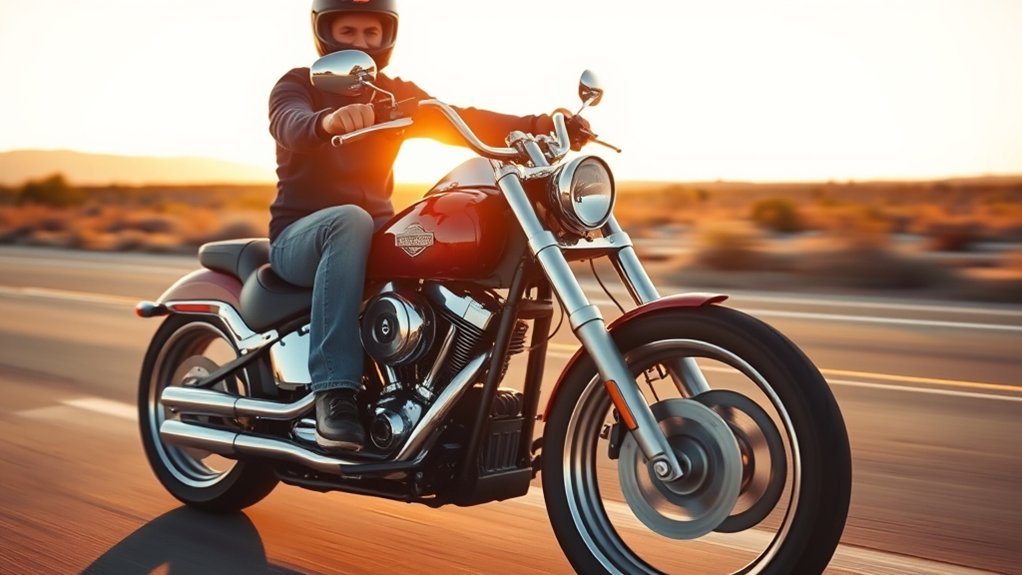
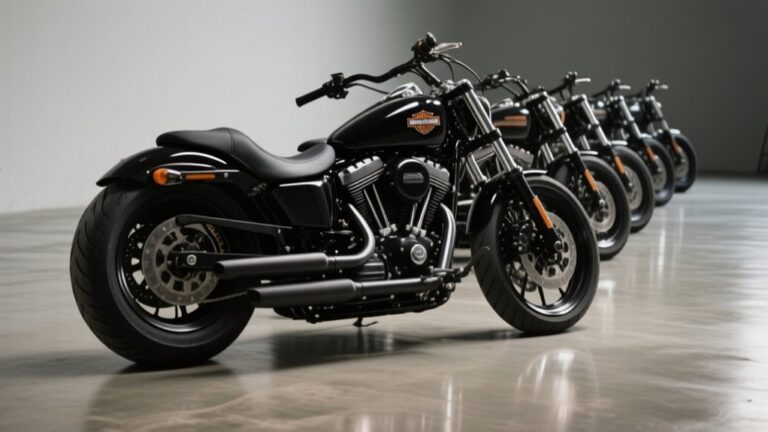
What sets Harley-Davidson motorcycles apart from other brands? You’ll notice their heavyweight build, often ranging between 700 and 900 pounds. This directly impacts handling and means you’ll need more effort and skill, especially if you’re new to riding.
Harley’s large-displacement engines produce significant torque. So, you have to manage power carefully to keep control.
The ergonomics favor a cruiser style with taller seat heights and a riding posture that can affect your balance and comfort depending on your size.
Plus, many models come with touring features like large fairings and saddlebags. These add to the overall weight and influence maneuverability.
All these elements combine to create a distinctive riding experience. That’s what really sets Harley-Davidson apart from lighter, sportier motorcycles.
How Heavy and Powerful Are Harley Motorcycles?
Although Harley-Davidson motorcycles vary widely in size and power, they generally weigh between 550 and over 900 pounds. Their engine capacities range from 494 cc to nearly 2,000 cc.
Harley-Davidson bikes range from 550 to over 900 pounds with engines from 494 cc to nearly 2,000 cc.
The substantial weight combined with powerful engines producing significant torque, often over 100 lb-ft, directly influences the bike’s handling. When you ride a heavier Harley, like a touring model, you’ll notice it’s harder to manage low-speed maneuvers and balancing, especially if you’re inexperienced.
The engine’s torque delivers strong acceleration, but controlling that power takes skill.
This mix of high weight and engine output means you need to be ready for the physical demands and precise control required.
Understanding these factors helps you anticipate the handling challenges Harley motorcycles bring.
That’s why riding one can feel difficult for some riders.
Which Harley Models Are Best for New Riders?
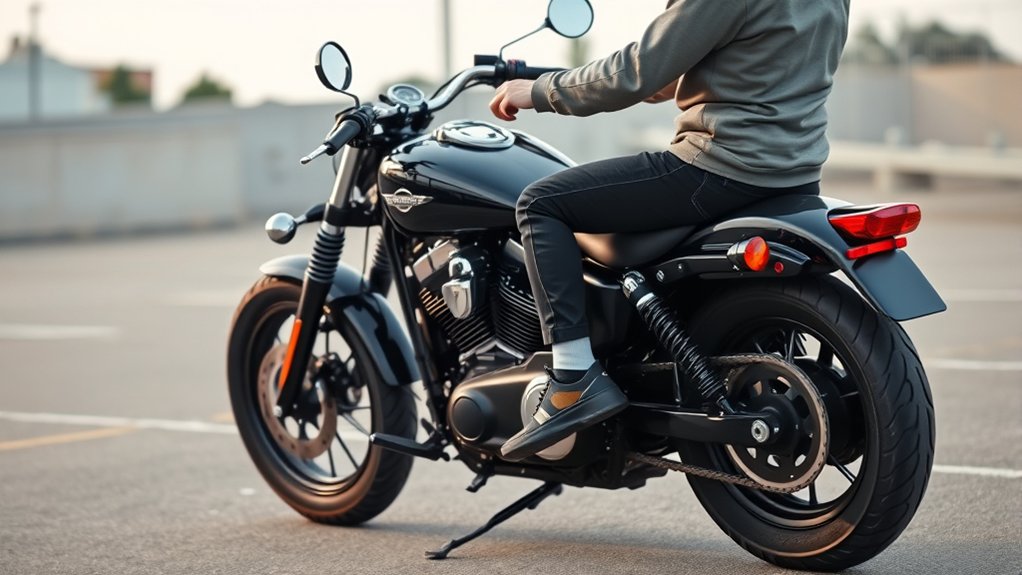
When choosing a Harley-Davidson motorcycle as a new rider, you’ll want to focus on models that offer manageable weight, comfortable seat height, and responsive handling. These factors help create a beginner-friendly experience with better maneuverability.
Here are three Harley models that are great for new riders:
- Harley Sportster S and Iron 883. Both are lightweight and easy to manage, making them perfect for beginners.
- Softail Standard. It offers a balanced ride with a lower seat height and easier handling.
- Street 500 and Street 750. These smaller displacement models are designed for those just starting out.
You’ll want to avoid larger touring models because their size and weight can be overwhelming for new riders. Picking a bike with these qualities helps you build confidence and control right from the start.
How Can Beginners Build Confidence Riding a Harley?
You can build confidence on a Harley by starting with essential safety training, like specialized riding courses that focus on hands-on skill development. These courses really help you get a feel for the bike in a safe setting.
Then, try practicing low-speed maneuvers in controlled environments. This way, you’ll gradually become more comfortable handling your Harley without any pressure.
Essential Safety Training
Because mastering a Harley requires specific skills, enrolling in a Harley-Davidson Riding Academy or Motorcycle Safety Foundation (MSF) course offers essential hands-on training designed to build your confidence. These courses focus on motorcycle safety fundamentals, helping you as a beginner gain control over the heavier Harley models.
To guarantee you develop the right skills, focus on practicing low-speed maneuvers such as U-turns and parking drills to improve control and handling.
Using upgraded lighting and visibility accessories can increase safety in varying conditions. Consistent practice combined with professional instruction really helps enhance comfort and confidence.
This structured training gives you a solid foundation, making your Harley riding experience safer and more enjoyable from the start.
Gradual Skill Development
Although riding a Harley can seem challenging at first, building confidence comes through gradual skill development and consistent practice.
As a beginner, start with lighter Harley models like the Sportster S or Iron 883 to ease your learning curve. Focus on practicing essential low-speed maneuvers such as U-turns and parking drills in safe, controlled environments to develop your skills and reduce anxiety.
Enroll in formal training programs like the Harley-Davidson Riding Academy or the MSF Basic RiderCourse to receive structured instruction that sharpens your techniques.
Gradually increase your riding experience by exploring low-traffic areas before progressing to more demanding terrains.
By combining consistent practice, proper training, and patience, you’ll steadily build the confidence needed to ride your Harley safely and competently.
It takes time, but stick with it—you’ll get there!
How Does Training Help You Master Harley Riding?
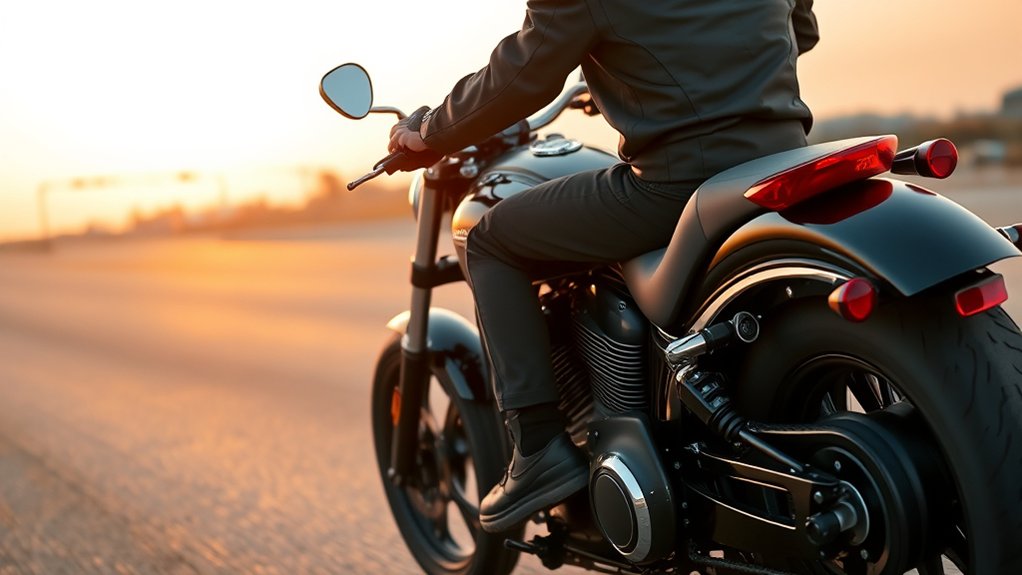
Training helps you develop essential safety skills by teaching you precise control and hazard awareness that are specific to Harley riding. It’s all about getting comfortable with your bike and understanding how it reacts in different situations.
Plus, training builds your confidence through hands-on practice with important maneuvers like emergency braking and low-speed handling. When you get to master these techniques in a structured environment, you naturally become a more capable and responsible rider.
Safety Skills Development
When you enroll in a safety course like the Harley-Davidson Riding Academy, you gain structured instruction on essential riding techniques tailored for handling large, powerful motorcycles. This training builds your safety skills by teaching low-speed maneuvers, obstacle avoidance, and proper control of heavy bikes.
It also sharpens your hazard awareness, preparing you to anticipate and respond to unpredictable road conditions. Through consistent practice, you develop muscle memory, which enhances your ability to react quickly and accurately.
Here are three key benefits of safety skills development:
- Mastery of complex riding techniques specific to Harley motorcycles
- Improved hazard recognition and decision-making on the road
- Acquisition of responsible riding habits that reduce accident risk
This focused training lays a solid foundation for safe and effective Harley riding.
Confidence Building
Because mastering a Harley requires handling a heavy, powerful machine, gaining confidence through structured instruction is essential. Training courses improve your riding skills by focusing on balance, slow-speed control, and cornering. They provide real-world scenario simulations, easing anxiety and enhancing rider assurance.
With hands-on practice, you build the confidence necessary to manage the bike safely and smoothly. The Harley-Davidson Riding Academy, for example, teaches you proper control usage and safety awareness, notably improving your riding experience.
| Training Aspect | Skills Developed | Rider Benefits |
|---|---|---|
| Balancing & Control | Handling heavy bikes | Increased confidence |
| Safety Awareness | Proper use of controls | Reduced anxiety |
| Real-World Scenarios | Maneuvering challenges | Improved rider assurance |
| Hands-on Practice | Slow-speed maneuvering | Enhanced riding skills |
How Do Experienced Riders Handle Harley’s Size and Weight?
Although Harley-Davidson motorcycles are known for their substantial size and weight, experienced riders quickly develop muscle memory and techniques that make handling feel more intuitive. You learn to manage the bike’s top-heavy feel and avoid instability by mastering specific skills.
For example, you use countersteering and precise body positioning to navigate turns smoothly despite the bike’s bulk. You also anticipate the bike’s momentum, avoiding sudden moves that could cause loss of balance.
And at low speeds, you adjust your riding style to compensate for the weight, which can feel challenging when starting or stopping.
Over time, this handling becomes second nature. Many riders even customize or select lighter Harley models to enhance control and boost their confidence on the road. It really makes a difference once you get the hang of it!
Is Riding a Harley Hard or Just Different?
How different is riding a Harley compared to other motorcycles? The main distinction lies in its heavy weight and size. Unlike smaller bikes, Harleys feature large engines with high torque, demanding more skill to control smoothly.
You’ll notice that maneuvering at slow speeds requires particular attention. The bike’s heavy build and tall seat height challenge balance and turning. This means riding a Harley isn’t necessarily harder, but it’s different, especially when handling tight corners or stop-and-go traffic.
With practice, you adapt to these unique demands, making the bike feel more manageable. So, the difficulty you experience often reflects a learning curve tied to the Harley’s physical characteristics and control nuances rather than an inherent riding challenge.
Tips for New Riders to Master Harley Riding
When you’re starting out on a Harley, focusing on skill-building through safety courses like the Harley Rider Academy or the MSF Basic RiderCourse can boost your confidence and control considerably.
As a new rider, developing your riding skills on a Harley-Davidson motorcycle requires patience and consistent practice.
Here are beginner tips to help you master Harley riding:
- Begin with smaller models like the Sportster S or Iron 883 to build foundational skills safely.
- Practice low-speed maneuvers such as U-turns, tight turns, and parking drills to handle the bike’s weight effectively.
- Upgrade lighting components to LED headlights and signals for improved visibility and safety.
Following these steps will really enhance your control and confidence on the road.
Give yourself time, keep practicing, and you’ll get there!
Frequently asked questions
What Maintenance Challenges Do Harley-Davidson Motorcycles Present?
You’ll face maintenance challenges with Harley-Davidson motorcycles because their high-performance engines need frequent tuning and lubrication. Their heavy metal construction and touring accessories add extra wear, so regular inspections are a must.
The complex electrical systems often require specialized diagnostics, which can be tricky. Repairs also tend to be costly and time-consuming since they involve heavy-duty parts.
Plus, you’ll need to consistently adjust belts or chains and keep the brake systems in check. This helps ensure your Harley runs smoothly and lasts a long time.
How Fuel-Efficient Are Harley Motorcycles Compared to Other Brands?
Harley motorcycles aren’t as fuel-efficient as many other brands, especially Japanese ones like Honda or Yamaha. You’ll typically see around 40-50 mpg on larger Harleys with big engines.
Smaller models like the Street 500 can exceed 60 mpg.
Their powerful engines and heavier touring bikes consume more fuel. So, if you prioritize fuel economy for daily rides or long trips, you might find other brands more economical than Harley-Davidson.
Are Harley-Davidson Motorcycles Suitable for Long-Distance Touring?
Riding a Harley-Davidson for long-distance touring is like slipping into your favorite leather jacket. It fits perfectly and keeps you comfortable.
You’ll appreciate the plush seats, advanced suspension, and windshields that shield you from the elements.
Cruise control lets you relax on highways, while ample storage carries your gear effortlessly.
Just remember, handling its weight takes some practice. With the right experience, you’re set for smooth, enjoyable rides across vast miles.
What Safety Gear Is Recommended Specifically for Harley Riders?
You should wear a DOT-approved full-face helmet to protect your head during rides.
A durable jacket with armor, like leather or Kevlar, shields you from impact and abrasions.
Gloves with reinforced knuckles and padding enhance grip and guard your hands.
Motorcycle-rated boots provide ankle support and non-slip soles for stability.
Don’t forget eye protection. Goggles or a helmet visor keep debris, wind, and insects out of your eyes for safer riding.
Safety gear really makes a difference when you’re out on a Harley, so it’s worth gearing up properly every time you ride.
How Does the Resale Value of Harley Motorcycles Compare to Others?
Harley motorcycles generally hold their resale value better than many other brands. You’ll find they retain about 70-80% of their original price after three years, thanks to strong brand loyalty and iconic status.
If you own a limited edition or classic model, its value might even appreciate. Factors like condition, mileage, and market demand also play a role.
But overall, Harleys tend to be a more stable investment compared to many Japanese or other cruiser brands.
Final Thought
Riding a Harley isn’t necessarily hard, it’s just a different ballgame. You’ll face a learning curve because of its weight and power. But with the right training and practice, you’ll build confidence quickly.
Starting with beginner-friendly models and following expert tips makes handling easier. Remember, every rider was once a rookie, so don’t rush. Take it step by step, and soon enough you’ll be cruising like a pro on your Harley.