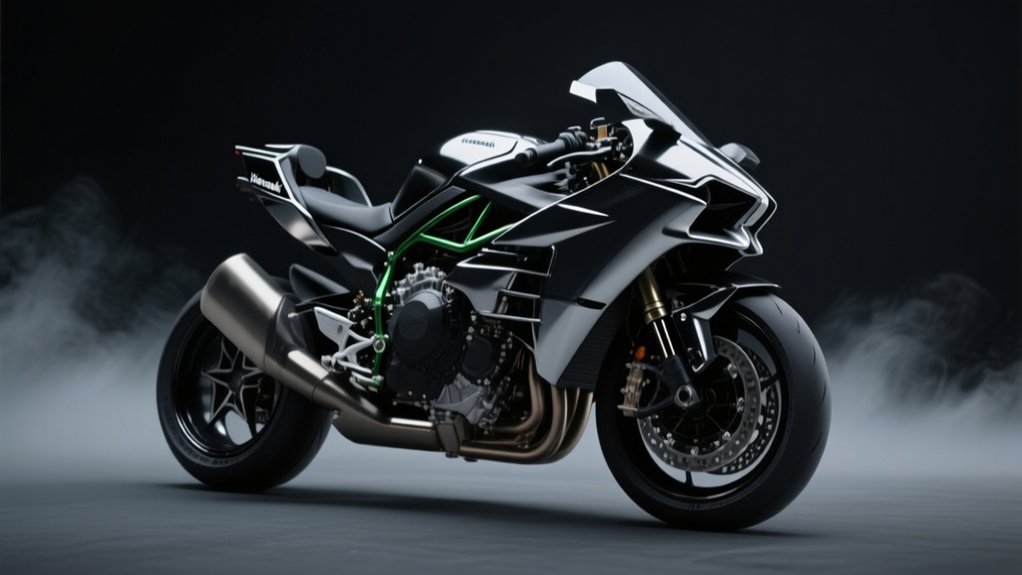
How Much Horsepower Does A Kawasaki H2 Have – Exact Amounts
The Kawasaki Ninja H2 delivers between 200 and 228 horsepower depending on the model year. This is thanks to its 998cc inline-four engine paired with a high-speed centrifugal supercharger. This setup boosts power with precise control and street-legal performance.
If you compare it to the H2R track version, that model pushes up to 310 horsepower stock, or 326 with modifications. Understanding these numbers is just the start. There’s more behind how Kawasaki achieves and manages these impressive power levels.
How Much Horsepower Does the Kawasaki Ninja H2 Produce?
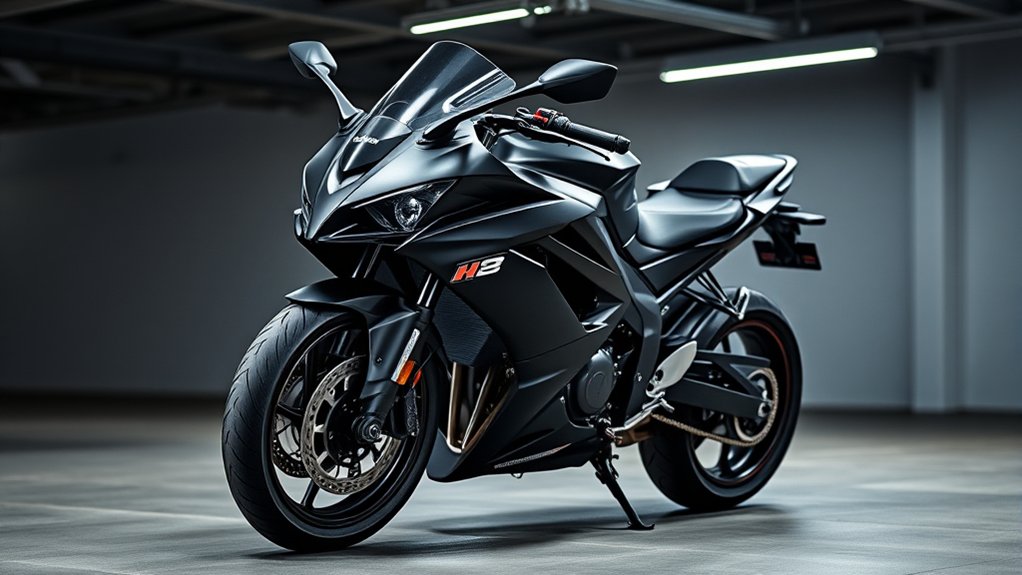
Although the Kawasaki Ninja H2 is street-legal, it delivers an incredible punch with approximately 200 horsepower in its standard form. Newer models push that figure up to 228 horsepower. This impressive power output comes from Kawasaki’s advanced supercharged engine, which uses a supercharger designed for broad, linear power delivery and high thermal efficiency.
The supercharger’s impeller spins at extremely high RPM, ensuring strong engine performance across the rev range. You can further boost the Ninja H2’s horsepower beyond 250 with ECU remapping and upgraded exhaust systems. That gets you closer to the H2R’s track-only power.
While the H2R’s supercharger spins over 130,000 RPM for extreme power, the Ninja H2 balances street legality with thrilling performance thanks to Kawasaki’s engineering. It’s a bike that really knows how to blend everyday usability with serious speed.
How Does the Ninja H2’s Horsepower Compare to the H2R Track Model?
You’ll notice the Ninja H2 delivers around 200 horsepower for street use.
On the other hand, the H2R track model cranks out an astonishing 310 horsepower thanks to its aggressive supercharger and ram-air system.
This big power gap really shows how the H2R is built for extreme track performance rather than everyday reliability.
Knowing these differences helps you see how Kawasaki balances power and practicality across both models.
Street vs Track Power
When comparing the Kawasaki Ninja H2 to its track-only sibling, the H2R, you’ll notice a striking difference in horsepower that reflects their distinct purposes. The street models focus on balance and compliance, while the H2R prioritizes raw power and track-ready performance.
Here’s a quick performance comparison:
- Kawasaki H2 street models produce about 200 to 228 horsepower.
- The H2R’s supercharged engine delivers up to 310 horsepower stock.
- Ram-air boost pushes H2R power output to 326 horsepower.
- Horsepower difference ranges from 80 to 100, highlighting model specifications tuned for either road or track.
This horsepower difference clearly defines each bike’s role and engineering focus. It’s what sets the street version apart from the track beast.
Performance Differences Explained
Because the Kawasaki Ninja H2 and H2R serve fundamentally different purposes, their horsepower figures reflect distinct engineering priorities. The H2’s supercharged engine balances street legality with high power output, while the H2R pushes performance differences to the extreme with race-focused engine internals and higher boost pressure.
ECU remapping and performance upgrades can close the gap, but the H2R’s 310-326 hp easily surpasses the H2’s 200-228 hp. Here’s a quick performance comparison:
| Feature | Ninja H2 |
|---|---|
| Horsepower | 200-228 hp |
| Boost Pressure | Up to ~20 psi |
| ECU Remapping | Yes |
| Engine Internals | Street-tuned |
| Power Output (H2R) | 310-326 hp, 35 psi |
These differences highlight the H2R’s track-only focus versus the versatile H2. It’s really about what you need—street performance or track domination.
Which Engine and Supercharger Features Boost the Ninja H2’s Horsepower?
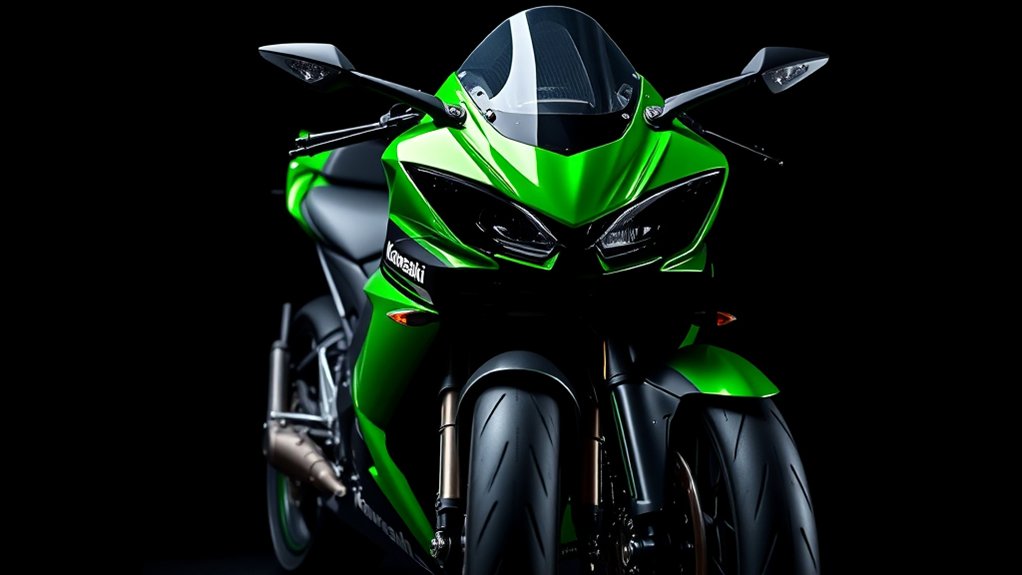
You’ll find the Ninja H2’s impressive horsepower comes from its supercharged engine design, which forces more air into the combustion chamber. This means the engine can burn more fuel, producing more power.
Plus, its high compression ratio works hand-in-hand with the supercharger’s efficiency to really maximize that power output. So, when you put these features together, they combine to boost performance in a big way.
Supercharged Engine Design
Though the Kawasaki Ninja H2’s 998cc inline-four engine already packs a punch, its true horsepower surge comes from a meticulously engineered centrifugal supercharger spinning at over 130,000 RPM. This supercharged engine uses a planetary gear system to boost impeller speed to 9.2 times the crankshaft speed, dramatically increasing engine airflow.
The system compresses air to 2.4 times atmospheric pressure, enhancing power output without bulky intercoolers. Optimized internal components and a high compression ratio maximize thermal efficiency and guarantee high RPM performance.
Here’s how the design elevates horsepower:
- Centrifugal supercharger delivers rapid, efficient air compression.
- Planetary gear system amplifies impeller speed for maximum boost.
- Compact design reduces heat gain, preserving thermal efficiency.
- Engine airflow and internal parts fine-tuned for peak performance.
Pretty impressive, right? This setup really pushes the limits of what a supercharged engine can do.
Compression Ratio Impact
When you combine the Kawasaki Ninja H2’s high compression ratio of 8.5:1 with its supercharger’s ability to compress air up to 2.4 times atmospheric pressure, you get a potent synergy that really boosts horsepower.
This high compression ratio optimizes engine performance by packing a denser air-fuel mixture into the combustion chamber, which enhances combustion efficiency.
The supercharger spins at over 130,000 RPM, delivering plenty of compressed air to support this process, especially at high RPMs.
Together, these features increase power output significantly, allowing the Kawasaki H2 to produce up to 228 horsepower in street-legal models.
The combination of high compression and forced induction makes for a broader powerband and exceptional throttle response.
This means the Kawasaki H2’s engine performance isn’t just powerful but also very responsive across a wide range of speeds.
Supercharger Efficiency Factors
Because the Kawasaki Ninja H2’s supercharger spins at nearly 130,000 RPM and compresses air up to 2.4 times atmospheric pressure, it plays a crucial role in boosting horsepower efficiently. This high impeller RPM ensures rapid air compression, increasing the engine’s air intake and power output.
The compact planetary gear system minimizes thermal gain, maintaining thermal stability even at high boost levels without an intercooler. Kawasaki’s design optimizes compression efficiency, delivering broad power across the RPM range.
Key supercharger efficiency factors include:
- High impeller RPM driving superior air compression
- Advanced planetary gear system reducing thermal gain
- Precise electronic control managing boost levels
- Optimized air intake supporting consistent compression efficiency
Together, these features maximize engine power and performance.
How Does the Supercharger Boost Horsepower?
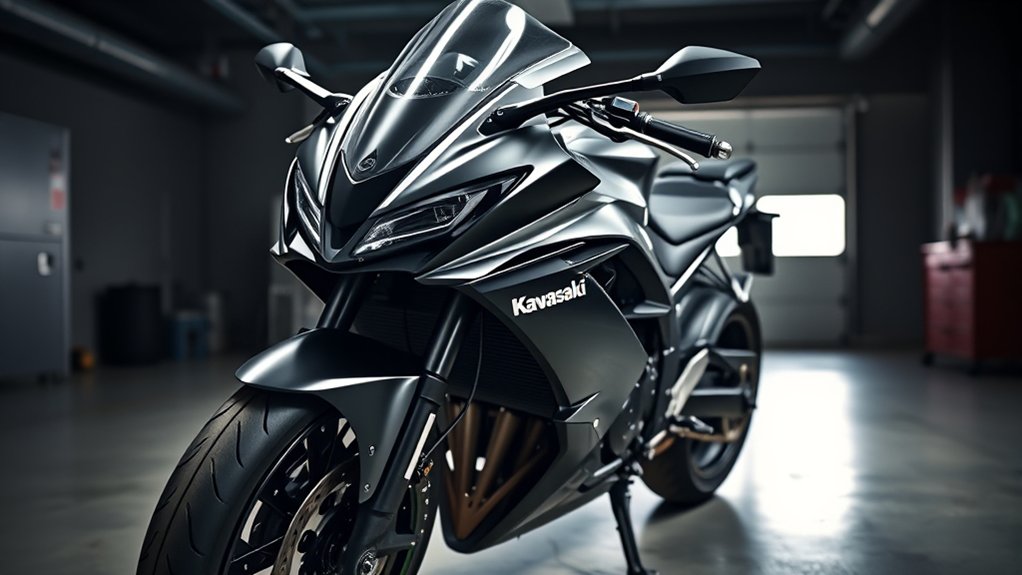
If you want to understand how the Kawasaki H2 achieves such remarkable horsepower, you need to look at its supercharger. This supercharged system compresses air up to 2.4 times atmospheric pressure, markedly increasing intake air pressure and improving combustion compression.
The impeller spins at nearly 130,000 RPM, boosting airflow volume and enhancing engine output. Through an efficient planetary gear system, power transfer from the crankshaft to the impeller maximizes boost without excessive heat.
This increased air pressure elevates engine efficiency, allowing the H2 to add roughly 98 horsepower over its base engine. The result? A substantial horsepower boost that delivers faster acceleration and exceptional performance, making the Kawasaki H2 a standout in power and engineering precision.
How Has Kawasaki Upgraded the Ninja H2’s Horsepower Over Time?
Understanding the supercharger’s role helps explain the Kawasaki Ninja H2’s impressive power, but the story of its horsepower doesn’t stop there. Kawasaki has continuously refined the Ninja H2’s performance through several key upgrades.
The Kawasaki Ninja H2’s power story extends beyond its supercharger, with ongoing refinements boosting performance.
Here’s how the model evolution boosted horsepower over time:
- ECU remapping tuned the supercharged engine for better efficiency and power delivery.
- Ram-air effects increased horsepower, pushing the H2R from 310 to 326 horsepower under ideal conditions.
- Assist and slipper clutch introduced in 2016 improved handling and indirectly supported horsepower performance.
- Electronic support systems like Kawasaki Launch Control and traction control optimized power output and rider control.
These upgrades combined to elevate the Ninja H2’s horsepower beyond its original figures. They’ve helped it remain a standout in the world of supercharged sportbikes.
How Does Horsepower Affect Acceleration and Top Speed?
When you increase a motorcycle’s horsepower, you boost its ability to accelerate quickly and reach higher top speeds. The Kawasaki H2’s supercharged engine delivers 228 horsepower, enabling rapid acceleration, reaching 60 mph in just 2.6 seconds.
This horsepower effect means greater power output translates directly to improved performance.
Higher horsepower also elevates the top speed, as seen in the H2R, which surpasses 300 mph. However, maximum speed depends not only on power output but also on aerodynamics and weight.
The Kawasaki H2’s design optimizes airflow, allowing it to make the most of its horsepower for both acceleration and top speed.
In principle, increasing horsepower enhances how swiftly you accelerate and how fast you can ultimately go. So, it’s a key factor in the bike’s thrilling performance.
Which Electronic Systems Manage the Ninja H2’s Horsepower Output?
Because the Kawasaki Ninja H2’s immense horsepower demands careful management, its advanced electronic systems play a crucial role in delivering power smoothly and safely. The bike’s engine management system, centered around a sophisticated ECU, precisely controls throttle response, ignition timing, and fuel delivery. This ensures peak horsepower output while maintaining reliability.
Key components include Kawasaki Traction Control (KTRC) and Kawasaki Engine Brake Control (KEBC), which regulate torque and prevent wheel slip. There’s also the Bosch IMU, providing real-time data for dynamic ECU adjustments to both engine and chassis.
Then you have Kawasaki Launch Control Mode (KLCM) and the quick shifter, which enable seamless acceleration and gear changes. Plus, ECU software updates and remapping allow for tailored horsepower tuning beyond stock settings.
Together, these systems maximize performance while keeping you in control.
How Does Horsepower Affect Real-World Riding?
Although raw horsepower numbers might seem abstract, they directly shape how your Kawasaki H2 performs on real roads. The high horsepower boosts acceleration and top speed, letting you throttle up quickly and overtake with ease.
Raw horsepower may seem abstract, but it powers your Kawasaki H2’s quick acceleration and effortless overtaking.
However, that extra torque demands sharp handling skills to prevent wheel spin and maintain control during aggressive riding.
Stability improves at high speeds, but you’ll rely heavily on electronic aids like traction control and ABS to keep things safe and smooth. These systems fine-tune throttle response and help manage power delivery, so you can focus on riding confidently.
Ultimately, horsepower isn’t just about numbers. It defines how your H2 reacts in corners, straight lines, and open roads, blending raw power with precision and control for a thrilling ride.
Can You Safely Increase the Street-Legal Ninja H2’s Horsepower?
If you want to safely increase the street-legal Kawasaki Ninja H2’s horsepower, you’ll need to approach upgrades with care and expertise. The H2’s supercharger and engine can handle higher performance, but pushing beyond limits risks engine reliability.
To boost horsepower effectively, consider ECU remapping for optimized fuel system and ignition timing. Installing a high-flow aftermarket exhaust helps reduce backpressure. You might also think about upgrading components like turbochargers and intercoolers, but only with precise tuning.
Rely on professional tuning to balance power gains without sacrificing engine durability. These upgrades can enhance horsepower beyond stock levels, potentially exceeding 250 hp. But they do require expert tuning to maintain engine reliability and overall performance.
Skipping quality parts or ignoring proper tuning can lead to costly engine damage. So, it’s always better to invest in the right components and professional help when pushing your Ninja H2’s limits.
Frequently asked questions
What Is the Fuel Efficiency of the Kawasaki Ninja H2?
You’ll find the Kawasaki Ninja H2 gets around 20-25 miles per gallon under typical riding conditions.
Keep in mind, if you push it hard with aggressive acceleration or high speeds, its fuel efficiency drops considerably.
Thanks to its supercharged engine and advanced fuel injection, it balances power with decent mileage.
This gives you roughly 150-180 miles on a full tank depending on how and where you ride.
How Much Does the Kawasaki Ninja H2 Weigh?
You might expect a beast like the Kawasaki Ninja H2 to be heavy, but it weighs just around 524 pounds (238 kg). That’s surprisingly light considering its power and performance.
Kawasaki uses high-strength materials like carbon fiber to keep it nimble and quick.
Depending on the model and any added accessories, the weight can range from about 520 to 530 pounds. It strikes a perfect balance for agility and speed.
What Are the Maintenance Costs for the Ninja H2?
You should expect to spend over $1,000 annually maintaining the Ninja H2.
Regular oil changes with synthetic oil cost around $200 to $300 every 3,000 to 5,000 miles.
Supercharger checks, done about every 15,000 miles, can run $500 to $1,000.
Brake pad replacements and KIBS ABS servicing add $300 to $600 yearly.
Furthermore, engine upkeep like spark plugs and coolant changes may cost $100 to $200 every 10,000 to 20,000 miles.
It’s all part of keeping your Ninja H2 running smoothly.
What Colors Are Available for the Kawasaki Ninja H2?
Imagine riding a steam-powered chariot, but with Kawasaki’s cutting-edge Ninja H2 colors instead. You can choose from Mirror Coated Spark Black, Lime Green, or Metallic Diablo Black.
If you want something special, the H2 Carbon edition has a carbon fiber finish and unique paint.
The track-only H2R pops with high-visibility Lime Green or racing liveries.
Don’t forget limited-edition metallic and matte finishes that highlight its premium style.
Is the Kawasaki Ninja H2 Suitable for Beginner Riders?
No, the Kawasaki Ninja H2 isn’t suitable for beginner riders. You’ll find its power and acceleration overwhelming if you’re new to motorcycling.
The advanced electronics and supercharged engine demand experience and skill to handle safely.
Instead, consider starting with less powerful Kawasaki models that offer rider aids. These help you build confidence and control before moving up to high-performance bikes like the H2.
Safety should always come first.
Final Thought
You’re riding a beast when you take the Kawasaki Ninja H2 out for a spin. Its horsepower is the thunder that propels you forward. With precise engineering and a supercharger that breathes fire into the engine, you get blistering acceleration and top speed.
While the H2R pushes the limits even further, the street-legal H2 balances power and control. It lets you harness raw energy without losing your grip on the road.