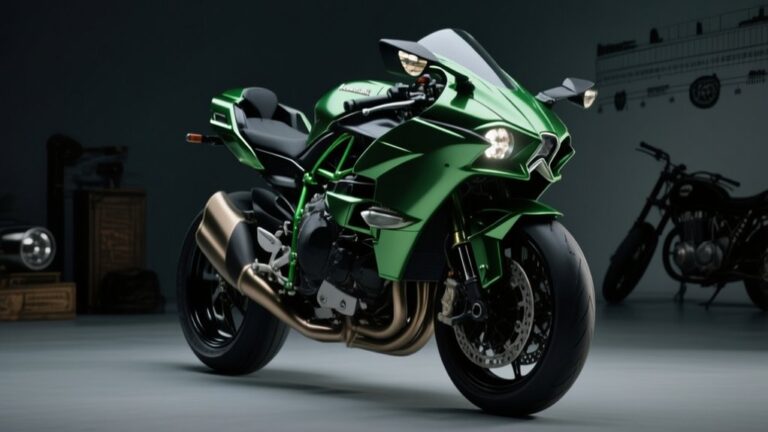
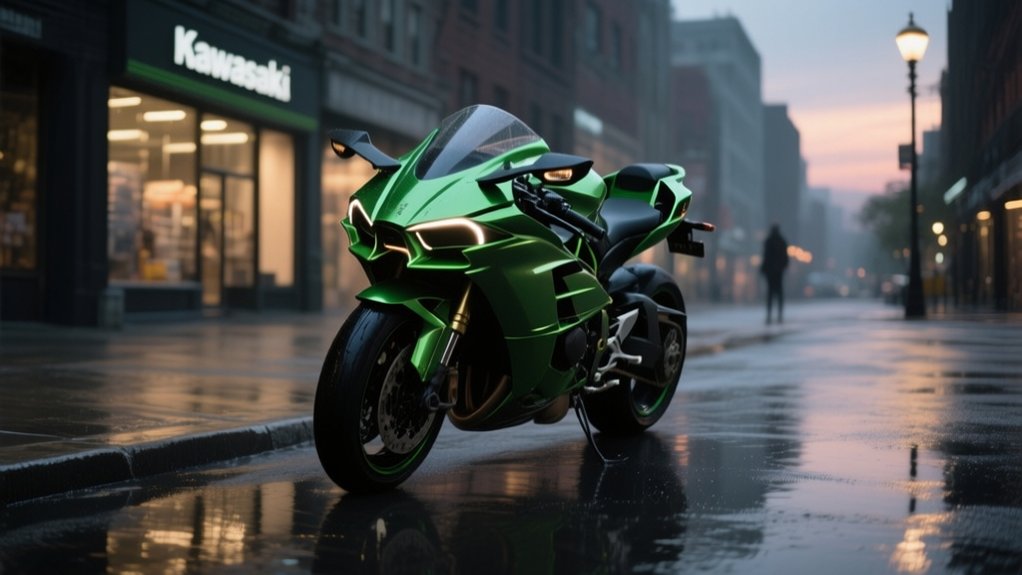
Is The Kawasaki H2 Street Legal – The Truth
You can ride the Kawasaki H2 on public roads only if it meets your local street-legal requirements. The standard H2 is designed for street use but may need specific modifications like headlights, signals, or emissions adjustments depending on your region.
The H2R, built solely for track performance, isn’t street legal without extensive changes and lacks necessary equipment. Knowing the differences and local laws helps make sure you ride safely and legally.
Taking a closer look at these details will clear up what makes the H2 street ready. It’s all about understanding what your area requires and how the bike fits into that.
Is the Kawasaki H2 Street Legal?
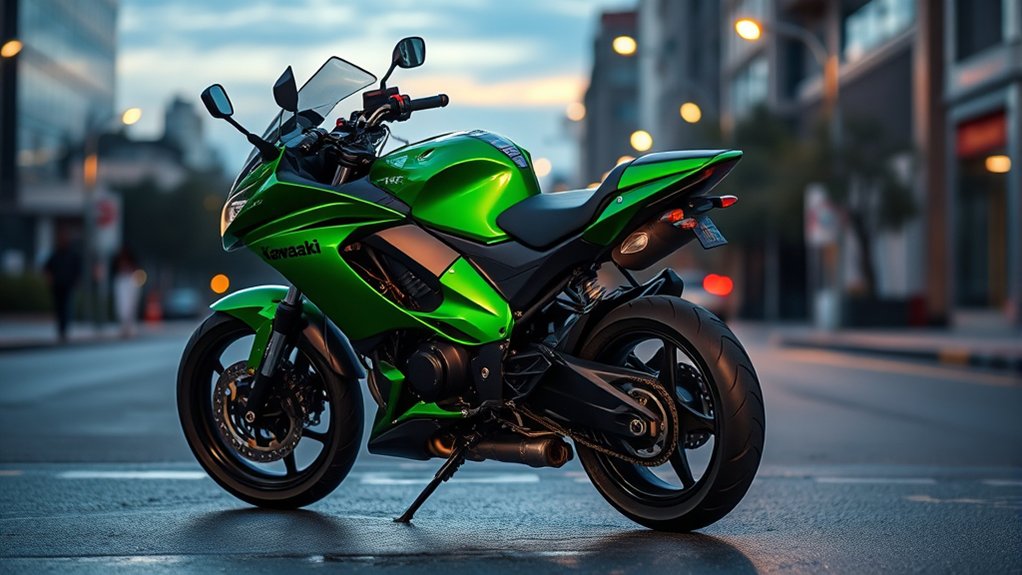
When it comes to street legality, the Kawasaki Ninja H2 presents a complex picture. The standard Kawasaki Ninja H2 may be street legal in some countries, but this depends heavily on regional regulations.
In contrast, the H2R variant, designed exclusively for track use, lacks essential features like turn signals and a license plate mount, making it generally illegal on public roads.
To meet street legal requirements, including emission standards and safety regulations, significant modifications are often necessary, especially for the H2R. However, these modifications are rarely practical or cost-effective.
If you’re considering the H2 or H2R for street riding, you must verify local laws carefully.
The high-performance nature of these motorcycles means they typically don’t comply with street-legal standards without adjustments. So, it’s really important to check the rules where you live before taking one of these out on the road.
How Does the H2R Differ From the Street-Legal H2?
Although the Kawasaki H2 and H2R share a similar base design, they differ markedly in features and purpose. The H2 is tailored for street use, while the H2R is engineered exclusively for track performance.
The track-only H2R boasts a supercharged engine tuned to exceed 300 horsepower, which far surpasses the street-legal H2’s output. It features advanced traction control and a lightweight trellis frame made from high-tensile steel.
You’ll also find adjustable rebound and compression damping for precise handling.
Unlike the H2, the H2R lacks headlights, turn signals, and mirrors, so it’s not suitable for public roads. Its aggressive aerodynamics include larger winglets to increase downforce.
Plus, the H2R’s fuel management optimizes a full tank specifically for track conditions, putting performance over everyday usability.
What Local Restrictions Affect Kawasaki H2 Riders?
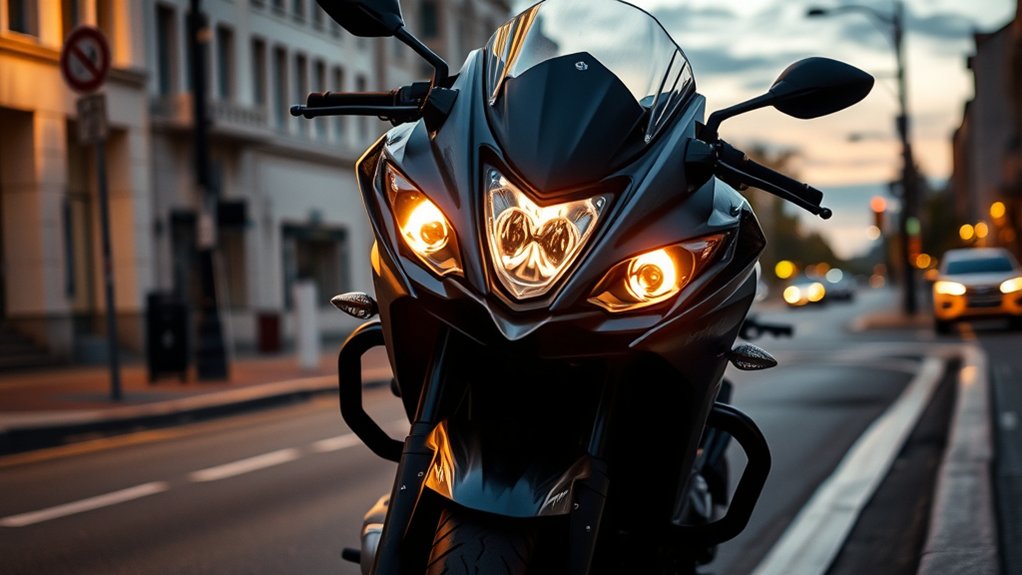
Understanding the differences between the Kawasaki H2 and the track-only H2R naturally leads to questions about legal use on public roads. If you want to ride an H2 street legal, you must navigate various local restrictions.
Jurisdiction restrictions often dictate whether the H2 meets emissions regulations, noise ordinances, and safety standards necessary for vehicle registration.
Local laws determine if the H2 complies with emissions, noise, and safety standards for registration.
The H2R, lacking these features, can’t be registered for street use, confining it to private tracks.
Even for the street-legal H2, licensing requirements and local noise limits may restrict your ability to ride freely.
You really need to review your area’s specific emissions and safety mandates carefully because these directly affect whether you can legally operate a Kawasaki H2 on public streets.
How Can You Verify Kawasaki H2 Legality in Your Region?
Since legal requirements for motorcycles can vary widely, you should start by checking with your local Department of Motor Vehicles (DMV) or transportation authority to verify the Kawasaki H2’s registration and street legality.
To guarantee compliance with local regulations, consider these steps:
First, confirm the Kawasaki H2 meets emission standards and other vehicle laws specific to your region.
Next, verify that the bike has all necessary equipment, such as turn signals, mirrors, and license plate holders.
You might also want to consult authorized Kawasaki dealerships or vehicle authorities to clarify if your H2 model qualifies for street registration.
It’s a good idea to review regional motorcycle classifications too, since some Kawasaki H2 variants may be limited to track use only.
Following this approach helps you accurately determine the Kawasaki H2’s street legality in your area.
Taking these steps will save you time and avoid any legal issues down the road.
What Modifications Are Needed for Kawasaki H2 Street Use?
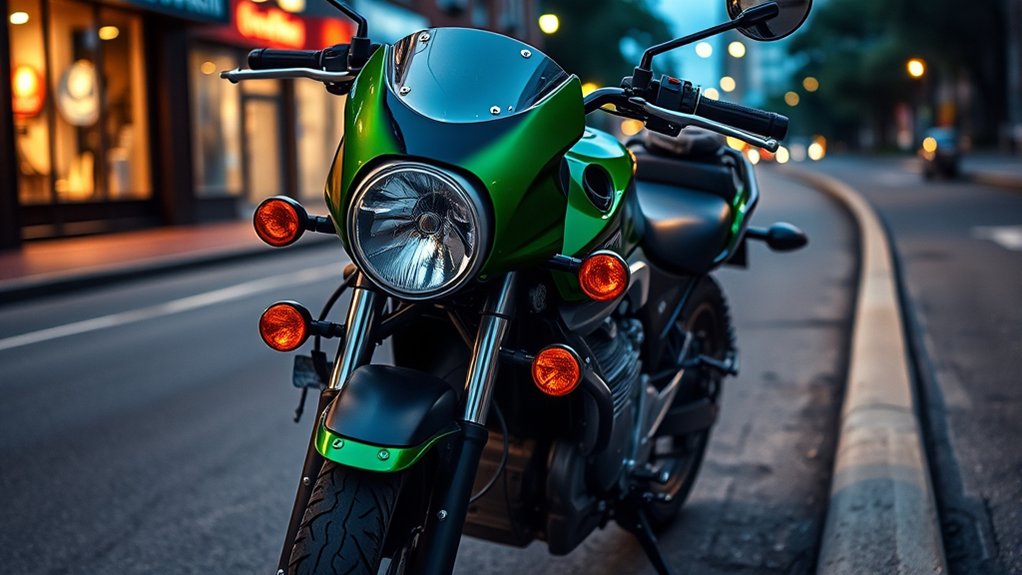
To make your Kawasaki H2 street legal, you’ll need to add some essential gear like turn signals, mirrors, a license plate holder, and lighting that meets the regulations. These are basic but important to get your bike ready for the road.
You’ll also have to tackle emissions and noise. This usually means installing catalytic converters or making muffler modifications, depending on what your local laws require. It’s all about keeping your ride compliant and respectful of the environment and neighbors.
On top of that, upgrading safety features like tires and reflectors is a smart move. This helps ensure your bike meets all the legal standards for street use and keeps you safer while you’re out riding.
Required Legal Modifications
Although the Kawasaki Ninja H2 is a high-performance machine, it doesn’t come ready for street use straight from the factory, especially the H2R variant designed exclusively for the track. To make the H2 street legal, you’ll need essential modifications that comply with local laws and regulations.
Key street-legal modifications include installing headlights, turn signals, and mirrors for visibility and signaling. You’ll also need to add a license plate holder to display registration clearly. Noise compliance is important too, so fitting appropriate exhaust systems is a must.
Meeting emissions regulations is another critical step, which might involve proper tuning or adding catalytic converters. Since the H2R lacks many street-legal features, you must install aftermarket parts that satisfy your region’s DMV requirements.
Always verify local standards, as they influence the scope of required modifications for safe and legal street use. It’s better to be sure upfront than face issues later on.
Safety Equipment Upgrades
Beyond the basic legal modifications like headlights and exhaust systems, upgrading safety equipment plays a significant role in preparing the Kawasaki H2 for street use. You’ll need to install turn signals, mirrors, and a license plate holder that comply with local laws. The lighting system must be enhanced to ensure visibility and safety, including headlights that meet regulatory standards.
Also, some regions require instrumentation like speedometers for full compliance. Along with fitting a legal exhaust system, these upgrades are essential for transforming the track-focused H2 into a street-legal machine.
| Required Upgrade | Purpose | Notes |
|---|---|---|
| Turn Signals | Indicate direction | Must meet local visibility |
| Mirrors | Rear visibility | Positioned for safe viewing |
| License Plate Holder | Identification | Proper mounting required |
| Headlights & Lighting | Nighttime visibility | Must comply with brightness |
What Does ‘Street Legal’ Really Mean for Kawasaki H2 Riders?
Since not all Kawasaki H2 models meet the stringent requirements for public road use, understanding what “street legal” means is essential for riders.
For the Kawasaki H2, being street legal involves meeting regional regulations on emissions and noise levels. It also means having proper lighting, including headlights, taillights, and turn signals.
You’ll need safety features like mirrors and licensing compliance too.
Plus, the motorcycle must adhere to local laws governing public road use.
The H2R variant lacks these critical elements and is restricted to track use.
On the other hand, the Ninja H2 is modified to conform with street legal standards.
As a rider, you should always verify local regulations before operating any Kawasaki H2 model on public roads.
This way, you can avoid legal issues and ensure your safety.
Frequently asked questions
What Is the Average Fuel Consumption of the Kawasaki H2?
You can expect the Kawasaki H2 to average around 25-30 miles per gallon (mpg), though it varies with your riding style and conditions.
If you ride aggressively or hit the track, your fuel consumption will drop noticeably.
Riding conservatively on the street improves mileage, but remember, this bike’s supercharged 998 cc engine prioritizes power over fuel efficiency.
Factors like your weight, speed, and how you ride will influence the exact numbers.
How Often Does the Kawasaki H2 Require Maintenance?
Think of your Kawasaki H2 as a finely tuned orchestra needing regular rehearsals. You’ll want to perform maintenance every 6,000 to 12,000 miles, depending on how fiercely you ride. This includes oil changes, chain lubrication, brake fluid swaps, and brake pad checks.
Because it’s supercharged, keep a close eye on cooling and supercharger parts.
Tires and brake pads wear faster with aggressive riding, so inspect and replace them more often to keep your bike performing at its peak.
What Safety Gear Is Recommended When Riding the Kawasaki H2?
You should wear a full-face helmet with advanced impact protection and an aerodynamic design when riding the Kawasaki H2.
Protective armored jackets, gloves, and pants with CE-approved padding are essential to minimize injuries.
Given the bike’s extreme power, a back protector and chest guard offer added safety.
High-visibility gear improves your visibility, which is always a good idea.
Reinforced riding boots protect your ankles and provide stability during aggressive maneuvers.
Can the Kawasaki H2 Be Insured at Standard Motorcycle Rates?
Insuring the Kawasaki H2 at standard motorcycle rates is like trying to fit a square peg in a round hole. It rarely works. Because of its extreme performance and limited street legality, insurers often see it as high-risk.
You’ll probably need specialized or performance motorcycle coverage. Some providers might even refuse coverage altogether.
To get proper insurance, check your local laws and talk directly with insurers who know high-performance bikes well. That way, you can find the best option for your Kawasaki H2.
What Are the Common Aftermarket Upgrades for the Kawasaki H2?
You’ll find common aftermarket upgrades for the Kawasaki H2 include high-performance exhaust systems to boost sound and power. Many riders install adjustable shocks and forks for better handling.
Aerodynamic fairings and winglets are popular to enhance stability at high speeds.
You might also consider ECU remapping to optimize engine performance and traction control.
Upgrading brake pads and rotors improves stopping power and fade resistance during aggressive riding. These tweaks can really change how the bike feels on the road.
Final Thought
If you’re eyeing the Kawasaki H2 for the streets, remember it’s not just about raw power, it’s about meeting legal checkpoints. While the H2 is designed for the road, the H2R is a different beast, strictly track-bound. Local laws can be a maze, so verifying your region’s rules is key.
With proper modifications, you’ll turn this beast into a street-legal marvel. That way, you can ride legally and safely without cutting corners. It’s all about making sure you’re good to go on public roads.