Is Kawasaki Japanese – The Real Answer
You’ll find Kawasaki is deeply Japanese, starting in 1878 as a shipbuilding firm by Shozo Kawasaki. It grew with a strong focus on craftsmanship and innovation rooted in Japan’s industrial history.
The company expanded beyond ships to locomotives, aerospace, and motorcycles. It maintained traditional engineering alongside cutting-edge technology.
Its global presence still reflects Japanese quality and cultural values. Keep exploring to understand how Kawasaki balances heritage with its modern international influence.
Where And When Did Kawasaki Begin Its Journey?

Although many recognize Kawasaki for its modern engineering feats, the company actually began its journey in 1878 in Japan. It was founded by Shozo Kawasaki as a shipbuilding firm in Tokyo. You’ll find that Kawasaki’s initial focus was on constructing ocean-going vessels, a critical component of Japan’s expanding maritime industry.
By 1886, Kawasaki shifted operations to Hyogo, establishing its main shipyard in Kobe. This move positioned the company strategically within Japan’s industrialization wave. It allowed Kawasaki to tap into the region’s growing infrastructure and labor pool, fueling its growth.
Over time, Kawasaki expanded beyond shipbuilding into various heavy industries. This shift reflected Japan’s broader industrial diversification. Understanding these origins helps you see how Kawasaki’s foundation is deeply rooted in Japan’s late 19th-century maritime industry and industrialization efforts.
How Do Kawasaki’s Founding And Roots Reflect Its Japanese Identity?
Because Kawasaki was founded in Japan in 1878 by Shozo Kawasaki, its origins are deeply intertwined with the country’s industrial history and cultural values. You’ll see this in its initial focus on shipbuilding and heavy industries, which exemplify Japanese craftsmanship and engineering precision.
Kawasaki’s roots in 1878 Japan reflect a legacy of craftsmanship and industrial innovation.
Kawasaki’s commitment to technological innovation aligns with Japan’s national priorities, driving advances in transportation and infrastructure.
The company also integrates elements of Japanese culture, such as Kojiro Matsukata’s art collection, reflecting its rootedness in Japan’s cultural legacy.
As Kawasaki evolved into a major multinational, it maintained its identity as a symbol of Japanese industrial resilience and ingenuity.
What Major Milestones Shaped Kawasaki’s Growth In Japan?
You’ll notice Kawasaki’s growth in Japan is marked by some important milestones. It all began with the company’s founding and its early move into shipbuilding.
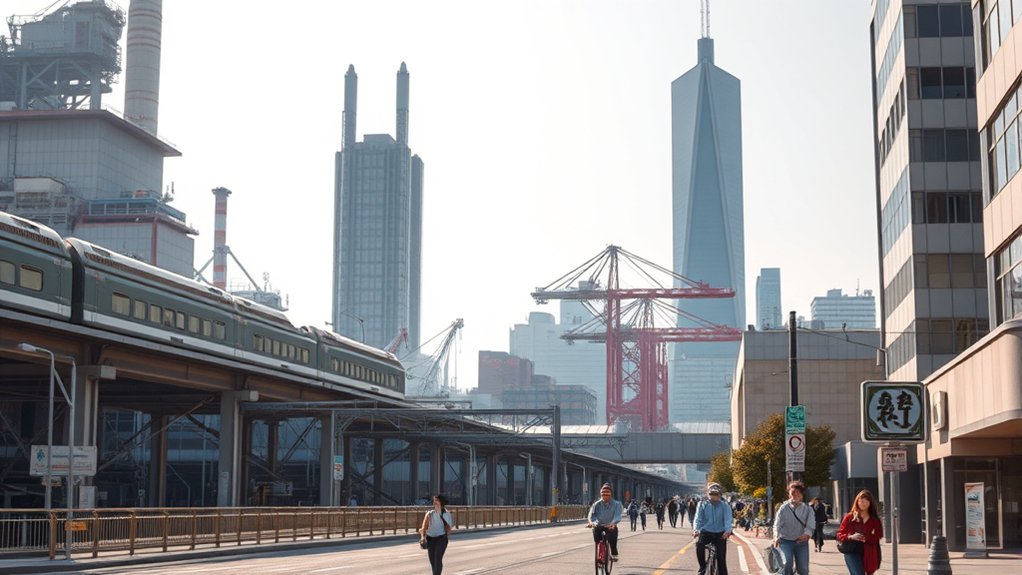
Then, as you follow the timeline of technological innovations, you see how Kawasaki branched out into railways and even aircraft manufacturing. These changes really show how Kawasaki played a key role in shaping Japan’s industrial landscape across several major sectors.
Founding and Early Expansion
How did Kawasaki evolve from a modest shipbuilding firm into a diversified industrial powerhouse in Japan? Founded in 1878 by Shozo Kawasaki in Tokyo, Kawasaki began with a focus on shipbuilding. Its early expansion involved some critical strategic moves.
First, they relocated operations from Tokyo to Hyogo in 1886, positioning themselves closer to key maritime routes.
Then, in 1896, they incorporated as Kawasaki Dockyard Co., Ltd., formalizing their corporate structure.
By 1902, they completed the Kobe Shipyard’s dry dock, which enabled them to service ships up to 6,000 GT.
After that, Kawasaki diversified into railway and aircraft manufacturing in the early 20th century, broadening its industrial base.
These milestones really laid the foundation for Kawasaki’s growth as a major Japanese industrial entity, shaping its trajectory beyond just shipbuilding.
Technological Innovations Timeline
Although Kawasaki began as a shipbuilding firm in 1878, its growth in Japan has been driven by key technological milestones across multiple industries.
You can trace its early technological innovation to the completion of the Kobe Shipyard dry dock in 1902, which advanced shipbuilding capabilities by accommodating vessels up to 6,000 GT.
By 1911, Kawasaki produced its first locally-made locomotive, marking a significant step in industrial manufacturing.
In 1962, the company entered the motorcycle market, emphasizing performance and technological progress.
Most particularly, Kawasaki’s delivery of the first Series 0 Shinkansen in 1964 revolutionized Japan’s high-speed rail.
Alongside these, Kawasaki developed gas turbines and automotive technologies, reflecting its sustained commitment to innovation.
These milestones collectively shaped Kawasaki’s trajectory in Japan’s industrial landscape.
It’s clear that the company didn’t just grow—it evolved by constantly pushing the boundaries of technology.
Diversification Into Key Industries
Kawasaki’s technological achievements set the stage for its expansion into multiple industries that defined its role in Japan’s industrial landscape. You’ll see how Kawasaki evolved from shipbuilding into a diversified industrial conglomerate impacting key sectors of Japanese manufacturing.
Key milestones include:
- Founding as a shipbuilding company in 1878, establishing a strong industrial base.
- Expansion into railway vehicles and heavy machinery, producing over 3,200 steam locomotives by 1971.
- Entry into the aerospace industry with Japan’s first locally-made airplane in 1922, marking a leap in aircraft production.
- Strategic relocation and incorporation milestones (1886, 1896) that facilitated broader industrial diversification.
These steps really show Kawasaki’s continual technological innovation. They highlight its essential role in Japan’s industrial modernization.
What Industries Did Kawasaki Expand Into Over Time?
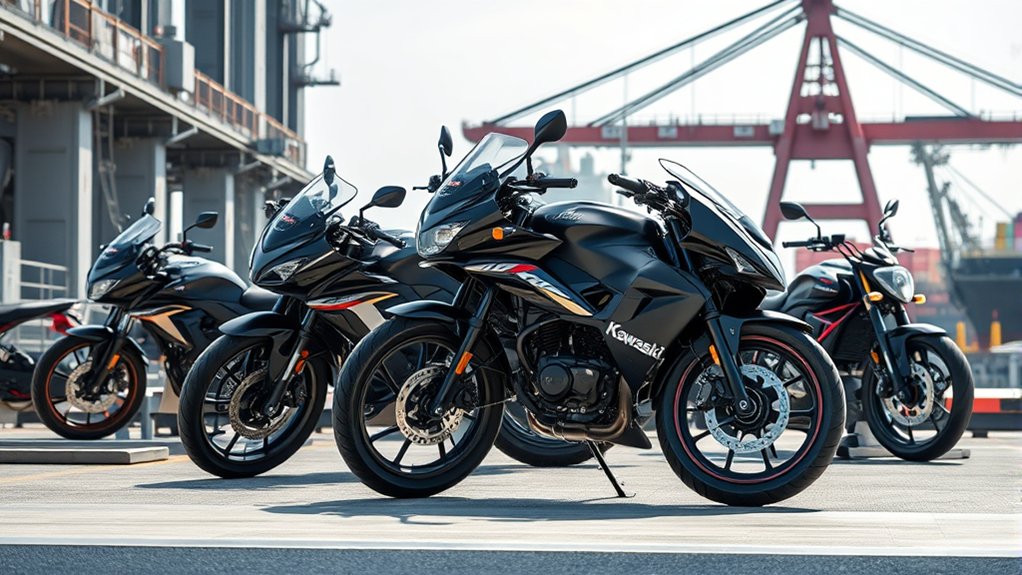
Since its founding in 1878 as a shipbuilding company, Kawasaki expanded deliberately into multiple industries, including railway, automotive, and aircraft manufacturing by the early 20th century. As a key player in Japanese industry, Kawasaki further diversified during the 1960s and 1970s into motorcycle production, bridge construction, and advanced aerospace technology.
You’ll notice Kawasaki’s strategic entry into the energy sector, developing gas turbines, LNG carriers, and renewable energy solutions such as wind and photovoltaic systems. Their expansion also covers industrial robotics and automation systems, enhancing efficiency across various manufacturing processes.
Today, Kawasaki’s portfolio includes industrial equipment supporting transportation, environmental sustainability through pollution control technologies, and innovations spanning aerospace to energy. This deliberate, multifaceted growth underscores Kawasaki’s integral role in Japan’s industrial evolution.
How Does Kawasaki’s Japanese Heritage Influence Its Technological Innovation?
When you look at Kawasaki’s technological advancements, you can really see how Japan’s industrial heritage plays a big role in shaping its innovation. The company’s Japanese roots influence its approach to advanced technology by blending craftsmanship with engineering rigor in a way that’s quite unique.
You can spot this influence in four key areas. First, there’s the integration of traditional Japanese craftsmanship with state-of-the-art aerospace and defense engineering.
Then, Kawasaki shows a strong commitment to domestic R&D, making the most of Japan’s technological infrastructure and skilled talent pool.
Next, the company preserves its cultural legacy, which inspires innovation that respects tradition.
Finally, Kawasaki’s corporate philosophy focuses on contributing to society, prioritizing safety, and pushing for continuous technological progress.
This combination means Kawasaki’s innovations aren’t just impressive technical achievements. They also carry a deep cultural significance, reinforcing Japan’s reputation for excellence in engineering and research and development.
Why Does Kawasaki Remain A Proudly Japanese Global Brand?
What makes a global brand proudly maintain its national identity in an increasingly interconnected world? Kawasaki stays a proudly Japanese global brand by grounding itself in Japanese manufacturing excellence and innovation. Its headquarters in Tokyo, combined with design and production processes that follow strict Japanese standards, really reinforce its industrial legacy.
Kawasaki’s corporate culture reflects Japanese heritage values like craftsmanship and technological progress. This ensures consistent Japanese quality worldwide. Plus, this commitment supports the Japanese economy and helps sustain the brand’s reputation for engineering excellence.
| Aspect | Japanese Influence | Global Impact |
|---|---|---|
| Manufacturing | Rooted in Japanese standards | Provides reliable global products |
| Innovation | Driven by Japanese innovation | Advances global tech sectors |
| Corporate Culture | Embodies Japanese heritage | Shapes international corporate identity |
| Economic Role | Boosts Japanese economy | Enhances global brand value |
How Does Kawasaki Blend Tradition With Global Innovation?
How does Kawasaki successfully integrate its rich heritage with cutting-edge global innovation? You see, Kawasaki blends Japanese craftsmanship with advanced transportation technology through strategic global collaboration and a strong commitment to traditional manufacturing. Here’s how it works:
Kawasaki preserves traditional shipbuilding and aerospace expertise rooted in Japanese engineering, maintaining precision and quality. It drives innovation by partnering in R&D projects worldwide, such as developing hydrogen infrastructure with Airbus.
Kawasaki blends time-honored Japanese engineering with global innovation through strategic partnerships like Airbus for hydrogen technology.
The company adapts iconic products like Ninja motorcycles to suit international markets while upholding Japanese craftsmanship standards.
Kawasaki also safeguards cultural assets like the Kobe Shipyard’s dry dock. This reflects its respect for history amid global expansion.
This balance between heritage and innovation defines Kawasaki as a unique fusion of tradition and modernity.
Frequently asked questions
Is Kawasaki Still Headquartered in Japan Today?
Yes, Kawasaki is still headquartered in Japan today. You’ll find its main corporate offices and key management based in Minato, Tokyo. Despite its extensive global operations, Kawasaki maintains its strategic headquarters in Japan.
This reflects its strong national roots. If you’re analyzing the company’s structure, you’ll see that this decision supports its corporate identity. It also positions Kawasaki firmly among Japan’s major industrial firms as of 2023.
Are Kawasaki Motorcycles Manufactured Only in Japan?
You might think Kawasaki motorcycles are made only in Japan, but that’s far from the full story. While Japan hosts the main plants with strict quality control, Kawasaki also manufactures bikes in Thailand and the U.S. to meet global demand and cut costs.
This international production strategy means you’re riding a Kawasaki assembled worldwide, not exclusively built in Japan. It’s a blend of Japanese engineering with global craftsmanship.
How Does Kawasaki Compare to Other Japanese Motorcycle Brands?
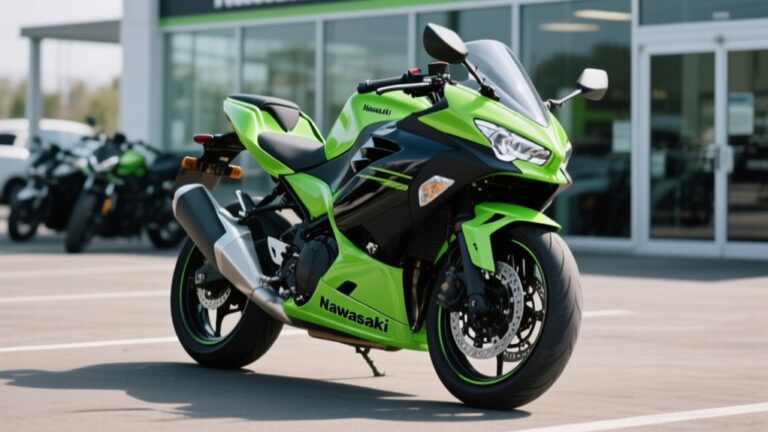
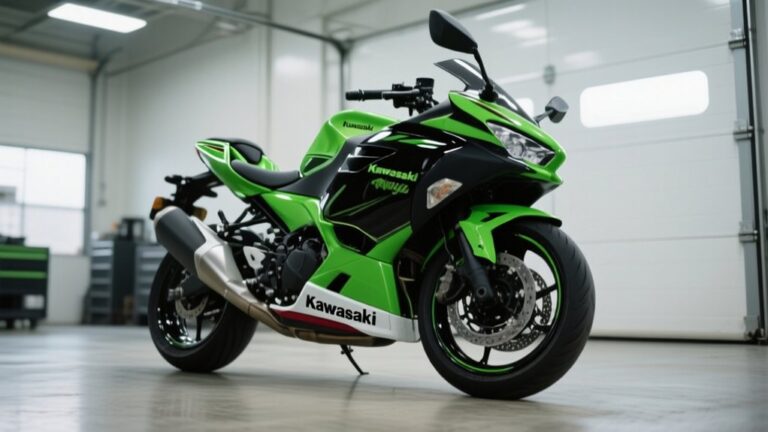
You’ll find Kawasaki stands out for its focus on high-performance, sporty motorcycles, especially with models like the Ninja series.
Compared to Honda, which prioritizes reliability and fuel efficiency, Kawasaki pushes speed and engineering innovation.
Yamaha and Suzuki offer balanced options, but Kawasaki’s aggressive designs really appeal if you want thrill and power.
Their strict adherence to Japanese quality standards guarantees you get authentic, well-crafted bikes that rival any top Japanese brand.
Does Kawasaki Participate in Japanese Cultural or Community Events?
Just like cherry blossoms signal spring’s arrival, Kawasaki actively participates in Japanese cultural and community events. You’ll find them sponsoring sumo tournaments and cherry blossom festivals, strengthening local bonds.
They also promote traditional craftsmanship through collaborations with artisans and support regional art exhibitions and sports competitions. By engaging in these activities, Kawasaki showcases a deep commitment to preserving Japan’s cultural heritage and fostering community engagement across the country.
What Role Does Kawasaki Play in Japan’s Modern Economy?
You’ll see that Kawasaki plays a vital role in Japan’s modern economy by driving innovation across aerospace, transportation, and energy sectors. It supports key industries like defense and infrastructure through advanced manufacturing of military aircraft, high-speed trains, and ships.
Kawasaki’s global reach boosts Japan’s export strength. Plus, its investments in robotics and sustainable energy really align with the country’s economic growth and technological leadership goals.
It’s clear that Kawasaki is a big part of Japan’s future.
Final Thought
You can clearly see Kawasaki’s deep Japanese roots shaping its journey from early beginnings to a global powerhouse. Its growth milestones and diverse industries reflect a commitment to innovation grounded in tradition.
Even as it embraces modern technology, Kawasaki stays proudly Japanese, blending heritage with cutting-edge progress like a samurai wielding a smartphone. This unique fusion guarantees Kawasaki remains a symbol of Japan’s enduring influence in global industry and technology.