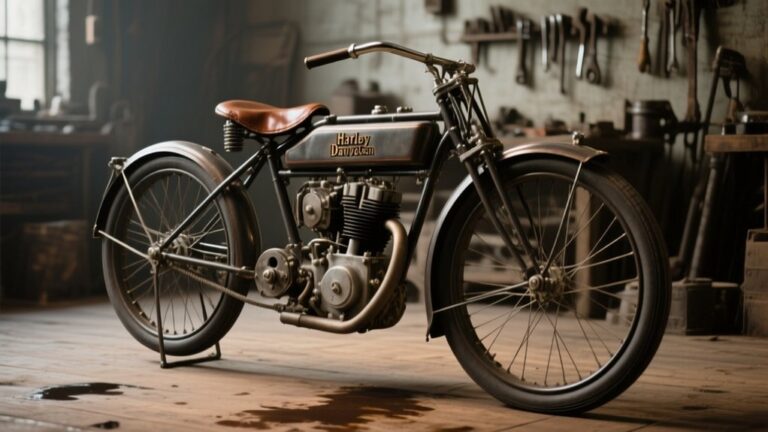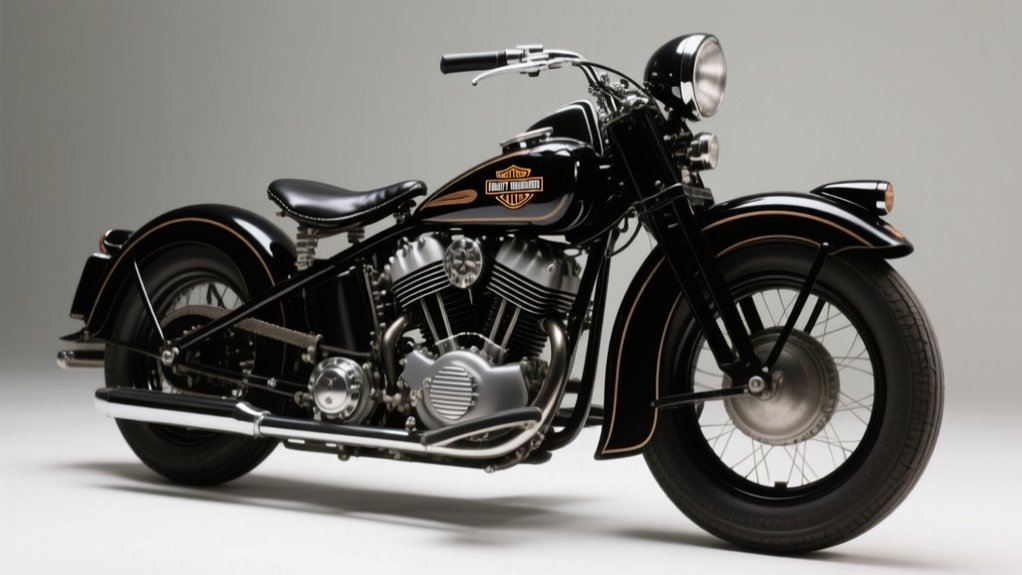
What Years Did Harley Make The Knucklehead – Meaning & More
Harley-Davidson made the Knucklehead engine from 1936 to 1947, marking a decade of innovation. This was their first overhead-valve design, boosting power and improving airflow compared to flatheads.
Early models had valve spring and oil leak issues, but Harley enhanced reliability with design updates by 1938. In 1941, the FL model expanded engine size and durability.
Though replaced by the Panhead in 1948, the Knucklehead set performance standards that shaped Harley’s future. Exploring its story reveals more about its evolution and impact.
What Made the Knucklehead Engine Revolutionary
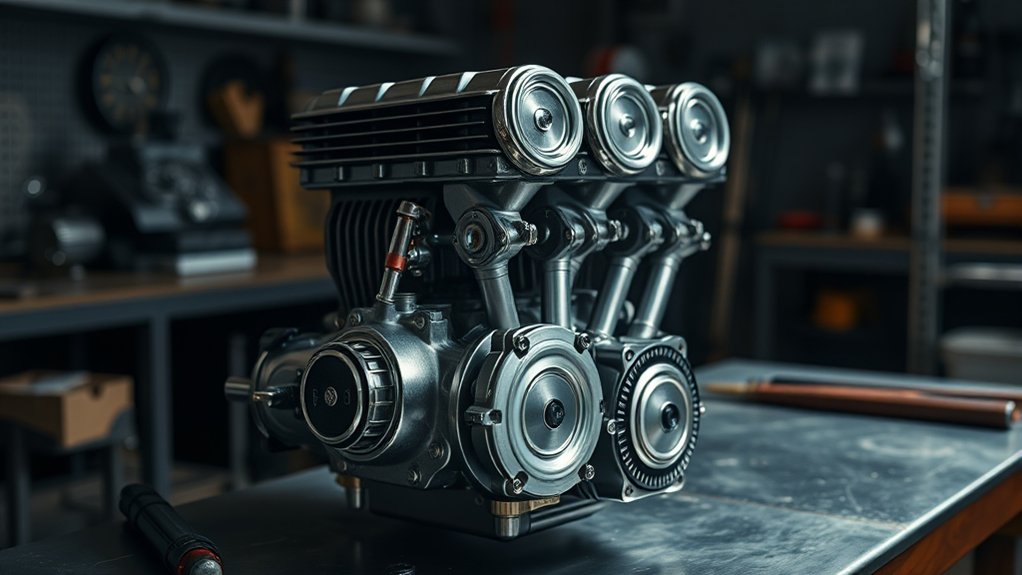
Although many engines came before it, the Knucklehead engine revolutionized Harley-Davidson by introducing the company’s first overhead-valve (OHV) design. This change dramatically boosted power and performance compared to earlier flathead engines.
You’ll notice the overhead valve setup improved airflow and combustion efficiency, which really helped enhance horsepower and throttle response.
The Knucklehead engine also featured a dry-sump lubrication system. You’ll appreciate this for its role in maintaining consistent oil circulation and better cooling, which increased engine reliability and lifespan.
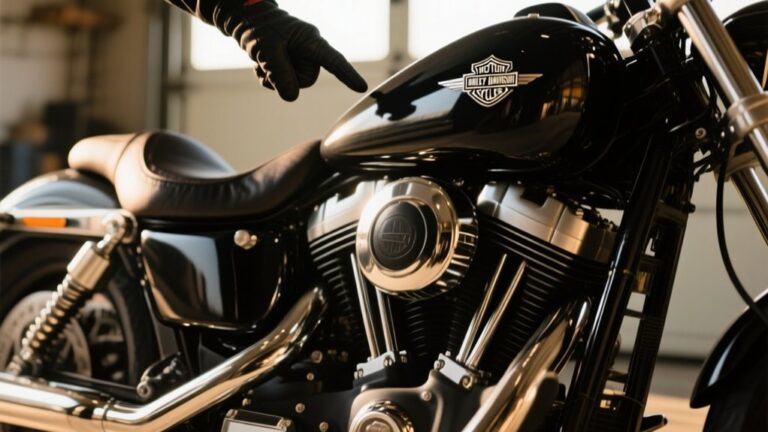
Its distinctive rocker covers, shaped like knuckles, marked a clear break from past designs and symbolized this engineering leap.
Plus, the integration of a four-speed transmission complemented the engine’s power. This combo elevated the overall riding experience.
This innovative combination set new performance standards and influenced future Harley engine developments. It was a game-changer that helped shape what Harley-Davidson engines would become.
The Knucklehead’s Production Years
When you look at Harley-Davidson’s history, the Knucklehead engine stands out for its production span from 1936 to 1947. This period really solidified its place as the company’s premier powerplant.
The Knucklehead marked a decade of continuous development, enhancing performance and design until it was succeeded by the Panhead in 1948. This era is a pivotal chapter in Harley-Davidson’s evolution. It reflects technological advancements that shaped future engines.
| Year Range | Significance |
|---|---|
| 1936 | Introduction of Knucklehead |
| 1936-1947 | Continuous design updates |
| 1948 | Shift to Panhead |
Understanding these years helps you appreciate how Harley-Davidson’s engineering focus matured alongside the Knucklehead’s enduring legacy. It’s pretty cool to see how this engine paved the way for what came next.
Common Issues and Harley’s Improvements
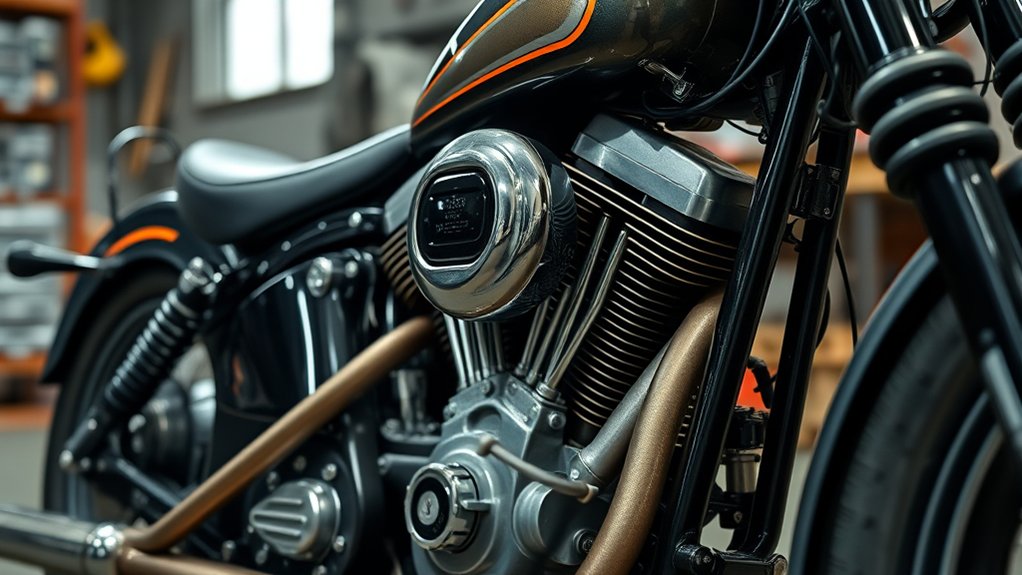
Because early Knucklehead engines had complex head and rocker box designs, they often suffered from valve spring breakage and persistent oil leaks. Harley tackled these issues head-on by stiffening valve springs and redesigning rocker assemblies, which enhanced durability and sealing.
In 1938, they introduced fully enclosed cylinder heads. This change markedly reduced oil leaks and improved cooling.
The company also provided repair kits to dealerships, making it easier for owners to address worn parts and oil pump problems.
The Evolution Into the Larger FL Model
You’ll notice the progression from the Knucklehead to the FL model brought a significant increase in engine size, jumping to 74 cubic inches. And it wasn’t just about making the engine bigger—it also boosted power output and overall performance.
When you look at how these changes shaped Harley-Davidson’s flagship engine, it really shows the company’s commitment to evolving both design and functionality.
FL Model Expansion
As Harley-Davidson expanded its Knucklehead lineup in 1941, it introduced the FL model with a larger 74-cubic-inch engine that markedly enhanced performance and durability. This FL model expansion represented a significant leap from earlier knucklehead engines, offering you improved power and reliability.
Key features included a bore increase to 3 3/4 inches while keeping the 4-inch stroke, and total displacement boosted to 74 cubic inches. The design also featured a stiffer crankshaft for better durability and improved cooling systems to manage heat more effectively.
The FL model was produced from 1941 to 1947, setting a solid foundation for future engines. It really marked an important step forward in Harley-Davidson’s engine development.
Engine Size Increase
How did Harley-Davidson boost its Knucklehead engine’s performance to meet growing demands? In 1941, they made a big move by increasing the engine size, expanding displacement from 61 to 74 cubic inches. This change led to the creation of the larger FL model.
To make it happen, Harley increased the engine’s bore to 3 5/16 inches and the stroke to 3 31/32 inches. This allowed for more combustion capacity and better power output. It was a smart step to satisfy riders who wanted more power and improved performance in the late 1930s and early 1940s.
The bigger FL engine stayed in use until 1947, when the Panhead engine took over. This shift was a key moment in Harley-Davidson’s history, showing their commitment to advancing engine technology and meeting rider expectations.
Why the Knucklehead Was Replaced
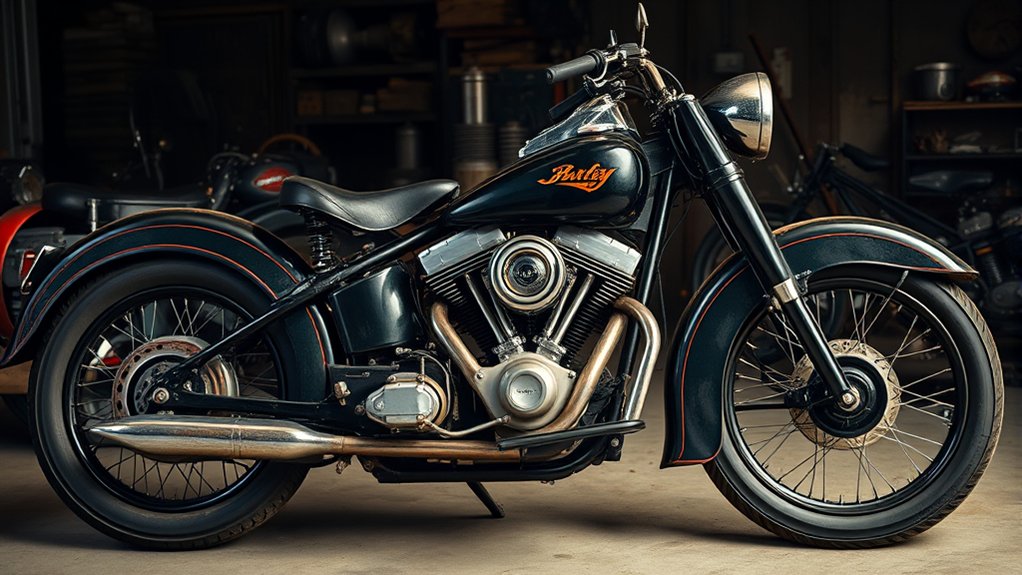
Although the Knucklehead engine marked a significant advancement for Harley-Davidson, it faced persistent reliability and performance challenges that demanded a solution. The Harley-Davidson Knucklehead, with its two valves per cylinder design, struggled to keep up with evolving demands.
You can see why it was replaced in 1948 by the Panhead, which offered vital improvements.
Key reasons for replacement include inadequate oiling system causing overheating and wear, cooling inefficiencies limiting power output, material shortages post-WWII prompting stronger components, need for higher durability in valve covers, and desire to modernize engine design for longevity and performance.
These factors made upgrading essential. That’s why Harley pushed to adopt the Panhead, enhancing reliability and meeting riders’ expectations.
The Lasting Legacy of the Knucklehead Engine
Because the Knucklehead engine introduced groundbreaking overhead-valve technology and distinctive rocker covers, it played a pivotal role in defining Harley-Davidson’s identity from 1936 to 1947. You’ll appreciate how this engine set new standards in performance and craftsmanship despite early technical challenges.
Over time, continuous refinements enhanced its durability and power, cementing the Knucklehead as a legendary engine. Its lasting legacy extends beyond its production years, influencing motorcycle design and inspiring restoration projects among enthusiasts today.
When you study its engineering and cultural impact, you see why the Knucklehead remains an enduring icon in American motorcycling history. Understanding this engine’s legacy helps you grasp Harley-Davidson’s evolution and the broader narrative of motorcycle innovation.
Frequently asked questions
What Is the Origin of the Name “Knucklehead”?
The name “Knucklehead” comes from the distinctive shape of the engine’s rocker covers, which look like clenched fists or knuckles. You’ll find that Harley riders and chopper culture in the late 1960s popularized this nickname, even though Harley-Davidson never officially used it.
When you see those unique valve covers, you instantly recognize the innovative design that made the engine legendary among enthusiasts and collectors alike. It’s pretty cool how a simple shape can create such a lasting impression, don’t you think?
This nickname really stuck because it captured the engine’s character perfectly.
How Many Knucklehead Engines Were Produced in Total?
Think of the Knucklehead as a rare gem, with about 90,000 engines produced in total. You’ll find that Harley-Davidson crafted these engines between 1936 and 1947, through tough times like World War II.
Production numbers fluctuated, peaking in the late ’30s and early ’40s, but shortages kept totals limited.
This figure highlights Harley’s dedication to the Knucklehead’s legacy and the lasting impact it’s had on motorcycle history. It’s pretty amazing how such a relatively small number of engines left such a big mark, don’t you think?
Which Harley-Davidson Models Used the Knucklehead Engine?
You’ll find the Knucklehead engine primarily in Harley-Davidson’s EL and FL series. The 1936 Model E was the first to feature it, setting the stage for later models.
The 1941 FL is notable as one of the last mainstream uses before the engine was replaced.
Furthermore, various custom and military Harley models incorporated the Knucklehead during its production. This shows its widespread appeal and versatility in that era.
It really was a game-changer for Harley-Davidson motorcycles.
Are There Modern Motorcycles That Mimic the Knucklehead Design?
Yes, you’ll find modern motorcycles that mimic the Knucklehead design, especially in custom and vintage-inspired builds. Builders often replicate its distinctive rocker covers and engine styling to capture that classic look.
While Harley-Davidson no longer produces original Knucklehead engines, some limited-edition models and aftermarket parts pay homage to the 1936-1947 era.
If you’re into vintage aesthetics, these designs offer a nostalgic yet functional blend of old-school charm and modern performance. It’s a cool way to enjoy the classic vibe without giving up today’s reliability and technology.
What Is the Average Market Value of a Vintage Knucklehead Bike?
Think of a vintage Knucklehead like a rare gem in a treasure chest. Its value depends on the shine and story behind it.
On average, you’ll find these bikes valued between $30,000 and $50,000. But pristine, original models or rare editions can soar past $75,000, sometimes even topping $100,000.
The market rewards originality and condition. So, if you’re eyeing one, know its worth climbs with uniqueness and careful restoration.
Final Thought
You’ve seen how the Knucklehead engine revolutionized Harley with its overhead valves. It powered bikes from 1936 to 1947. Harley tackled early issues with clever improvements along the way.
You’ve explored its evolution into the larger FL model and understood why it was eventually replaced. You’ve also recognized its lasting legacy.
The Knucklehead wasn’t just an engine. It was innovation in motion, progress in design, and a foundation for Harley’s enduring success.