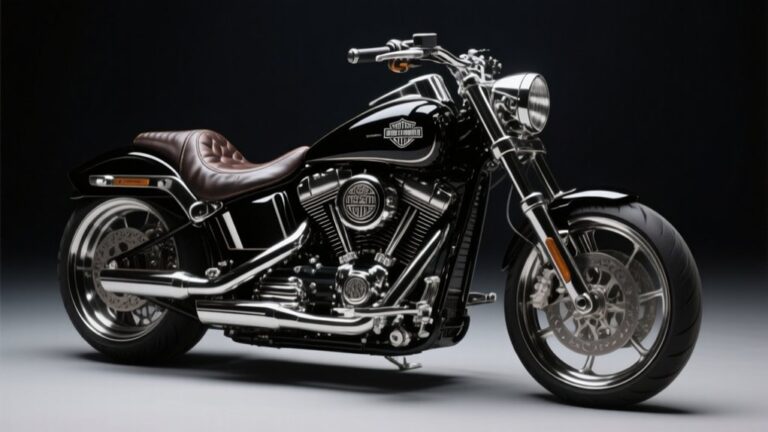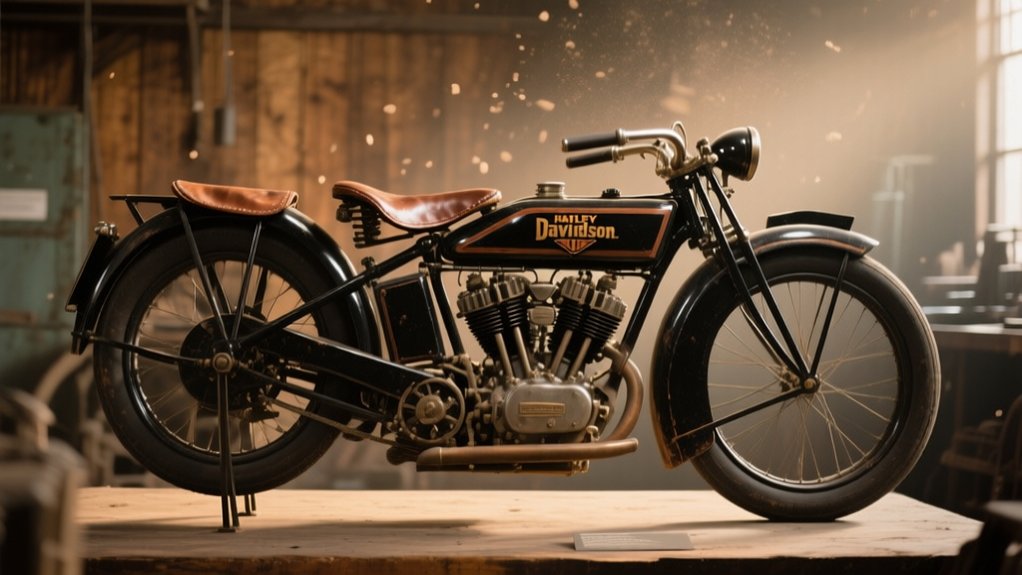
When Was Harley Davidson Motorcycle Invented – Here’s When
You’d be interested to know Harley-Davidson motorcycles were invented in 1903 when William Harley and the Davidson brothers built their first prototype in Milwaukee. This early model combined a single-cylinder engine with a bicycle frame, setting the stage for future innovations.
The company officially incorporated in 1907, but 1903 marks its true beginning. From there, Harley introduced groundbreaking designs like the 1909 V-twin engine, which transformed motorcycle performance.
You’ll find even more fascinating details about their evolution and impact ahead.
Who Were the Founders Behind Harley-Davidson?
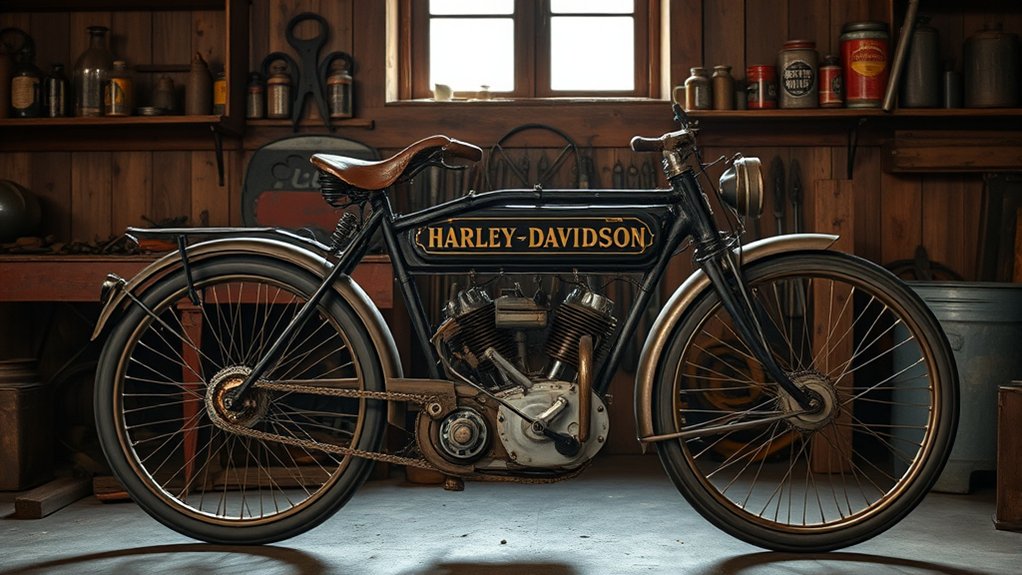
Although many associate Harley-Davidson with American motorcycle culture, few know the founders behind the brand. Harley-Davidson was founded in 1903 by William Harley and the Davidson brothers, Arthur, Walter, and William A., in Milwaukee, Wisconsin.
William Harley served as the chief engineer, designing the first motorcycle and pioneering essential engine innovations.
The Davidson brothers complemented his skills. Arthur Davidson became the first general sales manager, which was vital in marketing.
Walter Davidson built the first Harley motorcycle and later became the company’s first President and General Manager in 1907.
Together, William Harley and the Davidson brothers combined mechanical expertise and strong collaboration to establish the iconic Harley-Davidson brand you recognize today. Understanding their roles gives you deeper insight into the company’s early foundation and enduring legacy.
How Did the 1904 Prototype Shape Early Designs?
You’ll notice the 1904 prototype boosted engine size and refined the frame to enhance durability without adding weight.
Plus, its belt drive system and rigid 24-inch wheelbase set new standards for power transmission and structural integrity.
These improvements directly influenced the reliable, lightweight design that came to define early Harley-Davidson motorcycles.
Engine Size Advancements
The 1904 Harley-Davidson prototype marked a pivotal step in engine size advancements, featuring a larger, more powerful engine that outperformed earlier single-cylinder models. This prototype wasn’t just bigger; it set the stage for Harley’s signature V-twin engines introduced five years later.
You can see how the design focused on durability and reliability, essential for establishing Harley’s reputation in a competitive market.
By increasing engine size and optimizing performance, this prototype gave Harley-Davidson a clear edge in engineering innovation. When you study early Harley motorcycles, the 1904 engine stands out as a blueprint that influenced subsequent developments.
It directly contributed to the brand’s identity and helped it evolve into the powerhouse it’s today.
Frame and Drive Improvements
How did the 1904 Harley-Davidson prototype revolutionize early motorcycle design? This model introduced key frame and drive improvements that shaped future motorcycles. The sturdy steel frame replaced fragile bicycle frames, markedly boosting stability and handling.
The prototype also adopted a belt drive system, which ensured smoother power transfer compared to traditional chains. These innovations set the stage for Harley-Davidson’s signature design.
You should note these critical changes:
- A robust steel frame lowered the center of gravity, enhancing balance and control.
- The belt drive system reduced mechanical noise and wear.
- The prototype’s structural improvements influenced all subsequent Harley models.
These frame and drive upgrades made the 1904 prototype foundational. They directly impacted Harley-Davidson’s mechanical evolution and rider experience.
When Was the First Harley-Davidson Motorcycle Built?
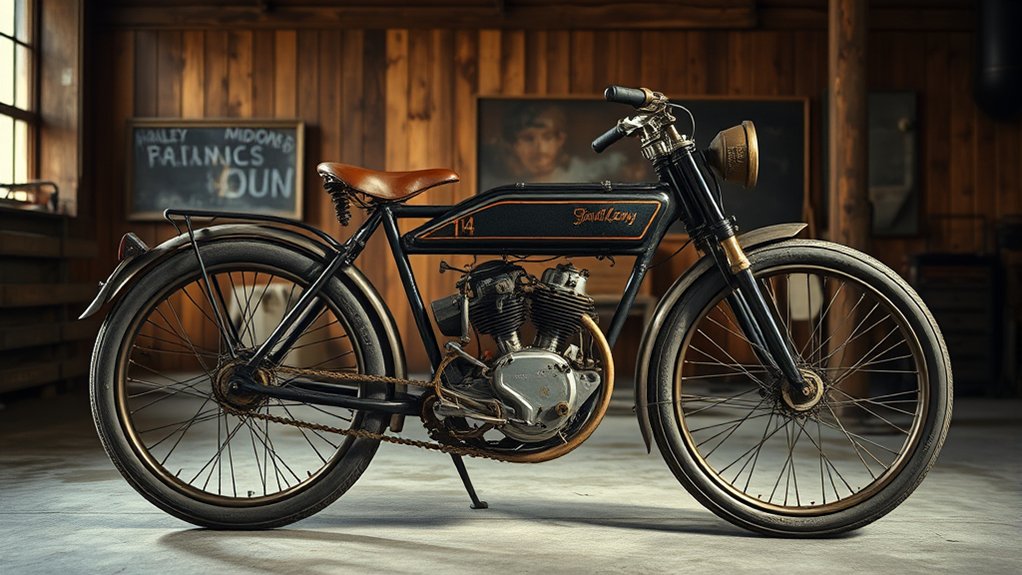
Although many associate Harley-Davidson with legendary motorcycles, its very first prototype was actually built back in 1903 inside a modest shed in Milwaukee, Wisconsin. You’d find William Harley and Arthur Davidson working closely on this prototype, combining engine design with bicycle mechanics.
This first Harley-Davidson prototype featured a single-cylinder engine mounted on a bicycle frame, setting the foundation for future models. By 1904, they improved the engine, leading to the first official production, the Model No. 1®, in 1905.
| Year | Milestone |
|---|---|
| 1903 | Prototype built in shed |
| 1904 | Larger engine developed |
| 1905 | Model No. 1® completed |
This timeline shows the careful evolution from prototype to production. It’s pretty cool to see how those early steps set the stage for what Harley-Davidson would become.
What Made the 1909 Harley-Davidson V-Twin Engine a Breakthrough?
Since Harley-Davidson introduced its first V-twin engine in 1909, it revolutionized motorcycle performance by combining power and smoothness in a way riders had never experienced before.
The 1909 V-twin engine marked a significant leap from single-cylinder models, delivering enhanced stability and speed.
Its 45-degree cylinder angle became a hallmark of Harley’s design, balancing aesthetics with mechanical efficiency.
You’ll appreciate how this engine set a new standard for heavyweight motorcycles, influencing future innovations.
Key breakthroughs of the 1909 V-twin engine include:
- Increased power output and smoother ride quality.
- Signature 45-degree cylinder layout promoting stability.
- Enhanced reliability supporting higher speeds and long-distance travel.
This engine firmly established Harley-Davidson as a leader in motorcycle performance.
Where Was Harley-Davidson’s First Manufacturing Location?
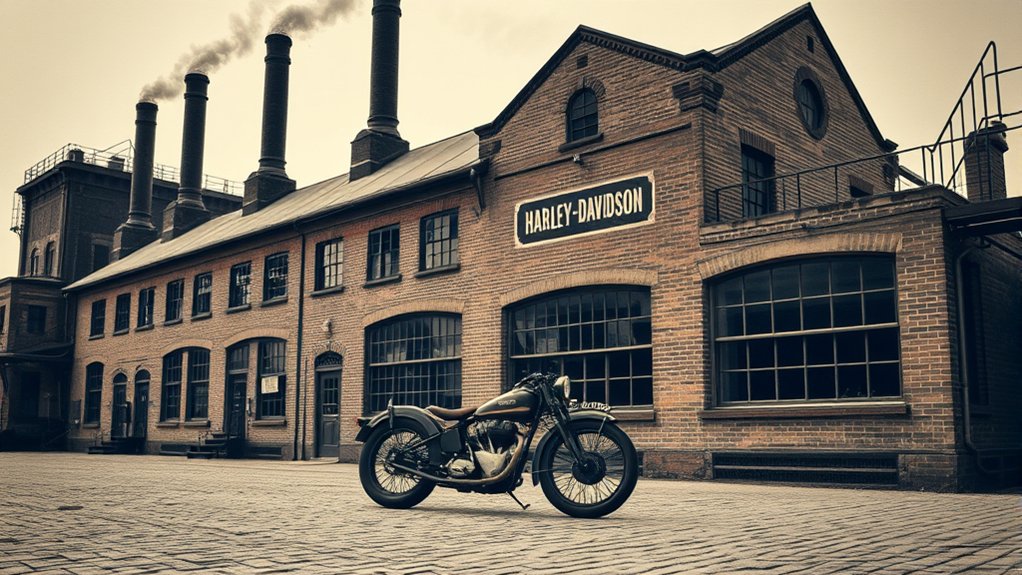
When William Harley and the Davidson brothers started building their motorcycles, they worked out of a tiny 10×15-foot wooden shed tucked away in the Davidson family’s backyard in Milwaukee, Wisconsin. This small wooden shed served as Harley-Davidson’s first manufacturing location, where the founders crafted their initial motorcycles around 1903.
William Harley and the Davidson brothers built their first motorcycles in a tiny 10×15-foot shed in Milwaukee.
Though modest, this space was vital in shaping the company’s beginnings.
By 1906, Harley-Davidson expanded to a larger factory on Juneau Avenue in Milwaukee, marking its shift from the small wooden shed to a more permanent manufacturing facility.
The original wooden structure was eventually replaced by a brick building in 1913.
Today, the first manufacturing location remains a significant part of Harley-Davidson’s heritage. It really symbolizes the brand’s humble start in Milwaukee.
What Key Innovations Set Harley-Davidson Apart Early On?
You’ll notice Harley-Davidson set itself apart early on by introducing the first V-twin engine in 1909. This move really boosted power and performance in a big way.
They didn’t stop there, though. They also came up with unique mechanical features like the Ful-Feathering Seat, which made riding much more comfortable.
Plus, they used mechanically operated intake valves to improve engine efficiency.
All these innovations together laid the groundwork for Harley’s lasting reputation—not just in engineering, but in the overall rider experience too.
Early Engine Developments
Although many motorcycle manufacturers were experimenting with engine designs in the early 1900s, Harley-Davidson set itself apart by developing the first V-twin engine in 1909. This was a real breakthrough that became their hallmark. The V-twin engine not only boosted power but also defined Harley’s identity.
Early models showcased these engine innovations with impressive performance and durability. You’ll really appreciate these key advancements:
- The shift from automatic to mechanically operated intake valves improved engine efficiency and longevity.
- The 1911 Silent Gray Fellow featured encased moving parts, which helped reduce noise and wear.
- The 1913 560cc single-cylinder model reached speeds up to 55 mph, highlighting big performance leaps.
Together, these developments cemented Harley-Davidson’s reputation for reliable, powerful motorcycles early on. It’s clear they were setting the standard from the start.
Unique Mechanical Features
Harley-Davidson’s early success wasn’t just about powerful engines; their unique mechanical features set them apart from competitors. In 1909, they pioneered the first V-twin engine, delivering smoother power and a distinctive sound that became their trademark.
By 1912, they introduced the patented full-feathering seat, equipped with coil springs and adjustable tension, enhancing rider comfort during long rides. They also shifted from automatic intake valves to mechanically operated valves, markedly improving engine performance and reliability.
Early models like the 1911 Silent Gray Fellow showcased encased moving parts and noise reduction, reflecting Harley’s commitment to refinement. These innovations, combined with adaptations from German and British designs, laid a foundation that made Harley-Davidson motorcycles both mechanically advanced and uniquely recognizable from the start.
What Helped Harley-Davidson Grow Before 1910?
When you look at the rapid expansion of the company before 1910, it’s clear that breakthroughs like the introduction of the first two-cylinder V-Twin internal combustion engine in 1909 played a crucial role in boosting performance and attracting riders. Harley-Davidson’s early growth was driven by key innovations and strategic partnerships that shaped its reputation in motorcycles.
The 1909 two-cylinder V-Twin engine breakthrough fueled Harley-Davidson’s rapid rise and rider appeal.
You can see this reflected in the development of pioneering models like the Model No. 1® in 1905, which set engineering standards. They also established dealer networks, including influential partners like Carl H. Lang in Chicago, which helped expand their market reach.
Plus, they focused on military contracts that provided stable demand and solidified their industrial foundations.
All these factors combined to accelerate Harley-Davidson’s early growth and cement its place in motorcycle history. It was a mix of smart innovation and strong partnerships that really got things moving.
Why Is 1903 Considered the Birth Year of Harley-Davidson Motorcycles?
Understanding the factors that fueled Harley-Davidson’s growth before 1910 sets the stage for recognizing why 1903 stands out as the company’s birth year.
In 1903, William Harley and the Davidson brothers completed the first Harley-Davidson prototype in a small Milwaukee shed, marking the founding moment of the company.
This prototype wasn’t just a machine; it was the foundation for everything Harley-Davidson would become.
Although the company wasn’t officially incorporated until 1907, 1903 is considered the birth year because it’s when motorcycle development and production efforts truly began.
That year symbolizes the start of Harley-Davidson’s journey, capturing the innovative spirit and determination behind the brand’s early success.
You’ll see why 1903 remains central to Harley-Davidson’s identity.
Frequently asked questions
How Did Harley-Davidson Motorcycles Evolve After 1910?
After 1910, Harley-Davidson evolved by introducing the first V-twin engine, which boosted performance considerably. You’ll see they expanded their lineup with models like the 7D®, featuring a two-speed transmission for better versatility.
Over the decades, they kept upgrading engine sizes and styling, such as with the JD® in 1925 and the UL® Sport Solo® in the 1930s. They really focused on innovation, racing success, and expanding choices to lead the motorcycle market.
What Types of Harley-Davidson Models Are Popular Today?
You’ll find Harley-Davidson’s Softail series stands strong with its sleek, classic style and smooth, modern performance. The Sportster series suits starters seeking swift, nimble rides.
The Street lineup shines in city streets with its lightweight, lively handling.
Touring models like the Electra Glide deliver long-distance luxury.
The Fat Boy flaunts its fearless, wide-profile frame.
These popular picks perfectly blend tradition with today’s tastes.
How Has Harley-Davidson Influenced Motorcycle Culture Worldwide?
Harley-Davidson has shaped motorcycle culture worldwide by promoting freedom and individuality through its iconic cruiser and chopper designs. You’ll see its influence in rider communities that emphasize customization and identity.
Its racing legacy inspired enthusiasts to modify bikes and push boundaries.
Plus, Harley’s global expansion and lifestyle branding, including clubs and events, helped spread a unique riding ethos you can find from Japan to Australia. It’s pretty amazing how it unites riders everywhere under a shared passion.
What Are the Main Competitors of Harley-Davidson?
You’ll find Harley-Davidson’s main competitors include Japanese brands like Honda, Yamaha, Suzuki, and Kawasaki. These companies are known for making affordable, reliable bikes that appeal to a wide audience.
Then, there are European names such as Ducati, BMW Motorrad, and Moto Guzzi. They challenge Harley with sport and luxury touring models that attract riders looking for something a bit different.
Indian Motorcycle targets similar cruiser and touring markets, going head-to-head with Harley in that space.
On the other hand, emerging Chinese brands like Qianjiang and CF Moto offer lower-cost options, making them attractive for budget-conscious buyers.
Finally, boutique brands like Triumph and Royal Enfield draw fans with vintage-inspired, mid-range motorcycles. They add a unique flavor to the market that Harley-Davidson also tries to capture.
How Does Harley-Davidson Maintain Its Brand Legacy Now?
You’ll see Harley-Davidson maintains its legacy by blending tradition with innovation. They introduce electric models like the LiveWire™ while preserving classic design.
You can explore their rich history at the Harley-Davidson Museum.
They also build a strong rider community through global events and customization programs. Plus, they emphasize freedom, rebellion, and craftsmanship in branding.
This way, you experience both heritage and modern technology every ride.
Final Thought
You now see why 1903 stands as the birth year of Harley-Davidson motorcycles, thanks to founders Davidson and Harley’s vision. Imagine a rider in 1909, thrilled by the new V-Twin engine’s power. This breakthrough pushed Harley ahead of competitors.
Their early innovations and first factory in Milwaukee set a strong foundation, fueling growth before 1910. Understanding this history helps you appreciate how Harley-Davidson became an iconic symbol of American motorcycling.