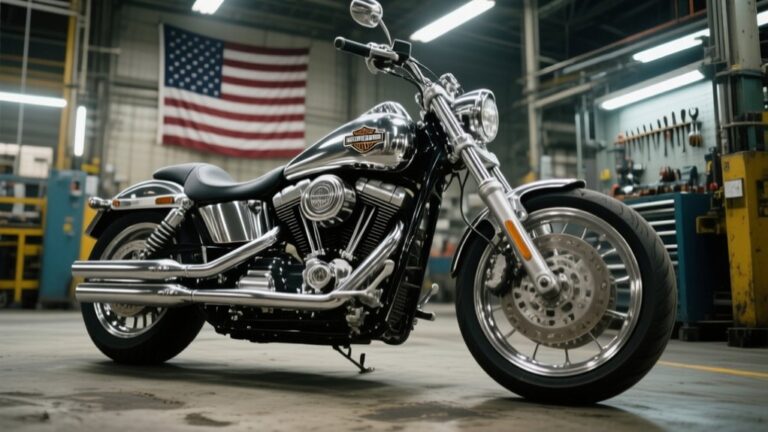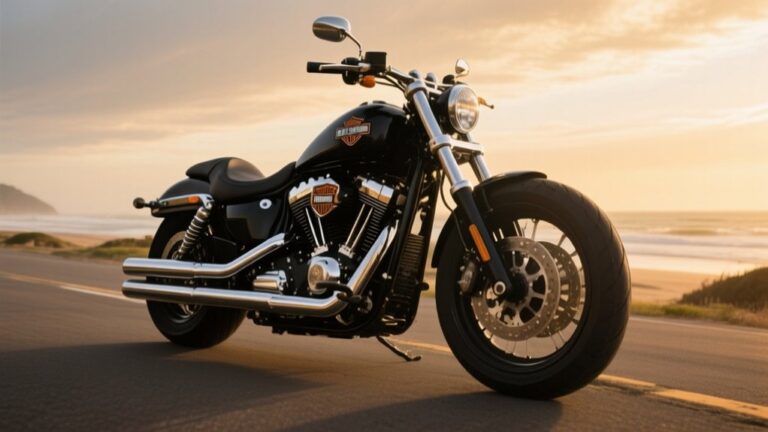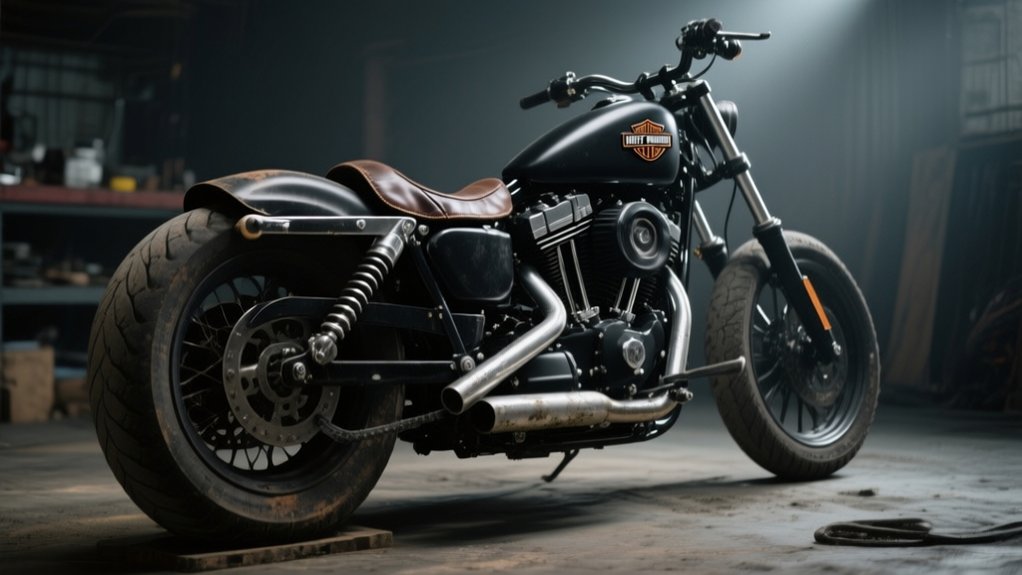
Why Did Harley Discontinue The Dyna – Here’s Why
You’re seeing Harley-Davidson discontinue the Dyna because its aging frame and suspension couldn’t fit the newer Milwaukee-Eight engine or meet modern rider expectations. The exposed twin shocks and elastomer mounts transmitted vibrations that the Dyna’s design couldn’t fully control.
Plus, shifting rider preferences moved toward the Softail, which offers better handling, comfort, and style with updated tech. This change simplified production and aligned Harley with evolving market demands.
Discover how these factors reshaped Harley’s cruiser lineup. It’s all about adapting to what riders want while improving the bikes under the hood and in the ride experience.
The Rise and Appeal of Harley-Davidson’s Dyna Line
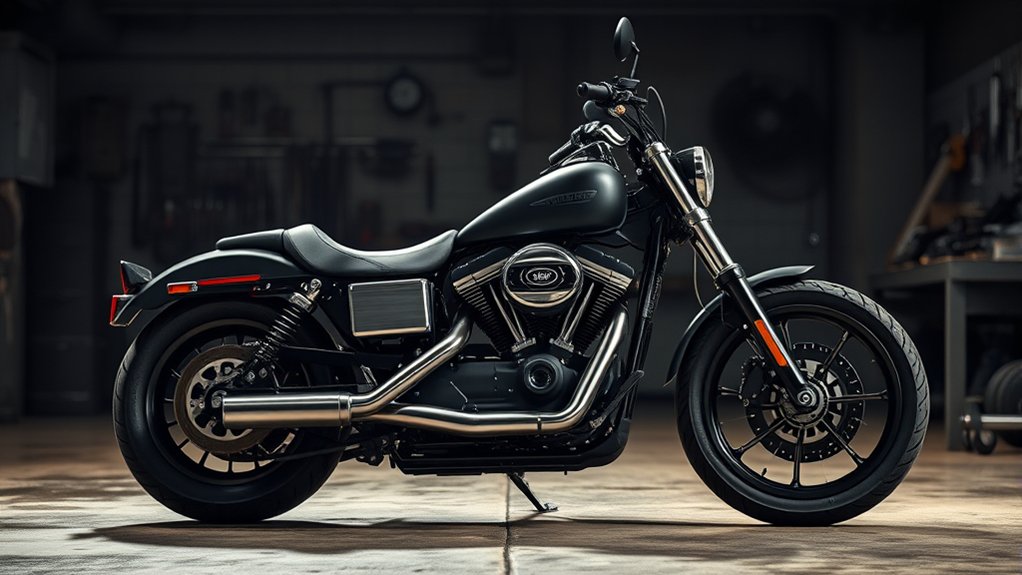
Why did the Harley-Davidson Dyna line capture the hearts of riders for over two decades? You’ll find it’s because the Harley-Davidson Dyna blended classic Harley-Davidson motorcycles’ traditional styling with modern technology and performance.
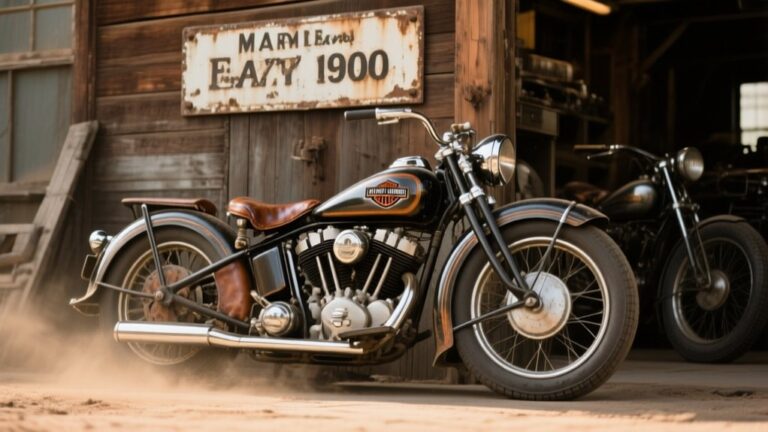
Introduced in 1991, the Dyna models stood out with their exposed mechanical parts, chunky forks, and wide fenders. They gave you that rugged, raw look that really turned heads.
Compared to Softail models, Dynas offered sportier handling and easier customization. This made them perfect for riders who wanted both agility and personalization.
Iconic Dyna models like the Super Glide, Wide Glide, and Street Bob became favorites because they balanced power and style so well. This combo earned the Dyna line a loyal following and secured its place as a performance-oriented cruiser in Harley’s lineup.
Dyna’s Signature Features: Power, Style, and Handling
Although many cruisers emphasize style over performance, the Harley-Davidson Dyna delivers both power and handling without compromise.
Harley-Davidson Dyna combines impressive power and sharp handling, proving performance need not sacrifice style.
When you ride a Dyna, you experience:
- Power Its high-torque engines provide quick acceleration, ensuring performance that thrills.
- Style Chunky forks, wide fenders, and blacked-out components create a rugged, raw aesthetic that stands out.
- Handling The stiff frame with exposed twin shocks enhances responsiveness and agility on the road.
- Performance-Driven Design Blending traditional Harley looks with modern technology, the Dyna balances classic style with superior ride quality.
You get a motorcycle that doesn’t sacrifice handling or performance for style, making the Dyna a standout in the cruiser segment. It’s a bike designed to deliver on all fronts.
Why Harley-Davidson Faced Declining Dyna Sales
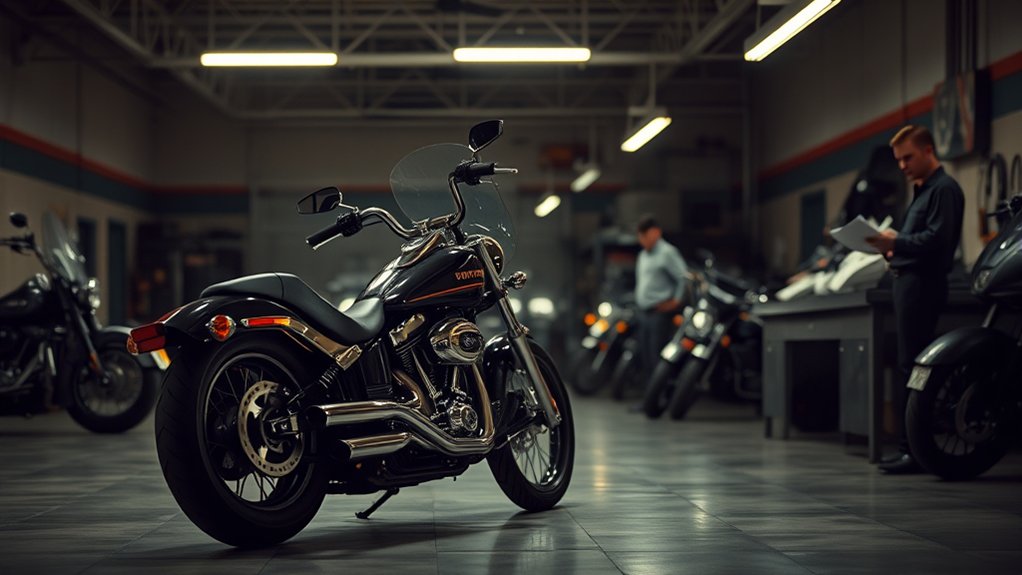
You’ve probably noticed that younger riders tend to go for bikes with modern styling and the latest tech. That shift really hurt the Dyna’s appeal.
Looking back at sales data from 2017, there was a clear drop in Harley’s cruiser numbers, which was a big red flag for the lineup.
On top of that, Harley couldn’t fit the newer Milwaukee-Eight engines into the existing Dyna frames. That made it tough to offer upgrades and keep riders excited about the models.
Shifting Rider Demographics
As rider demographics shifted, Harley-Davidson saw fewer middle-aged customers drawn to the traditional cruiser style of the Dyna line. Market research revealed that younger riders preferred bikes with modern technology and contemporary styling. These were areas where Dyna models lagged behind.
This shift forced Harley to rethink its approach. You should consider these key points about the changing rider landscape:
- The aging core customer base for Dyna models shrank steadily.
- Younger riders sought different aesthetics and advanced features.
- Harley struggled to attract new riders with the Dyna’s classic design.
- Shifting rider demographics pushed Harley to develop newer model lines like Softail.
Understanding these factors explains why Harley had to discontinue the Dyna and adapt to evolving market demands. It was all about keeping up with what riders wanted next.
Market Sales Decline
Changing rider preferences didn’t just reshape Harley-Davidson’s lineup. They also hit Dyna sales hard. You’ve seen the market sales for the Dyna lineup steadily decline as younger riders gravitated toward modern Softail and Touring models.
In 2017, Harley-Davidson’s US sales dropped nearly 9%, reflecting this shift. The declining demand for traditional Dynas came from changing tastes and Harley’s inability to update the Dyna with the newer Milwaukee-Eight engine. This combination made the Dyna less competitive, which sped up its market sales decline.
| Factor | Impact on Dyna Sales |
|---|---|
| Shifting Rider Tastes | Reduced interest |
| Rise of Modern Models | Diverted customer base |
| Demographic Changes | Younger riders’ shift |
| Engine Upgrade Limits | Stalled innovation |
| Overall Market Sales | Dropped by ~9% in 2017 |
Engine Upgrade Challenges
Although the Dyna lineup remained popular for years, Harley-Davidson couldn’t upgrade these models to the Milwaukee-Eight engine due to fundamental frame incompatibilities. You’d quickly see why this posed a serious challenge.
First, the Dyna frame’s design couldn’t accommodate the larger Milwaukee-Eight engine. Then, engineering limitations made fitting the new engine impossible without extensive redesign.
Plus, the Dyna’s exposed twin shocks and stiff frame restricted modern suspension and engine integration. On top of that, costly frame modifications needed for the engine upgrade weren’t feasible for Harley-Davidson.
Because of these constraints, Harley couldn’t offer the Milwaukee-Eight engine on the Dyna, which hurt sales as riders demanded newer tech.
In the end, the inability to overcome these engineering limitations led to the Dyna’s discontinuation.
How Changing Rider Demographics Hurt the Dyna
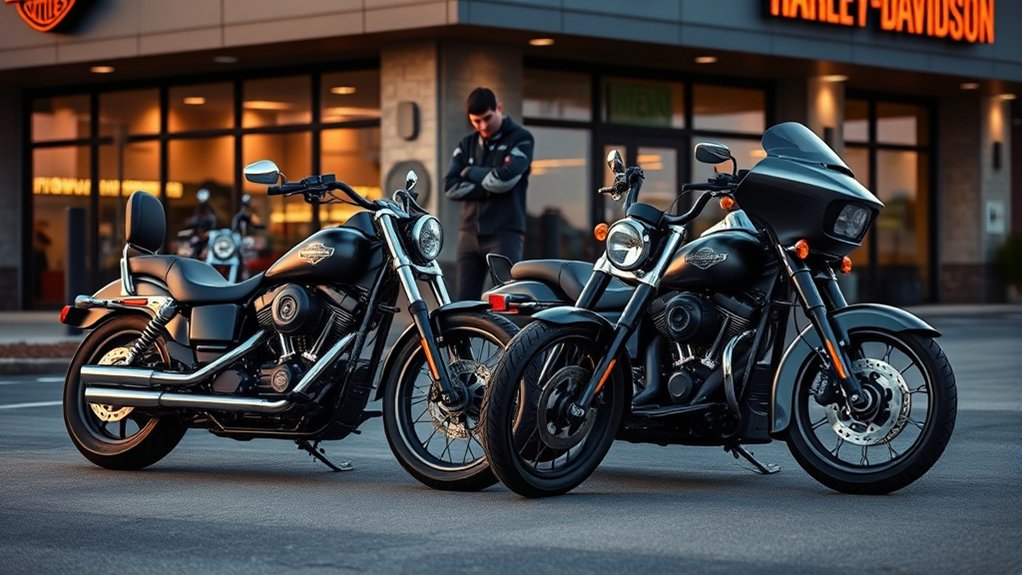
You’ve probably noticed that the Dyna’s main group of riders is getting older. That means the market that once made it so popular is getting smaller.
At the same time, younger riders are looking for bikes with modern technology and fresh styles—things the Dyna just doesn’t have.
Aging Rider Base
While Harley-Davidson’s Dyna line once resonated strongly with middle-aged riders, especially those over 50, that core demographic has steadily shrunk.
The aging rider base influenced Harley’s decision to phase out the Dyna due to several factors revealed by market research.
First, older riders showed less interest in the Dyna’s raw, minimalist design. At the same time, the demographic shift favored younger, tech-savvy riders who preferred modern features.
This change made the Dyna less appealing to the new generation of riders.
Also, the shrinking pool of middle-aged riders reduced overall demand for the Dyna.
Harley found it difficult to attract younger riders, which made the Dyna less viable in their evolving lineup.
So, you can see how the shift in demographics and changing preferences of older riders impacted the Dyna’s relevance.
That’s why Harley decided to discontinue it, despite its legacy appeal to the aging rider community.
Shifting Market Preferences
As the aging rider base shrank, the preferences of newer generations began reshaping Harley-Davidson’s market. You’ve seen a clear demographic shift, where fewer middle-aged riders, once the core audience for the Dyna, remain active.
Instead, younger riders favor bikes with modern aesthetics and advanced technology, like the Softail.
This change in rider profile forced Harley to reconsider its model lineup, as the raw, performance-focused Dyna no longer matched evolving market preferences. Harley’s research showed declining demand for the Dyna among these newer riders, who prioritize comfort, handling, and contemporary features.
To stay relevant, Harley shifted toward models that attract a broader, younger audience. This demographic shift played a pivotal role in making the Dyna less viable, ultimately leading to its discontinuation.
It’s a clear example of how markets evolve and companies have to adapt.
Why Engine Vibrations Persisted in the Dyna
Although Harley-Davidson designed the Dyna with rubber-mounted engines to reduce vibrations, riders still felt noticeable shakes, especially at higher RPMs. You’ll notice that engine vibrations persisted due to several factors.
First, the Twin Cam engines, while powerful, inherently produced vibrations from their large V-twin displacement. The rubber-mounted engine helped isolate some vibrations but wasn’t as effective as hidden mounts in Softail suspension systems.
Also, the Dyna’s exposed twin shocks and rigid frame transmitted more vibrations directly to the rider.
Harley’s elastomer mounts aimed to dampen vibration but couldn’t fully counteract the engine’s mechanical pulses. These design elements combined to deliver a riding experience where engine vibrations remained a persistent trait.
This ultimately influenced Harley’s move toward improved suspension and powertrain solutions in later models.
Engineering Limits of the Milwaukee-Eight Engine in Dyna Frames
You’ll quickly notice that the Milwaukee-Eight engine is bigger and solidly mounted, which just doesn’t gel with the Dyna frames designed for elastomer-mounted engines.
Because of this mismatch, there were some serious design headaches. Frame modifications became expensive and honestly, not very practical.
Frame Compatibility Challenges
When Harley-Davidson introduced the Milwaukee-Eight engine, they quickly realized it couldn’t simply be dropped into the existing Dyna frame without major issues. The frame’s geometry clashed with the Milwaukee-Eight’s design, causing significant compatibility challenges. Here’s what you need to know:
- The Dyna frame required extensive redesigns to fit the Milwaukee-Eight, driving up production costs.
- Its stiff, exposed twin-shock suspension limited space for the engine’s increased size and weight.
- Engineers found that forcing the Milwaukee-Eight into the Dyna frame compromised handling and ride quality.
- These frame compatibility challenges pushed Harley to discontinue the Dyna line and prioritize the Softail platform, which better accommodated the new engine.
Understanding these factors clarifies why the Dyna frame couldn’t adapt without major compromises. It just wasn’t a good fit without making big sacrifices.
Engine Mounting Limitations
Beyond frame compatibility, the Milwaukee-Eight engine posed significant mounting challenges within the Dyna frames. You’ll find that the engine mounting points for the Milwaukee-Eight differ greatly from those of the Twin Cam engines the Dyna frame was built for.
Its larger size and rigid mounting system can’t be accommodated without extensive frame redesign. This incompatibility affects vibration control and handling, which are critical to ride quality.
Harley-Davidson’s engineers faced limits fitting the Milwaukee-Eight into the existing frame without compromising structural integrity or performance. These engine mounting issues were pivotal in the Dyna’s discontinuation.
Instead of retrofitting an incompatible frame design, Harley shifted to Softail models engineered from the ground up to embrace the Milwaukee-Eight. This move resolved mounting challenges and improved overall engineering harmony.
It just made more sense to start fresh than to force-fit the new engine into an old frame.
Design Constraints Impact
Although the Milwaukee-Eight engine brought significant advancements, its integration into Dyna frames hit critical design constraints that you can’t overlook. The engineering limitations around frame geometry and engine compatibility made fitting the new engine impossible without drastic changes.
Here’s why these design constraints impacted the Dyna’s future:
- Dyna frames use elastomer mounts designed for older engines, conflicting with the solid mounts of Milwaukee-Eight engines.
- Modifying the frame to fit would require structural changes, risking frame integrity.
- These engineering limitations blocked straightforward upgrades, stalling modernization efforts.
- Harley-Davidson chose discontinuation over costly redesigns to maintain performance and safety standards.
Ultimately, the frame’s incompatibility with the Milwaukee-Eight engine sealed the Dyna’s fate.
How Softail’s Frame and Suspension Improve on the Dyna
Because Harley redesigned the Softail’s frame to conceal the rear suspension, you get a ride that combines classic rigid-bike looks with the comfort and handling benefits of modern shock absorption.
The Softail’s frame creates a continuous line from the steering head to the rear axle, enhancing both aesthetics and structural strength.
Its hidden suspension system improves ride comfort by absorbing bumps more effectively than the exposed twin shocks on the Dyna.
You’ll notice better stability and responsiveness, especially on long rides, thanks to this upgraded suspension design.
Furthermore, the solid mounting of the Milwaukee-Eight engine with twin counterbalancers reduces vibrations that were common in the Dyna’s elastomer-mounted engine.
What the Softail Offers That the Dyna Couldn’t
When you compare the Softail to the Dyna, you’ll find that Harley-Davidson engineered the Softail to offer a level of comfort, performance, and style that the Dyna simply couldn’t match. Here’s what the Softail brings to the table:
Its redesigned frame hides suspension, delivering a smoother ride and improved handling versus the Dyna’s exposed twin-shock setup.
The hidden suspension in the Softail’s redesigned frame offers a smoother ride and better handling than the Dyna.
Advanced Milwaukee-Eight engines boost technology and performance, outperforming older Dyna engines.
The Softail frame mimics rigid bikes but eliminates vibration issues common with Dynas.
Plus, higher weight capacity and enhanced stability make the Softail a better choice for long-distance touring.
This blend of modern technology and thoughtful frame design gives the Softail clear advantages over the Dyna.
It’s really a bike built to take you further, smoother, and in style.
Harley-Davidson’s Strategy to Phase Out the Dyna
Understanding the benefits the Softail brought over the Dyna sets the stage for why Harley-Davidson chose to phase out the Dyna line entirely. The introduction of Milwaukee-Eight engines in 2017 highlighted a major challenge: these powerful engines didn’t fit the existing Dyna frames.
Rather than redesigning multiple platforms, Harley streamlined production by discontinuing the Dyna in 2018 and integrating it into the Softail lineup. This strategy reduced manufacturing complexity and improved cost efficiency.
By consolidating models, Harley simplified maintenance and parts sharing across the Softail range.
Market trends and declining sales of traditional cruisers also pushed Harley to focus on more innovative offerings. Phasing out the Dyna wasn’t just about design. It was a calculated move to modernize the lineup while optimizing production and responding to shifting rider preferences.
How Dyna’s Discontinuation Affects Enthusiasts and Riders
Although Harley-Davidson discontinued the Dyna line in 2018, its impact still resonates deeply with enthusiasts and riders. You feel the weight of Dyna’s legacy in how discontinued models shaped your riding experience.
Here’s how the change affects you: you may miss the raw power and classic styling that made Dynas unique. The shift to Softail models offers modern comfort but limits your preferred customization options.
Nostalgia runs high, as many see Dynas as part of their identity and riding history. Aftermarket choices narrow, reducing parts and accessories tailored specifically for Dynas.
In essence, the end of the Dyna line challenges you to balance heritage with evolving technology. You keep its spirit alive despite the shift.
Frequently asked questions
When Was the Harley-Davidson Dyna First Introduced?
The Harley-Davidson Dyna was first introduced in 1991 with the FXDB Sturgis model. You’ll find that it combined the handling and performance of the FXR series with the styling of softail bikes.
This blend gave riders a rugged, high-performance option in Harley’s lineup.
What Engines Were Used in the Harley-Davidson Dyna Models?
Harley-Davidson Dyna models started with the Evolution V-Twin engines, giving you solid reliability and torque.
In 1999, they switched to the Twin Cam 88 engine, boosting performance.
From 2012, you got the Twin Cam 103 engine, which offered more power and displacement.
However, the newer Milwaukee-Eight engines weren’t compatible with Dyna frames, so they never made it into these models.
This kept the classic Dyna engine lineup intact throughout its production.
Which Dyna Model Was the Most Popular?
You’ll find the Harley-Davidson FXD Dyna Super Glide stands out as the most popular model. Introduced in 1991, it’s celebrated for its iconic design and reliable performance.
If you’re into aggressive styling, the 2008 FXDF Fat Bob also gained huge popularity.
But overall, the Super Glide’s blend of classic looks and solid mechanics makes it the top choice among Dyna enthusiasts through the years.
Are There Aftermarket Parts Available for the Dyna?
Yes, you’ll find thousands of aftermarket parts for the Dyna, reflecting its strong following. Brands like Twin Power and Drag Specialties offer suspension upgrades, exhaust systems, and performance kits to boost power.
Whether you want to enhance handling or customize aesthetics, the market supports you.
This extensive availability means you won’t struggle to maintain or improve your Dyna, even years after production stopped. It helps keep your bike both reliable and stylish.
Can Dyna Motorcycles Be Converted to Softail Frames?
You can convert a Dyna motorcycle to a Softail frame, but it’s complicated. The two frames have different geometries and suspension setups, so you’d need extensive modifications, custom engineering, and rewiring.
The Softail’s hidden rear suspension and compatibility with Milwaukee-Eight engines don’t align with the Dyna’s design. Because of these challenges and costs, most riders find it easier and more practical to buy a Softail rather than convert a Dyna.
Final Thought
You loved the Dyna for its raw power and classic vibe, but Harley’s shift to the Softail shows how innovation outpaces tradition. While the Dyna struggled with vibrations and changing rider tastes, the Softail’s modern frame and smoother ride clearly answer those challenges.
So, even though saying goodbye stings, embracing the Softail means enjoying better handling and comfort. It’s proof that progress often means leaving favorites behind to move forward.