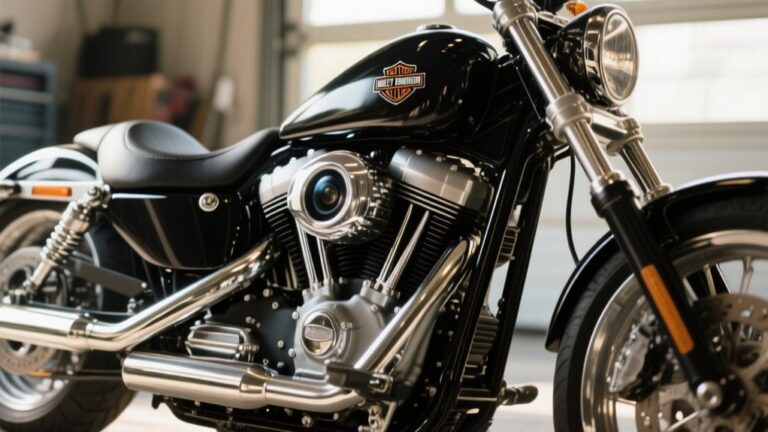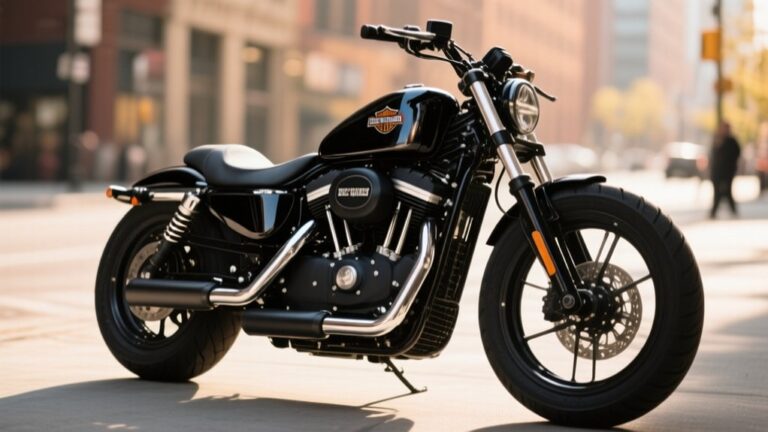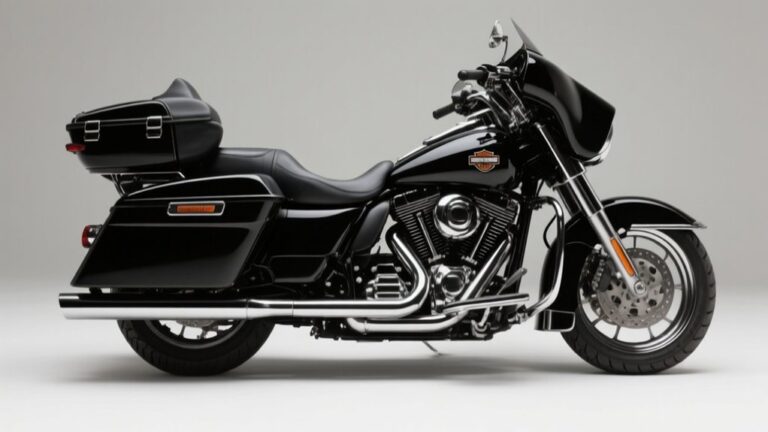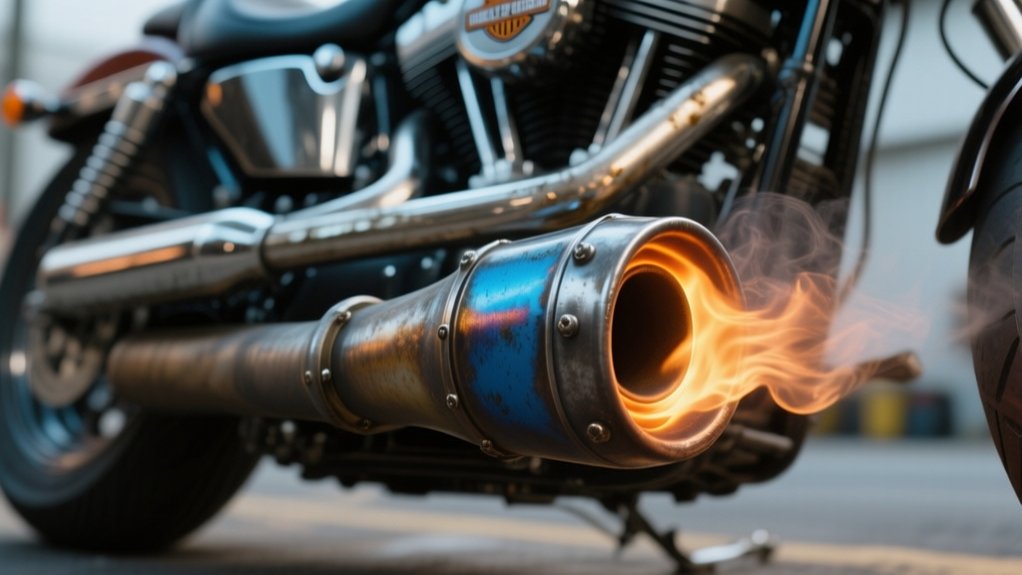
How Hot Does Harley Exhaust Get – Overview
Harley exhaust temperatures vary widely based on engine RPM, ambient heat, and riding style. Headers can soar between 1000°F and 1600°F, sometimes glowing red or blue under aggressive use. Mid-pipes run cooler around 850°F to 1000°F, while mufflers typically operate near 400°F to 500°F.
Exhaust discoloration signals thermal stress and possible overheating. Using heat-resistant materials and coatings helps manage these temperatures effectively. Understanding these factors will equip you to optimize performance and maintain safety.
It’s pretty important to keep an eye on these temps, especially if you’re pushing your bike hard. Knowing what’s normal can save you from costly damage down the road.
Factors Influencing Harley Exhaust Temperatures
Although many factors influence how hot your Harley’s exhaust gets, engine RPM plays a primary role. Higher revs, especially during hard acceleration or sustained high speeds, drive exhaust temperatures upward considerably. You’ll notice that exhaust temperatures rise sharply as the engine demands more fuel and air, intensifying combustion heat.
Ambient temperature also impacts heat levels. On hotter days, your exhaust system struggles more with heat dissipation, leading to elevated pipe temperatures.
The exhaust’s design affects heat retention too. Shorter pipes radiate less heat due to decreased surface area, while thicker, wider components distribute heat better, lowering overall exhaust temperatures.
Moreover, running a lean air-fuel mixture raises exhaust heat. This can potentially cause discoloration or glowing pipes.
Understanding these factors helps you anticipate and manage your Harley’s exhaust heat effectively.
How Riding Conditions Affect Exhaust Heat
When you ride aggressively and push your Harley’s engine to higher RPMs, the exhaust system heats up a lot because of increased combustion and gas flow. Riding conditions have a big impact on exhaust temperatures. High engine output and sustained high speeds really crank up the heat buildup.
Hot weather, especially on sunny or humid days, makes it harder for the exhaust to cool down. That means it holds onto more heat. On the other hand, when you’re idling for a long time or riding at low speeds, exhaust gases hang around longer, which can also raise temperatures even if the engine isn’t working as hard.
Knowing how these factors play out helps you predict how your Harley’s exhaust will behave in different situations. Being aware of your riding conditions means you can manage heat better. This keeps your exhaust system from getting too hot, which is great for performance and safety.
How Hot Do Harley Exhaust Headers Get?
Exhaust headers on your Harley are the hottest components in the system, regularly reaching temperatures between 1000°F and 1600°F. These high temperatures come from combustion gases exiting the engine, and the heat levels rise as engine RPM increases.
During aggressive riding, Harley exhaust headers may even glow red, yellow, or blue, which shows just how extreme the heat can get.
The material of the headers, usually stainless steel or titanium, affects how well heat dissipates.
To handle this intense heat within the exhaust system, you’ll want to use heat shields or ceramic coatings. These options protect you and nearby components from burns and heat damage.
That way, you keep things safer and make your Harley last longer.
Understanding these factors helps you maintain ideal performance and stay safe around your Harley exhaust headers. It’s all about managing the heat so you can enjoy the ride without worry.
Temperature Ranges of Mid-Pipes and Catalytic Converters
Since heat dissipates as exhaust gases travel away from the engine, mid-pipes on your Harley typically operate between 850°F and 1000°F. Understanding temperature ranges of mid-pipes and catalytic converters is vital for managing hot exhaust effectively.
Here’s what you need to know:
Mid-pipes maintain exhaust temperatures that are lower than headers but still hot enough to affect nearby components. The catalytic converter functions between 600°F and 1200°F, with chemical reactions inside causing spikes in heat, especially under heavy engine load.
Proper heat management is essential to prevent damage and maintain efficient exhaust flow, given these temperature ranges.
How Hot Are Harley Exhaust Mufflers During Operation?
Although Harley exhaust headers can reach temperatures as high as 1600°F, the mufflers usually run much cooler. They typically operate between 400°F and 500°F during normal riding. This happens because the exhaust gases cool down as they travel through the system, reaching the muffler at the exhaust end.
Under standard conditions, you’ll find the muffler stays within this temperature range. But if you’re doing extended high-rev riding or have aggressive tuning, the temperature can push toward 500°F.
To handle heat better, many Harley exhaust systems include heat shields or ceramic coatings on the mufflers. These features help reduce heat transfer, protect surrounding parts, and make the ride more comfortable.
Keeping an eye on and maintaining these protective measures ensures your muffler stays safely within its temperature limits. That way, you avoid premature wear or damage.
What Harley Exhaust Discoloration Reveals About Heat
When Harley exhaust pipes show discoloration, such as red, yellow, or blue hues, they reveal the intense heat they’ve been exposed to. This heat often ranges from 900°F to over 1200°F. The discoloration happens because of oxidation, where heat reacts with the metal surface and forms oxide layers.
Understanding these color changes can help you gauge exhaust temperatures and engine performance. For example, a red glow indicates exhaust temperatures near 900°F, signaling moderate heat exposure.
Yellow discoloration appears above 1000°F and shows increased thermal stress on the Harley exhaust.
Blueing usually happens during heavy load or performance tuning. It reveals temperatures exceeding 1200°F, which means the exhaust is experiencing extreme heat levels.
Keeping an eye on these hues can alert you to potential overheating or engine issues. That way, you can make sure your Harley exhaust operates within safe thermal limits.
Materials and Designs That Control Harley Exhaust Heat
You’ll find that choosing heat-resistant materials like titanium and stainless steel can really boost your exhaust’s durability while keeping the weight down.
Plus, applying ceramic coatings or heat wraps is a great way to manage surface temperatures and protect the parts nearby.
And don’t forget, tweaking the exhaust’s length and shape also plays a big part in controlling how heat spreads out.
Heat-Resistant Materials
Because controlling exhaust heat is essential for both performance and rider safety, Harley exhaust systems rely on advanced heat-resistant materials and designs. You’ll find these key elements:
- Stainless steel and titanium exhaust components: Stainless steel resists corrosion and endures temperatures up to 1600°F. Titanium offers superior heat resistance and durability for performance builds.
- Heat shields and wraps: These external features effectively reduce pipe surface temperatures. They protect both the rider and surrounding components.
- Carbon fiber and ceramic coatings: Carbon fiber parts reduce weight and withstand high heat. Ceramic coatings act as barriers to contain heat within the exhaust system.
Using these materials and designs guarantees peak thermal management. It also prolongs component life and keeps rider safety in check by controlling exhaust heat efficiently.
Exhaust Coatings Benefits
Although Harley exhaust systems generate intense heat, applying specialized coatings offers essential benefits in managing thermal output. Exhaust coatings, particularly heat-resistant ceramic types, create an effective thermal barrier that can reduce surface exhaust temperature by up to 50%. This reduction minimizes burn risk and protects nearby components.
Plus, ceramic coatings help with heat dissipation, which keeps the exhaust flow at an ideal level and reduces heat soak. These coatings can handle temperatures above 2000°F, which means they really extend the exhaust’s lifespan by limiting thermal stress and corrosion.
| Feature | Benefit |
|---|---|
| Heat-resistant ceramic | Withstands >2000°F, durable thermal barrier |
| Surface temperature reduction | Up to 50% cooler, safer to touch |
| Heat dissipation | Maintains optimal exhaust flow |
| Corrosion resistance | Prolongs exhaust component life |
| Thermal stress reduction | Prevents cracking and warping |
Design Strategies
When managing Harley exhaust heat, selecting the right materials and design features plays a crucial role in controlling temperature and protecting both the bike and rider. Effective temperature management hinges on combining heat-resistant materials with innovative design elements in the exhaust system.
Key strategies include utilizing materials like stainless steel, titanium, and carbon fiber. These offer superior heat resistance and help reduce overall weight.
Another important approach is applying ceramic coatings to exhaust pipes. These coatings insulate the pipes, maintaining higher internal temperatures while lowering external surface heat.
You can also install heat shields and wraps to block and dissipate heat. This protects surrounding components and improves rider safety.
Tips to Maintain Safe Harley Exhaust Temperatures
To maintain safe exhaust temperatures on your Harley, you should regularly monitor the heat levels, especially after performance modifications or aggressive riding. Use heat shields or ceramic coatings to shield your exhaust system and nearby parts from excessive heat. This helps reduce overheating risks.
Keep your engine tuning optimized to maintain the correct air-fuel mixture. Doing this prevents high exhaust temperatures caused by lean conditions.
Also, replace worn exhaust components promptly to avoid hotspots.
After hard riding, avoid long idling to let the exhaust cool gradually. It’s a simple step that can make a big difference in keeping your bike running safe and smooth.
Frequently asked questions
Can Harley Exhaust Heat Affect Nearby Motorcycle Components?
Yes, Harley exhaust heat can affect nearby motorcycle components. You’ll find that high temperatures can cause wiring insulation to melt, plastic parts to warp, and rubber seals to degrade faster.
Metal parts near the exhaust may get uncomfortably hot, which can risk damage or rider discomfort.
To protect your bike, you should use heat shields or wraps to minimize heat transfer. This helps keep sensitive components and paintwork intact and functional over time.
How Does Aftermarket Exhaust Impact Harley Exhaust Temperatures?
When you swap to an aftermarket exhaust, you’ll often notice hotter exhaust temps, especially near the headers. Reducing backpressure with slip-on or shorty mufflers can push temperatures above stock levels, sometimes over 1600°F. It’s pretty common to see this kind of change once you make the switch.
You’ll want to choose heat-resistant materials like titanium and make sure everything is installed and tuned properly to handle the extra heat. Otherwise, those higher temperatures could stress nearby parts or even hurt your bike’s performance.
Are There Specific Exhaust Temperature Sensors for Harley Motorcycles?
Yes, there are specific exhaust temperature sensors designed for Harley motorcycles. These sensors often use thermocouples or thermistors built to endure high heat, ranging from around 200°F to 1600°F.
You’ll find them mostly on high-performance or custom Harley models, where they provide real-time temperature data to the ECU or display. Installing one helps you monitor exhaust temps accurately, ensuring peak engine performance and preventing overheating damage.
It’s a smart upgrade if you want to keep your bike running smoothly and avoid costly repairs down the road.
How Long Does It Take for Harley Exhaust to Cool Down?
It typically takes your Harley exhaust about 30 to 45 minutes to cool down from extreme temperatures near the headers to a safe touch level.
The muffler area can take up to an hour or longer depending on riding conditions and ambient heat.
Factors like prolonged throttle use or hot weather will extend this time.
Using heat shields or ceramic coatings helps speed up cooling and reduces burn risk.
Just keep in mind, every ride is a little different, so give your bike some extra time if needed.
Can Exhaust Heat Cause Safety Hazards for Riders or Passengers?
Exhaust heat can be a silent threat, lurking beneath your ride. Yes, it poses serious safety hazards for you and your passengers. Touching components that reach up to 1600°F can cause severe burns.
Prolonged contact during maintenance only increases the risks. To keep yourself safe, always use heat shields and avoid touching hot parts while the bike is running.
Just stay aware and cautious—this way, your ride stays safe and injury-free.
Final Thought
Now that you know how hot your Harley’s exhaust can get, from searing headers to heated mufflers, you might wonder what that means for your ride and safety. The truth is, managing these temperatures isn’t just about comfort. It’s about preventing damage and making sure your bike runs at its best.
Stay vigilant and use the right materials. Keep an eye on conditions closely. Because when your exhaust heats up beyond control, it’s not just metal—it’s a warning you can’t afford to ignore.