What Harley Has The Most Horsepower – What It Really Means
The Harley with the most horsepower is the Pan America 1250 featuring the Revolution Max engine, delivering up to 150 hp. This liquid-cooled, modern V-twin outperforms traditional Milwaukee-Eight engines by blending strong low-end torque with impressive peak power.
While raw horsepower sounds thrilling, it’s the smooth power delivery and deep torque that truly shape your riding experience. If you want to understand how Harley balances power and ride feel, there’s a lot more to explore.
Which Harley Has the Most Horsepower? A Quick Comparison
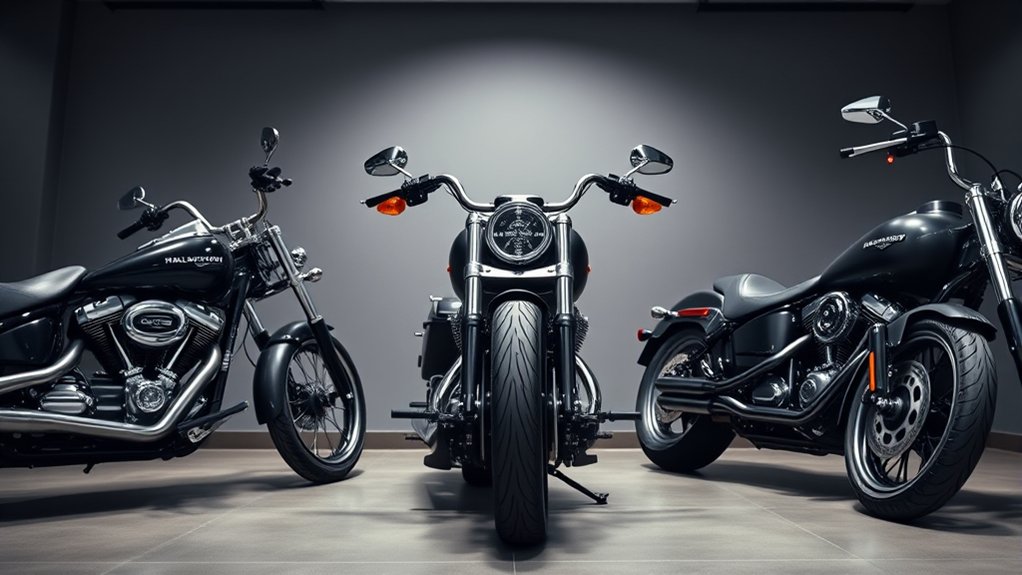
While many Harley-Davidson models are known for their iconic design and torque, if you’re after sheer horsepower, the Pan America 1250 Revolution Max engine takes the crown with up to 150 horsepower. This powerhouse sets a new benchmark for Harley’s performance lineup, outpacing earlier air-cooled V-twins.
The Milwaukee-Eight 117 engine, featured in the CVO Road Glide ST, delivers a strong 127 horsepower, making it a close contender but still behind the Pan America.
Even the discontinued V-Rod, with its Revolution engine, produced an impressive 115-123 horsepower, yet it can’t match the Revolution Max’s output.
How Harley’s V-Twin Design Shapes Horsepower and Torque
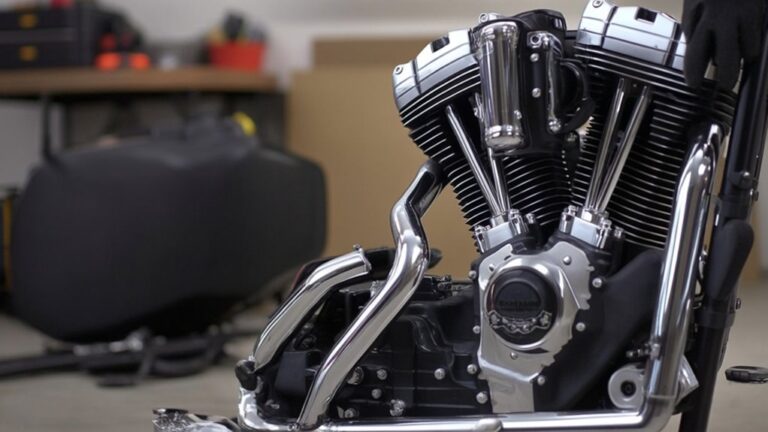
Because Harley-Davidson’s iconic V-twin engine uses a unique 45-degree angle and long-stroke design, it shapes how horsepower and torque develop across the rev range. This engine design prioritizes strong low-end torque, giving you powerful acceleration at lower RPMs.
The Milwaukee-Eight V-twin enhances this with overhead cams and liquid cooling, boosting horsepower without sacrificing torque. Harley’s firing order creates an irregular pattern, influencing power delivery and that unmistakable rumble. Here’s a quick look:
| Feature | Impact on Horsepower | Impact on Torque |
|---|---|---|
| 45-Degree V-Twin | Moderate peak HP | High low-end torque |
| Long-Stroke Design | Limits high RPM HP | Enhances torque |
| Milwaukee-Eight | Improved HP at RPMs | Smooth torque curve |
This balance really defines Harley’s approach to engine performance.
The Revolution Engine: Harley’s Most Powerful V-Twin Yet
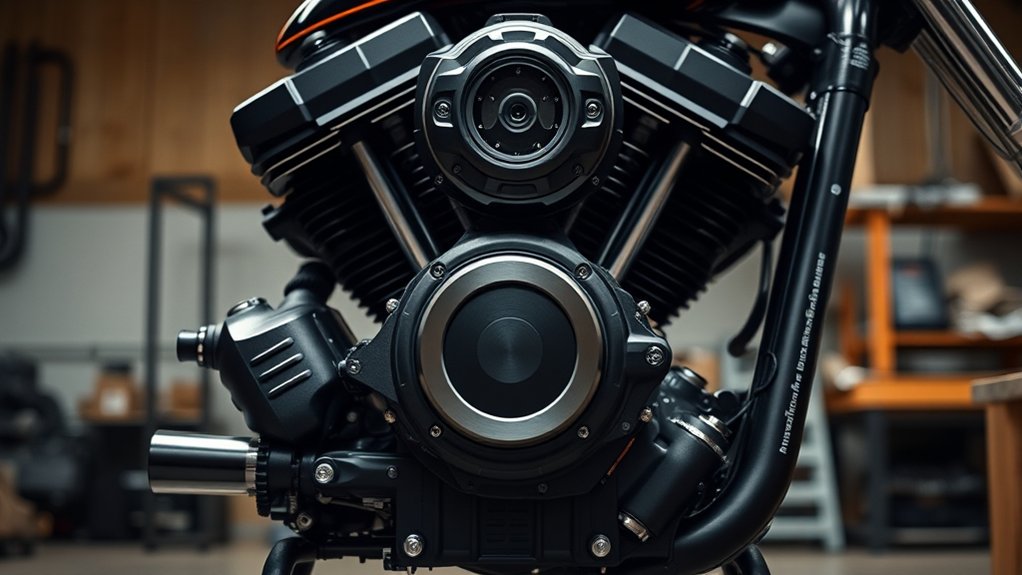
Harley-Davidson’s Revolution engine represents a bold leap from the traditional V-twin setup, delivering a level of horsepower that redefined what you could expect from a Harley. Developed with Porsche, this liquid-cooled powerhouse debuted in the V-Rod, boasting a 996cc displacement and overhead cams that pushed its redline to 9,000 RPM.
You’ll find the Revolution engine produces between 115 and 123 horsepower in stock form, making it Harley’s most potent V-twin when introduced. The 2005 Screamin’ Eagle upgrade nudged output to 123 horsepower, further proving its performance edge.
Thanks to its advanced design and modern materials, the Revolution engine marked a major technological breakthrough for Harley-Davidson. It set the stage for future high-performance models while challenging traditional air-cooled norms.
Comparing Harley Powerhouses: Revolution vs Milwaukee-Eight
Though the Revolution engine marked a significant technological breakthrough with its liquid cooling and overhead cams, the Milwaukee-Eight 117 now takes the crown for Harley’s most powerful production V-twin, delivering up to 127 horsepower.
When you compare these two engine platforms, you’ll notice the Revolution engine, developed with Porsche, initially offered 115-123 horsepower, which was a strong performance at its debut. However, the Milwaukee-Eight benefits from modern tech like electronic fuel injection and variable valve timing, pushing horsepower even higher.
For you, this means the Milwaukee-Eight isn’t just more powerful; it’s also more refined and efficient. While both engines represent milestones in Harley-Davidson’s evolution, the Milwaukee-Eight 117 clearly leads in peak horsepower. It really showcases Harley’s commitment to advancing their powerhouses.
Why Torque Matters More Than Peak Horsepower on Harleys
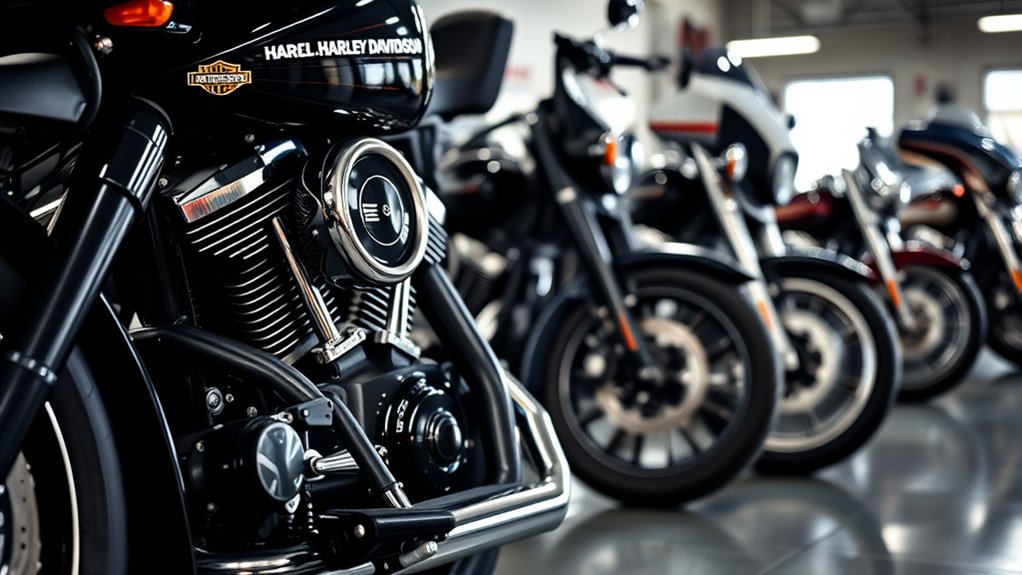
While peak horsepower grabs attention with big numbers, what really shapes your riding experience on a Harley is torque. Torque measures rotational force and directly influences how quickly your bike accelerates and handles low-speed control.
Harley engines, like the Milwaukee-Eight, focus on delivering strong low-end and mid-range torque. This ensures smooth, powerful performance during cruising, towing, or climbing hills.
Having consistent torque across the RPM range matters more than just chasing high peak horsepower numbers that only shine at top speeds.
When torque is ample at lower RPMs, you get faster acceleration and better responsiveness in everyday riding conditions.
How the Revolution Max Engine Boosts Harley Horsepower
Because the Revolution Max engine incorporates cutting-edge technology and engineering, it markedly boosts Harley’s horsepower without losing the torque that riders value. You’ll notice its liquid-cooled, DOHC design with variable valve timing (VVT) enhances airflow and combustion efficiency, pushing horsepower to new heights. For example, it can reach up to 150 hp in the Pan America.
The 60-degree V-angle combined with high-performance internals enables higher RPMs, delivering more power without compromising reliability. Unlike traditional air-cooled Harleys, this modern engine balances peak horsepower with the brand’s characteristic torque curve.
Real-World Harley Horsepower: Rider Experience on the Road
When you hit the throttle on a Harley, you’ll immediately notice how the power delivery and torque shape your ride. It offers smooth acceleration and a strong low-end response that really gets you moving.
Plus, the engine’s growl and vibration add a tangible sensation, making you feel connected to the bike’s performance.
Getting a feel for these elements helps you appreciate how horsepower actually translates into real-world confidence and control when you’re out on the road.
It’s not just about numbers—it’s about how the bike responds to you in every twist and turn.
Power Delivery Characteristics
Although Harley-Davidson motorcycles may not top the charts in peak horsepower, their power delivery focuses on low-end torque and smooth, predictable acceleration that you can feel with every twist of the throttle.
The Milwaukee-Eight engine exemplifies this by delivering robust torque that guarantees a strong, steady engine feel rather than just chasing high horsepower numbers.
You’ll notice the throttle response is finely tuned, providing consistent power delivery across different riding conditions thanks to modern ride modes and electronic aids.
This setup allows you to experience Harley’s signature V-twin pulsation, creating a connection that’s as much about rhythm and control as raw speed.
Fundamentally, Harley’s power delivery is designed to make your ride confident, engaging, and soulful.
It’s all about feeling the bike respond smoothly and powerfully, giving you that unique riding experience every time.
Torque Impact On Ride
While peak horsepower often grabs attention, it’s the torque that truly shapes your Harley riding experience on the road. Torque delivers the immediate pulling power you feel during acceleration, especially at low RPMs, making engine response smooth and predictable.
This means when you’re overtaking on the highway or climbing hills, your bike reacts effortlessly, enhancing control and confidence. The Revolution Max engines highlight this with increased torque, providing a more visceral ride in city traffic and twisty roads where quick bursts of power matter more than top-end horsepower.
Ultimately, while horsepower defines potential top speed, it’s the torque that controls how your Harley feels in real-world conditions. It directly impacts acceleration and overall riding enjoyment.
Sound And Sensation
Because a Harley’s horsepower directly influences its sound and sensation, you immediately notice the deep, rumbling exhaust note that signals strong low-end torque when you fire up a Milwaukee-Eight engine. This distinctive sound isn’t just noise. It’s a clear indicator of the engine’s performance and power delivery.
As you accelerate, the engine response becomes more pronounced, offering a visceral connection between throttle input and bike movement. Higher horsepower models like the CVO Road Glide ST amplify this experience, producing a surge and pulse you can physically feel.
While aftermarket exhausts can alter the sound, the authentic rumbling exhaust tone paired with engine vibrations defines Harley’s character. This blend of sound, horsepower, and engine response creates an alive sensation that makes every ride uniquely powerful and engaging.
Customizing Your Harley to Maximize Horsepower and Rideability
When you customize your Harley with high-performance parts like larger injectors, advanced camshafts, and aftermarket exhausts, you can boost horsepower by 20-50% over stock.
Upgrading your Harley-Davidson engine with these custom modifications, combined with ECU remapping or dyno tuning, ensures you unlock maximum power without sacrificing rideability.
Enhance your Harley’s performance with custom mods plus ECU remapping for peak power and smooth rideability.
Increasing performance isn’t just about raw horsepower; it’s about smooth power delivery and reliability.
Larger displacement engines, such as 131 or 1247cc, maintain low-end torque while enhancing overall output.
Incorporating modern tech like Variable Valve Timing and electronic ride modes further refines power to suit different conditions.
Don’t overlook suspension and chassis upgrades; they’re key to handling the extra power and providing a stable, enjoyable ride.
Thoughtful customization balances power and control perfectly.
Frequently asked questions
How Does Fuel Type Affect Harley Horsepower and Performance?
Fuel type directly affects your Harley’s horsepower and performance by influencing combustion quality. Using premium, higher-octane fuel lets your engine run closer to ideal timing, which boosts power and efficiency.
If you choose lower-octane fuel, your engine might knock or retard timing. This can cut horsepower, especially in high-compression models.
To get the best performance and keep your Harley running smoothly, it’s best to stick to the manufacturer’s recommended fuel type consistently. It really makes a difference!
What Maintenance Tips Keep Harley Engines Running at Peak Power?
To keep your Harley running at peak power, you can’t just rely on myths about horsepower upgrades alone. Regularly changing the engine oil with high-quality, Harley-approved oil reduces friction and preserves engine health.
You also need to clean the air filter, inspect fuel injectors, adjust valves, and replace spark plugs on schedule. These maintenance steps guarantee your engine breathes right, burns fuel efficiently, and delivers consistent, maximum horsepower every ride.
Taking care of these basics really makes a difference in how your bike performs day in and day out. So, stick to the routine and enjoy that smooth, powerful ride every time.
Are Harley’s Horsepower Ratings Consistent Across Different Model Years?
No, Harley’s horsepower ratings aren’t consistent across model years. You’ll notice variations because of updates in engine design, tuning, and emissions standards.
Even within the same engine family, changes in displacement or fuel systems can affect power output.
So, when you’re comparing models, don’t just assume the horsepower is the same. It’s best to check each year’s specs carefully.
Manufacturers often adjust ratings to meet regulations or boost performance, which can change things over time.
How Does Rider Weight Impact Perceived Horsepower and Acceleration?
You fire up your Harley, ready to feel that punch of power. But suddenly, it feels slower than expected. That’s rider weight at work.
The heavier you are, the more mass your bike has to move. This dulls acceleration and makes horsepower feel less potent.
On the other hand, lighter riders get quicker bursts.
Knowing this helps you appreciate how your own weight changes performance. It also makes suspension tweaks and positioning super important for that true Harley roar.
What Aftermarket Exhausts Best Enhance Harley Horsepower Output?
You’ll get the best horsepower boost from aftermarket exhausts like Vance & Hines, Bassani, and S&S. These systems reduce backpressure and improve exhaust flow, releasing 5-15 extra horsepower.
To maximize gains, pair them with proper fueling and ECU tuning. This combo can push power over 20 horsepower beyond stock.
Look for larger diameter, free-flow designs that enhance both low-end torque and high-RPM performance. That way, you’ll notice a real upgrade in your ride.
Final Thought
So, when it comes to Harley horsepower, it’s not just about raw numbers. It’s the torque that truly moves you. The Revolution Max engine revs up power without losing that classic Harley rumble you love.
Think of it as the heart of a beast, combining strength and soul. Whether you’re riding stock or customizing, understanding these engines helps you discover the full roar of your Harley. It makes every ride an unforgettable journey.