How Many Miles Per Gallon Does A Harley Davidson Get – Tips
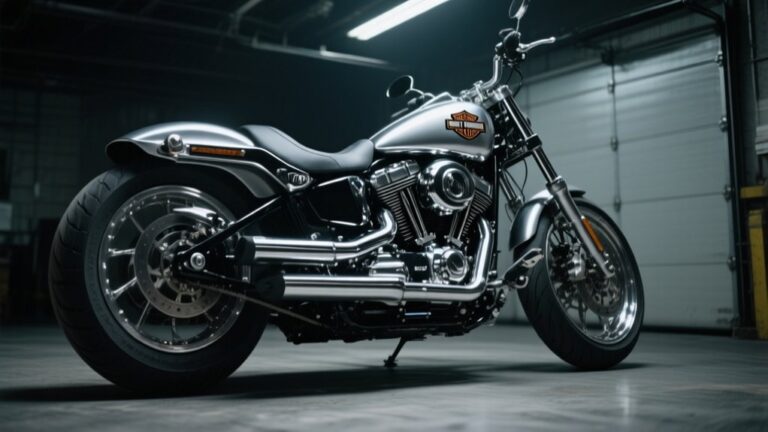
You can expect your Harley-Davidson to get between 40 and 50 MPG, though this varies by model and engine type. Lightweight, fuel-injected bikes like the Sportster Iron 883 perform best, often hitting over 50 MPG. Larger touring engines, on the other hand, use more fuel.
To improve mileage, maintain tire pressure, keep your engine tuned, and ride smoothly at steady speeds. Understanding how factors like engine design and riding habits affect fuel economy will help you get the most out of your Harley’s performance. Just a little care can go a long way!
What’s the Typical MPG for Harley-Davidson Bikes?
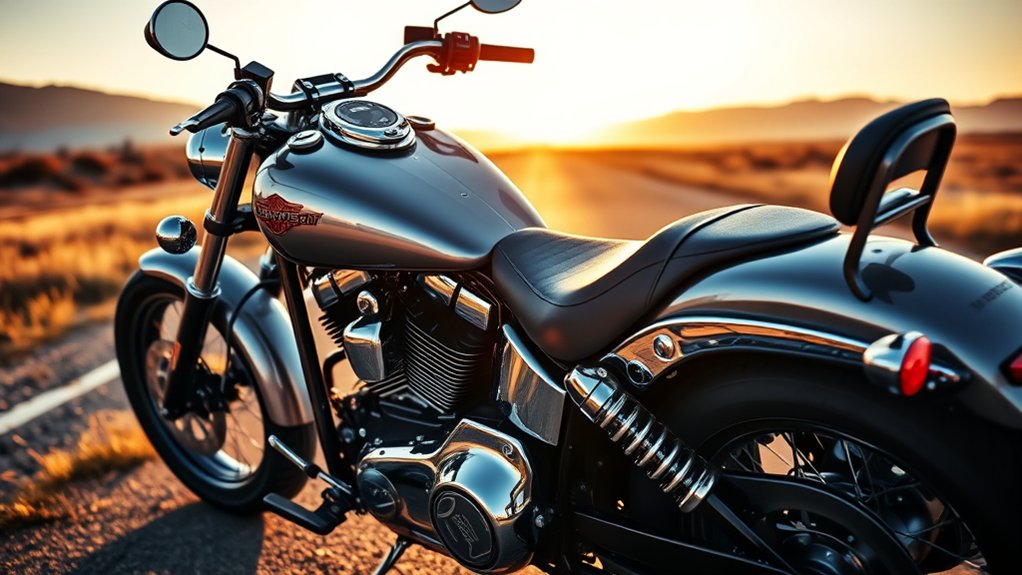
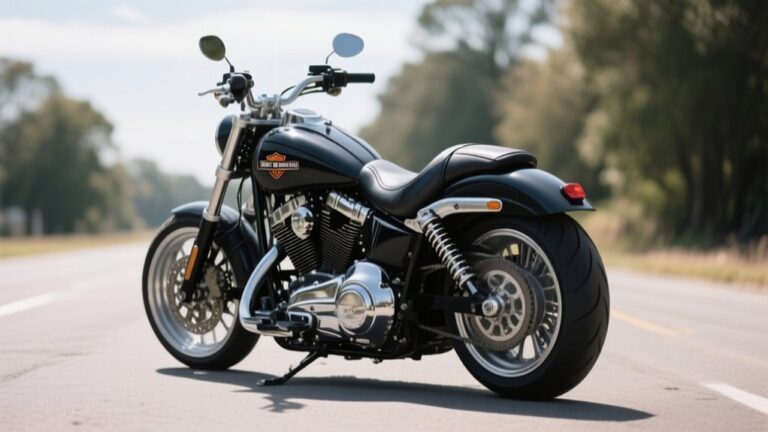
Although fuel economy varies by model and riding conditions, most Harley-Davidson motorcycles deliver between 40 and 50 miles per gallon. Touring bikes, like the Street Glide, typically achieve MPG in the high 30s to low 40s range due to their larger engine size and added weight.
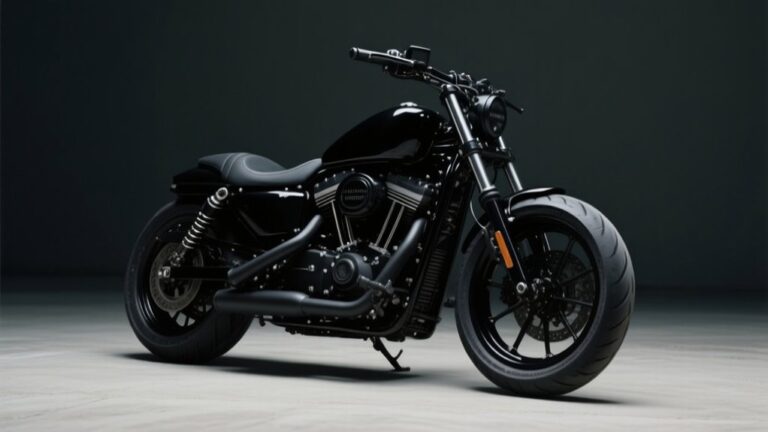
In contrast, lighter models such as the Sportster Iron 883 can reach up to 51 MPG, benefiting from smaller engines and streamlined design.
Performance-oriented bikes, like the FXDR 114, may exceed 50 MPG on steady highway rides, where consistent speed optimizes fuel efficiency.
Your riding habits greatly influence fuel economy. Aggressive acceleration and frequent stops reduce MPG, while smooth throttle control and maintaining highway speeds improve it.
Understanding these factors helps you maximize your Harley-Davidson’s MPG under varying conditions.
Which Harley Models Offer the Best Gas Mileage?
You’ll find the best gas mileage in Harley models like the Sportster Iron 883 and FXDR 114. Both can exceed 50 MPG when the conditions are just right.
Then there are lightweight, highway-focused bikes such as the Street Glide, which also deliver better fuel efficiency thanks to their design and fuel-injection systems.
Top Fuel-Efficient Models
When evaluating Harley-Davidson models for fuel efficiency, you’ll find that certain bikes stand out due to their design and engine technology. The Sportster Iron 883 tops the list, delivering up to 51 MPG, which is ideal for riders prioritizing fuel savings.
Similarly, FX models like the FXDR 114 can exceed 50 MPG during highway riding under *ideal* conditions.
The 2026 Sportster S also impresses with an estimated 46 MPG.
Generally, lightweight bikes with fuel-injected engines outperform older carbureted models in fuel efficiency. For highway riding, these models offer a practical balance between power and economy.
When choosing a Harley-Davidson, consider these tips: focus on fuel-injected, lightweight bikes designed for highway use to maximize MPG and overall fuel efficiency. It’s all about finding that sweet spot between performance and saving at the pump.
Lightweight Highway Performers
A key factor in achieving the best gas mileage on a Harley-Davidson lies in selecting lightweight models designed for highway use. Models like the Sportster Iron 883 and FXDR 114 excel with highway MPG ratings of up to 51 and over 50 respectively, reflecting their superior fuel economy and efficiency.
These lightweight machines reduce drag and engine load, optimizing fuel consumption during steady-speed cruising.
The Street 500 and Sportster line also demonstrate consistent fuel efficiency, outperforming heavier touring bikes in MPG. Moreover, fuel-injected versions enhance efficiency by delivering precise fuel metering, further improving highway fuel economy.
When you choose lightweight, highway-focused Harley models, you benefit from a combination of reduced weight, advanced fuel systems, and design tailored for sustained efficient performance on long rides.
How Harley Engine Type and Design Affect Fuel Economy
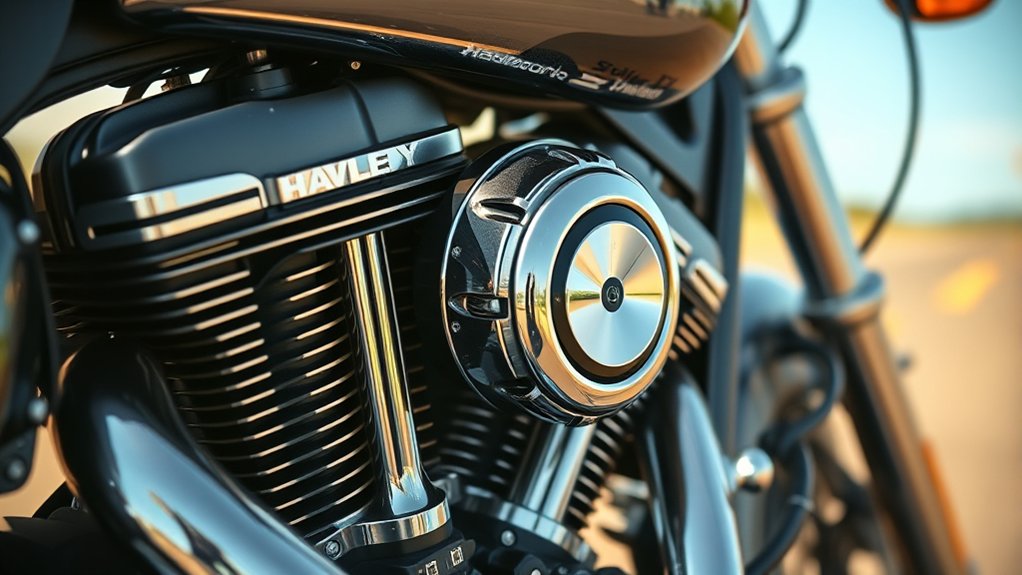
How exactly do Harley-Davidson engine types and designs impact fuel economy? Larger engine displacement, like the Milwaukee-Eight 117, consumes more fuel, which lowers your MPG. Engine design, such as air-cooled versus water-cooled, also affects thermal efficiency.
Modern fuel-injected models generally offer better fuel economy than carbureted ones. Touring engines focus on torque and power, so they tend to sacrifice MPG. On the other hand, smaller Sportster engines get higher fuel economy thanks to their simpler design.
Engine modifications, including cams and exhaust systems, can either improve or reduce fuel economy depending on how they’re tuned.
| Engine Type | Fuel Economy Impact |
|---|---|
| Large Displacement | Lower MPG, higher consumption |
| Fuel-Injected Models | Improved thermal efficiency |
| Engine Modifications | Variable; affects tuning |
How Riding Habits and Roads Impact Harley MPG
Engine type and design set the baseline for your Harley’s fuel consumption, but your riding habits and the roads you choose play a major role in real-world MPG. Maintaining a steady speed minimizes fuel-wasting acceleration and deceleration, which directly improves fuel efficiency.
Your Harley’s fuel efficiency depends not just on engine design but largely on steady speed and smart riding choices.
Try to use precise throttle control and shift gears early to optimize combustion during varied riding conditions. Avoid aggressive behaviors like hard revving and rapid acceleration because these can reduce MPG by up to 20%.
Traffic conditions heavily influence consumption. Stop and go traffic forces frequent idling and acceleration, which lowers efficiency. On the other hand, smooth traffic flow supports better MPG.
Effective route planning helps you avoid frequent stops and bad weather. This lets you keep consistent riding habits that maximize fuel economy.
Why Does Highway Riding Boost Harley Fuel Efficiency?
Because highway riding lets you maintain a steady speed, your Harley’s fuel consumption drops considerably compared to stop-and-go city traffic.
When you ride at consistent speeds, the engine operation stabilizes, hitting its ideal fuel economy range. This reduces fuel consumption caused by frequent acceleration and deceleration.
On highways, external conditions like wind resistance and road incline tend to be more predictable, allowing you to adjust smoothly and maintain efficient throttle control.
Unlike aggressive riding, steady highway riding minimizes abrupt engine load changes, preserving fuel efficiency.
Furthermore, avoiding constant stops prevents repeated engine restarts, which consume extra fuel.
Key Causes of Reduced Fuel Efficiency on Harley Bikes
Although Harley-Davidson motorcycles are known for their robust performance, several factors can considerably reduce their fuel efficiency. Your riding style plays a major role. Aggressive throttle use and rapid acceleration spike fuel consumption.
Harley fuel efficiency drops significantly with aggressive throttle use and rapid acceleration despite their strong performance.
Weight also impacts MPG. Heavier touring models demand more power, lowering efficiency. Poor engine tuning or neglecting maintenance leads to inefficient combustion, further reducing miles per gallon.
Moreover, challenging terrain like hilly roads strains the engine and increases fuel use.
Key causes include:
- Aggressive riding style with excessive throttle input
- Increased weight from larger engines or added accessories
- Improper engine tuning and skipped maintenance intervals
- Riding on hilly or stop-and-go terrain that burdens the engine
Being aware of these factors helps you understand why your Harley’s fuel efficiency fluctuates.
Tips to Improve Your Harley’s MPG
To boost your Harley’s MPG, try to keep a steady speed while riding. This helps cut down on fuel use and reduces engine wear.
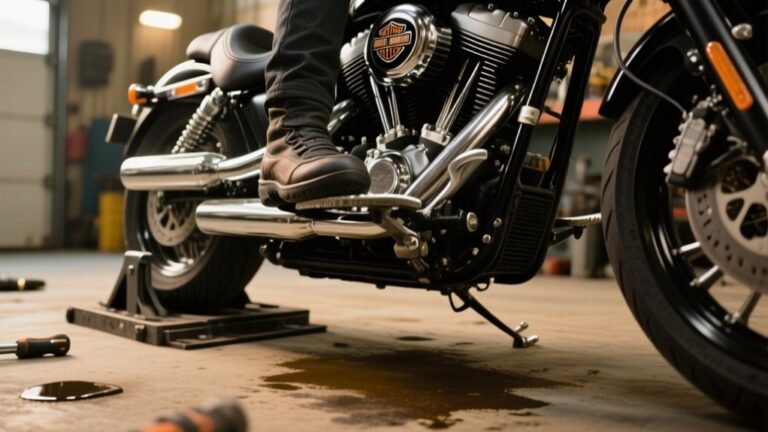
Also, don’t forget regular maintenance. Check your tire pressure, oil levels, and clean the air filters to keep everything running smoothly.
Maintain Steady Speed
When you maintain a steady speed on your Harley-Davidson, you reduce unnecessary acceleration and deceleration that waste fuel. Consistent throttle control and smooth RPM management really boost fuel efficiency, especially when you’re riding on the highway.
Sudden speed changes make your engine work harder, which can lower your fuel economy by up to 20%.
To get the most mileage out of your bike, try using cruise control or manual throttle to hold a constant speed between 55 and 65 mph. Keep an eye on your RPM to make sure the engine is running in its most efficient range.
Avoid aggressive acceleration or braking so you can keep a smooth momentum going. Also, it helps to plan your routes in a way that minimizes stop-and-go traffic and lets you maintain steady highway speeds.
Perform Routine Maintenance
Since your Harley-Davidson’s fuel efficiency depends heavily on engine performance, performing routine maintenance is essential to maximize your miles per gallon.
Regularly check tire pressure to reduce rolling resistance, which directly improves fuel efficiency.
Change the engine oil and air filter at manufacturer-recommended intervals to maintain ideal combustion and reduce engine wear.
Keep fuel injectors clean to ensure efficient fuel delivery and better MPG.
Periodically inspect spark plugs and ignition systems for complete combustion. Neglecting these can cause poor fuel economy.
Address any mechanical issues promptly. Unresolved problems often increase fuel consumption.
Staying consistent with maintenance not only preserves engine integrity but also enhances your Harley’s overall fuel efficiency, ensuring each gallon stretches farther during your rides.
How Regular Maintenance Helps Maximize Harley Fuel Economy
How exactly does regular maintenance impact your Harley-Davidson’s fuel economy? Routine upkeep directly enhances engine performance and fuel efficiency, guaranteeing your bike runs lean and clean.
By sticking to scheduled maintenance, you keep components from wearing out, which can drain fuel economy.
Focus on these essential maintenance tasks to get the most mileage:
- Keep your tire pressure right; underinflated tires can cut fuel economy by 3-5%.
- Swap out air filters regularly to make sure the air-fuel mix and combustion stay optimal.
- Change your engine oil on time to cut down friction and keep performance steady.
- Check and clean the fuel system parts, like spark plugs and injectors, to avoid misfires and wasteful combustion.
Doing regular maintenance consistently keeps your Harley’s fuel economy in top shape. That means saving money and giving your engine a longer life.
Picking the Best Harley for Great Gas Mileage
Although Harley-Davidson motorcycles are often associated with powerful engines and bold styling, several models stand out for their impressive fuel efficiency. To pick the best Harley for great gas mileage, focus on lightweight, highway-oriented bikes like the Sportster Iron 883, which achieves up to 51 MPG.
Harley-Davidson offers surprisingly fuel-efficient models like the lightweight Sportster Iron 883, delivering up to 51 MPG.
Touring models such as the Street Glide offer a balance of comfort and fuel economy, especially when you prioritize smaller, less heavy variants.
Fuel-injected Harleys generally provide better MPG than older carbureted versions, so consider newer models for improved efficiency.
Proper maintenance remains essential to sustain ideal fuel efficiency, as does adopting smooth riding techniques.
Frequently asked questions
How Does Harley-Davidson Fuel Type Affect Mileage and Performance?
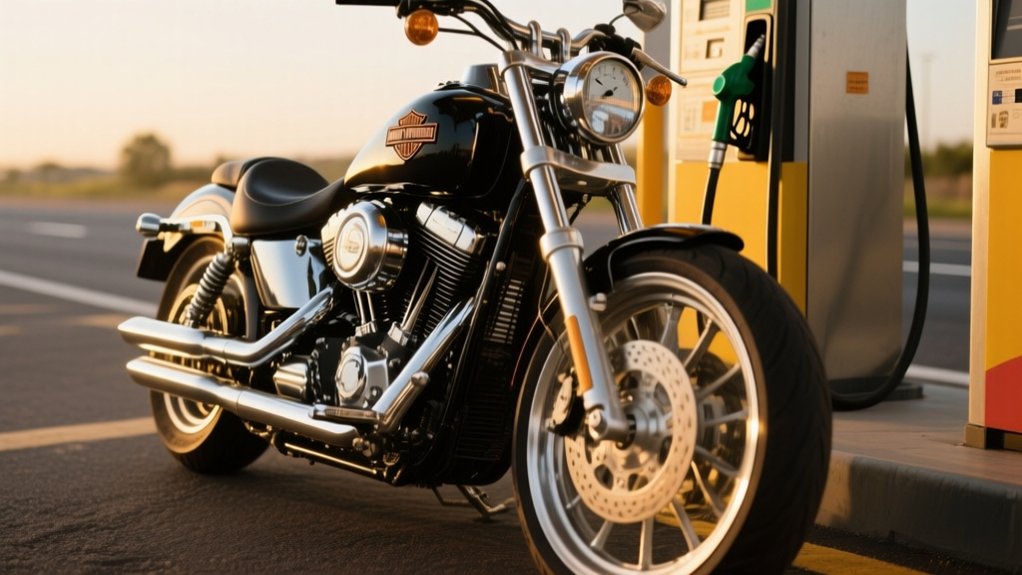
Your Harley-Davidson’s mileage and performance depend heavily on the fuel type you use. Using the recommended 91-octane unleaded gasoline ensures maximum combustion, preventing engine knocking and maximizing fuel efficiency.
Lower-octane fuels can cause pinging, which reduces power and MPG. Fuel-injected models adjust better to varying fuel qualities, but high-performance engines often require higher octane to keep power up and avoid damage.
Can Aftermarket Exhaust Systems Improve Harley Fuel Efficiency?
Yes, aftermarket exhaust systems can improve your Harley’s fuel efficiency by up to 5%, but only if you tune your bike properly afterward. These systems reduce backpressure and optimize airflow, allowing for more complete combustion.
However, if you install an aggressive exhaust without adjusting the fuel map, your engine may run richer, which can decrease your MPG.
For best results, pair a quality exhaust with precise tuning to gain modest, tangible improvements in fuel economy.
It’s all about making sure your bike is set up right after the upgrade. That way, you get the most out of your new exhaust without sacrificing efficiency.
What Impact Does Carrying Luggage Have on Harley MPG?
Carrying luggage on your Harley reduces MPG by 5-10% because of the added weight and increased aerodynamic drag. Heavier loads make your engine work harder, both when accelerating and cruising, so it uses more fuel.
To keep the impact low, make sure your luggage is secured tightly and stays streamlined to cut down on wind resistance. Try to avoid bulky or high-mounted bags since they create more drag.
It’s a good idea to regularly check your load. That way, you can keep the best fuel efficiency while you’re out riding.
How Does Weather Influence Harley Fuel Consumption?
Imagine riding through biting cold air or battling gusty headwinds; your Harley’s fuel consumption will spike.
Cold weather thickens the engine’s fuel mixture and demands longer warm-ups, reducing MPG.
High heat strains cooling systems, raising fuel use.
Wind increases aerodynamic drag, forcing your engine to work harder.
Rain slows you down and changes tire pressure, both lowering efficiency.
Adjust your riding style and maintenance to keep MPG at its best in shifting weather.
Are Electric Harley Models More Fuel-Efficient Than Gas Ones?
Yes, electric Harley models are more fuel-efficient than gas ones. You’ll get around 90-100 miles per charge with models like the Livewire. That translates to higher energy efficiency compared to traditional MPG ratings.
Since you don’t burn gasoline, you eliminate fuel costs and reduce emissions.
Electric efficiency stays consistent no matter how you ride, unlike gas Harleys where aggressive riding lowers MPG.
Final Thought
To get the most miles per gallon from your Harley-Davidson, you’ll want to focus on smart riding habits, regular maintenance, and choosing the right model for your needs. Remember, every drop of fuel counts when you’re hitting the open road.
By understanding how engine design and road conditions affect fuel economy, you can squeeze out better mileage without sacrificing performance. With these tips, you’ll be riding smarter, not harder, turning fuel efficiency into second nature.