What Type Of Battery Does Harley Davidson Use – Guide
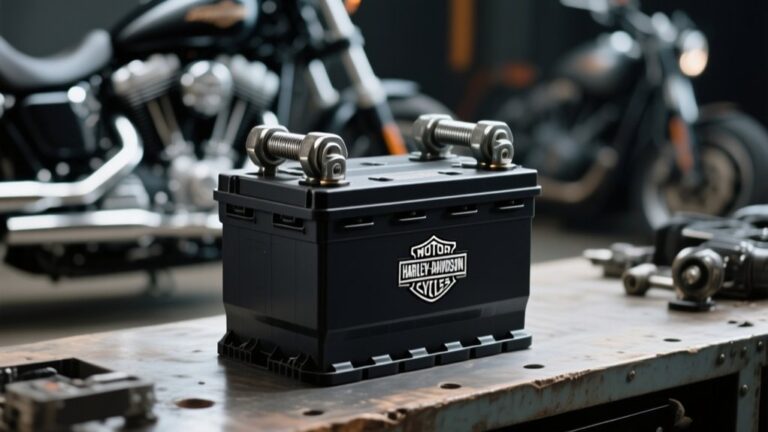
You’ll use a 12-volt battery engineered specifically for Harley-Davidson motorcycles. It’s typically a lead-acid type designed to handle vibrations and shocks.
Many riders upgrade to AGM batteries for maintenance-free durability or lithium-ion for lightweight, high cranking power, and longer life. Matching size, terminal layout, and Cold Cranking Amps (CCA) to your model is vital for reliable starts, especially in cold weather.
Understanding these options helps guarantee peak performance and battery longevity on your Harley. It’s all about choosing what works best for your riding style and conditions.
Types of Harley-Davidson Motorcycle Batteries Explained

While Harley-Davidson motorcycles primarily rely on 12-volt lead-acid batteries engineered to endure vibration and shocks, you’ll find that AGM and lithium-ion options offer distinct advantages.
Lead acid batteries are the OEM standard, designed to provide reliable Cranking Amps and durability.
AGM batteries, a popular upgrade, are maintenance-free and vibration-resistant, making them ideal for Harley-Davidson motorcycles exposed to rough conditions.
Lithium motorcycle batteries present a lightweight, longer-lasting alternative with higher Cranking Amps and faster recharge times. They’re perfect for riders seeking performance gains.
When replacing your battery, matching size, terminal configuration, and Cranking Amps to your Harley model is essential to guarantee peak performance.
Choosing the right battery type enhances reliability and riding experience across various Harley-Davidson motorcycles.
Why Cold Cranking Amps (CCA) Matter for Harley Batteries
Choosing the right battery type for your Harley-Davidson sets the foundation, but understanding Cold Cranking Amps (CCA) guarantees your bike starts reliably in all conditions.
Cold Cranking Amps measure your motorcycle battery’s ability to deliver the burst of starting power needed to crank the engine, especially in cold weather.
Cold Cranking Amps indicate your battery’s power to start the engine, crucial during cold weather conditions.
Harley Davidson recommends a minimum of 300 CCA, though 350 to 500 CCA ensures dependable cranking performance for larger engines.
If your battery’s CCA rating is too low, it may fail to provide sufficient power in cold temperatures, leading to starting issues.
Selecting a battery with proper CCA optimizes your Harley’s starting reliability and overall performance.
It reduces the risk of battery-related failures when you need it most.
Comparing Lead-Acid, AGM, and Lithium Batteries for Harley Bikes
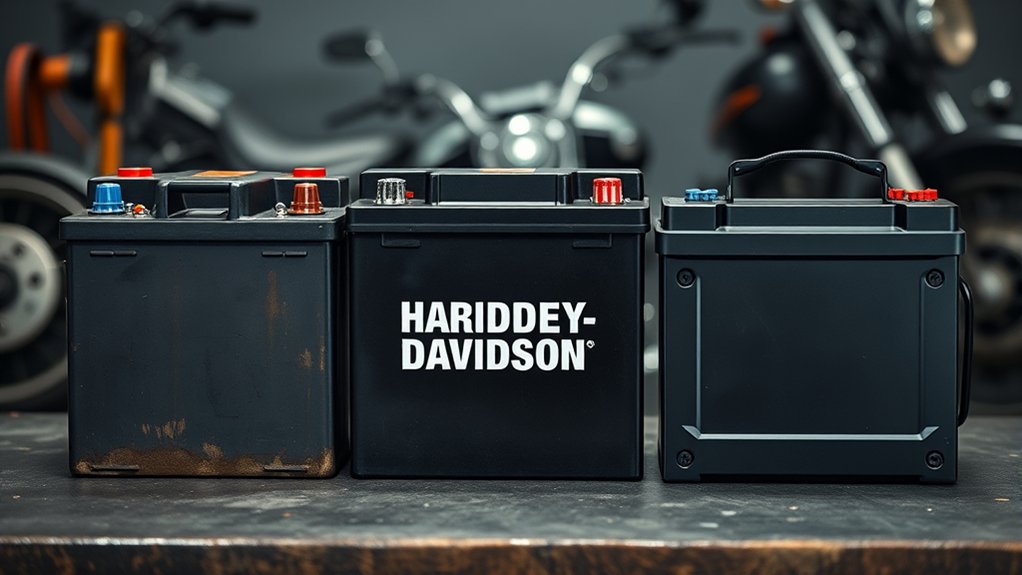
Because Harley Davidson motorcycles face unique demands like constant vibration and varying weather, selecting the right battery type is critical for peak performance.
In this battery comparison, traditional lead-acid batteries offer affordability but lack vibration resistance and perform poorly in cold conditions.
Harley Davidson primarily uses AGM batteries, which are sealed, maintenance-free, and provide superior vibration resistance and faster charging than flooded lead-acid types.
Lithium batteries, while less common, deliver exceptional cranking power, reduced weight, and longer lifespan. They’re ideal for riders seeking high performance with minimal upkeep.
Each battery type suits different motorcycle needs: lead-acid for budget-conscious riders, AGM for durability and maintenance-free convenience, and lithium batteries for advanced reliability and power.
Your choice impacts reliability and overall Harley Davidson performance.
How to Choose the Right Battery for Your Harley-Davidson
Three key factors determine the right battery for your Harley-Davidson: voltage and CCA rating, physical fit and terminal layout, and battery chemistry. Start by confirming your bike’s required Cold Cranking Amps (CCA) to guarantee reliable starts in all conditions.
Ensure your Harley-Davidson starts reliably by matching voltage, CCA rating, fit, and terminal layout.
Next, verify the battery size and terminal configuration for compatibility with your Harley Davidson battery compartment.
Choose between lead acid battery, AGM battery, or lithium battery types based on performance needs. AGM batteries offer maintenance-free operation and superior vibration resistance, which is ideal for typical Harley use.
Lithium batteries provide higher cranking power and lighter weight, making them suited for high-performance or touring models. Lead acid batteries remain a cost-effective option but require regular upkeep.
Essential Maintenance and Charging Tips for Harley Batteries
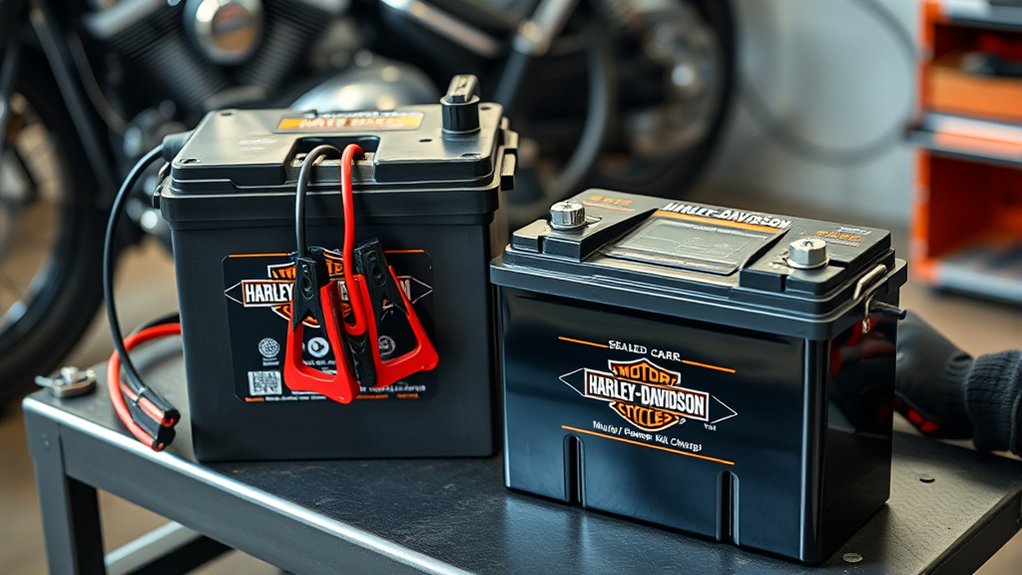
You want to make sure you’re using a charger that’s compatible with your Harley’s battery type. It’s important to follow the manufacturer’s voltage and current specs so you don’t accidentally cause any damage.
Also, keep those terminals clean and try to keep the battery charged regularly, especially if you’re not riding for a while. This really helps maintain its performance over time.
When it comes to storing your bike for the winter, it’s a good idea to disconnect the battery or use a battery maintainer.
Plus, storing it in a cool, dry place can make a big difference in extending its lifespan.
Battery Charging Best Practices
When maintaining your Harley-Davidson battery, it’s essential to use a charger designed specifically for AGM or Lithium types to prevent damage. Always disconnect the battery from the electrical system before charging to avoid short circuits or interference.
Charge at a slow rate, around 2 amps, to guarantee a safe, full charge without overheating or overvoltage.
Regularly monitor the battery’s voltage, keeping it above 12.6 volts. If it falls below this threshold, recharge promptly.
For effective maintenance during inactivity, use a battery tender or smart charger to prevent deep discharges and sulfation. These devices maintain a suitable voltage, ensuring your AGM batteries stay healthy and ready.
Following these best practices guarantees reliable charging and helps prolong your Harley’s battery life.
Maintenance For Longevity
Maintaining your Harley-Davidson battery’s health goes beyond proper charging techniques. Effective battery maintenance starts with corrosion prevention. Regularly clean terminals using a wire brush and a baking soda solution to guarantee solid connections.
Whether you have AGM batteries or traditional lead-acid batteries, avoid deep discharges below 50% capacity to preserve battery lifespan. Always follow manufacturer guidelines for proper charging voltage and current. This helps prevent damage from overcharging.
To keep the battery charged during inactivity, use a compatible motorcycle tender. This prevents sulfation and capacity loss.
While winter storage details come next, it’s important to note that storing the battery in a cool, dry environment reduces self-discharge and prolongs performance.
Consistent attention to these practices will optimize your Harley’s battery longevity and reliability. It’s worth the effort to keep your bike ready to go whenever you are!
Winter Storage Strategies
Although your Harley-Davidson might be idle during winter, its battery still demands careful attention to prevent damage from slow drainage and sulfation. Effective winter storage strategies require you to disconnect the battery or connect it to a compatible trickle charger or smart battery tender. This guarantees you keep the battery fully charged, avoiding deep discharges that harm AGM batteries and other types.
Store your motorcycle in a cool, dry environment away from temperature swings and sunlight to minimize battery stress. Before storage, clean terminals thoroughly and apply corrosion inhibitors for prime maintenance. Conduct monthly voltage monitoring to confirm the battery stays above 12.4 volts, recharging as needed.
These precise steps will preserve your Harley’s battery health throughout winter storage. Taking a little time now means your bike will be ready to ride when the warmer weather returns.
Where to Buy Genuine and Replacement Harley-Davidson Batteries
You’ll find genuine Harley-Davidson batteries exclusively at authorized dealerships and the official Harley-Davidson online store, so you know you’re getting products that meet exact OEM specifications. These OEM Harley-Davidson batteries are designed to match the size, terminal configuration, and performance standards specific to your Harley models.
Genuine Harley-Davidson batteries are available only at authorized dealers and the official online store, ensuring perfect OEM fit and performance.
For battery replacement, authorized dealerships offer a range of AGM batteries, lead-acid, and lithium-ion options tailored to various riding needs. If you prefer other options, trusted automotive retailers and licensed parts distributors also stock high-quality replacement batteries that work well with Harley-Davidson motorcycles.
Buying through official channels guarantees authenticity and top performance. Plus, the Harley-Davidson online store offers convenient home delivery or in-store pickup.
Always prioritize genuine Harley-Davidson batteries to keep your motorcycle reliable and running longer.
Frequently asked questions
How Long Do Harley-Davidson Batteries Typically Last?
Harley-Davidson batteries typically last between 3 to 5 years if you maintain them properly.
You can extend their lifespan by regularly charging the battery, cleaning the terminals, and using a battery tender during off-seasons.
High-quality AGM batteries usually outperform standard lead-acid types, especially against vibration.
Keep in mind, extreme cold can reduce battery life, so inspect your battery frequently.
Replace it timely to avoid starting issues and keep your bike running at its best.
Taking these simple steps can save you from unexpected problems down the road.
Can I Install a Harley Battery Myself or Need Professional Help?
You can install a Harley battery yourself, save money, and gain confidence. Just make sure you follow proper safety procedures.
Start by disconnecting the negative terminal first, then the positive.
When reconnecting, do it in the reverse order.
Use basic tools and double-check that the battery matches the size, CCA rating, and terminal type you need.
If you’re unsure or uncomfortable with electrical systems, don’t hesitate to get professional help.
It’s better to be safe than risk damage or injury.
What Are Signs My Harley Battery Needs Replacing?
You’ll know your Harley battery needs replacing if the engine cranks slowly or struggles to start. Notice dim headlights or weak electrical accessories. These are signs the battery’s power is insufficient.
Swelling, leaks, or corrosion on the battery indicate damage. If it loses charge quickly after charging or won’t hold voltage above 12.4 volts at idle, it’s deteriorating.
Address these signs promptly to avoid breakdowns and keep your bike running smoothly. Don’t wait until you’re stranded—taking action early saves you hassle later.
Are Harley Battery Warranties Transferable Between Owners?
Harley battery warranties aren’t transferable between owners. They only cover the original purchaser and protect against manufacturer defects. So, if you buy a used battery or bike, you won’t get warranty benefits.
To confirm any exceptions, check the specific battery’s warranty terms or contact Harley-Davidson customer service. Some aftermarket batteries may offer transferable warranties, but Harley’s official batteries generally don’t.
It’s a good idea to keep your purchase proof handy for any claims. That way, you’re covered if something goes wrong.
How Does Riding Frequency Affect Battery Life on a Harley?
Wonder how riding often impacts your Harley’s battery life? Frequent riding keeps your battery charged by activating the alternator regularly. This prevents deep discharges that can damage the battery cells.
If you ride rarely, your battery risks sulfation and gradual failure. That happens because power drains from electrical components even when the bike is off.
To maintain the best battery health, try to ride at least every few days. Or, use a battery tender during long breaks. This simple approach helps extend your battery’s lifespan effectively.
Final Thought
Choosing the right battery for your Harley-Davidson isn’t just about power; it’s about reliability and longevity. Whether you go for lead-acid, AGM, or lithium, understanding Cold Cranking Amps helps make sure your bike starts every time. No smoke signals needed.
Keep your battery maintained and charged properly to avoid unexpected failures. It’s all about staying ahead of trouble so your ride never lets you down.
Remember, investing in a quality Harley battery today means your bike will keep roaring tomorrow. It’s the perfect mix of modern tech and timeless performance.