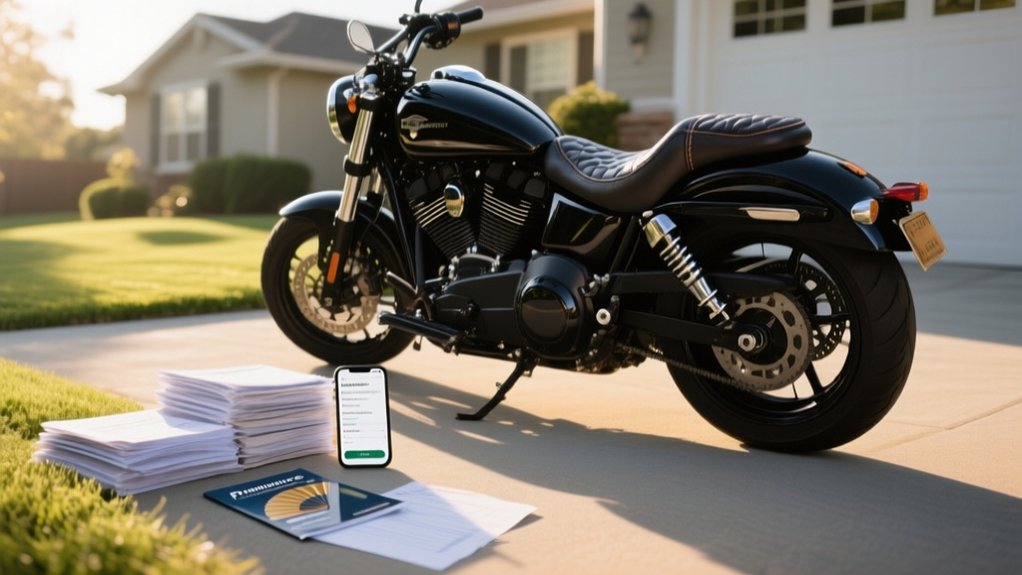
How To Get Motorcycle Insurance – Simple Steps
To get motorcycle insurance, first check your state’s minimum liability and mandatory coverage requirements. Gather your bike’s details, rider info, and any aftermarket parts.
Compare quotes from several insurers or use a licensed broker to make certain consistent coverage and find discounts like multi-policy or safety course perks. Choose suitable limits and deductibles, then finalize your purchase with accurate info to activate coverage.
Keep options like total loss and custom parts endorsements in mind for full protection. Explore further to confidently secure the right plan.
Check Your State’s Motorcycle Insurance Requirements

Before you shop for motorcycle insurance, you need to understand your state’s specific requirements. Start by checking your state minimum liability limits, which usually include bodily injury and property damage coverage but vary widely.
Know your state’s minimum liability coverage before buying motorcycle insurance to ensure proper protection.
Some states mandate additional coverages like Personal Injury Protection (PIP) or Medical Payments, so verify if you need these. If your motorcycle is financed or leased, lender requirements typically demand collision and full coverage, regardless of state minimums.
Also, be aware of proof of financial responsibility rules, such as filing an SR-22, and the uninsured penalties you might face, including fines or license suspension.
Finally, check if your state offers seasonal lay-up coverage, allowing full coverage-only protection during storage periods, and note any restrictions on riding during those times.
Understand Coverage Types and Choose Your Level
You’ll want to start by getting a good grasp of the key coverage types like liability, collision, and full coverage. These help protect both your bike and yourself.
After that, think about optional coverages—things like uninsured motorist protection and endorsements for custom parts—which can help you customize your policy to fit your needs.
Finally, picking the right limits and deductibles is important because it ensures you get the right balance between solid protection and affordable premiums.
Key Coverage Types
Several key coverage types form the foundation of motorcycle insurance, and understanding them helps you tailor a policy that fits your needs. You’ll want to weigh liability coverage, which covers others’ injuries and property damage up to your coverage limits if you’re at fault.
Collision coverage repairs or replaces your bike after crashes, applying your deductible amount. All-risk coverage protects against theft, weather, and vandalism. Uninsured/underinsured motorist coverage shields you when the at-fault driver lacks enough insurance.
Medical payments (MedPay) cover immediate medical bills regardless of fault. Total-loss replacement offers full MSRP for nearly-new bikes. Accessories custom parts endorsement protects add-ons up to $30,000.
Roadside assistance provides emergency support. Choosing appropriate coverage limits and deductible amounts balances cost and protection.
Optional Coverage Choices
Frequently, riders overlook the value of optional motorcycle insurance coverages that can markedly enhance your financial protection and peace of mind.
Beyond state-required liability, adding uninsured/underinsured motorist coverage shields you if the other driver lacks sufficient insurance.
If your bike’s worth over $3,000 or financed, consider collision and all-risk coverage to protect against crash damage, theft, or fire, each with a deductible you select.
Don’t forget endorsements for accessories and custom parts, especially if you’ve invested in high-value mods.
Medical payments or PIP cover rider and passenger medical expenses regardless of fault, while roadside assistance and trip interruption help during emergencies and travel delays.
New-bike replacement offers valuable protection for recent models.
Including these options tailors your policy to fit your needs and budget effectively.
Selecting Limits And Deductibles
Although meeting your state’s minimum liability limits is essential, choosing higher limits and appropriate deductibles can markedly strengthen your financial protection. Opt for liability limits like 100/300/100 to better safeguard your assets and avoid underinsurance.
Carefully balance your collision deductible and inclusive deductible to save on premiums without risking excessive out-of-pocket costs. Don’t overlook uninsured/underinsured motorist coverage limits matching your liability limits for added medical payments, bodily injury, and repair protection.
If you have valuable accessories and custom parts, increase coverage beyond the standard $3,000. For newer bikes, consider total-loss replacement or new bike replacement coverage to receive MSRP minus your policy deductible rather than depreciated value.
- Select coverage limits that reflect your financial risks
- Balance collision and inclusive deductibles wisely
- Match uninsured/underinsured motorist limits to liability limits
- Endorse accessories and custom parts for full replacement
Gather Your Bike and Personal Information
To get accurate motorcycle insurance quotes, you’ll need to gather detailed information about your bike and yourself. Start by recording your motorcycle’s make and model, year, Vehicle Identification Number (VIN), current odometer reading, and estimated annual mileage. Insurers rely on these details to price coverage correctly.
Note your bike’s current market value and list any aftermarket accessories or custom parts, including receipts or photos, as coverage limits may vary. Have your driver’s license number, riding license/endorsement status, full name, and years of riding experience ready.
Prepare your driving/riding history, including past claims, accidents, tickets, and any completed safety courses since these affect premiums and discounts. Collecting this information upfront guarantees a smoother application and helps you secure the best possible rate.
Compare Motorcycle Insurance Quotes or Contact a Broker

You should get multiple quotes from different insurers using the same coverage details to make accurate comparisons. It’s a smart way to see who offers the best deal without missing out on important coverage.
Also, consider reaching out to licensed brokers. They can quickly gather quotes from various carriers and point out discounts or coverage options you might otherwise overlook. This makes the whole process easier and more efficient.
Obtain Multiple Quotes
Obtaining multiple quotes from at least three insurers, such as Progressive, GEICO, and Allstate, gives you a clearer picture of your motorcycle insurance options. To get accurate motorcycle insurance quotes, use an online comparison tool or insurance aggregator to pull quotes from multiple providers quickly.
Always make certain consistent coverage selections, coverage limits, and deductibles across quotes. Provide detailed vehicle and rider details like VIN, model year, mileage, and safety-course completion to avoid mismatches. When you compare quotes, look beyond price to included features for true value.
- Use an insurance aggregator for side-by-side rate comparisons
- Maintain consistent coverage limits and deductibles for accuracy
- Provide detailed and consistent vehicle and rider information
- Review included benefits like roadside assistance or disappearing deductibles
Consult Licensed Brokers
When comparing motorcycle insurance quotes, consulting a licensed broker can really streamline the process and make certain you get side-by-side comparisons from top carriers like GEICO, Progressive, and Allstate. Provide your broker with accurate VIN and bike details including year, make, model, and mileage along with your riding history for precise quotes.
Ask for optional coverages such as collision and comprehensive, UM/UIM coverage, and accessories/CPE limits to guarantee true full coverage comparisons. Confirm what’s automatically included, like safety apparel limits, and explore cost adjustments for higher coverage.
Request premium differences for various deductibles and available discounts including multi-policy comparison, safety courses, and anti-theft devices. Using a licensed insurance broker guarantees thorough, tailored quotes from multiple carriers, helping you balance protection and price efficiently.
Find Discounts and Consider Optional Coverages
Look into available discounts that can materially lower your motorcycle insurance premiums, such as multi-policy bundling, multi-bike coverage, and safety course completion. These motorcycle insurance discounts often stack, helping you save substantially. Don’t overlook claim-free discounts or low-mileage perks that insurers commonly offer.
Beyond discounts, consider optional coverages to protect your investment and yourself. Add comprehensive and collision coverage if your bike’s worth over $3,000 or financed. Use a CPE endorsement to make certain custom parts and accessories receive proper compensation.
Include roadside assistance and trip interruption for peace of mind during rides away from home. Opt for medical payments and UM/UIM coverage to guard against injury costs and uninsured drivers. Combining discounts with tailored coverages guarantees both savings and solid protection.
Review Policy Limits and Deductibles

After identifying discounts and optional coverages that fit your needs, it’s important to carefully review your policy limits and deductibles. Start by verifying your liability limits meet or exceed your state minimum requirements for bodily injury and property damage.
Ensure your liability limits meet or exceed state minimums before finalizing your motorcycle insurance policy.
For collision coverage and all-risk coverage, choose a deductible selection you can comfortably pay. Higher deductibles lower premiums but increase out-of-pocket costs after a claim.
Match your uninsured/underinsured motorist and medical payments (MedPay) limits to your health coverage needs, guaranteeing adequate protection. Don’t overlook endorsements like accessories/custom parts endorsement, which can increase coverage for added gear, and total loss replacement, valuable for newer bikes.
When doing coverage comparison, keep limits and deductibles consistent across quotes to accurately assess insurer pricing. This guarantees you get the best value for your motorcycle insurance.
Finalize Your Motorcycle Insurance Purchase
Finalize your motorcycle insurance purchase by carefully reviewing all selected coverages, limits, and deductibles to make certain they meet your needs.
Double-check that your liability coverage, collision, comprehensive, UM/UIM, and MedPay options align with your risk tolerance and budget.
Before binding, confirm any optional add-ons like total loss replacement or accessories/custom parts endorsement are included.
Provide accurate VIN and bike details to avoid delays, and set your effective date to guarantee seamless protection.
Verify bike and rider info, including license endorsements and garaging ZIP.
Review payment options and activate electronic payments for immediate coverage.
Obtain and save proof of insurance for legal and lender requirements.
Cancel prior policies to prevent coverage gaps.
Taking these steps assures your motorcycle insurance is tailored, valid, and ready when you hit the road.
Frequently Asked Questions
Can I Insure Multiple Motorcycles Under One Policy?
Yes, you can insure multiple motorcycles under one policy, often called a multi-vehicle or family policy. This approach offers premium discounts by combining your bikes and sharing a single premium. Sometimes, it also includes a combined deductible.
Named operators can be assigned per bike, while policy limits and endorsement options apply overall. Insurers also consider your garage location when setting rates. Bundling your motorcycles simplifies billing and may save you money.
How Does My Credit Score Affect Motorcycle Insurance Rates?
Your credit history gently nudges insurers’ algorithms, shaping your risk classification and influencing how they approach policy underwriting.
A solid payment history can reduce the score impact, lowering your rate deviation.
A weaker one may raise it, reflecting perceived claims frequency risks.
Score thresholds play a key role, much like interest rates.
Understanding this lets you shop wisely, seeking insurers balancing score impact and offering fairer terms despite credit variations.
Are There Age Restrictions for Motorcycle Insurance Eligibility?
You don’t usually face a strict maximum age for motorcycle insurance, but minimum age requirements apply, often 16 with learner permits and parental consent.
Young riders typically encounter higher age-based rates due to risk, while senior discounts may lower premiums for experienced older riders.
Insurers require age verification and proper licensing.
Some offer age exemptions or special rates for military age applicants.
Always check your insurer’s specific policies on age restrictions.
What Happens if I Ride a Motorcycle Not Listed on My Policy?
Riding an unauthorized bike not listed on your policy is like playing with fire in a thunderstorm. You risk a policy breach that can lead to a denied claim and a dangerous coverage gap.
This exposes you to huge liability exposure, legal penalties, possible license implications, police seizure, and even cancellation risk. Plus, insurers might hit you with a premium increase.
Always list every bike you ride to protect yourself and stay compliant.
Can I Get Insurance if My Motorcycle Is Modified?
Yes, you can get insurance for a modified motorcycle, but you must disclose all custom parts like performance upgrades, aftermarket exhaust, engine tuning, fuel system changes, safety modifications, and cosmetic changes. Insurers may require insurance endorsements to cover these, affecting your claimed value and possibly your warranty impact.
Providing documentation guarantees proper coverage and avoids claim denials. Always get written acceptance from your insurer before riding to protect your investment.
Conclusion
Getting motorcycle insurance doesn’t have to feel like maneuvering a winding road blindfolded. By checking your state’s requirements, understanding coverage options, and comparing quotes, you’re steering yourself toward smart protection.
Don’t forget to hunt for discounts and review your policy details carefully. When you finalize your purchase, you’ll ride with confidence, knowing you’ve secured the best coverage for your needs.
Take control now. It’s your safety and peace of mind on the line.