What Is Cbt Motorcycle Training – Quick Answer
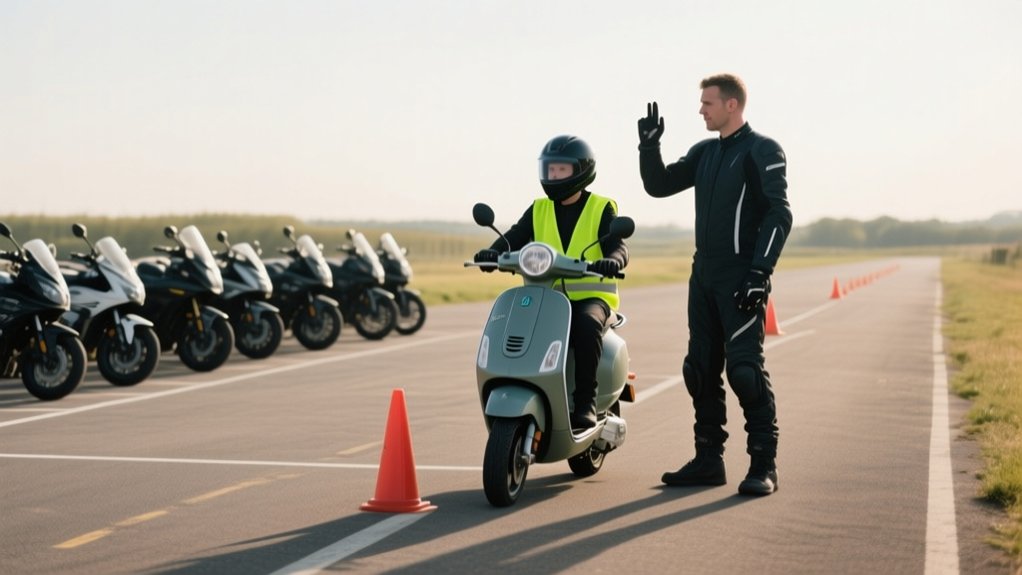
CBT motorcycle training is a one-day course that helps you safely ride a 125cc bike on UK roads. It’s not a test but essential training covering road rules, hazard awareness, and practical riding skills.
After completing CBT, you can ride with L plates for up to two years. There are some restrictions though, like no passengers or motorways.
This course sets you up for legal, confident riding and is your first step toward a full motorcycle license. Learn more about what to expect and next steps here.
What Is CBT and Why Do You Need It?
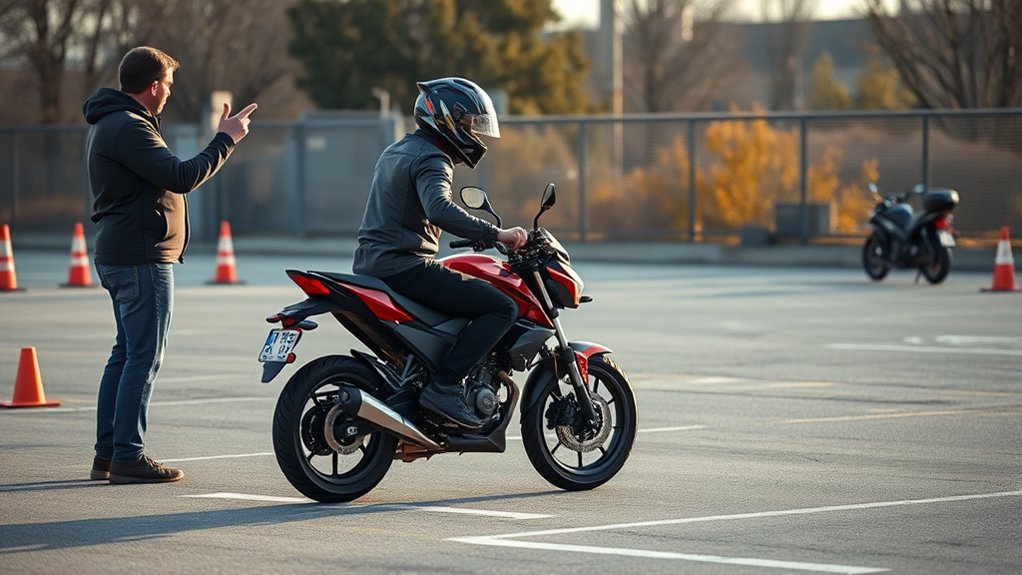
What exactly is CBT, and why do you need it before hitting the road? CBT, or Compulsory Basic Training, is a mandatory course designed to teach you essential motorcycle safety skills. It’s not a test but a structured program that helps you build competence and awareness needed to ride safely.
By completing CBT, you’re legally allowed to ride 125cc motorcycles or mopeds with L plates for up to two years. The training covers key topics like road rules, hazard perception, and practical riding skills both off-road and on-road.
You must complete CBT before riding on public roads, making it an indispensable first step. Taking this course ensures you’re prepared to handle your motorcycle confidently and responsibly from day one.
Who Must Take CBT Before Riding in the UK
Although it might seem straightforward, you must complete a CBT before riding any moped or motorcycle on UK roads if you’re 16 or older. This is mandatory if you hold a provisional licence and want to ride bikes up to 125cc and 11kW.
However, if you have a full car license obtained before February 1, 2001, you might be exempt from needing a CBT certificate. New riders under 16 cannot take CBT but may ride mopeds under specific conditions.
| Age Group | Licence Type | CBT Requirement |
|---|---|---|
| 16+ | Provisional Licence | Must complete CBT |
| 17+ | Provisional Licence | CBT for motorcycles ≤125cc |
| Any age <16 | No Full Licence | CBT not available |
Getting your CBT certificate is your first legal step on the road. It’s a simple process that gets you ready to ride safely and legally.
The Five Key Steps of CBT Motorcycle Training
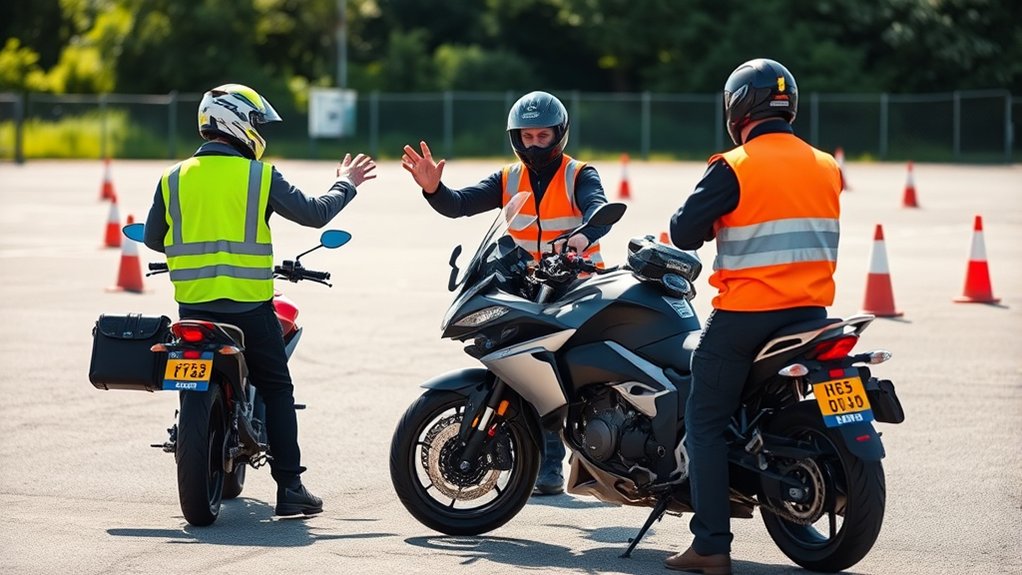
Before you can hit the road confidently, you’ll go through five key steps in your CBT motorcycle training that build your skills from the ground up. First, you’ll complete a licensing check and learn essential motorcycle controls, guaranteeing you understand how everything works.
Start your CBT journey with a licensing check and mastering essential motorcycle controls.
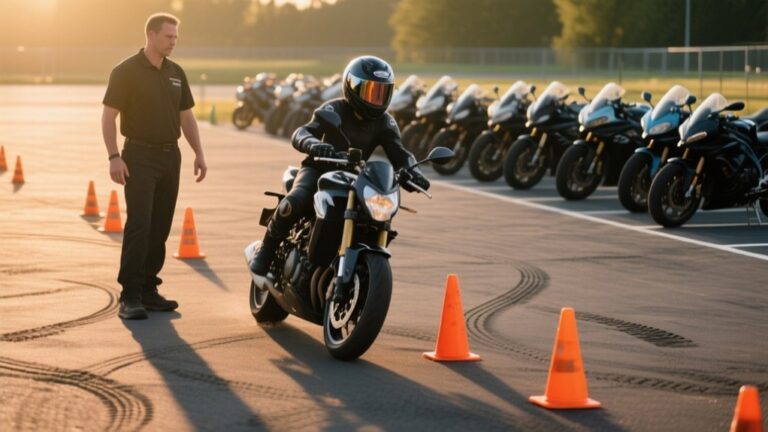
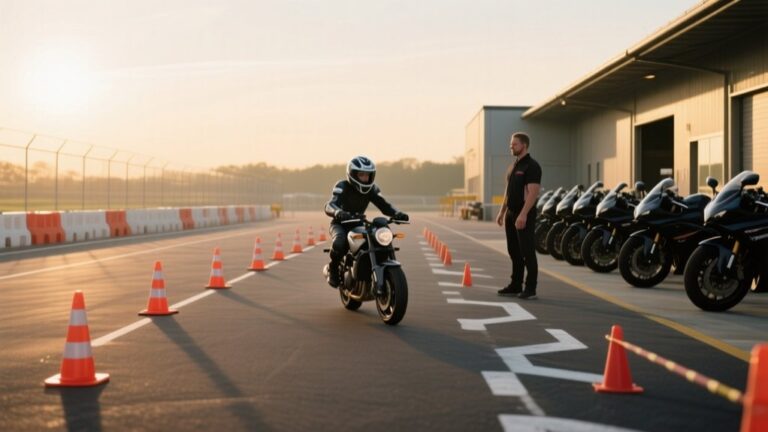
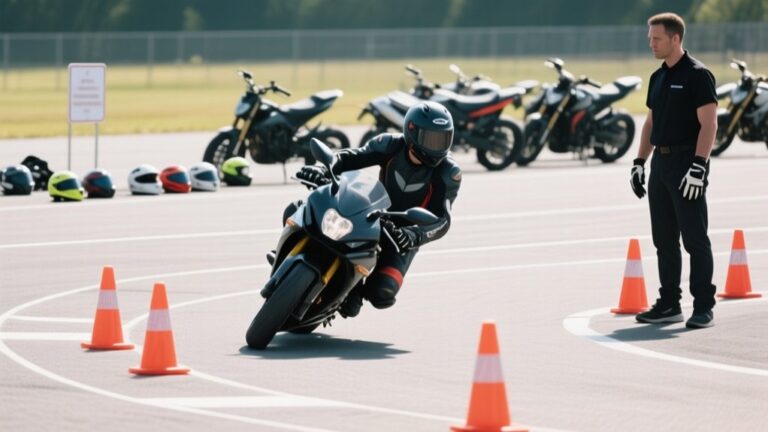
Next, you’ll practice off-road riding to master starting, stopping, and junction procedures in a safe setting.
Then, your training will focus on hazard awareness, teaching you to spot and respond to potential dangers effectively.
Each step builds on the last, preparing you for the final stage: on-road riding. This progression ensures you develop solid skills and confidence before riding on public roads, making your journey safer and more enjoyable.
What Happens During the On-Road CBT Session
The on-road CBT session puts your skills to the test as you ride 30 to 50 miles in real traffic with your instructor guiding you throughout. This hands-on experience helps you build confidence and shows you can handle different road situations. Your instructor stays in constant radio contact, giving feedback as you steer through public roads.
During the session, you’ll practice essential skills that are vital for safe riding. These skills include hazard perception and reacting appropriately, navigating junctions safely, performing hill starts smoothly, and making controlled U-turns.
Successfully completing this on-road segment proves you’re ready for solo riding. Plus, you’ll earn the DL196 certificate, which is a key step in your motorcycle training journey.
How Long Is CBT Training?
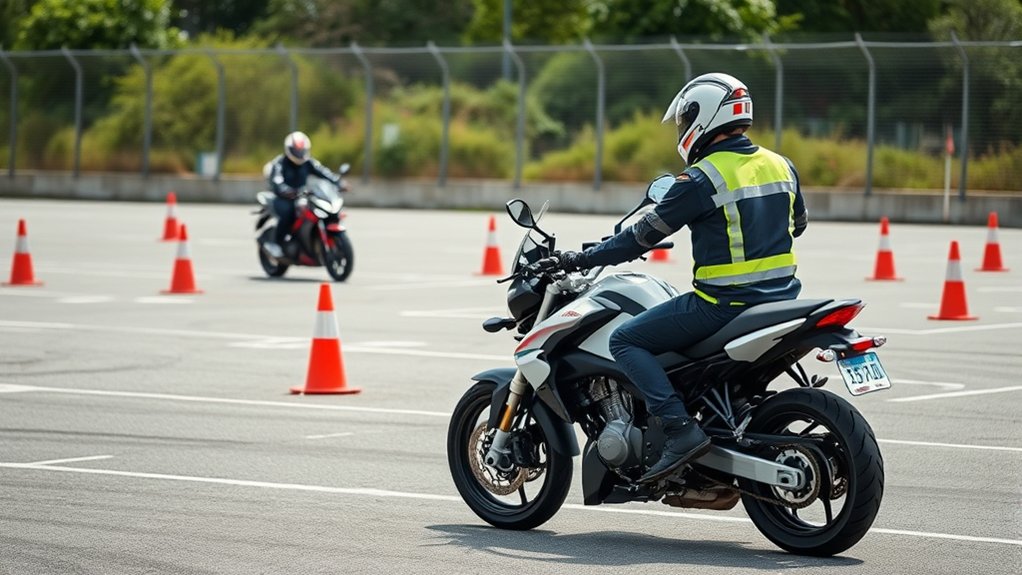
Completing your CBT training usually takes about one full day, typically lasting between 6 to 8 hours. During this time, you’ll complete five structured sections, covering everything from basic skills to on-road riding.
The practical part includes riding between 30 to 50 miles, depending on the course, giving you real experience on public roads.
Most people finish their CBT training within this single day, receiving certification immediately afterward so you can start riding legally right away.
Occasionally, if you need extra support or practice, the course might be extended, but this is uncommon.
Booking Your CBT Course: Step-by-Step
When you’re booking your CBT course, the first thing to do is find approved providers that match your schedule.
It’s a good idea to double-check important details like where the course will be held, how long it lasts, and any documents you might need to bring along.
Booking early can really pay off because it helps you lock in the date you want and saves you from any last-minute stress.
Scheduling Your Course
Since booking your CBT course is your first step toward riding independently, you’ll want to plan ahead by choosing an approved training provider. Scheduling your course means confirming key details to make sure everything goes smoothly.
When you book, make sure you verify the course location, date, and duration for your convenience. Also, have your provisional license and any necessary documents ready.
Choose a provider with proper accreditation, like Motorcycle Industry Association approval. It’s also important to understand the full cost, including any fees for bike hire or equipment.
Booking with a reputable training provider guarantees quality instruction and gets you ready for your CBT.
Planning carefully helps you avoid last-minute issues and sets you up for a successful start to your motorcycle journey.
Finding Approved Providers
How do you find the right place to take your CBT course? Start by looking for approved providers accredited by the Motorcycle Industry Association (MCIA) or the Driving and Vehicle Standards Agency (DVSA). These approvals guarantee the training meets quality and legal standards.
You can easily book your course online through the provider’s website or visit their physical location. Many reputable centers offer flexible scheduling, including evenings and weekends, to fit your timetable.
Before booking, double-check that the provider is officially approved to deliver CBT courses. This guarantees you’ll receive proper instruction and comply with regulations.
Choosing an approved provider gives you confidence in your training and helps you progress smoothly on your motorcycle journey.
Confirming Course Details
Although booking your CBT course might seem straightforward, verifying all the essential details beforehand guarantees a smooth experience. Before you finalize your booking, double-check key information to avoid any hiccups.
Confirming the course location, date, and duration ensures it fits your schedule and availability.
Make sure you have all necessary documents, like your provisional license and ID, ready when booking. Also, verify the training provider is accredited and well-reviewed to guarantee quality instruction.
Here’s a quick checklist for confirming your course details:
- Course location, date, and duration
- Required documents (provisional license, ID)
- Provider accreditation and reviews
- Booking well in advance, especially during peak seasons
Taking these steps helps you secure your spot and prepare confidently for your CBT course.
What to Bring and How to Prepare for CBT
Before your CBT course, be sure to bring your valid provisional license and ID to confirm your eligibility.
Also, don’t forget to wear proper protective gear like a helmet and gloves to keep yourself safe during the riding sessions.
It’s a good idea to brush up on basic riding skills and safety rules beforehand, too. This will help boost your confidence and make the experience smoother.
Essential Documents Needed
What should you bring to guarantee a smooth CBT motorcycle training session? Having the right essential documents ready will help you focus on learning without any last-minute stress.
For your CBT motorcycle training, make sure you prepare these items ahead of time:
- A valid provisional driving license to prove your eligibility
- Personal identification such as an ID card or passport for registration
- Booking confirmation or appointment details from your training provider
- A basic understanding of safety guidelines and the Highway Code
Bringing these essential documents assures your registration process goes smoothly and lets you concentrate on mastering the skills.
Being well-prepared shows responsibility and helps you get the most out of your CBT motorcycle training experience.
Appropriate Riding Gear
Since your safety and comfort are vital during CBT motorcycle training, bringing the right riding gear is a must. Make certain you have a certified helmet, gloves, a protective jacket, trousers, and sturdy footwear. These items provide essential protection and help you stay comfortable throughout the course.
Don’t forget to wear weather-appropriate clothing, like waterproof gear or layers, depending on the forecast. Before you arrive, perform safety checks on your riding gear to verify it meets safety standards and fits properly. This way, you’ll maximize both protection and comfort.
Also, bring personal identification, your provisional license, and booking details. Packing a pen and notepad helps you jot down important safety tips and instructions during training. Preparing well sets you up for success.
Pre-Course Skill Practice
Although arriving prepared can feel overwhelming, bringing your provisional license, ID, and booking confirmation is vital for verifying your enrollment.
Pre-course skill practice helps you feel confident and ready for your Compulsory Basic Training (CBT). Before the course, focus on reviewing key skills and understanding safety essentials to make the most of your training day.
Here’s what to keep in mind for effective preparation:
Wear protective gear like a helmet, gloves, and sturdy clothing for safety during practical exercises. Practice basic riding skills such as balancing, starting, stopping, and slow turns to build confidence.
Study safety guidelines, road rules, and hazard perception through online resources or the Highway Code.
Arrive early to allow time for registration, equipment fitting, and a briefing before CBT begins.
This preparation ensures a smooth start to your CBT motorcycle training.
What You Can and Cannot Do After Completing CBT
Wondering what you can do once you complete your CBT? After passing, you can legally ride a motorcycle up to 125cc with L plates for two years. Just remember, you have to ride safely and follow the rules.
No passengers or motorway riding until you get your full motorcycle licence. Also, riding without L plates or a valid CBT certificate could get you fines and penalty points.
Here’s a quick guide to what you can and cannot do:
| What You Can Do | What You Cannot Do |
|---|---|
| Ride motorcycles up to 125cc | Carry passengers |
| Display L plates on your bike | Ride on motorways |
| Ride for two years after CBT | Ride without a valid CBT certificate |
| Practice to get full licence | Exceed CBT restrictions |
| Ride safely within the law | Avoid retaking training after 2 years |
Stick to these limits to ride safely and work towards your full motorcycle licence.
How to Renew or Retake Your CBT Certificate
How often do you need to renew your CBT certificate? You must renew it every two years by completing the training again with an approved provider. If your CBT certificate expires, you’ll need to retake the full course to ride legally.
Renew your CBT certificate every two years by completing the training again with an approved provider to stay legal.
Retaking the CBT involves going through the five structured sections, similar to the original training. You can retake it multiple times within the two-year validity period.
To make renewing or retaking smoother, consider these tips:
- Choose an approved training provider for your CBT course.
- Practice your riding skills before retaking to boost confidence.
- Prepare for the five sections of the CBT during retakes.
- Keep track of your certificate’s expiry date to avoid lapses.
Renewing or retaking your CBT keeps you safe and legal on the road.
How CBT Fits Into Getting a Full Motorcycle License
Completing your CBT is the first essential step towards getting a full motorcycle license. It lets you ride smaller bikes with L plates for up to two years.
After that, you’ll need to pass both the theory and practical tests to gain full riding privileges.
CBT’s Role Explained
Where does your CBT fit into the journey toward a full motorcycle license? Your CBT is the essential first step in motorcycle training. It gives you the legal right to ride on the road with L plates for up to two years.
It builds the foundational skills and safety awareness you need before tackling the full licensing tests. Remember, CBT isn’t a substitute for these exams but a prerequisite.
Here’s how CBT plays a vital role:
- Grants legal riding experience on public roads with L plates
- Provides core riding skills and safety knowledge
- Must be completed before taking theory and practical tests
- Valid for two years, requiring full license completion within this time
Your CBT sets the stage for safe, confident riding. It gets you ready for the next steps toward full licensing.
Post-CBT Licensing Steps
After finishing your CBT, you have up to two years to advance toward a full motorcycle license by passing the required theory and practical tests. The post-CBT licensing process lets you progress from basic riding with restrictions to full license privileges, including motorway riding and no L plates.
Make sure to complete your tests within this period. Otherwise, you’ll need to retake the CBT.
| Step | Details |
|---|---|
| Theory Test | Required for all full license types |
| Practical Test | Confirms riding skills for your category |
| Full License | Removes CBT restrictions and L plates |
Following these steps will help make your transition from CBT to a full license smooth and timely.
Frequently asked questions
Can CBT Training Be Done on Electric Motorcycles?
Yes, you can do CBT training on electric motorcycles as long as they meet legal and safety requirements. Your instructor will check that the bike is insured and roadworthy before you start.
The training process stays the same whether you use electric or petrol bikes, so you won’t miss out on anything.
Once you complete your CBT on an electric motorcycle, you’re legally allowed to ride it on public roads.
Are There Any Age Restrictions for CBT Refresher Courses?
You won’t find any strict age fences blocking you from taking a CBT refresher course. Whether you’re 16 or enjoying the wisdom of your later years, as long as you hold a valid provisional or full motorcycle license, you’re welcome to join.
Some providers might have their own preferences, but generally, your age won’t hold you back. It’s a great way to boost your confidence and safety, especially if you’re returning to riding.
Does Weather Affect CBT Training Schedules?
Yes, weather can definitely affect your CBT training schedule. If conditions like heavy rain, snow, or strong winds make riding unsafe, your provider might postpone or reschedule your session. They often keep an eye on forecasts to protect your safety.
Sometimes, they offer indoor or simulator alternatives to keep you on track.
It’s a good idea to check the weather and confirm your appointment beforehand to avoid any surprises.
Can I Choose My Instructor for CBT Training?
Think of choosing your CBT instructor like picking a guide for a mountain trek. You want someone experienced and trustworthy.
You can usually choose your training provider, and sometimes even request a specific instructor, but it depends on their schedule.
To increase your chances, book early and ask about instructor options. This way, you’ll get quality guidance tailored to your learning style.
It makes your CBT journey smoother and more confident.
Is CBT Training Valid Outside the UK?
No, CBT training isn’t valid outside the UK. If you’re planning to ride abroad, you’ll need to check the specific licensing rules of the country you’re visiting.
Some places require an International Driving Permit or additional training.
So, don’t rely solely on your UK CBT certificate. Make sure you complete any extra steps needed to ride legally and safely when you’re overseas.
It’s always better to be prepared!
Final Thought
Completing your CBT is like opening the first gear on your motorcycle journey. It sets you in motion with confidence and safety.
You’ll gain essential skills, understand the rules, and feel ready to hit the road responsibly. Remember, CBT is your stepping stone, not the finish line.
Keep your certificate up to date, and soon you’ll be cruising toward a full license. So gear up, stay focused, and enjoy every mile ahead!