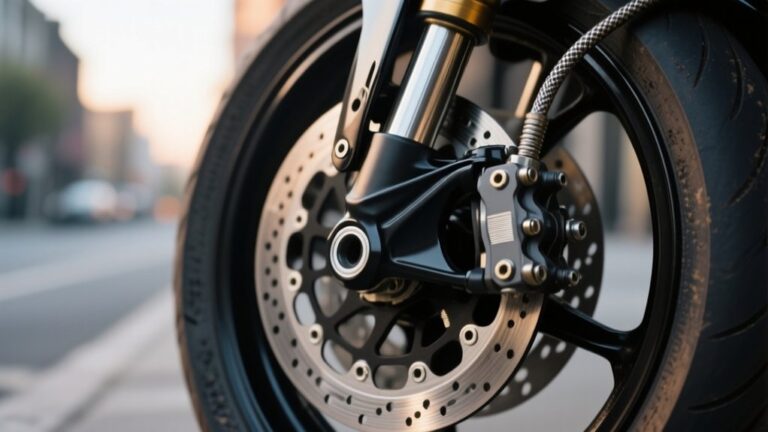
What Causes Death Wobble On A Motorcycle – Straight Answer
You get death wobble on a motorcycle when worn or loose steering bearings, front wheel imbalances, improper suspension settings, or loose components let unstable oscillations grow rapidly above 40 mph. Issues like bearing play reduce damping, bent rims disrupt balance, and weak suspension changes natural frequencies, all triggering violent steering shake.
External factors like road debris or abrupt rider inputs can start it, but underlying mechanical faults let it worsen. Understanding these causes helps you prevent and control this dangerous condition.
Understanding Death Wobble on Motorcycles

Although it may feel sudden and uncontrollable, death wobble on motorcycles results from a specific set of mechanical and dynamic conditions. Death wobble is a rapid, high-amplitude oscillation, typically 4 to 10 Hz, where the handlebars violently steer side-to-side. It’s often triggered above 40–50 mph.
It happens when your bike’s steering system is underdamped due to loose or worn headset bearings, a loose triple-tree, or a flexible frame. Wheel irregularities like out-of-round rims, imbalance, or worn tires make small disturbances turn into sustained oscillations.
External triggers such as hitting potholes, debris, or abrupt weight shifts can excite this wobble by disturbing front-end loading and steering geometry. Insufficient damping, improper suspension setup, or incorrect tire pressure further increase the chance the oscillation grows instead of fading away.
Recognizing Death Wobble Symptoms Early
Death wobble typically starts with subtle cues that riders often overlook until the oscillation becomes severe.
Death wobble begins with subtle signs that are often missed until the shaking intensifies.
You might first notice a light or disconnected feeling at the front, or a subtle shimmy after hitting a bump at speeds above 40 mph.
The handlebars may begin to self-steer beyond normal counter-steering inputs.
If you instinctively grip the bars tightly or brake abruptly, the oscillation can quickly grow in amplitude.
Early mechanical signs include loose or worn steering bearings, out-of-balance front tires, and loose fasteners in the triple tree or axle.
External triggers like potholes or sudden weight shifts can excite front-end resonance, initiating the wobble.
Recognizing these symptoms early allows you to address front-end issues before they escalate into dangerous oscillations.
Why Worn Steering Bearings Can Cause Wobble
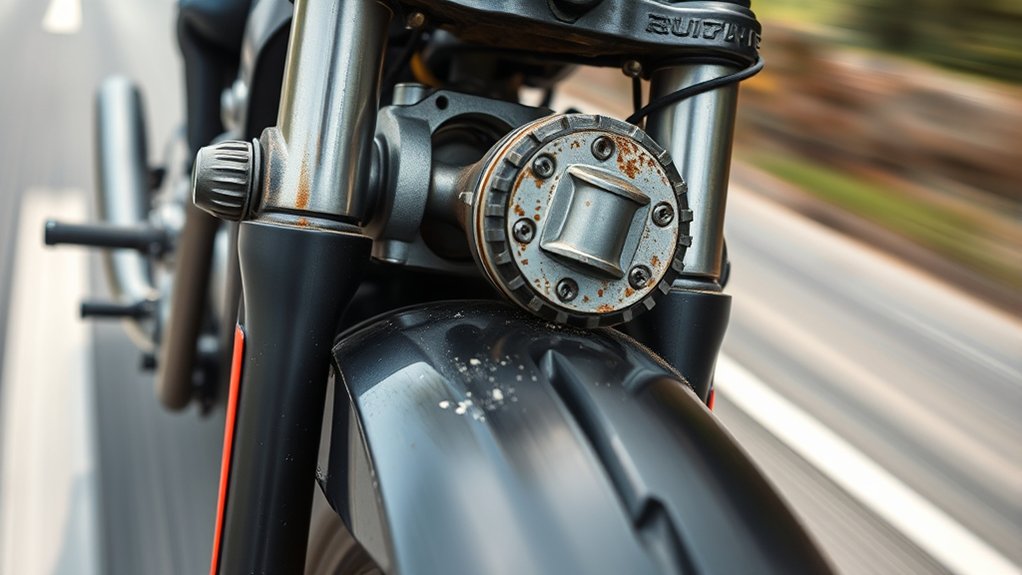
When steering bearings wear out, they introduce excessive play along the steering axis, allowing the front wheel to yaw independently from the frame. This freedom is what enables oscillations to begin and grow, potentially leading to death wobble.
Loose or pitted bearings reduce the steering pivot’s consistent centering torque, which decreases damping and makes small disturbances easier to amplify—even with a steering damper installed. Excessive preload or uneven wear causes nonlinear steering friction, creating stick-slip effects that can couple with wheel motion and trigger high-frequency shimmy.
Furthermore, bearing wear shifts the steering axis and alters front-end alignment under load. This changes the system’s natural frequency and pushes stable speeds into the instability range.
- Feel for notchiness or play during inspection
- Adjust to factory torque specifications precisely
- Replace bearings at the first sign of roughness
- Use a steering damper but don’t rely solely on it
Front Wheel Balance and Tires in Death Wobble
Steering bearing condition directly affects front-end stability, but the balance and condition of the front wheel and tires play a significant role in triggering wobble events. If your front wheel is out of balance, either static or dynamic, it generates cyclic lateral forces that can excite steering shimmy, especially near the system’s natural frequency.
Irregular wear on the front tire, such as flat spots or cupping, introduces uneven contact forces that heighten wobble risk. Maintaining correct tire pressure is vital since both underinflation and overinflation alter lateral stiffness and damping, diminishing disturbance absorption.
Moreover, contaminants on the front tire tread or mismatched tires and wheels, like bent rims or loose spokes, disrupt rotating mass distribution and steering geometry. This further increases wobble susceptibility. Regular inspection and precise balancing of your front tire are essential to prevent death wobble.
Why Suspension Setup Matters for Death Wobble
Proper suspension setup plays a crucial role in preventing wobble by maintaining front-end stability and controlling how your motorcycle responds to road inputs. When your front wheel suspension lacks proper damping or preload, steering becomes unstable, increasing wobble risk at speed. You need a setup tuned to your weight and riding style to keep resonance out of cruising ranges.
Key suspension factors to manage include:
- Correct fork bearing preload to guarantee precise steering head pivoting
- Proper spring rate and sag for your weight to maintain correct front-end load and trail
- Adequate compression and rebound damping to absorb road disturbances
- Tight, balanced front wheel assembly with no worn components to dissipate cyclic forces
Optimizing these aspects helps raise damping ratio, stabilizing the front wheel and reducing death wobble risk markedly.
How Your Weight Affects Front-End Stability
Adjusting suspension settings sets the stage for front-end stability, but how you position your weight directly influences how the bike responds to those settings. As a new motorcycle rider, you should understand that shifting your weight rearward reduces load on the front wheel, raising the speed threshold where wobble occurs.
Conversely, leaning forward or carrying gear ahead increases steering inertia, making oscillations more likely. Maintaining a low center of mass improves roll stability and reduces steering oscillations. Uneven or dynamic weight shifts can cause asymmetric tire loads, exciting shimmy modes.
| Rider Weight Position | Effect on Front-End Stability |
|---|---|
| Rearward | Decreases front load, delays wobble |
| Forward | Increases steering inertia, riskier |
| High Center of Mass | Reduces roll stability, amplifies wobble |
Manage your weight consciously to enhance stability and avoid death wobble.
Road and Environmental Triggers of Death Wobble
When you hit a pothole or curb at high speed, the sudden lateral jolt can excite your motorcycle’s steering assembly and trigger a wobble. Road and environmental factors play a critical role in initiating death wobble, especially if your riding techniques don’t compensate for these hazards. You must stay vigilant to conditions that alter front-end loading or traction.
Key triggers include:
- Oil, gravel, or debris on the front tire causing asymmetric forces or traction loss
- Strong crosswinds or turbulent airflow above 50 mph applying uneven aerodynamic pressure
- Rapid weight shifts from hard front braking or abrupt rider movements altering front-end dynamics
- Surface changes like groove pavement or metal bridge decks generating repetitive steering inputs
Adapting your riding techniques to these conditions helps prevent instability and maintains control.
Key Mechanical Failures That Cause Death Wobble
Beyond external factors like road conditions and environmental forces, mechanical issues within your motorcycle’s front-end components often trigger death wobble. Key failures include worn or loose steering/headset bearings that create excessive play around the pivot point, allowing uncontrolled oscillations.
Improperly torqued triple-tree clamps and fork pinch bolts let the forks pivot independently, reducing steering stiffness and enabling shimmy. Front-wheel problems such as out-of-round tires, uneven wear, low pressure, or unbalanced wheels introduce cyclic lateral forces that excite wobble modes.
Weak or worn suspension components diminish front-end damping, altering natural frequencies and increasing susceptibility. Moreover, a failed or missing steering damper removes critical damping necessary to suppress the resonance that causes death wobble.
Addressing these mechanical failures is essential to maintain stable, predictable handling.
How to Safely Recover From Death Wobble While Riding
Recognizing the onset of death wobble is essential for maintaining control and safety. When you feel rapid front-end oscillations, don’t fight the bars; relax your grip, keep elbows bent, and allow the chassis to settle naturally. Gradually reduce speed without sudden throttle cuts or aggressive front braking, as these can worsen the wobble.
Stay calm during front-end oscillations: relax your grip, keep elbows bent, and reduce speed smoothly to regain control.
To recover safely:
Roll off the throttle progressively to minimize longitudinal load transfer. Maintain an upright posture, look toward your intended path, and shift weight slightly rearward. Avoid abrupt steering inputs and resist putting your feet down. Once oscillations slow, gently apply brakes without hard front braking until stable.
After stopping, inspect new and existing components like tire pressure, wheel balance, and steering bearings before resuming higher speeds.
Adjusting Steering Dampers to Prevent Wobble
Although a steering damper can’t fix all causes of death wobble, it plays a crucial role in reducing high-frequency oscillations by adding viscous resistance to the steering assembly. To adjust your damper properly, start at the softest setting and gradually increase stiffness until transient oscillations disappear without sacrificing low-speed steering feel.
The damper acts like a notch filter, targeting wobble frequencies between 4 and 10 Hz, so correct tuning is critical. Make sure damper stiffness matches your motorcycle and rider weight. Too soft won’t stop the wobble, and too stiff can degrade self-centering and cause high-speed weave.
Always pair damper adjustments with mechanical fixes like balanced wheels and proper fork setup. Finally, verify stability at speeds where oscillations occurred and have a shop check damper mounts and alignment to avoid failure.
Frequently Asked Questions
Can Death Wobble Damage My Motorcycle Permanently?
Yes, death wobble can cause permanent damage to your motorcycle. The violent oscillations can misalign your suspension, stressing components like fork tubes and triple clamps.
Suspension alignment issues lead to uneven wear and compromised handling. Fasteners may loosen, bearings degrade, and wheels or tires can develop cracks or fatigue.
Even if damage isn’t visible, hidden structural fatigue might exist. You should get a professional inspection and realignment before riding again to avoid lasting harm.
Are Certain Motorcycle Brands More Prone to Death Wobble?
You won’t find clear brand susceptibility to death wobble since it’s more about your bike’s geometry, front-end stiffness, and setup than the manufacturer. Older or lightly damped designs might be more prone, but it’s usually improper maintenance, like loose bearings or worn tires, that triggers wobble.
Modern bikes with tuned suspension and factory steering dampers reduce the risk, so focus on your bike’s condition and setup rather than blaming a specific brand.
How Often Should I Service My Bike to Prevent Death Wobble?
You don’t want a death wobble throwing you off at 60 mph, so prioritize regular maintenance like your life depends on it because it does!
Service your bike every 3,000 to 6,000 miles or at each oil change, inspecting steering bearings, wheel balance, and tire condition meticulously.
Don’t skip suspension checks annually or after weight changes.
Staying precise and consistent with this schedule keeps your ride stable and wobble-free.
Can Aftermarket Parts Cause or Worsen Death Wobble?
Yes, aftermarket parts can cause or worsen death wobble, especially if you don’t guarantee proper aftermarket alignment. Stiffer windscreens, heavier handlebars, or incorrect steering dampers affect your bike’s steering dynamics.
Non-OEM wheels or tires that aren’t balanced or are out-of-round create cyclic loads. Even modified triple trees or loose clamps change bearing preload, introducing play.
You need to carefully check and adjust alignment and component compatibility to avoid amplifying wobble.
Is Death Wobble More Common at Specific Speeds?
Yes, death wobble is more common within specific speed ranges, typically between 40 and 80 mph. You’ll often notice it intensifying around 50 to 75 mph, where front-end resonance modes and frame flexibility can trigger oscillations.
While wobble frequency stays fairly constant, the amplitude grows in these speed ranges. Factors like suspension setup, tire condition, and aerodynamics can shift these thresholds, so maintaining proper damping and alignment is essential to minimize risks.
Conclusion
Now that you know what causes death wobble, from worn steering bearings to suspension issues, are you ready to tackle it head-on? Don’t ignore early symptoms or overlook proper wheel balance and tire condition.
Regularly check your steering components and adjust your dampers to maintain control. Understanding these factors helps you prevent dangerous oscillations and guarantees a safer ride.
Stay vigilant, maintain your bike, and keep death wobble from taking over your ride.