What Is Counter Steering On A Motorcycle – Straight Answer
Countersteering on a motorcycle is the quick push you give the handlebar on the side you want to turn.
Push right to go right, push left to go left.
That brief input makes the bike lean, and the lean is what lets you corner at speed.
You don’t use it to hold the turn, just to start it cleanly and reliably.
Once you know the feel, cornering and swerving get much easier.
What Is Countersteering on a Motorcycle?
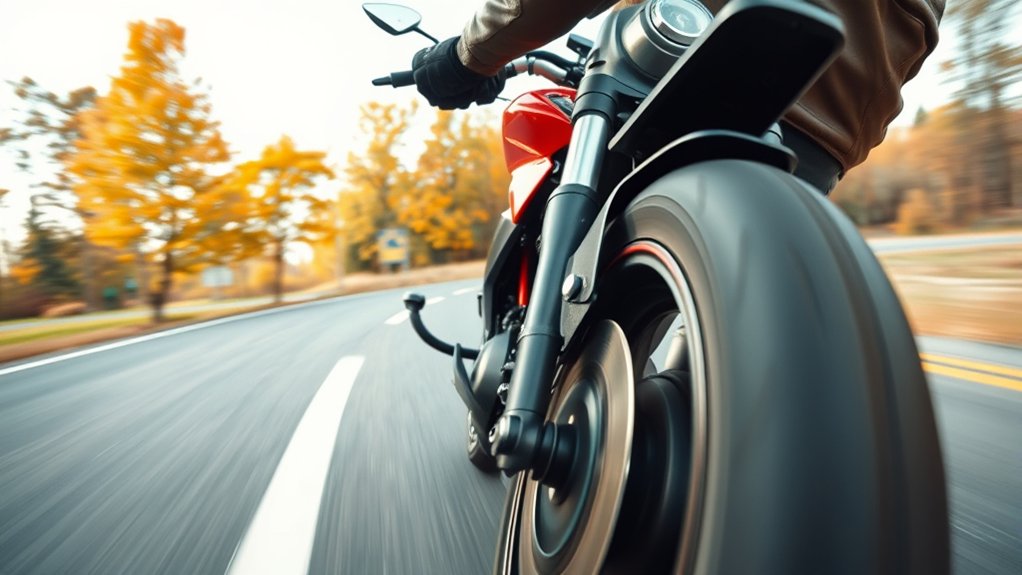
Countersteering is the quick push you give the handlebar on the side you want to turn. For example, push right to go right, so the motorcycle leans into the curve.
Countersteering is the quick push on the handlebar that helps a motorcycle lean into the turn.
You use this brief input to start the lean, not to hold the turn. When you press the handlebar forward on the inside of the turn, the front wheel turns slightly the other way for a moment and tips the bike onto the right line.
Once the motorcycle is leaning, you steer into the turn to stay on the curve. This technique matters because it’s faster, more precise, and more reliable than shifting your body alone, especially at normal road speeds and on heavier bikes.
Safety courses teach countersteering because you’ll need it for stable cornering and quick swerves.
How Countersteering Works at Speed
At speeds above about 12 mph, you push forward on the handlebar on the side you want to turn. That brief input nudges the bike into a lean by steering the front wheel slightly the other way.
Once the bike has started leaning, it begins to turn into the corner. That’s because lean angle is what allows you to follow a curved path at speed.
After you’ve reached the amount of lean you want, you then steer in the direction of the turn to hold the bike’s line through the curve.
Push To Lean
To initiate a turn at typical road speeds, push the handlebar forward on the side you want to turn.
Push the right grip to lean and turn right.
That countersteering input briefly points the front wheel away from the turn.
Then the tire forces tip the bike into the proper lean angle.
You don’t need a hard shove.
A gentle, momentary push is usually enough for clean turn initiation.
As speed rises, or as you ask for a tighter radius, you need more lean.
So you’ll use a stronger push on the handlebar input to reach it.
Sharp inputs create faster lean rates.
They can help in quick swerves, but they also add instability if you overdo them.
Lean To Turn
Once you’ve given that brief push on the bar, the bike doesn’t turn instantly.
It first leans, and that lean is what lets it carve the corner.
With countersteering, you apply steering torque opposite the direction you want to go.
So the front wheel briefly points away from the turn.
That small out-tracking creates lateral tire force.
It also shifts the combined center of mass inside the curve.
At speed, the bike can’t follow a new path without the right lean angle.
And the faster you ride or the tighter the turn radius, the more lean you need.
Above about 12 mph, this input becomes clear.
It’s the quickest, most precise way to bank the motorcycle into the turn you want.
Hold Steady Through Curve
As the motorcycle settles into the curve, keep the lean steady by steering into the turn after that initial countersteer input. At roadway speed, countersteering gives you the quick lean you need.
Then your handlebar input shifts into the turn to hold your line. The lean angle you need depends on speed and radius, so faster travel or a tighter bend demands more lean.
That means you’ll feel a stronger press during turn entry. In a steady-radius turn, the front wheel stays pointed into the curve while the bike tracks smoothly.
Practice light pushes at about 20 mph to feel how small inputs change lean without oversteering. Use the same quick action for emergency swerves, where fast, precise countersteering helps you change direction immediately and safely.
Why a Motorcycle Must Lean to Turn
You’ve got to lean the motorcycle when you turn because gravity and the cornering force need to line up so the bike can follow the curve instead of just tipping outward.
A small amount of countersteering helps you start that lean in the first place.
And how much you need keeps changing.
As your speed goes up or the turn gets tighter, you’ll need more lean angle.
At lower speeds, you can get away with less lean.
Lean Angle Basics
Leaning is what lets a motorcycle turn without falling outward. The bike and rider have to angle their combined center of mass so the tire’s lateral, or centripetal, force passes through it and balances gravity.
Your lean angle depends on speed and turn radius. Faster riding or a tighter corner demands more lean. Use the guide θ = arctan(v²/(g·r)).
If you don’t lean enough, inertia pushes you wide and the tires understeer.
In practice, you’ll see a few degrees at walking pace. Then 30° to 45° or more in brisk cornering.
Countersteering helps you initiate that lean, but once set, the bike must hold the angle. To steer into the turn, you need balance.
Countersteer To Lean
To make a motorcycle turn, you first have to make it lean. Countersteering gives you that lean with a quick push on the bar toward the turn.
| Factor | Effect |
|---|---|
| handlebar input | starts the lean |
| lateral tire force | tips the bike |
| lean angle | matches the curve |
| speed vs radius | sets the demand |
| heavier bike | needs more input |
Without lean, inertia carries you straight and the tires understeer, so you run wide. The needed lean angle rises with speed and tightens as radius shrinks, roughly arctan(v²/g·r).
That’s why a brief, precise steer input works. It creates the side force that angles the bike, letting gravity and tire grip balance the turn.
At street speeds, this happens fast and cleanly.
Speed Changes Lean
The faster you’re going, the more the bike has to lean to stay in the turn. That’s because the lean angle must grow with speed and shrink with turn radius.
You need that lean so the bike’s combined mass stays aligned with the force through the tyres’ contact patch. As speed rises, the centrifugal term grows with v². So a modest increase in speed can demand much more lean angle for the same turn radius.
If you don’t lean enough, inertia pushes you wide and the bike understeers. At low speed, body shift may be enough. But above about 12–18 mph, you use countersteering to initiate lean.
That deliberate input lets the bike set the angle needed to hold the line.
How to Use Push Left, Go Left
Nudge the left handlebar forward to start a left turn. That small push first steers the front wheel slightly right. Then the bike leans left and arcs into the curve.
Nudge the left handlebar forward to start a left turn; the bike briefly steers right, then leans left into the curve.
This is countersteering in action, and it explains “push left, go left.” Use a gentle, deliberate press. Don’t yank; a hard shove can make the bike react too fast.
The move works best above about 12 mph. Practice at 15–25 mph on a safe road to feel it. At low speeds, it’s less noticeable.
To straighten up, ease off or press the right grip slightly. Then roll on throttle gradually. Keep your upper body relaxed and grip light.
How to Position Your Body in Corners
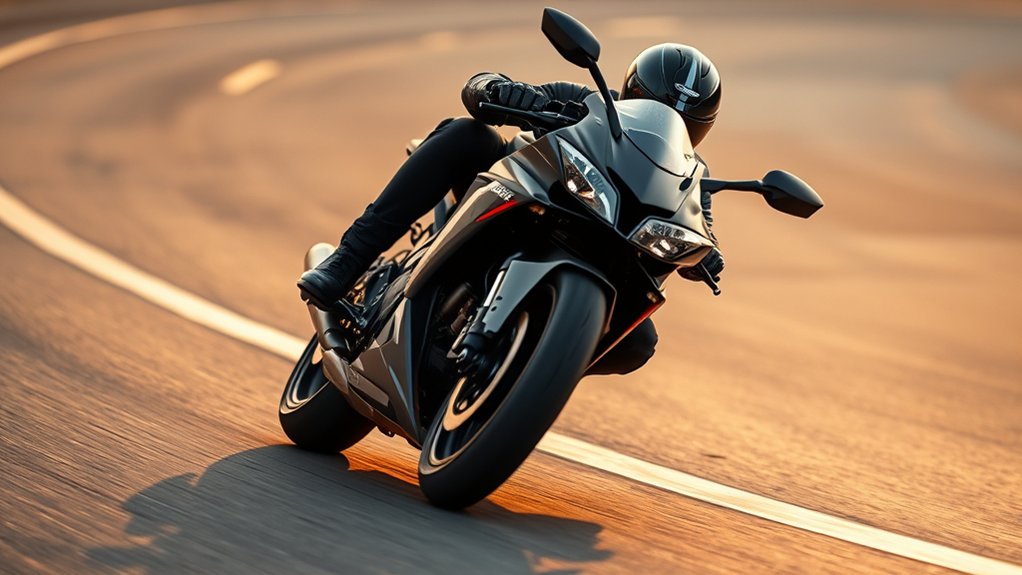
As you tip into a corner, lean your upper body slightly toward the inside.
This helps the bike reach the needed lean angle with less handlebar input.
Keep your torso aligned with the steering axis.
Grip the tank with your knees and keep both feet planted.
A little pressure on the inside peg helps the motorcycle settle into the turn.
It also helps you stay balanced.
Countersteering still starts the lean.
Your body position fine-tunes it from there.
Relax your arms and shoulders so the bars stay light.
Then let the bike move beneath you smoothly.
| Body cue | Result | Feel |
|---|---|---|
| Slight inside lean | Quicker turn-in | Controlled |
| Inside peg pressure | Better balance | Confident |
| Relax your arms | Cleaner steering | Smooth |
As you exit, realign your upper body.
Roll on throttle smoothly.
What Happens If You Don’t Countersteer?
If you skip countersteering at moderate-to-high speeds, your motorcycle usually won’t lean enough to turn.
It may keep tracking straight, which can make you run wide in a curve.
Without the right lean angle, direct steering alone often feels weak, especially on heavier bikes.
You may notice understeer, slow turn-in, or a drift toward the centerline when you need a sharper line.
If you panic and steer away from a hazard, you can end up moving closer to it instead of escaping.
That’s why countersteering matters for an emergency swerve.
It helps you change direction fast and cleanly.
At low speed, direct steering and balance corrections usually work fine, but once speed rises, skipping countersteering reduces control and increases crash risk.
How to Practice Countersteering Safely
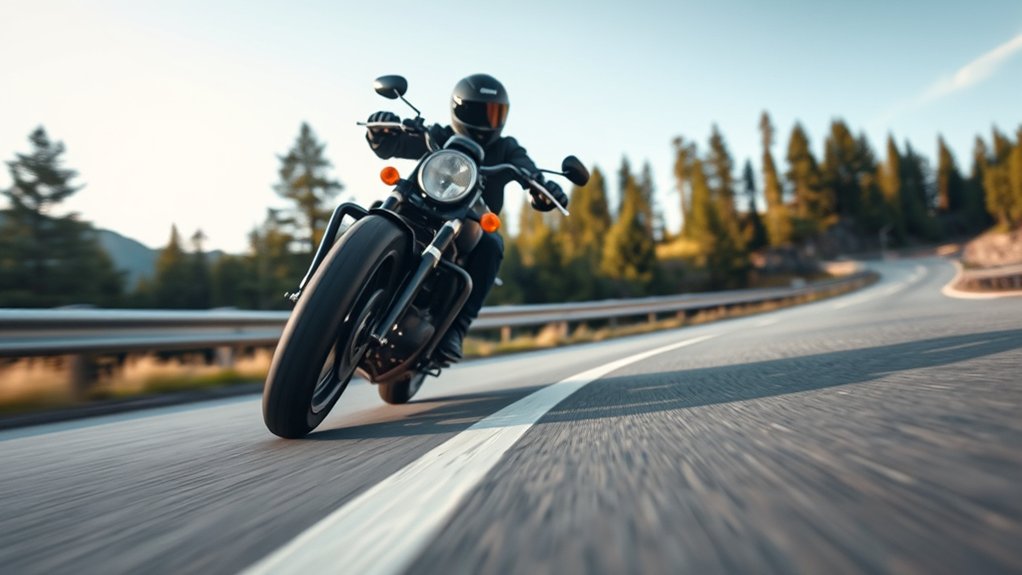
Now that you know why countersteering matters, practice it in a safe, open space like an empty parking lot or a quiet road at about 20 mph (30 km/h). Keep the steering input small but easy to feel.
Use countersteering with a relaxed grip. Lightly press the inside grip for 0.2 to 0.5 seconds, and remember “push left go left” or “push right, go right.”
Feel the bike lean before adding more force. Keep the throttle steady, look through the turn, and grip the tank with your knees while shifting a little weight to the inside peg.
Build skill in the practice area by increasing speed in small steps. Take wider turns as you gain confidence.
If it feels off, slow down and switch to direct steering.
Frequently Asked Questions
Does Countersteering Work on All Motorcycle Types?
No, countersteering doesn’t work the same on all motorcycle types. You’ll use it on standard two-wheel motorcycles and leaning trikes because they need to lean to turn.
On non-leaning three-wheelers and sidecar rigs, you steer more like a car. So countersteering isn’t very useful.
At low speeds, you may lean or steer with body movement. But once you’re moving faster, countersteering becomes the main method on two-wheelers.
Can Countersteering Happen Without the Rider Noticing?
Yes, it can happen like a whisper in a storm.
At typical riding speeds, you often press the bar so briefly and lightly that you don’t notice it.
Your bike still leans and turns because your hands make tiny corrections faster than your brain registers them.
That’s why many riders feel the result, not the input.
With practice, you can spot and control it more deliberately.
Is Countersteering Needed at Very Low Speeds?
No, you usually don’t need countersteering at very low speeds.
When you’re moving at walking pace up to about 12 mph, you steer mostly with direct handlebar input, throttle control, and body position.
Countersteering becomes more useful as speed rises, usually above 12 to 18 mph.
For parking, U-turns, and tight maneuvers, keep inputs smooth and deliberate, and focus on balance rather than pushing on the bar.
How Does Tire Grip Affect Countersteering?
Tire grip controls how quickly your bike leans when you countersteer.
With good grip, the contact patch can build lateral force fast, so you need only a small, smooth input.
With cold, underinflated, wet, oily, or dirty tires, grip drops.
Then the bike leans more slowly or unpredictably, and small mistakes feel bigger.
Sport tires usually give you more margin than hard touring tires.
But always keep your inputs gentle and precise.
Can Countersteering Help in Emergency Swerves?
Yes, you can use countersteering to help in emergency swerves.
At road speeds, push the handlebar briefly in the direction you want to go, and the bike leans quickly to dodge the hazard.
You’ll generally get a faster, more controlled response than with body movement alone.
Keep your throttle steady, use short inputs, and practice on a course so you don’t freeze or steer the wrong way.
Conclusion
Countersteering isn’t magic, and it isn’t optional. It’s how you make your bike lean, turn, and stay controlled at speed. Push left to go left, push right to go right, and keep your body relaxed and ready. Practice it smoothly, practice it safely, and practice it until it feels natural.
When you understand countersteering, you don’t just ride better. You corner cleaner, react faster, and stay safer every time you lean into a turn.