How To Prevent Motorcycle Theft – Quick Guide
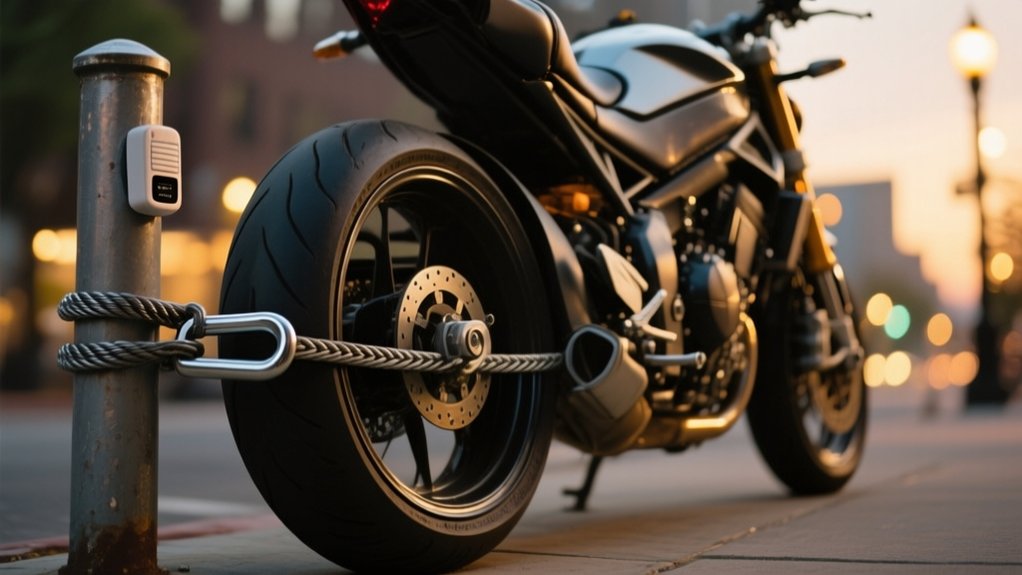
Use layered security: lock your motorcycle to an immovable anchor with a 13–14 mm hardened-steel chain. Add a disc lock, and fit a 110 dB alarm plus a GPS tracker.
Park in bright, busy, CCTV-covered spots, and use a cover to help hide the bike.
Install an immobiliser to block hotwiring, and keep keys secure.
Do the same every time you park, because consistency beats opportunity. And there’s more you can do to cut risk further.
Start With Layered Motorcycle Security
Build your motorcycle security in layers so a thief has to fight multiple barriers, not just one.
Start with a hardened steel chain, 14mm or thicker, and anchor it to concrete, a ground anchor, lamp post, or bike rack.
Use a hardened steel chain, 14mm or thicker, and anchor it to something immovable.
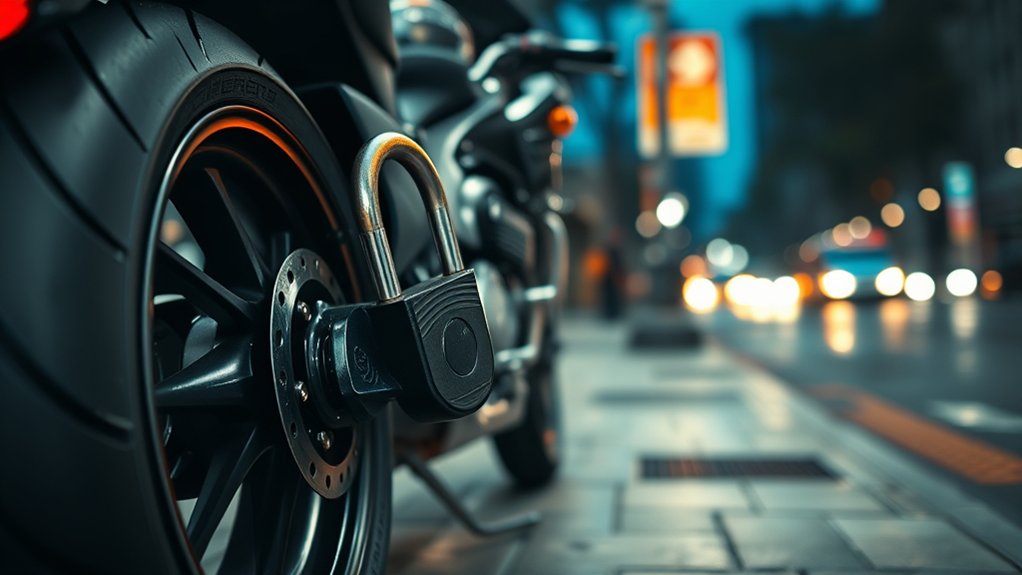
Add disc locks on the brake to force noisy cutting tools and slow down attacks.
Then install GPS tracking with 3G or 4G support so you can locate the bike if someone gets past the hardware.
Pair that with an alarm or immobilizer to block hotwiring.
Use visible deterrents and a cover to make the bike look harder to steal and less identifiable.
Keep the system usable so it actually protects your bike.
If you won’t fit the lock every time, it won’t work when it matters.
Choose the Best Lock and Chain
Pick a hardened-steel chain that’s at least 13–14 mm thick.
Go heavier if you park in a high-risk area.
Pair it with a Sold Secure or ART-rated padlock.
This helps the chain resist bolt cutters and slows angle grinders.
Always secure the chain to a certified ground or wall anchor bolted into concrete.
This stops thieves from rolling the bike away.
Add a compact disc lock or D-/U-lock for layered protection.
Forcing two tools takes more time and noise.
Choose weather- and freeze-resistant hardware.
Prefer stainless or coated hardened-steel.
Use fabric or rubber covers to protect your finish.
For daily use, keep a mounted solution handy.
For overnight parking, use the heavier chain setup.
Pick a Disc Lock That Deters Thieves
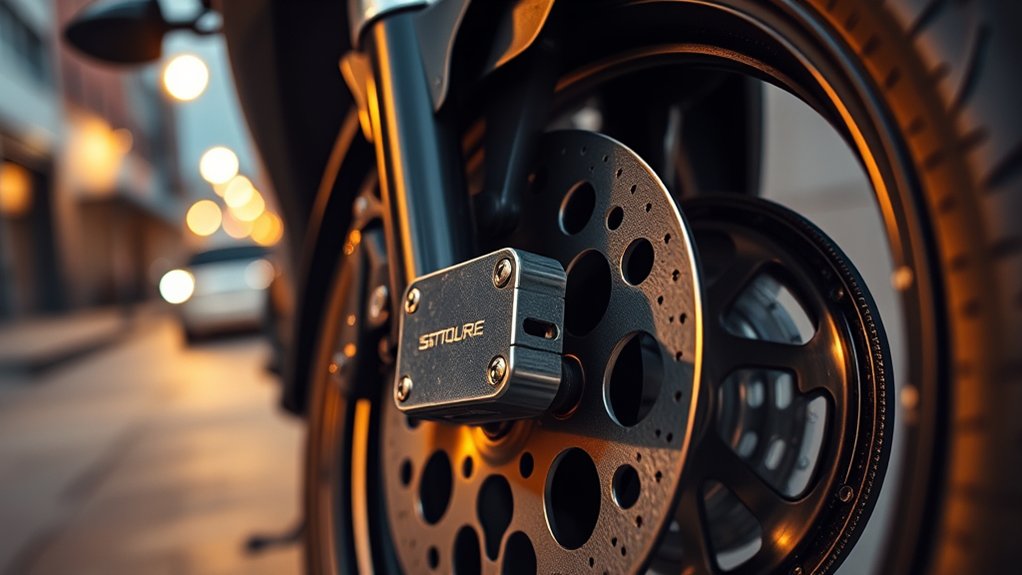
Choose a disc lock made from hardened or stainless steel. Opt for a large-diameter locking pin, since it’s harder to cut or drill through.
Make sure the disc lock fits your brake disc snugly. A loose fit makes tampering easier.
Favor models with a 120 dB alarm system or anti-pick cylinders. Noise draws attention and can delay thieves.
Look for Sold Secure or similar independent ratings. Also, choose weather-resistant construction for dependable everyday use.
A quality stainless steel lock from brands like Abus Granit or Kovix can raise the effort needed to steal your bike.
If your setup allows it, use one on each wheel. Or add a rear lock to stop simple wheel removal.
The disc lock helps slow rolling, but it won’t replace a heavy chain or anchor.
Secure Your Bike to a Fixed Anchor
Bolt your motorcycle to a fixed anchor with a heavy-duty chain and padlock.
Bolt your motorcycle to a fixed anchor with a heavy-duty chain and padlock.
Use 13–14 mm hardened steel, ideally one that mates directly to the frame or swingarm.
Choose a Sold Secure or ART-rated ground anchor.
Bolt it into reinforced concrete, or fix a wall anchor into solid masonry so it can’t be sheared free.
Keep the chain short and off the ground.
This limits leverage and reduces cutting access.
Route the chain through the frame, not just a wheel.
That way, thieves can’t lift the bike away.
Match the anchor to your chain diameter for full-strength locking.
Add a visible secondary deterrent, like a disc lock or alarmed padlock.
This setup makes quick theft far harder.
It also forces thieves to spend more time on the attempt.
Park in Safer, Better-Lit Places
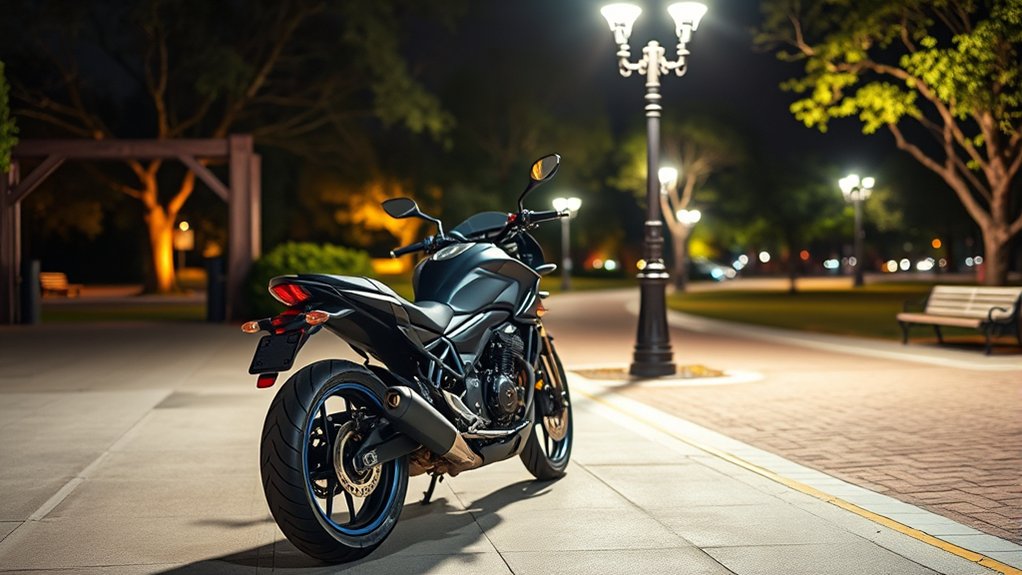
Choose parking areas that are well lit and have people coming and going.
When your bike is in a visible spot, it’s usually a harder target.
If you can, go for busy places near entrances or where CCTV covers the area.
Also, try to avoid isolated corners or any hidden end-of-row spaces.
And if it’s possible, keep your bike in sight and just a few metres away while you’re making a quick stop.
Choose Well-Lit Areas
A well-lit parking spot can make a big difference in motorcycle security. Thieves usually target dark, isolated areas.
Whenever you park your motorcycle, choose well-lit areas. Look under streetlights, near entrances, or beside monitored garages.
Visible, illuminated spots make your bike harder to approach unnoticed. They also make it easier for passers-by to spot.
Avoid end-of-row spaces and blind spots. Those areas give thieves cover.
If you can, use designated motorcycle parking zones with lighting and surveillance. They’re built to cut theft risk.
At night, favor staffed facilities or bright commercial lots. Dim curbside spaces are a tougher choice.
The goal is simple: keep your bike exposed, observed, and difficult to steal.
Prefer Busy Locations
Park your motorcycle in busy, well-lit places where people are constantly coming and going.
Thieves usually target quiet, secluded areas, so choose spots with steady foot traffic, shopfronts, cafés, or CCTV-covered entrances.
If possible, park in well-lit, high-footfall areas and use designated motorcycle bays or monitored car parks for better protection and recovery odds.
Keep the bike where staff or you can see it from inside.
| Spot | Why it helps |
|---|---|
| Busy entrance | More eyes, less risk |
| CCTV zone | Better deterrence |
| Designated bay | Clearer control |
| Visible window view | Faster spotting |
If you’re stopping briefly for fuel or coffee, park within direct sight and 10–20 meters of the entrance.
That short exposure can make all the difference.
Reduce Hidden Parking Spots
Once you’ve picked a busy area, make sure your motorcycle isn’t hidden from view. Park in well-lit areas with steady foot traffic. Thieves often avoid places where people pass often.
Choose a spot near cameras, attendants, or garage access points when you can. Avoid parking at the end of rows, blind corners, or behind vans and SUVs that block sightlines.
Instead, park close to building entrances or under streetlights. Keep your bike visible to staff, customers, and pedestrians.
In shared or apartment garages, select controlled-access spaces. Use a ground anchor if available.
These visible, monitored spots make forced entry riskier. Theft is also harder to hide, especially during peak theft months.
Use a Motorcycle Cover to Hide Details
Slip a fitted motorcycle cover over your bike to hide the make, model, and aftermarket parts that can attract thieves.
Slip on a fitted motorcycle cover to conceal your bike’s make, model, and attention-grabbing aftermarket parts.
It also helps to choose one that fits snugly and resists wind and UV damage.
A good cover improves concealment, but pick a style with a lock-access hole.
This way you can thread a chain or ground-anchor lock through the bike without exposing it.
In high-risk areas, choose an opaque, non-branded cover.
Logos can advertise a popular model.
- Hide identifiable details.
- Keep the cover secure with straps.
- Use weatherproof, durable material.
- Pair it with a mechanical lock.
Don’t rely on the cover alone.
Thieves can still move or lift an uncovered bike, so add physical restraint for real protection.
Install a Motorcycle Alarm System
A cover can hide your bike.
But an alarm adds an active layer of protection.
Choose an alarm system with motion sensors, tamper detection, and a siren of at least 110 dB.
That way, it scares off thieves fast.
Pick one with vibration, tilt, and cable-cut sensors.
Plus smartphone alerts, so you know the moment someone touches the bike.
If you can, buy a unit that includes a GPS tracker for location updates.
Also make sure the alarm has an electronic immobilizer or kill-switch to block startup without the right fob or code.
Don’t cut corners on installation.
Poor wiring, loose sensors, or dead batteries can leave you exposed.
Have it professionally fitted and checked regularly.
That keeps it working when you need it most.
Add GPS Tracking for Recovery
You should add a GPS tracker that gives you real-time location updates, plus geofence alerts if your motorcycle moves unexpectedly. If theft does happen, quick position refreshes and a route history can help police find and recover the bike before it’s stripped.
Also, pair the tracker with physical security like chains, disc locks, or a ground anchor, because tracking helps with recovery—but it won’t actually stop the theft by itself.
Real-Time Location Tracking
Adding a GPS tracker gives you a real chance of recovering a stolen motorcycle, especially if it uses 4G LTE with GPS and cellular fallback for near real-time location updates.
Pick a GPS tracker with tamper alerts and geofencing so you’re notified the moment it moves.
Hide it well or hardwire it, and choose backup power so thieves can’t kill it by cutting bike power.
Use an app with live maps, location history, and exportable coordinates.
Make sure coverage is strong where you ride.
Treat tracking as one layer only.
Pair it with locks and alarms to make theft harder.
A tracker won’t stop a thief.
But it can give you a fast, accurate real-time location and better odds of recovery.
Recovery After Theft
If your motorcycle gets stolen, a GPS tracker can turn a dead end into a recoverable trail.
Choose a unit with 3G/4G cellular and GPS. If available, select one with GLONASS too, so you keep live coordinates even when signal conditions change.
Hide the tracker in the tail unit, under the seat, or inside an accessory box. Secure its wiring, or use a battery-powered model to resist tampering.
Set up geofencing and instant push, SMS, or email alerts. That way, you know the moment the bike leaves its zone.
Keep the subscription active. Trackers with recovery support improve your odds well beyond the typical 16% recovery rate.
Also, record registered identifiers, including the VIN. Share them with police and online registries so officers can confirm and return your bike fast.
Pair With Locks
Pair a high-quality GPS tracker with hardened locks to slow thieves down. You can still track the bike if they get past the locks.
Use a discreet GPS tracker with 3G/4G and cellular fallback. Then pair it with a hardened chain and disc lock. Add tamper alerts and immobilizer integration so you can react fast.
- Mount the tracker out of sight.
- Power it from the bike battery or a 24–72 hour backup.
- Register it with geofencing and instant push or SMS alerts.
- Use at least two physical layers, such as a ground anchor plus disc lock.
Trackers don’t stop theft, but they boost recovery odds. With quick alerts and history logs, you can help police find the bike before thieves strip it.
Fit an Immobilizer That Blocks Hotwiring
Install an electronic immobilizer that only completes the ignition circuit when your programmed transponder key or fob is present. This makes hotwiring a non-starter.
Choose an immobilizer with rolling-code or encrypted communication. That helps prevent thieves from relaying or grabbing codes.
For stronger protection, fit a unit that interfaces with the ECU or cuts fuel, starter, or ignition power. The engine won’t fire without authorization.
Make sure the system matches your bike, and use a qualified installer to wire it in correctly. Cheap units and bad wiring can be bypassed or trigger faults.
Confirm your insurer accepts certified installation. An immobilizer blocks hotwiring, but it won’t stop a thief from loading the bike into a van, so pair it with an alarm or GPS tracker.
Make Motorcycle Security a Daily Habit
Make motorcycle security non-negotiable—every time you park, lock it with a disc lock or a grip lock, and if you can, secure it to a fixed object.
Then keep it simple: have a compact lock mounted on the bike, and store your keys and fobs away from doors and windows.
If you ever need extra protection, use a Faraday pouch too, so you’re not accidentally creating an easy target.
To back it all up, use alarms, an immobilizer, and a GPS tracker.
And when you choose where to park, always go for well-lit, busy areas—or a monitored garage whenever possible.
Secure It Every Time
Every time you park, lock your motorcycle to an immovable object with a hardened-steel chain or a Sold Secure/ART-rated U-lock, even if you’re stepping away for just a few minutes. Then add a disc lock for visible deterrence and activate the immobiliser or alarm.
Use a hardened-steel chain or U-lock every stop.
Fit a disc lock or EasyBlock to the wheel.
Turn on the alarm, immobiliser, and tracker if fitted.
Park in bright, busy, or CCTV-covered spots.
Keep the ignition key with you, then cover the bike and attach at least two different lock types.
Layering mechanical and electronic security makes theft slower, louder, and riskier for thieves, so they’re more likely to move on.
Build Consistent Security Habits
Build motorcycle security into your routine so it happens automatically. Make the last step every time you park, even for a quick stop. Use locks with a ground anchor or fixed fixture.
| Habit | Action |
|---|---|
| Park | Use a disc lock or chain immediately. |
| Night | Store the bike in a locked, lit area. |
| Check | Confirm alarm and GPS tracker are active. |
| Protect | Keep spare keys away from the bike. |
Keep a disc lock mounted or within reach so you’ll use it. At night, add layered security with visible coverage. Thieves avoid hassle.
Log where you park and avoid predictable spots. Small, repeatable actions cut risk because most thefts are opportunistic. When you stay consistent, you make your bike a harder target and improve recovery odds if someone tries.
Frequently Asked Questions
How Much Should I Budget for Motorcycle Theft Protection?
You should budget about $50 to $200 for basic protection.
For a strong home setup, plan on $150 to $400.
If you want high-rated, layered security, budget around $300 to $600.
For full protection with an anchor, heavy chain or D-lock, alarm, disc lock, and GPS tracker, plan on $500 to $1,000 or more.
You’ll pay extra for installation, subscriptions, and premium brands.
But you’ll greatly improve theft resistance.
Does Comprehensive Insurance Cover Stolen Motorcycles?
Yes, comprehensive insurance usually covers a stolen motorcycle, but you should check your policy to be sure. You also can’t assume you’ll get a full payout.
Insurers typically expect proof that you locked the bike, used approved security, and reported the theft promptly. They may deduct your excess and pay market value rather than replacement cost.
If you have agreed-value cover, you’re in better shape. A closer look at the policy will reveal the real limits.
What Theft-Prevention Habits Work During Short Stops?
You should lock your bike every time you stop, even for a few minutes.
Use a visible disc or grip lock, and park in bright, busy spots near entrances or CCTV if you can.
Face the bike outward when possible.
If you can, chain it to a fixed object.
Keep your keys and fobs on you, not on the bike.
Use an immobilizer so thieves can’t ride off quickly.
Can Street Parking Ever Be Reasonably Secure Overnight?
Not really, but you can make it less risky. You’re safest off-street; urban hotspots see far more overnight theft.
If you must park outside, pick a bright, busy street or a spot under CCTV.
Lock your bike to an immovable anchor with a heavy-duty chain or U-lock.
Add a disc lock and alarmed tracker, and cover it.
Layered security won’t guarantee safety, but it’ll discourage thieves.
Which Anti-Theft Products Offer the Best Value?
The best value comes from a hardened-steel chain with a Sold Secure or ART rating, paired with a quality padlock.
You’ll pay more upfront, but you’ll get far better cut resistance than cheap chains.
For quick stops, add a good disc lock.
For home parking, use a ground anchor.
If you can, fit a GPS tracker too.
It won’t stop theft, but it will boost recovery chances.
Conclusion
Stopping motorcycle theft starts with layers, not luck.
Lock your bike with a heavy chain, add a disc lock, and secure it to a fixed anchor whenever you can.
Park in bright, busy spots and use an alarm.
Add a GPS tracker and an immobilizer for extra protection.
Make these steps part of your routine.
You’ll make your bike a far harder target than thieves can handle.
A few minutes now can save you a world of trouble later.