How Does A Motorcycle Engine Work – Guide
Your motorcycle engine works by drawing an air-fuel mix into the cylinder during the intake stroke, compressing it, then igniting it with a spark to generate combustion. This combustion drives the piston down, transferring motion through connecting rods and crankshaft to create torque and horsepower.
Key components like piston rings seal gases, while valvetrain and fuel delivery optimize combustion. Understanding these basics sets the stage for exploring tuning, maintenance, and performance nuances that keep your engine efficient and powerful.
How a Motorcycle Engine Converts Fuel Into Motion

A four-stroke motorcycle engine converts fuel into motion through a precise sequence of intake, compression, power, and exhaust strokes completed over two crankshaft revolutions.
During the intake stroke, the engine draws an air and fuel mixture into the cylinder as the intake valve opens.
The intake stroke pulls a precise air and fuel blend into the cylinder for combustion.
The piston then compresses this mixture to a high pressure, typically with a compression ratio between 9:1 and 12:1, optimizing combustion efficiency.
At or just before top dead center, the spark plug ignites the compressed air and fuel mixture, generating high-pressure combustion gases that force the piston downward during the power stroke.
Finally, the exhaust valve opens, allowing burnt gases to exit during the exhaust stroke.
This cyclical process converts the reciprocating piston motion into rotary torque via the crankshaft, ultimately driving the motorcycle’s rear wheel.
Key Motorcycle Engine Components and Their Roles
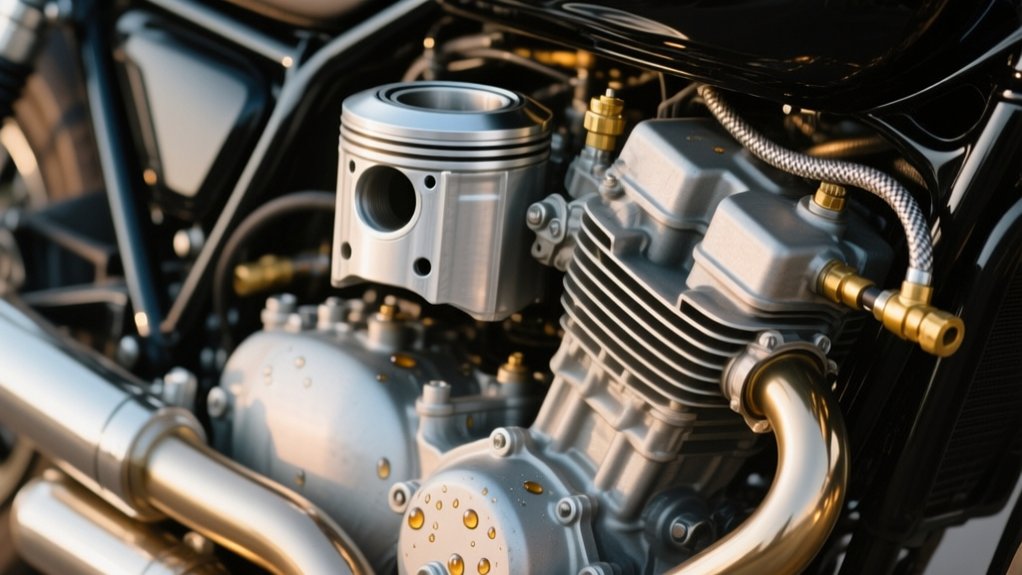
Understanding how a motorcycle engine converts fuel into motion requires examining the specific components that make this process possible. The piston, typically forged aluminum, moves within the cylinder, compressing the air–fuel mixture before combustion. This force transfers through connecting rods to the crankshaft, which converts the piston’s reciprocating motion into rotary motion to drive the transmission.
Piston rings seal combustion gases and regulate heat and oil control. The cylinder head houses camshafts and valves, controlling airflow and combustion timing, directly affecting engine output. The fuel delivery system, either carburetor or fuel injection, precisely meters the air–fuel mixture for combustion efficiency.
Together with ignition, cooling, and exhaust systems, these components guarantee peak combustion, power generation, and engine durability, forming the foundation of your motorcycle’s performance.
What Torque, Horsepower, and RPM Mean for Your Motorcycle Engine
Torque, horsepower, and RPM play distinct but interconnected roles in defining your motorcycle engine’s performance. Torque is the twisting force at the crankshaft, vital for acceleration especially at low RPM.
Horsepower represents the rate of work, derived from torque multiplied by RPM. So higher RPM can compensate for torque drop to boost top speed. Understanding how these interact helps you grasp engine behavior across the rev range.
| Parameter | Role in Engine Performance |
|---|---|
| Torque | Determines initial acceleration and pulling power |
| RPM | Measures crankshaft speed, affects torque and power curves |
| Horsepower | Indicates overall power output, peaks at high RPM |
How Engine Size and Design Affect Performance
Engine size and design directly shape how torque, horsepower, and RPM translate into real-world performance. Engine displacement determines the total volume swept by pistons. Larger displacements intake more air-fuel mixture per cycle, boosting torque and horsepower potential.
Engine displacement controls air-fuel intake, directly enhancing torque and horsepower output.
Compression ratio critically influences thermal efficiency. Higher ratios increase power output per cc but demand higher-octane fuel to prevent knocking. Cylinder configuration affects power delivery: singles and twins emphasize low-end torque, while inline-fours excel at high-rpm horsepower with smoother delivery.
Valvetrain design, including SOHC versus DOHC and cam timing, further refines torque curves and rpm range. Cooling methods and engine packaging impact sustained power and reliability. Liquid-cooled, balanced engines maintain tighter tolerances under stress.
Understanding these variables helps you predict how design choices affect your motorcycle’s dynamic performance.
How Air Intake and Exhaust Affect Motorcycle Engine Breathing

When optimizing your motorcycle’s performance, how air enters and exits the engine plays a crucial role in its breathing efficiency. The intake system’s design, whether short ram-style runners or long intake tracts, affects torque and power delivery by manipulating pressure-wave resonance.
Larger, less restricted air intakes and clean filters boost volumetric efficiency, allowing more oxygen for combustion. But you have to adjust the fuel system or ECU to maintain the correct air/fuel ratio.
On the exhaust side, minimizing backpressure and optimizing scavenging through tuned headers enhances cylinder evacuation. This improves high-rpm power and reduces heat buildup.
Any modifications to intake or exhaust airflow demand precise fuel and ignition tuning to avoid running too lean or rich. Otherwise, it can cause detonation and reduce engine longevity.
Easy Tuning Tricks to Make Your Motorcycle Engine More Powerful
Dialing in your motorcycle’s performance starts with simple tuning adjustments that directly impact power output and responsiveness. Improving intake airflow by installing less restrictive air filters or enlarging intake ports allows your engine to draw fresh air and fuel more efficiently. But this requires rejetting or ECU remapping to maintain the correct air/fuel ratio.
Upgrading the exhaust system reduces backpressure and enhances horsepower, but it also demands ignition timing tweaks. Slightly advancing ignition timing within safe limits boosts midrange torque, provided you monitor for knock and use appropriate fuel.
Regular valve adjustments and replacing spark plugs guarantee peak combustion and prevent power loss.
| Tuning Aspect | Effect |
|---|---|
| Air Filter | Increases fresh air intake |
| Intake Ports | Enhances airflow, needs fueling adjustment |
| Exhaust System | Reduces backpressure, improves power |
| Ignition Timing | Advances torque, requires careful testing |
| Valve & Spark Plug | Restores power, guarantees combustion |
Common Motorcycle Engine Problems and How to Spot Them Early
Frequently, common motorcycle engine problems start with subtle symptoms that, if ignored, can lead to significant performance loss or mechanical failure. To spot issues early, monitor these key indicators:
- Loss of power is often caused by clogged air filters, fouled spark plugs, or degraded fuel.
- Overheating can be noticed by high coolant temperature or steam, which signals coolant leaks or radiator blockages.
- Engine knocking happens due to detonation from low-octane fuel or improper ignition timing.
- Oil abnormalities like low levels, burnt smell, or leaks hint at seal damage or piston ring wear.
Addressing these symptoms promptly prevents damage to critical components like piston rings. This way, your motorcycle engine maintains efficiency and longevity.
Regular inspection and understanding these signs help you avoid costly repairs.
Essential Maintenance Tips to Keep Your Motorcycle Engine Running Strong
You should change your engine oil every 3,000 to 5,000 miles, making sure to use the correct grade and filter.
This helps keep your engine well-lubricated and prevents unnecessary wear.
It’s also really important to check and replace your air filter at least once a year, or even more often if you ride a lot.
A clogged air filter can restrict airflow, which means your engine won’t run as efficiently.
Regular Oil Changes
Regularly changing your motorcycle oil guarantees peak lubrication and cooling, directly preventing accelerated wear on critical engine components like pistons, rings, and bearings.
For optimal motorcycle maintenance, adhere to these key practices:
- Change oil every 3,000 to 5,000 miles or as per manufacturer’s guidelines to maintain proper lubrication as the piston reaches top dead center.
- Use the specified oil grade and viscosity to avoid issues like clutch slippage or reduced oil pressure.
- Replace the oil filter with every oil change to trap contaminants that can damage the crankshaft and valve train.
- Check oil level weekly or before rides; low oil signals leaks or seal failures risking overheating or engine failure.
Following these steps ensures your engine components remain protected and operating efficiently.
Air Filter Care
Inspecting your motorcycle’s air filter every few months or between 1,000 and 3,000 miles, depending on riding conditions, prevents airflow restrictions that diminish engine power and fuel efficiency. A clogged air filter disrupts the optimal fuel and air mixture, which impairs combustion.
Replace disposable foam or paper filters at least annually, or more frequently in dusty environments. For reusable foam filters, use manufacturer-approved cleaners and apply the correct amount of oil. Improper oiling either restricts airflow or fouls sensors.
Examine the airbox and intake snorkels for debris, damage, or leaks, and make sure clamps and seals are secure. Unmetered air can lean the fuel and air mixture, risking engine damage.
Always follow your service manual for filter type, replacement intervals, and installation torque to maintain precise engine breathing and performance.
Frequently Asked Questions
How Do Electric Motorcycle Engines Differ From Traditional Combustion Engines?
Electric motorcycle engines differ from traditional combustion engines by delivering instant electric torque without relying on fuel combustion.
You’ll notice fewer moving parts, which means less maintenance and quieter operation.
Instead of a fuel tank, you’ll manage a large battery requiring efficient battery cooling to maintain performance and longevity.
Unlike combustion engines, electric motors convert electrical energy directly into mechanical power, offering a smoother, more responsive ride with zero emissions.
What Safety Gear Is Essential When Working on a Motorcycle Engine?
You need protective gloves to shield your hands from sharp edges, hot surfaces, and harmful chemicals while working on a motorcycle engine. Eye protection is also essential to prevent debris, fluids, or metal fragments from causing injury.
Always select gloves made of durable, oil-resistant material and wear safety goggles or a face shield that meets impact resistance standards. These precautions minimize injury risks and guarantee a safer, more efficient maintenance process.
How Does Fuel Type Impact Motorcycle Engine Performance and Longevity?
Fuel type acts like the lifeblood coursing through your motorcycle’s veins, directly affecting its engine’s rhythm. Using the correct fuel octane prevents knocking, ensuring smooth combustion and peak power delivery.
Meanwhile, fuel quality influences lubrication viscosity, which protects moving parts from wear. Choosing the right fuel type enhances engine efficiency, extends longevity, and maintains performance stability.
Ignoring this balance risks premature wear and reduced power output.
Can Modifying the Exhaust System Affect Warranty Coverage?
Yes, modifying the exhaust system can affect your warranty coverage. Manufacturers often specify that unauthorized changes, like aftermarket exhausts, may void warranty implications related to engine and emissions components.
If a failure occurs linked to the modification, you might lose manufacturer reimbursement for repairs. Always review your warranty terms carefully and consider consulting the dealer before altering the exhaust system to avoid unexpected costs or denied claims.
What Are the Environmental Impacts of Motorcycle Engine Emissions?
Motorcycle engine emissions contribute substantially to air pollution by releasing pollutants like carbon monoxide, nitrogen oxides, and hydrocarbons.
You should know these emissions increase greenhouse gases, markedly carbon dioxide, which intensify climate change.
Because motorcycles often have less stringent emission controls than cars, their environmental impact can be disproportionate.
Understanding this helps you appreciate the importance of cleaner technologies and stricter standards to reduce air pollution and mitigate greenhouse gas effects.
Conclusion
Understanding how your motorcycle engine converts fuel into motion empowers you to optimize its performance. Did you know that motorcycles with high RPM engines can reach up to 15,000 revolutions per minute? This markedly boosts horsepower.
By mastering components like torque, air intake, and exhaust, you can fine-tune your engine for maximum efficiency. Regular maintenance and early problem detection guarantee your engine runs reliably, keeping your ride smooth and powerful every time you hit the road.