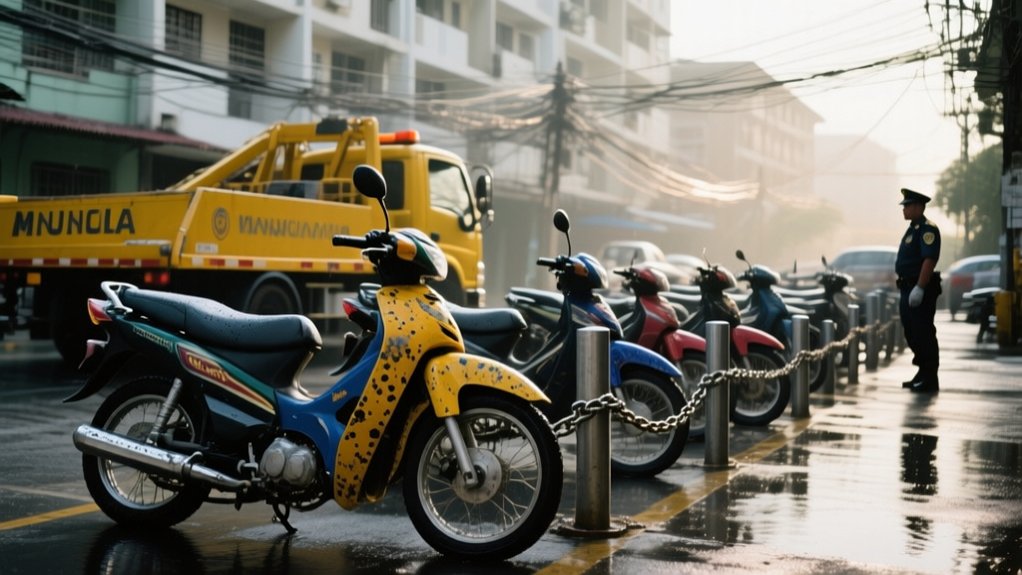
Motorcycle Impoundment When Parked Philippines – Guide
You risk impoundment if you park illegally, drive without a valid license, or have expired registration in the Philippines. To check, contact local police, the LTO, or use the 911 hotline with your motorcycle details.
Retrieve your vehicle by presenting valid ID, original registration papers, and paying fines and fees. Guardians handle fines for minors caught riding unlicensed.
Follow proper procedures and keep documents updated to avoid penalties. More information will clarify the full process and your options.
Common Reasons for Motorcycle Impoundment in the Philippines

Motorcycles are frequently impounded in the Philippines due to common traffic violations such as driving without a valid license, expired registration, or lacking proper plates as mandated by RA 4136 and RA 11235.
As a motorcycle owner, you must make sure your vehicle complies with these regulations before using public roads.
Riding without an approved helmet, violating RA 10054, can also lead to fines and impoundment, especially for repeat offenses.
Authorities may seize motorcycles involved in criminal activities or found under suspicious circumstances for investigation.
Furthermore, driving under the influence (DUI) under RA 10586 or committing parking violations can result in immediate impoundment.
Understanding these common causes helps you avoid penalties and protect your motorcycle from confiscation on public roads.
How to Check If Your Motorcycle Has Been Impounded
If you suspect your motorcycle has been impounded, start by checking with the Land Transportation Office (LTO) and the local police precincts. These agencies usually hold seized vehicles. Motorcycle riders and vehicle owners should call the national 911 emergency hotline or the municipal police to inquire, providing the plate number, make, model, color, and seizure details.
If you suspect your motorcycle is impounded, contact the LTO, local police, or call 911 with your vehicle details.
You can also visit the city or municipal impound lot, typically managed by the engineering or traffic office. Bring valid ID, registration documents (OR/CR), and the rider’s license to verify your motorcycle’s status.
Furthermore, check online or social media pages of local police or traffic offices, as some publish impound lists.
These steps help owners quickly determine if their motorcycle has been impounded and avoid further complications.
How to Retrieve Your Impounded Motorcycle
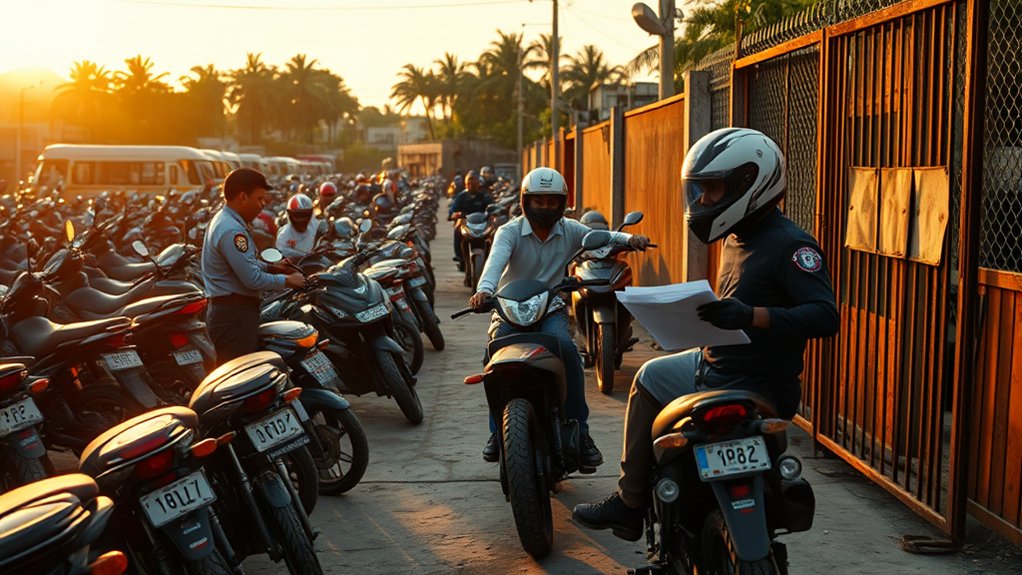
To get your impounded motorcycle back, start by gathering all the necessary documents. You’ll need the original OR/CR, your ID, and your driver’s license if you have one.
Next, make sure to pay off any fines and fees, like impoundment and towing charges. It’s important to settle these before moving forward.
Once you have everything ready and the payments are taken care of, just follow the proper steps and present the required release orders. Doing this will help ensure the whole process goes smoothly and you can get your motorcycle released without any hassle.
Required Documents For Retrieval
Retrieving your impounded motorcycle requires presenting key documents such as the original Certificate of Registration (OR) and Official Receipt (OR/CR) or proof of ownership. If you’ve lost these, bring an affidavit of loss with supporting papers.
The registered owner or authorized representative must show a valid government ID and a notarized authorization letter with the representative’s ID. For vehicles impounded due to registration issues under RA 11235, you’ll need proof of updated registration, plates, and receipts.
If the impoundment involved license or helmet violations, present a valid driver’s license or proof of completing required sanctions. Before release, settle all fines and fees.
After retrieving your motorcycle, consider setting up a new account with the relevant agency and install anti-theft devices to avoid future complications.
Payment Of Impound Fees
Prepare to settle the required impound fees and fines before you can reclaim your motorcycle. The total amount depends on your locality, violation, and additional charges like daily storage fees.
You must pay all fines, including those for missing license, helmetless riding, or expired registration. Some areas offer online payment options for convenience, but confirm with the local impound office.
In certain cases, you may qualify for fee waivers or installment options. Check eligibility to ease the financial burden.
- Feel the relief of clearing all dues swiftly
- Avoid frustration by preparing necessary payments in advance
- Gain control with online payment and flexible options
- Prevent mounting costs from daily storage fees
Stay informed and settle fees promptly to speed up your motorcycle’s release.
Step-by-Step Release Process
Although the process can seem intimidating, you can reclaim your impounded motorcycle smoothly by following a clear set of steps.
First, prepare your release checklist: valid ID, original OR/CR, and the driver’s license of the person driving during impoundment.
Next, settle all fines and towing/storage fees at the impounding unit or city treasury. Obtain the impoundment receipt or clearance from the apprehending officer or relevant agency.
Present these documents and proof of payment at the impound lot to retrieve your motorcycle within the prescribed impoundment timeline.
For third party retrieval, secure a notarized authorization letter, owner’s ID, and original OR/CR.
If you suspect unlawful impoundment, keep all receipts and seek legal counsel to challenge the seizure.
Following these steps guarantees a hassle-free release process.
Documents and Fees to Get Your Motorcycle Back
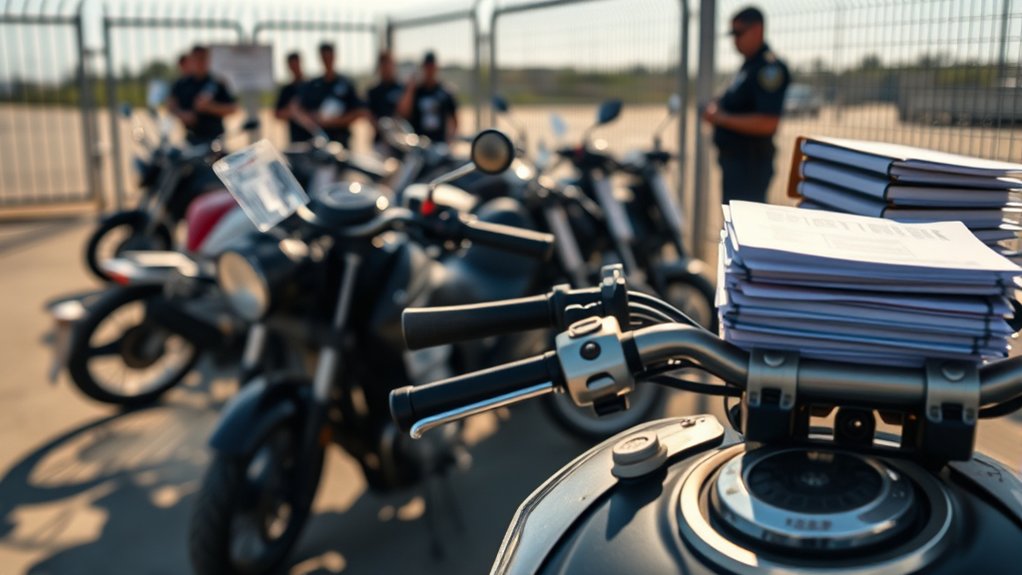
To get your motorcycle back from impound in the Philippines, you’ll need to present key documents like the original Certificate of Registration (OR), Official Receipt (OR/CR), your valid ID, and the vehicle keys.
If you’re handling third party retrieval, bring a notarized authorization letter from the owner plus their ID and OR/CR.
Be prepared to settle towing, storage, administrative fines, and any fees related to impound insurance or violations.
If your papers were expired, show proof of LTO clearance.
Keep copies of the impound ticket and release orders handy.
Here’s what you’ll need to prepare:
- Original OR and Official Receipt (OR/CR)
- Valid ID and driver’s license (if applicable)
- Notarized authorization for third party retrieval
- Payment of towing, storage, and fines before release
Understanding the appeal process can help if you contest fees.
Handling Motorcycle Impoundment Due to Traffic Violations
When your motorcycle gets impounded because of traffic violations, it’s important to know the official steps for getting it back and what legal issues you might face.
Usually, the authorities will tow your bike and give you a citation that explains what rule you broke and where your motorcycle is being held.
Once you have that information, you can move quickly to sort things out.
Understanding these steps helps you avoid extra fines or complications down the road.
Impoundment Procedures Explained
Because traffic enforcers act under RA No. 11235 and related regulations, they can impound motorcycles parked illegally, bearing expired or illegal plates, or operated without a valid license.
When your motorcycle gets impounded, the authorities perform an impound audit to ensure proper chain of custody and evidence preservation.
You must present the original Vehicle Registration, a valid ID, and a release order to retrieve your motorcycle.
You’re also required to pay fines and daily storage fees.
Remember to:
- Request the official impounding receipt and inventory report
- Follow up promptly at the designated impound facility
- Sign custody documents to confirm chain of custody
- Retrieve your motorcycle within the prescribed period to avoid forfeiture
Strict compliance guarantees transparency and protects your rights throughout the process.
Legal Consequences for Violations
Although motorcycle impoundment often results from traffic violations, you should understand the serious legal consequences involved.
Depending on the offense, penalty tiers range from fines up to ₱50,000 to imprisonment, especially for violations like unregistered motorcycles or driving without a valid license.
Non-compliance with helmet or distracted driving laws can lead to administrative sanctions and possible license confiscation, affecting impoundment release.
You have the right to initiate an appeal process if you believe the impoundment was unjust, but make sure you meet all legal requirements to avoid prolonged detention and extra storage fees.
Note that insurance implications may arise since insurers might deny claims if violations contributed to the impoundment.
Comply promptly to minimize legal and financial setbacks.
Motorcycle Impoundment Rules for Minors and Unlicensed Riders
If you’re a minor or riding without a valid license, be aware that the Land Transportation and Traffic Code (RA 4136) and LTO/PNP regulations allow officers to impound your motorcycle immediately upon detection. Underage penalties are strict, and your guardian may be held liable. They’re often summoned during the impoundment process.
Officers will secure your motorcycle, issue fines, and notify your parents or guardians. In some cases, school interventions may be recommended to address the violation.
Authorities will impound your motorcycle, impose fines, and inform your guardians; schools may also get involved.
Key points to remember:
- Immediate impoundment upon riding without a license or if you’re underage
- Guardian liability includes attending to fines and compliance
- Unsafe conditions or missing documents increase seizure risks
- Releasing your motorcycle requires payment, proof of ownership, and valid license compliance
Stay informed to avoid severe consequences.
Tips to Avoid Motorcycle Impoundment
To prevent your motorcycle from being impounded, you must strictly follow parking rules and keep all documents current and visible.
Always park in designated bays or private lots with clear signage and payment proof.
Avoid sidewalks, private driveways without consent, and blocking fire hydrants to practice proper parking etiquette.
Make sure your vehicle displays a valid plate and current registration sticker; expired or missing documents invite impoundment.
Maintain your motorcycle properly to avoid mechanical issues that might attract enforcement attention.
Carry your driver’s license and wear required safety gear like helmets and reflective vests to comply with the law.
Never allow unlicensed riders, especially minors, to operate your motorcycle.
Removing valuables from sight also minimizes theft suspicion, reducing the risk of impoundment.
Following these tips safeguards your motorcycle from unnecessary confiscation.
Where to Report Motorcycle Theft or Illegal Impoundment
Wondering where to report your motorcycle if it’s stolen or impounded illegally? Act quickly by going to the nearest Philippine National Police (PNP) station to file a police blotter. This official report is vital for recovery and claims.
For suspected illegal impoundment, use hotline verification by dialing 911 or visiting the regional PNP unit to confirm custody and location. Always bring valid ID, vehicle documents (OR/CR), proof of ownership, and make certain evidence submission like photos or videos to support your case.
Feel frustrated when facing unauthorized impoundment? Worried about delays in recovery? Confused about where to turn for help? Determined to protect your rights and property?
If needed, seek assistance from the LTO or legal counsel.
Frequently Asked Questions
Can I Contest the Impoundment Decision Legally?
Yes, you can legally contest the impoundment decision by filing an appeal through the proper administrative remedy first, such as a motion for reconsideration with the impounding agency.
If that doesn’t resolve the issue, you may pursue judicial review by filing a petition with the regional trial court.
Make sure to act promptly, gather solid evidence, and follow deadlines to avoid additional fines or loss of your motorcycle.
Are There Specific Impoundment Rules for Electric Motorcycles?
Like a bike on a smooth road, electric motorcycles follow the same impoundment rules as regular ones, but with added twists.
You’ll need to watch out for battery regulations and safe handling due to fire risks.
Charging infrastructure doesn’t exempt you from rules, nor do noise exemptions.
Local units may impose extra steps, so check your area’s ordinances closely.
Always prepare safety documents when retrieving your e-bike from impound.
How Long Can the Police Keep My Motorcycle Impounded?
The impound duration varies depending on the violation and local agency rules, but police typically hold your motorcycle until you complete release procedures.
You’ll need to pay penalty fines, present original OR/CR, valid ID, and a driver’s license, and settle any storage fees.
For criminal cases, it stays with authorities until resolved or court-ordered release.
Always coordinate with the seizing unit to know specific timelines and requirements to get your motorcycle back promptly.
Is There a Way to Track Impounded Motorcycles Online?
Think of tracking your impounded motorcycle like finding your way through a digital maze.
While there’s no universal mobile app or GPS tracker system for this, some cities offer online portals linked to license databases where you can check your vehicle’s status. You’ll need key details like your plate number.
If online tools fail, contacting local authorities remains your best bet.
Keep in mind, technology’s role in impound tracking is growing but not yet seamless nationwide.
Can a Third Party Retrieve My Impounded Motorcycle for Me?
Yes, a third party can retrieve your impounded motorcycle if you provide an authorization letter granting them permission. They’ll need to bring all required paperwork, including your original OR/CR, valid IDs, and any liability waiver if applicable.
Make sure they settle all retrieval fees and fines before release. Check with the impounding authority if a notarized authorization letter or additional documents are needed to avoid delays during the retrieval process.
Conclusion
Remember, “an ounce of prevention is worth a pound of cure.” To avoid the hassle of motorcycle impoundment in the Philippines, stay informed about traffic rules and always carry the necessary documents.
If your bike does get impounded, act quickly. Check its status, prepare the required fees, and follow the proper procedures to retrieve it. Being proactive and responsible guarantees you keep riding smoothly without unnecessary interruptions.