Where Can I Learn To Ride A Motorcycle – Best Options
You can learn to ride a motorcycle fastest and safest in a state-approved Basic Rider Course, like California’s CMSP or an MSF-approved BRC. These classes teach clutch control, braking, turns, obstacle avoidance, and DMV test prep. They often waive the riding test with a completion card.
If you want faster one-on-one coaching, private lessons are a great option. You can get flexible scheduling, bike rental, and focused practice.
Your best choice depends on your goals, your pace, and what you need for your license.
State Courses vs Private Lessons

When you’re choosing between a state-approved Basic Rider Course and private lessons, think about what you need most: certification or speed and flexibility.
A Basic Rider Course gives you structured Motorcycle Safety training, usually with online modules plus 11–15 hours on the range.
A Basic Rider Course offers structured motorcycle safety training with online modules and 11–15 hours on the range.
It costs about $150–$300, runs in small groups, and can waive the DMV riding test after you pass.
If you want faster, more personal coaching, private lessons fit better.
You’ll get one-on-one instruction, flexible scheduling, and often same-day availability.
Many private lessons last two hours and include the bike, helmet, and gas.
They’re ideal if you want to build skills quickly, prep for the test, or use the instructor’s motorcycle for the DMV exam.
What Beginner Motorcycle Classes Teach
Beginner motorcycle classes start by teaching you the core controls—especially clutch and throttle coordination, how to shift gears, and how to use the front and rear brakes smoothly.
Then you move on to practical skills like low-speed turns, U-turns, emergency stops, and obstacle avoidance, so you can build real confidence and control on the bike.
Along the way, these courses also cover important safety habits, risk management, and how to choose the right gear.
And yes, they can even help you prepare for the DMV test, which is a nice bonus.
Core Riding Skills
In a beginner motorcycle class, you’ll build the core riding skills that make the bike feel predictable and controllable. You’ll focus on clutch-throttle coordination, smooth shifting, starting and stopping, and low-speed maneuvering.
Motorcycle Riders learn through Motorcycle Instruction that breaks each move into simple steps. You can practice one control at a time before combining them.
You’ll work on clutch release, throttle roll-on, brake use, and steering input until the riding skills feel natural. Most classes also include short online lessons.
Then you’ll spend 8 to 15 hours on the range. You’ll repeat starts, stops, slow turns, and U-turns.
If you take private lessons, you may cover the same basics in a condensed session. That can help you reach solid control faster.
Safety And Control
Safety starts with control. You’ll practice each motorcycle input in a calm, step-by-step way before you ever ride in traffic.
In beginner motorcycle training, you build a Safety Foundation through hands-on practice. You’ll cover clutch/throttle coordination, shifting, and smooth starts and stops.
Instructors isolate one control at a time, then combine them. That way, you can manage the bike with confidence.
You’ll practice figure-eights, U-turns, and slow-speed balance. You’ll also drill emergency braking and threshold braking with both brakes.
You’ll learn gear, lane positioning, and defensive-riding habits. Then you’ll repeat these skills in controlled exercises.
Training usually runs about 8–15 hours. You’ll keep going until the movements feel natural.
That preparation helps you stop faster, turn tighter, and spot risks early. By the time you’re ready for the street, you’ll ride with more control and fewer surprises.
How to Choose a Motorcycle School
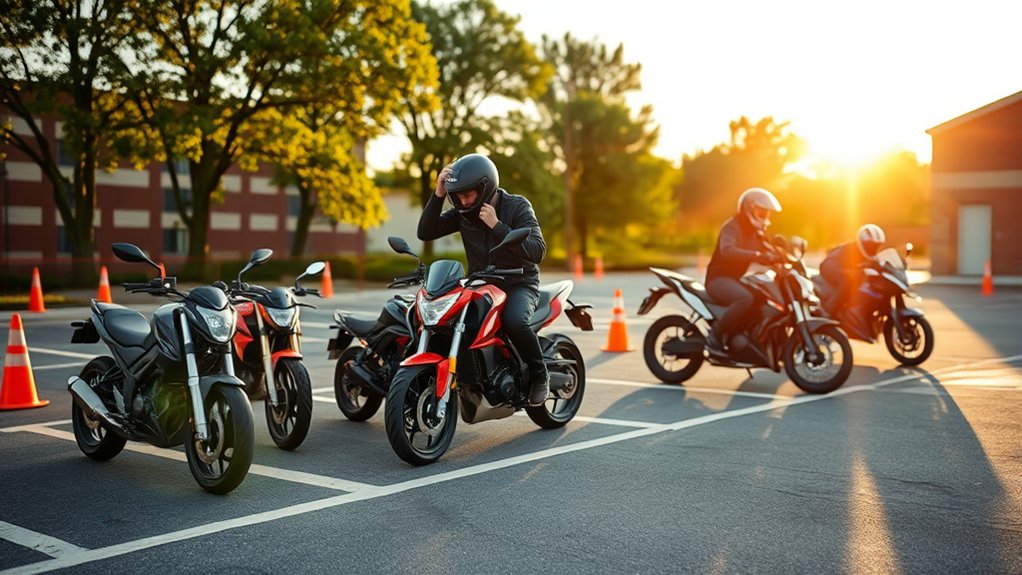
When you’re choosing a motorcycle school, start with a course that matches your goals. It should also help you move from practice to licensure with as little guesswork as possible.
For most motorcycle riders, an MSF- or state-certified Basic Rider Course is a great first step. It blends classroom learning with hands-on training, and it often waives the DMV skills test.
If you want faster progress, consider private 1:1 lessons. Look for a clear mastery plan so you always know what comes next.
Before you sign up, confirm the school provides the motorcycle, helmet, insurance, and test rentals. That way, you can train without buying a bike.
Finally, check instructor credentials, class size, and safety focus. Also read reviews for patience, success rate, and a calm learning environment.
Motorcycle Licensing and DMV Test Help
You can speed up your licensing by taking a state-certified Basic Rider Course. It combines classroom learning with range training, and in many cases it can even waive your DMV road test.
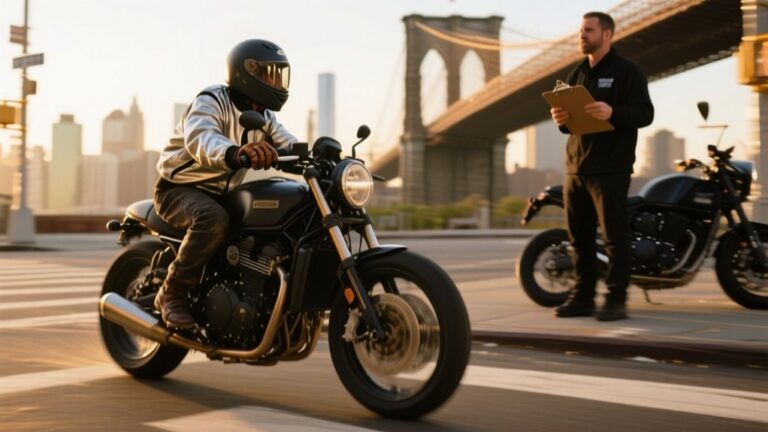
If you want extra prep, consider booking a private 1:1 lesson. That way, you can practice the exact skills the examiner checks—like U-turns, slow maneuvers, and controlled stops.
Before test day, also confirm your local rental options. Then make sure you bring everything you need to the DMV, including your completion card, your permit/ID, and the proper gear.
DMV Test Prep
To pass the DMV motorcycle test with less stress, start with a state-approved basic rider course like California’s CMSP or the MSF Basic RiderCourse. Hands-on range training can often waive the riding exam with a completion card.
For your motorcycle license, use DMV test prep that sharpens your skills and builds confidence for the exact maneuvers you’ll face.
Practice tight turns, U-turns, stops, and quick lane changes one skill at a time. Book at least one session on the same bike or scooter you’ll use at the DMV.
Ask about pass-rate stats, test rental options, and support if you’re nervous. Many riders learn the needed controls in about 4 to 5 hours total, and you’ll be ready faster when you train with purpose.
Private Lesson Support
Private 1:1 lessons help fill the gaps after a basic rider course. They also give focused DMV test prep on the exact skills that trip riders up.
You can usually book pay-as-you-go sessions. Many are around $150 for two hours with bike, helmet, and gas included.
Most riders reach mastery in 4–5 hours. You’ll get the most value by targeting clutch/throttle control, slow turns, gear choice, and both-brake emergency stops.
Choose instructors who offer DMV test preparation. Ideally, they can ride with you to the DMV or provide a test-rental bike or scooter.
Look for a Results Or You Do Not Pay guarantee. Then pay after the lesson if you feel ready.
Flexible same-day or next-day scheduling is a big plus. It lets you practice right before your exam.
Licensing Course Options
When you’re choosing a motorcycle licensing path, start with your state’s DMV-approved Basic Rider Course. It can provide a completion certificate that may waive the road test while teaching clutch and throttle control, turning, shifting, and stopping.
When you apply, check whether your state accepts the certificate for the DMV skills test. If you want more coaching, book private instruction to practice slow-speed control and braking.
Ask for a bike that matches the one you’ll use at the DMV. If your state requires it, a state-certified 15-hour group class can also help.
You can pair that with targeted private instruction for tougher maneuvers. If you need extra seat time, rent a bike locally for practice or test day so you arrive familiar, confident, and ready.
Best Beginner Motorcycle Programs in California
Choosing the right beginner motorcycle program in California can speed up your learning. It also helps make your first miles safer.
Start with the California Motorcyclist Safety Program, or Basic Rider Course. It pairs classroom instruction with hands-on range practice, and completion can waive your DMV road test.
If you want faster one-on-one coaching, ride2rideagain offers private lessons with a motorcycle. Helmet and gas are included, plus there’s a Results Or You Do Not Pay guarantee.
For new riders who need extra confidence, Total Control Training and Ride Rite Motorcycle Training focus on braking, obstacle avoidance, and slow-speed control.
If you’re chasing advanced skills later, Yamaha-partnered schools add pro-level track training. In Los Angeles, you can also rent practice bikes for seat time before you buy.
Which California Motorcycle Class Fits You?
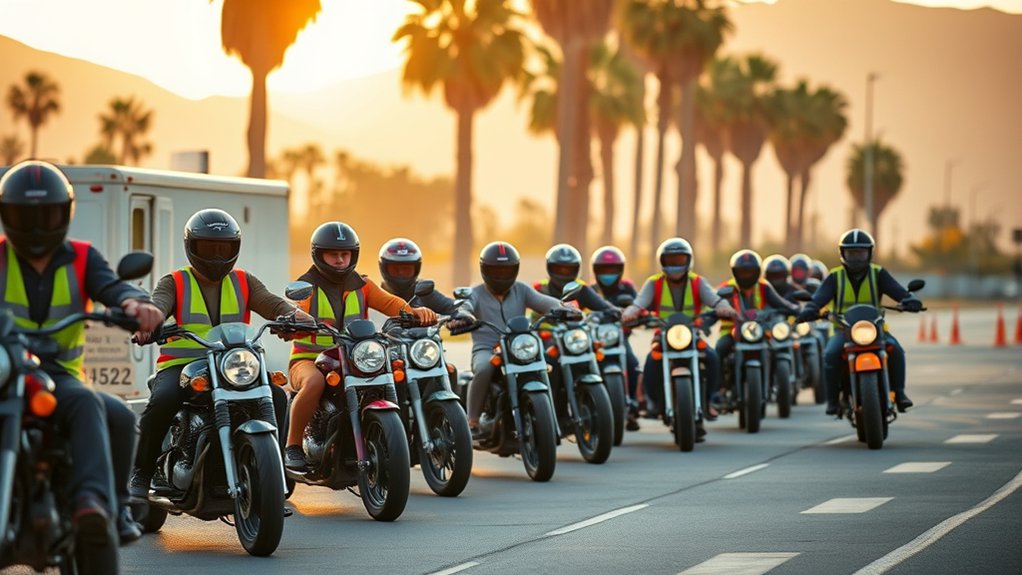
Figuring out which California motorcycle class fits you comes down to your goals, your experience, and how fast you want to learn.
Most new riders start with the CMSP or a DMV-approved BRC. It can waive the DMV skills test and provides a certificate.
If you want faster progress, private 1:1 lessons help you build skills quickly. Many students feel ready in about 4–5 hours.
Choose group training if you want structure and loaner bikes.
Pick private coaching if you want the best motorcycle fit and personal feedback.
Book DMV test prep if you only need to pass the skills test.
If you want track, sportbike, or dirt training, specialty schools can make sense.
But they usually aren’t the best first step for licensing.
Frequently Asked Questions
Can I Learn to Ride Without Owning a Motorcycle?
Yes, you can learn without owning a motorcycle.
You can take a state-approved Basic Rider Course. They’ll provide a bike, helmet, and hands-on practice.
You can also book private lessons or rent a motorcycle for training.
These options help you build confidence, learn controls, and prepare for the DMV test.
Check local schools, MSF sites, and dealerships to find equipment-inclusive classes near you.
What Safety Gear Do I Need for My First Lesson?
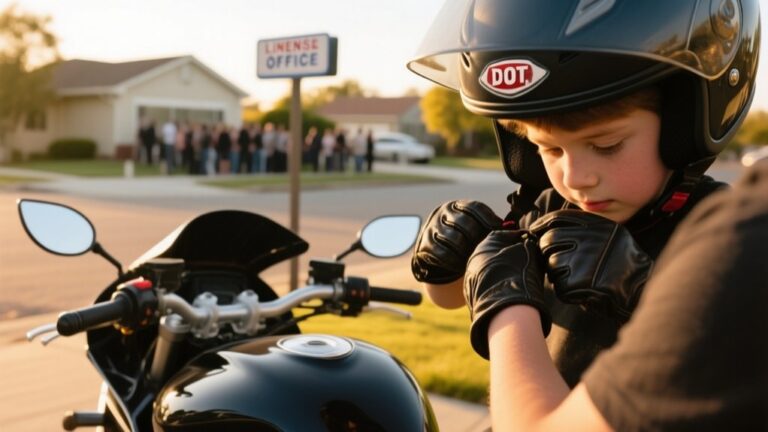
You’ll need a DOT or ECE-certified full-face helmet. Your school may lend one for your first lesson.
Wear a CE-rated motorcycle jacket with shoulder, elbow, and back armor. Pair it with full-length pants or armored jeans.
Choose over-the-ankle boots with non-slip soles and good support. Add full-fingered gloves with reinforced palms and knuckle protection.
Skip sneakers, shorts, sandals, and loose clothing. They don’t protect you well in a fall.
How Long Does It Take to Become a Confident Rider?
You’ll usually start feeling confident in 4 to 15 hours.
But the road teaches at its own pace.
Like a lantern growing brighter as you walk, each lesson sharpens your control.
Private sessions can build solid low-speed skills in about 4–5 hours.
A Basic Rider Course takes longer, but it adds structure.
Keep practicing after class, and you’ll turn early progress into real confidence.
You’ll feel it on traffic-filled streets and highways too.
Are Motorcycle Classes Available for Complete Adults Beginners?
Yes, you can take motorcycle classes as a complete adult beginner.
You’ll find state-approved Basic Rider Courses and college programs.
Many programs start with online lessons, then move to hands-on range practice.
They teach you controls, braking, turns, and safety.
Most schools provide bikes, helmets, and fuel, so you don’t need your own motorcycle.
Some may even waive the DMV road test and help lower your insurance rates.
Can I Take Lessons Before Getting My Motorcycle Permit?
Yes, you can take lessons before you get your motorcycle permit. Many private schools offer one-on-one beginner lessons with a bike, helmet, and gas included.
State-certified MSF or CMSP courses often let you enroll before your endorsement. Some may even allow you to enroll with only a learner permit.
Check your state’s rules, since requirements and test waivers can vary by location.
Conclusion
Now that you’ve seen your options, you can pick the motorcycle class that fits your goals, schedule, and budget.
If you want structure and licensing help, a state course is a smart start.
If you want more flexibility, private lessons can work well too.
Choose a school with safe bikes, patient instructors, and strong reviews.
With the right training, you’ll be ready to ride with confidence.
No knight-errant drama required.