How Does A Motorcycle Permit Work – Full Story
In Colorado, you need a motorcycle instruction permit before you can practice on a bike. Later, you’ll add an M or 3 endorsement.
To get your permit, apply in person at a DMV office. You’ll pass a vision check and a motorcycle knowledge test, too.
Bring the required ID and other documents. You’ll also need to follow specific permit limits while you ride.
Permits include age, passenger, freeway, and nighttime restrictions. You must carry the permit while riding.
If you keep going, you’ll see how to get licensed faster.
How Colorado Motorcycle Permits Work
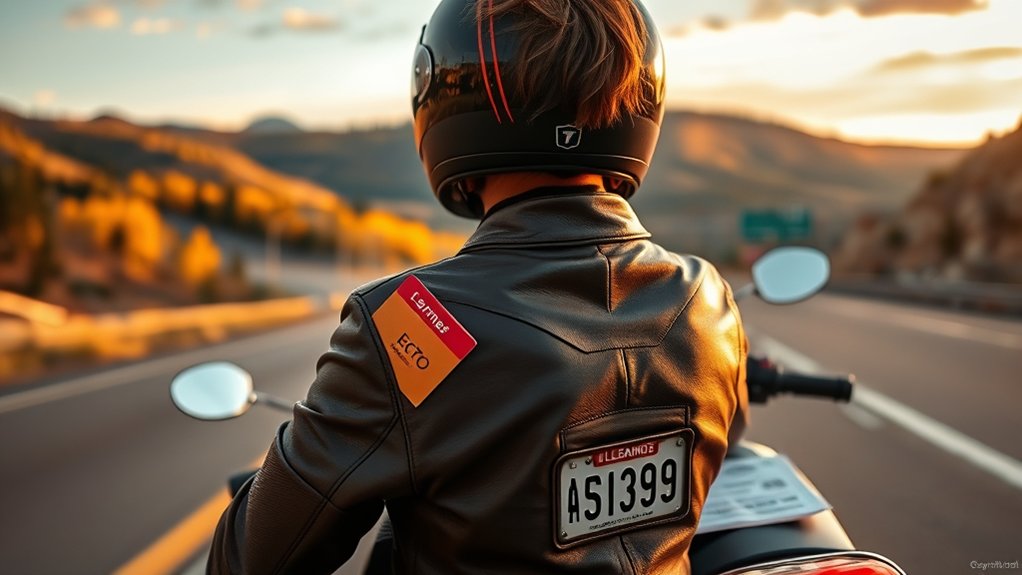
If you’re getting a motorcycle endorsement in Colorado, you’ll need to start with a motorcycle instruction permit. This lets you practice riding legally before you add an M endorsement for two- and three-wheel motorcycles, or a 3 endorsement for three-wheel bikes.
You must apply in person at a driver license office. You’ll also need to pass the motorcycle written exam, and you must carry the permit while riding.
If you have an accepted MOST waiver, you can skip the test. Keep the permit for at least 12 months before you add an endorsement if you’re under 18.
If you’re under 16, you must complete a Colorado State Patrol approved motorcycle safety training program first. Bring the required DR 2460M affidavit.
You can’t add an endorsement online, by phone, or by mail.
Who Needs a Motorcycle Permit?
You need a motorcycle permit before you can legally practice on a bike that’s over 50cc or capable of more than 30 mph on level ground in many states.
If you’re new to riding, you’ll usually need this motorcycle permit before you can train on public roads with supervision.
Minimum ages vary by state, often 15 ½ to 16, and minors may have to hold the permit for months before upgrading.
Permit holders must follow strict limits.
For example, no passengers, no freeway riding, and no nighttime riding where visibility drops.
Helmet use is often required too.
To qualify, you’ll usually take a motorcycle knowledge test and vision screening.
The permit helps you build skills safely before pursuing full licensure.
How to Get Your Motorcycle Permit
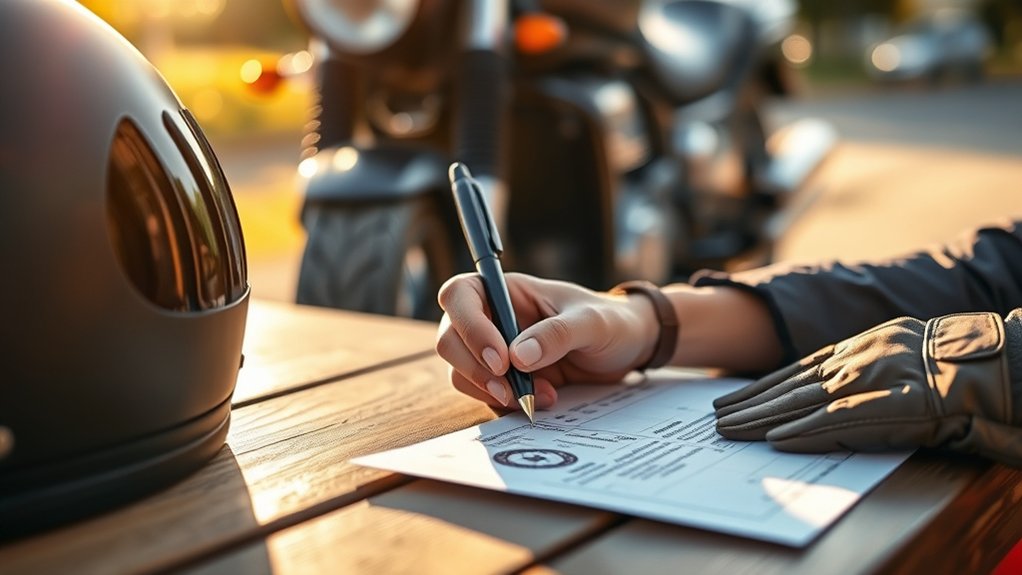
To get your motorcycle permit, you’ll need to meet your state’s eligibility requirements first. After that, you’ll complete the required application in person.
Next, you’ll pay the permit fee and take the motorcycle knowledge test and vision screening. If you have an approved training card, it may waive the written test.
Once you receive your permit, make sure you follow all restrictions closely. That way, you’ll stay safe and also remain legal.
Permit Eligibility
Before you can apply for a motorcycle learner permit, you’ll usually need to meet your state’s age, identity, and residency rules. Then, submit a completed application with the required fee.
You also need a valid driver license or other accepted ID. You’ll likely take a vision check and a knowledge test using the motorcycle manual.
A motorcycle instruction permit allows you to ride only under restrictions while you learn. If you’re under 18, your parent or guardian may need to consent.
You must also complete any safety course or supervised practice your state requires.
| Requirement | Typical Expectation | Safety Note |
|---|---|---|
| Age | 15–16+ | Check local law |
| ID/residency | Proof required | Bring originals |
| Testing | Vision, knowledge | Study first |
| Minor rules | Consent, training | Follow limits |
| Riding limits | No passengers/night | Wear helmet |
Application Steps
Once you’ve confirmed you meet your state’s permit requirements, head to the licensing office. Complete the application form, pay the fee, and take the motorcycle knowledge test. You’ll also need a vision screening.
Bring your Driver License/Identification Card Application (DL-5) or your state’s permit form. Also bring any required documents. Study your Motorcycle Operator Manual so you can pass the motorcycle knowledge test confidently.
If you’re under 18, be ready to show proof of rider education. You may also need a parent or guardian signature, or a minimum permit period, depending on your state.
After you qualify, you’ll receive a motorcycle instruction permit with riding limits. Follow those limits closely. Use the permit to practice safely, then schedule your skills test or complete a motorcycle safety course to earn your full endorsement.
Motorcycle Permit Age Rules
Motorcycle permit age rules vary by state. You’ll need to check your local DMV requirements before you apply.
Many states set minimum ages around 15½ to 16 for a motorcycle learner’s permit. Full Class M licensing usually starts at 16.
If you’re under 18, you’ll often need parental consent. You may also have to wait 6–12 months before upgrading.
You may need supervised riding hours and a safety course.
| Age rule | Typical requirement |
|---|---|
| Minimum ages | 15½–16 for a permit |
| Full license | Usually 16+ |
| Holding period | 6–12 months |
| Supervised riding hours | 30–65 hours |
| Parent/guardian sign-off | Required for minors |
Follow your state’s training and paperwork rules to stay safe.
Motorcycle Permit Restrictions
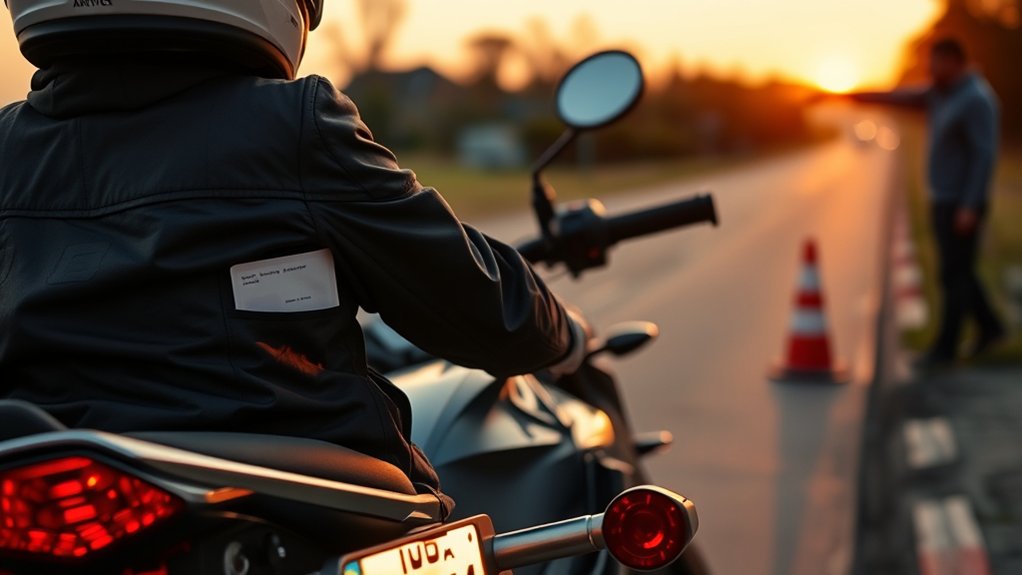
When you ride on a motorcycle permit, there are usually some strict limits you have to follow.
For example, you’ll typically need to ride without any passengers, and you usually can’t ride on freeways or interstates unless an instructor is with you.
You’ll also have to follow riding time rules.
In many states, that means you can only ride from sunrise to sunset.
Permit Use Limits
A motorcycle permit usually comes with strict limits designed to keep you safe while you learn.
You can’t carry passengers, and you usually can’t ride on freeways or interstates.
Most permits also ban nighttime riding, so plan your permit rides between sunrise and sunset.
Many states require you to wear a helmet, though some riders over 21 who’ve completed motorcycle safety training or meet certain qualifications may qualify for an exemption.
If you’re a minor, you may need to hold the permit for months.
You’ll also need to finish supervised practice or an approved course before moving up.
Stay out of low-visibility conditions.
Follow supervision rules if needed, and check your state’s exact permit requirements before every ride.
Riding Time Rules
Most motorcycle permits limit you to riding only during daylight hours. Plan your trips between sunrise and sunset. Avoid riding at night.
Use your permit only when visibility stays safe, usually above 500 feet. You can’t take passengers unless a licensed instructor is with you.
Always wear your helmet. Most states require it for permit riders.
| Rule | What you do | Why it matters |
|---|---|---|
| Daylight hours | Ride before dark | You stay visible |
| Solo riding | Skip passengers | You keep control |
| Helmet use | Wear it every ride | You reduce injury risk |
If weather, traffic, or fading light makes riding risky, stop and wait. Following these permit limits helps you build skills safely. It also prepares you for full licensing.
Motorcycle Permit Tests and Training
To get a motorcycle permit, you’ll usually need to pass a motorcycle knowledge test based on your state’s Motorcycle Operator Manual.
To get a motorcycle permit, you’ll usually need to pass a motorcycle knowledge test based on your state’s manual.
Some states also require you to pass a regular driver license knowledge test before they issue your learner permit.
You’ll show ID, meet age rules, pass a vision screening, and pay the fee.
A Motorcycle Instruction/Learner Permit often limits you to daylight riding, no passengers, no freeway travel, and helmet use.
Some states let you take an approved motorcycle safety course instead of the motorcycle skills test.
Your course may also count for part of the written testing.
Finish the class and keep your Certificate of Completion.
If you’re a minor, you may need supervised hours and parent approval.
How to Add a Motorcycle Endorsement
Once you’re ready to add a motorcycle endorsement, you’ll need to do it in person at a driver license office. There’s no mail, online, or phone option.
Bring your current driver license, the required documents, and any insurance or registration proof the office asks for.
You can qualify by passing the motorcycle written exam. Then you’ll get an instruction permit and later pass the drive skills test.
You can also complete an approved Motorcycle Operator Safety Training course. Present the original course completion card to skip the skills test.
Pay the DMV fees when you apply.
If you’re under 18, expect extra rules. These may include permit timing and a parent or guardian signature.
Always ride only after your motorcycle endorsement is added.
Motorcycle Endorsement Options
In Colorado, you have two options for motorcycle endorsements depending on the type of vehicle. For two- and three-wheel motorcycles, you’ll use the “M” endorsement. For three-wheel motorcycles only, you’ll use the “3” endorsement.
To add the endorsement, you’ll need a valid Colorado driver license, and you’ll have to complete the process in person at a driver license office. You can qualify by passing both the written exam and the skills test, or you can take an approved MOST course and bring your original waiver card.
Endorsement Types
Colorado offers two motorcycle endorsement options, and your choice depends on what you want to ride.
“M” lets you operate two- and three-wheel motorcycles.
“3” limits you to three-wheel motorcycles only.
When you seek a motorcycle endorsement, match the class to your bike and ride safely.
A Class M is broader.
A three-wheel endorsement is narrower and keeps you on trikes only.
Pick “M” if you may ride either type.
Pick “3” if you’ll stay on trikes.
Bring a valid Colorado license and an original MOST waiver card.
If you’re under 18, extra permit time applies.
Colorado won’t accept mail, online, or phone requests.
You must go in person, and out-of-state cards usually don’t count.
How To Add It
After you’ve chosen the right endorsement type, you can add it to your license in one of two ways.
First, you can pass the motorcycle written exam. Then get a motorcycle instruction permit. After that, schedule and pass the drive skills test at a driver license office before you buy a new driver license in person.
Second, you can complete an approved motorcycle training course, such as the Motorcycle Safety Foundation (MSF) program. Bring the original waiver or completion card to your appointment. The office will add the motorcycle endorsement without a skills test.
You can’t do this by mail, online, or phone. If you’re under 18, expect extra rules, parent or guardian forms, and possible waiting periods.
Bring all required IDs, residency proof, and fees.
What to Do After You Pass?
Now that you’ve passed, book a driver license office appointment to add the motorcycle endorsement to your license.
Bring your original Completion Card from MOST or another approved course, plus your valid driver license and required documents.
If you only passed the written test and still hold a motorcycle instruction permit, you’ll need to complete the course or pass the motorcycle drive skills test before the endorsement can be issued.
Bring proof of registration, inspection, and insurance.
Submit any required parental consent forms if you’re under 18.
Ask the office to add the motorcycle endorsement in person.
Follow any helmet, passenger, or vehicle restrictions that remain.
After they issue it, ride only within your limits and keep safety first.
Permit Fees, Expiration, and Reapplication
Permit fees vary by state, so check your local DMV rules before you apply.
In many places, you’ll pay a small knowledge-test or application fee.
You may owe the fee again if your permit expires.
Your motorcycle learner permit usually lasts 6 to 12 months, so track the date.
Don’t ride on an expired card.
If you need to reapply for your permit, you may file the form again.
You may also have to pay permit fees again.
| Item | Rule |
|---|---|
| Expiration | Often 6–12 months |
| Reapplication | Usually required after expiry |
| Limits | Some states cap attempts |
After several failed skills tests, some states require you to reapply for a permit before retesting.
Training cards can sometimes replace testing, but they still follow time limits.
Frequently Asked Questions
Can I Ride Alone With a Motorcycle Permit?
Usually, you can’t ride alone with a motorcycle permit unless your state allows it.
You’ll often need supervision, a licensed rider nearby, or another full license.
Many permits also restrict passengers, freeway riding, and night riding.
If you’re under 18, you may have extra limits and required training hours.
Check your state DMV rules before you ride.
That way, you stay legal and safe.
Does a Permit Let Me Carry Passengers?
Usually, no—your permit doesn’t let you carry passengers. Keep that seat empty while you practice.
You’re generally limited to solo riding as you learn. Some states only allow exceptions with a licensed supervising rider or instructor.
If you’re underage, the rules are often stricter. In most cases, you can’t take passengers at all.
Check your state DMV before you ride. One wrong move can turn a practice run into a penalty.
Is Nighttime Riding Allowed on a Motorcycle Permit?
Usually, you can’t ride at night on a motorcycle permit.
Most states limit you to daytime riding, often from sunrise to sunset.
Some states also ban riding after dark outright. Check your state’s permit rules, since exceptions are rare.
If you ignore the limit, you could lose your permit or delay your license. Ride only within your permit’s allowed hours.
Can I Use a Permit in Other States?
Yes, you can sometimes use it in other states.
But rules don’t travel like luggage, so you’ll need to check the destination state’s DMV first.
Some states honor your permit for visitors, while others don’t.
If they do, you must follow both states’ restrictions, carry the original permit, and keep proof of identity and insurance handy.
If you’re moving there, you’ll likely need a local permit or endorsement.
What Documents Do I Need for the Permit Application?
You’ll need proof of identity and lawful presence, like a passport or birth certificate. You’ll also need your Social Security number or card.
Bring your current driver license, or complete your state’s application if you don’t have one. You’ll also need proof of residency.
If you’re under 18, bring a parent or guardian’s signed permission form. If you qualify through training, bring your original safety course completion card or certificate.
Conclusion
Getting your motorcycle permit is just the first turn in the road.
Once you pass the test, you can practice safely.
Follow your permit limits to build the skills you need for the next step.
Don’t rush the ride.
Mastering the basics now helps you avoid trouble later.
Check your expiration date and stay alert.
Keep moving toward your endorsement.
With each mile, you’re not just learning to ride.
You’re learning to ride right.