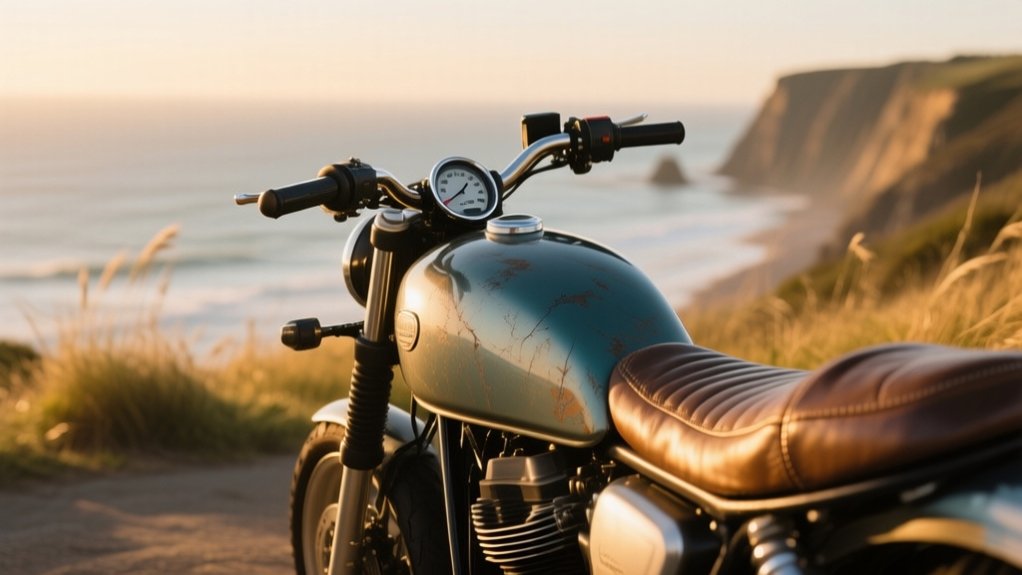
What Is The Best Motorcycle – What It Really Means
The best motorcycle isn’t simply the fastest or most powerful. It’s the one that fits your riding style, comfort needs, and intended use. You’ll want to prioritize ergonomics, handling, and practicality over raw specs to reduce fatigue and improve control.
Whether commuting, touring, or hitting the track, every bike makes trade-offs. Choosing thoughtfully means balancing performance, comfort, and cost. Exploring how different designs serve specific purposes will help you pick a bike that truly suits you.
Defining the Best Motorcycle for You

Choosing the best motorcycle for you starts with understanding your primary riding purpose, whether it’s commuting, touring, sport riding, off-road adventures, or a combination. Each use demands different traits like fuel range, suspension travel, and ergonomics.
Selecting the ideal motorcycle begins with identifying your main riding purpose and the features it requires.
To find the right motorcycle, focus on fit and comfort. Seat height, reach, and handlebar position matter more than raw horsepower. Evaluate practical features such as fuel capacity, luggage space, and service intervals to make sure the bike suits your daily needs or long trips.
Balance power and braking with your skill level and environment to avoid overpowered machines that may be costly and unsafe.
Finally, consider total ownership costs including insurance and maintenance, as these often outweigh peak specs when determining the right motorcycle for your lifestyle.
How Your Riding Style Influences Bike Choice
Your riding style plays a significant role in narrowing down the best motorcycle for your needs. Start by identifying your primary riding environment. Urban commuters benefit from lightweight standards or scooters (125–500cc), while long-distance touring calls for larger adventure or touring bikes with 1000–1300cc engines and storage.
Consider how often and why you ride. Daily riders prioritize fuel economy and reliability. Weekend track enthusiasts need specialized sportbikes. Match ergonomics to ride duration. Upright standards suit longer rides, while sportbikes focus on aggressive positioning and performance.
If you mix on and off-road riding, dual-sport or adventure bikes with long-travel suspension offer versatility without legal issues. Finally, factor in your experience and budget to choose an engine size and complexity that fits your riding style effectively.
Why Comfort and Ergonomics Beat Raw Specs
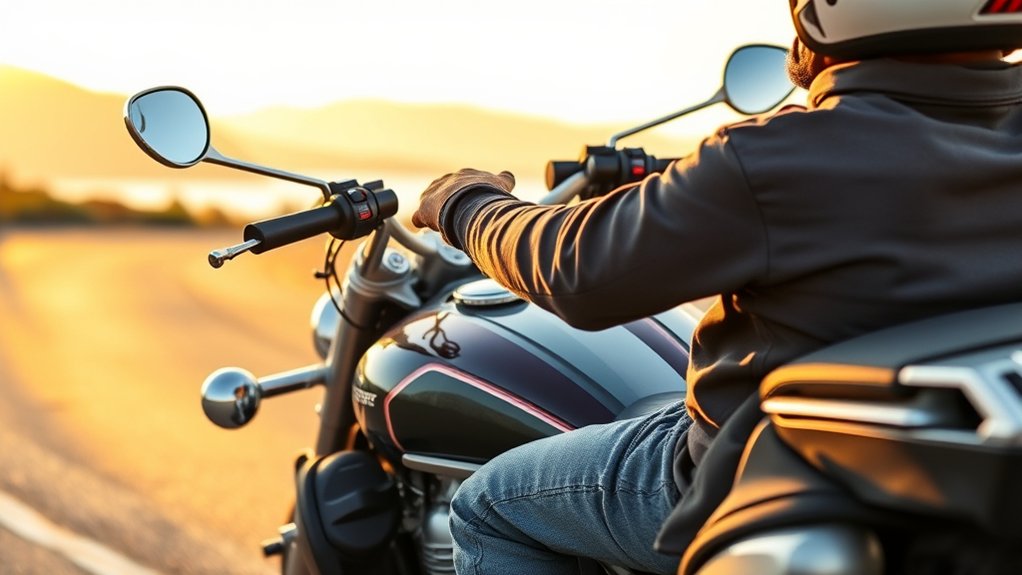
Although raw specifications like horsepower and top speed often grab attention, comfort and ergonomics have a greater impact on your overall riding experience. A comfortable riding position reduces fatigue, letting you ride longer without discomfort. Proper ergonomics also enhance control and safety by minimizing strain on your wrists, neck, and lower back.
Comfort and ergonomics outweigh raw specs, reducing fatigue and enhancing control for safer, longer rides.
Consider these key factors:
- Ergonomic fit: Reach to bars, seat height, and footpeg placement tailored to your body improve reaction times and reduce fatigue.
- Seat design: Wider, well-padded seats with thicker foam maintain comfort over extended rides compared to firm sportbike seats.
- Fuel range: Larger tanks reduce stops, supporting a more relaxed rhythm on long journeys.
Focusing on comfort and ergonomics guarantees you enjoy riding more than chasing raw specs alone.
Finding the Right Mix of Style, Power, and Practicality
When finding the right motorcycle, you need to balance style, power, and practicality based on how and where you ride most. Different types of motorcycles serve distinct purposes. Adventure bikes like the Honda Africa Twin excel off-road and touring, while sportbikes like the BMW S1000RR emphasize power and handling for the track.
Consider your typical rides—commuting, touring, or trail—and prioritize accordingly. Ergonomics matter, so test rides help guarantee the bike fits your body and riding style. If you want a multi-role bike, expect compromises since no single model excels equally across all terrains and uses.
New vs Used: Making a Smart Motorcycle Purchase
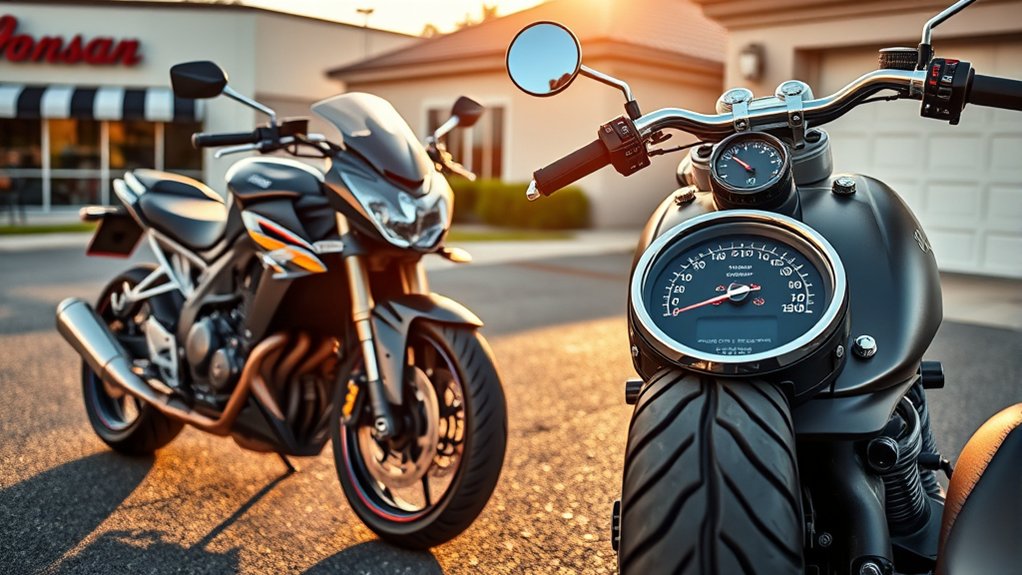
When you’re trying to decide between a new or used motorcycle, your budget is a big factor. New bikes tend to lose value quickly, but well-maintained used ones can save you quite a bit of money.
It’s important to take a close look at used motorcycles, checking for any wear and digging into their maintenance history to avoid any surprises later on.
Don’t forget to think about ongoing costs, too. And definitely make sure to take the bike for a test ride so you can see if it really suits your needs and riding style.
Budget Considerations
Since motorcycles vary widely in price and condition, deciding between new and used models markedly impacts your budget and ownership experience. When you need a motorcycle, consider how upfront costs and long-term expenses align with your financial goals.
New motorcycles cost 10–30% more and depreciate sharply in the first few years but offer warranties and modern features. Used bikes, especially well-maintained touring or Japanese commuters, can save you 20–50% while maintaining reliability.
Factor ongoing costs like insurance, maintenance, tires, and gear at about 10–15% of the purchase price annually to avoid surprises. Weighing these factors helps you make a smart, informed purchase that fits both your riding needs and budget constraints.
Reliability and Condition
Although new motorcycles often come with manufacturer warranties and lower initial maintenance needs, they typically lose 20–30% of their value in the first year. When considering reliability and condition, you’ll find well-maintained used motorcycles, especially touring models from Japanese brands like Honda and Yamaha, can offer dependable ownership at a lower price.
These bikes often exceed 50,000–100,000 miles with proper care. Checking service history and wear items helps you gauge reliability without guessing. Avoid bikes with crash damage, aftermarket engine work, or inconsistent maintenance records, as these increase risk and potential costs.
Remember to factor in total ownership expenses, including insurance and scheduled services, since higher-performance models usually demand more upkeep. Balancing reliability with condition guarantees your purchase aligns with both your budget and long-term satisfaction.
Inspection and Risks
Choosing between a new and a used motorcycle means carefully inspecting the bike and understanding the risks involved. New motorcycles come with full warranties and minimal initial maintenance, but cost substantially more. A used motorcycle, however, can offer better value if you scrutinize its condition and service history closely.
When inspecting a used motorcycle, focus on these key areas:
- Frame and fork integrity, plus engine oil and valve noise.
- Chain, sprockets, tire age (check DOT date), and service records.
- Signs of crash damage or mechanical abuse, especially on sportbikes and dirt bikes.
Budget for immediate expenses like tires and brake pads, which often total 5–15% of the purchase price. A thorough pre-purchase inspection helps you avoid costly surprises.
Understanding Why No Bike Is Perfect for Everything
You won’t find a motorcycle that’s perfect for every type of riding. That’s because each bike is designed with a specific purpose in mind—like sport, touring, or off-road. These focus areas come with their own trade-offs in comfort, power, and handling.
Purpose-Specific Design Limits
When you consider the diverse demands of different riding styles, it becomes clear why no motorcycle can excel at everything. Each bike’s design targets specific purposes, enforcing limits you can’t ignore. Take a touring bike: it prioritizes large fuel tanks, wind protection, and luggage space, enhancing comfort over long distances but sacrificing agility and top speed.
Three key design limits shape your choice:
- Ergonomics and Suspension Dirt bikes offer long-travel suspension for rough terrain, while sportbikes have stiff frames for sharp cornering.
- Engine Tuning Adventure and touring bikes focus on midrange torque for load-carrying, unlike supersport engines tuned for peak horsepower.
- Weight and Fuel Capacity Lighter bikes maneuver easily but lack range; heavier bikes improve stability but reduce off-road capability.
Understanding these limits helps you pick the right bike for your dominant riding needs.
Inherent Performance Trade-Offs
Although motorcycles come in many shapes and sizes, no single bike can deliver top-tier performance across every category. Different types of motorcycles prioritize specific attributes, creating inherent performance trade-offs.
For example, a 1000cc sportbike achieves impressive peak power and top speed but sacrifices low-speed comfort and practicality due to aggressive ergonomics.
Adventure bikes enhance off-road capability with long-travel suspension and higher ground clearance but compromise on-road sharpness and fuel efficiency.
Cruisers and touring bikes focus on rider comfort and luggage capacity, limiting nimble handling and cornering performance.
Dual-purpose bikes balance weight and versatility but don’t match specialized track or touring motorcycles in speed or range.
Even advanced electronics can’t eliminate these compromises because physics dictates performance boundaries across different types of motorcycles.
Realistic Expectations Essential
Understanding the inherent trade-offs in motorcycle design helps set realistic expectations about what a bike can deliver. No motorcycle excels in every area because ergonomics, performance, and durability are balanced differently depending on purpose.
When choosing your bike, consider these key points:
- Prioritize ergonomics: riding position, seat padding, and tank size influence comfort far more than raw horsepower.
- Recognize performance limits: high power and specialized features benefit specific uses but reduce versatility.
- Factor in maintenance and reliability: some models offer proven durability and cost efficiency, while others may bring hidden expenses.
How to Test Ride and Choose With Confidence
Since choosing the right motorcycle involves more than just looks, scheduling test rides on at least three different types tailored to your riding style helps you evaluate comfort and handling in real conditions.
Make sure you have your motorcycle license ready before booking rides on standard, sport, and adventure bikes over routes matching your typical use, like city streets, twisty backroads, and highways.
Spend 15–30 minutes on each, evaluating clutch and brake modulation, throttle response, and whether you can flat-foot the bike safely.
Use adjustable settings or aftermarket parts if available to fine-tune ergonomics.
Bring full gear and a passenger if you ride two-up to test real-world weight and visibility.
After each ride, record key specs and rank each bike against your priorities.
This data-driven approach helps you choose confidently and objectively.
Frequently Asked Questions
What Maintenance Costs Should I Expect for Different Motorcycle Types?
You should expect ownership expenses to vary by motorcycle type. Standard bikes usually cost $300–$600 yearly for maintenance.
Sportbikes run higher, around $600–$1,200 due to faster tire and brake wear.
Adventure bikes sit between $400–$900 but may need pricey upgrades.
Cruisers keep costs lower, $300–$700, unless you opt for custom parts.
Dual-sport bikes are cheapest at $200–$500 but can have unpredictable repair costs from off-road use.
How Does Insurance Vary Between Motorcycle Models?
Insurance differences between motorcycle models vary like the weather, unpredictable but influenced by clear factors.
You’ll pay more for high-performance sportbikes because of higher theft and crash rates, especially if you’re younger.
Electric bikes might cost more due to pricey battery replacements. Coverage choices and safety features also impact premiums. Understanding these variables helps you pick a bike that fits your budget and insurance needs without surprises.
What Gear Is Essential for Beginner Riders?
For beginner riders, essential gear includes a properly fitting helmet with DOT or ECE certification to guarantee maximum protection.
You’ll also need a CE-rated armored jacket, gloves with knuckle protection, and over-the-ankle boots for crash safety.
Don’t overlook high-visibility clothing to boost your visibility on the road.
Prioritizing helmet fit and certified protective gear markedly reduces injury risk while improving your riding confidence and control.
Are Electric Motorcycles a Practical Choice Today?
If you’re an urban commuter seeking instant torque, low maintenance, and eco-friendly rides, electric motorcycles can be practical today.
They offer quick acceleration, quieter operation, and fewer mechanical hassles.
However, you’ll need access to home or workplace charging and should consider your daily range needs.
While upfront costs are higher, savings on fuel and upkeep balance that out.
For city use, electrics make sense; for long tours, they’re still limited.
How Do Weather Conditions Affect Motorcycle Performance?
Weather conditions directly impact your motorcycle’s performance by affecting traction loss, engine power, and stability.
Cold air boosts power slightly but thickens oil and weakens your battery, making cold starts tough.
Rain drastically reduces traction, so you should slow down and avoid sharp maneuvers.
Hot weather lowers engine power and increases the risk of overheating.
Strong winds can push you off line, requiring careful countersteering and lane adjustments to maintain control.
Conclusion
Choosing the best motorcycle isn’t about finding a mythical perfect machine. It’s about matching a bike to your unique needs and style.
You won’t find a bike that excels at everything, but by prioritizing comfort, practicality, and your riding habits, you’ll get close enough to feel like you’ve tamed a wild beast.
Test rides and thoughtful decisions will steer you right, ensuring your next motorcycle truly fits you, not the other way around.