How Fast Does A Kawasaki Klx 140 Go – Guide
You can expect your Kawasaki KLX 140 to reach speeds of 30 to 35 mph. Certain models, like the KLX140R F, can push up to 40-45 mph under ideal conditions.
Factors like your weight, terrain, and wheel size affect overall speed and handling. The bike’s reliable 144cc engine balances power and control, making it perfect for beginners and intermediates.
Explore how modifications and terrain impact performance to get the most from your ride. It’s all about finding what works best for you and the conditions you’re riding in.
What Top Speed to Expect From the KLX 140
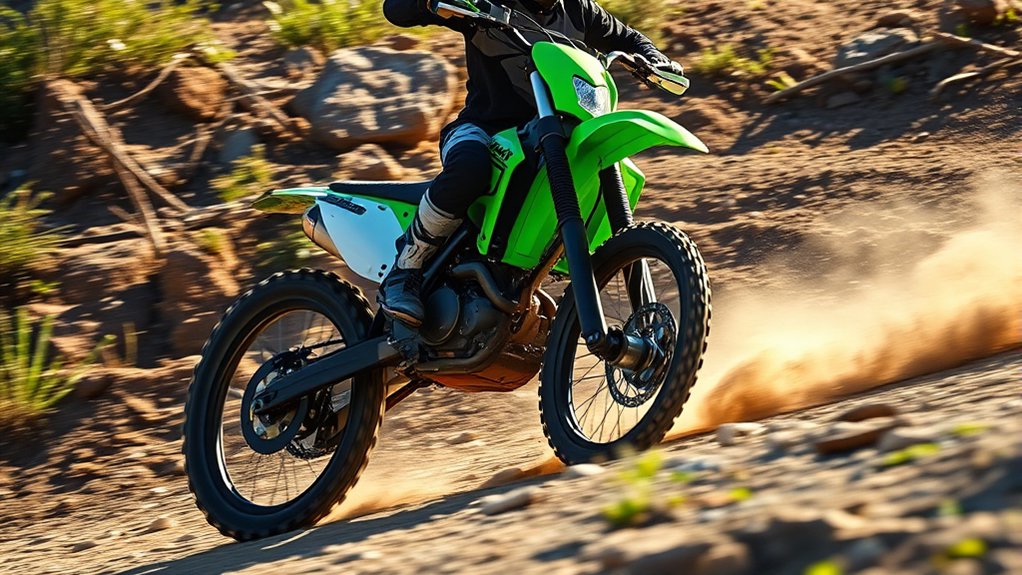
Although the Kawasaki KLX 140 isn’t built for high speeds, you can typically expect it to reach around 30 to 35 miles per hour (48 to 56 km/h). This top speed depends on factors like rider weight, terrain, and specific model.
The Kawasaki KLX 140 usually tops out around 30 to 35 mph, depending on conditions.
For example, the KLX140R, featuring larger wheels, generally achieves a slightly higher top speed compared to standard KLX 140 models. Its 144cc engine focuses on trail riding and beginner-friendly performance, prioritizing safety and control over raw speed.
On flat terrain, stock KLX 140 bikes maintain their top speed comfortably without modifications.
If you want a bit more speed, performance upgrades like carburetor tuning or exhaust changes can push the top speed slightly beyond factory settings. But the KLX 140 remains primarily designed for manageable, controlled riding.
How the KLX 140 Engine Balances Power and Reliability
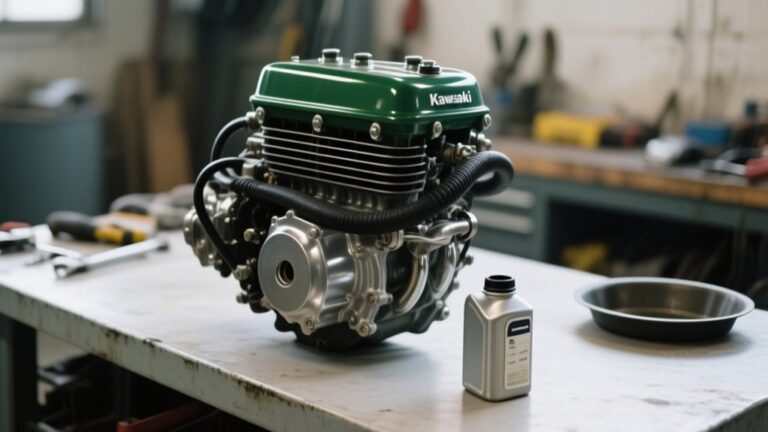
When you ride the Kawasaki KLX140, you benefit from an engine thoughtfully engineered to blend power with reliability. The 144cc air-cooled SOHC 4-stroke engine balances high-revving output with durable performance.
Here’s how the KLX 140 engine achieves this balance:
A 9.5:1 compression ratio ensures consistent power without over-stressing components, which boosts reliability. The simple carbureted fuel system and air cooling reduce mechanical complexity, limiting failure points.
Its robust yet lightweight design supports tough trail conditions while maintaining dependable operation.
The 5-speed manual transmission with a manual clutch provides smooth power delivery and precise control. This combination results in an engine that delivers strong performance while prioritizing long-term reliability and low maintenance.
It’s a setup that makes riding both fun and worry-free.
Effects of Rider Weight and Terrain on KLX 140 Speed
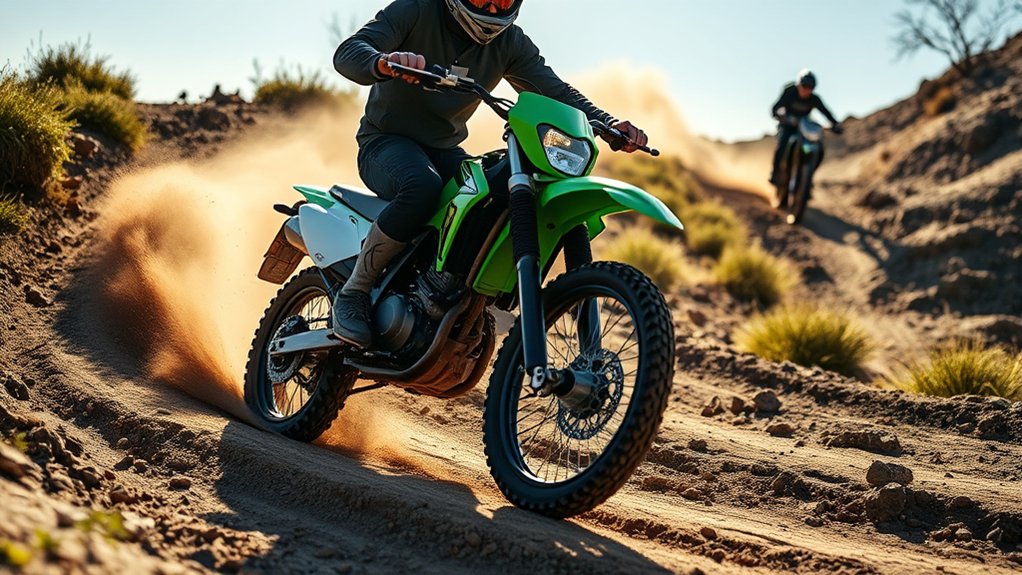
You’ll notice that rider weight directly affects the KLX 140’s speed. Heavier riders tend to experience slightly lower top speeds because of the added load.
Terrain type also plays a big role here. Rough or uneven surfaces, like hills and mud, can slow down acceleration and lower the maximum speed compared to flat, smooth ground.
Rider Weight Impact
Because the Kawasaki KLX 140 has a small 144cc engine, rider weight plays a big role in its speed and acceleration. The heavier you are, the harder the engine has to work, which directly affects the bike’s top speed.
Here’s how rider weight impacts performance:
Heavier riders create more resistance, which lowers the KLX 140’s top speed. If you weigh over 150 pounds, you might notice slower acceleration. That extra engine load also reduces overall speed and responsiveness.
Plus, keeping momentum going gets tougher as your weight goes up.
Knowing these things helps you set realistic expectations for your KLX 140’s performance. Weight is just one part of what affects how your ride feels and how well you can control the bike.
Terrain Type Influence
Although rider weight plays a crucial role in determining the Kawasaki KLX 140’s speed, the type of terrain you ride on also considerably influences its performance. Smooth, hard-packed terrain allows the bike to reach higher speeds due to better grip and minimal rolling resistance.
In contrast, rough, uneven surfaces like rocky or root-filled trails reduce acceleration and top speed by challenging the bike’s ground clearance and stability. Soft terrains such as sand or mud further decrease speed, as tire slip and reduced traction impede forward momentum.
Your ability to maintain control on varying terrain directly affects how efficiently the KLX 140 can perform. Understanding how terrain interacts with ground clearance and traction helps you anticipate speed changes and adapt your riding technique accordingly.
Speed Variability Factors
When riding a Kawasaki KLX 140, the speed you achieve depends heavily on both your weight and the terrain you’re maneuvering. While the engine’s power remains steady, these factors directly influence the bike’s top speed and overall performance.
Key considerations include: heavier riders generally experience a lower top speed due to increased load. Off-road terrain conditions like mud, sand, or uphill slopes reduce achievable speed compared to flat surfaces.
Variations in terrain friction, such as loose gravel or wet ground, cause additional resistance that slows the bike down. On smooth, flat terrain with lighter riders, the KLX 140 can reach speeds closer to 40 mph, while challenging terrain and heavier weight may limit it near 30 mph.
Understanding these speed variability factors helps you optimize your riding experience. It’s good to keep these in mind so you can get the most out of your ride.
Speed Comparison of KLX 140R, L, and F Models
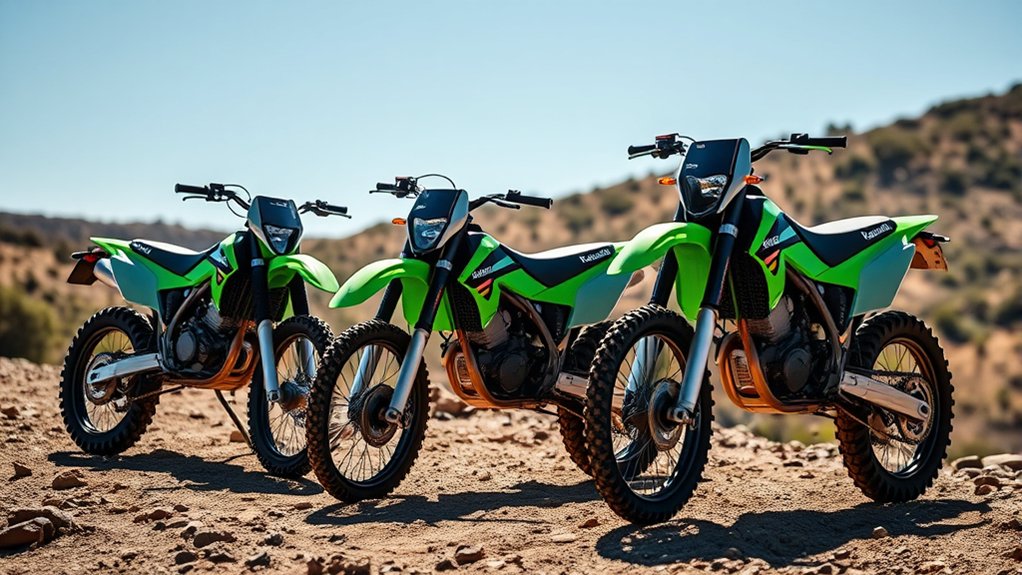
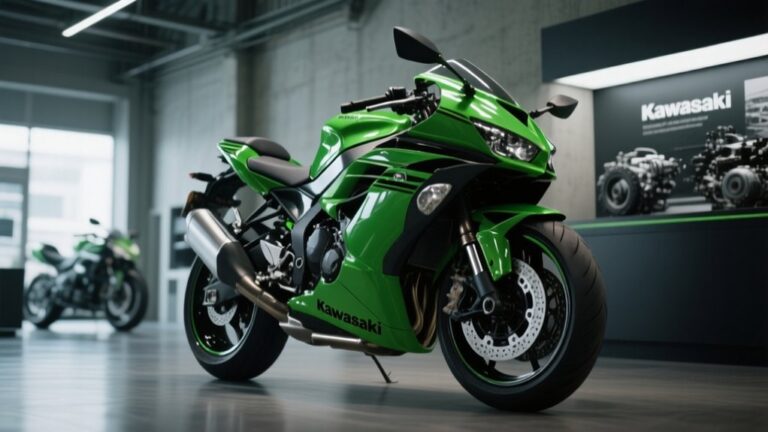
If you’re comparing the Kawasaki KLX140R models, you’ll notice distinct differences in their top speeds influenced by design variations. The KLX140R hits around 30-35 mph, while the L model with larger wheel size and enhanced suspension climbs to 35-40 mph.
The KLX140R F, built for advanced riders, reaches 40-45 mph. Disc brakes on all models guarantee reliable stopping power, but the increased ground clearance and wheel size on the L and F contribute to their higher speeds.
Here’s a quick comparison:
| Model | Top Speed (mph) | Wheel Size (inches) |
|---|---|---|
| KLX140R | 30-35 | 17/14 |
| KLX140R L | 35-40 | 19/16 |
| KLX140R F | 40-45 | 19/16 |
These differences impact trail performance and handling more than outright speed. So, it’s worth considering what kind of riding you plan to do before choosing a model.
Modifications That Boost KLX 140 Performance
If you want to boost your KLX 140’s performance, start by looking at engine upgrades. Installing a high-performance carburetor or upgrading the exhaust system can really help increase horsepower and improve throttle response.
But don’t stop there. Suspension enhancements are just as important because they improve handling and stability, especially when you’re riding on rough terrain at higher speeds.
When you combine these modifications, your bike not only gets faster but also becomes much more controllable. It’s all about making the most out of your ride!
Engine Upgrades
Although the Kawasaki KLX 140 comes with a reliable engine, several upgrades can substantially boost its performance and responsiveness. Enhancing your bike’s power involves targeted modifications to key components.
Consider these four effective engine upgrades:
- Upgrade the exhaust system to increase horsepower and improve engine efficiency by reducing backpressure.
- Install a performance CDI to optimize spark timing, ensuring better combustion and throttle response.
- Replace the stock carburetor with a larger or performance-oriented model to enhance airflow and power delivery.
- Use a high-flow air filter to reduce intake restrictions, allowing the engine to breathe better and perform at a higher level.
These upgrades work together to elevate your KLX 140’s engine output without compromising reliability. It’s a smart way to get more from your bike without losing what makes it great.
Suspension Enhancements
When tackling rough terrain, upgrading your Kawasaki KLX 140’s suspension can dramatically enhance handling and stability. Suspension modifications, including shock enhancements, improve traction, control, and rider confidence.
Adjustable preload and damping components let you tailor settings for varied trail conditions. Upgraded front forks or rear shocks increase travel distance, helping absorb bigger obstacles and reducing bottoming out. This boost in suspension performance really makes for a more comfortable ride.
| Modification Type | Benefit | Key Feature |
|---|---|---|
| High-performance shocks | Improved handling | Adjustable damping |
| Front fork upgrades | Increased travel | Enhanced shock absorption |
| Rear shock enhancements | Better ride comfort | Reduced bottoming out |
Proper suspension tuning is essential for maximizing your KLX 140’s off-road performance and control. It’s worth taking the time to get it dialed in just right.
Off-Road Handling of the KLX 140 at Higher Speeds
Because the Kawasaki KLX 140 can reach speeds of 30 to 35 mph, you’ll appreciate how its lightweight frame and high-revving engine contribute to stable off-road handling at these higher speeds. The bike’s design focuses on control and responsiveness, which is essential when riding faster on rough terrain.
Key factors that enhance off-road handling include:
- Disc brakes on both wheels deliver consistent and reliable stopping power, vital for safety at speed.
- The suspension system, especially with up to 7.5 inches of travel on the F model, smooths out bumps and maintains traction.
- Full-size wheels improve stability and roll over obstacles efficiently.
- The narrow profile aids in maneuverability, letting you confidently navigate sharp turns and uneven trails.
Together, these features provide balanced, controlled handling at elevated off-road speeds.
Why the KLX 140 Is Ideal for Beginner and Intermediate Riders
If you’re new to off-road riding or looking to build your skills, the Kawasaki KLX 140 offers an ideal balance of power and control tailored to beginner and intermediate riders. KLX140R motorcycles feature a lightweight frame and a comfortable seat height, allowing you to handle the bike confidently on trails and dirt tracks.
Its 144cc four-stroke engine delivers smooth power, making acceleration manageable and throttle response predictable, which is essential when learning. The 5-speed manual transmission helps you develop shifting skills gradually.
The durable construction and reliable brakes provide safety as you progress.
With a top speed around 30-35 mph, the KLX 140 is designed to support your growth without overwhelming you. It’s a perfect choice for riders advancing their off-road abilities.
Tips to Safely Maximize KLX 140 Speed
Although the Kawasaki KLX 140 is designed with beginner-friendly performance, you can safely enhance its speed by following key maintenance and tuning practices. To maximize your KLX 140’s speed while maintaining control with its manual clutch and full-size wheels, consider these tips:
- Keep the engine in top shape with regular oil changes and a clean air filter to ensure peak performance.
- Adjust sprockets, like using a larger rear or smaller front, to increase top speed, but keep an eye on acceleration and engine strain.
- Tune the carburetor properly and maintain correct tire pressure for efficient power delivery and traction.
- Reduce weight by removing unnecessary parts or using lightweight components to improve speed and handling.
Riding on smooth, flat terrain will also help you safely reach the bike’s maximum speed. Just take it easy and enjoy the ride while you make these adjustments!
Frequently asked questions
What Is the Fuel Efficiency of the Kawasaki KLX 140?
The Kawasaki KLX140 offers fuel efficiency around 80 to 100 miles per gallon, depending on how you ride. Its 144cc air-cooled engine is built for low fuel consumption, which means you can enjoy longer rides without frequent refueling.
With a 1.5-gallon tank, you’ll typically travel 120 to 150 miles on a full tank. Of course, factors like terrain and throttle use can affect mileage.
But overall, it’s a great choice for economical trail riding.
How Often Should I Service the KLX 140 Engine?
You should service your Kawasaki KLX 140 engine every 10-15 hours of riding or at least once every three months, whichever comes first. Regular oil changes are important every 10 hours.
You should also inspect and replace the spark plug every 20-30 hours.
Don’t forget to clean or replace the air filter every 10-15 hours. Also, check and tighten all engine bolts during maintenance to keep your bike running smoothly.
Keeping up with these tasks will help your bike perform at its best and last longer.
What Type of Tires Are Best for the KLX 140?
You’ll want tires that truly embrace adventure for your KLX 140. Opt for knobby, off-road tires with aggressive tread patterns to maximize traction on dirt and loose terrain.
Make sure they fit the 21-inch front and 18-inch rear wheels.
Reinforced sidewalls boost durability, while tubeless designs reduce flats and make maintenance easier.
Finally, choose a tire compound that balances softness for grip and toughness for lasting performance on varied trails.
It’s all about finding the right mix to keep you rolling confidently wherever you go.
Can the KLX 140 Be Used for Motocross Racing?
You can use the KLX 140 for beginner motocross racing and practice, but it’s not ideal for high-level competition. Its 144cc engine and basic suspension limit power and handling on more demanding tracks.
If you want to race seriously, you’ll likely need to upgrade the suspension and modify the engine.
For casual riders or those new to motocross, it offers a solid, manageable experience without overwhelming complexity.
What Safety Gear Is Recommended When Riding the KLX 140?
Imagine the road as a wild beast. You need armor to tame it. When riding your KLX 140, wear a DOT-approved helmet to protect your head.
Don’t skip gloves, long sleeves, and durable pants to guard against scrapes. Knee and elbow pads shield your joints, while riding boots support your ankles and help you stay in control.
For extra protection, use a chest protector or body armor to absorb impacts during tough rides. Stay safe and ride smart!
Final Thought
You’ll find the Kawasaki KLX 140 offers an impressive balance of speed, power, and reliability that feels like it could outrun a lightning bolt. Whether you’re tackling rough terrain or cruising flat trails, this bike adapts well to rider weight and conditions.
With a few smart modifications, you can safely push its limits even further. Perfect for beginners and intermediates, the KLX 140 guarantees you ride confidently while maximizing fun and control.