How To Lock A Motorcycle – Quick Tips
Park in a bright, busy spot with CCTV or clear sightlines. Then turn the bars fully, engage the steering lock, and remove the key.
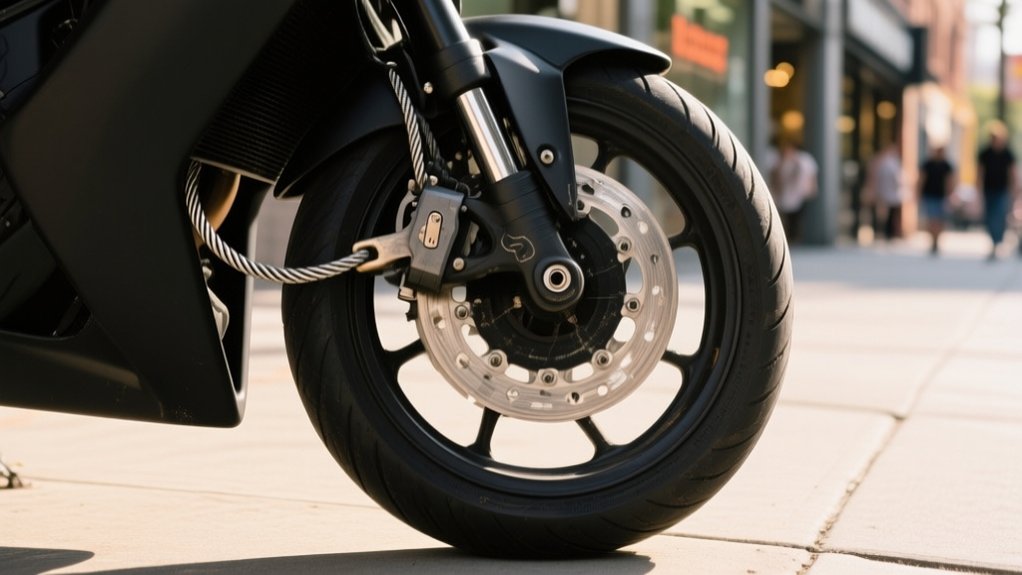
Add a disc lock or a tight U-lock on the wheel. If you can, chain the frame to a fixed anchor, keeping the chain off the ground.
Lock next to a wall, curb, or other bikes. Take any removable gear with you.
Layering these steps gives you stronger protection and more to learn.
Park in the Safest Spot First
Start by parking where theft is least likely to go unnoticed. Choose a well-lit, high-foot-traffic spot with CCTV or clear sightlines, and avoid isolated areas.
Position your bike near immovable objects like a lamp post or cemented rack, and use that as your anchoring point.
Check the structure first for fresh cuts, loose fixings, or signs of tampering. Park amid other locked motorcycles, not at the end of a row.
If you’re stopping near a cinema, gym, or similar place, don’t advertise absence by leaving it right outside. Move a block or two away instead.
Keep your parking choice predictable only to you. Always favor locations that increase visibility, resistance, and time pressure on attackers.
Lock the Handlebars Before You Leave
Turn the handlebars fully to one side.
Engage the steering lock before you walk away, so the front wheel can’t be steered for a quick grab-and-ride.
If your bike uses a handlebar lock or grip lock, set it fully and confirm it’s engaged.
Then remove the key and keep the ignition closed.
When possible, park against a curb or a wall.
This helps the bars stop against a fixed object and resist leverage.
If the factory steering lock leaves the keyhole exposed, pad or block it to reduce tampering.
Add a reminder cable or disc-lock reminder whenever the bike has a fork or grip lock, so you won’t ride off with it attached.
This won’t stop lifting, but it does slow a thief.
It also makes a fast escape harder.
Use a Disc Lock or U-Lock on the Wheel
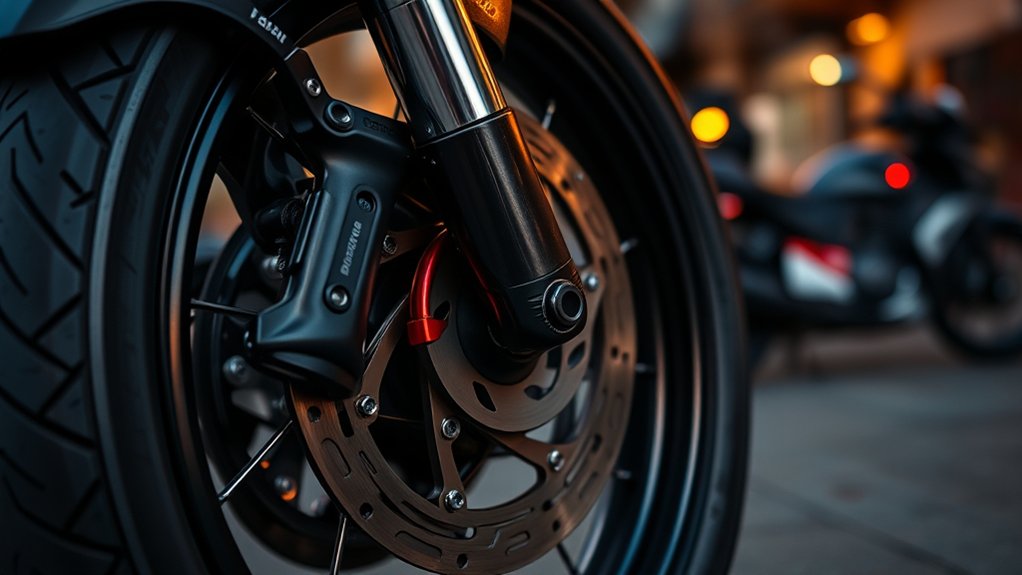
Once the handlebars are locked, secure a wheel with a disc lock or U-lock. This keeps the bike from rolling away.
Run a disc lock through the front or rear brake rotor. Choose one with a 13.5 mm hardened steel shackle, like an ABUS Granit Detecto, for stronger cut resistance.
If you need more coverage, use a U-lock on the rear wheel and frame secure points. Use a 16 mm shackle and keep a tight fit.
Place the lock high, and if possible, keep the keyway facing down. Measure rotor holes and wheel geometry before buying so the lock seats cleanly.
For better protection, combine locks. Use a disc lock on one wheel and a U-lock on the frame or rear wheel.
Chain Your Motorcycle to a Fixed Anchor
Next, lock your motorcycle to a fixed anchor with a heavy-duty Sold Secure Gold chain and a high-security padlock or integrated lock. Use a 14–16 mm chain lock to resist bolt cutters and grinders. Anchor to a fixed ground anchor or wall mount, not a fence, tree, or removable post.
- Thread the chain through the frame, not just the rear wheel.
- If possible, pass it through the rear wheel and swingarm too.
- Keep the lock high, facing down, and the chain off the ground.
A sleeve helps protect paint and slows cutting tools. Choose a proper ground anchor, and if you want extra resistance, add a secondary lock of a different type. This setup makes theft slower, louder, and harder.
Layer Your Motorcycle Locks for Better Security
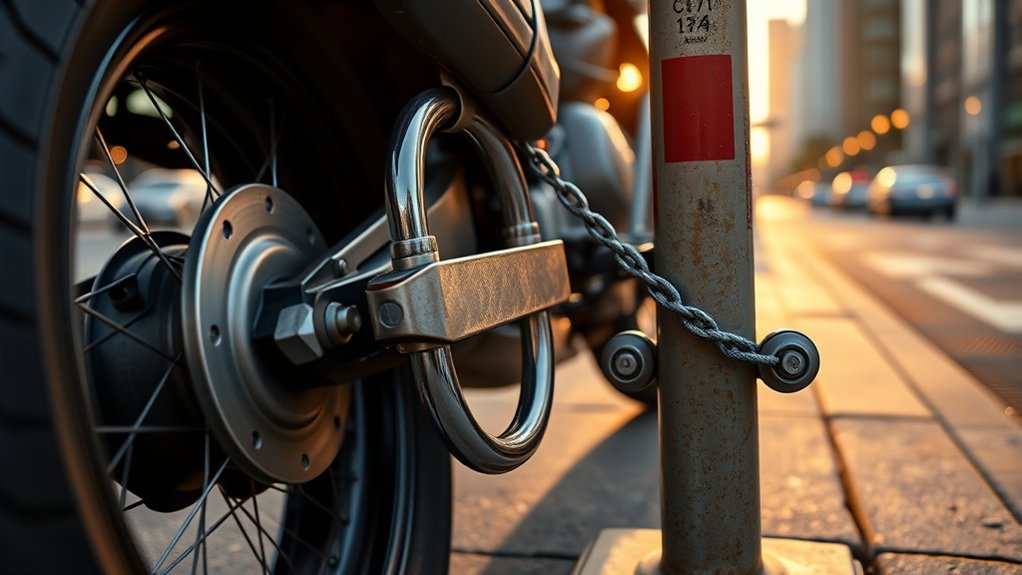
Use at least two different lock types, so a thief needs different tools and more time to get through. Start by putting a Sold Secure Gold or Diamond D-lock through the frame and the rear wheel.
Then, add a hardened chain or an anchor lock to an immovable point.
Also, keep both locks off the ground and tight to the bike. That way, you reduce leverage attacks and make wheel removal much harder.
Combine Lock Types
Layering different lock types forces a thief to defeat separate mechanisms with separate tools. This slows them down and raises the risk of getting caught.
Use two locks: a heavy U-lock through the frame to anchor and rear wheel, then add chain locks or disc locks on the other side.
Choose Sold Secure Gold or better for the main lock. Keep it off the ground with the U packed tight to limit leverage.
- Put the strongest lock on the frame and wheel.
- Add a lighter secondary lock on the front wheel or forks.
- Pair an alarm or GPS tracker with the locks for tamper alerts and recovery.
For portability, a hardened chain or disc lock gives you layered protection without much bulk.
Secure Frame And Wheel
Anchor your bike by locking the frame, not just the wheel, to an immovable object.
When you can, pass your main lock through the rear swingarm or frame triangle.
To lock your bike well, use a D-lock or heavy chain on the frame and rear wheel.
That area is the hardest to remove quickly.
Keep the lock off the ground and remove slack so thieves can’t lever it.
If you use a U-lock, fill the inside with frame tubing and the fixed anchor to reduce attack space.
Add a disc lock on a rotor so they need different tools and more time.
Fit security skewers on wheels and secure removable parts too, since a frame lock alone won’t stop component theft.
Layering these barriers increases effort, noise, and risk fast.
Add Anchor Support
Beneath your bike, install a ground or wall anchor cemented into concrete.
This gives your chain or L1000 link a fixed point that can’t be lifted or rolled away.
Choose a Sold Secure Gold ground anchor, then match it with a hardened chain of equal class.
Then:
- Route the chain through the frame and rear wheel, keeping it high off the ground.
- Add a disc lock or other secondary immobilizer to stop grab-and-ride theft.
- Check anchor fixings regularly. Torque them, and replace any rusted or tampered parts.
Don’t use light posts, removable racks, or chain-link fences.
A properly installed anchor fixings setup limits leverage, blocks cutter access, and defeats lift-and-roll attacks.
Keep the lock body away from the floor, where tools can work.
Park Next to a Wall, Curb, or Other Bikes
Park your motorcycle tight against a wall, curb, or another bike so it can’t be rolled or pushed straight out. Position it parallel and keep the bike’s side close to the wall or curb. If you can, put the rear wheel and exhaust side toward it.
Park your motorcycle tight to a wall or curb, with its side close to the barrier.
This blocks easy access to the controls. It also makes it harder for someone to get the bike into neutral and ride it away. Leave the smallest safe gap for mounting, then use the locked handlebar to reduce steering movement.
Don’t park in the middle of open space. If you’re beside other bikes, park in the middle of the row, not at an end.
This layout limits angles for lifting, wheeling, or sliding a van ramp under the bike. It also forces thieves to maneuver around obstacles.
Protect Removable Parts and Accessories
Once the bike is positioned, protect anything that can be removed quickly.
1. Remove easily detachable items like helmets, tank bags, GPS units, and quick-release lights, then carry them with you; thieves target them first.
2. Swap quick-release skewers or seat clamps for security skewers or locking nuts.
If you must leave gear attached, use a helmet lock or a short hardened cable.
3. Secure accessories and luggage with lockable mounts or integral locks.
Remove soft bags when possible since they unzip fast.
For phone mounts, RAM mounts, and similar hardware, hard-wire or permanently mount them.
Then conceal wiring.
If you use trackers, hide GPS units so they’re harder to spot and easier to recover after a theft.
Keep everything compact, locked, and out of sight.
Add an Alarm or GPS Tracker
Adding a motion-sensitive alarm or a hidden GPS tracker gives your bike a second layer of defense beyond physical locks.
Install the GPS tracker hidden in the frame or under bodywork so you can pull real-time location data if someone moves it.
Pick a unit with tamper detection, geofencing, and push alerts, and keep the SIM active.
A loud alarm with a siren or a silent alert can scare off thieves during tampering.
Integrated disc-lock systems also work well too.
Hard-wire both devices when you can, and avoid obvious plugs.
Higher-end models may add engine cut-off for extra protection against joyrides.
Check battery life, signal reception, and data-plan status often, since recovery depends on power, cellular coverage, and GPS reception.
Frequently Asked Questions
Which Lock Type Is Best for Overnight Parking?
For overnight parking, you’ll get the best protection from a heavy-duty hardened chain locked to a proper ground anchor.
It helps stop lift-and-roll and carry-away theft better than a standalone lock.
If you can’t anchor, use a Sold Secure Gold or Diamond U-lock on the rear wheel and frame.
Then add an alarmed disk lock as backup.
Keep everything off the ground, and hide a GPS tracker too.
How Do I Lock a Motorcycle Without a Garage?
You can lock it outside by choosing a bright, busy spot and chaining the frame to a solid anchor or thick post.
Use two locks: a Gold chain or U-lock through the rear wheel and frame, plus a disc lock with a reminder cord.
Keep locks off the ground, remove accessories, and add a hidden GPS tracker.
If you can, fit an immobilizer or a secret kill switch too.
Are Cover Straps Useful for Motorcycle Security?
Yes, cover straps can help, but they’re only a minor security layer.
Use them to keep the cover tight, hide the bike, and stop wind from exposing wheels, locks, or accessories.
Choose a cover with reinforced grommets.
Then run a lockable strap or cable through to a frame or anchor.
Don’t rely on straps alone.
Pair them with a disc lock, chain, or alarm for real deterrence.
What Should I Do if My Bike Has No Anchor Point?
If you’ve got no anchor, don’t settle for the wheel alone.
Thread a heavy-duty chain through the frame or rear wheel and wrap it around the largest immovable object nearby, like a lamppost or bollard.
If there’s still nothing solid, use two locks: a disc alarm plus a chain or U-lock.
You can also carry a portable anchor or fit a hidden GPS tracker for backup.
How Often Should I Check My Motorcycle Locks?
You should check your motorcycle locks every time you park, then do deeper inspections on a schedule.
Visually inspect visible locks daily.
Test keys and alarms weekly.
Check anchors and mounting points monthly.
Test GPS trackers and immobilizers monthly too.
Every 3–6 months, perform a full security audit.
If you notice tampering, corrosion, or a theft attempt, inspect everything immediately.
Replace damaged parts before riding.
Conclusion
Locking your motorcycle well is like building a fortress around your ride.
Park in the safest spot you can, and position the handlebars to help deter theft.
Use a disc lock or a U-lock on the wheel.
Then secure the bike to a fixed anchor with a chain.
Layer on extra locks for added protection.
Park near a wall or curb when possible, too.
Protect removable parts whenever you can.
If you can, add an alarm or a GPS tracker for peace of mind.