How To Load A Motorcycle Into A Truck – Pro Tips
Choose a ramp rated at least 1.5 times your bike’s weight.
Pick one with a grippy surface and enough width for your tire setup.
Clear and dry the truck bed.
Add non-slip matting and keep the ramp angle low, under 15 degrees.
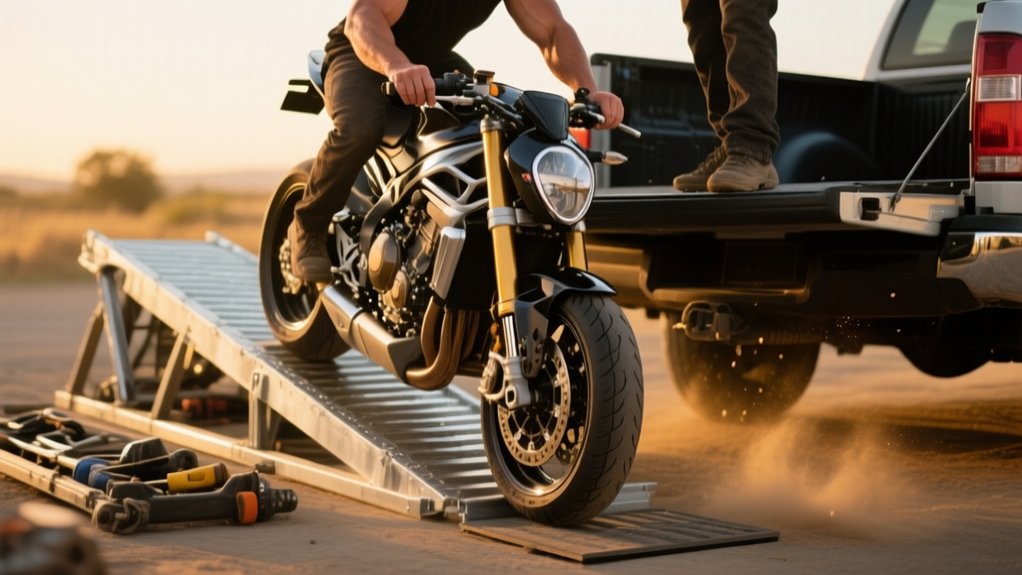
Roll the bike up slowly with a helper or wheel chock.
Strap the front and rear firmly, then check for any movement.
Before driving, re-check that everything is secure.
Then follow the step-by-step setup and keep going.
Choose a Motorcycle Ramp
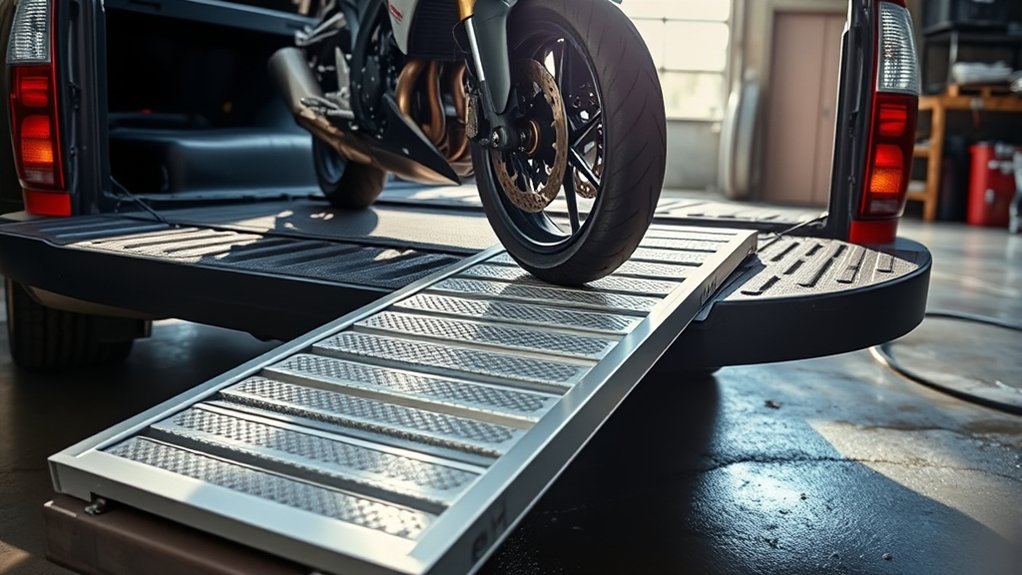
Start by choosing a motorcycle ramp rated for at least 1.5 times your bike’s gross weight. For example, a 600 lb motorcycle should use a ramp with at least 900 lb capacity.
Pick a solid aluminum or steel ramp that won’t flex under load. Match the width to your tire setup: 8–12 inches per rail or a 12–18 inch single platform.
Look for knurled, serrated, or rubberized surfaces. Raised side lips also help keep the tire centered.
Choose a ramp that locks to the truck bed with pins, hooks, or straps. Verify it fits your tailgate height before you buy.
For easier loading, use a folding model with handles. Aim for at least 6–8 feet of unfolded length for a smoother ride up.
Create a new account, if needed, to save compatible ramp specs.
Prepare the Truck Bed
Once you’ve chosen a ramp that fits your bike and truck, prepare the bed by clearing out loose items.
Sweep away debris and check the available length and width.
Make sure the motorcycle will sit fully inside the bed without overhang.
Make sure the motorcycle sits fully inside the bed, with no overhang.
Lower or remove the tailgate if needed.
Clean and dry the floor so the tires grip properly.
For extra traction, lay non-slip rubber matting or carpet strips where the wheels will rest.
- Measure the bed. Most full-size pickups run 78–97 inches long and 50–66 inches wide.
- Install rated D-rings or anchor rails for four straps.
- Set a wheel chock or block where the front wheel will land.
- Confirm strap clearance and leave space for a passenger if needed.
Position the Ramp Correctly
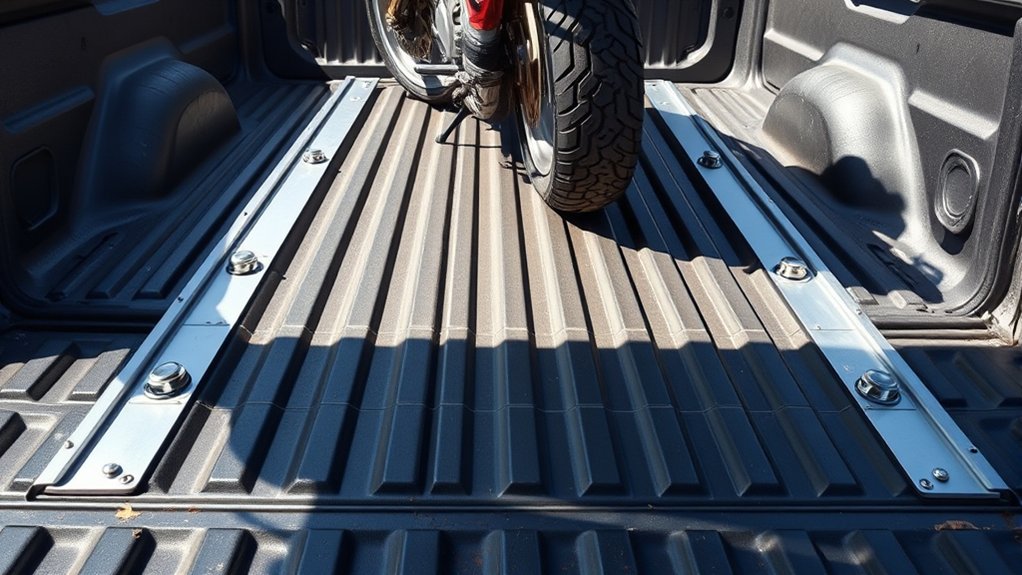
With the truck on level ground and the tailgate lowered, center the ramp on the bed. Keep the ramp-to-bed angle under about 15 degrees so the bike stays stable as you walk it up.
Place the ramp straight in line with the motorcycle’s path. Keep any offset under 2–3 inches.
Match the ramp width to the tire track. Use 8–10 inches per rail for dirt-bike style ramps and 12–18 inches for street bikes.
Secure the ramp at the top with a pin, strap, or latch. Verify there’s less than 1/4 inch of play.
Use a rubber mat or traction tape at the contact point. Add a tailgate protector so the ramp won’t slip backward.
If you use dual ramps, set equal spacing.
Load the Bike Up the Ramp
Ease the bike up the ramp slowly and under control. Use a solid, rated ramp that can handle the combined weight of the motorcycle and gear.
Park on level ground. Drop the tailgate, then lock the ramp to the truck with pins, straps, or built-in latches so it can’t shift.
Keep the ramp angle under 15° if you can. A longer ramp helps.
Roll the bike straight and centered. Keep throttle steady and light.
Use the clutch to meter speed, not revs. Let one person stabilize the rear while another walks beside it.
Once the front wheel reaches the bed, stay smooth and deliberate. Center the bike, set it in neutral, then prepare it for transport with secure tie-down points.
Use balanced tension for the straps.
Use a Helper or Wheel Chock
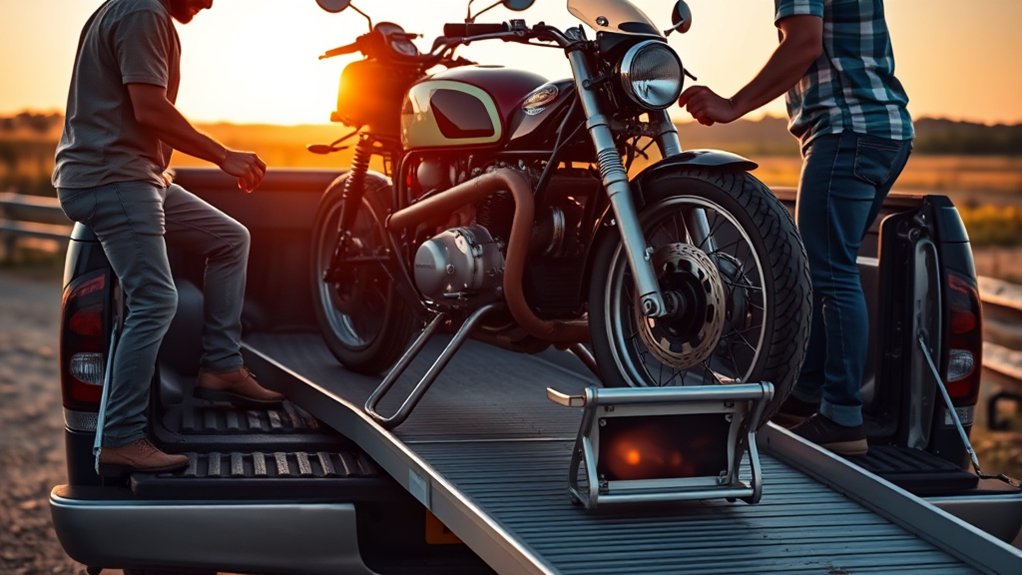
A helper can make the load much more stable by steadying the bike from the rear while you guide it up the ramp. This reduces side-to-side sway and helps prevent a tip-over.
A helper steadying the bike from the rear can reduce sway and help prevent a tip-over.
Position that person at the rear fender or passenger grab rail. Keep a two-handed grip and agree on clear throttle-and-stop cues before moving.
Have the helper wear gloves and stay clear of ramp edges and the swingarm. As the front wheel reaches the bed, they can brace the tailgate or hold a wheel chock at the lip to stop premature roll.
If you’re loading alone, install a quality wheel chock or front-wheel stop in the bed. Then secure the bike immediately after the wheel seats.
Release it only after primary straps are fastened.
Tie Down the Front and Rear
Lock the front wheel using a centered chock or a ratchet strap so it can’t shift side to side.
Then secure two 2-inch straps from the lower triple clamp or fork tubes to fixed bed anchors, aiming them at about a 45-degree forward-downward angle.
Next, run two more straps from solid rear frame points (or the passenger footpeg mounts) to rear anchors.
Position these at roughly a 45-degree rearward-downward angle to help keep the bike upright and prevent any rotation.
Tighten all four straps evenly until the suspension compresses slightly, and protect contact points with soft loops or padding.
Finally, make sure any loose strap ends are secured so they won’t flap or catch.
Front Wheel Security
Center the motorcycle in the truck bed or trailer.
Put it in neutral, and block the rear wheel with a wheel chock or sturdy wood before you secure the front.
Use a threaded fork stop or a soft loop around the lower triple clamp.
Do not use the brake lever or the fender.
Fit 1,500–2,000 lb-rated ratchet straps on both sides.
Tighten to 20–30% of full ratchet tension so you don’t overcompress the fork.
Angle the straps 15–20 degrees outward.
This pulls the wheel into the chock and limits side-to-side shift.
Add a short safety strap from the handlebars to an anchor point.
Then verify bed anchors and clips.
Bounce the bike, retorque the straps, and recheck after 10–15 miles.
Rear Strap Placement
With the bike already steadied at the front, place the rear strap on a solid anchor such as the rear fender loop, passenger footpeg bracket, or a frame-mounted grab handle. Avoid the exhaust, taillight mounts, and other soft plastic parts.
Add a soft loop or chafe protector at the contact point. Then route the strap forward under the swingarm or through a rear tie-down slot so it can’t shift and damage the finish.
Keep rear tension light, just enough to stop wheel movement. Let the front straps do the main clamping. If possible, run two rear straps, one per side, angled about 45 degrees outward to limit sway.
Check that your straps and hardware are clean, unrusted, and rated for motorcycle load.
Check for Movement Before Driving
Before you drive, do a quick movement check on the motorcycle. Set chocks or wheel straps first, then gently push the bike from different angles. Make sure there’s no more than 0–1 inch of play at the wheels or mounts.
With the engine off and the brake applied, tug each strap to verify tension. Ratchets and cam buckles shouldn’t slip. Press on every anchor point and mount—nothing should rotate, lift, or deform.
Check that the front and rear straps have equal tension. Use rated 4-point tie-downs.
Confirm the soft loops sit flat. Recheck after 50–100 feet.
Unload the Motorcycle Safely
Once the motorcycle has passed your movement check, unload it on level ground. Set the truck’s parking brake and chock the wheels.
Keep the tailgate or ramp anchored so it can’t shift. If you’re using a ramp, drop tire pressure 2–4 psi for better traction.
After unloading, reinflate the tires. Shut the engine off, select first gear, and keep the clutch engaged.
Alternatively, hold the rear brake while you walk the bike down facing forward. Stay beside or slightly ahead of the handlebars.
Use a rated tie-down, or have a second person at the rear, to control speed. Keep the bike centered and don’t release the front brake suddenly.
Once it’s on the ground, secure the kickstand. Inspect for leaks or damage, then re-fasten the straps before riding.
Frequently Asked Questions
What Truck Bed Length Is Best for Hauling a Motorcycle?
An 8-foot truck bed is best for hauling a motorcycle. It gives you enough room for most bikes without wheel removal or risky overhang.
A 6.5-foot bed can work for standard motorcycles. Load diagonally or sideways, but longer cruisers and touring bikes usually need extra length.
Leave 6–8 inches for suspension compression and secure tie-downs. This helps the bike stay put during transport.
Can I Load a Motorcycle Alone Without a Wheel Chock?
Yes, you can load it alone without a wheel chock if you set up carefully.
You’ll need a wide, rigid ramp rated for at least 500 lbs, secured to the tailgate.
Also, use two strong tie-downs that are already pre-tensioned to the truck’s anchors.
Keep the bike in 1st gear and move slowly as you load it.
Use a temporary wheel block at the bed edge for extra control.
Practice first, wear boots and gloves, and stay balanced throughout the process.
Should I Remove Saddlebags Before Loading the Bike?
Yes, you should remove saddlebags if you can.
A light bike needs wide truck space, and bulky bags can create tight clearance and scraping risk.
Taking them off reduces width, cuts weight by 10–40 lb, and helps prevent them from catching on ramps or bed rails.
If they’re fixed, empty them, secure them, and pad any contact points.
Measure for 2–3 inches of side clearance.
Use wider ramps when removal isn’t practical.
How Do I Protect the Truck Bed From Motorcycle Scratches?
You should protect your truck bed with a 3–4 ft strip of 3/8–1/2 in rubber or marine foam matting across the floor.
Add a removable bed liner or carpet remnants, then tape down the edges so they don’t shift.
Place 2×6 runners under the tires.
Wrap contact points with blankets.
Apply anti-slip tape where the bike rolls to reduce scraping and spin.
What Weight Rating Should My Tie-Down Straps Have?
You should use tie-down straps with at least a 1,000 lb working load limit (WLL) per strap for a typical 300–800 lb motorcycle.
Choose 2-inch polyester cam buckle or ratchet straps with 3,000–6,000 lb breaking strength.
Make sure the combined WLL exceeds your bike’s weight.
Use four straps minimum, and for rough roads or long trips, step up to 2,500–3,000 lb WLL straps for extra margin.
Conclusion
Now you know how to load your motorcycle into a truck safely and efficiently. Choose a sturdy ramp, prepare the bed, and align everything correctly. Then load the bike with control.
Use a helper or a wheel chock if needed. Secure the motorcycle with tiedowns, and test for movement before driving. You’re set.
When you unload, reverse the process carefully. Why rush when a few precise steps can protect your bike and your truck every time?