Can You Plug A Motorcycle Tire – What to Know
You can plug a motorcycle tire only if the puncture is in the central 75% of the tread, is roughly round, and no larger than about 6 mm. Avoid plugging sidewall, shoulder, or irregular holes because flexing risks plug failure.
Use a plug and patch placed internally for a permanent fix. Roadside plugs are temporary and require speed and mileage limits. Monitor pressure closely and replace the tire promptly if the damage worsens.
Understanding these guidelines helps you manage safe repairs effectively.
Step-by-Step Guide to Plugging Motorcycle Tires

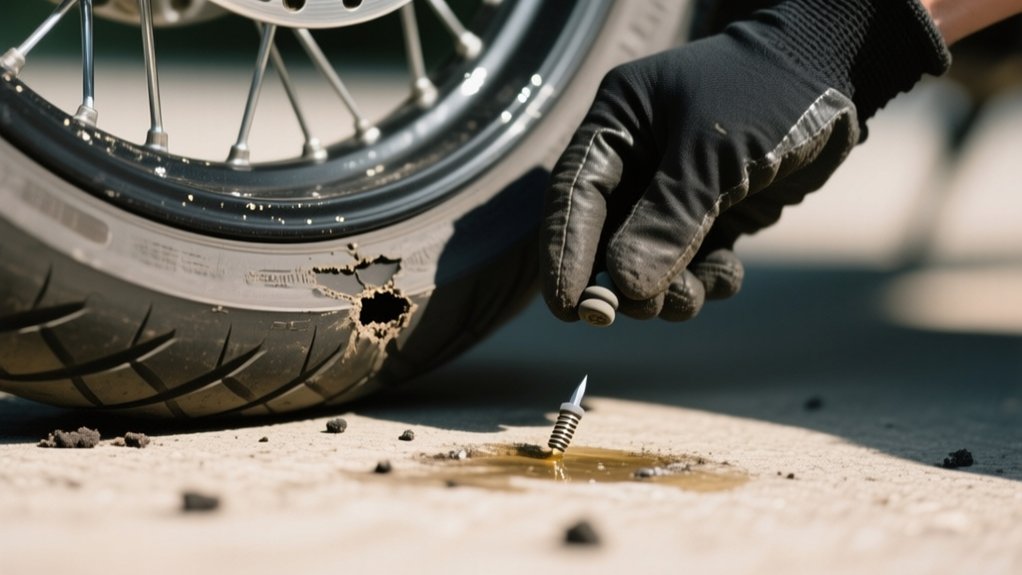
Before you begin plugging a motorcycle tire, confirm that the puncture is located in the crown, the central 75% of the tread, and that it’s caused by a round object like a nail or screw no larger than 6 mm in diameter.
Ensure the puncture is in the tread’s central 75% and caused by a small, round object before plugging.
For a tubeless motorcycle tire, start by removing the object carefully. Use the reamer tool from your tire plug kit to clean and enlarge the hole slightly.
Insert the rope-style or mushroom plug per instructions, embedding about two-thirds inside the puncture, then trim it flush with the tread. Apply rubber cement or the kit’s adhesive to seal.
Reinflate the tire to recommended pressure and check for leaks with soapy water. Remember, this is a temporary fix; plan to have a professional install an internal plug-patch or replace the tire for a permanent solution.
Identifying Which Motorcycle Tire Punctures You Can Plug
You can only plug punctures that are located within the central 75% of the tread. It’s important to avoid any damage on the shoulders or sidewalls.
Also, the hole needs to be round and no larger than about 6 mm in diameter for a plug repair to be safe. So, always take a good look at where the puncture is and how big it’s before you decide to fix it.
Puncture Location Limits
Puncture location plays a critical role in determining whether a motorcycle tire can be safely plugged. Only punctures within the crown, the central 75% of the tread, are suitable for repair. Avoid plugging punctures on the sidewall or shoulder, as these areas flex considerably and compromise plug integrity.
Make certain the tread depth over the puncture remains at least 1.5 mm to maintain adequate grip and plug retention. Round punctures caused by nails or screws are generally repairable, whereas irregular or slashed holes are not.
For a permanent repair, the tire must be removed and a combined internal plug and patch installed and inspected professionally. Remember, roadside plugs are temporary and don’t replace a proper permanent repair.
Always assess puncture location before attempting any plug.
Hole Size Restrictions
Understanding the size of the hole is just as important as its location when deciding if a motorcycle tire can be safely plugged. For effective tubeless tire repair, observe these key size restrictions:
The puncture size limit is generally 6 mm (0.25 in) diameter; larger holes are unsafe to repair. Only roughly circular punctures in the tread crown qualify. Slashes, tears, or oblong holes are non-repairable.
Avoid repairs on sidewall vs tread shoulder damage because flexing can eject plugs and compromise integrity. Temporary roadside plugs may get you to a shop, but a permanent fix requires an internal plug-and-patch installed off the rim.
Keep these guidelines in mind to guarantee your motorcycle tire repair is both safe and durable.
When Should You Skip Plugging Your Motorcycle Tire?

Although plugging a motorcycle tire can be a quick fix, you should skip it if the puncture is located on the shoulder or sidewall. Flexing in these areas can cause the plug to fail or the tire to suffer structural damage.
Avoid plugging front tires unless absolutely necessary. Failure there compromises steering and safety.
Check the hole size against the manufacturer limit, typically no larger than 3 to 7 mm. Bigger or irregular punctures like slices or tears require tire replacement.
Also, measure tread depth at the puncture. If it’s below about 1.5 mm (1/16 inch), the rubber won’t hold a reliable seal.
If internal damage is suspected or the manufacturer’s policy forbids repairs, don’t plug. Instead, opt for professional internal patching or a new tire.
Essential Tools and Materials for Plugging Tires
You’ll want to have a dedicated tubeless repair kit on hand. It should include a reamer, an insertion tool, and rope-style plugs that are about 4–6 mm in size to seal the tire effectively. Along with that, rubber cement is a good idea—it helps create a tight bond between the plug and the tire, making sure the repair holds up.
Also, don’t forget to bring a portable inflator or a CO2 source, plus a pressure gauge. These will help you restore the tire pressure and check it afterward to make sure everything’s just right. And it’s always smart to carry some basic safety gear and tools like pliers and a sharp knife. You’ll need those to clear out any debris and trim the plug flush once it’s inserted.
Required Repair Tools
Gathering the right tools is essential when plugging a motorcycle tire to guarantee a secure and lasting repair. You’ll need a proper plug kit that includes a reamer to clean and enlarge the puncture and an insertion tool to insert the plug correctly. CO2 cartridges or a portable inflator help you rapidly re-inflate the tire and reach the correct PSI after repair.
Essential tools include:
- Reamer and insertion tool from plug kits
- Rope-style or mushroom plugs (3–6 mm capacity)
- CO2 cartridges or portable inflator with pressure gauge
- Needle-nose pliers or screwdriver to extract the puncturing object
Having these tools makes certain you can perform a reliable roadside tire plug repair efficiently and safely.
Plug Materials Needed
Select the right plug materials to guarantee a reliable motorcycle tire repair. Start with a quality plug kit, including a reamer and T-handle insertion tool designed for motorcycle tires.
Equip yourself with rope-type plugs sized for punctures up to approximately 6 mm. Use rubber cement or adhesive specified by the kit manufacturer to make certain a strong seal.
For permanent repairs, a patch/plug combination kit is essential, requiring tire removal and internal patch installation. Always carry a tire pressure gauge to monitor inflation before and after repair.
Additional tools like heavy-duty gloves, pliers for object extraction, and a portable inflator complete the setup. Optional items include soapy-water spray to detect leaks and a flush trimmer to level plugs with the tread for peak safety and performance.
Speed and Distance Limits After Plugging a Motorcycle Tire

Although a plugged motorcycle tire can get you back on the road, you should limit your speed to around 50–75 mph (80–120 km/h) immediately afterward. Avoid exceeding about 60 mph until a professional inspects the repair. Treat the temporary plug as a short-term fix and follow strict speed and distance limits to stay safe.
Keep these guidelines in mind:
- Only ride as far as necessary to reach a tire repair facility, typically under 50 to 100 miles (80 to 160 km).
- Avoid plugs in the shoulder or sidewall because flexing can eject the plug regardless of speed.
- Limit your speed to 50–75 mph after plugging and don’t exceed about 60 mph until it’s inspected.
- Check your tire pressure frequently and avoid heavy loads or long trips until the tire is repaired or replaced.
Following these limits protects your motorcycle tires and helps ensure safer riding after a temporary plug.
How Long Can You Safely Ride on a Plugged Motorcycle Tire?
You should rarely rely on a plugged motorcycle tire for long-distance or high-speed riding. When you plug a tubeless motorcycle tire, treat the repair as a temporary fix. Limit speed to 50–60 mph for the first 24 hours, and avoid sustained speeds above 75–80 mph unless a certified internal plug-patch is used and manufacturer guidelines permit.
Temporary fixes like roadside rope or mushroom plugs require you to replace the tire within 700–1,000 miles to prevent unpredictable failure. Front tire punctures demand even more caution. It’s better to use a tow truck or get an immediate replacement.
Always monitor pressure after plugging and stop riding if you detect rapid pressure loss, bulging, vibration, or imbalance. Promptly replace the tire to make certain safety and prevent internal damage from worsening.
Risks of Improper Motorcycle Tire Plugging
Relying on a plugged tire without proper procedures increases the risk of sudden failure and hidden damage. When you opt for quick plugging and patching on the side of the road, you might overlook critical internal damage that only a full tire removal can reveal. Improper repairs can compromise safety and tire integrity.
Consider these risks: Plugging sidewall or shoulder damage can cause the repair to eject due to flexing. External plug-only fixes are temporary and don’t meet permanent repair standards. Punctures larger than 6 mm demand a new tire to avoid carcass failure. Unseen internal damage like ply separation or steel-belt corrosion can worsen unnoticed.
Always seek professional inspection after patching to make certain safe, long-term tire service.
How Manufacturer Guidelines Affect Your Tire Repair Options
When considering tire repairs, manufacturer guidelines play a critical role in determining what options are safe and permissible. Most manufacturers restrict repairs to the tread crown, roughly the central 75% of the tread. They explicitly forbid sidewall repairs because flexing there can eject plugs.
Permanent fixes require a plug-and-patch applied internally with the tire off the rim, guaranteeing no carcass damage exists. Manufacturers also limit repairable puncture diameter to about 3–7 mm. Anything larger or irregular means you need to replace the tire.
After repair, manufacturers often impose speed and usage restrictions and may void warranties. If tread depth falls below 1.5 mm or structural damage is evident, guidelines mandate replacement. Following these manufacturer guidelines guarantees your repair maintains safety and tire integrity.
When to Replace a Plugged Motorcycle Tire
Although some tire plugs might hold up for a while, you should replace a plugged motorcycle tire before riding more than 700 to 1,500 miles if the repair involved a roadside rope or mushroom plug. These are temporary fixes with unpredictable durability.
If the repair used an inside plug-plus-patch, replace the tire only if the puncture exceeds size limits, is in the sidewall, or if internal damage occurs.
Replace immediately if you notice:
- Progressive pressure loss or bulging
- Puncture in the shoulder or sidewall
- Oblong or tearing hole shape
- Plug shifting or severe wheel balance issues
Always follow manufacturer limits on speed and usage after repair, especially for front tires.
Frequently Asked Questions
Can Tubeless Plugs Be Used on All Motorcycle Tire Brands?
You can’t use tubeless plugs universally on all motorcycle tire brands due to brand compatibility issues. Valve differences and tire compound variations affect repair effectiveness and safety.
Rim fitment also plays a role, as improper sealing risks air loss. Most manufacturers restrict plug repairs to maintain warranties, often requiring internal plug-patch repairs instead.
Always check your tire’s specific guidelines to avoid voiding warranties and compromising performance or safety.
How Does Tire Pressure Affect the Effectiveness of a Plug?
Imagine the plug as a tiny dam holding back pressure inside your tire.
Tire pressure directly stresses this dam. Too high, and the plug risks ejecting, especially near sidewall damage or an improper repair location.
Temperature changes cause pressure shifts, which affect the seal’s integrity. Also, keep an eye on the valve condition to avoid leaks.
While tread depth doesn’t impact the plug, always use proper pressure. Check the repair immediately and again after short rides to make sure the plug holds under real conditions.
Are There Specific Tire Pressures Recommended After Plugging?
You should always inflate your tire to the recommended PSI specified by the manufacturer after plugging. Don’t underinflate to compensate for the repair, as that can affect load limits and handling.
Temperature effects can cause pressure fluctuations, so monitor pressure frequently, especially during the first 24 hours. Check valve integrity too, since leaks can mimic plug failures.
Regular pressure monitoring guarantees safety and helps catch slow leaks early.
Can Plugging a Tire Affect Motorcycle Handling or Braking?
Yes, plugging a tire can cause stability changes and affect your braking performance. You might notice a subtle steering feel alteration, especially if the plug creates imbalance.
This imbalance can lead to vibration increase at higher speeds, compromising comfort and control. Moreover, if the plug causes pressure loss, you risk reduced cornering grip, heightening cornering risk.
Always monitor tire pressure closely after repair to minimize braking imbalance and maintain safe handling.
Is It Safe to Plug a Tire Before a Long-Distance Trip?
Plugging a tire before a long-distance trip is like using a bandage on a deep wound. It’s only a temporary fix. For true ride safety, rely on patch alternatives or a professional internal plug plus patch.
While a roadside plug may support emergency preparedness, longhaul risks remain high if you depend solely on it. Always inspect thoroughly and consider replacement to maintain performance and avoid potential failure during your journey.
Conclusion
You might hear that plugging motorcycle tires is just a temporary fix and that’s true. While you can safely plug certain punctures using the right tools and techniques, this method isn’t a permanent solution.
Manufacturer guidelines often limit how and when you can repair tires. For safety and performance, always inspect the plug closely and follow speed and distance limits. When in doubt, replacing the tire is the smartest, most reliable choice.