What Is The Most Reliable Motorcycle – Straight Answer
If you want the straight answer, Honda is usually the most reliable motorcycle brand. That’s especially true for models like the CB500, CRF250L, and Gold Wing.
Yamaha, Suzuki, and Kawasaki are close behind. All four Japanese brands have strong records for durability, low warranty claims, and easy maintenance.
Your best bet is a proven model with simple engineering, good parts support, and a solid service history. Keep going, and you’ll see which bikes and habits matter most.
What Makes a Motorcycle Reliable?
A reliable motorcycle is one that keeps running with minimal surprises over the long haul.
A reliable motorcycle keeps running with few surprises, mile after mile, with routine care.
You judge it by engine durability, low warranty claims, and major parts that last beyond 50,000 miles with routine care.
Simple engineering helps.
Proven air-cooled or liquid-cooled designs and straightforward fuel systems usually fail less often.
Fewer electronic subsystems also mean fewer things can go wrong.
So it’s worth paying attention to how complex the bike’s electronics are.
You should also look at service intervals and easy access to oil and filters.
Parts you can find quickly help you keep downtime low.
Motorcycle brands with strong dealer and aftermarket support make maintenance easier.
That support can also reduce delays when something needs replacement.
Good corrosion resistance matters too, because weather is hard on bikes.
Sealed connectors, coated fasteners, and durable paint help prevent weather-related failures.
In practice, reliability comes from sound design, quality manufacturing, and easy upkeep.
The Most Reliable Motorcycle Brands
If you’re looking for the most reliable motorcycle brands, you’ll usually see Japanese manufacturers at the top—especially Honda, which often sets the benchmark for long-term dependability.
That said, Yamaha, Suzuki, and Kawasaki also have excellent reputations for durable engines, low-maintenance ownership, and strong mileage when you keep up with regular care.
Of course, BMW and KTM can be reliable as well. However, you’ll typically need stricter service habits and a larger repair budget to get the same level of consistent performance you’d expect from the Japanese brands.
Japanese Reliability Leaders
Japanese brands consistently lead reliability rankings. Honda usually takes the top spot thanks to models like the CB500X and CRF250L. These bikes often show low failure rates and strong long-term owner satisfaction.
If you want dependable ownership, Yamaha comes next. It’s known for durable engines, long service intervals, and models like the MT-07 and Tenere 700. Both are also known for solid resale value.
Suzuki also earns trust through the GSX-R and V-Strom lines. Drivetrain reliability and fewer electrical problems help keep costs down. Owners tend to feel confident maintaining them over time.
Kawasaki rounds out the group with the Ninja 650 and Versys 650. These models use sturdy transmissions and clutches. You can usually preserve this reliability with regular oil changes, valve checks, and chain care.
Japanese bikes still post lower warranty claims than many European rivals.
Proven Long-Term Durability
When you look at proven long-term durability, Honda usually sets the benchmark. CRF and CB models often reach 100,000 miles or more with routine maintenance and few major failures.
Yamaha’s YZF and MT engines also last impressively. Service valves and chains on schedule for best results.
Suzuki’s GSX and V-Strom lines show strong drivetrain endurance. Kawasaki’s Ninja and Z-series bikes can cover high mileage with regular oil and coolant care.
| Brand | Strength | Typical Mileage |
|---|---|---|
| Honda | Benchmark durability | 100,000+ |
| Yamaha | Conservative tuning | 80,000–120,000 |
| Suzuki | Durable drivetrains | 70,000+ |
| Kawasaki | Mechanical toughness | High-mileage capable |
Royal Enfield and KTM can also stay dependable. Still, results depend more on how you ride and keep up maintenance.
Low-Maintenance Brand Picks
Long-term durability is only part of the equation. If you want the most reliable motorcycle with the least hassle, brand-level maintenance costs matter just as much. You’ll usually get the best value from Japanese brands, especially when you prioritize simple service, affordable parts, and fewer surprises.
- Honda: top reliability, proven longevity
- Yamaha: durable engines, low upkeep
- Suzuki: simple designs, fewer repairs
- Kawasaki: affordable service and parts
- Triumph/BMW: improved, but pricier
Honda often leads the field, with CB500 and CRF250L models routinely going past 100,000 miles. Yamaha’s MT-07 and Tenere bikes stay dependable over years.
Suzuki’s DR-Z400 and V-Strom lines reward you with low-maintenance ownership. Kawasaki’s Ninja 400 and Versys keep costs manageable.
Triumph and BMW are better than before, but they’ll usually cost more.
Most Reliable Honda Motorcycle Models
Honda’s most reliable motorcycles are the ones that keep the design simple, durable, and easy to service. If you want proven Honda dependability, start with the CB500X. It uses a long-lasting parallel-twin and often goes 50,000 miles or more between major services.
The CRF250L and CRF300L help keep upkeep low too. They use simple single-cylinder layouts that are easy to maintain.
For touring, the Gold Wing really stands out. Its flat-six and shaft drive regularly clear 100,000 miles with proper maintenance.
The NC750X, and earlier NC700X, also earn strong marks. Its torque-focused twin helps reduce stress and helps prevent unscheduled repairs.
If you prefer a naked bike, check out the CB750 legacy models and CB650R. They’ve straightforward engines, solid parts support, and easy repairs.
Most Reliable Yamaha Motorcycle Models
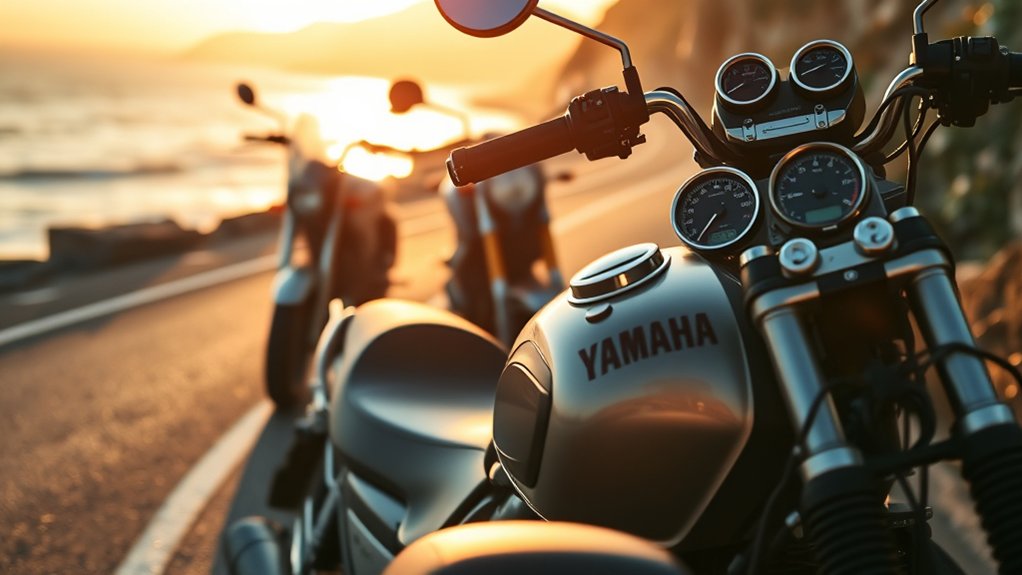
Yamaha’s most reliable motorcycles tend to share the same winning formula: simple, proven engines and low-cost maintenance. If you want a bike that’s easy to live with, these models stand out for durability and long service life.
- Tenere 700: 689cc twin, long valve-check intervals
- MT-07: strong CP2 engine, often 60,000+ miles
- XSR700: same reliable platform, few electrical issues
- FJR1300: 1,298cc inline-four built for high mileage
- SR400/SR500: simple single-cylinder design, easy upkeep
You can trust the Tenere 700 for adventure use. The MT-07 and XSR700 are great for everyday riding. The FJR1300 is a solid pick for touring. If you want classic simplicity, choose the SR400/SR500.
With regular oil changes and scheduled service, Yamaha’s best reliability picks can stay dependable for years and rack up serious mileage.
Most Reliable Kawasaki Motorcycle Models
When you look at Kawasaki reliability, a few models really stand out—like the KLR650, Ninja 650, Z650, Versys 650, and the W800.
These bikes are known for durable engines and proven designs, and they tend to earn strong reputations over time.
On top of that, you’ll usually find that maintenance stays pretty straightforward, and parts support is widely available.
Best Kawasaki Reliability
If you want a Kawasaki that’s built to last, a few models consistently stand out for durability and low-drama ownership. You’ll usually get the best results from bikes with straightforward engineering and a maintenance schedule you can realistically keep.
- Concours 14: long-haul touring reliability
- Ninja 650: simple, proven, low-cost
- Versys 650: versatile and mechanically tough
- KLR650: rugged, easy to service
- Z900/Z650: conservative tuning, solid support
If you ride a Concours 14, you can expect strong mileage potential with routine care.
If you prefer a lighter bike, the Ninja 650 and Versys 650 both have excellent owner-reported dependability.
For rough conditions, the KLR650 stays a benchmark.
The Z900 and Z650 also deliver dependable everyday use, with fewer major issues than many rivals.
Durable Kawasaki Engines
Kawasaki’s most durable engines are typically the ones built with simple, conservative engineering and regular maintenance in mind.
If you want long life, start with the Z1000 and Z1000SX inline-four 1,043cc engines.
They hold up well when you service them every 6,000–8,000 km and run 10W-40 synthetic oil.
The KLR650’s air-cooled 652cc single is another standout.
Many owners reach 100,000+ miles with routine valve checks and oil changes.
You can also trust the Ninja 650 and ER-6n 649cc twin.
Their mild tuning helps them run past 50,000 miles.
Kawasaki’s KLX250 and similar small singles also last, because their valve clearances are easy to inspect.
Low-Maintenance Kawasaki Models
Among Kawasaki’s most reliable bikes, the low-maintenance models stand out.
They keep engineering simple and service costs predictable.
You get dependable choices that don’t demand constant attention:
- KLR650: air-cooled single, easy valve checks, and oil changes often every 6,000–8,000 miles
- Versys 650: durable parallel-twin, strong gearbox, and valve inspections around 9,000–12,000 miles
- Ninja 650: fuel-injected twin with routine chain, tire, brake, and oil care
- Z650: shared hardware with the Ninja and Versys, so maintenance stays straightforward
- Older Kawasaki singles and twins: carbureted or simple FI layouts with forgiving cooling
You’ll usually spend less time in the garage and more time riding.
If you want reliable daily use, these Kawasaki models make sense.
They pair proven hardware with sensible service intervals and low ownership stress.
Why Suzuki Belongs on the Reliability List
Suzuki earns its place on any reliability list because its bikes have a long record of durable engines, straightforward engineering, and low ownership drama. You see that in GSX-R and V-Strom models, where owners often log well over 100,000 miles with routine maintenance.
Suzuki’s SV650 and GSX-R600/750 engines use simple, robust layouts that cut failure points and limit major service needs. In many markets, you also benefit from a solid dealer network and easy OEM parts access, which helps keep repairs quicker and less costly.
Reliability surveys and owner reports put Suzuki near the top among mainstream brands for fewer electrical faults and drivetrain failures. Conservative tuning and proven components further support long-term dependability, without sacrificing everyday usability or performance.
Best Used Reliable Motorcycles to Buy
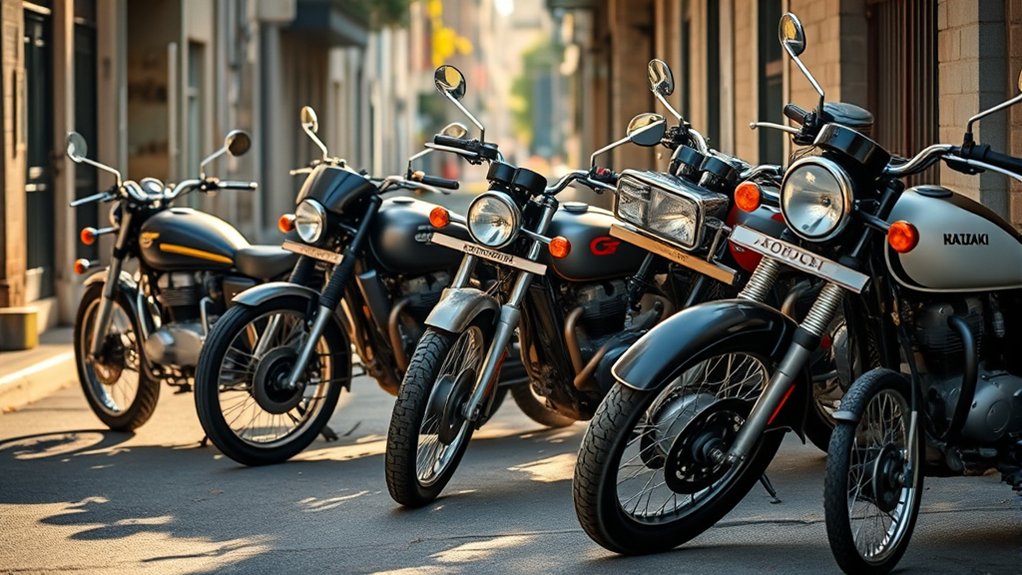
If you’re looking for a used motorcycle that’s genuinely hard to wear out, it helps to start with models that already have a strong track record. Some of the best reliable picks include the Honda CB500F/CB500X, Yamaha MT-07, Suzuki SV650, and Kawasaki KLR650. With these bikes, you can usually count on dependable engines, simple day-to-day maintenance, and good parts availability—so your ownership costs stay reasonable.
That said, you don’t always need a big “classic” motorcycle to get reliability. Smaller commuter bikes and even well-chosen scooters can be great options too, especially if your goal is maximum dependability for minimum money.
Proven Used Picks
When you want a used motorcycle that’s already proven itself, start with models known for simple engineering, easy maintenance, and long service life. You’ll usually get the best value from bikes that have a long record of surviving high mileage with routine care.
- Honda CB750/CB900
- Kawasaki KLR650
- Yamaha FZ6/Fazer and FZ1
- Suzuki DR-Z400/DR650
- Honda Gold Wing GL1100–GL1800
These picks aren’t flashy, but they’re reliable when maintained. The Honda fours are easy to keep running. The KLR650 shrugs off abuse. The Yamaha FZ models stay affordable. The Suzuki dual-sports handle hard use. The Gold Wing delivers huge mileage in touring trim.
Choose one with service records, and you’ll lower your risk.
Dependable Engine Choices
For dependable used motorcycles, focus on engines with a long track record of simple, durable design and routine maintenance.
You’ll get the best odds from models like these:
| Engine family | Why it’s dependable |
|---|---|
| Honda CB500/CB300 twin | Basic, long-lasting, easy to service |
| Yamaha CP2 and inline-four | Proven, smooth, durable |
| Suzuki GSX-R/V-Strom 650 | Strong commuter and touring longevity |
| Kawasaki KLR650/Ninja 650 | Simple, rugged, field-repair friendly |
| BMW R-series/FJR1300 | Durable for touring with scheduled service |
These engines often reach 50,000 to 100,000 miles, and some go well beyond that.
Prioritize examples with clear maintenance records, because consistent oil changes, valve checks, and cooling-system care matter more than peak power.
Low-Cost Ownership Factors
To keep ownership costs low on a used motorcycle, focus on models with proven reliability, cheap parts, and simple maintenance schedules.
You’ll usually spend less on a Honda CB500X or CRF300L, a Yamaha MT-07/FZ-07 or R3, a Suzuki SV650, and a Kawasaki Ninja 650 or Versys 650.
These bikes often cover 50,000 miles or more with routine care, and their parts are easy to find.
- Check service records for 5,000–10,000 mile intervals
- Prefer bikes with no crash damage
- Choose chain-drive models for cheaper upkeep
- Confirm recent valve or timing service
- Look for strong fuel economy and low insurance
When you buy carefully, you cut surprise repairs and keep commuting costs predictable.
How to Spot a Reliable Used Bike
A reliable used bike usually gives up its story if you know where to look.
Start with records, then inspect, then ride.
Service stamps should show oil and filter changes every 3,000–6,000 miles on older bikes, plus valve checks and major work.
| Check | What you want | Red flag |
|---|---|---|
| Engine | Dry cases, no smoke | Oil leaks |
| Frame | Straight, original | Weld patches |
| Ride | Smooth, clean shifts | False neutrals |
| Wear | Good tires, pads | Old DOT date |
Use this quick scan to catch hidden risk before you pay.
Next, check compression.
Cylinders should stay within 10–15% of each other.
Look for matching numbers, no misalignment, and a clutch that engages cleanly.
Rack up costs from tires, chains, sprockets, pads, and battery before you commit.
Maintenance Habits That Keep Bikes Reliable
Regular maintenance keeps a good bike dependable, and you can’t skip the basics if you want it to stay that way.
Regular maintenance keeps a bike dependable, and skipping the basics only invites trouble.
Change engine oil and filter every 3,000–5,000 miles, or per the manual, to limit wear and sludge.
Before each ride, check tire pressure.
Inspect tread and brakes on schedule, and lube and adjust the chain weekly.
Replace brake fluid every 1–2 years, too.
Verify valve clearance at the service intervals.
Use the specified oil grade, because the wrong viscosity can hurt lubrication.
Keep the chain tight enough to avoid drag, but not so tight it strains bearings.
Watch pad and rotor condition, and swap brake fluid before moisture builds up.
Follow valve checks at the recommended mileage to protect performance and reduce expensive repairs.
Which Motorcycle Brand Is Most Reliable?
When it comes to reliability, Honda is widely regarded as the safest bet. Models like the CB500 and CRF250L have a strong reputation for long service life and low repair rates.
If you want the lowest chance of hassle, Honda usually gives you the best odds. Yamaha runs a very close second, and its MT-series and Tenere bikes deliver strong durability and steady maintenance intervals.
Suzuki and Kawasaki can also be dependable, especially in the SV, GSX, Z, and Ninja lines. Just keep up with service.
BMW and KTM can be mechanically solid too. Still, their added complexity and higher parts costs can make ownership less practical.
In surveys and long-term studies, Japanese brands continue to rank highest for reliability and total cost.
Frequently Asked Questions
How Much Mileage Is Too Much for a Reliable Used Motorcycle?
Too much mileage depends more on maintenance than the number on the odometer.
Still, you should get cautious past 20,000–30,000 miles on many bikes.
If you’re looking at a sportbike, be extra careful after 15,000–20,000 miles.
You can still buy a reliable motorcycle with 40,000+ miles if it has solid records, fresh wear items, and no engine, valve, or oil-consumption problems.
Does Rider Weight Affect Motorcycle Reliability?
Yes, your weight can affect reliability indirectly. You won’t change the engine’s basic durability, but you can wear out suspension, tires, bearings, brakes, and drivetrain parts faster if you’re heavy for the bike or exceed GVWR.
Stay within the rated load, set tire pressure correctly, and upgrade springs if needed. This keeps stress down and helps your motorcycle stay reliable.
Are Air-Cooled Motorcycles More Reliable Than Liquid-Cooled Ones?
Not always. You’ll often find air-cooled motorcycles simpler and easier to keep reliable because they’ve fewer parts. That means you’ve got fewer cooling-system failures to worry about.
But liquid-cooled bikes usually control heat better, which can protect the engine under hard use, hot weather, or stop-and-go riding. In practice, judge reliability by design, maintenance, and how you ride, not cooling type alone.
How Often Should a Motorcycle Battery Be Replaced?
A battery’s surprise death usually isn’t all that surprising. Replace yours every 2–4 years, or every 4–6 years if it’s a quality AGM.
If you ride rarely or face extreme temperatures, expect 2–3 years. Replace it sooner if it won’t hold a charge, drops below 12.4 V at rest, or shows swelling, leaks, or corrosion.
Test it yearly, and don’t wait for it to fail before you act.
Do ABS and Traction Control Reduce Reliability?
No, ABS and traction control usually don’t reduce reliability much. You’ll add a few sensors and control modules, but modern systems fail rarely.
When they do, they often just turn off that feature and keep the bike rideable.
You can get the best reliability by keeping sensors clean. Also, keep the battery healthy and update the software.
In practice, the safety gain usually outweighs the small added complexity.
Conclusion
So, if you want the most reliable motorcycle, you’re usually safest with a well-kept Honda, Yamaha, or Kawasaki. In the end, reliability comes down to solid engineering and your own care.
That means regular oil changes, clean fluids, and timely inspections. Choose a bike with a smooth history, and it’ll feel like a steady machine beneath you.
It’ll fire up on cold mornings and carry you home mile after mile with confidence.