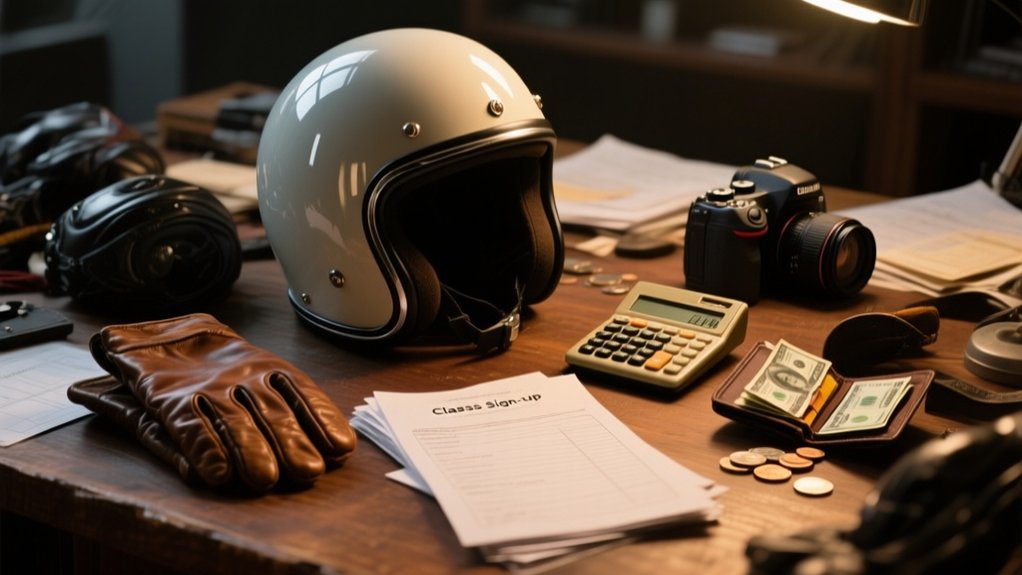
How Much Are Motorcycle Classes – By the Numbers
Most standard 2-wheel Basic RiderCourses cost about $295. Many run 15–16 hours over two days.
That price often includes bike use, classroom materials, and sometimes a helmet. You may pay extra for certification, gear rental, or a retest.
Three-wheel classes usually cost more because of equipment and staffing. Online classroom options can trim $50–$150.
Location and subsidies can shift your total a lot. More details can sharpen your estimate.
Motorcycle Class Costs at a Glance
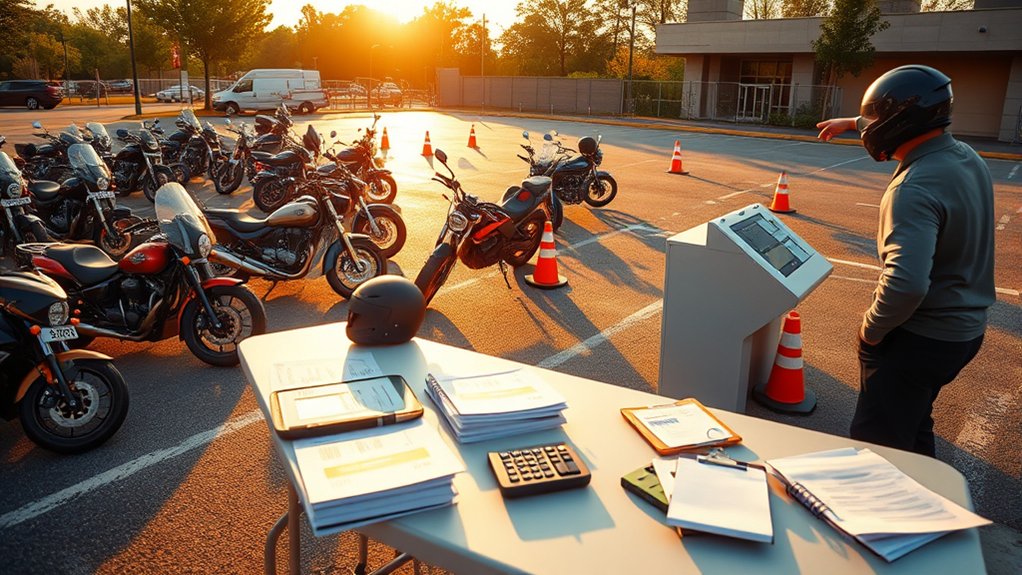
At a glance, 2-wheel Basic RiderCourse tuition often centers around $295 at many providers, including examples like Orange Osceola Safety Institute, though prices can vary by location and course format.
2-wheel Basic RiderCourse tuition often centers around $295, though prices can vary by provider and format.
You’ll usually see Motorcycle Training priced as a package. That fee often includes the Basic RiderCourse itself, plus motorcycle and helmet access.
That makes the posted amount a practical benchmark, not just a headline rate. If you’re comparing schools, check whether you’re looking at a 2-wheel or 3-wheel class, since trike pricing may differ.
You can sometimes find subsidized seats through colleges or community programs, which lowers your out-of-pocket cost. For current schedules, exact pricing, and any extra fees, call the provider or register online.
What Basic Rider Courses Usually Include
A Basic Rider Course usually gives you about 16 hours of training over two days.
Typically, you’ll do classroom instruction and then practice on the range, with the riding split into two separate sessions.
During the course, you’ll learn core skills like bike controls, basic maneuvers, defensive riding, and general safety.
Many programs also include the motorcycle, helmet, and course materials in the course fee.
You’ll finish with skills testing, and if you pass, you can receive a certificate.
In some cases, that certificate can help you waive the state riding test and may even lower your insurance costs.
Core Riding Skills
Building core riding skills, a Basic Rider Course (BRC) usually packs about 15–16 hours of instruction into a weekend format. It includes classroom time and two roughly 5-hour on-bike sessions.
In Motorcycle Training, you practice riding skills that directly affect control and safety. This covers clutch and throttle coordination, smooth shifting, braking, low-speed balance, and cornering.
You’ll also work on emergency maneuvers like quick stops and swerves. You ride maintained training bikes, so you can focus on technique instead of ownership.
You’ll need proper gear too—long pants, long sleeves or a jacket, full-fingered gloves, and ankle-covering boots. Wear a DOT helmet and eye protection.
This hands-on structure helps you build measurable competence. Then you test it through written and on-cycle evaluations.
Passing often earns a certificate that can waive the road test.
Classroom And Range Time
Basic RiderCourses usually take 15–16 total hours.
About 6–8 hours happen in the classroom, plus two 5-hour on-bike range sessions over a weekend.
You’ll start in the classroom by learning road rules.
You’ll also cover controls and risk basics before you move outside.
Two range sessions build skill through repetition.
You’ll practice clutch, throttle, braking, turning, and balance.
Attendance and both tests matter for completion.
This format keeps the workload measurable, roughly 40% theory and 60% riding.
If you choose an eRider option, you can complete the classroom portion online.
Then you’ll attend on-site for just the range sessions.
Programs often supply motorcycles, helmets, and materials.
So your main prep is wearing the right clothing.
The structure stays tight, efficient, and focused on skill gain.
Gear, Bikes, And Tests
Most Basic Rider Courses teach you the essentials without owning a motorcycle. You’ll typically use loaner bikes, get classroom materials, and may receive a DOT-approved helmet if you don’t bring one.
You’ll still need basic gear: a long-sleeved shirt or jacket, long pants, full-fingered gloves, and ankle-covering boots. Some classes also require or recommend eye protection.
Motorcycle Safety Foundation and state-approved classes usually include the bikes in tuition. That means a $295 course can cover the machine, instruction, and range use.
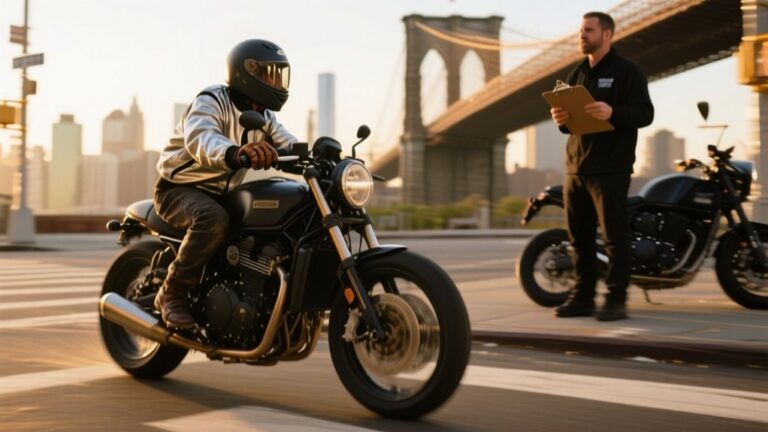
You’ll also take a written knowledge test and an on-cycle skills evaluation. If you pass both, you’ll usually earn a certificate that can waive your state riding test.
Some providers let you complete the classroom portion online. Just remember you must finish the riding and testing in person.
Why 3-Wheel Classes Cost More
Three-wheel Basic RiderCourses usually cost more because you’re paying for a license-qualification course with specialized training, not just a standard rider class. You’re getting Rider Training built around a motorcycle license. Instructors are certified for trike and 2-ATV dynamics, and that raises tuition.
Dedicated 3-wheel vehicles cost more to buy, maintain, and insure.
Smaller class sizes increase instructor time per student.
Tailored drills and longer coaching add hours to the curriculum.
Schools also absorb administrative and program-approval fees tied to 3-wheel licensing. Compared with a 2-wheel rate like $295, your price reflects equipment, staffing, and compliance costs.
If you’re comparing classes, look past the sticker price and check what the course includes. A higher fee often means more hands-on practice, more instructor attention, and a training environment built for 3-wheel control, balance, and steering.
Gear Rental, Certification Fees, and Retests
You’ll often pay extra for gear rental. Many Basic RiderCourses include a helmet and a bike, but full protective gear can add to the roughly $295 course price.
If you complete an MSF-approved course, you’ll usually skip the on-cycle licensing test and its fee. That said, any processing charges may still apply.
If you miss or fail a skills test, your course provider sets the retest or make-up cost. So it’s a good idea to check the policy before you enroll.
Gear Rental Costs
Gear rental costs are often lower than riders expect. Many Basic RiderCourse programs already include helmets, and some also provide other protective gear if you don’t bring your own.
In a Motorcycle learning environment, this bundled support keeps your out-of-pocket spending predictable. For example, some 2-wheel courses list tuition at $295 and cover instruction, training motorcycles, and standard equipment use, not extra rental add-ons.
If you take an online classroom module first, you may reduce how much gear you need onsite. The riding segment is the only in-person part.
- Helmet use is often included
- Extra gear may be optional
- Riding gear needs vary by provider
Certification Fee Details
Although the base tuition for a typical two-wheel Basic RiderCourse is about $295, providers often include motorcycles, classroom materials, and sometimes helmets. Separate gear rentals can add roughly $10–$40 per item, or about $20–$75 as a package.
You’ll also want to budget for certification charges. Many MSF-approved schools include the Completion Certificate fee, but some add $10–$30 for administration.
| Item | Typical Cost | Notes |
|---|---|---|
| Helmet rental | $10–$40 | Sometimes bundled |
| Jacket/gloves | $10–$40 each | Provider-specific |
| Certification fee | $0–$30 | Often included |
| Specialized course | Varies | Check schedule |
| Retest policy | $25–$75 | Some include one free |
Your total depends on provider rules, course type, and what you bring.
Retest Charge Policies
If you need to retake the skills test, expect another charge. Many providers set retest fees around $25, though some can bill up to half the original course price if they require extra instruction.
You should also watch for gear rental. It can add $0–$25 per item, or a flat fee at checkout if you don’t bring your own helmet, jacket, or gloves.
Some schools include certification cards in tuition, but others charge $10–$30 extra for completion paperwork or license qualification.
- Retest fees: $25 to 50% of tuition
- Gear rental: per-item or flat-rate charges
- Certification: sometimes included, sometimes extra
How Online Classroom Options Affect Price

Online classroom options can trim the price of a Basic RiderCourse, but usually only modestly.
Many MSF-approved 2-wheel courses still advertise around $295.
eRider or similar formats often reduce the onsite riding-only fee by roughly $50–$150.
That’s because you complete the theory at home.
You usually finish the classroom work before your range days.
Many providers require it by Friday night to lock in the discounted rate.
Still, don’t assume a lower total bill.
Some schools make you pay in full to reserve a seat, even with online instruction.
Administrative fees can also erase part of the savings.
And if you need a retake or extra range session, your cost can rise, since certification depends on both portions.
How Location Changes Motorcycle Class Costs
Location matters because the same MSF Basic RiderCourse can cost different amounts depending on where you take it and who sponsors it. In Florida, you might pay about $295 for a standard 2-wheel class, while partner sites can shift the price.
Location matters: the same MSF Basic RiderCourse can cost more or less depending on where you take it.
Trike courses often price differently than 2-wheel classes.
Urban dealers may keep tuition similar but add range or demo-bike access.
State-run or college-backed programs can cut your out-of-pocket cost.
If you’re in Washington or Texas, subsidies can lower tuition further. In California and other states, online classroom formats can trim fee totals.
Local range charges still matter.
You’ll see the biggest swings when sponsors bundle equipment, access, or scheduling into the posted rate.
Your final cost depends on local funding, facility type, and whether the course includes extra riding support.
How to Compare Local Motorcycle Class Prices
To sort local motorcycle class prices, start by comparing the base tuition for the same course type. A standard 2-wheel MSF Basic RiderCourse can run around $295 in some areas and vary by region, college, or state program.
Next, check whether the quote covers the full 16-hour, two-day format. Shorter intro rides or specialty classes often cost less.
Then, look closely at what’s included. Some providers supply motorcycles, DOT helmets, and classroom materials, which can offset a higher sticker price.
After that, factor in subsidies, waivers, or insurance benefits from colleges and state programs. Those can lower your out-of-pocket cost.
Finally, compare practical details like online registration, rescheduling rules, and the range location. These extras can change your total cost and overall value, even when listed prices look similar.
Frequently Asked Questions
Do Motorcycle Class Prices Include the Motorcycle Itself?
Yes, often they do, but you should verify every course.
Many entry-level and Basic RiderCourses include the training motorcycle, helmet, and on-bike instruction in the advertised tuition. That means you usually don’t pay extra rental fees.
Specialty classes like DirtBike School or 3-wheel courses also often provide bikes.
Still, policies vary by provider, so check the listing or call ahead before you enroll.
Are Helmets Provided During the Training Course?
Yes—usually. Most MSF-approved classes provide helmets if you don’t bring one.
Some schools even supply all required gear, like a safety net at the start.
Still, confirm the helmet standard before you enroll.
Many programs require a D.O.T.-approved lid and eye protection.
Bringing your own helmet helps with fit, comfort, and consistency.
You can often use a school-issued one if needed.
Can I Use My Own Bike for the Class?
You can sometimes use your own bike, but you’ll need to check the school’s policy first.
Some classes supply motorcycles, while others allow your bike only if it passes safety checks.
Your bike may need tires, brakes, lights, registration, and insurance that are up to date.
You’ll also need proper gear, and some programs require their fleet bikes instead.
Call the provider or review your enrollment details to confirm your bike is allowed.
Ask whether any extra forms are required.
Do Classes Offer Payment Plans or Financing Options?
Yes, you can sometimes get payment plans or financing, but you’ll need to ask the provider directly.
Most schools require full payment at registration, and some won’t hold your seat until they get it.
A few offer subsidized or discounted courses, which can lower your cost.
If the program uses eRider or EMTC, you may pay separately for each part, but deadlines still apply.
How Long Is a Motorcycle Class Certification Valid?
Your motorcycle class certification often lasts indefinitely, but your state decides whether it’ll accept it for a license waiver. In many places, a Basic RiderCourse certificate works when you apply, with no universal expiration date.
Still, some states require recent completion, sometimes within a few years. About 1 in 3 riders may need to verify local rules before using an older certificate.
Conclusion
So, how much are motorcycle classes? You’ll usually pay somewhere between a few hundred dollars and a little more, depending on the course type, gear, and location.
You can spot the best value by comparing what’s included, because a lower sticker price can hide extra fees.
In other words, don’t just buy the number. Buy the whole package.
If you check the details, you’ll make a smarter, safer choice and ride away with real confidence.