Is Kawasaki A Good Brand – Straight Answer
You can trust Kawasaki to deliver powerful, well-engineered motorcycles that blend advanced technology, speed, and handling. Their diverse lineup suits beginners and pros alike. Plus, Southeast Asian manufacturing keeps costs competitive without sacrificing quality.
That said, there are occasional reliability hiccups and aggressive ergonomics to consider. But Kawasaki’s strong global presence and racing heritage back their innovation and performance.
If you want to understand their full strengths, weaknesses, and how they stack up against rivals, there’s a lot more to explore.
Kawasaki Motorcycles: Brand Reputation and History
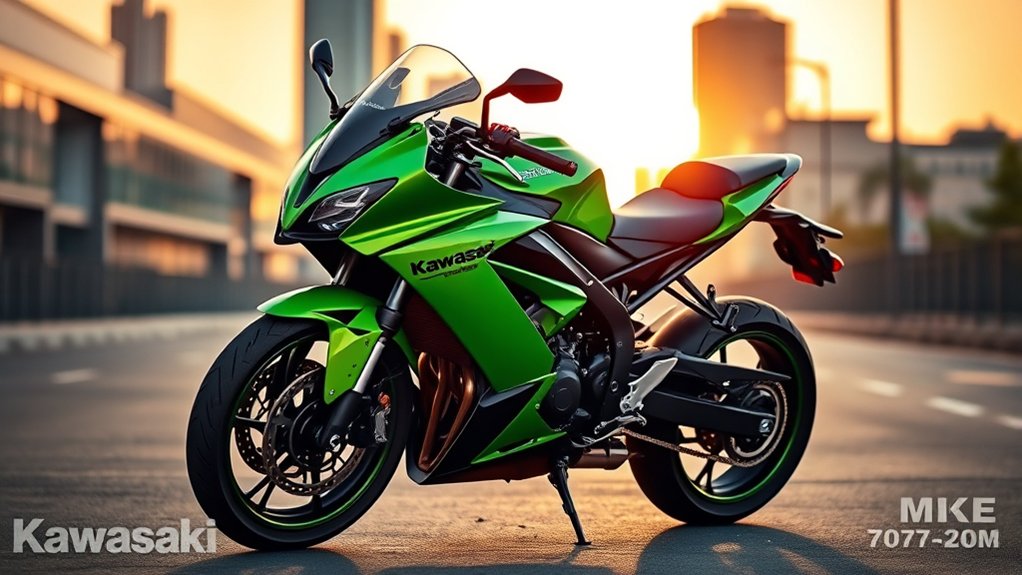
How did Kawasaki become a powerhouse in the motorcycle world? You’ll find its Kawasaki reputation deeply rooted in a rich motorcycle history dating back to the 1960s. From the start, the brand focused on performance, especially highlighted through the iconic Ninja series known for speed and sharp handling.
Kawasaki’s background in heavy industries like shipbuilding and aerospace directly influences its build quality. This means they emphasize durability and precision engineering.
Kawasaki’s roots in shipbuilding and aerospace ensure motorcycles built with durability and precision engineering.
Over the decades, Kawasaki has shown brand innovation by continually pushing the boundaries of motorcycle technology and racing capabilities.
While it excels in performance focus, you should know that occasional quality control issues have affected some owners’ views on reliability. Still, Kawasaki’s legacy combines strong engineering with a commitment to advancing motorcycle design.
It’s a brand that’s always looking to improve and excite riders.
What Makes Kawasaki Motorcycles Stand Out in Performance
Although many motorcycle brands emphasize speed, Kawasaki stands out by combining powerful engines with cutting-edge technology that enhances both acceleration and handling. You’ll notice Kawasaki’s high-performance engineering delivers rapid acceleration, with models like the ZX-14R reaching 0-60 mph in just 2.7 seconds.
Their bikes achieve impressive top speeds, such as the Ninja H2R’s capability of over 220 mph. Kawasaki integrates advanced racing technology, including aerodynamic designs and electronically controlled traction systems, to boost performance on various terrains.
This focus on aggressive handling and stability at high speeds means you can count on precise control whether you’re on the track or the road. Overall, Kawasaki’s commitment to innovative engineering makes their motorcycles stand out in performance.
It really appeals to riders who want both speed and superior handling.
Best Kawasaki Models for Every Rider
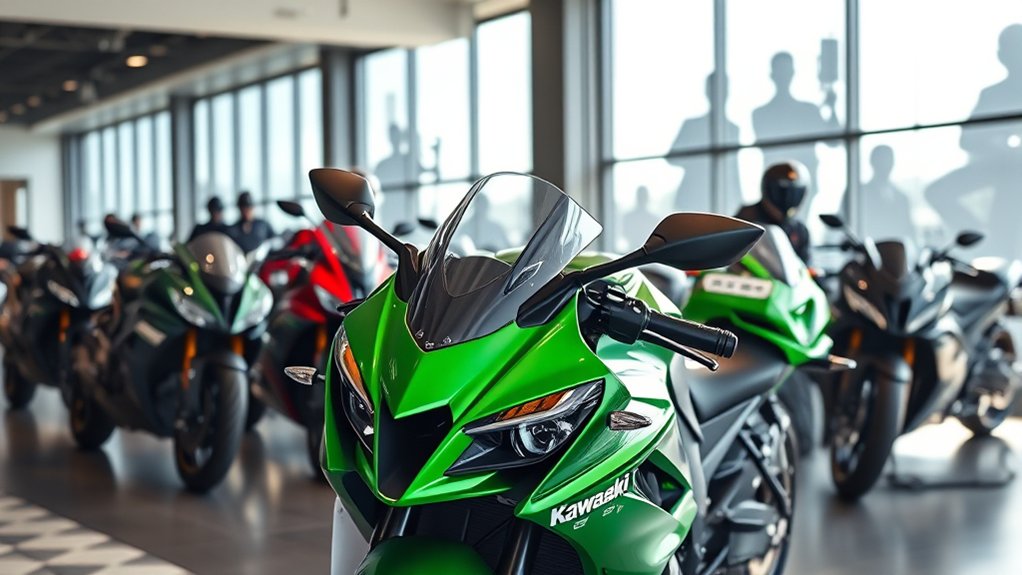
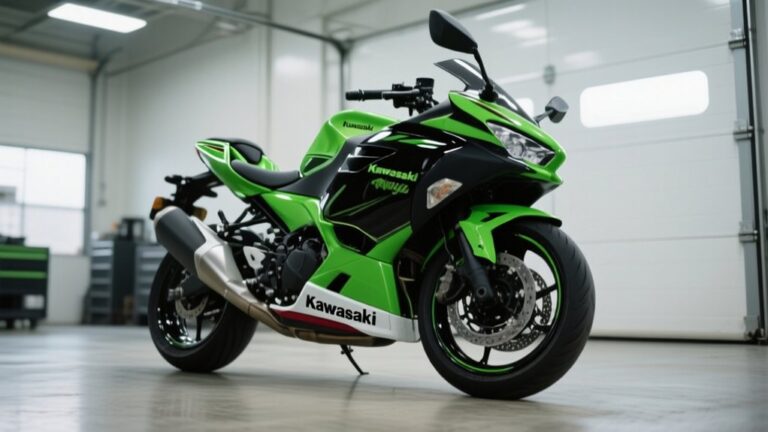
You’ll find that Kawasaki offers top models tailored to different riding styles. Whether you’re just starting out and looking at the beginner-friendly Ninja 400, or you want something more performance-driven like the ZX-10R, there’s something for everyone.
Maybe cruisers are more your style — the Vulcan S is a great choice. Or if you like versatility, the Versys touring bikes might catch your eye.
And for those who want something agile and naked, the Z series fits the bill perfectly.
No matter what kind of rider you are, Kawasaki has a bike built to match your needs. Let’s dive in and see which model suits you best!
Top Kawasaki Motorcycles
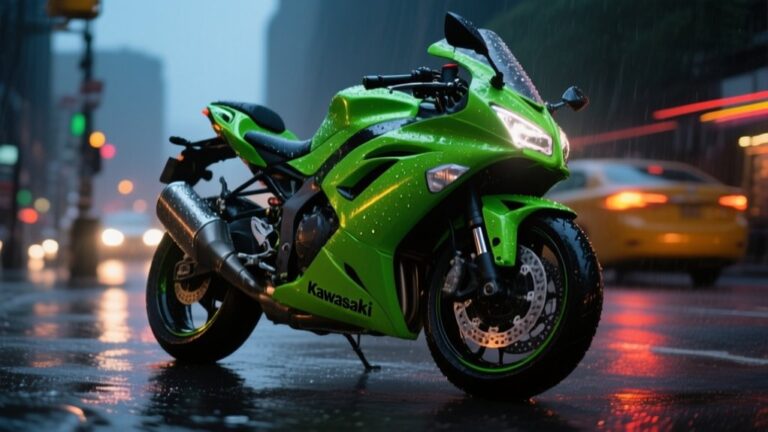
Which Kawasaki motorcycle suits your riding style and experience level best? The Kawasaki Ninja series offers a wide range, from beginner-friendly models like the Ninja 400 to high-performance machines such as the ZX-10R. These bikes are known for performance and reliability, and they deliver impressive top speed.
If you prefer cruising, the Vulcan S provides comfort and customization for relaxed rides.
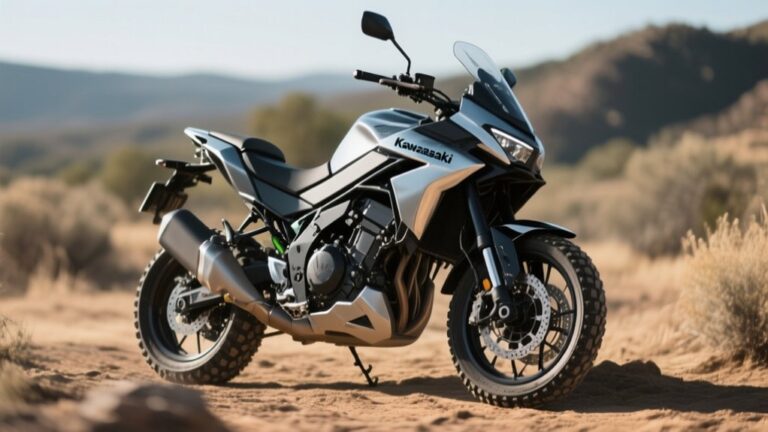
For adventure seekers, the Versys 650 and 1000 handle touring and off-road exploration with ease.
Meanwhile, the Z series, including the Z400 and Z900, excels in city commuting and highway speeds with its naked bike design.
Kawasaki’s diverse lineup guarantees you’ll find a model tailored precisely to your preferences and skill level.
Rider-Specific Model Choices
Kawasaki’s lineup caters to a variety of riders by matching specific models to different experience levels and riding preferences. If you’re new, the beginner-friendly Ninja 400 offers manageable power with sporty performance.
For city or highway commuting, the Z series naked bikes, like the Z400 and Z900, combine agility and style.
Adventure seekers will appreciate the Versys 650 or 1000, which handle touring, commuting, and light off-road well.
If long-distance cruising is your focus, the Vulcan S cruiser delivers comfort plus customization options.
Kawasaki models provide rider-specific model choices within a versatile lineup.
This means that whether you prioritize ease of use, performance, or versatility, there’s a bike suited to your skill level and riding style.
It’s a thoughtful selection that really highlights Kawasaki’s commitment to diverse riders.
Pros and Cons of Kawasaki Motorcycles
Although Kawasaki motorcycles deliver impressive performance and cutting-edge racing technology at a competitive price, you should consider both their strengths and weaknesses before making a purchase.
You’ll appreciate Kawasaki’s strong performance and value for money, as they offer advanced features typically found in higher-priced bikes.
However, reliability can vary by model; some riders report electrical issues and transmission concerns that affect long-term dependability.
Build quality also shows inconsistency, with occasional quality control problems.
If rider comfort is a priority, keep in mind Kawasaki’s aggressive ergonomics may cause discomfort on longer rides.
The focus leans more toward sportiness rather than plush seating.
Overall, Kawasaki balances performance and affordability well.
But you should weigh potential reliability and comfort trade-offs based on your riding needs.
How Kawasaki Motorcycles Compare to Other Brands
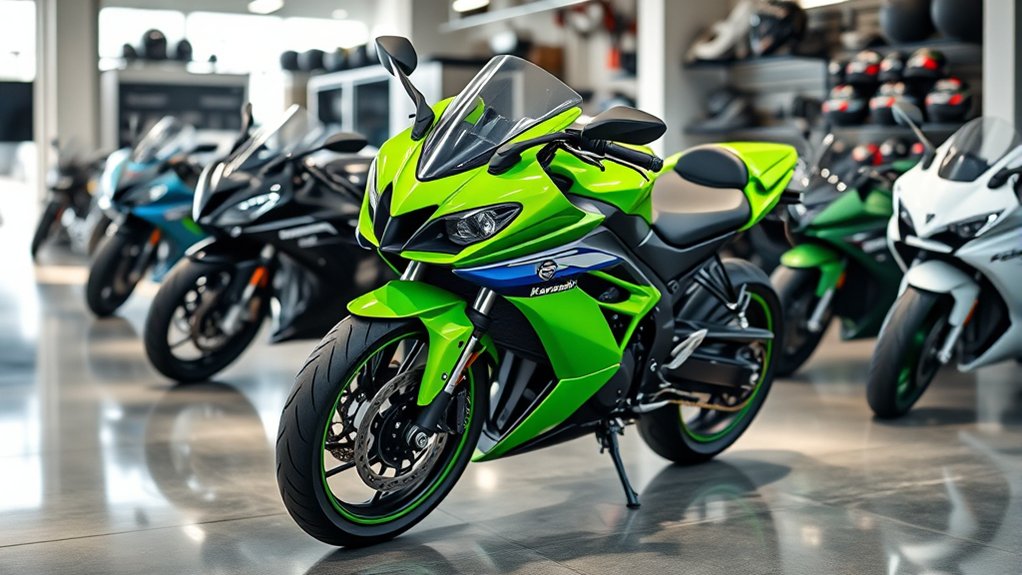
How does Kawasaki compare to other motorcycle brands in aspects of performance, price, and quality? When you look at Kawasaki, you’ll find a brand that offers strong performance and value. It often matches or even exceeds Yamaha and Suzuki in speed and handling.
However, quality can vary more than these Japanese competitors. Compared to European brands like Ducati and BMW, Kawasaki delivers impressive performance. But it comes with less premium refinement and at a more affordable price.
Here’s a quick comparison:
- Performance: Kawasaki excels with racing-inspired designs and powerful engines. This really appeals to sportbike enthusiasts.
- Quality: While generally solid, Kawasaki’s quality control isn’t as consistent as Honda or Yamaha.
- Value: Kawasaki offers a balanced blend of performance and price. That makes it a smart choice for many riders.
Are Kawasaki Motorcycles Reliable and Easy to Maintain?
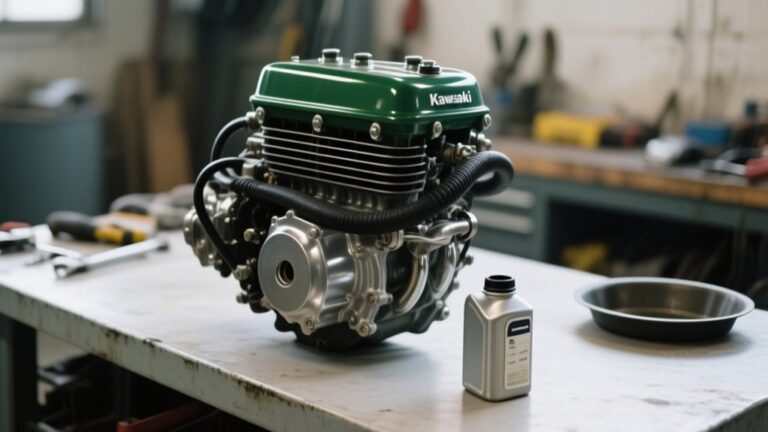
When considering a Kawasaki motorcycle, you’ll want to weigh not only performance and price but also how reliable and easy to maintain the bike is over time. Kawasaki motorcycles generally offer good durability and dependability, especially if you keep up with regular maintenance and servicing like oil changes and inspections.
While some models have faced electrical or transmission issues, many owners report riding tens of thousands of miles without major problems.
High-performance models may require more frequent upkeep, but routine maintenance usually keeps the bike running smoothly.
Although occasional quality control inconsistencies can affect reliability, Kawasaki’s solid build quality supports long-term dependability.
Where Kawasaki Motorcycles Are Made
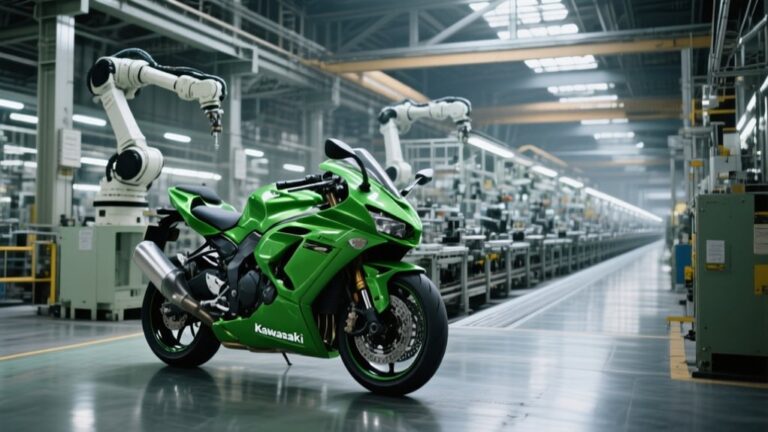
Where exactly are Kawasaki motorcycles made? Kawasaki’s manufacturing facilities span several countries, reflecting its global presence and strategic production.
Primarily, Kawasaki motorcycles are produced in Japan, the company’s main hub known for advanced technology and quality control. Beyond Japan, Kawasaki has key factories in Southeast Asia and the U.S., which helps optimize costs and distribution.
Here are the main manufacturing locations:
- Japan – The core production hub focusing on high-end models and innovation.
- Thailand and Indonesia – Facilities benefit from lower production costs and tax incentives.
- Philippines – Established in 1974, this site is a major Southeast Asian manufacturing center.
These locations let Kawasaki efficiently produce and distribute motorcycles worldwide while balancing quality with cost-effectiveness.
Frequently asked questions
What Type of Fuel Do Kawasaki Motorcycles Use?
Kawasaki motorcycles typically use regular unleaded gasoline with an octane rating of 87 or higher.
However, if you own a high-performance model like a sportbike, you’ll often need higher-octane fuel, 91 or 93, to get the best engine performance.
For electric or hybrid Kawasakis, like the Z e-1 or Ninja HEV, fuel isn’t required at all.
Always check your owner’s manual to know exactly what your specific model needs.
Does Kawasaki Offer Electric Motorcycles?
Kawasaki does offer electric motorcycles, so you’re not stuck with just gas-powered options. For instance, the Z e-1 features twin lithium-ion batteries and a 5.0 kW motor, giving you about 70 km of real-world range.
You’ll find multiple riding modes, including Eco and e-Boost, to suit your style.
Charging takes around 3.7 hours per battery, either on-bike or by removing batteries for indoor charging.
Are Kawasaki Motorcycles Suitable for Beginners?
Yes, Kawasaki motorcycles are suitable for beginners. You’ll find models like the Ninja 400 that offer manageable power and smooth delivery, making it easier to learn.
The bikes have comfortable, upright ergonomics and lightweight designs, helping you handle them confidently.
Kawasaki also provides good dealer support and training resources, which can boost your skills and safety as a new rider.
What Is the Warranty Coverage on Kawasaki Motorcycles?
Think of Kawasaki’s warranty as a safety net you don’t see until you need it. They typically offer 12 months or 12,000 miles coverage on new motorcycles, protecting you against manufacturing defects.
Some models might include extended options or specific component coverage, like the engine.
Keep in mind, damage from accidents or misuse isn’t covered. Warranty terms vary by location, so check with your dealer.
Also, keep up with regular maintenance to stay protected.
Where Can I Find Kawasaki Motorcycle Accessories and Parts?
You can find Kawasaki motorcycle accessories and parts through authorized Kawasaki dealerships, online retailers like Partzilla, BikeBandit, and RevZilla, and Kawasaki’s official website. These sources offer genuine OEM parts designed for the best fit and performance.
Dealerships also provide maintenance services and can order specific parts if they’re out of stock.
Plus, specialty stores and online forums often have custom accessories and used parts tailored to Kawasaki motorcycles. It’s a good idea to check around to find exactly what you need.
Final Thought
Choosing a Kawasaki is like picking a trusty compass for your ride. It guides you with solid performance, reliability, and a rich heritage.
You’ll appreciate Kawasaki’s balance of power and ease of maintenance, whether you’re a beginner or a seasoned rider. While every brand has its quirks, Kawasaki consistently offers quality and innovation.
If you value durability and versatility, Kawasaki is definitely a brand worth considering for your next motorcycle adventure.