
Does Florida Have A Motorcycle Helmet Law – Myth or Fact
Florida does have a motorcycle helmet law, so this is fact, not myth.
If you’re under 21, you must wear a helmet that meets federal safety standards.
Your passenger must too when either rider is under 21.
If you’re 21 or older, you can ride without a helmet only if you carry at least $10,000 in medical insurance.
Skipping the rule can lead to citations, liability, and reduced compensation after a crash.
What Does Florida Helmet Law Say?
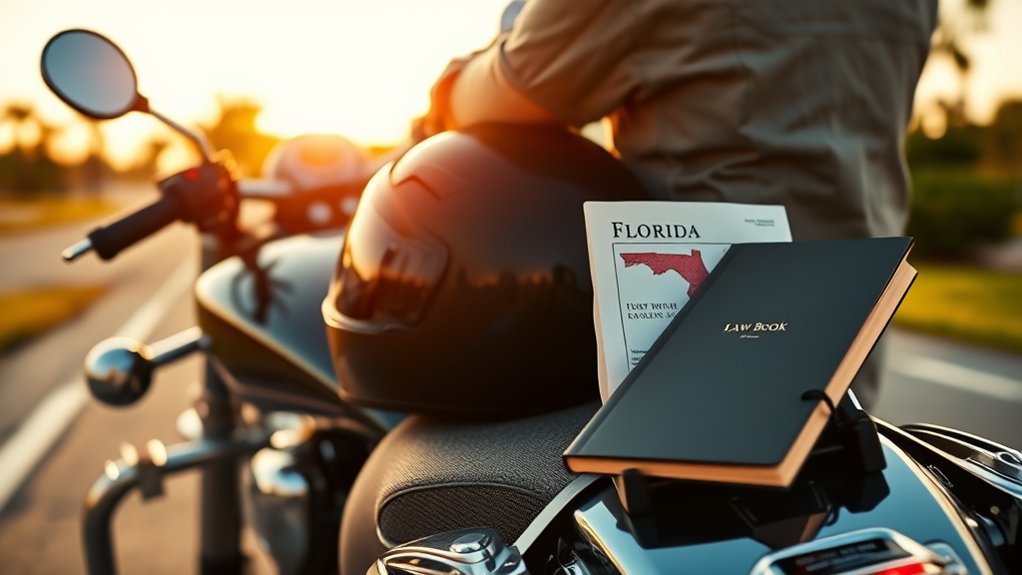
Florida’s motorcycle helmet law, Fla. Stat. §316.211, sets a clear rider age requirement.
Under Florida law, you must under 21 wear a helmet that complies with FMVSS-218, and your passenger must do the same.
If you’re 21 or older, you may ride without a helmet only if you carry medical insurance $10,000 for crash-related injuries.
You must also use eye protection ANSI-Z87, whether you wear eyeglasses or goggles.
This rule applies to you and your passenger.
Lawmakers rely on helmet effectiveness data showing FMVSS-218 helmets cut fatal injury risk and substantially reduce head injury risk.
Enforcement can be difficult because officers must confirm your age and insurance coverage before determining whether the helmet rule applies.
Who Has to Wear a Helmet in Florida?
Under Florida law, you and your passenger must wear a motorcycle helmet if either of you is under 21.
Florida requires motorcycle helmets for you and your passenger if either of you is under 21.
The helmet must meet FMVSS 218 standards.
Florida’s helmet law also requires you to use approved eye protection every ride.
If you’re under age 21, you must wear a helmet.
If you’re older, Florida ties any helmet exception to proof of at least $10,000 in medical insurance for motorcycle crash injuries.
- FMVSS 218-compliant helmet
- Approved eye protection, including ANSI-Z87 eyewear
- Proof of 10,000 medical insurance for exempt adults
You should treat noncompliance seriously, because a helmet violation can affect claims and comparative negligence after a crash.
The rule is straightforward: comply, or risk legal and financial consequences.
Can Adults Ride Without a Helmet?

If you’re 21 or older, Florida law allows you to ride a motorcycle without a helmet—but only in certain situations.
In particular, you must have at least $10,000 in medical insurance coverage for motorcycle crash injuries.
If you don’t have that insurance, then you need to wear a helmet that meets federal safety standards.
And just to be clear, this exemption is based on whether you can prove you have the required coverage—not on age alone.
Adult Helmet Exemption
Yes. Under Florida’s motorcycle helmet law, you can use the adult helmet exemption if you’re 21 or older and carry at least $10,000 in medical insurance for crash injuries.
Your helmet, if worn, must meet FMVSS 218. This option gives riders over 21 a lawful choice, but it doesn’t remove risk.
Helmets can cut death odds by about 37%. They can also reduce head injury risk by up to 69%.
If you don’t wear a helmet, helmet nonuse may be used in comparative negligence when you seek to recover compensation.
Police may have trouble confirming your age and coverage during a stop, but the exemption still depends on financial responsibility.
If you ride without a helmet, you accept greater exposure to serious injury. Florida law may also factor that decision when damages are assessed.
Insurance Requirement Explained
Florida’s adult helmet exemption doesn’t stand alone; it depends on proof of medical coverage. Under Florida motorcycle helmet law, you may ride without a helmet only if you’re 21 or older and carry the insurance requirement of at least $10,000 coverage for crash injuries.
That medical insurance can come from motorcycle or other health benefits.
| Requirement | Effect |
|---|---|
| Age 21 exemption | Permits helmetless riding |
| 10,000 coverage | Satisfies the law |
| No proof | You risk a citation |
| No helmet | You face greater head injuries |
Officers can’t easily verify age or coverage roadside, but the exemption still affects claims. If a crash occurs, comparative negligence may reduce your recovery when helmet nonuse worsens injury.
What Happens If You Skip the Helmet?
Skipping the helmet can trigger both legal and financial fallout in Florida.
Under motorcycle helmet laws, you must wear helmets if you’re under age 21.
Officers can cite you under Florida Statute 316.211.
If you’re 21 or older, you may ride helmetless only with $10,000 in medical coverage.
Without that coverage, you risk penalties.
More importantly, a crash without a helmet can worsen injury and reduce compensation under comparative negligence.
You may receive a citation.
You may face added medical exposure.
You may recover less after a crash.
A helmet also cuts the odds of death by about 37% and head injury by up to 69%.
Why Florida Still Requires Helmets for Some Riders?

Although Florida gives some adults a choice, it still requires helmets for riders and passengers under 21. The state wants to prevent avoidable head injuries and deaths.
Under Florida law, F.S. 316.211, you must wear a helmet that meets FMVSS 218 if you’re under age 21. The rule targets motorcycle riders, who face a higher risk of head injury in crashes.
Research shows helmets cut fatal head injuries substantially. If you’re 21 or older, you may ride without a helmet only if you carry at least $10,000 in medical insurance for crash injuries.
This insurance option reflects a policy choice. It protects younger riders while allowing insured adults more freedom.
In practice, enforcement can be difficult. Officers must verify age, and insurance verification isn’t always immediate.
Why Many Florida Riders Still Choose Helmets?
Even when the law lets you ride without one, many Florida motorcyclists still choose helmets because the safety benefits are hard to ignore.
Under the Florida motorcycle helmet law, you can opt for helmetless riding if you’re 21+ and keep medical insurance coverage, but motorcycle safety studies still favor wearing a helmet.
- Studies show strong head injury reduction and a lower fatality risk.
- Helmets help shield you from wind, bugs, debris, and eye-protection issues.
- They can also limit comparative negligence arguments after a crash.
If you’ve completed BRC/ARC training, you already know risk management matters.
Habit, experience, and concern over catastrophic brain injury often outweigh convenience.
A helmet won’t prevent every crash, but it can sharply improve your odds when seconds count.
Frequently Asked Questions
What Counts as Approved Helmet Certification in Florida?
Approved helmet certification in Florida means your helmet meets FMVSS No. 218 and has the DOT certification sticker.
You can wear a full-face, three-quarter, or open-face helmet if the manufacturer certifies compliance and the DOT sticker is present.
You can’t rely on ECE or Snell by themselves.
If your helmet doesn’t fully cover your face, you’ll also need ANSI-Z87-compliant eye protection to stay legal on the road.
Does the Helmet Law Apply to Passengers Too?
Yes, Florida’s helmet law applies to passengers too.
If you’re under 21, you must wear a DOT-compliant helmet that meets FMVSS 218, just like the rider.
If you’re 21 or older, you can ride without one only if the motorcycle operator carries at least $10,000 in medical insurance coverage.
You must also wear eye protection, and any glasses or goggles you use must meet ANSI-Z87 standards.
Can Out-Of-State Riders Follow Different Helmet Rules?
No. If you ride in Florida, you must follow Florida’s helmet rules, not your home state’s.
You’ll need a helmet if you’re under 21.
If you’re 21 or older, you can ride without one only if you carry at least $10,000 in medical benefits and can show proof.
Your helmet must meet FMVSS 218, and officers can cite you for noncompliance on Florida roads.
How Is the Insurance Requirement Verified Roadside?
Roadside, you usually verify it by showing an insurance ID card or policy that lists at least $10,000 in medical benefits.
Officers rarely audit the policy on the spot, and they often can’t confirm limits during a stop.
If they doubt your coverage, they can issue a citation and verify it later.
Florida’s helmet-exemption checks remain inconsistent, and many riders don’t carry proof that clearly shows medical-benefit coverage.
Are There Exceptions for Scooters or Mopeds?
Yes. If your scooter or moped is classified as a motorcycle or motor-driven cycle, you’ll follow the same helmet rules.
You must wear a helmet if you’re under 21.
If you’re 21 or older, you can ride without one only if you carry at least $10,000 in medical insurance benefits.
If your vehicle meets Florida’s separate moped definition, different equipment and licensing rules may apply.
You should verify its classification carefully.
Conclusion
So, does Florida have a motorcycle helmet law? Yes, but not for every rider. If you’re under 21, you must wear one; if you’re older, you can ride without a helmet only if you carry at least $10,000 in medical insurance.
Even so, helmets matter. The NHTSA reports they cut fatal injury risk by about 37% for riders. Before you decide, know the law, weigh the risk, and protect yourself.