How Did Harley Davidson Get Its Name – Guide
You’ll find Harley-Davidson’s name comes directly from its founders, William S. Harley and Arthur Davidson. They combined their last names in 1903 to reflect their partnership. Both grew up near Milwaukee, sharing a passion for mechanics that inspired them to build motorized bicycles.
The name symbolizes their shared vision and craftsmanship, rooted in Milwaukee’s industrial culture. If you explore further, you’ll discover how this name evolved into a symbol of American innovation and motorcycle legacy. It’s pretty cool how a simple combination of last names ended up representing so much more over time.
How the Harley-Davidson Name Came to Be
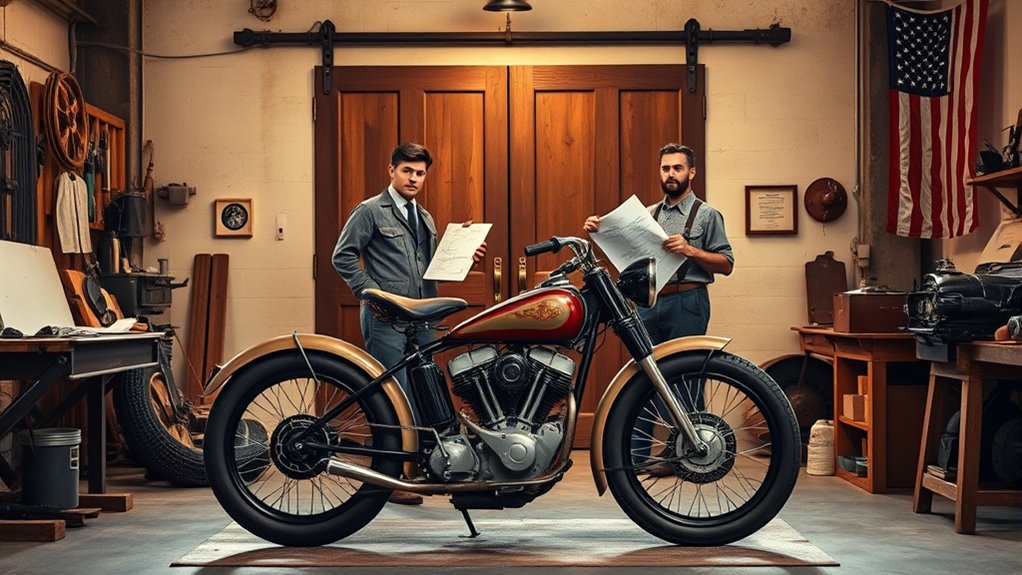
Although you might already recognize the Harley-Davidson name, you may not know it originated from the founders themselves: William S. Harley and Arthur Davidson. The company name reflects the partnership between these two key figures, combining William Harley’s last name with Arthur Davidson’s surname to create the now-iconic brand name.
When the company was officially incorporated in 1907, the founders chose “Harley-Davidson” as the formal name, cementing their collaboration in both business and branding. This thoughtful combination highlighted the joint effort of the Harley and Davidson families in building the company from the ground up.
Today, the Harley-Davidson brand name stands as a symbol of the founders’ legacy and their pioneering role in motorcycle manufacturing worldwide. It’s pretty cool how a simple combination of two last names turned into such a legendary brand, don’t you think?
Who Were William S. Harley and Arthur Davidson?
You’ll find that William S. Harley was born in Milwaukee in 1880. By the time he was 15, he was already working at a bicycle factory.
Meanwhile, Arthur Davidson, who was born nearby in 1881, trained as a pattern maker. Both shared a passion for mechanics and design, which naturally brought them together.
They started collaborating on developing motorcycle engines and frames. This partnership eventually laid the foundation for the Harley-Davidson company, which they established in 1903.
Founders’ Early Lives
What shaped the minds behind the iconic Harley-Davidson motorcycles? William S. Harley and Arthur Davidson’s early lives in Milwaukee laid the groundwork.
Born in 1880, William S. Harley began working at a bicycle factory by age 15, gaining hands-on experience in mechanics and engineering.
Arthur Davidson, born a year later nearby, developed his skills as a pattern maker.
These founders shared a passion for mechanics and design, nurtured by Milwaukee’s industrial environment.
Their friendship grew from common interests and practical knowledge of bicycle manufacturing.
This combination of backgrounds and skills gave them the insight needed to innovate.
Understanding their early lives helps you appreciate how William S. Harley and Arthur Davidson transformed mechanical curiosity into a legendary motorcycle brand.
Mechanical Collaboration Beginnings
The early mechanical skills William S. Harley developed while working at a Milwaukee bicycle factory laid the groundwork for his future innovations.
Arthur Davidson, born nearby, honed his manufacturing expertise as a pattern maker. Their shared passion for mechanics sparked a collaboration fueled by experimentation with engine designs, inspired by a theater prop featuring a single-cylinder engine on a three-wheeler.
Together, William S. Harley and Arthur Davidson combined their talents to create motorized bicycles, pushing the boundaries of early motorcycles. This partnership was pivotal in the founding of Harley-Davidson in 1903.
Their teamwork in Milwaukee not only shaped the design of their first motorcycles but also set the foundation for a company that would become synonymous with motorcycle culture worldwide.
How William and Arthur’s Partnership Shaped Harley-Davidson
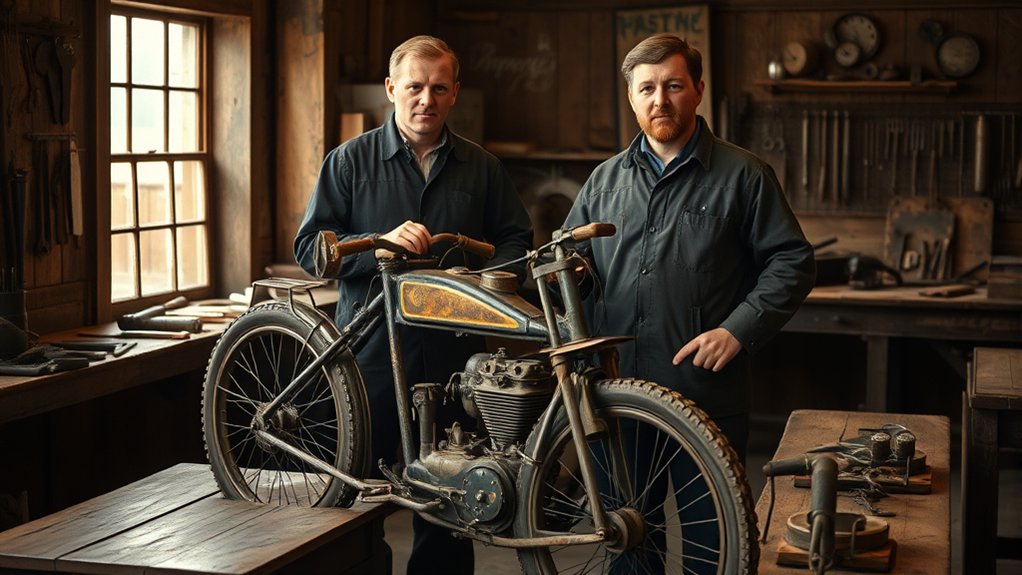
Although many factors contributed to Harley-Davidson’s rise, the partnership between William Harley and Arthur Davidson played a crucial role in shaping the company’s early success. You’ll see that their collaboration began with experimenting on small engines and bicycles, which directly led to the creation of the first Harley-Davidson motorcycle in 1903.
William Harley’s mechanical expertise paired perfectly with Arthur Davidson’s pattern-making skills, driving continuous innovation in motorcycle design.
This effective partnership was fundamental during the founding years, culminating in the formal incorporation of the company in 1907.
Their shared vision and combined talents set the foundation for Harley-Davidson’s enduring legacy. Understanding this partnership helps you appreciate how collaboration sparked the innovation that shaped the Harley-Davidson brand you know today.
Why Combining Harley and Davidson Made Perfect Sense
You know, combining Harley and Davidson wasn’t just about slapping two names together. It actually reflected the founders’ shared vision and complementary skills that really fueled the company’s success.
By bringing their strengths together—William Harley’s engineering know-how and Arthur Davidson’s business smarts—they created a balanced partnership.
This teamwork laid the groundwork for a brand known for innovation and collaboration.
Founders’ Shared Vision
When you look at the name Harley-Davidson, you’re seeing more than just two surnames combined. It reflects a deliberate partnership between William S. Harley and Arthur Davidson. These founders shared a vision rooted in collaboration, aiming to blend Harley’s innovative engineering with Davidson’s craftsmanship.
Their partnership wasn’t just about branding. It stood for a commitment to engineering excellence and American ingenuity.
By using both names, they established credibility and recognition in the nascent motorcycle industry.
This shared vision symbolized their dedication to creating durable, high-quality motorcycles that embodied their values.
Complementary Skills United
Since Harley and Davidson brought distinct yet complementary skills to the table, combining their surnames in the brand name made perfect sense. William S. Harley contributed essential engineering expertise, designing innovative motorcycle engines, while Arthur Davidson offered invaluable manufacturing experience, ensuring quality craftsmanship and efficient production.
Their partnership rested on a shared vision to create reliable, high-performance motorcycles. By naming the company Harley-Davidson, they highlighted this collaboration and united their strengths under one brand name.
This union symbolized the perfect blend of mechanical ingenuity and practical manufacturing, building trust and credibility with consumers from the start. When you understand their complementary skills and mutual dedication, it’s clear why the partnership and brand name became a foundation for the company’s enduring success and legacy in motorcycle history.
When and Where Harley-Davidson Was First Used
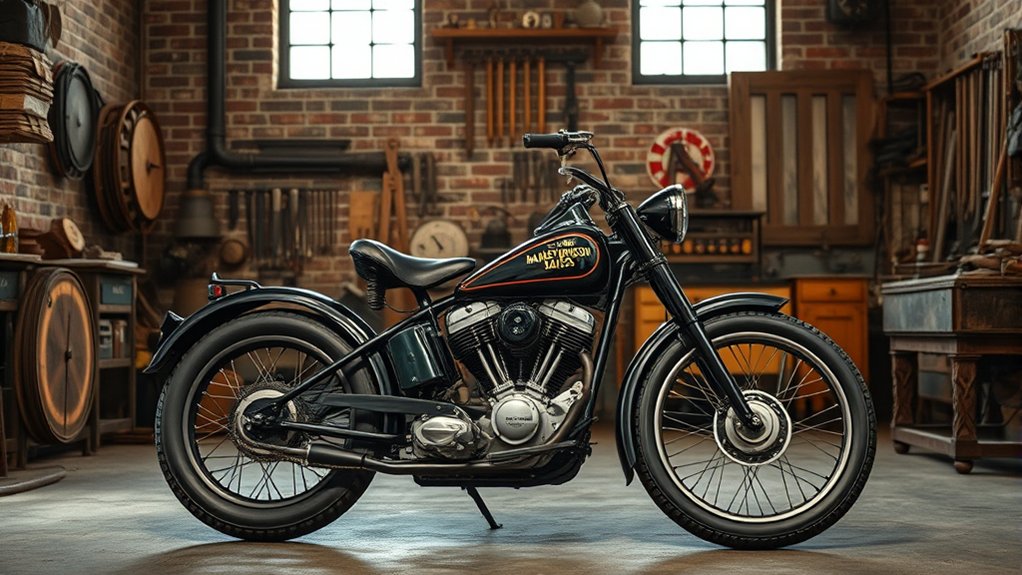
Although the company’s origins trace back to 1903, the name “Harley-Davidson” officially came into use when William S. Harley and Arthur Davidson founded the company in Milwaukee that same year. They incorporated the Davidson family name to honor Arthur Davidson’s heritage, creating a distinctive brand name that would appear on their first motorcycles.
From the outset, “Harley-Davidson” was more than just a label; it became the official company name and was registered as a trademark early on. This secured legal protection and helped establish a strong identity in the growing motorcycle market.
As you explore Harley-Davidson’s beginnings, you’ll see how this brand name, rooted in collaboration and place, quickly became synonymous with quality and innovation in motorcycle manufacturing starting in 1903 Milwaukee.
How Early Innovations Strengthened Harley-Davidson’s Brand
You’ll see how Harley-Davidson’s engine design breakthroughs, like the 1909 V-twin, really set a new standard for power and reliability.
What’s cool is how those early racing wins helped prove these innovations worked in real competition, which boosted the brand’s reputation big time.
And on top of that, military contracts during both World Wars showed just how durable and well-engineered Harley motorcycles were, really cementing its prestige.
Engine Design Breakthroughs
How did Harley-Davidson build a reputation for powerful and reliable motorcycles? It started with early engine breakthroughs, especially the introduction of the V-twin engine in 1909. This engine design offered unmatched power and set the foundation for Harley’s identity.
Later, the company advanced engine technology by developing overhead valve systems, culminating in the iconic Knucklehead engine in 1936. This innovation enhanced both performance and reliability, which were critical factors that helped Harley-Davidson stand out in a crowded market.
Even during tough times like the Great Depression, Harley’s loop-frame design showed their commitment to robust engine design. These continuous engine innovations didn’t just boost durability—they also reinforced Harley-Davidson’s legacy as a leader in American-made motorcycles focused on strength and reliability.
Early Racing Success
Why did Harley-Davidson’s early racing achievements matter so much to its brand? Early racing victories, like Otto Walker’s 1921 win surpassing 100 mph, showcased Harley’s commitment to speed and performance. These accomplishments proved the durability and engineering excellence of Harley-Davidson motorcycles, reinforcing their reputation.
You can see how racing success in the 1910s and 1920s positioned Harley-Davidson as a leader in motorcycle technology. The company’s innovations, including lightweight, reliable engines, directly contributed to a competitive edge on the track.
This strong record in motorsport didn’t just boost sales. It cemented the brand’s identity as a high-performance, innovative force. When you consider Harley’s legacy, these early wins clearly helped build trust and enthusiasm among riders who valued cutting-edge engineering and proven durability.
Military Contract Impact
What role did Harley-Davidson’s military contracts play in shaping its brand identity? During World War I and World War II, Harley-Davidson secured major military contracts, supplying over 20,000 motorcycles in WWI and more than 90,000 in WWII.
These military contracts boosted its reputation for producing rugged motorcycles built to withstand harsh conditions. The WLA model, designed as a military-grade bike, became iconic, showcasing Harley’s engineering innovation.
This large-scale production under wartime pressures helped Harley-Davidson refine durability and reliability, strengthening its brand legacy. By meeting the military’s demanding standards, Harley evolved from a civilian motorcycle company into a symbol of American resilience and strength.
These early military innovations firmly established Harley-Davidson’s identity as a maker of tough, dependable motorcycles.
Why Milwaukee Is Key to Harley-Davidson’s Story
Where does the spirit of Harley-Davidson truly begin? It starts in Milwaukee, the city where William S. Harley and Arthur Davidson founded the company in 1903. The original Harley-Davidson factory on Juneau Avenue marked the company origin and remains central to its story.
The spirit of Harley-Davidson begins in Milwaukee, where its founders built a legacy starting in 1903.
Milwaukee’s rich manufacturing heritage provided the resources and skilled workforce essential for Harley-Davidson’s early growth. The city’s industrial identity and strong community support helped the brand thrive, embedding Harley-Davidson deeply into Milwaukee history.
This connection isn’t just about location; it’s about how Milwaukee shaped the company’s values and resilience. When you think of Harley-Davidson, you’re also reflecting on Milwaukee’s legacy as a manufacturing powerhouse.
It really makes the city key to understanding the brand’s enduring story.
How Harley-Davidson Became a Symbol of American Quality
Milwaukee’s manufacturing spirit laid the foundation for Harley-Davidson’s reputation as a symbol of American quality. From its start in 1903, Harley-Davidson combined innovation and engineering to create motorcycles known for durability and craftsmanship.
You’ll notice that their rugged designs stood up to tough conditions, especially during WWI and WWII. This proved reliability wasn’t just a claim but a standard. It’s pretty impressive when you think about it.
This commitment to performance and customization helped Harley-Davidson become an iconic American brand with deep heritage. When you ride or see one, you’re witnessing more than a motorcycle. You’re experiencing decades of American quality, innovation, and pride.
The brand’s global recognition reflects its enduring role as a symbol of craftsmanship and freedom. It really reinforces the values embedded in every Harley-Davidson machine.
How Harley-Davidson’s Name Shaped Motorcycle Culture
Because the name “Harley-Davidson” combines the surnames of its founders, William S. Harley and Arthur Davidson, it established a legacy grounded in personal craftsmanship. This name became iconic, shaping motorcycle culture by symbolizing rugged durability and a rebellious spirit.
When you see “Harley-Davidson,” you don’t just see a motorcycle. You see a lifestyle embraced worldwide.
Here’s how the name shaped motorcycle culture:
- It built a strong branding identity tied to freedom and individualism.
- It cemented Harley-Davidson’s reputation for durability and performance.
- It inspired a global lifestyle, influencing music, fashion, and motorcycle clubs.
Harley-Davidson’s name continues to define motorcycle culture, reflecting a legacy that’s both deeply personal and universally iconic.
Where to Experience Harley-Davidson’s Legacy Today
You can immerse yourself in Harley-Davidson’s rich legacy by visiting the Harley-Davidson Museum in Milwaukee. Here, historic motorcycles and interactive exhibits bring the brand’s story to life. The museum offers guided tours that highlight motorcycle history and brand heritage.
You’ll find exclusive collectibles and apparel, both onsite and online. Beyond Milwaukee, Harley-Davidson dealerships worldwide connect you with the latest models and community events.
Joining Harley-Davidson-sponsored rides and owner clubs deepens your experience of the Harley-Davidson community. It’s a great way to celebrate the brand’s culture and impact.
| Location | Experience Offered | Highlights |
|---|---|---|
| Harley-Davidson Museum | Historic motorcycles, exhibits | Guided tours, collectibles |
| Milwaukee | Interactive displays | Brand heritage |
| Dealerships Worldwide | Latest models, merchandise | Local community events |
| Rallies & Rides | Sponsored rides, owner clubs | Community engagement |
| Online Shop | Apparel, memorabilia | Exclusive collectibles |
Frequently asked questions
What Was the First Harley-Davidson Motorcycle Model Called?
The first Harley-Davidson motorcycle model was called the “Model No. 1®.” You’d recognize it as a lightweight, single-cylinder bike created in 1905 by William Harley and Arthur Davidson.
It featured a 24-inch wheel and a 410cc engine, making it quite innovative for its time. This model set the stage for everything Harley-Davidson would build later, marking the start of their legendary motorcycle legacy.
How Did Harley-Davidson’s Logo Design Evolve Over Time?
You’ll see Harley-Davidson’s logo evolved from a simple, bold script emphasizing tradition to the iconic Bar & Shield symbol introduced in the 1910s. This symbol represents strength and American heritage.
Over time, they’ve refined it with streamlined fonts and more modern, simplified designs.
Recently, they’ve incorporated black, chrome, and bold lettering. This captures the brand’s tough, rebellious motorcycle culture while keeping that classic shield motif central to its identity.
What Are Some Famous Harley-Davidson Motorcycle Models Today?
You’ll feel the rumble of the Fat Boy’s bold, muscular design as you cruise down the highway. Or glide comfortably on a Street Glide, built for long-distance touring.
The nimble Sportster Iron 883 offers classic style and quick handling. Meanwhile, the Softail Heritage Classic blends retro looks with modern comfort.
Underneath it all, the Milwaukee-Eight engines power these iconic models. They deliver the performance Harley-Davidson riders expect today.
How Has Harley-Davidson Influenced Motorcycle Safety Standards?
Harley-Davidson has influenced motorcycle safety standards by pioneering reliable braking systems like disc brakes in the 1970s and implementing anti-lock braking systems (ABS) on many models. You’ll notice their push for rider education and helmet use has raised awareness industry-wide.
They also helped standardize lighting and signaling systems, improving visibility. Their focus on safety has encouraged other manufacturers to adopt stricter regulations, making riding safer for everyone.
What Role Do Harley-Davidson Clubs Play in the Brand’s Culture?
When you join a Harley-Davidson club, you step into a living legacy where camaraderie fuels every ride. These clubs don’t just connect riders; they keep the brand’s culture alive by hosting events, sharing stories, and promoting Harley’s values.
You’ll find exclusive experiences and merchandise that deepen your loyalty.
Through these clubs, you actively contribute to a vibrant community. It’s all about preserving Harley’s heritage and reinforcing its iconic lifestyle across generations.
Final Thought
You’ve seen how Harley-Davidson’s name isn’t just a brand but a powerful symbol born from the partnership of two visionaries in Milwaukee. It shaped motorcycle culture and became synonymous with American quality, roaring louder than thunder across the decades.
When you ride or visit Harley-Davidson’s legacy, you connect with a story of innovation and grit that changed the world. Their name carries the weight of history and the spirit of freedom you can feel in every mile.