
Top 12 Best Toddler Bike for 2 Year Old Kids Buyers Love
Kids around age two quickly outgrow the bulky, unstable bikes meant for younger toddlers or struggle with models that weigh too much for their small frame. Choosing the best toddler bike for 2 year old helps avoid constant frustration caused by an ill-fitting seat or handlebars and the frequent tipping that comes from poor balance support. Cheaper bikes often have rough edges or parts that rust easily, creating more hassle than fun during outdoor play.
The most important aspects to focus on include the bike’s size and weight, usually a 10 to 12-inch wheel size fits this age group, and the bike should weigh around 6 to 8 pounds for easier handling. Safety comes next, with smooth edges, reliable brakes designed for tiny hands, and durable, non-toxic paint. Lastly, a simple design with removable parts allows for quick cleaning after muddy rides or accidental spills, which happens quite often at this stage.
Need a Quick Check?
| Image | Product | Price |
|---|---|---|
Our Top Picks 1  | SEREED Balance Bike | Check Price |
Our Top Picks 2  | Umatoll Tricycle | Check Price |
Our Top Picks 3  | JMMD 6-in-1 Bike | Check Price |
Our Selected Top 12 Toddler Bike for 2 Year Old Worth Your Money
This list includes bikes designed to help toddlers develop balance and coordination safely. Each review explains how well the bike works for young children, highlights who might find it most useful, and points out any design strengths or potential drawbacks.
1. SEREED Toddler Balance Bike
Getting a toddler to learn balance and steering early sets the pace for easier bike riding later. The SEREED Toddler Balance Bike fits young kids who are just starting to explore two-wheel riding. It stands out for being sturdy and adjustable, making it a solid pick for a growing child.
Setting up the bike requires no tools since the seat and handlebar heights adjust with quick-release mechanisms. The starting seat height at 12.6 inches suits smaller toddlers, and it can grow up to 17.1 inches.
Rubber grips and a soft saddle add comfort during rides. Its light weight of 3.5 kg makes it easy for kids to carry or push themselves around in different spots, indoors or outdoors.
Made with a wide carbon steel frame, it supports up to 110 lbs, so durability is strong. Its EVA foam tires don’t need air, so flats won’t stop a fun ride, and they grip well on paved roads without scratching floors.
A few notice the lack of brakes, which means stopping relies fully on foot control. Adjustments hold up well without tools, though some might find the handlebar adjustment range limited.
The bike’s sturdy build and airless tires get frequent praise for lasting through early childhood use and rough play. The main drawback is the lack of brakes, which means young children must rely entirely on foot stopping, and this can make controlling speed on slopes or crowded areas tricky.
Parents seeking a simple, durable bike that grows with a toddler will find this a reliable choice. It suits kids comfortable with foot braking and those who value adjustability. Those wanting more control from brakes or a wider handlebar adjustment may want to explore other models.
Pros
- Tool-free seat and handlebar height adjustments
- Lightweight design easy for toddlers to handle
- Durable frame supports up to 110 lbs
- EVA foam tires prevent flats and protect floors
Cons
- No brakes require stopping with feet only
- Handlebar height range might be too narrow for some kids
| Specification | Details |
|---|---|
| Bike Type | Balance Bike |
| Seat Height | Adjustable from 12.6 to 17.1 inches |
| Handlebar Height | Adjustable from 19.6 to 22.5 inches |
| Weight | 3.5 kg (7.8 pounds) |
| Frame Material | Wide carbon steel |
| Brake Style | No Brakes |
2. Umatoll Tricycle
A solid frame made from carbon steel gives the Umatoll Tricycle a build that lasts as your child grows from 2 to 5 years old. It suits parents who want a safe, steady introduction to riding with extra features that add fun and practicality.
Setup mainly involves assembling the sturdy frame and adjusting the seat to fit the child’s size, which can be done in two positions. The adjustable seat supports a few years of use, while the included dual baskets make carrying toys or snacks easy on a trip outside. The rear wheels light up without batteries, making rides more engaging both indoors and outdoors.
Stability comes from extended rear wheels and a wide wheelbase that help prevent tipping, providing a secure ride for little ones still learning balance. Construction hinges on durable carbon steel with reinforced screws and spring buckles, promising longevity.
The most appreciated feature according to feedback is its steady, safe feel, but some point out the light-up wheels might wear unevenly after heavy outdoor use.
The tricycle’s steady ride stands out as its strongest point, making it easier for toddlers to gain confidence. The wide, tip-resistant wheelbase and reinforced frame give a reassuring feel. Some experience quicker wear on the light-up wheels when used heavily outside, which limits the visual effect over time.
Toddlers between 2 and 5 who need a step up from a balance bike will find this tricycle fits well. Families wanting a ride that lasts several years with adjustable sizing and extra storage will appreciate it. Those looking for a very lightweight or fully enclosed trike might want to compare other models.
Pros
- Strong carbon steel frame
- Adjustable seat fits growing kids
- Dual baskets for carrying toys
- Battery-free light-up wheels
Cons
- Light-up wheels may wear faster outdoors
- Assembly takes some time for first setup
| Specification | Details |
|---|---|
| Material | Carbon steel |
| Age Range | 2 to 5 years |
| Seat | 2-position adjustable |
| Wheelbase | Wide, extended rear wheels |
| Included Components | Front and rear removable baskets |
| Special Feature | Rear wheels light up without batteries |
3. JMMD 6-in-1 Toddler Bike
Ideal for parents wanting a single bike for toddlers between 18 and 60 months, this 6-in-1 toddler bike adapts to growing kids. Its standout feature is the multiple riding modes, evolving from a parent-push trike to a balance bike and more, offering great long-term value and use.
Setting up is straightforward since it arrives mostly assembled; you just add the handlebar, seat, push rod, and pedals. Adjusting the handlebar and seat height fits kids of various sizes comfortably.
The bike folds easily with a button press, making it practical for outings or storing in a car trunk. The push handle rotates for safe steering control, helpful while guiding toddlers.
The bike performs well across its different modes, providing stability with a hand brake and 60° steering limiter to prevent sharp turns. Its aluminum alloy frame and 12-inch puncture-proof rubber wheels stand up to outdoor use.
Praise often focuses on its safety features and smooth transitions between modes. Common complaints mention the limited speed option and some challenges in maneuvering on tight turns.
Parents appreciate the safety features and how the bike grows with their child, allowing use from toddler push to independent riding stages. The hand brake and steering limit provide confidence while riding. A frequently noted drawback is the difficulty managing tight corners, which can challenge some toddlers during early balance stages.
The bike fits families wanting a versatile model that adapts over several years and supports skill development from push trike to balance bike. Those looking for more advanced gear options or easier handling in tight spaces may want to consider other models focused on those specific aspects.
Pros
- Adjustable seat and handlebar for growing kids
- Folds easily for travel and storage
- Strong safety features including hand brake and steering limiter
- Multiple riding modes in one bike
Cons
- Single speed limits progression for more advanced riders
- Steering can be tricky on tight turns
| Specification | Details |
|---|---|
| Bike Type | Balance Bike |
| Number Of Speeds | 1 |
| Brake Style | Hand Brake |
| Frame Material | Aluminum Alloy |
| Wheel Size | 12-inch all-terrain puncture-proof rubber |
| Additional Features | Adjustable Handlebars, Adjustable Seat, Foldable, Push Handle, Training Wheels |
4. SEREED Toddler Balance Bike

Balance bikes designed for toddlers often struggle with durability and adjustability, but this one addresses both by supporting up to 110 lbs and offering quick seat and handlebar height changes. It fits kids growing through the early stages of riding, providing a secure and comfortable start for small beginners learning balance.
Assembly is straightforward with no tools needed for adjusting seat height from 11.8 to 16.5 inches and handlebar height between 19.6 and 22.5 inches, thanks to the quick-release system. Its light weight at 3.5 kg makes it easy for a toddler to carry or push on different surfaces, from playground paths to indoor floors without marking them.
Personalizing the bike with stickers adds fun and ownership for kids.
The frame uses carbon steel, ensuring sturdiness and safety during rides. EVA foam tires offer quiet, flat-free operation across various terrains.
Feedback highlights the bike’s ability to help kids gain balance and confidence quickly. Some mention the lack of brakes as a limitation, requiring supervision on slopes or uneven ground for safety.
The bike receives praise for sturdy construction and smooth riding on multiple surfaces. Most common concern involves the absence of brakes, making downhill control dependent on adult guidance. The easy adjustments and low weight help balance skills develop quickly without the risk of flat tires or noisy rides.
Families wanting a beginner bike that grows with toddlers and stays manageable will appreciate this model. Children comfortable without brakes and using it mainly on flat terrain will find it suitable. Choosing a bike with brakes might be better for those expecting more rugged or steep riding conditions.
Pros
- Adjustable seat and handlebar heights without tools
- Lightweight at 3.5 kg for easy handling
- Durable carbon steel frame supports up to 110 lbs
- Flat-free, quiet EVA foam tires fit indoor/outdoor
Cons
- No brakes, requiring caution on slopes
- Seat may feel narrow for some toddlers
| Specification | Details |
|---|---|
| Bike Type | Balance Bike |
| Seat Height | 11.8-16.5 inch (adjustable) |
| Handlebar Height | 19.6-22.5 inch (adjustable) |
| Weight | 3.5 kg (7.8 pounds) |
| Suspension | Rigid |
| Tires | EVA foam, noiseless, anti-slip |
5. SEREED Baby Balance Bike

SEREED Baby Balance Bike is built to help toddlers aged 12 to 24 months develop balance and coordination early on. It suits parents looking for a lightweight, safe way for their child to start learning to ride.
Its biggest strength lies in safety features that prevent tipping and protect tiny feet during rides.
Setup does not involve pedals or brakes, making it simple for toddlers to get started. The bike’s 1.6kg weight means you can carry it easily to parks or indoors without hassle. The non-slip TPU handles and supportive seat make it comfortable for little ones to hold and sit on during daily use, whether on smooth floors or outdoor paths.
Balance and stability are reliable thanks to a sturdy aluminum alloy frame and widened wheels that won’t damage floors. Steering is limited to 135 degrees, reducing risk of falls.
The most praised aspect is its safe design that keeps children upright. Some find the lack of adjustable seat height a limitation as toddlers grow.
Most users appreciate the strong safety features that protect toddlers from tipping and pinching feet. The lightweight design also receives praise for convenience when moving the bike between indoors and outdoors. Common complaints focus on the seat height remaining fixed, which can become uncomfortable as children grow closer to two years old.
Parents of very young toddlers will find it an easy and safe introduction to riding. Its weight and safety features suit indoor and moderate outdoor use. Those wanting a bike that adapts to height changes or includes a braking system may want to consider other models suited for closer to 24 months or beyond.
Pros
- Very lightweight for easy carrying
- Widened closed wheels prevent foot pinching
- Supportive padded seat boosts comfort
- 135° steering limit reduces fall risk
Cons
- Seat height is not adjustable
- No brakes to help slow down
| Specification | Details |
|---|---|
| Recommended Age | 12–24 months |
| Weight | 1.6 kg (3.6 lbs) |
| Maximum Weight Capacity | 55 lbs |
| Frame Material | Aluminum Alloy |
| Brake Style | No brake |
| Number of Speeds | 1 |
6. SEREED Toddler Tricycle
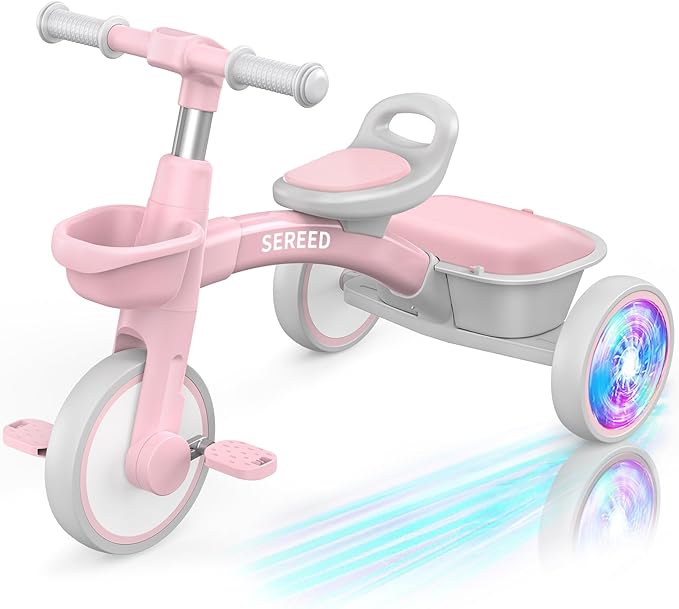
Riding a tricycle for a toddler becomes an easy and fun experience with the SEREED Toddler Tricycle. It fits kids aged 2 to 5 years and impresses with how lightweight it is while still being sturdy. This makes it ideal for toddlers ready to explore their surroundings safely with a ride that’s smooth and easy to pedal.
Setting it up is quick thanks to a spring-loaded snap design, so assembly is done in minutes without needing tools. The adjustable seat and handlebar can be changed as the child grows or if a sibling wants to use it. The detachable front and rear baskets are useful for carrying snacks or toys on neighborhood rides, and the light-up rear wheels add some fun without any batteries.
The tricycle rides smoothly because of precision bearings and a unique pedal design that helps young riders get going without much effort. It weighs only 6.6 pounds, which makes it easy for toddlers to move it by themselves. The frame combines lightweight materials and durability, but some might find the plastic parts less tough over long-term use.
Most remarks praise the easy assembly, though a few mention the seat adjustment can be a bit stiff.
Assembly stands out for being extremely fast and tool-free, allowing kids to start riding almost immediately. The smooth pedaling helps toddlers gain confidence early. On the downside, the seat adjustment mechanism sometimes feels stiff, which can be awkward for frequent adjustments as the child grows. Some plastic components might not hold up perfectly over years of outdoor play.
Toddlers between 2 and 5 years who want a light and easy-to-handle tricycle will find this model fits well. Families who want quick setup and adjustable sizing will appreciate it too. Those needing a trike with mostly metal parts for extra durability or who want frequent seat changes might want to explore sturdier options.
Pros
- Lightweight frame easy for toddlers to move
- Snap assembly requires no tools
- Adjustable seat and handlebar for growth
- Detachable baskets for toys and snacks
Cons
- Seat adjustment can be tight to change
- Plastic parts may wear with extended use
| Specification | Details |
|---|---|
| Recommended Age | 24 months – 5 years |
| Weight | 6.6 pounds |
| Seat Positions | 3 adjustable |
| Handlebar Positions | 2 adjustable |
| Additional Features | Detachable baskets, light-up rear wheels |
| Assembly | Quick snap design |
7. Umatoll Toddler Tricycle

Great choice for toddlers transitioning to solo rides, the Umatoll Toddler Tricycle offers a classic design with safety and durability at its core. It suits parents looking for a sturdy tricycle that helps toddlers develop coordination while staying secure during outdoor or indoor play.
Setting up the tricycle takes just minutes thanks to its special design. Daily use is simple, with non-slip pedals that hold well on various surfaces and a wide wheelbase that keeps the ride steady. Two baskets make it easy to bring along snacks or small toys, encouraging longer outings and playdates without extra load on parents.
The steel frame feels solid and capable of handling regular toddler use. Balance and steering improve steadily as the child rides.
A common note is how the glow wheels add fun without needing batteries, yet some mention the seat adjustment is a bit tricky to move forward or backward. The wide base prevents tipping, which reassures many during the early learning phase.
The tricycle’s frame and wide wheelbase make it very sturdy, helping toddlers gain confidence while balancing. The glow wheels add a touch of fun that doesn’t require batteries, but some children might find the seat’s adjustment mechanism a bit stiff to handle smoothly during height changes. The dual baskets are useful and keep toys or snacks close by without extra.
Children who are starting to move beyond strollers will find the tricycle encouraging and comfortable for rides in parks or around the neighborhood. Those needing very simple seat adjustments or a more compact frame for limited storage space might want to consider other options. Kids who enjoy interactive features will appreciate the light-up wheels during lower light conditions.
Pros
- Sturdy carbon steel frame for durability
- Adjustable seat grows with the child
- Non-slip pedals for secure footing
- Glow wheels that light without batteries
Cons
- Seat adjustment can be difficult to move
- Glow effect less visible in bright daylight
| Specification | Details |
|---|---|
| Material | Carbon steel frame |
| Age Range | 18 months – 4 years |
| Seat Positions | 3-position adjustable, forward or backward |
| Wheel Features | Battery-free glow wheels |
| Baskets | Dual storage baskets |
8. Newyoo 5-in-1 Tricycle

Carbon steel forms the frame of the newyoo 5-in-1 Tricycle, designed for toddlers aged 1 to 3 years. Its standout feature lies in the ability to convert through five different modes, matching a child’s development stage while allowing parents to steer and control the ride.
Assembly involves fitting the front and rear frame, handlebar, and wheels, which feels straightforward thanks to clear buttons and adjustable parts. The handlebar, seat, and pedals shift to fit different stages, making daily transitions from tricycle to balance bike quick. Parents appreciate the adjustable push handle that controls both speed and direction safely while walking alongside their child.
The tricycle rides smoothly on EVA wheels, offering shock absorption on most surfaces. Its carbon steel frame keeps it sturdy and durable. Praise often focuses on the adjustable steering handle that helps prevent falls, but some find the size limits tight for taller kids near 43.3 inches.
The red button system simplifies mode changes, though a few users mention the pedals sometimes feel loose in transition mode.
Praise gravitates toward the adjustable steering push handle that lets parents guide and protect toddlers during rides. The most frequent issue involves pedal placement feeling unstable or loose when switching between the balance bike and bike modes.
Children growing from 1 to 3 years get a lot of use through the cycling progression the tricycle supports. Families seeking a tricycle that transitions as toddlers learn to pedal and steer will find the conversions helpful. Toddlers nearing or over 43.3 inches may outgrow this model too quickly and should consider larger options.
Pros
- Five ride modes suit various toddler stages
- Adjustable push handlebar for parent control
- Strong and durable carbon steel frame
- EVA wheels absorb shocks for smoother ride
Cons
- Pedals can feel loose when changing modes
- Size limit may be small for taller toddlers
| Specification | Details |
|---|---|
| Material | Carbon Steel Frame, EVA Wheels |
| Age Range | 12 months – 3 years |
| Modes | 5 (Push Tricycle, Push Balance Bike, Tricycle, Balance Bike, Bike) |
| Adjustable Parts | Handlebar, Seat, Pedals |
| Maximum Height | 43.3 inches (110 cm) |
9. KRIDDO Toddler Balance Bike

Lightweight design stands out for toddlers taking their first rides, suited for ages 2 to 5 who are starting to learn balance. Its biggest strength lies in the sturdy yet gentle frame that supports up to 110 lbs while keeping things safe and stable for little learners.
Setup requires minimal tools, thanks to a quick release mechanism for seat and handlebar adjustment, making it easy to tailor the bike to a growing child’s height. The included customizable plate lets kids personalize it, which adds to daily fun.
The tires resist punctures, so riding on grass or pavement causes little worry about flats.
The bike performs well in teaching balance because of its wide carbon-steel frame and wide tires, offering strong stability. The soft PU seat and rubber grips add comfort. Some find the seat a bit narrow for wider toddlers, but the easy height adjustments and durable build receive consistent praise.
Assembly takes about 15-20 minutes without hassle.
Durability is the highlight, with a sturdy frame and puncture-proof tires adding confidence during early riding. The common issue arises with the seat width, which can feel tight for bigger toddlers but does not affect most children’s comfort. Adjustment features make the bike usable over several years while kids grow.
Toddlers ready for balance bikes and families seeking a durable, adjustable option will appreciate this product. Those wanting a cushier or wider seat might look for bikes with additional padding or larger seating areas.
Pros
- Strong carbon-steel frame holds heavy toddlers
- Customizable name plate included
- Never-flat tires suit grass and pavement
- Quick seat and handlebar height adjustments
Cons
- Seat may feel narrow for some toddlers
- Handlebar grips can wear after heavy use
| Specification | Details |
|---|---|
| Brand | KRIDDO |
| Age Range | 24 months to 5 years |
| Weight Capacity | 110 lbs |
| Tires | 12 inch puncture-resistant, never-flat tires |
| Frame | Wide carbon-steel |
| Seat & Handlebar Adjustments | Quick release mechanism |
10. Radio Flyer Red Rider Trike

Ideal for toddlers from 2.5 to 5 years old, the Red Rider Trike delivers steady durability and comfort, making it suitable for little riders taking their first pedaling steps. Its biggest advantage lies in its adjustable seat that grows with your child, extending its usability well beyond the typical toddler bike.
Setup requires assembling the front wheel, handlebars, main frame, seat, and storage bin, which comes in one count. The quietride wheels and comfort grip handlebars keep rides smooth and manageable on pavement or driveways. Its covered rear storage bin offers convenience for stashing toys or snacks, and the easy carry seat handle simplifies transport during quick trips or storage.
The sturdy steel construction supports confident riding. The quietride wheels and grip handlebars make short rides comfortable on neighborhood sidewalks.
Feedback highlights the solid build and enjoyable ride experience. Some note that the seat adjustment demands a bit of effort when readjusting for growing children.
Sturdy construction gets praised for supporting confident rides on various neighbourhood surfaces, while some find repositioning the adjustable seat a bit challenging. The quietride wheels help keep the ride pleasant without much noise or bumps.
Parents wanting a tricycle that spans toddler to early childhood will find the adjustable seat very practical. Those seeking a trike for children beyond 5 years old should consider larger bikes designed for older age groups instead.
Pros
- Steel frame ensures long-lasting durability
- Adjustable seat fits toddlers aged 2.5 to 5 years
- Quiet ride wheels reduce noise during use
- Rear storage bin adds playtime functionality
Cons
- Seat adjustment mechanism can be stiff to operate
- Limited to ages up to 5 years only
| Specification | Details |
|---|---|
| Age Range | 30 months – 5 years |
| Material | Steel |
| Features | Quiet Ride Wheels, Comfort Grip Handlebars, Covered Storage Bin |
| Assembly Components | Front Wheel Assembly, Handlebars, Main Frame, Seat, Storage Bin |
| Manufacturer Warranty | 1 year, extendable to 2 years |
11. Fisher-Price Harley-Davidson Tough Trike

Small explorers need a sturdy ride that can handle some rough outdoor play while supporting their growing muscles. Suited for toddlers ages 2 to 5 who like to pedal around in style, the Fisher-Price Harley-Davidson Tough Trike stands out with its rugged tires and tough frame that can take off-road adventures easily.
Setting it up requires minimal effort since it comes mostly assembled, letting a toddler hop on quickly. The large foot pedals and easy-grip handlebars promote balance and coordination.
The lift-up seat adds practical storage space for small toys or snacks, so a little one can bring essentials along for neighborhood rides or park trips.
It delivers reliable riding thanks to its wide wheelbase and durable tires with deep treads, designed for varied terrains. The strong frame feels solid and built to last, supporting kids up to 55 pounds.
A common drawback is the lack of a warranty, and sometimes the storage compartment can be tricky for small hands to open.
The ride performs well outdoors, particularly on uneven surfaces, thanks to the rugged tires and stable frame. The extra storage under the seat often gets noticed for convenience, even though smaller children might struggle to open it. Solid construction earns praise, but the absence of a warranty tends to raise concerns about long-term use.
Families seeking a tough, outdoor-ready tricycle will find this model fitting for active toddlers up to 25 kilograms. Smaller toddlers or those needing easy-to-open features might prefer models with simpler compartments and included guarantees. It suits kids who enjoy outdoor play where stability and durability matter most.
Pros
- Durable tires handle rough pavement and grass
- Large pedals fit toddler feet comfortably
- Wide wheelbase provides stability during rides
- Hidden storage compartment under the seat
Cons
- No manufacturer warranty included
- Storage compartment hard for toddlers to access
| Specification | Details |
|---|---|
| Brand Name | Fisher-Price |
| Model Number | W1778 |
| Recommended Age | 24 months – 5 years |
| Max Weight Capacity | 55 lb/25 kg |
| Key Features | Sturdy Frame, Durable Tires, Storage Compartment |
| Subject Character | Harley-Davidson |
12. Radio Flyer Steady Start Balance Bike

Wide front wheel combined with dual rear wheels provides excellent stability, perfect for toddlers just learning to balance. Designed with young children in mind, it helps build coordination and confidence before moving on to pedal bikes.
Its solid three-wheel setup sets it apart for early riders who need extra support.
Setting up requires no tools thanks to the adjustable seat that grows with your child. The padded seat and handgrips make rides more comfortable, both indoors and on paved paths or sidewalks.
Quiet, treaded wheels work well on surfaces like hardwood floors and cement, making it easy to use in various environments without much noise or fuss.
Build quality feels durable yet lightweight, good for toddlers to handle by themselves. The chainless design reduces maintenance and risk of injury. The bike performs well for learning balance, though some note the foot brake system can be tricky for little feet to operate smoothly at first.
Balance and steady riding are its biggest strengths.
Its stability is its most praised feature, making early rides more confident and less wobbly. Some find the foot brake challenging to use for very young riders, which can slow down learning to stop smoothly. Quiet wheels make indoor play more pleasant but limit rough terrain use.
Parents looking for a stable, easy-to-use balance bike that’s comfortable and adjustable will find this suitable. Children ready for riding exclusively on smooth paved surfaces will benefit most. Those needing a two-wheel model earlier or wanting all-terrain capabilities may want to look elsewhere.
Pros
- Stable three-wheel design for easy balance
- Quiet, treaded wheels good for indoor/outdoor use
- Tool-free adjustable seat grows with child
- Lightweight and durable frame
Cons
- Foot brake can be difficult for toddlers
- Not suited for rough or unpaved surfaces
| Specification | Details |
|---|---|
| Bike Type | Balance Bike |
| Wheel Setup | 3-Wheel (Wide front, dual rear) |
| Seat | Adjustable, padded, tool-free |
| Brake Style | Foot Brake |
| Intended Terrain | Paved Roads, Indoor Floors |
| Power Source | Manual |
Comparison of Best Toddler Bikes for 2 Year Olds
| Product | Age Range | Type | Adjustable | Brake Style |
|---|---|---|---|---|
| SEREED Balance Bike | 2 years | Balance Bike | Yes | No Brakes |
| Umatoll Tricycle | 2-5 years | Tricycle | Yes | – |
| JMMD 6-in-1 Bike | – | Balance Bike | Yes | Hand Brake |
| SEREED Toddler Bike | – | Balance Bike | Yes | No Brakes |
| SEREED Baby Bike | – | Balance Bike | No | No brake |
| SEREED Toddler Trike | 2-5 years | Toddler Trike | Yes | – |
| Umatoll Toddler Trike | 18 months-4 years | Toddler Trike | Yes | – |
| newyoo 5-in-1 Trike | 1-3 years | Tricycle/Balance Bike | Yes | – |
| KRIDDO Balance Bike | 2-5 years | Balance Bike | – | – |
| Radio Flyer Red Rider | 2.5-5 years | Tricycle | – | – |
| Fisher-Price Harley Trike | 2-5 years | Ride-On Tricycle | – | – |
| Radio Flyer Balance Bike | – | Balance Bike | Yes | Foot Brake |
- Age Range2 years
- TypeBalance Bike
- AdjustableYes
- Brake StyleNo Brakes
- Age Range2-5 years
- TypeTricycle
- AdjustableYes
- Brake Style–
- Age Range–
- TypeBalance Bike
- AdjustableYes
- Brake StyleHand Brake
- Age Range–
- TypeBalance Bike
- AdjustableYes
- Brake StyleNo Brakes
- Age Range–
- TypeBalance Bike
- AdjustableNo
- Brake StyleNo brake
- Age Range2-5 years
- TypeToddler Trike
- AdjustableYes
- Brake Style–
- Age Range18 months-4 years
- TypeToddler Trike
- AdjustableYes
- Brake Style–
- Age Range1-3 years
- TypeTricycle/Balance Bike
- AdjustableYes
- Brake Style–
- Age Range2-5 years
- TypeBalance Bike
- Adjustable–
- Brake Style–
- Age Range2.5-5 years
- TypeTricycle
- Adjustable–
- Brake Style–
- Age Range2-5 years
- TypeRide-On Tricycle
- Adjustable–
- Brake Style–
- Age Range–
- TypeBalance Bike
- AdjustableYes
- Brake StyleFoot Brake
How to Choose the Right Toddler Bike
Focus on a bike with the right size and weight to match your child’s height and strength, ensuring they can easily handle it. Good balance and safety features prevent falls and accidents. Choosing well saves money by avoiding replacements and keeps your toddler comfortable and confident.
Size and Fit
Most toddlers around two years old have inseams between 12 and 15 inches, making wheel sizes between 10 and 12 inches the common sweet spot. Picking a bike with wheels that match a toddler’s height and leg length makes a noticeable difference. A wheel size that’s too big causes the child to stretch awkwardly or have trouble balancing, while one too small limits their ability to ride comfortably or gain confidence.
Bikes with a low frame design simplify mounting and dismounting. This comes in handy during practice sessions or quick stops, reducing frustration for both the child and parent. Adjustable seats and handlebars extend the lifespan of the bike, accommodating growth spurts and unusual postures.
Seat height should ideally start around 12 inches off the ground and adjust up at least 4 inches, allowing the child to keep feet flat on the ground for balance. Handlebars that move up or down help maintain proper posture and control as the toddler grows.
Balance and Stability
Most toddlers begin their first rides on bikes equipped with training wheels or a design that acts as a balance bike. Training wheels that are adjustable and easy to remove make a big difference during the transition to independent riding.
Bikes built around a balance bike design encourage toddlers to use their own balance rather than relying on extra support, helping them develop coordination faster. Watching a child shift from wobbling with training wheels to confidently gliding provides clear proof of the impact good balance support has.
Frame geometry plays a crucial role in keeping little riders upright. Bikes with a low center of gravity and a slightly longer wheelbase help reduce tipping risks during slow speeds and sharp turns. A typical frame height for toddlers this age ranges from 8 to 10 inches, with lightweight steel or aluminum being common to keep the weight manageable.
Proper weight distribution lets a child easily steer and control the bike without getting fatigued early. Uneven or overly heavy frames often cause frustration as toddlers struggle to keep the bike steady or lift it when needed.
Safety Features
Stopping quickly can be a real struggle for toddlers because their hands aren’t strong enough to squeeze adult-style brakes. Reliable braking systems designed specifically for small hands make a huge difference. Look for bikes with coaster brakes or simple hand brakes that don’t require much force.
These allow the child to stop safely without frustration. Without this, sudden stops often end with tumbling off the bike or dragging fingers on the ground, which is both scary and painful.
Grips and pedals that don’t slip have a surprisingly big impact on safety and confidence. Soft rubber grips sized for tiny hands keep hold steady, while pedals with non-slip surfaces and small ridges prevent slipping even if shoes get wet or sweaty.
Some models also use textured plastic or rubber for better grip. Lack of these features can lead to unexpected slips, making rides stop sooner than planned.
Chains and other moving parts covered with protective shields are another practical safety point. These covers prevent fingers or clothes from getting stuck or caught, which can cause injuries or sudden halts.
It’s best to pick bikes with full chain guards made from sturdy plastic or metal that won’t break easily. Simple covers often wear out quickly and defeat the purpose.
Durability and Materials
Kids don’t go easy on their bikes. After a few rides over rough sidewalks and grassy patches, frames made from cheap metal or plastic often start bending or cracking. A good steel frame with a powder-coated finish usually holds up well against dents and scratches.
Aluminum frames can be lighter and resist rust, but they need a thicker gauge to stay sturdy enough for active toddlers. The main benefit here is less worry about dents or warping that could make the bike unsafe or uncomfortable.
Tires make a big difference outside the driveway. Solid rubber tires resist punctures but can feel hard and skid on rough surfaces. Air-filled tires with thicker treads handle uneven ground better and provide decent traction, but they require regular inflation and can get flats.
Look for tires that are around 10-12 inches in diameter with a puncture-resistant lining. This size suits small riders and balances stability with ease of handling.
Paint finishes can fade or chip after exposure to sun, rain, or mud. Bikes coated in epoxy or polyester paints stay brighter longer and defend against corrosion, especially around joints and bolts. Consistent finish quality also keeps cleanup simple, usually just a wipe-down with a damp cloth after outdoor play.
Ease of Use and Maintenance
Many toddlers’ bikes require basic assembly right out of the box, but some models need special wrenches or precision adjustments that complicate setup. A simpler design with snap-on pedals, hand-tightened seat clamps, and quick-release wheels saves time and frustration. This also means less fumbling with tiny screws or misplaced tools during routine adjustments, which happen often as the child grows.
Parts that fit standard sizes like 12-inch tires or universal pedals make replacements straightforward instead of requiring special orders or expensive components.
Routine cleaning after a muddy afternoon is crucial to keep the bike in good shape, yet delicate parts or poor paint quality can suffer. A frame made from powder-coated steel or aluminum holds up well to hosing down, while rubber or plastic grips and saddles stand up to wipes with mild soap and water. Avoid bikes with exposed bearings or sealed components that trap dirt but can’t be reached easily.
Focus on models where tires and seats detach quickly for deeper cleaning or drying without damage.
Tips for Teaching Your Toddler to Ride a Balance Bike
Balance bikes rely on a toddler’s ability to push off the ground and glide, so starting on a flat, smooth surface is key. A driveway, empty parking lot, or quiet sidewalk works well.
Choosing a bike that allows your child’s feet to touch the ground comfortably helps them stop and stabilize with confidence.
Encourage frequent breaks. Little legs tire quickly, which can make rides frustrating.
Let your toddler rest often and keep sessions short to maintain enthusiasm.
Use these tips to ease learning:
- Remove the pedals entirely so the focus is on balance and steering.
- Stand beside or slightly behind your child to offer gentle guidance without taking over.
- Point out landmarks or simple goals for short rides, like reaching a nearby tree or mailbox.
- Celebrate small milestones like balancing longer or making smooth turns.
Patience is important. Many toddlers pick up balance biking quickly once they find the right fit and feel safe pushing off and coasting.
Essential Maintenance Practices to Prolong the Life of Toddler Bikes
Checking tire pressure regularly is one of the simplest ways to keep a toddler bike in good shape. Properly inflated tires not only improve riding comfort but also prevent unnecessary wear on the wheels. For most toddler bikes, the recommended pressure sits between 20 and 25 psi, using a basic tire gauge makes this task quick and precise.
Lubricating the chain every few weeks helps maintain smooth pedaling. A drop of bike-specific lubricant on each chain link reduces friction and protects against rust, especially if the bike gets wet during outdoor play.
- Inspect bolts and screws: Tighten any loose parts to avoid safety hazards.
- Keep the bike clean: Wipe down the frame and components with a damp cloth to remove dirt and prevent buildup.
- Store indoors: Shielding the bike from extreme weather extends its lifespan significantly.
Following these simple steps can keep a toddler’s bike ready to roll, no matter how often it gets used.
Common Mistakes to Avoid When Choosing a First Bike for Your Toddler
Choosing a bike that’s too big is a frequent mistake. Young toddlers need a bike that allows them to place their feet flat on the ground while sitting, ensuring stability and confidence as they learn balance.
Bikes with adjustable seat heights are helpful but make sure the lowest setting fits your child comfortably.
Many parents overlook the importance of weight. A heavy bike makes it harder for a 2-year-old to control and can lead to frustration. Opt for models made from lightweight materials like aluminum or durable plastics designed specifically for toddlers.
Skipping the trial run before buying can backfire. Try to bring your toddler to a store so they can test out different bikes. Not all toddlers react the same to balance bikes versus ones with training wheels.
Other common pitfalls include:
- Neglecting to check handlebar grips and brakes for small hands
- Buying a bike without appropriate safety gear compatibility
- Choosing complex assembly models over simpler setups
These points help avoid frustration and promote a positive introduction to biking.
People Also Asked
How Do I Choose the Right Size Toddler Bike for a 2 Year Old?
The right size toddler bike for a 2 year old should have a seat height that allows the child to touch the ground with both feet flat. Measure your child’s inseam and compare it to the bike’s minimum seat height, usually around 11 to 14 inches, to ensure a comfortable fit.
What Safety Features Should a Toddler Bike Have for Two-Year-Olds?
Good toddler bikes include features like a low center of gravity, soft handlebar grips, and a rear brake easy to reach by small hands. Look for bikes without sharp edges and with a sturdy frame to prevent tipping.
How Long Can a Toddler Typically Use a Balance Bike Before Upgrading?
Typically, toddlers use balance bikes for about 1 to 2 years, depending on their growth and balance skills. Watching your child’s comfort and confidence while riding helps determine when it’s time to switch to a pedal bike.
Are Toddler Bike Parts Easily Replaceable If Something Breaks?
Many toddler bike parts, such as tires, seats, and handles, can be replaced, but availability depends on the brand. Keeping the bike clean and checking screws regularly extends the part’s life and makes repairs easier.
What Common Problems Do Parents Face with Toddler Bikes for 2 Year Olds?
Parents often wrestle with balance bike stability and the seat height not adjusting low enough. Loose bolts and small parts getting lost are common, so keeping a toolkit handy and securing parts after assembly helps avoid trouble.
Conclusion
Choosing a toddler bike for a 2-year-old mainly comes down to three things: size that fits the child comfortably, weight that allows easy handling, and safety features like a low center of gravity and reliable brakes. Kids at this age benefit from simple designs that encourage balance and build confidence without overwhelming them with too many parts.
Consider how much space you have for storage and your budget before deciding. Bikes used often may justify spending a bit more on durability.
Check the comparison table and reviews above to find options that suit your daily needs and environment best.