
Top 12 Best Bike Battery Charger That Will Shock You!
Waking up to a dead bike battery after a night of charging is a frustration many know too well. A cheap or poorly matched charger might show a full indicator but leave the battery undercharged or even cause damage over time. Finding the best bike battery charger means looking for one that reliably delivers the right current without overheating or killing the battery’s lifespan.
What sets a good bike battery charger apart is its ability to provide the correct voltage and amperage tailored to common bike batteries, usually 12V and around 1 to 2 amps for standard maintenance charging. Safety features like automatic shutoff to prevent overcharging and reverse polarity protection are essential. Also important is the charger’s build quality, water-resistant casing and sturdy connectors can make a difference when charging outdoors or in a damp environment.
Need a Quick Check?
| Image | Product | Price |
|---|---|---|
Our Top Picks 1  | UL Certified 54.6V 2A Charger | Check Price |
Our Top Picks 2  | 54.6V 48V Lithium Charger | Check Price |
Our Top Picks 3  | 54.6V 2A Charger with 6 | Check Price |
Our Selected Top 12 Bike Battery Charger for Different Needs
This list features a variety of bike battery chargers suited for different types of bikes and user needs. Each review explains how the charger performs, highlights its strengths and weaknesses, and identifies who it is best suited for.
1. UL Certified 54.6V 2A Electric Bike Charger
Perfect for anyone needing a reliable charger for a 48V lithium electric bike battery, it shines with its UL certification for added safety. Its key selling point is the comprehensive safety features that protect the battery and charger during use, making it a dependable choice over cheaper, uncertified models.
Setting it up is straightforward thanks to the five universal connectors, compatible with most e-bikes and scooters, simplifying daily use without worrying about fitting issues. The charger plugs into standard 110V outlets, and the automatic stop at full charge makes charging hands-off and stress-free.
The CC-CV mode helps maintain battery health by regulating voltage and current smartly.
Charging performance meets expectations by delivering a steady 2A current at 54.6 volts, suitable for most 48V lithium batteries but incompatible with lead-acid types. The build quality feels solid, with protection against overvoltage, current spikes, short circuits, and overheating.
Praise often mentions the safety features, while some find the connector variety a bit limited depending on their specific model.
The charger’s standout feature is its extensive safety protections like overcurrent and reverse connection safeguards, which users highly appreciate for the extra security they provide. On the downside, the connectors included don’t cover every possible battery plug, which can be inconvenient for some.
Ideal for those with 48V lithium batteries who need a safe and effective charging solution. Users with lead-acid batteries or very uncommon connectors should look elsewhere for compatibility.
Pros
- UL Certified for safety and reliability
- Five universal connectors included
- CC-CV mode to extend battery life
- Automatically stops when fully charged
Cons
- Not compatible with lead-acid batteries
- Connector variety might not fit all models
| Specification | Details |
|---|---|
| Output Voltage | 54.6 V |
| Output Current | 2 A |
| Input Voltage | 110 volts |
| Wattage | 109.2 watts |
| Connector Type | 2-Pin |
2. 54.6V Charger for 48V Lithium Batteries
Running out of battery during a ride can be a real pain, especially with electric bikes or scooters. Designed for 48V lithium batteries, this 54.6V charger works well for people who want a safe and reliable way to keep their rides powered up. Its biggest strength lies in its built-in safety features that protect your battery while charging.
Setting it up is straightforward; just make sure your device matches the DC 5.5mm x 2.5mm or 2.1mm connector, and you’ll be ready. The LED lights make it easy to see when charging is happening (red) and when it’s done (green).
Charging usually completes in about 4 to 6 hours, which means less waiting and more riding without any complex steps or settings to worry about.
The charger does a solid job of powering 48V 13S lithium batteries, quickly bringing them from empty to full without risking damage thanks to safety shut-offs for over-voltage, over-current, and short circuits. Built with a sturdy body and UL safety certification, it feels reliable. Reviews highlight how well it protects batteries, though some mention the connector sizing requires careful checking before buying.
Strong safety features and clear charging status are often praised for keeping batteries safe and users informed. However, connector compatibility is a common concern, requiring users to verify port sizes before purchase to avoid mismatches.
People with 48V lithium batteries who want reliable protection and relatively quick charging will find this charger fits the bill. Those needing faster charging or non-standard connectors might want to look at other options.
Pros
- Built-in safety protections for battery health
- Fast charging between 4 to 6 hours
- Clear LED status indicators
- Compatible with multiple electric devices
Cons
- Connector size may not fit all devices
- Charging current limited to 1.5 A output
| Specification | Details |
|---|---|
| Output Voltage | 120 volts |
| Output Current | 1.5 A |
| Amperage | 2 A |
| Connector Type | DC 5.5mm x 2.5/2.1mm Connector |
| Input Voltage | 120 volts |
3. 54.6V 2A Electric Bike Charger with 6 Plugs
54.6 volts output and a 2 amp rating make this charger reliable for several popular electric bikes. It’s especially good for those who want a charger with safety features like over-voltage and temperature protection. The multiple plugs add flexibility for different bike models, making it a practical choice for Lectric, Ecotric, and Evercross bikes.
Setting up involves choosing the right plug from the six options and connecting to your bike’s DC port. The 120 volts input means it works well with standard home outlets. Everyday charging feels secure thanks to built-in protections that guard against shorts and overheating, giving some confidence that the battery will be charged safely without you having to babysit the process.
It delivers consistent power to the battery, doing its main job without fuss. The flame-retardant V-0 enclosure adds to its sturdy feel. Reviews point out how reliable it is during charging sessions while the most frequent complaint is about the charger’s somewhat bulky size, which can make it less convenient for travel or storage.
Charging is steady and safe thanks to thorough protections and UL certification. Many find reliability a key strength but note the size can make it awkward to transport or store.
People with the compatible bikes who prioritize safety and flexible plug options will appreciate this charger. Those needing a lighter, faster charger might want to look elsewhere.
Pros
- Six plugs fit various electric bike models
- Multiple safety protections ensure safe charging
- UL certified for reliable quality
- Flame-retardant enclosure for fire safety
Cons
- Relatively bulky design for carrying around
- Limited to 2 amps may slow charging on larger batteries
| Specification | Details |
|---|---|
| Output Voltage | 54.6 volts |
| Input Voltage | 120 volts |
| Current Rating | 2 A |
| Compatible Devices | Lectric XP 2.0/3.0, Ecotric City/Beach, Evercross H5/H7 |
| Connector Type | DC |
4. UL Certified 54.6V 3A Electric Bike Charger

People who ride electric bikes regularly and need a reliable charger will find the UL Certified 54.6V 3A Electric Bike Charger fitting. It really stands out for charging much faster than standard chargers while keeping the battery cool and healthy over time.
Setting up the charger is straightforward, just plug into a 110-volt outlet and connect to your 48V battery. It works with a range of battery capacities from 13Ah to 30Ah, so it’s flexible for many bikes. You’ll notice it stays cooler thanks to built-in temperature control, which means it won’t overheat even during extended charging sessions.
Charging is completed in about 5 hours for a 48V 15Ah battery, roughly twice as fast as basic 1.5A chargers. The charger is solidly built and UL certified, ensuring safety along with TUV, CE, and FCC compliance.
The main praise centers on quick charge times and cool operation, while the occasional complaint involves its somewhat bulky size compared to smaller chargers.
Most praise highlights the quicker-than-normal charging speed combined with the cool operation that protects the battery. A repeated complaint is about the charger’s physical bulkiness compared to lighter, more compact models. Users appreciate its safety certifications, adding confidence during charging.
Strong candidates for this charger include those with 48V batteries needing faster turnaround and reliable temperature control. Riders who value portability or require chargers for varying voltages might prefer a smaller or more versatile alternative.
Pros
- Charges 48V 15Ah battery fully in 5 hours
- Stays significantly cooler with temperature control
- Compatible with many battery capacities
- UL certified for safety
Cons
- Charger size larger than some smaller models
- Limited to 110V input, not universal voltage
| Specification | Details |
|---|---|
| Output Voltage | 54.6 volts |
| Input Voltage | 110 volts |
| Current Rating | 3 A |
| Compatible Battery Capacity | 13/14/15/16/17.5/18/20/21/22.5/23/25/30 Ah |
| Connector Type | 48V Battery |
5. UL Listed 54.6V 2A Lithium Battery Charger

Designed specifically for 48V lithium bike batteries, this charger stands out for its UL certification, ensuring safe and reliable charging. It suits anyone looking for a dependable charger for a variety of 48V electric bike battery sizes, especially from well-known brands like Rad Power and Ancheer.
Setup is straightforward with multiple connector options including 18mm XLR and standard 3-pin plugs, making it easy to plug in your compatible electric bike battery. Daily charging is consistent with a 2A output current that suits battery capacities between 7.8Ah and 20Ah. Confirming battery voltage before purchasing is crucial since it’s tailored strictly for 48V lithium batteries, not suitable for other voltages or battery types.
Charging operates consistently at 54.6V and 2A without overheating or safety issues, supported by certifications such as UL, CE, and RoHS for added reliability. The charger feels solid and durable, built to last through regular use. The most appreciated feature is its reliability in everyday charging, while the main downside is incompatibility with other battery voltages and types, limiting its use strictly to 48V lithium batteries.
Charging is dependable and stable across small to large 48V lithium batteries, making it safe for everyday use thanks to UL certification. However, the charger does not support other battery voltages or types, causing inconvenience for users with different electric vehicles or battery chemistries.
People with 48V lithium electric bikes from compatible brands will find this charger reliable and easy to use. Those with different voltage requirements or non-lithium batteries should look for another option better suited to their equipment.
Pros
- UL certified for safe daily use
- Multiple connector types included
- Compatible with various popular 48V battery brands
- Consistent 2A current output for steady charging
Cons
- Only fits 48V lithium bike batteries
- Not compatible with scooters or lead-acid batteries
| Specification | Details |
|---|---|
| Output Voltage | 48 volts |
| Output Current | 2 A |
| Connector Type | 18mm XLR, 12mm standard 3-pin, DC 5.5×2.5mm/2.1mm round hole |
| Input Voltage | 110 volts |
| Wattage | 109.2 watts |
| Compatibility | 48V lithium batteries (7.8Ah–20Ah), specific e-bike brands |
6. SGS Certified 54.6V 2A Electric Bike Charger
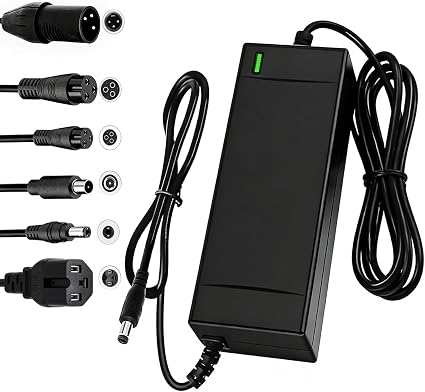
SGS Certified 54.6V 2A Electric Bike Charger offers reliable charging for a variety of 48V 13S lithium e-bikes. It suits riders who want a safe and versatile charger with multiple plug options for different bike models. Its biggest strength lies in its comprehensive protective features combined with universal compatibility.
Setup is straightforward thanks to the seven different plug options, including five common DC connectors and a universal IEC plug. Daily use involves simply matching the right plug for your e-bike, then plugging into a standard 240-volt outlet.
The charger manages current safely at 2 amps and protects against over-voltage, short circuits, and temperature problems, making it an easy choice for any e-bike owner’s routine.
Charging performs steadily at 54.6 volts output, providing consistent power for compatible bikes like Ecotric City/Beach and Lectric XP 2.0/3.0. The charger’s flame-retardant V-0 rated enclosure improves durability and safety. The most praised aspect is its rigorous safety certifications and protective features, while some users notice the single-port design limits charging multiple batteries simultaneously.
Many appreciate the charger’s extensive safety protections, including over-voltage and temperature cutoffs, contributing to user confidence. On the downside, the single charging port means you can only handle one battery at a time, which might slow down charging if multiple bikes are involved.
Anyone with a 48V 13S lithium e-bike will find this charger fits well and keeps the battery safe. Those needing simultaneous multi-bike charging or different input voltages might want to explore other options.
Pros
- Multiple plug options fit various e-bike models
- Strong safety features with SGS and UL certification
- Compact flame-retardant enclosure for protection
- Steady 2A current supports reliable charging
Cons
- Single charging port limits simultaneous device use
- Fixed 240V input may not suit all regions
| Specification | Details |
|---|---|
| Output Voltage | 54.6 volts |
| Input Voltage | 240 volts |
| Current Rating | 2 A |
| Compatible Devices | Ecotric City/Beach, Lectric XP 2.0/3.0, Evercross H5/H7, 48V 13S lithium ebikes |
| Connector Type | DC |
| Number of Ports | 1 |
7. NOCO GENIUS1 6/12V Smart Battery Charger

Charging a bike battery with this little charger feels straightforward and reliable, exactly what you want when dealing with battery maintenance. It works well for anyone with smaller 6 or 12-volt batteries, especially if you need something compact but powerful enough to handle different kinds like lead-acid and lithium.
Its biggest strength is its ability to adjust charging based on temperature, so your battery gets exactly what it needs.
Setting up the charger is simple: just connect the battery clamps or eyelet terminals to your battery, plug it into a 120-volt outlet, and it starts working. You can leave it connected for days because it quietly switches to maintenance mode when the battery is full. The built-in thermal sensor keeps charging safe in both hot and cold weather, which means you don’t have to worry about damaging your battery while it’s plugged in.
It charges fairly quickly with a current rating of 1 amp, taking around 10 hours to fully charge a battery. The design is compact and sturdy, built to last without getting bulky or heavy. Most praise it for the precise charging modes and the small size.
On the downside, some might find the 1-amp output too slow for larger batteries needing quick boosts.
The most praised feature is the temperature-based charging adjustment, which protects the battery against overcharge or undercharge. The most common complaint comes from users with larger batteries finding the 1-amp output to charge too slowly.
People with small or medium-sized bike batteries and a need for safe, steady charging will find this charger fits their needs perfectly. Those requiring faster charging for bigger batteries might want to look for higher amp options instead.
Pros
- Small size saves space and easy to carry
- Smart charging adjusts to temperature changes
- Works with many battery types and voltages
- Quiet maintenance mode keeps battery charged safely
Cons
- Only 1 amp output may be slow for large batteries
- Single port limits charging multiple batteries simultaneously
| Specification | Details |
|---|---|
| Output Voltage | 12 volts |
| Input Voltage | 120 volts |
| Current Rating | 1 A |
| Battery Charge Time | 10 hours |
| Compatible Devices | Cars, Boats, Motorcycles, ATVs, RVs, Trucks, SUVs, Scooters, Lawn Mowers, Tractors and More |
8. MOTOPOWER MP00205A 12V Automatic Battery Charger

Great for anyone needing an all-in-one solution to charge and maintain 12V batteries, this charger’s standout feature is its automatic desulfation. It suits motorcyclists, car drivers, and powersport enthusiasts looking to keep their batteries healthy without any extra hassle.
Connecting the charger is straightforward with clamp/alligator clips that securely grip battery terminals. It works quietly in the background, automatically detecting and fixing sulfation problems using pulse current technology, so it maintains battery life without requiring your intervention. Standby mode uses zero output, avoiding battery drain, and it’s spark-free during connections, which adds a safety layer in daily handling.
It reliably keeps all kinds of 12-volt lead-acid batteries in good shape, including sealed AGM and gel cells. The casing feels sturdy enough for garage or outdoor use, offering confidence in durability.
The most praised aspect is how it optimizes battery performance without manual settings. Some users note that its 800 milliamps charge current means it’s slower than some chargers on the market, which might be a drawback for quicker top-ups.
The charger’s biggest strength is how it automatically detects and reverses battery sulfation, improving battery performance without manual input. Most users appreciate this hands-off approach and safety features like spark-free connections. The main limitation comes from its modest current output, meaning charging can take longer compared to higher-amp models.
People who want a reliable, low-maintenance charger that also prevents battery damage will be satisfied here. Those needing faster charging for larger batteries or multiple batteries at once might want to consider a model with higher amperage or multiple ports instead.
Pros
- Automatic desulfation to extend battery life
- Zero output in standby mode prevents battery drain
- Spark-proof connections ensure user safety
- Works with multiple battery types and vehicles
Cons
- Slower charging speed due to 800 mA output
- Single port limits charging multiple batteries simultaneously
| Specification | Details |
|---|---|
| Output Voltage | 12 volts of direct current |
| Input Voltage | 110 volts of alternating current |
| Current Rating | 800 milliamps |
| Compatible Devices | Cars, Motorcycles, ATVs, RVs, Powersports, Boats |
| Connector Type | Clamp/alligator clip |
| Number of Ports | 1 |
9. SGS Certified 54.6V 2A Ebike Charger

Compact and reliable, the charger features a simple design focused on universal compatibility. It suits anyone with 48V lithium-ion rideables who needs one charger for multiple devices without the clutter of extras. Its biggest strength lies in the six interchangeable connectors that work with dozens of e-scooters, bikes, and hoverboards.
Setup takes just moments by selecting one of the six plug options to fit your battery perfectly. After that, charging is straightforward, plug it into a 240V outlet and connect it to your device.
Daily use stays simple since there’s no complicated programming or adjustments. The charger is light enough to carry around easily and replaces OEM chargers smoothly without any fuss.
Charging output holds steady at 54.6 volts and 2 amps, which matches or exceeds what most original chargers provide. The overall build feels sturdy but basic, focusing more on utility than style.
Praises commonly highlight how versatile it is across many brands, while some mentions complain about its standard cable length feeling a bit short in some setups.
Many users appreciate how convenient the interchangeable connectors make charging multiple 48V devices without needing separate chargers. The most common complaint relates to the cable being shorter than expected, which can limit positioning during charging.
Ideal for riders with several 48V lithium-ion devices who value simplicity and compatibility in one charger. Those who need longer cables or operate outside 240V power sources should explore other options better suited to those needs.
Pros
- Works with multiple brands and models
- Easy plug-and-play setup
- Compact size for easy storage
- Replaces lost or damaged OEM chargers
Cons
- Cable length shorter than some prefer
- Not designed for 240V input variation
| Specification | Details |
|---|---|
| Output Voltage | 54.6 volts |
| Input Voltage | 240 volts |
| Current Rating | 2 A |
| Amperage | 2 A |
| Number of Ports | 6 |
| Compatible Devices | 48V lithium-ion electric bikes, scooters, hoverboards, Jetson hoverboards |
10. 54.6V 2A 48V Electric Bike Charger with 5 Plugs

Fast charging stands out with this 54.6V 2A 48V Electric Bike Charger, ideal for anyone with a 48V lithium battery setup. The best part is its versatility, thanks to five interchangeable plugs that fit most electric bike connectors, making it a solid match for various ebikes and scooters.
Setting it up is straightforward, just pick the matching plug and connect it to your bike or scooter. Daily charging feels quicker, with the fast charging tech cutting down waiting times. Switching plugs between different devices is easy, and safety features like over-voltage and short circuit protection operate seamlessly in the background.
The charger maintains a stable DC output, which users appreciate for protecting battery life over time. Build quality is sound, and the smaller footprint fits well in any garage or storage space. Some mention the single-port design limits charging multiple batteries at once, but that’s a minor trade-off for what it offers.
The charger is praised for excellent fast charging and safety features that keep the battery healthy, contributing to a longer service life. Common concerns revolve around the single charging port, limiting the ability to charge multiple devices at the same time.
This charger works well for anyone needing quick, reliable charging for a 48V lithium battery setup and wants flexibility with different connectors. Those needing to charge more than one battery simultaneously should consider other options with additional ports.
Pros
- Includes 5 plugs fitting most ebike connectors
- Effective safety protections against common faults
- Fast charging reduces waiting time noticeably
- Stable output prevents battery damage
Cons
- Only one charging port to use
- Input voltage limited to 110 volts
| Specification | Details |
|---|---|
| Output Voltage | 54.6 volts |
| Input Voltage | 110 volts |
| Current Rating | 2 A |
| Amperage | 2 |
| Compatible Devices | electric bike, electric bicycle, scooter, one wheel, Rad Power Bike |
| Number of Ports | 1 |
11. 54.6V 2A Electric Bike Charger with 6 Plugs

Designed specifically for 48V lithium-ion e-bike batteries with 13 cells, this charger stands out by offering six interchangeable plugs for a versatile fit. Perfect for those wanting a reliable, single charger to suit multiple 48V electric bikes or scooters, it simplifies charging without needing extra adapters.
Setting it up is straightforward as you just match one of the included six plugs to your battery’s port. It delivers a steady 2A current, so you don’t have to worry about fluctuating power levels during charging.
The auto shut-off feature means it stops charging once the battery is full, preventing overcharge and prolonging battery life.
This charger performs consistently in powering 48V lithium-ion packs while its build feels solid and dependable. Many appreciate its compatibility options thanks to the six plug choices.
The main complaint some mention is its limitation to 48V Li-ion batteries only, making it unusable with other types like lead-acid or LiFePO4.
Charging stays steady at 2A with a solid build quality, making it a reliable replacement charger. The main drawback is its restriction to only 48V lithium-ion batteries, limiting use across all e-bike battery types.
Anyone with 48V Li-ion (13S) battery packs will find this charger an easy fit and dependable daily tool. Those needing to charge other battery chemistries or voltages should look elsewhere for more flexible options.
Pros
- Six interchangeable plugs included for versatile compatibility
- Constant 2A charging current for reliable power delivery
- Auto shut-off prevents battery overcharging
- Designed exclusively for 48V Li-ion (13S) batteries
Cons
- Only works with 48V Li-ion batteries, no support for other types
- Not compatible with common voltages like 24V or 36V batteries
| Specification | Details |
|---|---|
| Output Voltage | 54.6 volts_of_direct_current |
| Current Rating | 2 A |
| Input Voltage | 240 volts |
| Compatible Devices | 48V Lithium Batteries, Electric Scooters, Ebikes, Personal Electric Vehicles |
| Connector Type Used on Cable | 5.5×2.1/2.5mm, 8/9/12mm, 3-Pin XLR, Female Plug |
12. 54.6V 2A Lithium-Ion Ebike Battery Charger

Charging a 48V e-bike battery can be confusing with all the different plugs and voltages out there. This charger stands out with its wide compatibility and dependable 54.6V output, perfect for people with electric bikes and scooters looking for a charger that works with several models. It simplifies charging by including seven interchangeable connectors to suit many popular e-bike brands.
Setting up is straightforward since the charger comes with seven different connectors that easily snap onto common 48V lithium-ion batteries. Daily charging feels simple, you just match the connector to your battery and plug it into a 120V outlet.
The 2A current rating keeps charging speeds balanced, preventing overheating while getting you back on the road without delay.
Charging performance is steady, providing a full 54.6 volts output as needed for most 48V e-bikes, electric scooters, and hoverboards. Build quality holds up well under regular use, with a durable cable and solid connectors. The common praise centers on its reliable voltage and broad compatibility.
A noted downside is the lack of faster charging options, as the 2A current may feel slow for those expecting quicker power-ups.
Reviewers praise the charger for reliably delivering a stable voltage that suits multiple devices, making it a versatile choice for different e-bikes and scooters. The most frequent complaint involves the slower charging speed due to its 2A current rating, which may not meet needs for fast recharge times.
Anyone needing a dependable charger with broad brand compatibility will appreciate this unit. Those looking for quick charging might want to explore alternatives with higher amperage for faster battery fill-ups.
Pros
- Seven connectors cover many e-bike brands
- Stable 54.6V output for consistent charging
- Moderate 2A current prevents battery stress
- Durable build handles everyday use well
Cons
- Charging speed limited by 2A output
- Only works with 48V lithium-ion batteries
| Specification | Details |
|---|---|
| Output Voltage | 54.6 volts |
| Current Rating | 2 A |
| Input Voltage | 120 volts |
| Number of Connectors | 7 |
| Compatible Devices | 48V Lithium-ion E-bikes, Scooters, Hoverboards |
Best Bike Battery Chargers Comparison Table
| Product | Output Voltage | Current Rating | Compatible Devices | Connector Type |
|---|---|---|---|---|
| UL Certified 54.6V 2A Charger | 54.6 V | 2 A | Electric Bikes, Scooters | 2-Pin |
| 54.6V 48V Lithium Charger | 120 V | 1.5 A | Electric Bikes, Scooters | DC 5.5mm x 2.5/2.1mm |
| 54.6V 2A Charger with 6 | 54.6 V | 2 A | Lectric, Ecotric, Evercross | DC |
| UL Certified 54.6V 3A Charger | 54.6 V | 3 A | Ecotric, Isinwheel, Himiway | – |
| UL Listed 54.6V 2A Charger | 54.6 V | 2 A | Multiple eBike Brands | 18mm XLR, 3-pin, DC |
| SGS Certified 54.6V 2A Charger | 54.6 V | 2 A | Ecotric, Lectric, Evercross | DC |
| NOCO GENIUS1 Smart Charger | 12 V | 1 A | Cars, Scooters, ATVs | Battery Clamps |
| MOTOPOWER MP00205A Charger | 12 V | 0.8 A | Cars, Motorcycles, Boats | Clamp/Alligator Clip |
| SGS 54.6V 2A Ebike Charger | 54.6 V | 2 A | 48V e-bikes, scooters | – |
| 54.6V 2A Charger 5 Plugs | 54.6 V | 2 A | e-bike, scooter, Rad Power | – |
| 54.6V 2A Charger 6 Plugs | 54.6 V | 2 A | 48V Lithium Batteries | Multiple plugs |
| 54.6V 2A Lithium-ion Charger | 54.6 V | 2 A | Electric Vehicles (48V) | Battery Connectors |
- Output Voltage54.6 V
- Current Rating2 A
- Compatible DevicesElectric Bikes, Scooters
- Connector Type2-Pin
- Output Voltage120 V
- Current Rating1.5 A
- Compatible DevicesElectric Bikes, Scooters
- Connector TypeDC 5.5mm x 2.5/2.1mm
- Output Voltage54.6 V
- Current Rating2 A
- Compatible DevicesLectric, Ecotric, Evercross
- Connector TypeDC
- Output Voltage54.6 V
- Current Rating3 A
- Compatible DevicesEcotric, Isinwheel, Himiway
- Connector Type–
- Output Voltage54.6 V
- Current Rating2 A
- Compatible DevicesMultiple eBike Brands
- Connector Type18mm XLR, 3-pin, DC
- Output Voltage54.6 V
- Current Rating2 A
- Compatible DevicesEcotric, Lectric, Evercross
- Connector TypeDC
- Output Voltage12 V
- Current Rating1 A
- Compatible DevicesCars, Scooters, ATVs
- Connector TypeBattery Clamps
- Output Voltage12 V
- Current Rating0.8 A
- Compatible DevicesCars, Motorcycles, Boats
- Connector TypeClamp/Alligator Clip
- Output Voltage54.6 V
- Current Rating2 A
- Compatible Devices48V e-bikes, scooters
- Connector Type–
- Output Voltage54.6 V
- Current Rating2 A
- Compatible Devicese-bike, scooter, Rad Power
- Connector Type–
- Output Voltage54.6 V
- Current Rating2 A
- Compatible Devices48V Lithium Batteries
- Connector TypeMultiple plugs
- Output Voltage54.6 V
- Current Rating2 A
- Compatible DevicesElectric Vehicles (48V)
- Connector TypeBattery Connectors
How to Choose the Best Bike Battery Charger
Selecting the right bike battery charger depends on compatibility with your battery type, charging speed, and safety features like overcharge protection. Choosing the appropriate charger ensures efficient charging, prolongs battery life, and helps avoid costly damage or inconvenient breakdowns.
Compatibility with Battery Types
Many chargers struggle with handling different types of batteries, which can lead to inefficient charging or even damage. Bikes use various chemistries like lead-acid, lithium-ion, and gel batteries. A good charger matches these precisely to avoid undercharging or overheating.
It’s essential to pick one that clearly states support for your battery type and has adjustable settings for voltage compatibility. Most bike batteries range between 12V and 48V, so the charger should cover that.
Charging batteries of different capacities requires the ability to adjust current output; small chargers offering around 1-2 amps won’t be efficient for larger batteries, while large, high-output models may stress smaller cells. The best chargers provide flexible voltage and current settings to accommodate the battery’s chemistry and size, ensuring full and safe charges without wasting energy.
Charging Speed and Efficiency
Charging speed varies mostly with the output current, measured in amps. Chargers rated at 2 to 5 amps typically strike a balance between a practical charging time and battery health.
High current can speed up charging but risks overheating or shortening battery life without smart controls.
Effective chargers include features to cut off or reduce current automatically once the battery reaches full capacity, which avoids overcharging. Some incorporate pulse or trickle charging modes to keep the battery topped up without draining excess power.
Less efficient chargers waste energy and increase electricity bills, so checking for energy-saving functions is helpful for everyday use.
Safety Features
Safety risks such as short circuits, reversed connections, and overheating can cause damage or fires if the charger lacks protection features. Reliable units include built-in safeguards like automatic shutoff during faults and reverse polarity protection to prevent damage from incorrect wiring.
Many trusted chargers have certifications such as CE, UL, or FCC, showing they meet safety standards. Choosing one with these marks reduces the chance of electrical hazards.
Heat-resistant casing and thermal sensors also add layers of protection that make daily use secure and worry-free.
Portability and Design
Transporting a bulky or heavy charger is inconvenient, especially for riders who travel or store their bikes in tight spaces. Chargers that weigh under 2 pounds and have a compact design fit easily in backpacks or bike compartments.
Solid construction with water and dust resistance keeps them working after regular handling and exposure.
User-friendly interfaces matter too. Clear LED indicators for charging status, simple connection plugs, and intuitive switches prevent confusion.
A durable cable and connector that don’t fray or come loose after repeated use contribute to a reliable charger you won’t hesitate to use regularly.
Additional Functionalities and Warranty
Extra features like maintenance or float charging modes extend battery life by preventing over-discharge, which is useful during long storage periods. Fast charging options provide flexibility when time is tight but should only be used as needed to avoid stressing the battery.
Digital displays that show voltage, current, and charge percentage offer valuable feedback. Some chargers connect to smartphones via apps to monitor battery health remotely.
The length of warranty and accessibility of customer support are crucial. A reliable warranty, often 1-2 years, combined with responsive support adds confidence for postpurchase issues.
Proper Maintenance and Care for Your Bike Battery Charger
Keeping a bike battery charger in good condition involves more than just plugging it in and letting it work. Regular inspection of the cables and connectors can prevent common issues like fraying or corrosion.
Store the charger in a dry place away from extreme temperatures to avoid damage to its internal components. Clean the contacts with a dry cloth periodically to maintain good electrical connection.
Follow these steps for effective maintenance:
- Unplug the charger when not in use to reduce wear on electronic components.
- Avoid coiling the cables tightly to prevent internal breaks.
- Check the user manual for specific cleaning agents or methods recommended by the manufacturer.
Routine care extends the lifespan of the charger and ensures reliable performance every time you need to recharge your bike battery.
Safety Precautions When Using Bike Battery Chargers
Using a bike battery charger requires attention to basic safety to prevent injury or damage. Always connect the charger to the battery before plugging it into the power source. This sequence reduces the risk of sparks or electrical shorts.
Make sure the working area is well-ventilated and dry, as moisture can cause electrical hazards.
Battery chargers often generate heat during operation, so place them on a non-flammable surface with enough space for air circulation. Keep the charger away from children and pets to avoid accidental contact with electrical parts.
- Never use a damaged charger or cable.
- Avoid charging overnight unless the charger has an automatic shut-off feature.
- Wear protective gloves if handling battery terminals or acid-coated surfaces.
Observing these precautions makes the charging process safer and prevents damage to both the battery and charger.
Comparing Smart Chargers and Traditional Chargers for Bike Batteries
Smart chargers and traditional chargers serve the same basic function but differ significantly in how they manage the charging process. Traditional chargers supply a constant voltage or current without adjusting for the battery’s state of charge. This can lead to overcharging or overheating if left connected too long.
Smart chargers use microprocessors to monitor battery voltage and regulate the power delivery accordingly.
Smart chargers can automatically switch to trickle charging or shut off when the battery is fully charged, helping to preserve battery life. They often feature diagnostic tools that identify battery health or faults. Traditional chargers tend to be simpler and less expensive but require more attention during use to prevent battery damage.
- Use smart chargers for convenience and precise control over the charging cycle.
- Consider traditional chargers if you need a basic, budget-friendly option and can monitor the charge manually.
Choosing between them depends on how much control and automation you want during the charging process.
People Also Asked
How Do I Choose the Right Size Bike Battery Charger?
Pick a charger that matches your battery’s voltage and capacity; this info is on the battery label. Chargers designed for lower or higher voltages can damage the battery or charge inefficiently. Look for specs that match or come very close to your bike battery’s requirements.
Is It Safe to Leave a Bike Battery Charger Plugged Overnight?
Leaving a charger plugged in overnight is generally okay, especially if it has an automatic shutoff or trickle charge mode. Avoid cheap chargers that keep pushing current continuously, as this can lead to battery overheating or reduced battery lifespan over time.
Can I Use a Bike Battery Charger with Different Battery Types?
Most chargers are designed for specific battery chemistries like lead-acid, lithium-ion, or NiMH, so you should not interchange them. Using the wrong charger type might cause improper charging or safety issues. Check the charger’s compatibility markings before use.
How Long Does a Typical Bike Battery Charger Last Before Replacement?
A bike battery charger can last several years but this varies with usage and build quality. Avoid cheap chargers to reduce the risk of early failure. When charging takes longer than usual or the charger gets unusually hot, it could be time to replace it.
What Common Problems Should I Watch for with Bike Battery Chargers?
Common issues include cables fraying, connectors corroding, and the charger failing to maintain proper voltage. Dirt or moisture can cause poor connections. Regularly inspect the charger and cables for damage and keep it in a dry place to extend its life.
Conclusion
Choosing a bike battery charger comes down to compatibility with your bike’s battery type, how quickly it can recharge, and safety features like overcharge protection. A charger that fits your specific battery voltage and capacity ensures proper charging without damage. Fast charging saves time but can generate more heat, so balance speed with safety depending on your needs.
Consider how often you will use the charger and your available space before buying. A compact model suits small storage areas, while a budget-friendly option may be better for occasional use. Refer back to the comparison table and product details to find a charger that fits your setup and routine.