
Top 12 Best Balance Bike for 1.5 Year Old Kids You Need Now
Choosing the best balance bike for 1.5 year old can be frustrating since many models are either too big, too heavy, or unstable. Kids at that age quickly lose interest or even get scared if the bike isn’t the right fit or hard to push.
A poorly chosen balance bike will cause more falls and frustration than fun learning moments.
The real difference with balance bikes for toddlers this young comes down to weight, size, and safety features. Look for bikes under 5 pounds to avoid tiring out little legs.
Seat height should be adjustable around 10 to 12 inches so the child can easily touch the ground. Tires that don’t require air, like EVA foam, reduce maintenance and the chance of flats, which helps keep things simple for parents.
Need a Quick Check?
| Image | Product | Price |
|---|---|---|
Our Top Picks 1  | SEREED Baby Balance | Check Price |
Our Top Picks 2  | Radio Flyer Balance | Check Price |
Our Top Picks 3  | Retrospec Cricket Bike | Check Price |
Our Selected Top 12 Balance Bike for 1.5 Year Old You Can Trust
This collection features carefully chosen balance bikes designed for toddlers around 1.5 years old. Each review highlights how well the bike performs, its ideal user, and both its advantages and potential drawbacks, helping you find the most suitable option for your child’s early riding experience.
1. SEREED Baby Balance Bike
Aluminum alloy frame sets the tone for a sturdy balance bike aimed at toddlers between 12 and 24 months old. It suits little beginners best, focusing on early balance and confidence building without pedals or brakes. Safety features stand out as the biggest strength, with a smart turning limit and foot protection.
Daily use shows this bike is light enough for easy handling and strong enough for both indoor and outdoor play. Setup is straightforward thanks to the simple design with no pedals or complicated parts.
The non-slip TPU handles and supportive seat keep a toddler comfortable while the non-marking wheels make riding on various surfaces worry-free.
Performance shines through smooth, controlled rides supported by a 135° turning limit that prevents tipping. The rigid suspension keeps things simple and predictable for beginners.
The frame feels durable, yet a few reviews mention the seat could be slightly firmer for longer rides. It gets the balance learning job done well with safety as a priority.
The balance bike receives praise for its safety features, particularly the turning limit that helps prevent falls. Common complaints target the seat comfort, as some feel it could offer more support during extended use. Setup and daily use are straightforward, letting toddlers focus on balance without distractions.
This bike works well for parents wanting a simple and safe first ride for children just starting to walk and pedal. Those seeking a bike with brakes or adjustable suspension may want to explore other options better suited for older or more advanced toddlers.
Pros
- Sturdy aluminum alloy frame
- Safe 135° turning limit
- Comfortable seat and non-slip handles
- Wheels friendly for indoor and outdoor use
Cons
- No brake system included
- Seat padding could be firmer for longer rides
| Specification | Details |
|---|---|
| Bike Type | Balance Bike |
| Number Of Speeds | 1 |
| Suspension Type | Rigid |
| Brake Style | No brake |
| Specific Uses For Product | Learning To Ride, Trail |
| Bicycle Drivetrain Type | Hub Drive |
2. Radio Flyer Steady Start Balance Bike
Bright red and sturdy, the Radio Flyer Steady Start Balance Bike is perfect for toddlers ready to gain balance and coordination. Its standout feature is the stable three-wheel design, making it ideal for little ones just starting to move around confidently on two wheels.
Getting started with this bike is simple thanks to the adjustable seat that fits your toddler comfortably as they grow. Its lightweight build means it’s easy to carry around or bring indoors.
The wide front wheel and dual rear wheels keep it steady on various surfaces like hardwood floors, sidewalks, and driveways, suitable for both indoor and outdoor play.
Designed to help toddlers learn balance before moving to pedal bikes, it performs well on paved roads and similar smooth surfaces. The durable frame and quiet, treaded wheels offer a smooth ride without disturbing noise.
Some notice that it doesn’t have suspension, which can make rough terrain less comfortable for the child.
The three-wheel setup is praised for helping toddlers stay steady, while the lack of suspension makes it less comfortable on uneven ground. The quiet wheels are a plus for indoor use, but anyone looking for off-road ability might find it lacking.
Great for toddlers just beginning to walk and scoot on smooth surfaces, this bike suits families needing indoor and outdoor options. Those in need of rough terrain durability or suspension might want to look at different models.
Pros
- Stable three-wheel design for balance
- Adjustable seat grows with the child
- Quiet, treaded wheels suitable indoors too
- Lightweight and easy to carry
Cons
- No suspension makes rough terrain bumpy
- Limited to paved and smooth surfaces
| Specification | Details |
|---|---|
| Bike Type | Balance Bike |
| Suspension Type | Rigid |
| Additional Features | Adjustable Seat, Chainless, Durable, Lightweight, Portable |
| Brake Style | Foot Brake |
| Specific Uses For Product | Learning to ride, Indoor, Outdoor |
| Intended Riding Terrain | Paved Roads |
3. Retrospec Cricket Baby Balance Bike
Perfect for toddlers aged 12 to 24 months, this balance bike is easy to handle and encourages early balance and coordination skills. Its biggest strength is the four-wheel design that provides more stability than typical two-wheel balance bikes, making it a confident first riding experience for little ones.
Setup comes mostly done, with only minor assembly needed, so you can get it ready quickly. The feet-to-floor design lets toddlers easily walk or scoot with it, while the soft handlebars and cushy seat keep them comfortable during play.
Indoor floors stay safe from scratches thanks to the quiet, non-slip wheels that also grip well outside, making rides possible almost anywhere.
The four wheels do a great job supporting balance as kids learn to ride, and the built-in steering limiter prevents steering from going too far, which helps keep control. The bike is lightweight yet supports up to 44 pounds, suitable for a growing toddler. Some users find the size fits best closer to 2 years, so smaller kids might outgrow it quickly.
Parents appreciate the four-wheel layout for added stability, making it easier for toddlers to gain confidence. The main downside comes from smaller kids outgrowing it quickly, which may reduce how long it stays useful.
People aiming to build early balance skills in toddlers will enjoy this bike, especially for indoor use or beginner riders. For children smaller than 18 months or those looking for a two-wheel challenge, a different model might work better.
Pros
- Four wheels prevent tipping over easily
- Soft handlebars and cushy seat for comfort
- Non-slip wheels safe for indoors and outdoors
- Lightweight with 95% pre-assembled
Cons
- Best suited for toddlers closer to 24 months
- Limited steering range can feel restrictive
| Specification | Details |
|---|---|
| Manufacturer | Retrospec |
| Age Range Description | Toddler |
| Weight Capacity | 44lb |
| Recommended Age | 12 months – 2 years |
| Wheels | 4 non-slip, no-scratch wheels |
4. Baby Balance Bike with Adjustable Seat

Getting a toddler moving confidently can be tricky, and having a balance bike that grows with your child makes all the difference. Ideal for little ones just learning to balance and coordinate, this bike’s sturdy steel frame and adjustable seat make it a reliable choice for ages around 1.5 years.
Setting up the bike is straightforward, with the adjustable seat making it simple to fit a growing child comfortably. The soft PU seat material and non-slip handles ensure your toddler stays comfy and secure.
Its closed wheels and steering limit help prevent the common toddler mishaps like side falls and stuck feet, making everyday rides smoother and safer on paved roads.
The bike performs well as an introductory balance bike, encouraging active play and natural balance practice. The steel frame feels solid underfoot and stands up to energetic riding. Many consider it sturdy and safe, but some wish the seat adjustment range was broader to fit larger toddlers sooner.
Its single-speed setup with a foot brake keeps things uncomplicated but limits speed control.
The balance bike receives strong praise for its sturdy construction and child-safe features like the closed wheels and steering limit that reduce falls. A common complaint is that the seat’s adjustability doesn’t cover a wider range as the child grows, which may require replacing sooner than expected.
Toddlers just starting to explore balance on smooth surfaces will do very well with this bike. Families needing a bike that adapts to a larger range of sizes or one with more braking options should consider other models suited for older toddlers or varied terrains.
Pros
- Sturdy and stable steel frame
- Adjustable soft PU seat for comfort
- Safe steering limit design
- Non-slip handle grips for better control
Cons
- Seat adjustment range could be larger
- Foot brake limits speed control options
| Specification | Details |
|---|---|
| Bike Type | Balance Bike |
| Number Of Speeds | 1 |
| Suspension Type | Rigid |
| Additional Features | Adjustable Seat |
| Brake Style | Foot |
| Intended Riding Terrain | Paved Roads |
5. SEREED Toddler Balance Bike

Supporting up to 110 lbs, this balance bike is great for toddlers learning to ride early on. It suits children around 1.5 years old thanks to its adjustable seat and handlebar heights, making it easy to fit growing kids. Its sturdy carbon steel frame stands out as a key strength for durability and safety.
Adjusting the bike is simple with a quick-release mechanism, so you don’t need tools to fit the seat height from 12.6 to 17.1 inches and handlebar height from 19.6 to 22.5 inches. The rubber grips and soft saddle provide comfort during rides. The safe footrest pad gives little riders a secure place for their feet as they build confidence.
The bike performs its main job well by helping toddlers learn balance and steering on paved surfaces. Its rigid suspension supports stability, and the no-pedal design makes the transition to a pedal bike smoother. Reviewers praise the strong frame, but some note the lack of brakes as a drawback for more active kids.
Strong frame and easy height adjustments improve safety and comfort during rides. Common concern involves missing brakes, which might reduce control on slopes or faster rides.
Parents looking for a solid beginner bike for paved areas will appreciate this model. Those wanting brake features or off-road capability might consider other options.
Pros
- Supports up to 110 lbs
- Adjustable seat and handlebar heights
- Sturdy carbon steel frame
- Comfortable rubber grips and soft saddle
Cons
- No brakes included
- Rigid suspension limits shock absorption
| Specification | Details |
|---|---|
| Bike Type | Balance Bike |
| Number Of Speeds | 1 |
| Suspension Type | Rigid |
| Specific Uses For Product | Toddler Balance |
| Adjustable | Yes |
| Brake Style | No Brakes |
6. Umatoll Baby Balance Bike
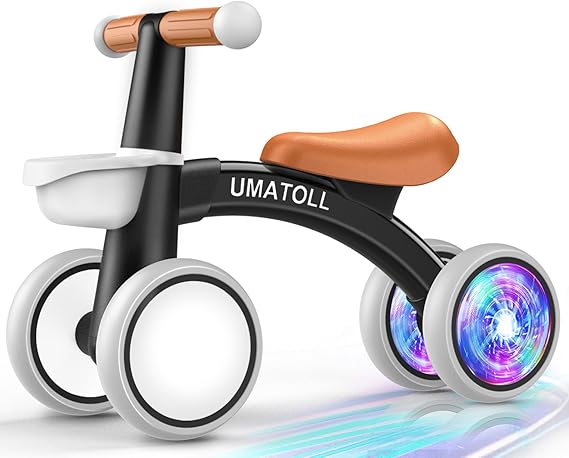
Great for toddlers between 12 and 24 months, this balance bike helps little ones get used to riding early on. Its most noticeable feature is the glowing rear wheel that captures a child’s attention, making playtime more engaging and encouraging active movement.
Getting started is simple, thanks to the adjustable seat with three positions that easily adapts as the child grows. The bike requires no batteries for the glowing wheels, which light up by spinning.
The steering limiter keeps turns smooth to avoid sudden flips, while enclosed wheels and a grippy TPU handlebar improve safety during everyday rides.
The bike does its job well by offering a safe and entertaining introduction to balance riding. It has solid build quality with no sharp parts, making it worry-free for young riders. Many appreciate the light-up wheels for holding a toddler’s interest, but a few note the lack of suspension and brakes might limit performance on rougher surfaces.
The glowing rear wheel draws toddlers to ride more, adding fun without extra fuss since no batteries are needed. Safety features like the steering limiter and enclosed wheels are praised, though some find the bike less suited for uneven outdoor paths due to missing suspension and brakes.
Families looking for a secure, interest-grabbing first balance bike will find this a solid pick. Those planning to ride mostly on rough terrain or wanting braking might want to look for models with added features.
Pros
- Colorful lighted rear wheels spark curiosity
- Adjustable seat fits 12-24 months old
- Steering limiter prevents tipping over
- Fully enclosed wheels protect feet
Cons
- No brakes included
- Lacks suspension for rougher rides
| Specification | Details |
|---|---|
| Bike Type | Balance Bike |
| Number Of Speeds | 1 |
| Brake Style | No |
| Additional Features | Adjustable Seat |
| Number of Handles | 2 |
7. Colorful Lighting Baby Balance Bike

Colorful Lighting Baby Balance Bike is designed for toddlers aged 10 to 36 months, standing out with its glowing rear wheel that lights up without batteries. Perfect for little ones learning to balance and steer, the light feature adds extra fun during rides while keeping safety a priority.
Setting up involves simply having the child hop on and start pushing since there are no pedals to install. Its no-pedal design and widened, closed wheels prevent feet getting caught, making every ride safer. The 135° steering limit keeps falls from sharp turns minimal, and the glowing wheels turn heads, sparking curiosity and playfulness.
It performs well as a beginner balance bike, helping with coordination and confidence through steady support. Solid construction with no sharp edges means little ones can explore without worry.
The bike’s strongest point is its safety with limited steering and foot protection. Some find the frame size a bit small for the upper age range but suitable for early toddlers.
The glow-in-the-dark wheel is a standout feature that really captures kids’ attention and adds fun to everyday rides. Many appreciate the safety elements like the steering limit and closed wheels, though some find the size tight for kids nearing three years old.
Parents looking for an engaging, secure balance bike for a younger toddler will find this fits well. Those with taller or bigger toddlers might want to consider a model with adjustable sizing for longer use.
Pros
- Colorful glowing rear wheel without batteries
- Steering limit reduces side falls
- Safety-focused design avoids foot pinching
- Great for toddlers starting to balance
Cons
- Frame may feel small for oldest toddlers
- No adjustable seat height mentioned
| Specification | Details |
|---|---|
| Recommended Ages | 10-36 months |
| Steering Limit | 135° |
| Wheel Feature | Colorful lighting, no batteries needed |
| Safety Design | Widened closed wheels, no pedal |
| Model Number | BK-200 |
8. Umatoll Toddler Balance Bike

Umatoll Toddler Balance Bike offers solid safety and adjustable fit for toddlers aged 1.5 to 5 years. Its biggest strength lies in growing with your child, thanks to the adjustable handlebar and seat. It’s well-suited for parents wanting a sturdy bike that lasts through early childhood.
Setup involves adjusting the handlebar height between 19 and 20.9 inches and the seat height from 11 to 15.7 inches as your toddler grows. Day-to-day, the puncture-resistant tires mean no pumping or worrying about flats.
The PU seat and non-slip TPE handlebars keep rides comfortable and secure for little explorers on paved or unpaved surfaces.
Performance focuses on beginner balance skills with a single speed and no brakes, making it easy for young kids to learn. The durable carbon steel frame provides a sturdy feel, standing up to daily adventures.
Most praise highlights its adjustability and tire reliability, while some mention the absence of suspension as a drawback on rougher trails.
The quick-release adjustability is highly praised for fitting toddlers comfortably as they grow while the lack of suspension is commonly noted as making bumpy paths less smooth. The puncture-resistant tires allow focus on riding instead of maintenance.
Anyone wanting a beginner bike that lasts through early years and handles various surfaces will find this a practical choice. Those needing more advanced shock absorption or braking might want to explore other options.
Pros
- Adjustable handlebar and seat for growing kids
- Puncture-resistant tires require no inflation
- Durable carbon steel frame for safety
- Non-slip TPE handlebars improve grip
Cons
- No suspension makes rough terrain uncomfortable
- No brake system for better ride control
| Specification | Details |
|---|---|
| Bike Type | Balance Bike |
| Number Of Speeds | 1 |
| Suspension Type | Rigid |
| Intended Riding Terrain | Paved Roads, Unpaved Trails, Urban Terrain |
| Brake Style | No Brake |
| Additional Features | Adjustable |
9. Liberry Baby Balance Bike with Adjustable Seat

Riding feels steady and secure thanks to the four-wheel design that keeps balance easy for little ones. Perfect for toddlers around 1.5 years old who are just starting to explore riding, it shines in its safety features that minimize falls and make learning fun and worry-free.
Setup is straightforward with an adjustable seat that moves from 9.7 to 11 inches, growing along with your child. Rubber handlebars provide a safe grip without risking tears, while smooth EVA tires reduce noise and prevent skidding during rides. The foot brake is simple for beginners and the closed wheels safeguard little fingers from pinching or small objects.
The balance bike does a solid job building coordination and balance for beginners. Made with a strengthened steel frame and coated with safe paint, it feels durable and reliable day after day. Most users appreciate the stability from the four wheels, though some might find the bike a bit heavier compared to two-wheel models.
Many highlight the bike’s excellent stability and safety, especially thanks to the closed wheels and sturdy frame. A common note concerns the bike’s weight, which can make lifting or carrying it a bit more challenging than lighter two-wheel balance bikes.
The bike suits parents who prioritize safety and stability over lightweight design, particularly for toddlers new to riding. Those seeking more maneuverability or less weight might want to explore two-wheel balance bikes instead.
Pros
- Very stable four-wheel design
- Seat adjusts as child grows
- Safe rubber handlebars
- Quiet and skid-resistant EVA tires
Cons
- Heavier compared to two-wheel bikes
- Limited speed options with one speed
| Specification | Details |
|---|---|
| Bike Type | Balance Bike |
| Number Of Speeds | 1 |
| Suspension Type | Soft EVA Wheels |
| Additional Features | Adjustable Seat |
| Brake Style | Foot Brake |
| Skill Level | Beginner |
10. Bobike Toddler Balance Bike

Great for toddlers up to 4 years old, the Bobike Toddler Balance Bike offers a sturdy and safe way to learn balance early. Its durable carbon steel frame is the standout feature, making it reliable for active little beginners who are just starting to ride.
Assembly is quick and straightforward, requiring only a few minutes without any complex tools. The adjustable seat means it grows with your child, and the enclosed non-slip wheels provide good grip and added safety while riding. Steering and braking are simple, making it easy for both toddlers and parents to manage daily rides.
Doing its main job well, the balance bike helps kids get comfortable with walking and balancing on two wheels. The steel construction feels solid and durable for regular use.
Most praise focuses on its safety features and build quality, while some point out that the single-speed and rigid suspension limit off-road comfort.
Strong points include the bike’s durable build and safety-focused design, praised for keeping kids steady and comfortable. The most common issue noted is the lack of suspension, which can make rides on uneven ground less smooth for toddlers.
Parents looking for a reliable, beginner-friendly bike for smooth surfaces will appreciate this model. Those needing something for rougher outdoor trails might want to consider other options with suspension or more gear options.
Pros
- Strong carbon steel frame
- Adjustable seat for growing kids
- Enclosed non-slip wheels for safety
- Quick and easy assembly
Cons
- Rigid suspension not suited for rough terrain
- Single-speed limits versatility
| Specification | Details |
|---|---|
| Bike Type | Balance Bike |
| Number Of Speeds | 1 |
| Suspension Type | Rigid |
| Additional Features | Adjustable Seat |
| Brake Style | Coaster |
| Power Source | Manual |
11. Balance Bike for 1+ Year Old
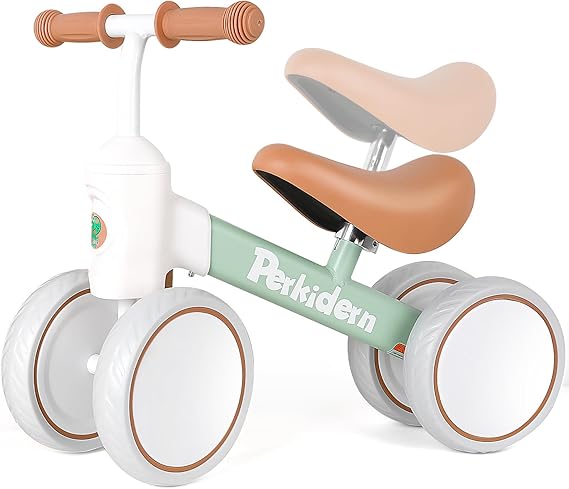
Lightweight construction with no pedals makes this balance bike ideal for toddlers aged 12 to 24 months. It focuses on developing early balance, steering, and coordination skills while prioritizing safety features designed specifically for young beginners.
Setting up is simple as it comes with fully enclosed four training wheels that prevent feet from getting caught. The 135° steering limit stops sudden sharp turns that could cause falls.
Day-to-day riding feels secure thanks to the U brake and lightweight frame, allowing toddlers to practice walking and riding confidently on paved roads.
Performance is steady and beginner-friendly, supporting toddlers learning to balance and steer. The rigid suspension means no extra bounce, which helps maintain stability.
Its strongest praise highlights its safe design without sharp edges, while some mention the limited weight capacity of 35kg (77 lbs) when kids grow bigger.
The safest aspect is the absence of sharp edges combined with enclosed training wheels, praised for protecting toddlers’ feet. The common issue arises from the weight limit, making it unsuitable once children surpass 35 kilograms.
Parents seeking a beginner-friendly balance bike with a focus on safety and simple controls will find this suitable. Those needing a bike with suspension or higher weight capacity should consider other models built for growing toddlers or varied terrains.
Pros
- Lightweight design perfect for toddlers
- Fully enclosed training wheels for foot safety
- Steering limited to 135° for stable control
- Simple U brake easy for beginners to use
Cons
- Weight limit caps at 35KG (77 lbs)
- Rigid suspension offers no shock absorption
| Specification | Details |
|---|---|
| Bike Type | Balance Bike |
| Number Of Speeds | 1 |
| Suspension Type | Rigid |
| Brake Style | U Brake |
| Intended Riding Terrain | Paved Roads |
12. Ridego Toddler Balance Bike

Four wheels offer a steady and safe introduction to balance biking, perfect for toddlers between 1 and 3 years old. Its biggest strength lies in the stability it provides, which helps little ones build confidence as they learn to balance and move independently. A roomy front basket adds a fun and practical touch for carrying favorite toys or snacks.
Setup involves attaching a few parts with the included tool kit, making it quick to get ready for use. The pedal-free design encourages kids to push off with their feet for smooth, self-paced movement. Soft rubber grips on the handlebars give a firm hold, while the padded seat is comfortable during longer play sessions both indoors and outdoors.
Performance centers on helping toddlers get accustomed to balancing without worrying about tipping over, thanks to the four wheels. The lightweight frame makes it easy to carry or move around. The smooth, quiet wheels work well on various surfaces.
The most praised feature in reviews is the stable ride, and some mention the design isn’t quite like a traditional two-wheel balance bike.
The stable four-wheel design gets praised for building toddler confidence, with many appreciating how quiet and smooth the wheels are on different surfaces. Some find the bike less similar to a classic balance bike due to the four wheels, which can affect the transition to pedal bikes later on.
Young toddlers and parents looking for maximum stability during early rides will find this bike very suitable. Those aiming to prepare for two-wheel cycling might consider a traditional balance bike instead, as this model focuses on steady, gentle introduction rather than advancing balancing skills quickly.
Pros
- Stable 4-wheel design for steady first rides
- Quiet, floor-friendly rubber wheels
- Front basket for carrying toys and snacks
- Soft seat and textured grips for comfort
Cons
- Not a traditional two-wheel balance bike
- Limited to toddlers up to 3 years old
| Specification | Details |
|---|---|
| Brand Name | Ridego |
| Item Highlight | 4-Wheel Baby Balance Bike with Quiet Wheels, Lightweight, No Pedal |
| Manufacturer recommended age | 0 – 3 years |
| Number of Wheels | 4 |
| Included Components | Tool Kit |
| Manufacturer Warranty | 2 Year Manufacturer |
Best Balance Bikes for 1.5 Year Old Comparison
| Product | Brake Style | Adjustable Seat | Suspension Type | Weight Capacity |
|---|---|---|---|---|
| SEREED Baby Balance | No brake | – | Rigid | – |
| Radio Flyer Balance | Foot Brake | Yes | Rigid | – |
| Retrospec Cricket Bike | – | – | – | 44lb Capacity |
| Adjustable Seat Balance | Foot | Yes | Rigid | – |
| SEREED Toddler Bike | No Brakes | Yes | Rigid | – |
| Umatoll Baby Balance | No | Yes | No | – |
| Colorful Lighting Bike | – | – | – | – |
| Umatoll Toddler Bike | No Brake | Yes | Rigid | – |
| Liberry Adjustable Bike | Foot Brake | Yes | Soft EVA Wheels | – |
| Bobike Toddler Bike | Coaster | Yes | Rigid | – |
| 1+ Year Balance Bike | U Brake | – | Rigid | – |
| Ridego Toddler Bike | – | – | – | – |
- Brake StyleNo brake
- Adjustable Seat–
- Suspension TypeRigid
- Weight Capacity–
- Brake StyleFoot Brake
- Adjustable SeatYes
- Suspension TypeRigid
- Weight Capacity–
- Brake Style–
- Adjustable Seat–
- Suspension Type–
- Weight Capacity44lb Capacity
- Brake StyleFoot
- Adjustable SeatYes
- Suspension TypeRigid
- Weight Capacity–
- Brake StyleNo Brakes
- Adjustable SeatYes
- Suspension TypeRigid
- Weight Capacity–
- Brake StyleNo
- Adjustable SeatYes
- Suspension TypeNo
- Weight Capacity–
- Brake Style–
- Adjustable Seat–
- Suspension Type–
- Weight Capacity–
- Brake StyleNo Brake
- Adjustable SeatYes
- Suspension TypeRigid
- Weight Capacity–
- Brake StyleFoot Brake
- Adjustable SeatYes
- Suspension TypeSoft EVA Wheels
- Weight Capacity–
- Brake StyleCoaster
- Adjustable SeatYes
- Suspension TypeRigid
- Weight Capacity–
- Brake StyleU Brake
- Adjustable Seat–
- Suspension TypeRigid
- Weight Capacity–
- Brake Style–
- Adjustable Seat–
- Suspension Type–
- Weight Capacity–
How to Choose the Right Balance Bike
Choosing the right balance bike for a 1.5-year-old involves focusing on lightweight materials, adjustable seat height, and sturdy construction. These features ensure safety, comfort, and long-term use, helping avoid frequent replacements and keeping your child motivated to learn balance and coordination effectively.
Size and Fit
Toys that don’t adjust properly often become frustrating quickly. Kids struggle with balance when the seat is too high or handlebars awkwardly positioned. A balance bike for toddlers works best when both seat and handlebars are adjustable in height.
This ensures a natural, ergonomic posture that supports confident riding. Wheels around 10 to 12 inches make it easier for little legs to reach the ground and maintain control, especially at 1.5 years old.
Bikes that weigh more than 7 or 8 pounds can be tough for toddlers to handle alone, making balance and steering more difficult.
Choosing a balance bike that fits well means better coordination development and less frustration. Adjustability lets the bike grow with the child, extending the bike’s useful life.
Checking specific size guidelines and weight limits before buying prevents returns or early outgrowth.
Safety Features
The frame of a toddler’s balance bike takes quite a bit of abuse, from falls to bumps. A frame made of strong steel or reinforced aluminum handles these impacts without bending or breaking.
Cheap frames can quickly become unsafe or unusable.
Paint and finishes should be smooth and free of toxic chemicals. Kids tend to touch and lick parts of the bike, so non-toxic paint reduces the risk of skin irritation. For stopping, either a simple hand brake designed for small hands or a well-positioned footrest helps children learn to slow down and stop safely.
Bikes without these features can make stopping uncertain or difficult, increasing the risk of spills.
Materials and Durability
Metals like aluminum or steel coated to prevent rust give the bike a longer lifespan, especially since balance bikes spend a lot of time outside. Reinforced plastics are used in some parts to reduce weight without sacrificing strength.
Low-quality plastics may crack or degrade quickly after a few weeks.
The tires also matter greatly. Strong, puncture-resistant tires work on grass, pavement, and dirt without constant air loss or wear. Thin rubber or foam tires without tread do not last long on rough surfaces.
Durable tires and rust-resistant materials mean less frequent repairs and an overall more enjoyable experience.
Ease of Use
Lifting and carrying a balance bike is a daily task for parents and toddlers alike. A lightweight design around 6 to 8 pounds strikes a good balance between sturdiness and portability.
Heavier models often sit unused in the corner because they’re too much hassle.
Assembly should be possible with a simple set of tools and clear instructions. Complex setups or constant maintenance worry parents and discourage use. Comfort improves with soft grips shaped for small hands and a frame that allows for natural handling.
Bikes that feel clunky or aren’t intuitive slow down learning.
Comfort and Ride Quality
Uneven sidewalks and bumpy park trails can quickly cause discomfort on a hard bike saddle. Models with some padding on the seat or basic suspension elements reduce jarring impacts, allowing toddlers to ride longer without fuss. Some basic suspension or cushioned tires take the edge off rough ground.
Wheels that roll smoothly but don’t spin too freely help kids maintain balance by avoiding sudden starting or stopping. Tires with a medium tread level provide both stability and quiet, controllable rides. A stable, quiet ride keeps toddlers happy and encourages practice.
Tips for Teaching Your Toddler to Ride a Balance Bike
Starting with a balance bike involves helping your toddler build confidence on two wheels without pedals. Begin by adjusting the seat height so your child’s feet can touch the ground firmly, offering stability and control.
Choose a flat, grassy area for initial practice to soften falls and provide an easy surface for balance.
Encourage your toddler to walk with the bike between their legs to get used to the weight and movement. Gradually, motivate them to lift their feet and scoot, pushing off with their feet while maintaining balance.
- Use simple encouragement and avoid rushing the process.
- Keep sessions short to match a toddler’s attention span.
- Wear a helmet and supervise closely.
Consistent, patient practice will help your toddler develop coordination and confidence steadily, making the transition to a pedal bike easier later on.
Essential Maintenance Practices to Extend the Life of a Balance Bike
Routine upkeep keeps a balance bike safe and functional over time. Regularly checking the tire pressure is crucial, especially if the bike has air-filled tires, as underinflated tires affect ride quality and safety.
Inspect the frame and components for loose bolts or screws every few rides. Tightening these prevents wobbling and potential accidents.
Clean the bike after outdoor use, especially if it’s exposed to mud or dust, to avoid buildup that can cause damage.
- Lubricate any moving parts like the bearings or joints moderately to maintain smooth motion.
- Store the bike indoors or under cover to protect it from weather exposure.
- Adjust the seat and handlebar periodically to accommodate a growing child.
By following these simple steps, the balance bike will remain safe and enjoyable for your toddler over months of use.
Common Mistakes to Avoid When Introducing a Balance Bike to Young Children
A common mistake is introducing the balance bike too early before your child has developed basic coordination skills. Balance bikes require a degree of motor control, so starting before about 18 months might lead to frustration rather than fun.
Another error is ignoring proper fit. A bike that’s too big or too small makes learning harder and can cause discomfort. Checking seat height and handlebar reach before each ride ensures the bike matches your child’s current size.
- Don’t pressure your child to ride or push past their willingness.
- Avoid smooth or slippery surfaces initially; rough terrain offers better traction and confidence.
- Neglecting safety gear like helmets increases risk during falls.
Being mindful of these issues can make learning on a balance bike a more positive and safe experience for young children.
People Also Asked
How Do I Choose the Right Size Balance Bike for a 1.5 Year Old?
Choose a balance bike with an adjustable seat that allows your 1.5 year old to place their feet flat on the ground while sitting. This helps them maintain balance and control. Checking the bike’s minimum seat height measurements before buying saves you from having to return it later.
What Safety Features Should I Look for in Balance Bikes?
Look for balance bikes with a low center of gravity and padded handlebars for safety. Also, consider models with soft grip tires instead of hard plastic wheels to reduce slipping. A reliable hand brake can add extra stopping control as your child gets comfortable riding.
How Do I Properly Teach a Toddler to Use a Balance Bike?
Start by encouraging your toddler to walk while sitting on the bike, pushing off with their feet. Gradually help them practice balancing with feet lifted for short moments. Choose flat, open spaces without traffic to build confidence at their own pace.
How Long Can a Balance Bike Typically Last for a Growing Child?
A balance bike can typically last about two years, depending on the child’s growth and model adjustability. Bikes with adjustable seats and handlebars can accommodate your child from toddlerhood up until they are ready for a pedal bike.
What Common Problems Do Parents Face with Balance Bikes for Toddlers?
Common problems include difficulty adjusting seat height, wheels that wear out quickly, and toddlers finding the seat uncomfortable. Regularly checking and tightening parts and choosing models with durable tires and cushioned seats can prevent these issues.
Conclusion
Choosing the right balance bike for a 1.5 year old comes down to weight, size, and ease of use. A lightweight bike helps your toddler maneuver easily, while an adjustable seat and handlebars ensure it fits just right. Simple design features like neither pedals nor training wheels will let your child focus on learning balance first.
Consider where your child will ride most often and how much you want to spend. A compact bike fits smaller spaces and is easier to carry around. Check the comparison table and detailed picks above to find a balance bike that fits your specific needs and daily routine.