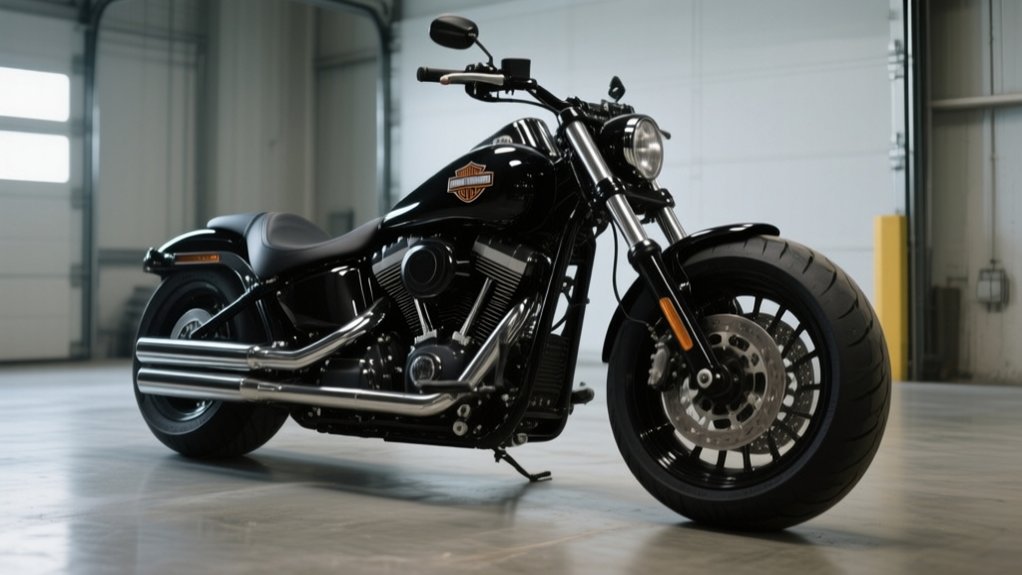
How Much Does A Harley Fatboy Weigh – Quick Facts
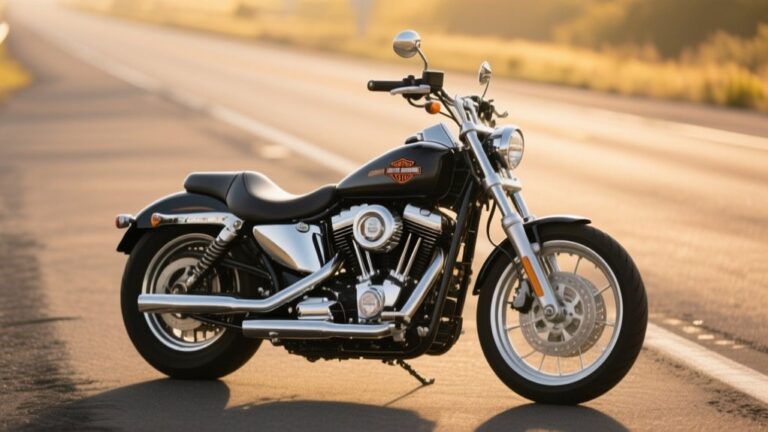
You’re looking at a Harley Fat Boy that weighs about 699 pounds, putting you in the heavyweight cruiser category. This weight gives you excellent stability and smooth cruising but requires confidence and skill, especially at low speeds. Its robust Milwaukee-Eight engine, wide tires, and solid frame all add to that heft.
Compared to other cruisers, it balances power with presence. Keep exploring, and you’ll discover tips to manage this impressive machine safely and effectively.
How Heavy Is the Harley Fat Boy?
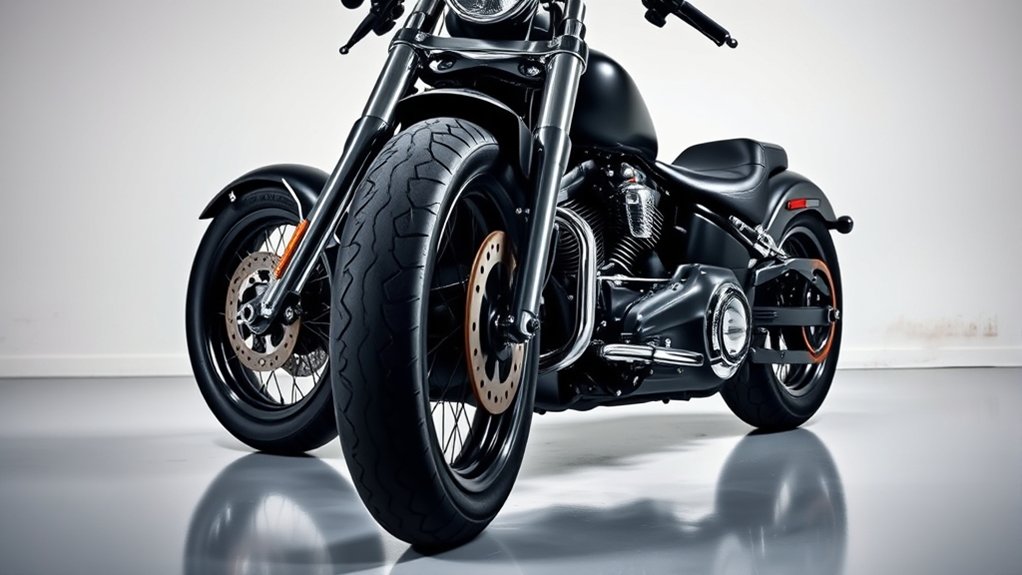
The Harley Fat Boy weighs about 699 pounds (317 kg) in its standard form, giving it a solid and stable feel on the road. This substantial weight is a defining characteristic of the Harley-Davidson Fat Boy, contributing directly to its impressive stability and smooth cruising experience.
While the exact weight can vary slightly depending on the model year and any customizations, the Fat Boy consistently offers a commanding presence. Its heavy weight is expertly supported by wide tires and a robust frame, designed to enhance comfort and control during long rides.
That said, this weight also means the Fat Boy demands respect, especially from less experienced riders, as its mass affects maneuverability.
Why Does the Fat Boy’s Weight Matter to Riders?
Knowing the Harley Fat Boy’s weight gives you a clear idea of what to expect when handling this motorcycle. At approximately 699 pounds, its substantial weight directly affects your ability to maneuver the bike, especially at low speeds or in tight spaces.
The Harley Fat Boy’s 699-pound weight significantly impacts maneuverability, especially in tight or slow-speed situations.
This weight demands confidence and strength for effective handling, particularly when parking or steering through urban environments.
But that same weight also enhances stability, giving you a smooth, steady ride on highways. It influences acceleration and braking, so you’ll need to adapt your riding style and rely on advanced rider assistance for ideal control.
Understanding the Fat Boy’s weight helps you realistically assess your comfort and skill level. This way, you can ensure safer, more enjoyable rides.
Ultimately, the weight plays a vital role in balancing stability and maneuverability for riders like you.
What Factors Contribute to the Harley Fat Boy’s Weight?
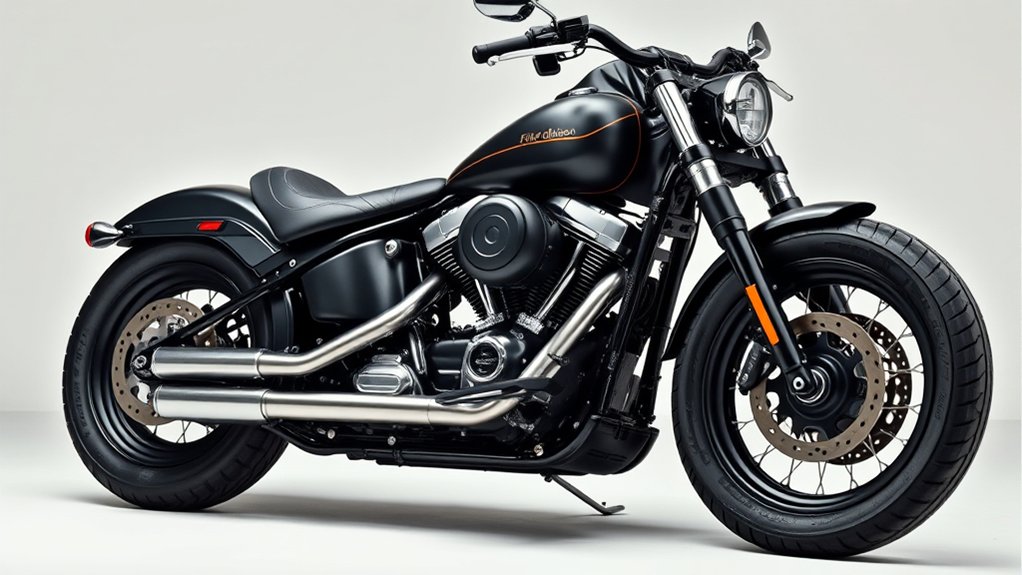
Because the Harley Fat Boy weighs around 699 pounds, several key factors contribute to its hefty mass. You’ll notice the weight comes from its heavy-duty Milwaukee-Eight engine, which provides power but adds significant heft. The wide tires not only enhance stability but also increase the overall mass.
Finally, the materials used throughout the bike play a vital role.
Here are the main contributors to the Harley Fat Boy’s weight:
- Heavy-duty engine and substantial frame that support performance and durability.
- Wide tires that improve handling but add considerable mass.
- High-quality, durable materials in wheels, suspension, and body panels for strength and longevity.
Together, these factors create the Fat Boy’s signature weight and solid presence on the road.
How Does the Harley Fat Boy’s Weight Compare to Other Cruisers?
While the Harley Fat Boy’s weight of approximately 699 pounds comes from its robust build and components, it’s helpful to see how this compares with other cruisers on the market. The Fat Boy sits comfortably in the heavyweight cruiser category, slightly lighter than the Indian Chief Dark Horse, which weighs around 744 pounds.
Many cruisers, including the Ducati Diavel V4, also exceed 650 pounds, placing the Fat Boy in a similar league.
In contrast, lightweight cruisers like the Honda Rebel 500 weigh considerably less, near 420 pounds.
This comparison shows that the Harley Fat Boy’s weight aligns with other heavyweight cruisers, offering stability and presence.
Understanding this helps you appreciate where the Fat Boy stands in terms of weight among popular cruiser motorcycles.
Tips for Managing and Riding a Heavy Harley Fat Boy
Since the Harley Fat Boy weighs around 699 pounds, you’ll need to adopt specific techniques to handle its mass safely and confidently. Managing this heavyweight cruiser demands precise handling and awareness of its weight impact on stability.
Here are three essential tips for riding your Fat Boy effectively:
- Practice slow-speed maneuvers regularly to build control during tight turns and parking. This will improve your confidence in handling the bike’s weight.
- Maintain proper body positioning and use smooth, controlled movements to ensure stability, especially when accelerating or braking.
- Use both front and rear brakes evenly. Also, check tire pressure and suspension settings often. These simple steps enhance handling and prevent imbalance caused by the Fat Boy’s substantial weight.
Following these tips will help you ride with greater control and safety. Give them a try and see how much easier it gets!
Frequently asked questions
What Is the Fuel Capacity of the Harley Fat Boy 114?
The Harley Fat Boy 114 has a fuel capacity of 5 gallons, or about 18.9 liters. This size lets you enjoy longer rides without frequent stops for gas.
It balances weight and range perfectly for cruising, ensuring you get an estimated 47 miles per gallon.
With this fuel tank, you’ll experience smooth performance tailored to the Fat Boy’s cruiser style. It makes your rides both efficient and enjoyable.
How Much Horsepower Does the Milwaukee-Eight 114 Engine Produce?
The Milwaukee-Eight 114 engine produces about 94 horsepower at 4,750 rpm. You’ll find it delivers strong torque too, 119 ft-lbs at 3,000 rpm, giving you powerful low-end performance.
This 114 cubic inch (1868cc) engine combines modern technology with smooth, responsive power. It makes your Harley Fat Boy a beast on the road.
You can count on it for robust cruising and impressive acceleration when you twist the throttle. It really brings that classic Harley feel with plenty of punch.
What Are the Available Color Options for the Harley Fat Boy?
You can choose from several striking colors for the Harley Fat Boy, including Olive Steel Metallic two-tone, Dark Billiard Gray, Vivid Black, White Onyx Pearl, and Brilliant Red. Vivid Black is the standard option, while two-tone shades like Whiskey Fire add extra flair.
These vibrant and classic colors highlight the Fat Boy’s muscular stance and retro-inspired style. They let you customize your bike to fit your personal taste perfectly.
Does the Fat Boy 114 Come With Advanced Safety Features?
Imagine riding through twisty mountain roads. Your bike responds like a trusted co-pilot. Yes, the Fat Boy 114 comes with advanced safety features like ABS, traction control, and a Tire Pressure Monitoring System.
Its Cornering Enhanced ABS and Traction Control keep you stable during sharp turns. Plus, Drag-Torque Slip Control reduces rear-wheel slip when slowing down. These systems work seamlessly, helping you stay confident and in control no matter the conditions.
What Is the Typical Maintenance Schedule for a Harley Fat Boy?
You should change the oil every 10,000 miles or once a year. Check your brake pads and fluid every 2,000 to 3,000 miles to stay safe.
Inspect the drive belt or chain every 5,000 miles for proper tension and wear.
Replace spark plugs and air filters around every 10,000 miles to keep your engine running smoothly.
Following this schedule keeps your Harley Fat Boy reliable and performing at its best. Just stick with it, and you’ll have no trouble enjoying your ride for years to come.
Final Thought
You might worry the Harley Fat Boy’s weight feels overwhelming, but once you get used to it, you’ll appreciate the stability and control it offers. Its heft isn’t a drawback. It’s a feature that delivers a smooth, confident ride, especially at highway speeds.
By understanding its weight and handling tips, you’ll ride smarter and safer. You’ll enjoy every mile on this iconic cruiser without hesitation or doubt.