
Top 12 Best 3D Printed Road Bike Saddle You Can’t Miss
Long rides often become uncomfortable when a saddle digs in or feels unbalanced, a common issue with cheaper or ill-fitting options. The best 3d printed road bike saddle avoids this by offering a precise fit that matches the rider’s anatomy, reducing pressure points and chafing.
Finding the right model can mean the difference between pain and performance during those crucial miles.
What sets a good 3d printed road bike saddle apart are usually the materials and design precision. High-quality nylon or carbon-reinforced polymers provide strength without adding unnecessary weight, often keeping saddles under 250 grams.
Accurate sizing and shape tailored through 3d printing help distribute weight evenly, improving comfort. Ventilation channels or cutouts also play a role in preventing numbness, making a well-designed saddle both practical and durable on long rides.
Need a Quick Check?
| Image | Product | Price |
|---|---|---|
Our Top Picks 1  | ROCKBROS Carbon Road Saddle | Check Price |
Our Top Picks 2  | Carbon Road Bike Saddle | Check Price |
Our Top Picks 3  | Lightweight Carbon Saddle | Check Price |
Our Selected Top 12 3d Printed Road Bike Saddle for Different Needs
This list features carefully chosen 3D printed road bike saddles designed for various riding styles and preferences. Each review covers how the saddle performs, who it best suits, and highlights its strengths and weaknesses to help you find the right fit for your needs.
1. ROCKBROS 3D Printed Carbon Road Bike Saddle
Comfort meets innovation with a 3D printed road bike saddle designed for riders seeking a smooth experience on various terrains. Ideal for those who spend long hours on the road or trails, it offers excellent shock absorption and adapts well to different sit bones.
The setup is straightforward, swapping out with most road bike posts due to its standard design. The breathable honeycomb liquid resin cover keeps things stable during rides with its non-slip surface.
Daily rides feel less taxing as the carbon fiber shell works with the 3D resin cover to absorb shocks and reduce pressure points.
Performance shines through its shock-absorbing design that truly cushions against uneven surfaces. The lightweight 5.6-ounce build keeps the bike nimble, while the carbon fiber shell adds durability alongside comfort.
Most riders appreciate how the saddle adapts to their body shape, though some mention the firm support might need a break-in period.
Comfort and adaptability stand out with its shock-absorbing design that fits sit bones well. The firm support is often noted, so it may feel stiff at first before becoming more comfortable with use. Lightweight construction helps maintain bike performance without added weight.
Those who ride extensively on roads and trails will appreciate how it cushions and stabilizes rides. Riders seeking immediate plush comfort might want to explore saddles with more padding or a longer break-in phase. The warranty period is decent but not exceptional for the price range.
Pros
- Shock-absorbing carbon fiber shell
- Breathable, non-slip honeycomb resin cover
- Lightweight at 5.6 ounces
- Ergonomic 3D design adapts to sit bones
Cons
- Firm support may require a break-in period
- Limited warranty of 1 year only
| Specification | Details |
|---|---|
| Brand Name | ROCKBROS |
| Item Weight | 5.6 ounces |
| Item Type Name | 3D Printed Bike Saddle |
| Manufacturer Part Number | 380016001-CBR |
| Included Components | Bike seat |
| Warranty Description | 1 Year |
2. 3D Printed Carbon Road Bike Saddle
Carbon and a 3D-printed honeycomb design make this road bike saddle stand out for long-distance comfort. Suited for riders who struggle with numbness and discomfort on rough roads, it provides a unique combination of support and shock absorption that helps you stay seated longer without pain.
Setting it up is straightforward since it replaces your existing seat directly. The open honeycomb top layer flexes with your sit bones while letting air circulate to keep you cool. The textured surface prevents slipping, so you don’t have to constantly adjust your position, even on climbs or sprint efforts in warm weather.
Performance is focused on comfort and stability, combining a rigid carbon shell with flexible cushioning. It handles road impacts well while supporting an efficient pedaling stance. The main praise highlights its ability to stop leg numbness, but some mention the saddle feels firm at first and may require a break-in period.
The clearest benefit is relief from numbness thanks to its supportive honeycomb layer combined with impact absorption. Some users note it takes time to get used to the saddle’s firmness. Quiet ventilation and solid hold on the rails often come up as positives in daily riding.
Riders seeking long rides in varying temperatures will appreciate this saddle’s comfort and cooling. Those preferring padded softness right away or needing multiple saddle options might explore other models.
Pros
- Honeycomb layer flexes to support sit bones
- Carbon shell absorbs road impacts
- Non-slip textured surface keeps position secure
- Open structure promotes airflow to stay cool
Cons
- Feels firm initially before break-in
- Only one unit count per package
| Specification | Details |
|---|---|
| Brand Name | CycEzreal |
| Model Number | 10748 |
| Included Components | Bike Seat |
| Manufacturer | ALLTOO PRO |
| Warranty Description | 1 year |
3. 3D Printed Carbon Road Bike Saddle
Lightweight and precisely designed, this saddle suits road cyclists who prioritize comfort and weight savings. Its standout feature is the use of 3D printing technology that tailors hardness and elasticity across the seat, aiming to reduce discomfort on longer rides.
Installation is straightforward, with guide rails crafted from T800 carbon fiber that balance strength and low weight. Daily rides reveal a saddle that adapts to different pressures thanks to its ergonomic design, making it a comfortable choice for extended cycling sessions without feeling bulky or heavy.
The saddle performs well by maintaining firmness where needed while softening under pressure points, helping to avoid numbness. The carbon fiber build feels sturdy but light at just 8.5 ounces.
High strength and durability stand out, although some users find the frosted bottom shell requires extra care to avoid scratches.
Praise concentrates on how well the saddle’s tailored elasticity supports comfort during lengthy rides, while the most noticeable downside involves the delicate frosted bottom that might scratch with rough handling. The design’s focus on lightweight but durable materials stands out in practical use.
Ideal riders appreciate a lightweight, ergonomic saddle for road cycling and value seat comfort tuned by advanced technology. Those needing multiple size options or a more rugged bottom surface may want to consider alternatives.
Pros
- Lightweight carbon fiber rails and shell
- Ergonomic cushion design tuned by 3D printing
- Balances hardness and elasticity effectively
- High-strength T800 carbon fiber construction
Cons
- Frosted bottom shell can show scratches easily
- Single unit available with no size options
| Specification | Details |
|---|---|
| Brand Name | ATWEINA |
| Item Weight | 8.5 ounces |
| Number of Packs | 1 |
| Number of Items | 1 |
| Unit Count | 1 Count |
4. ROCKBROS 3D Printed Hollow Ventilated Bike Saddle

Offering a unique lattice surface and hollow ventilated design, this saddle fits riders who need comfort on long rides without overheating. Its standout feature is the 3D printed lattice that resists wear, making it last longer than typical bike saddles in this price range.
Setting it up requires no special tools, fitting standard road bike seat posts easily. The hollow honeycomb design keeps the saddle cool and dry by allowing air to flow freely, which is especially useful during warm rides or extended trips.
The elastic zoned cushion follows hip curves, reducing pressure points and keeping you comfortable throughout your journey.
Designed to deliver balanced shock absorption, it handles rough roads well without feeling harsh. The compact textured surface shows little wear even after heavy use, confirming its durability. Some comments mention it might feel firm initially, but many appreciate the support it offers over time.
The hollow design improves ventilation but might cause a different riding feel versus padded saddles.
Many riders note that the saddle’s shock-absorbing design reduces discomfort on long rides while the ventilated lattice surface keeps things cool and dry. Some find the firmness unusual at first but recognize the lasting comfort it provides once broken in.
The saddle suits those who prioritize breathability and durable materials over extra softness. People wanting more cushioning might prefer a saddle with thicker padding or traditional foam.
Pros
- Ventilated hollow design prevents heat build-up
- Durable 3D printed lattice surface resists peeling
- Elastic zoned cushion supports hip curve comfortably
- Lightweight at just 177 g for easy handling
Cons
- May feel firm during initial rides
- Hollow design less padding for softer ride preference
| Specification | Details |
|---|---|
| Model Number | 380039001/USA |
| Item Weight | 177 g |
| Included Components | Saddle Body |
| Warranty Description | 2 Year Manufacturer |
5. Fizik Vento Argo Adaptive 3D Printed Bike Saddle

Rough rides and pressure points on long road cycling sessions call for a saddle that adapts well and supports comfort without compromising performance. Fizik Vento Argo Adaptive offers a short-nosed design aimed at keeping you stable while reducing soft tissue pressure, making it ideal for those seeking a balance of fit and cushion on their road bike.
The saddle mounts to your bike using the Kium hollow rails, which offer a strong and lightweight anchoring point. The carbon-reinforced nylon shell combined with the 3D-printed cushioning zones creates tailored support that feels different on various parts of the saddle. Daily rides benefit from this targeted softness and stable shape, helping to maintain a comfortable position over time.
Performance-wise, the saddle excels at distributing pressure smartly where it’s most needed, easing discomfort on longer stretches. Constructed with Digital Light Synthesis 3D printing, the saddle’s zonal cushioning adapts dynamically.
Reviewers often praise its blend of lightness and stability. The most common complaint centers on its niche fit for riders who prefer a traditional longer nose.
Its adaptive cushioning and stable short nose create lasting comfort during rides, making pressure relief a notable feature. Some users find the shape less compatible if they like a longer saddle nose, which affects comfort preferences.
Those who want a balance of support and advanced cushioning will find this saddle a strong match. Cyclists who need a longer saddle profile or ultra-light setup might want to explore other options.
Pros
- Adaptive zonal cushioning for targeted comfort
- Stable short-nosed design relieves soft tissue pressure
- Lightweight carbon-reinforced shell and hollow rails
- Durable 2-year warranty included
Cons
- Less suitable for riders preferring longer nose saddles
- Higher weight compared to some ultra-light saddles
| Specification | Details |
|---|---|
| Item Weight | 15.52 ounces |
| Shell Material | Carbon-reinforced nylon |
| Rail Type | Kium hollow rail |
| Model Number | 70F1D00A1P002 |
| Warranty | 2 Year Manufacturer |
6. 3D Printed Lightweight Breathable Bike Saddle

Weighing just 180g, this 3D printed bike saddle suits riders looking for a lightweight and breathable option. Its standout feature is the 3D printed honeycomb design that balances comfort with weight savings, making it ideal for mountain, city, or folding bikes that need a universal fit.
Installation is straightforward thanks to its universal compatibility with Full Carbon 7x9mm rails. Day-to-day riding benefits from the nylon-carbon fiber material and the honeycomb structure, providing cushion and pressure relief without adding bulk.
Measuring the seat size beforehand helps ensure a proper fit, and its quiet ride adds to comfort on longer trips.
Performance highlights include balanced weight distribution and reliable cushioning that doesn’t sacrifice lightness. The build feels sturdy and stable, made from carbon ultralight materials designed to last.
Praised most for its effective pressure relief, some find the saddle a bit narrow given its 2401150mm size, so sizing is key to satisfaction.
The saddle is praised for excellent pressure distribution and lightness thanks to the 3D printed honeycomb design. Commonly mentioned drawbacks include the narrow width, so paying attention to sizing before buying is important.
Riders prioritizing weight and breathability on mountain or city bikes will find this saddle a strong match. Those needing a wider seat or less precise fit may want to explore other options.
Pros
- Very lightweight at around 180 grams
- Good pressure relief with honeycomb cushion
- Durable nylon-carbon fiber material
- Quiet ride without noise
Cons
- Saddle width might feel narrow for some riders
- Requires exact measurement for proper fit
| Specification | Details |
|---|---|
| Weight | 180g±10g (0.24lb) |
| Material | Nylon-Carbon Fiber + 3D printed honeycomb structure |
| Seat Size | 240*1150mm |
| Rail Size | Full Carbon 7x9mm |
| Compatibility | Mountain, City, Folding Bikes |
| Warranty | 1 year |
7. 3D Printed Carbon Ultrathin Bike Saddle
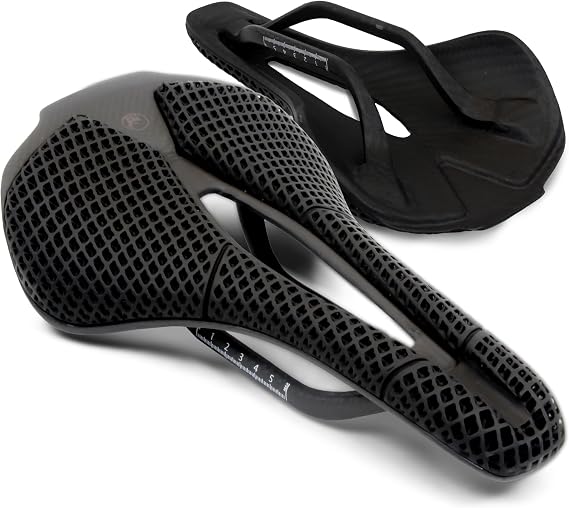
Road cyclists chasing maximum power transfer will appreciate this lightweight saddle crafted with 3D printing and carbon fiber. Its stiff build suits aggressive riding positions and riders who pair it with quality chamois shorts. The standout feature is the unique hexagonal honeycomb structure designed to manage pressure and boost circulation during long rides.
Setup requires a few rides to break in comfortably. It sits firm, just like professional road saddles, and fits well on most standard road bike rails. The saddle’s rigidity means daily rides demand quality padded shorts for comfort.
Cleaning is straightforward thanks to its carbon fiber surface, but it’s not meant for casual or upright riding styles.
The saddle excels at transferring power efficiently due to its rigid T800 carbon base, making pedaling feel direct and responsive. Built at only around 152 grams, it’s one of the lightest options out there. Reviewers praise the pressure distribution but often mention it takes several rides to adapt to the firmness.
This isn’t the go-to choice when comfort is the priority.
Riders find the saddle’s honeycomb structure effective in distributing pressure and improving circulation during rides, while the stiffness demands a break-in period and quality padded shorts for comfort. Its weight and rigidity make it ideal for performance but less forgiving on softer needs.
Those focused on competitive road cycling and aggressive positions will find this saddle rewarding, especially when paired with proper shorts. Cyclists seeking a softer, more cushioned feel should consider other options designed for comfort over power transfer.
Pros
- Exceptionally lightweight at 152 g
- Hexagonal honeycomb design for pressure distribution
- Rigid carbon base for direct power transfer
- Compact dimensions suit aggressive riding position
Cons
- Firmness requires 3–5 rides to break in
- Not suitable for casual or comfort-focused riders
| Specification | Details |
|---|---|
| Brand Name | IMPALAPRO |
| Item Weight | 152 g |
| Material | Ultralight T800 Carbon Fiber |
| Dimensions | 250x140mm |
| Model Number | IKE-3DCARBONSADDLE-0000 |
| Warranty | 2 years |
8. ROCKBROS Ergonomic Road Bike Saddle

Designed for riders who prefer firm support over plush cushioning, this saddle stands out for its breathable open-center and durable materials. It works well for road cyclists looking for a balance between firmness and airflow during longer rides.
The firm foam helps maintain stable positioning without sinking in too much.
Installation is straightforward with chromoly steel rails providing solid attachment points. The nylon shell reinforced with fiberglass keeps the shape firm throughout daily cycling use.
Breathability is handled by the saddle’s open-center, allowing air to circulate under you, while the narrower nose gives enough clearance during pedaling. The wider rear section offers a stable platform for sitting.
The firm foam padding gives support without too much softness, which some will appreciate for a performance ride, while others might find it a bit too hard. The construction is sturdy with chromoly rails and a fiberglass-reinforced nylon shell, making it dependable over time.
Most praise centers on its supportive feel, while a common complaint relates to the firmness being a bit much for riders looking for comfort.
Most riders appreciate the firm, supportive feel that holds position on the bike well and promotes airflow through the open center. A frequent downside mentioned is the saddle’s firmness, which can feel too hard during longer rides for those expecting a cushier seat.
Those who like a firm saddle that encourages good pedal clearance and cool ventilation will likely be satisfied. Cyclists wanting a softer, more cushioned ride should consider alternatives offering more foam padding.
Pros
- Firm foam provides stable, supportive ride
- Open-center design improves ventilation
- Durable chromoly rails and fiberglass shell
- Wider rear section for seat support
Cons
- Firmness may feel hard to some cyclists
- Limited plush padding for comfort seekers
| Specification | Details |
|---|---|
| Brand Name | ROCKBROS |
| Material | PVC eco-leather |
| Support Construction | Chromoly steel rails, nylon shell with 20% fiberglass |
| Design Feature | Open center for airflow |
| Warranty | 1 year warranty |
9. BUCKLOS 3D Printed Mountain Road Bike Saddle

BUCKLOS 3D Printed Mountain Road Bike Saddle offers targeted comfort and durability for riders who demand precision in their gear. Its standout feature is the use of 3D printing technology to adjust cushion firmness in specific areas, making it ideal for cyclists who want to reduce shock during long rides.
Setting up the saddle is straightforward, fitting most road bike seat posts easily thanks to its standard dimensions. The ergonomic design supports blood circulation, which helps prevent numbness even in aggressive riding positions. The full carbon fiber structure keeps the weight low at only 0.39 kg without compromising strength, which feels noticeable on climbs and sprints.
Performance-wise, the saddle handles shock well thanks to the carefully tuned cushioning. It holds up firmly under intense pressure but stays comfortable for extended periods. It features a T800 carbon fiber bottom shell and guide rails, offering superb durability.
The main praise focuses on comfort during long rides, while a common complaint is that the unique shape may require some getting used to.
Positive feedback highlights how the 3D printed cushion reduces shock effectively, improving comfort during long rides in competitive positions. The most frequent concern relates to the saddle’s shape, which may feel unusual at first and takes time to get used to.
Cyclists who prioritize weight savings and ergonomic support in aggressive riding will appreciate this saddle. Those unfamiliar with carbon fiber saddles or who prefer traditional shapes might want to explore other options before committing.
Pros
- 3D printed cushion firmness for comfort
- Ergonomic design reduces numbness
- Lightweight with full carbon fiber body
- Supports aerodynamic aggressive riding posture
Cons
- Shape requires acclimation for some riders
- Limited seat packages with just one included
| Specification | Details |
|---|---|
| Brand Name | BUCKLOS |
| Item Weight | 0.39 kg |
| Material Structure | Full carbon fiber (T800) |
| Included Components | Saddles *1 |
| Warranty Description | 1 year |
10. 3D Printed Carbon Fiber Bike Saddle

Comfort during long rides stands out thanks to the 3D printed elastic hollow lattice structure that offers shock absorption and ventilation. Ideal for road cyclists seeking a lightweight saddle with ergonomic support and pressure relief, especially on extended trips.
Mounting it is straightforward, fitting standard rails without hassle. The honeycomb design provides targeted cushioning, helping reduce pressure in sensitive areas while allowing air to flow.
Carbon fiber support adds durability and keeps the saddle both strong and light, making daily rides feel less tiring.
The saddle effectively absorbs shocks and reduces discomfort over uneven roads, maintaining breathability throughout. Built with a carbon fiber bow and 3D printed design, durability pairs well with flexibility.
Most praise highlights comfort on long rides, while some mention a need to adjust fit for optimal pressure relief.
Users appreciate the comfort provided by the elastic hollow lattice and honeycomb structure on longer rides, noting effective shock absorption and ventilation. Common feedback points to the need for some fine-tuning in fit to maximize pressure relief and avoid discomfort.
Cyclists who prioritize lightweight design and breathable support will find this saddle well-suited. Those seeking universal fit or simpler designs might prefer other options, especially if rail compatibility or immediate comfort without adjustments is a priority.
Pros
- Comfortable pressure relief with honeycomb cushioning
- Lightweight at only 8 ounces
- Breathable lattice structure reduces sweat build-up
- Strong carbon fiber support for shock absorption
Cons
- Fit may require adjustment for some riders
- Limited to standard rail compatibility
| Specification | Details |
|---|---|
| Brand Name | Cyclesavvy |
| Item Weight | 8 ounces |
| Unit Count | 1 Count |
| Item Type Name | 3D Printed Bike Saddle |
| Warranty Description | 1years |
11. Tempo Aliante Adaptive 3D Printed Road Saddle

Offering a comfortable ride with an innovative padding design, the Tempo Aliante Adaptive 3D Printed Road Saddle suits road cyclists seeking long-lasting support. Its key strength is the tailored cushioning that adapts to pressure zones, making endurance rides easier on sensitive areas.
Setup involves standard seat post attachment, fitting most common road bike frames without extra adjustments. Daily rides benefit from the waved-profile shape and wider platform that distribute rider weight evenly.
The 3D-printed padding resists wear, keeping the saddle feeling fresh through repeated use and varied weather conditions.
Performance delivers solid pressure relief while maintaining a firm, supportive base. Construction relies on digital 3D printing to provide zonal cushioning not possible with traditional materials.
Praises highlight the saddle’s comfort on longer rides, while some mention the shape may take adjustment time for those used to narrower seats.
The saddle’s biggest plus lies in its zonal cushioning that eases pressure during long rides, but some find the wider, waved shape less intuitive at first. Its durable 3D-printed padding stands up well to consistent use without degrading quickly.
Riders prioritizing comfort on extended road trips will appreciate the support here, while those who prefer minimalist or narrow seats may want to look elsewhere. This saddle fits well for cyclists needing targeted pressure relief without sacrificing durability.
Pros
- Adaptive 3D-printed cushioning for pressure relief
- Waved-profile shape supports a wider platform
- Durable padding resists wear over time
- Fits standard road bike seat posts easily
Cons
- Wider platform may feel bulky for some riders
- Adjusting to shape can require multiple rides
| Specification | Details |
|---|---|
| Brand Name | Fizik |
| Item Weight | 11.2 ounces |
| Unit Count | 1 Count |
| Model Number | 70F8D00A1P002 |
| Warranty Description | 2 Year Manufacturer |
12. 3D Printed Carbon Fiber Road Bike Saddle

Carbon fiber construction defines this 3D printed road bike saddle, making it a perfect fit for cyclists focused on lightweight gear and support. Its key strength lies in the tailored hardness and elasticity across the saddle, which reduces impact shocks for a more comfortable ride.
Installation is straightforward, fitting standard bike rails without fuss. The advanced 3D printing tech means the saddle isn’t uniformly stiff; areas adjust to where pressure is highest, so it molds well to your riding style.
Weighing only 6.72 ounces, it feels barely there on longer rides, and the carbon fiber build promises durability and stability.
Performance-wise, it handles road vibrations well thanks to its precise elasticity settings, making bumpy rides less taxing. Its full carbon fiber design improves both strength and weight savings, meeting the key needs of road cyclists. Most users praise comfort, though a few find it a bit harder than expected during initial rides.
The most common praise highlights superior shock absorption combined with lightweight strength, making long rides far more comfortable. A frequent complaint mentions the firmness during the first few uses, which might require some time to get used to.
Ideal for serious road cyclists who value a lightweight saddle with customized support and durability. Those who easily prefer softer seating might consider a different model with a more traditional cushion feel.
Pros
- Extremely lightweight carbon fiber construction
- Adjustable hardness and elasticity zones
- Strong and durable material for road durability
- Exceptional shock absorption on rough roads
Cons
- Initial firmness may feel uncomfortable
- Premium material limits affordability
| Specification | Details |
|---|---|
| Brand Name | Samassi |
| Item Weight | 6.72 ounces |
| Model Number | R2 |
| Warranty Description | 2 Year Manufacturer |
| Included Components | 3D Printed Carbon Fiber Bike Saddle * 1 |
Best 3D Printed Road Bike Saddles Compared
| Product | Brand | Weight | Warranty | Included Components |
|---|---|---|---|---|
| ROCKBROS Carbon Road Saddle | ROCKBROS | 5.6 ounces | 1 Year | bike seat |
| Carbon Road Bike Saddle | CycEzreal | – | 1 year | Bike Seat |
| Lightweight Carbon Saddle | ATWEINA | 8.5 ounces | – | – |
| ROCKBROS Ventilated Bike Saddle | ROCKBROS | 177 g | 2 Year | Saddle Body |
| Fizik Vento Argo Saddle | Fizik | 15.52 ounces | 2 Year | Saddles |
| Breathable Lightweight Saddle | EVOSID | – | 1years | no |
| Ultrathin Carbon Saddle | IMPALAPRO | 152 g | 2 | Ultralight 3D printed saddle |
| ROCKBROS Ergonomic Road Saddle | ROCKBROS | – | 1 year | Bottom shell, Surface |
| BUCKLOS Mountain Bike Saddle | BUCKLOS | 0.39 kg | 1 year | saddles 1 |
| Carbon Fiber Bike Saddle | Cyclesavvy | 8 ounces | 1years | bike saddle |
| Tempo Aliante Road Saddle | Fizik | 11.2 ounces | 2 Year | Saddle |
| Carbon Fiber Road Saddle | Samassi | 6.72 ounces | 2 Year | 3D Printed Carbon Fiber Saddle |
- BrandROCKBROS
- Weight5.6 ounces
- Warranty1 Year
- Included Componentsbike seat
- BrandCycEzreal
- Weight–
- Warranty1 year
- Included ComponentsBike Seat
- BrandATWEINA
- Weight8.5 ounces
- Warranty–
- Included Components–
- BrandROCKBROS
- Weight177 g
- Warranty2 Year
- Included ComponentsSaddle Body
- BrandFizik
- Weight15.52 ounces
- Warranty2 Year
- Included ComponentsSaddles
- BrandEVOSID
- Weight–
- Warranty1years
- Included Componentsno
- BrandIMPALAPRO
- Weight152 g
- Warranty2
- Included ComponentsUltralight 3D printed saddle
- BrandROCKBROS
- Weight–
- Warranty1 year
- Included ComponentsBottom shell, Surface
- BrandBUCKLOS
- Weight0.39 kg
- Warranty1 year
- Included Componentssaddles 1
- BrandCyclesavvy
- Weight8 ounces
- Warranty1years
- Included Componentsbike saddle
- BrandFizik
- Weight11.2 ounces
- Warranty2 Year
- Included ComponentsSaddle
- BrandSamassi
- Weight6.72 ounces
- Warranty2 Year
- Included Components3D Printed Carbon Fiber Saddle
How to Choose the Perfect 3D Printed Road Bike Saddle
Comfort, durability, and proper fit are key when selecting a 3D printed road bike saddle, as these factors directly affect riding experience and long-term use. Choosing the right materials and design helps avoid discomfort and frequent replacements, ultimately saving money and hassle.
Comfort and Fit
Sitting on a saddle that doesn’t match your road cycling posture quickly reminds you how uncomfortable rides can become. Shapes designed with a hard, flat surface tend to create pressure points, making long rides painful.
Saddles tailored to road cyclists have specific contouring that supports the forward-leaning position, often with a subtle dip or groove to relieve pressure on sensitive areas. Padding plays a key role here. Thick, soft cushioning might feel good at first but tends to compress too much over time, leading to discomfort.
A firmer padding type, such as high-density foam or gel inserts, strikes a better balance between support and weight.
Width and length are crucial in fitting the rider’s block structure. Measuring your sit bone spacing helps in choosing a saddle that avoids chafing or numbness.
Most models provide a width range between 130mm and 145mm and length from 250mm to 280mm, giving room for personalized fit. Paying attention to these dimensions improves comfort on longer rides significantly.
Material Quality and Durability
Many 3D printed saddles use polymers or composite materials engineered for strength and flexibility, which influences durability noticeably. Polymers that flex slightly absorb road vibrations better but need to hold their shape without warping.
Cheaper plastics may crack under repeated pressure, while higher-quality composites offer better wear resistance. Exposure to UV light and varying weather conditions can cause fading or brittleness if the material isn’t designed for outdoor use.
Long-term shape retention shows up as consistent ride feel over months or years. A saddle should not sag or develop permanent dents from daily loading. Checking for materials rated for high tensile strength and impact resistance can help identify options that will last.
This stability is important to avoid replacing the saddle frequently or suffering a drop in performance caused by deformation.
Weight and Performance
Every gram counts for road cyclists focused on speed, so saddle weight can affect efficiency and ride enjoyment. 3D printing allows complex internal lattice structures that reduce material volume without losing strength, resulting in lighter saddles.
This design approach optimizes the balance between durability and weight, often producing saddles under 200 grams.
A lighter saddle also improves power transfer. Bulkier saddles can flex or shift slightly under force, draining energy.
Rigid yet lightweight 3D printed models maintain stable contact, ensuring the rider’s pedaling effort translates effectively into forward motion. This makes a noticeable difference over long climbs or sprints.
Ventilation and Breathability
Heat and moisture buildup under the saddle can turn comfortable rides into chafing nightmares, especially during warmer weather or extended sessions. Some 3D printed designs incorporate ventilation by adding airflow channels or perforations directly into the saddle body.
These features promote air circulation around the sit bones and soft tissue areas, reducing sweat accumulation.
Effective breathability prevents sticky discomfort and skin irritation. This is valuable for riders dealing with variable weather, as the saddle remains cooler and drier across temperature changes and humidity levels. Vented saddles demonstrate how material choice and design can improve comfort beyond just padding.
Compatibility and Mounting
Getting a new saddle to fit can become a drawn-out hassle without good compatibility. Most seats use standard rails compatible with common seat posts, but 3D printed saddles vary in rail diameter or shape.
Checking that the saddle has rails matching the 7mm round or 7x9mm oval rails found on most road bikes avoids upgrade headaches.
Installation should be straightforward, allowing for fore-aft and tilt adjustments. Stability is critical; any unwanted movement during pedaling wastes energy and affects ride confidence. Tight clamps and well-fitting rails ensure the saddle holds position firmly, preventing shifting over rough roads or aggressive cycling.
Optimizing Comfort: Riding Techniques to Maximize Your 3D Printed Road Bike Saddle
Proper positioning on a 3D printed road bike saddle can greatly reduce fatigue during long rides. Many designs feature contoured shapes that support sit bones without putting pressure on soft tissue areas.
Adjusting saddle height so your leg has a slight bend at the bottom of the pedal stroke improves power transfer while preventing unnecessary knee strain. Tilting the saddle nose slightly downward helps alleviate pressure on perineal regions.
Try these tips for better comfort:
- Set handlebars at a level that allows a natural reach without overstretching.
- Use padded cycling shorts to reduce friction and absorb vibrations.
- Shift your weight periodically during rides to avoid numbness and hotspots.
- Check saddle alignment regularly as minor misalignments can cause discomfort.
These practical adjustments complement the ergonomic benefits that 3D printing offers by allowing complex shapes tailored for anatomic support.
Maintaining Longevity: Cleaning and Care Tips for 3D Printed Bike Saddles
Cleaning your 3D printed bike saddle regularly helps maintain its shape and material integrity. Dirt and sweat can degrade polymers over time, so a gentle wipe with a damp cloth after each ride is a good habit. Avoid harsh chemicals or solvents that might weaken the plastic or affect any coatings.
For deeper cleaning:
- Use mild soap mixed with water and a soft brush to reach textured surfaces.
- Rinse thoroughly and dry fully before use to prevent moisture buildup.
- Inspect for cracks or wear signs which can indicate the need for replacement.
Store the bike in a cool, dry place when not in use to avoid exposure to UV light that may cause discoloration or brittleness. These simple maintenance steps prolong the function and appearance of the saddle over many rides.
Comparing 3D Printed Saddles to Traditional Models: Performance and Durability Insights
3D printed road bike saddles offer some clear differences compared to traditional models in both design and materials. They can incorporate complex internal lattices that provide targeted cushioning and flexibility, something difficult to achieve with molded foam and plastics.
This results in tailored pressure relief tailored to specific anatomical zones.
In terms of durability, the materials used in 3D printing vary but often include strong thermoplastics or composites. They resist common wear mechanisms like abrasion and deformation. However, some printed saddles might lack the cushioning depth found in layered foam options, which can affect feel over rough surfaces.
Traditional saddles generally come with proven longevity from years of use but may not offer the same degree of customization. Riders looking for precise fit and pressure management might find 3D printed options advantageous, while those prioritizing tried-and-true cushioning prefer conventional designs.
People Also Asked
How Do I Choose the Right Size for a 3D Printed Saddle?
Choose a saddle size based on your sit bone width measurement for proper support. You can measure your sit bones by sitting on a piece of cardboard to mark where they press down, ensuring the saddle width matches this distance.
Are 3D Printed Road Bike Saddles Safe for Long Rides?
3D printed saddles can be safe for long rides if made from durable materials and properly tested. It helps to check reviews or manufacturer details about flex and comfort before using one on long rides.
What Is the Average Lifespan of a 3D Printed Bike Saddle?
The lifespan varies depending on material and riding conditions but expect a few years of regular use. Inspect the saddle regularly for cracks or deformities to avoid unexpected failure during rides.
How Do I Properly Care for a 3D Printed Bike Saddle?
Clean the saddle with mild soap and water, avoid harsh chemicals, and keep it out of prolonged direct sunlight. Storing your bike indoors can also prevent material degradation over time.
Can a 3D Printed Saddle Fit Standard Road Bike Seat Posts?
Many 3D printed saddles are designed to fit standard rails compatible with common road bike seat posts. Confirm the rail size and mounting system matches your post before purchasing to avoid compatibility issues.
Conclusion
Comfort, weight, and durability stand out as the key factors when choosing a 3D printed road bike saddle. The fit should support your riding style and body without causing pressure points. Materials and construction affect how light the saddle is and how well it holds up over time, especially on longer rides or rough surfaces.
Think about how often you’ll ride and how much you want to spend before making a final choice. A more expensive model may be worth it for daily use, while occasional riders might lean toward something simpler. Check the comparison table and earlier reviews to align your needs with the right features and price point.