
Top 12 Best Angle Grinder for Knife Making You Can’t Miss
Grinding a blade with a cheap or unsuitable angle grinder often leads to uneven edges and wasted material, problems anyone making knives regularly knows all too well. The best angle grinder for knife making helps avoid those issues by maintaining consistent speed and control, making it easier to shape and sharpen steel precisely without overheating the metal, which can ruin its temper.
Key features that distinguish a good angle grinder for knife making include a moderate disc size, typically between 4.5 and 6 inches, for better control around curves and edges. Power output around 7 to 9 amps provides enough force without being unwieldy.
Balance and ergonomics are crucial too, as extended use requires a tool that fits comfortably in the hand and offers a steady grip. Sturdy construction and reliable safety features protect both the operator and the blade during intricate work.
Need a Quick Check?
| Image | Product | Price |
|---|---|---|
Our Top Picks 1  | Belt Grinder Sharpener Small | Check Price |
Our Top Picks 2  | Belt Grinder Sharpener Standard | Check Price |
Our Top Picks 3  | Makita 9564CV Angle Grinder | Check Price |
Our Selected Top 12 Angle Grinder for Knife Making You Can Trust
This list features twelve reliable angle grinders designed specifically for knife making. Each review includes performance details, user recommendations, and points out strengths and limitations, helping you find the right tool to improve your blade crafting process.
1. Belt Grinder Knife Sharpener Jig Small
Feeling solid and precise in hand, the Belt Grinder Knife Sharpener Jig Small works well for anyone shaping or sharpening blades up to 12 cm. Its biggest strength is the adjustable angle feature, which lets you easily fine-tune the blade’s sharpening position.
Setting it up is quick thanks to the included hexagonal wrench and locking knob. Adjusting the guide rail angle is straightforward, making it easy to hold the blade steady while grinding. The compact size fits nicely on most workbenches and keeps smaller blades secure for consistent sharpening or shaping passes.
Built from durable aluminum alloy, the jig promises long-lasting use. It grips blades firmly and maintains angle accuracy during use. Positive feedback highlights its sturdy build and convenience, while the main complaint points to its small size limiting the use on larger blades beyond 12 cm.
The jig is praised for its sturdy aluminum build and the ease in adjusting the sharpening angle smoothly. Complaints mainly point to its small size, restricting work to blades 12 cm or less and needing some attention during angle setup to get just right.
This tool suits knife makers working primarily with small blades needing precise angle control. Those shaping or sharpening larger blades should look for a jig fitting bigger sizes, as this one won’t hold longer blades securely.
Pros
- Adjustable angle guide for precise sharpening
- Durable aluminum alloy frame
- Compact size fits small blades perfectly
- Simple setup with included hex wrench
Cons
- Small size limits use on blades over 12 cm
- Angle adjustments may require minor fine-tuning
| Specification | Details |
|---|---|
| Brand Name | Singring |
| Size (small fixture) | 6.29*2.36*2.55 inch (16*6*6.5 cm) |
| Blade Length Compatibility | 12 cm and below |
| Included Components | Manual Belt Grinder Knife Jig, small hexagon wrench |
| Model Number | 8020120211109188 |
2. Belt Grinder Knife Sharpener Jig
Great for knife makers who want consistent sharpening angles, this jig stands out for its solid build and adjustability. It fits on belt sanders and keeps blades steady, making precision much simpler to achieve.
Perfect for those who demand control over blade angles during sharpening.
Setting it up involves attaching the jig to a belt sander and securing knives with two red-handled quick-release clamps, which hold the blade firmly in place. Adjusting the angle is straightforward thanks to the center knob, allowing you to fine-tune the sharpening edge. Multiple mounting positions accommodate different blade sizes, making daily sharpening smoother without guesswork.
Its stainless steel base is heavy-duty and stable, ensuring the jig doesn’t wobble during tasks. It delivers consistent blade angles every time, which is critical for effective knife sharpening. A common downside is that some users find adjusting the mounting positions takes a bit of extra effort.
Despite that, it holds up well and feels built to last through many sharpening sessions.
Consistent blade angles stand out as the biggest advantage due to the sturdy base and precision guides. The most frequent complaint is the challenge in adjusting the mounting positions, which can take some extra patience during setup.
Knife makers valuing stable, repeatable sharpening will appreciate this jig. Those needing compatibility beyond belt sanders or quicker angle adjustments might explore alternative tools better suited to their workflow.
Pros
- Adjustable clamps for secure blade holding
- Heavy-duty stainless steel base
- Multiple angle settings and mounting positions
- Quick-release clamp handles for easy operation
Cons
- Adjustment of mounting positions can be fiddly
- Limited to use with belt sanders only
| Specification | Details |
|---|---|
| Brand Name | JCFANTS |
| Model Number | 1420 |
| Manufacturer | GJ-009 |
| Unit Count | 1 Count |
| Included Components | Adjustment Knobs, Clamping Handles, Knife Sharpening Jig, Mounting Base |
3. Makita 9564CV 4-1/2-Inch Angle Grinder
Compact and built with a sturdy metal casing, it’s ideal for knife makers who need a powerful yet controllable tool. The single biggest strength is its variable speed control, allowing precise adjustments suited to both delicate grinding and aggressive material removal.
Setting up involves attaching a 4-1/2-inch wheel, and the soft start feature keeps the initial spin smooth, avoiding sudden jerks. The mechanical clutch system adds a safety layer, preventing damage if the wheel stops suddenly.
Constant speed control ensures the tool maintains power under heavy load, making it reliable throughout long grinding sessions.
Grinding performance is strong with a 13 amp motor outputting up to 10,500 RPM, providing consistent power. The build feels solid with good attention to gear longevity from the clutch system and soft start.
The most praised feature is its ability to maintain speed under load, while the main complaint centers on the weight, which can cause fatigue during extended use.
The grinder consistently holds speed even under hard loads, which many find valuable for knife making. However, several note that the weight can become tiring during extended use. The clutch system and soft start contribute significantly to durability and smooth operation.
People focused on precise speed control and durability will appreciate this grinder. Those seeking a lighter tool for longer continuous grinding sessions might want to look for lighter models or those with cordless features.
Pros
- Variable speed dial for precise control
- Soft start reduces mechanical stress
- Strong 13 amp motor power
- Mechanical clutch protects motor and gears
Cons
- Heavier than competing models
- 24 volts may limit cordless options
| Specification | Details |
|---|---|
| Power Source | Electric-powered |
| Voltage | 24 volts |
| Wattage | 1400 watts |
| Maximum Rotational Speed | 10,500 rpm |
| Horsepower | 1.87 hp |
4. Makita GA9060 9-Inch Angle Grinder

Power stands out right away with this angle grinder, making it a solid choice for knife making tasks needing serious muscle. It suits those who want durability combined with steady control during grinding and shaping metal blades. Its extended motor life is the biggest plus here, promising long hours of dependable use.
Setting up the grinder is straightforward thanks to the rear handle trigger switch with a lock-off safety feature that needs two steps to start, adding a layer of security during operation. The motor design keeps dust and debris out thanks to seals like labyrinth construction and epoxy coatings, cutting down on wear and tear.
These features mean less maintenance worry day-to-day, even in tougher work environments.
Grinding power feels consistent at the 6600 rpm max speed, allowing for smooth rotations supported by spiral bevel gears that transfer energy efficiently. The 2000 watt motor has solid build quality with larger commutator bars and improved armature stability for a longer lifespan.
Strong points users mention include motor durability and smooth performance, while a common criticism involves the absence of a lock-on feature, which some find inconvenient for continuous grinding sessions.
Durability emerges clearly because of the fortified motor design and protective coatings, keeping the tool running longer in dusty workshops. The switch design, however, requires extra effort to start, which some find interruptive during prolonged cutting or grinding jobs.
Those who value long motor life and safety features during grinding will appreciate this angle grinder. People needing extended continuous operation or a lighter tool might look elsewhere for a model with lock-on capability and reduced weight.
Pros
- Motor lasts three times longer than previous models
- Effective protection against dust and debris
- Secure two-action lock-off safety switch
- Smooth, efficient energy transfer with spiral bevel gears
Cons
- No lock-on feature for continuous use
- Relatively heavy for extended handheld work
| Specification | Details |
|---|---|
| Power Source | AC |
| Voltage | 110 volts |
| Wattage | 2000 watts |
| Maximum Rotational Speed | 6600 rpm |
| Disc Size | 9-Inch |
5. Belt Grinder Knife Sharpener Jig Adjustable Angle

Precision angle adjustment makes this tool ideal for knife makers who need accurate, repeatable bevels. It suits both hobbyists and pros wanting a solid jig that won’t shift mid-grind. Its biggest strength is the stable, fine-tuned angle control, which can be hard to find on more budget-friendly models.
Setup involves mounting the jig using its universal clamping system with many threaded holes, allowing it to fit most belt grinders with ease. The aluminum alloy construction keeps vibrations low, and the ABS base plate ensures smooth sliding on tool rests. Adjusting the angle is straightforward thanks to a stainless steel protractor with laser-etched scales and a locking knob that holds the position steadily during use.
The grind quality is precise thanks to the zero-movement angle lock and high perpendicularity built into the hinge design. Solid, CNC-machined aluminum gives a durable feel. Most praise revolves around the accurate angle settings and stable operation, while some note it can require careful initial setup for perfect alignment.
The 44 mounting holes add great flexibility, though some find the weight slightly heavier than expected.
Most praise focuses on how the super-fine adjustment and locking system deliver consistent angles without any movement during grinding. The common complaint points to the setup process needing careful alignment, which can feel fiddly for those new to angle jigs. Its weight is also noted but generally accepted as a tradeoff for durability.
This jig fits knife makers who value highly accurate angle control and a sturdy build for long-term use. Beginners looking for a lightweight or simpler setup might prefer a less complex option, but anyone serious about consistent knife bevels will appreciate its design and precision.
Pros
- Precision angle settings with fine thread turnbuckle
- Wide range of adjustable mounting holes
- Solid aluminum alloy construction
- Stable locking mechanism prevents shift during grinding
Cons
- Initial setup can be time-consuming
- Heavier compared to simpler jigs
| Specification | Details |
|---|---|
| Brand Name | Weonefit |
| Included Components | 1x Belt Grinder Knife Jig |
| Material | Aluminum alloy with anodizing |
| Angle Scale Range | -5° to 25° |
| Mounting Holes | 44 threaded holes (1/4-20 UNC) |
| Model Number | Weonefit GGM-236001A-6073 |
6. BUCKTOOL 2×42 Belt Sander and Bench Grinder Combo

Grinding and shaping blades requires a tool that handles metal precisely and flexibly. Suited for knife makers looking for both power and versatility, this BUCKTOOL combo unit stands out by combining a belt sander and bench grinder in one machine. Its biggest strength lies in its multi-angle sanding feature that adapts to complex blade profiles and long workpieces.
Setting up takes minimal time since it plugs into a standard 120-volt outlet and runs on a 3.5 Amp motor. The 2×42 belt is easy to replace and tilts up to 90 degrees for precise edge work.
Switching between the horizontal and vertical belt positions offers good control on different parts of the blade, while the medium grit 60 sanding belt handles rough shaping and smoothing efficiently.
Grinding performance matches expectations for small shop use with a no-load speed of 3450 RPM on the wheel and a belt speed of 4480 FPM, offering consistent material removal. The build is solid and meets CSA safety standards, ensuring reliable durability.
Most users praise the powerful induction motor, while a common downside is the medium grit belt wearing quickly under heavy use.
The induction motor powering the belt and bench grinder combo provides steady, reliable force for shaping knives, while the adjustable belt angle gives excellent control for different tasks. The medium grit belt, however, does not last long during heavy or continuous use.
Those making small to medium-sized knives who want a flexible tool will appreciate the multi-angle sanding and decent power. Users working on larger blades or who need longer belt durability should consider a grinder with a more heavy-duty motor or finer grit options.
Pros
- Multi-angle belt adjusts from 0 to 90 degrees
- Heavy-duty induction motor runs steadily under load
- Two-in-one combo saves bench space
- High belt speed for effective metal sanding
Cons
- Medium grit belt may wear out quickly
- Motor may feel underpowered for larger blades
| Specification | Details |
|---|---|
| Voltage | 120 volts |
| Power Source | Corded Electric |
| Amperage Capacity | 3.5 A |
| Grit Number | 60 |
| Maximum Rotational Speed | 3450 rpm |
7. BUCKTOOL 1×30 Low Speed Belt Sander

Running at 1790 RPM, this low-speed belt sander offers precise control, ideal for anyone shaping or sharpening knives. Its slower speed helps avoid overheating metal, making it a solid pick for knife makers seeking accuracy over raw speed.
Setting up involves plugging into a standard power source and adjusting the sharpening guide, which swings between 10° and 45°. The angle guide really helps keep your blade edges consistent without guesswork. The belt is grit 120, which strikes a balance between material removal and smoothness.
It runs on a 2.3A induction motor that keeps vibrations low, letting you work steadily without wearing out your hands quickly.
Grinding and sharpening feel smooth and steady, with the motor providing enough torque for controlled material removal. The machine’s build focuses on stability, so it stays put on your bench while you fine-tune blades.
Most praise highlights the adjustable sharpening guide for maintaining precise angles, while occasional notes mention it’s on the quieter side but could be a bit heavier compared to some alternatives.
The adjustable sharpening guide is frequently praised for keeping edges consistently angled, making knife sharpening more reliable. Some users mention the machine’s weight as a downside, especially if portability or quick repositioning matters. Its quieter motor is liked but might leave you wishing for slightly faster operation in some jobs.
People working primarily on detailed blade shaping and sharpening will appreciate its precision and stability. Those looking for a portable, fast-grinding tool for rough shaping might want to explore higher-speed grinders instead. This fits best in a workshop where controlled, repeatable sharpening is a priority.
Pros
- Runs at controlled low speed for precision work
- Adjustable sharpening guide between 10° and 45°
- Induction motor reduces vibration and noise
- Stable and steady during operation
Cons
- Can feel heavier than handheld angle grinders
- Limited to 120 grit belt for all tasks
| Specification | Details |
|---|---|
| Power Source | Corded Electric |
| Amperage Capacity | 2.3 A |
| Maximum Rotational Speed | 1790 rpm |
| Grit Number | 120 |
| Grit Type | 120 |
8. Belt Grinder Knife Sharpener Jig Large Adjustable
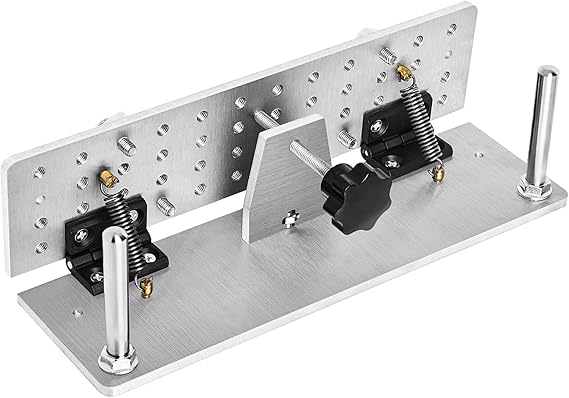
Someone into knife making looking for a reliable way to get precise bevels will appreciate this jig. Its main strength lies in the adjustable angle feature that makes grinding consistent and repeatable for blades up to 20cm in length.
Perfect for those who want sturdy support while shaping knives on a belt grinder.
Setting it up involves clamping the blade securely and adjusting the angle with the locking knob and hex wrench. The aluminum alloy frame keeps everything rigid without adding too much weight. It fits nicely on abrasive belt grinding machines, making daily use straightforward for accurate bevel grinding without constant readjusting.
The jig does a solid job holding knives at the right angle, providing consistent grinding results. The aluminum frame feels durable and built to last.
On the downside, some users mention it is slightly bulky and that smaller blades under 12cm need the smaller jig version. Still, it handles its task with ease and stability.
Aluminum alloy frame makes this sharpening jig durable and suitable for consistent use. Adjustable angles offer control over knife beveling, which is helpful for accurate sharpening. Common complaint is that the clamp size limits use on blades longer than 20 cm, restricting versatility. The locking knob and included hex wrench provide stable adjustments during grinding.
Knife makers focusing on blades under 20 cm will find this jig useful for precise bevels. People who work with very large knives or need more versatile clamping might need to consider alternative jigs or tools. Suitable for abrasive belt grinders but may not fit other sharpening setups. Practical for hobbyists or small workshop use with common belt grinders.
Pros
- Adjustable angle for precise beveling
- Durable aluminum alloy frame
- Compatible with belt grinding machines
- Suitable for blades up to 20cm
Cons
- Bulkier size for some users
- Smaller blades need separate jig
| Specification | Details |
|---|---|
| Brand Name | Beststamp |
| Size Large Knife Jig | 9.84 * 2.36 * 2.95 inches (25 * 6 * 7.5cm) |
| Blade Clamp Size | Blades up to 20cm |
| Material | Aluminum alloy frame |
| Adjustments | Locking knob and hexagonal wrench |
9. KSAG-5 Pro Angle Guide for 1×30 Belt Sander

Enlarged opening and smooth blade movement make this guide perfect for knife makers working with bigger guards. It suits those seeking more clearance around the handle to sharpen knives without restriction. The biggest strength lies in its open design that lets the blade move freely along the sanding area.
Setup involves attaching the guide to a 1×30 belt sander, and it weighs just under 3 pounds, so handling is manageable. The extra space around the guard accommodates knives with thick handles, reducing awkward angles during sharpening. Day-to-day use feels less cramped thanks to the wider opening, allowing for more precise control when working on different blade shapes.
Performance is solid, providing smooth and consistent blade movement which helps maintain edge quality. Built by KFMK, the guide feels sturdy and durable with a coarse grit setup included for sharpening. A common compliment praises the extra room for larger knives, while some mention the limited versatility for sizes smaller than the opening.
The guide is frequently praised for providing extra clearance around knife handles, making sharpening larger blades less restricted and more comfortable. However, some find it less suitable when working with smaller knives, where the larger opening feels excessive.
Those sharpening knives with larger guards will appreciate the KSAG-5 Pro’s spacious design. Knife makers mainly working with smaller blades might prefer a model with a more compact opening for better control.
Pros
- Wider opening for larger knife guards
- Allows smooth blade movement
- Lightweight at just under 3 pounds
- Includes coarse grit for sharpening
Cons
- Not ideal for smaller knives
- Limited to 1×30 belt sanders
| Specification | Details |
|---|---|
| Manufacturer | KFMK |
| Item Weight | 2.93 pounds |
| Item model number | KSAG-5 Pro |
| Power Source | Corded Electric |
| Voltage | 120 volts |
| Included Components | Belt Disc Sander |
10. Bosch GWS8-45 4-1/2 Inch Angle Grinder

Bosch GWS8-45 4-1/2 Inch Angle Grinder delivers reliable power and control, making it a solid choice for knife making where precision and comfort matter. Its 7.5 amp motor hitting 11,000 rpm stands out for handling detailed grinding without sacrificing ease of use.
Setting up involves just plugging it into a 120-volt outlet and attaching the disc using the large spindle lock, which is simple and quick. The slim-grip design fits comfortably in hand during long sessions, while the two-position side handle helps adjust for better control. Dust stays away from key parts thanks to directed airflow, so maintenance is less frequent.
Grinding performance is strong with the 900-watt motor reliably powering through steel for shaping blades. Its solid build includes durable carbon brushes that lengthen tool life. Commonly praised for smooth handling and power, some users note it gets warm after extended use.
Quick adjustments on the burst-protection guard add safety for knife makers who spend long hours at the grinder.
Powerful motor and comfortable grip receive strong praise, making it reliable for detailed knife shaping tasks. The most frequent drawback noted is the tool heating up after long periods of continuous use, which can limit session length.
Best suited for knife makers who value precise control and steady power in a corded model. Those needing longer cordless flexibility or frequent extended grinding may consider alternatives better suited for heavy-duty continuous work.
Pros
- Powerful 7.5 amp motor at 11,000 rpm
- Slim-grip design for comfortable handling
- Two-position side handle offers better control
- Durable carbon brushes extend tool life
Cons
- Can get warm during extended use
- Performance tied to cord length and outlet availability
| Specification | Details |
|---|---|
| Power Source | Corded Electric |
| Voltage | 120 volts |
| Wattage | 900 watts |
| Maximum Rotational Speed | 11000 rpm |
| Motor Amps | 7.5 amp |
11. Makita GA4030 4-Inch Angle Grinder

Feels balanced and light, making it easy to control during detailed knife work. Perfect for those who need a powerful grinder without the bulk.
The 6.0 AMP motor pushing out 11,000 RPM stands out for handling tough metal shaping with consistency.
Setup is straightforward with a compact design weighing only 3.7 lbs, which helps reduce fatigue on long sessions. The motor and bearings are well-protected from dust thanks to its labyrinth construction, meaning less downtime for cleaning and longer life. Running it on 110 volts plugs right into standard outlets without any fuss.
Its power delivery is steady and strong, handling sharpening and grinding tasks smoothly. The build feels solid and thought-out, with a focus on durability in dusty workshop environments. Users praise its reliable speed, while some mention the horsepower at 0.96 might not suit very heavy-duty jobs.
The Makita GA4030 4-Inch Angle Grinder runs with a solid 6.0 AMP motor that hits 11,000 RPM, good for cutting and grinding metals including knife blades. It weighs just 3.7 pounds, so it’s not too tiring to hold during longer work sessions. Some find the power delivery a bit uneven and the handle grips could be more comfortable for precise.
This grinder suits those making knives who want a lightweight tool that lasts through tough dust and debris thanks to its sealed motor. People needing finer control for delicate work or who prefer extra comfort might want to look at models with softer grips or variable speed control. The compact size works well in tight spaces.
Pros
- Lightweight design reduces user fatigue
- High speed motor at 11,000 RPM
- Motor protection extends tool lifespan
- Compatible with standard 110V power outlets
Cons
- Less horsepower compared to larger grinders
- Not ideal for very heavy-duty metal removal
| Specification | Details |
|---|---|
| Power Source | AC |
| Voltage | 110 |
| Wattage | 720 watts |
| Maximum Rotational Speed | 11000 rpm |
| Horsepower | 0.96 |
| Weight | 3.7 lbs |
12. DongCheng 4-1/2 Inch Angle Grinder

Great for knife makers looking for strong and reliable cutting power, the DongCheng 4-1/2 Inch Angle Grinder delivers consistent high-speed output with its 9.2 Amp copper motor. It’s especially suited for those needing a compact tool that handles tough metalwork without feeling heavy.
Setup is straightforward with the corded electric power source, so no battery worries. The ultra-light 4.2 lb weight and slim 59mm body make holding and maneuvering comfortable during long use.
The ergonomic grip helps reduce hand fatigue, allowing you to focus on precise cutting and grinding tasks without strain.
Delivers steady performance at up to 11800 RPM, cutting through metal with ease, rust removal, and surface polishing all handled well. Built solidly with durable materials, the grinder doesn’t feel flimsy in your hands. Strongest praise mentions its powerful motor and efficient grinding, while some users note the cord limits mobility compared to cordless options.
The motor provides strong, consistent speed that cuts through metal efficiently, a major plus for detailed knife work. Complaints focus on the corded design limiting flexibility and freedom of movement when working in tight spaces or away from outlets.
Anyone needing a powerful, lightweight grinder for heavy-duty metal tasks will appreciate this tool. Those wanting cordless convenience or less noise should consider other angle grinders better suited for those priorities.
Pros
- Powerful 9.2 Amp copper motor
- Lightweight at just 4.2 lbs
- Slim 59mm body for easy handling
- Stable 11800 RPM speed output
Cons
- Cord limits mobility during use
- Noisy at full speed
| Specification | Details |
|---|---|
| Power Source | Corded Electric |
| Voltage | 120 volts_of_alternating_current |
| Wattage | 1100 watts |
| Maximum Rotational Speed | 11800 rpm |
| Horsepower | 1.48 hp |
| Weight | 4.2 lbs |
Comparison of Best Angle Grinders for Knife Making
| Product | Power Source | Voltage | Wattage | Max RPM |
|---|---|---|---|---|
| Belt Grinder Sharpener Small | – | – | – | – |
| Belt Grinder Sharpener Standard | – | – | – | – |
| Makita 9564CV Angle Grinder | Electric-powered | 24 volts | 1400 watts | 10500 rpm |
| Makita GA9060 Angle Grinder | AC | 110 volts | 2000 watts | 6600 rpm |
| Belt Grinder Sharpener Adjustable | – | – | – | – |
| BUCKTOOL 2×42 Belt Sander Combo | Corded Electric | 120 volts | – | 3450 rpm |
| BUCKTOOL 1×30 Low Speed Sander | Corded Electric | – | – | 1790 rpm |
| Belt Grinder Sharpener Large Adjustable | – | – | – | – |
| KSAG-5 Pro Angle Guide | Corded Electric | 120 volts | – | – |
| Bosch GWS8-45 Angle Grinder | Corded Electric | 120 volts | 900 watts | 11000 rpm |
| Makita GA4030 Angle Grinder | AC | 110 volts | 720 watts | 11000 rpm |
| DongCheng 4-1/2 Grinder | Corded Electric | 120 volts | 1100 watts | 11800 rpm |
- Power Source–
- Voltage–
- Wattage–
- Max RPM–
- Power Source–
- Voltage–
- Wattage–
- Max RPM–
- Power SourceElectric-powered
- Voltage24 volts
- Wattage1400 watts
- Max RPM10500 rpm
- Power SourceAC
- Voltage110 volts
- Wattage2000 watts
- Max RPM6600 rpm
- Power Source–
- Voltage–
- Wattage–
- Max RPM–
- Power SourceCorded Electric
- Voltage120 volts
- Wattage–
- Max RPM3450 rpm
- Power SourceCorded Electric
- Voltage–
- Wattage–
- Max RPM1790 rpm
- Power Source–
- Voltage–
- Wattage–
- Max RPM–
- Power SourceCorded Electric
- Voltage120 volts
- Wattage–
- Max RPM–
- Power SourceCorded Electric
- Voltage120 volts
- Wattage900 watts
- Max RPM11000 rpm
- Power SourceAC
- Voltage110 volts
- Wattage720 watts
- Max RPM11000 rpm
- Power SourceCorded Electric
- Voltage120 volts
- Wattage1100 watts
- Max RPM11800 rpm
How to Choose the Right Angle Grinder
Choosing the right angle grinder for knife making involves focusing on power, speed control, and durability to handle tough metal safely and efficiently. Selecting the appropriate features ensures smoother work, reduces wear on tools, and prevents costly mistakes during the grinding process.
Power and Speed
One frustrating issue with lower-powered angle grinders is how easily they stall when working with hard metals, costing time and precision. An electric motor rated around 700 watts or 6 to 8 amps generally handles tough steel without bogging down. Maintaining a steady speed matters just as much.
Machines that drop RPM under load make it tough to control the cut and can cause uneven finishes.
Variable speed control stands out during finishing touches. Adjusting RPM anywhere from 2,000 to 10,000 allows smooth transitions from rough shaping to delicate polishing, without swapping tools. Consistent RPM through the session reduces wrist strain and keeps the metal surface even, cutting down on rework and improving the quality of your knives.
Disc Size and Compatibility
For knife-related tasks, a disc size of 4.5 inches is often a sweet spot. It’s small enough for detailed shaping and sharpening in tight areas but large enough to speed up grinding.
Larger discs can be awkward when you need finesse, while smaller ones wear out faster and don’t cover enough surface.
Compatibility with multiple disc types is essential. Look for grinders that accept grinding wheels, cutoff discs, and polishing pads so you can switch roles without buying separate tools.
An easy disc change system, like a spindle lock or quick-release mechanism, cuts downtime when moving between cutting and finishing jobs.
Ergonomics and Weight
Work involving knife shaping demands fine motor control. Grinders tipping the scales above 6 pounds become fatiguing after a few minutes and reduce accuracy. Balanced tools with a comfortable rubberized grip help steady your hands during intricate passes.
Compact designs also allow better visibility of the work area.
Switch placement affects safety and convenience. Triggers or power buttons located awkwardly can cause accidental starts or stops, hindering workflow.
A lock-on button or recessed switches minimize such risks, keeping the focus on detailed grinding rather than tool management.
Durability and Build Quality
Metal debris and sparks fly constantly during knife fabrication, so the tool must hold up over time. Models with sturdy housings made from impact-resistant materials stand a better chance against dents and chips. Heat buildup from long sessions often damages cheap plastics, so heat-resistant components around the motor and gearbox extend tool life significantly.
Integrated dust seals and filters protect internal parts. Without these, fine metal powders can infiltrate the motor, causing failures or slowing performance. Investing in a well-built grinder means fewer repairs and downtime, an important consideration for anyone serious about knife making.
Safety Features
Sparks and flying disc fragments create real hazards, so protective guards are non-negotiable. A guard that covers at least half the disc adds substantial security during grinding and cutting. Some guards rotate for better positioning, improving both safety and convenience.
Antikickback features reduce the chance of the tool jerking suddenly if the disc catches on the workpiece, which can lead to loss of control. Overload protection is equally important; it stops the motor before it burns out during heavy use, preventing damage and reducing the risk of electrical hazards. These safety features give you confidence and security during your work.
Proper Safety Measures When Using Angle Grinders for Knife Making
Angle grinders produce sparks and debris that can cause serious injuries if proper precautions are not taken. Always wear safety glasses with side shields to protect your eyes from flying particles. Thick gloves and long sleeves help prevent cuts and burns.
Secure the knife blank firmly using a clamp or vise to avoid movement during grinding. Make sure the workspace is well ventilated to reduce inhaling dust and metal particles.
Operating the grinder at the correct speed prevents overheating the blade and reduces kickback risk. Replace worn or damaged discs immediately and use the guard to shield yourself from possible disc shatter.
Avoid loose clothing or jewelry that could get caught. Taking regular breaks reduces fatigue, keeping your grip steady and control precise throughout the process.
Maintenance Tips to Extend the Lifespan of Your Angle Grinder
Clean the angle grinder regularly by blowing out dust and grit from vents and switches to prevent motor overheating. Inspect the power cord for cracks or frays to avoid electrical hazards. Lubricate moving parts according to the manufacturer’s instructions to maintain smooth operation.
Balance the grinding wheel by replacing or dressing it if vibrations occur during use. Store the tool in a dry place to protect against rust and corrosion.
Check the tightness of bolts and screws after every few sessions to ensure parts remain securely attached. Keeping the handle grip free of oil and debris improves control and safety. Replacing worn-out brushes can restore motor efficiency and prolong the grinder’s lifespan significantly.
Comparing Angle Grinders and Belt Grinders for Knife Making Efficiency
Angle grinders and belt grinders serve different purposes in knife making, influencing efficiency based on task requirements. Angle grinders excel at rapidly removing metal with abrasive discs, making them suitable for initial shaping and rough grinding.
Their compact size allows for working on smaller sections or detailed grinding in tight areas. Belt grinders, however, offer more control and consistent surface finish over larger areas, especially during profiling and edge refinement. Belt grinders’ continuous abrasive surface cuts metal evenly, reducing heat buildup and minimizing blade warping.
Angle grinders produce more sparks and can be harder to control for delicate work. Choosing between the two depends on the stage of knife making and how much precision versus material removal speed is needed.
People Also Asked
How Do I Choose the Right Angle Grinder Size for Knife Making?
A 4.5-inch angle grinder is usually the best size for knife making. It offers good control and precision without being too heavy or unwieldy for detailed work like shaping blades. Larger grinders can be harder to manage for fine edges.
What Safety Precautions Should I Take Using an Angle Grinder?
Always wear eye protection and a dust mask when grinding knives. Sparks and metal particles can cause injury or irritation. Securing the knife and using gloves will help prevent slips and cuts during grinding.
How Long Does an Angle Grinder Typically Last with Knife Making?
An angle grinder’s lifespan depends on usage and maintenance but generally, it can last several years with moderate knife-making work. Changing worn brushes and keeping it clean increases its longevity. Avoid running it too long without breaks to prevent overheating.
Can I Use the Same Grinding Discs for Knife Making and Metalwork?
Grinding discs designed for metalwork usually work for knife making, but thinner discs or those made for precision grinding are better for fine blade edges. Using the right disc prevents overheating and damage to the blade’s temper.
What Are Common Problems When Using an Angle Grinder on Knives?
Common issues include overheating the blade, which can ruin the temper, and uneven grinding that affects the knife’s edge. Using steady, light pressure and allowing the blade to cool between passes helps prevent these problems.
Conclusion
Choosing the right angle grinder for knife making mostly comes down to power, control, and the size of the disc. Having enough power helps with grinding tough steel, but control is key to shaping knives accurately without removing too much material quickly.
The disc size affects how close you can get into detailed areas or how fast you can remove stock on larger pieces.
Consider how much space you have in your workshop, how often you plan to use the grinder, and your budget before making a decision. Smaller grinders take up less space and cost less but may lack some power, while larger ones handle heavy work better but require more room. Check the comparison table and the individual product reviews above to find the model that fits your needs best.