
Top 12 Best Beginner Full Suspension Mountain Bike Picks
Riding over roots, rocks, and uneven trails quickly exposes the limitations of a poorly chosen bike. Many riders looking for the best beginner full suspension mountain bike end up with models that have weak frames or inadequate shock absorption, leading to uncomfortable rides and early wear.
The wrong size or poorly tuned suspension can make managing rough terrain more tiring and frustrating than fun.
A good beginner full suspension mountain bike balances a lightweight aluminum frame with quality front and rear shocks, usually with about 100 to 140 millimeters of travel to handle trail bumps without stealing too much pedaling energy. Proper sizing ensures the rider can maintain control and comfort, with frame geometries designed for stability rather than aggressive downhill speed. Reliable disc brakes and easy-to-access maintenance points make daily rides safer and less of a chore to keep in good shape.
Need a Quick Check?
| Image | Product | Price |
|---|---|---|
Our Top Picks 1  | Full Suspension Mountain Bike | Check Price |
Our Top Picks 2  | Aluminum Full Suspension Bike | Check Price |
Our Top Picks 3  | Steel Frame Full Suspension Bike | Check Price |
Our Selected Top 12 Beginner Full Suspension Mountain Bike Worth Considering
This list covers a variety of full suspension mountain bikes designed for beginners, highlighting their riding performance, comfort, and build quality. Each review points out the bike’s strengths and limitations, along with the type of rider and terrain it suits best.
1. Mountain Bike 24/26/27.5 Inch Full Suspension
Full suspension mountain bikes come with a reputation for handling rough terrain comfortably, and the Mountain Bike 24/26/27.5 Inch Full Suspension fits that role well for beginners. Riders who want a bike that adapts to their height and delivers a soft ride will appreciate its adjustable sizing and dual suspension system. It shines in shock absorption and smoothness on bumpy trails.
Assembly suits those who are not mechanically inclined since the bike arrives 90% pre-assembled, and the quick-release front wheel simplifies putting it together or storing it away. Riding daily feels comfortable thanks to the padded saddle and dual suspension, which cuts down vibrations from uneven surfaces. Added fenders help keep mud and water away, making it a practical choice for wet conditions or light commuting.
The 21-speed twist grip shifter provides a wide gear range suitable for climbing hills and maintaining speed on flat roads. The frame supports up to 265 lbs, which covers most adult riders, and the V brakes deliver reliable stopping power. Some mention the gear system works smoothly, while others find occasional difficulty shifting gears precisely, but the suspension performs consistently well during rides.
Riders often praise how well the suspension absorbs bumps, making the bike comfortable over rough ground. Some mention the shifting can be tricky, especially for newcomers, requiring some adjustment to use smoothly. The quick assembly and included tools also receive positive notes for convenience.
Daily riders who want an affordable, comfortable mountain bike suited for casual trails or city streets will find this a reliable option. Those planning on more aggressive mountain biking or steep downhill rides might prefer a bike with disc brakes and more advanced components.
Pros
- Supports wide height range with three frame sizes
- Dual suspension smooths out rough trails
- Front and rear fenders protect against splashes
- Quick-release front wheel for easy assembly
Cons
- Occasional gear shifting feels imprecise
- V brakes less powerful than disc brakes on steep descents
| Specification | Details |
|---|---|
| Suspension Type | Dual (front and rear) |
| Frame Sizes | 24″, 26″, 27.5″ (based on rider height) |
| Number of Speeds | 21 |
| Brake Style | V Brake |
| Weight Capacity | Up to 265 lbs |
2. Mountain Bike 24/26 Inch Full Suspension Aluminum Frame
A full suspension mountain bike with a lightweight aluminum frame suits riders between 5’2 and 5’11 who want a comfortable ride on mixed terrain. Its biggest strength lies in the dual suspension setup that softens shocks on rough roads and trails better than a hardtail bike.
Unpacking the bike with 85% pre-assembly makes setup easier with an installation video guiding the final steps. Adjust the seat height to fit your body and check brakes, gears, and suspension before heading out. The 21-speed drivetrain with Shimano trigger shifters lets you match pedaling effort to hills or flat roads, and the tires grip well on pavement and light trails.
The suspension system absorbs bumps effectively, making the ride more comfortable on uneven ground. The aluminum frame keeps the bike light enough for climbing yet sturdy enough to handle daily use. Dual disc brakes offer confident stopping power.
Praise points include smooth gear shifting and fit adjustment. Complaints mostly focus on the need for some assembly skill and occasional adjustments to brake alignment.
The suspension reduces jolts effectively and shifting gears is generally precise, but some time spent on brake calibration is necessary. The bike feels solid for recreational trails and paved paths but isn’t ready to ride out of the box without setup.
Riders around 5’2″ to 5’11” who want a smooth ride on light trails and pavement will appreciate this bike. Those not comfortable with basic assembly or needing a bike for very rough or technical mountain routes should consider alternatives.
Pros
- Adjustable seat for rider height 5’2″ to 5’11”
- Dual suspension smooths out rough terrain
- 21-speed Shimano drivetrain for varied terrain
- Lightweight aluminum frame for easier handling
Cons
- Requires some assembly skills
- Brake alignment might need frequent adjustment
| Specification | Details |
|---|---|
| Wheel Size | 26 Inch |
| Frame Material | Aluminum |
| Speeds | 21 (3×7 drivetrain) |
| Brake Type | Dual Disc Brakes |
| Suspension | Front fork and rear coil shock |
| Skill Level | Advanced |
3. Mountain Bike 24/26 Inch Full Suspension Steel Frame
Rough trails, rocky paths, and unstable surfaces become manageable when riding a bike built to handle bumps and uneven ground. Designed for beginners, this mountain bike offers solid stability and comfort thanks to its full suspension and fat tires that grip well on different terrains including snow and beach sand.
Setting up the bike is mostly straightforward with about 85% pre-assembled parts, so less time is spent in the garage and more on the trail. The thickened front forks and rear shock absorbers absorb shocks effectively, cutting down on rider fatigue during longer rides.
The ergonomic grips and comfortable saddle make daily use smoother, whether commuting or trail riding.
Durability is a highlight because of the 18.5-inch high-carbon steel frame, which holds up well on rough mountain trails and urban surfaces. The 21-speed derailleur gears shift smoothly, allowing control over climbs and descents.
Mechanical disc brakes deliver confident stopping power even in muddy or sandy conditions. Some note the bike feels a bit heavy compared to lighter materials and occasionally the assembly instructions lack detail.
The bike’s durable steel frame combined with dual suspension absorbs bumps, making for a stable ride even on challenging paths. Its wide tires add grip that works well across sand, snow, and gravel. The main complaint revolves around the bike’s weight, which can affect how easy it is to carry or maneuver off the bike.
Riders seeking a tough mountain bike for varied surfaces who don’t mind a heavier frame will find this bike suits their needs. Beginner riders will appreciate the smooth gear shifting and strong brakes for safety. Those looking for a lighter bike for fast or long-distance riding might want to consider models with aluminum or carbon frames instead.
Pros
- Strong steel frame handles rough terrain
- Wide fat tires improve grip and stability
- Smooth gear shifting with 21 speeds
- Disc brakes work well in wet conditions
Cons
- Bike is noticeably heavy to carry
- Assembly instructions could be clearer
| Specification | Details |
|---|---|
| Frame Material | 18.5-inch High-Carbon Steel |
| Tire Size | 26 x 4.0-inch Fat Tires |
| Speeds | 21-speed Derailleur Gears |
| Suspension Type | Dual (Front Forks and Rear Shock) |
| Brake Style | Mechanical Disc Brakes |
4. SAVADECK Titan 612 Carbon Fiber Soft Tail Mountain Bike

SAVADECK’s Titan 612 Carbon Fiber Soft Tail Mountain Bike features a lightweight full-suspension carbon frame built for technical trails and enduro riding. It suits beginner riders aiming to handle rough terrain with stability and precise control, making it effective for both climbing and descending on mountain paths.
Setting up the bike involves adjusting the internal cable routing and the DNM air shock settings for your preferred ride feel. Changing gears is smooth thanks to the Shimano DEORE M6100 12-speed setup, which covers a wide range for steep climbs or speedy flat sections.
The four-piston hydraulic disc brakes deliver strong stopping power in various weather, while the 2.4 Continental tires handle mud, rocks, and gravel well.
The bike excels in maintaining control on uneven trails and fast corners thanks to its dual-link suspension and reinforced rear triangle. The carbon frame keeps the weight down without sacrificing durability. Some users have noted the hydraulic lockout requires attention for climbing efficiency, but shifting and braking perform reliably.
Occasional complaints mention tire upgrades becoming necessary on very rough terrain for extra stability.
The bike is praised for its stable handling and reliable shifting across demanding trails. The four-piston hydraulic brakes prevent fade during long descents effectively. Most complaints involve the learning curve with the dual-link suspension lockout and occasional need for wider tires on extreme terrain.
Riders new to full-suspension mountain biking looking for a lightweight, durable bike will find it ready for varied mountain trails. Those planning very aggressive technical riding with extreme surface conditions might prefer a model with factory-fitted wider tires or more suspension travel. Riders who value easy maintenance and consistent brake performance will appreciate what this bike offers.
Pros
- Lightweight carbon fiber full-suspension frame
- Smooth shifting with Shimano DEORE 12-speed groupset
- Powerful four-piston hydraulic disc brakes
- Continental 2.4″ tires grip multiple surfaces
Cons
- Hydraulic lockout needs careful adjustment for climbs
- Requires tire upgrade for very rough, technical terrain
| Specification | Details |
|---|---|
| Bike Type | Mountain Bike |
| Number Of Speeds | 12 |
| Suspension Type | Dual |
| Brake Style | Disc |
| Bicycle Drivetrain Type | Derailleur |
| Bicycle Gear Shifter Type | Trigger |
5. Mountain Bike 24/26 Inch Full Suspension Aluminum Frame

Mountain riders between 5’2 and 5’11 will find this bike particularly suited for casual trail and road rides. It excels in comfort thanks to dual suspension that smooths out rough patches.
The adjustable seat fits various heights effectively, making it accessible for many beginners.
Setting up the bike is mostly straightforward, with about 85% pre-assembled. The included installation video helps with the final touches.
Using it daily is comfortable because the front suspension fork and rear coil shock absorb bumps well on trails or roads. Trigger shifters adjust the 21-speed Shimano drivetrain, helping control pedaling effort. Disc brakes offer reliable stopping power in a variety of conditions.
The full suspension system handles light off-road terrain and paved surfaces well. The aluminum frame keeps weight down, making the bike easier to maneuver and carry.
One strong point from reviews is the smooth ride quality. Some note that the bike could feel a bit stiff on very rough trails, hinting at limits in more intense mountain biking.
Riders appreciate the smoothness from the full suspension setup, especially on light trails and paved roads. Most feedback highlights comfort as the best feature, while a common drawback involves the rear suspension not cushioning extreme terrain as well as expected for a mountain bike.
The bike suits beginner riders who ride mostly on road, gravel paths, and light trails and want a comfortable ride with multiple gears. Those planning to tackle technical or very rough mountain terrain regularly should consider bikes with heavier-duty suspension systems designed for aggressive off-roading.
Pros
- Adjustable seat fits a wide height range
- Dual suspension softens bumps on mixed terrain
- Disc brakes provide strong stopping power
- 21-speed Shimano drivetrain offers versatile gearing
Cons
- Setup requires moderate mechanical skill
- Rear suspension performance limited on very rough trails
| Specification | Details |
|---|---|
| Frame Material | Aluminum |
| Wheel Size | 26 inches |
| Speeds | 21 (3×7 drivetrain) |
| Brakes | Front & Rear Disc Brakes |
| Suspension Type | Dual (front fork and rear coil shock) |
| Rider Height Recommended | 5’2″–5’11” |
6. Huffy Stone Mountain Bike 20/24/26 Inch

Huffy Stone Mountain Bike stands out with its full dual suspension setup, making it a solid choice for beginners wanting comfort on rougher trails. Designed for riders 5’0 or taller, it fits those starting mountain biking who need a reliable frame and versatile gearing to handle different surfaces well.
Setting up the bike includes straightforward assembly with clear instructions and comes with an adjustable seat and kickstand for daily convenience. The twist shifters control a 21-speed Shimano system, making gear changes smooth during rides on gravel paths or uneven roads.
Tires are chunky and knobby, offering traction on multiple terrains. Dual linear pull brakes provide stopping power that’s easy to manage.
Performance manages to absorb trail bumps through the front fork and rear spring shock, delivering a stable ride on various surfaces. The steel frame feels durable and solid without being overly heavy. Positive feedback often notes its comfortable suspension and precise shifting.
A common downside is the bike’s relatively basic brake system, which may require adjustments for stronger stops on steeper slopes.
The suspension system provides a noticeably comfortable ride on bumpy trails, helping keep control and reducing fatigue. Shifting is responsive thanks to the Shimano 21-speed setup, but the linear pull brakes sometimes need adjustments to maintain effective stopping power on steeper or faster descents.
Those new to mountain biking looking for a sturdy, adjustable bike with wide gear options will appreciate this model. Riders needing lighter weight or more advanced braking might want to consider other options better suited for aggressive trail use or racing scenarios.
Pros
- Dual suspension softens rough trail impact
- 21-speed Shimano gears handle hills smoothly
- Knobby tires provide good traction on dirt
- Steel frame built for durability and toughness
Cons
- Brakes may require frequent tuning for strong stops
- Steel frame adds noticeable weight compared to aluminum
| Specification | Details |
|---|---|
| Suspension Type | Dual |
| Number Of Speeds | 21 |
| Frame Material | Steel |
| Tire Size | 26 Inch |
| Brake Style | Dual linear pull |
| Gear Shifter Type | Twist Grip |
7. WEIZE 27.5 Inch Mountain Bike

WEIZE 27.5 Inch Mountain Bike suits riders between 5’5” and 6’5” looking for a beginner-friendly, full suspension mountain bike for light outdoor rides and daily commuting. Its biggest advantage is the smooth full suspension setup that makes rough terrain easier to handle for new riders.
Setting up involves adjusting the seat and getting familiar with the 21-speed gear system, which shifts smoothly for hills and flat roads. The bike feels sturdy thanks to its lightweight aluminum frame and 2.125-inch wide tires add stability.
A kickstand and front reflector add practical touches for everyday use around neighborhoods and light trails.
The full suspension absorbs bumps well, making rides comfortable on uneven paths. The dual disc brakes provide solid stopping power in various conditions.
A common praise is how the suspension cushions shocks, but some mention the gearing can take a little while to get used to when shifting quickly.
Smooth suspension and reliable disc brakes are often praised for comfort and control on rough terrain. Shifting through the 21-speed gears sometimes requires effort to avoid hiccups, which some riders find slows momentum on quick changes.
Riders seeking a comfortable ride on light trails or daily urban commutes will find this bike practical and manageable. Those planning more aggressive off-road mountain biking or needing faster gear changes might want to consider a different model with heavier-duty components.
Pros
- Full suspension reduces trail vibrations effectively
- Wide tires add grip on gravel and park trails
- 21 gears handle hills and flats smoothly
- Lightweight aluminum frame eases maneuvering
Cons
- Gears may feel slow to shift at first
- Best suited for light trails, not aggressive mountain rides
| Specification | Details |
|---|---|
| Frame | Lightweight aluminum, 17-inch |
| Wheel Size | 27.5 Inch |
| Speeds | 21-Speed |
| Suspension | Full (front and rear) |
| Brakes | Front and rear disc brakes |
| Recommended Rider Height | 5’5” – 6’5” |
8. Mongoose Impasse Mountain Bike

Riding feels comfortable, thanks to the lightweight aluminum frame and full suspension design. Suitable for riders between 5’7 and 5’10 looking for a reliable trail bike with good shock absorption.
Its main strength lies in balancing comfort and control on varied mountain trails.
Setting up requires some tools: a Phillips head screwdriver, Allen wrenches from 4 to 8mm, an adjustable wrench, and pliers. The bike arrives mostly assembled, which cuts down the work.
Daily riding benefits from the RST Blaze fork with 100mm travel that smooths rough trails, and the 1×9 drivetrain makes gear changes straightforward under different conditions.
Handling mountain terrain is solid, thanks to hydraulic disc brakes that provide effective stopping power in wet or dry conditions. The frame’s aluminum build keeps it light, making climbs and descents easier. Shifting is consistent with the Microshift 1×9 system, though some riders find the assembly process a bit demanding without the right tools.
Stopping power and ride comfort earn strong praise due to hydraulic brakes and full suspension working together. The 80% pre-assembly is helpful, although having the right tools for completion is essential. Some find getting everything adjusted properly takes patience and mechanical skill.
Mountain bikers fitting the height range who want a comfortable, lightweight bike for trail and gravel will appreciate this model. Those looking for a bike that needs less assembly or a different fit should consider other options.
Pros
- Lightweight aluminum frame aids in maneuverability
- Hydraulic disc brakes perform well in all weather
- 1×9 drivetrain offers a wide gear range
- RST Blaze fork absorbs trail bumps effectively
Cons
- Assembly requires multiple tools and can be tricky
- Frame size may not fit riders outside 5’7″ to 5’10”
| Specification | Details |
|---|---|
| Frame Size | 17-inch |
| Suspension Type | Dual (full suspension) |
| Suspension Travel | 100mm (front) |
| Drivetrain | Microshift 1×9 |
| Brakes | Front and rear hydraulic disc |
| Intended Rider Height | 5’7″ to 5’10” |
9. Max4out 26 Inch 7-Speed Full Suspension Mountain Bike

Good choice for anyone starting out in mountain biking, the Max4out 26 Inch 7-Speed Full Suspension Mountain Bike offers solid suspension and versatile gearing. Its biggest strength lies in how it handles rough trails while adapting to different rider heights with its adjustable frame.
Setting up the bike takes about 20 minutes with most parts pre-assembled, making it easy to get rolling quickly. The included video guide adds clarity to the process. Daily rides benefit from the twist grip shifters, which let you shift smoothly through 7 speeds.
The dual suspension with a front fork and rear coil shock softens bumps on uneven paths. V-brakes on both wheels provide secure stops even on loose dirt or wet surfaces.
Built with a sturdy steel frame, it feels durable and stable on mountain terrain. The 26-inch all-terrain tires grip well on rocky or muddy trails.
The shifting is precise, though some note the twist shifters take a bit to get used to. The dual suspension absorbs shocks reliably, but a few riders mention the rear coil shock can feel slightly stiff at times. Maintenance is straightforward thanks to the quick-release wheels.
Many appreciate how the bike handles uneven terrain with its dual suspension and strong frame. Setup is generally smooth thanks to pre-assembled parts and a helpful video. The twist shifters work well but take some practice to shift smoothly without fumbling. The rear coil shock sometimes feels less responsive on very rough rides.
Anyone between 5’2″ and 6’2″ wanting an affordable mountain bike for trail and hill riding will find it suitable. Riders who prefer very soft suspension or rapid gear changes might look for models with advanced shocks or different shifters. The steel frame adds weight but improves durability for beginners building off-road skills.
Pros
- Adjustable frame fits riders from 5’2″ to 6’2″
- Quick assembly with included tools and video
- Dual suspension smooths rough off-road trails
- Reliable stopping power with V-brakes
Cons
- Rear coil shock can feel stiff on some trails
- Twist grip shifters have a learning curve
| Specification | Details |
|---|---|
| Bike Type | Mountain Bike |
| Number Of Speeds | 7 |
| Suspension Type | Dual |
| Brake Style | V Brake |
| Bicycle Gear Shifter Type | Twist Grip |
| Intended Riding Terrain | Mountain Terrain |
10. Mountain Bike 27.5 Inch Full Suspension 21-Speed

High carbon steel forms the frame of this 27.5 inch full suspension mountain bike, designed to support riders between 5’4” and 5’9” weighing up to 250lbs. It suits beginners who want a sturdy, reliable option with a smooth ride on mountain terrain. The standout feature is its dual shock absorbers that handle rough trails effectively.
Setting up the bike is straightforward, especially with a tool kit included for small repairs and adjustments. The 21-speed system comes with a gear indicator that shows your current gear, removing guesswork during shifts.
Mechanical disc brakes provide consistent stopping power in various weather, encouraging confidence on unfamiliar paths or wet conditions.
The bike performs well across mountain paths with its full suspension soaking up most bumps. Customers appreciate the durable steel frame and low-maintenance aluminum alloy rims.
A frequent remark involves the mechanical discs, which handle braking reliably but may require occasional adjustment to maintain optimal response.
Dual shock absorbers make rides comfortable, even on rough terrain, making the bike suitable for longer days on the trail. The mechanical disc brakes deliver reliable stopping power but some fine-tuning is needed from time to time to keep them responsive. Many riders value the included tool kit for simplifying upkeep.
Beginners in mountain biking with average height will appreciate the solid frame and adaptable gears. Those taller than 5’9” or looking for a more lightweight frame might look for other options. The bike fits riders prioritizing durability and daily trail use over ultra-lightweight designs.
Pros
- Full suspension absorbs trail bumps effectively
- 21-speed with clear gear indicator
- Mechanical disc brakes offer weather-resistant stopping
- Includes tool kit for basic maintenance
Cons
- Frame size limits riders under 5’4” or over 5’9”
- Mechanical disc brakes need occasional tuning
| Specification | Details |
|---|---|
| Number Of Speeds | 21 |
| Frame Material | High Carbon Steel |
| Suspension Type | Front |
| Brake Style | Mechanical Disc |
| Riding Terrain | Mountain Terrain |
| Bicycle Gear Shifter Type | Trigger |
11. Dynacraft Vertical Gauntlet 24 Inch Full Suspension Bike
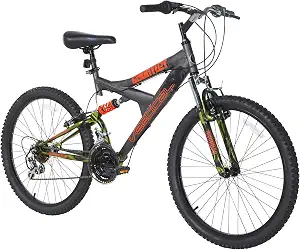
Full suspension is the first thing you notice about the Vertical Gauntlet 24 Inch, designed for kids or beginners who want a smooth ride on rough trails. Its main appeal lies in its front and rear shock absorbers, which handle bumps well and improve control on uneven paths.
Setting up the bike is straightforward since it arrives partially assembled. Shimano 21-speed grip shifters allow easy gear changes for climbing or cruising on flat terrain.
The adjustable seat helps find a comfortable riding position, and the knobby tires offer decent traction on dirt and pavement alike.
The carbon alloy steel frame feels sturdy and rugged, built to handle off-road conditions without trouble. Braking works well with front and rear V-brakes, giving reliable stopping power.
Some users find the bike heavier than expected, which can affect handling for smaller riders. The dual suspension soaks up trail impacts, but assembly instructions could be clearer for less experienced mechanics.
Strong points of the bike include effective shock absorption and dependable braking, helping riders stay in control on rough trails. A common criticism is the bike’s weight, which some find makes handling more difficult, especially for younger or smaller riders.
Those who want a tough, trail-ready bike with multiple speeds and reliable suspension will appreciate this model. Riders looking for something lighter or simpler to assemble might consider other options better suited for very small children or beginners who need easy setup.
Pros
- Dual suspension provides a comfortable ride
- Shimano 21-speed grip shifters for smooth gear changes
- Knobby tires suitable for various terrains
- Adjustable seat fits growing riders
Cons
- Heavier frame can be hard for smaller kids
- Assembly instructions lack detail
| Specification | Details |
|---|---|
| Bike Type | Mountain Bike |
| Number Of Speeds | 21 |
| Suspension Type | Dual |
| Brake Style | Linear Pull (V-Brakes) |
| Gear Shifter Type | Twist Grip (Shimano) |
| Frame Material | Carbon Alloy Steel |
12. Ktaxon 26/27.5 Inch 7-Speed Full Suspension Mountain Bike

Ideal for beginners hitting mountain or unpaved trails, this full suspension bike stands out by cutting down frame wobble during sharp turns. It suits riders who want better control in loose or rocky terrain without stepping up to a high-end model.
Its frame design and dual suspension deliver more confidence in handling than typical entry-level options.
Setup arrives mostly done; you only need to attach a few parts like the handlebar and pedals. The quick-adjust seat post makes finding a comfortable height quick and tool-free.
Seven gears shift sharply, allowing you to handle different terrains smoothly without lag. Tires grip well on gravel and dirt, supporting a smooth ride even on rough paths.
The steel frame feels solid and resists dents over time. Dual suspension cushions impacts front and rear, reducing rider fatigue on bumpy terrain. Sharp gear changes come from good derailleurs, adding to control.
Some find the linear pull brakes less powerful, especially on steep descents, which can require extra attention.
Dual suspension provides a noticeably smoother experience over rocks and roots, easing fatigue on longer rides. Brake power is often described as just adequate; extra caution is advised during steep descents or sudden stops. The frame is solid and built to last under tough conditions.
Riders new to full suspension and those who prioritize control and comfort on rough trails will find this bike a solid match. Those needing stronger braking or ready for professional-level components may want to explore other options. The bike balances durability, suspension, and terrain adaptability at a beginner-friendly level.
Pros
- Dual suspension cushions rough terrain effectively
- Sharp, reliable 7-speed gear shifting system
- Quick seat height adjustment without tools
- Frame resists deformation during rough rides
Cons
- Linear pull brakes can feel weak downhill
- Requires some assembly and brake tuning out of box
| Specification | Details |
|---|---|
| Bike Type | Mountain Bike |
| Number Of Speeds | 7 |
| Suspension Type | Dual |
| Brake Style | Linear Pull |
| Frame Material | High-carbon steel |
| Intended Terrain | Mountain Terrain, Unpaved Trails |
Best Beginner Full Suspension Mountain Bikes Comparison
| Product | Skill Level | Speeds | Brake Style | Gear Shifter Type |
|---|---|---|---|---|
| Full Suspension Mountain Bike | – | 21 | V Brake | Twist Grip |
| Aluminum Full Suspension Bike | Advanced | 21 | Disc | Trigger |
| Steel Frame Full Suspension Bike | Beginner | 21 | Disc | Twist Grip |
| SAVADECK Titan 612 MTB | – | 12 | Disc | Trigger |
| Aluminum Suspension Mountain Bike | Advanced | 21 | Disc | Trigger |
| Huffy Stone Mountain Bike | Beginner | 21 | Dual linear pull | Twist Grip |
| WEIZE 27.5 MTB | – | 21 | Disc | – |
| Mongoose Impasse Bike | – | 9 | Disc | Trigger |
| Max4out 7-Speed MTB | – | 7 | V Brake | Twist Grip |
| 27.5 Full Suspension MTB | – | 21 | Disc | Trigger |
| Dynacraft Gauntlet 24 MTB | – | 1 | Linear Pull | Twist Grip |
| Ktaxon 7-Speed MTB | – | 7 | Linear Pull | – |
- Skill Level–
- Speeds21
- Brake StyleV Brake
- Gear Shifter TypeTwist Grip
- Skill LevelAdvanced
- Speeds21
- Brake StyleDisc
- Gear Shifter TypeTrigger
- Skill LevelBeginner
- Speeds21
- Brake StyleDisc
- Gear Shifter TypeTwist Grip
- Skill Level–
- Speeds12
- Brake StyleDisc
- Gear Shifter TypeTrigger
- Skill LevelAdvanced
- Speeds21
- Brake StyleDisc
- Gear Shifter TypeTrigger
- Skill LevelBeginner
- Speeds21
- Brake StyleDual linear pull
- Gear Shifter TypeTwist Grip
- Skill Level–
- Speeds21
- Brake StyleDisc
- Gear Shifter Type–
- Skill Level–
- Speeds9
- Brake StyleDisc
- Gear Shifter TypeTrigger
- Skill Level–
- Speeds7
- Brake StyleV Brake
- Gear Shifter TypeTwist Grip
- Skill Level–
- Speeds21
- Brake StyleDisc
- Gear Shifter TypeTrigger
- Skill Level–
- Speeds1
- Brake StyleLinear Pull
- Gear Shifter TypeTwist Grip
- Skill Level–
- Speeds7
- Brake StyleLinear Pull
- Gear Shifter Type–
How to Choose the Right Beginner Full Suspension Bike
Choosing the right beginner full suspension bike means focusing on frame size, suspension quality, and weight. Matching these to your riding style and terrain ensures easier handling and less maintenance, which can prevent costly repairs and keep riding enjoyable from the start.
Frame Material and Quality
One common issue with entry-level trail bikes is the frame bending or developing cracks after just a few months of riding. This usually happens when the frame material can’t handle the constant impacts and vibrations of rough trails. Frames made from aluminum alloys offer a good balance between durability and weight, making handling smoother without slowing you down.
Steel frames tend to be heavier but have better shock absorption and can flex slightly under stress, which helps reduce rider fatigue on longer routes.
The long-term resistance to corrosion and wear also matters. Aluminum frames often come with anodized coatings that prevent rust and keep the bike looking new over time, especially if you ride in wet conditions or store your bike outdoors. Steel needs proper paint and regular maintenance to avoid rust spots.
Pay attention to the suspension pivot points and weld joints, high-quality manufacturing here reduces frame flex and improves impact absorption, making every trail feel less bumpy.
Suspension Performance
Riding over roots and rocks with just 80 to 120 millimeters of travel length usually suits beginner trails well. Too little travel makes bumps feel harsh and can tire your arms quickly.
Excessive travel adds unnecessary weight and complexity, making climbs harder than they need to be. A bike balanced around 100mm of travel generally smooths small obstacles while remaining efficient for pedal power on easy to moderate terrain.
Adjustability in suspension makes a big difference. Beginner-focused models often offer simple lockout or rebound settings, helping to dial in comfort and control without complicated tuning.
The ability to stiffen the suspension on smooth sections or soften it over rougher ground makes rides more enjoyable and less fatiguing. Look for bikes with easy-to-access dials or switches on the shock absorbers.
Shock absorber quality directly affects ride smoothness and durability. Lower-end models sometimes use basic coil springs or less refined dampers that can feel jerky.
Higher quality air shocks or well-tuned dampers absorb impacts more consistently and last longer under regular use. Reliable seals and serviceability options also mean fewer surprises down the trail.
Proper Sizing and Fit
Riding a bike with the wrong frame size quickly becomes uncomfortable and inefficient. For example, a frame that’s too big forces an awkward reach to the handlebars, causing arm fatigue and reducing control on rough trails. Matching the frame size to your height and inseam is critical; most manufacturers offer size charts where a person 5’6 to 5’9 typically fits a medium frame with a 16-18 inch seat tube length.
This fit helps maintain a balanced posture, reducing strain on knees and back during longer rides.
Comfort and stability come from geometry designed to distribute weight evenly and lower the center of gravity. Bikes with slacker head angles (around 65-67 degrees) give more confidence on descents, while slightly shorter top tubes keep the cockpit cozy without feeling cramped. Adjusting saddle height and handlebar position should be straightforward, as most models allow quick changes without tools.
Look for bikes offering adjustable stems and dropper posts, which make finding the right fit on varied terrain much smoother.
Component Reliability
Riding with a drivetrain that sticks or a brake system that falters often leads to frustration or safety issues, especially on rough terrain. Drivetrains with at least a 1×10 or 2×9 speed setup are common and reliable for beginners, using hardened steel or alloy gears to withstand frequent shifts and chain tension. Hydraulic disc brakes offer consistent stopping power and require less hand effort compared to mechanical ones, making descents safer.
Check for brake rotor sizes around 160mm to balance stopping power and heat dissipation.
The ease of maintenance plays a big role in how long components last without extra trips to the shop. Models with widely available replacement parts, like Shimano or SRAM components, make repairs and upgrades easier.
Compatibility also matters for future tweaks, a bike designed to work with standard bottom bracket and headset sizes opens options for better shocks or drivetrain parts down the line. This attention to component reliability means you spend more time on the trails and less time fixing gear.
Weight and Maneuverability
Carrying a bike up steep trail sections or loading it onto a car rack reveals how much weight matters. Bikes over 32 pounds quickly become tiring to handle, especially on long rides with frequent stops. Lighter frames, typically made from aluminum or carbon fiber, make daily transport and quick maneuvers easier.
A bike weighing around 28 to 31 pounds strikes a good balance, avoiding the clunkiness of heavier models without sacrificing durability.
Design features directly influence how the bike feels on tight corners or rough descents. Shorter chainstays and a lower center of gravity improve balance, while a slacker head angle (around 65 to 67 degrees) offers more predictable steering on variable terrain. For beginners tackling different trail conditions, these aspects reduce the risk of losing control.
Tires around 2.3 to 2.5 inches wide provide enough grip without bogging down the bike, while suspension travel of 120 to 140 mm keeps the ride smooth without overcomplicating handling.
Proper Maintenance Tips to Keep Your Full Suspension Mountain Bike Performing Smoothly
The suspension components on a full suspension mountain bike should be cleaned and lubricated regularly to avoid dirt buildup and premature wear. Use a damp cloth to wipe down the shocks and pivots immediately after rides in muddy or dusty conditions.
Avoid spraying direct water into seals to prevent damage.
Check for any play or unusual noises in the suspension pivots every few rides. Tighten or replace bearings as needed to maintain smooth movement. Keeping suspension fluid at the recommended levels by your bike’s manufacturer is important; this usually involves servicing the shocks annually or after about 100 hours of riding.
Other key maintenance tasks include:
- Lubricate the chain frequently with a suitable bike-specific lubricant to prevent rust and reduce drivetrain wear.
- Inspect and adjust brake pads for wear and alignment to ensure reliable stopping power.
- Tire pressure checks before each ride for optimal traction and comfort.
Regular maintenance extends the life of your bike and keeps ride quality consistent over time.
Common Mistakes Beginners Make When Riding and How to Avoid Them
Starting off on a full suspension mountain bike can be challenging without the right technique. Many beginners tend to keep their weight too far back, which affects control and balance on climbs and descents. Leaning slightly forward helps maintain traction, especially on uphill sections.
Another frequent issue is gripping the handlebars too tightly, which leads to quick fatigue and reduces bike responsiveness. Relaxed hands improve comfort and steering precision.
Braking mistakes are common too. Using the front brake abruptly can cause the bike to pitch forward, while relying only on the rear brake reduces stopping power. A balanced approach, applying both brakes smoothly, provides safer and more controlled stops.
Body positioning matters as well. Staying seated on rough downhill trails limits shock absorption and can tire the legs faster.
Standing up on the pedals allows the suspension to work better and prepares you for unexpected obstacles.
- Shift your weight slightly forward on climbs.
- Keep your grip firm but relaxed.
- Use both brakes evenly.
- Stand up to absorb bumps on descents.
Comparing Full Suspension Mountain Bikes to Hardtail Models: Which Is Right for You?
Full suspension mountain bikes have shock absorbers both at the front and rear, which significantly improves comfort and control on rough terrain. This type of bike handles rocks, roots, and drops much better than a hardtail, which only has front suspension.
The main differences between full suspension and hardtail models include:
- Ride comfort: Full suspension reduces rider fatigue by absorbing bumps more effectively.
- Weight: Hardtails tend to be lighter, making them more efficient on climbs and smoother trails.
- Maintenance: Full suspension bikes have more moving parts, requiring more frequent upkeep.
- Cost: Full suspension models usually cost more upfront and can have higher repair costs.
Choosing between the two depends on your local trail conditions and personal preferences. For rough, technical trails, full suspension offers better control.
For smoother paths or budget-conscious riders, a hardtail might be the more practical starting point.
People Also Asked
How Do I Choose the Right Size Full Suspension Mountain Bike?
Choose a bike size based on your height and inseam length; most brands provide size charts to help. Test sitting on the bike to see if you can comfortably reach the handlebars and pedals without overextending.
What Are Common Maintenance Tips for a Beginner Full Suspension Bike?
Regularly clean the bike, especially after muddy rides, and lubricate the chain to keep it running smoothly. Check suspension settings and tire pressure before each ride to avoid issues on the trail.
How Long Do Full Suspension Mountain Bikes Generally Last?
Full suspension bikes usually last 5 to 10 years with proper maintenance, but component upgrades may be needed sooner. Keep an eye on suspension wear and frame cracks to know when parts must be replaced.
Are Full Suspension Mountain Bikes Safe for Downhill Trails?
Full suspension bikes provide better control and shock absorption, making them suitable and safer for downhill trails compared to hardtails. Adjust suspension settings to fit your weight and trail conditions for improved safety.
What Should I Check for Compatibility with Aftermarket Bike Parts?
Check the bottom bracket, headset, and axle standards to ensure new parts fit your bike’s frame. Look at compatibility with your suspension system and brake mounts to avoid mismatched components that cause installation problems.
Conclusion
Choosing the right beginner full suspension mountain bike comes down to the frame size, shock quality, and reliable components. A frame that fits your height and riding style keeps you comfortable and in control. Good suspension absorbs bumps well without being overly complex.
Durable brakes and gears matter since they affect how well you handle trails and maintain the bike over time.
Consider where you’ll store the bike and how often you’ll ride. Smaller storage spaces may call for a more compact frame, and riding frequency should influence your budget and component quality. Use the comparison table and detailed picks above to find an option that fits your specific needs and setup.
That approach helps ensure the bike works well for you on every ride.