
Top 12 Best Car Battery for Power Inverter You Can’t Miss
Many people who rely on a power inverter discover that a cheap or ill-suited car battery can lead to frustrating problems like sudden power drops or quick battery drain. The best car battery for power inverter use needs to provide consistent, high output to keep electronics running smoothly, especially during extended use.
Without that, devices may shut off unexpectedly or the battery may fail prematurely, which can become a costly inconvenience.
Key factors in choosing a car battery for a power inverter include the battery’s reserve capacity and cold cranking amps (CCA). A battery with a reserve capacity of at least 100 minutes ensures longer power availability without the engine running.
High CCA ratings, often 600 or above, help the battery start vehicles reliably in cold conditions if needed. Batteries with maintenance-free designs and sealed lead-acid construction reduce the risk of leaks and simplify cleaning, which is important when dealing with sensitive electronics.
Need a Quick Check?
| Image | Product | Price |
|---|---|---|
Our Top Picks 1 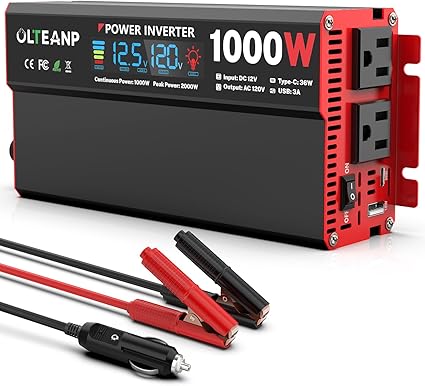 | Power Inverter 1000W Basic | Check Price |
Our Top Picks 2  | Power Inverter 1200W USB AC | Check Price |
Our Top Picks 3 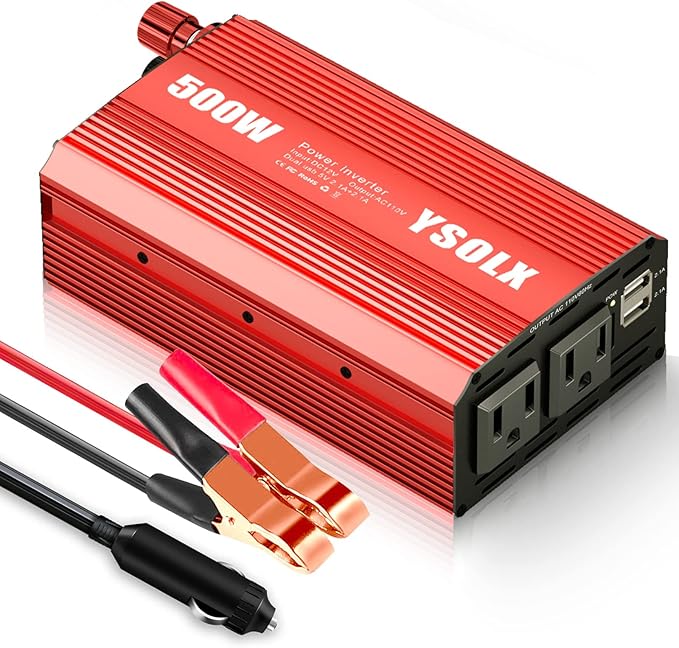 | Power Inverter 500W Basic | Check Price |
Our Selected Top 12 Car Battery for Power Inverter for Every Budget
This list features a variety of car batteries designed for use with power inverters, covering different budgets and needs. Each review explains the battery’s performance, ideal user scenarios, and highlights its advantages and drawbacks for a clear understanding of suitability.
1. Power Inverter 1000W 12V to 110V AC
When you’re on the road or camping and need to power small devices, this 1000W inverter turns your 12V battery into a reliable AC outlet. It works well for those needing consistent power for laptops, TVs, or chargers away from home.
Its main strength lies in delivering steady, modified sine wave output up to 1000W continuously.
Setup is straightforward, connecting directly to a 12V battery, including solar setups. Having two outlets means you can run a couple of devices at once. The LCD display keeps you updated on voltage and power status, making daily use simple.
It’s designed to fit into car or truck travel routines without needing much extra attention.
The inverter handles power conversion smoothly, providing a dependable source for small household electronics. The build is solid enough for outdoor use, though the modified sine wave can cause minor noise in sensitive equipment. It’s praised for reliable continuous output but does not support very sensitive electronics perfectly.
This inverter provides steady power with a strong continuous 1000W output, praised for reliability during road trips and outdoor use. The most common drawback is the modified sine wave output leading to noise on certain electronics, limiting its use with sensitive equipment.
It suits those who need a dependable power source for basic devices like laptops and TVs while traveling or camping. Users requiring pure sine wave output for delicate or high-end electronics should look for other options.
Pros
- Good continuous power output at 1000W
- Two AC outlets for multiple devices
- Clear LCD display for monitoring
- Works with solar and battery power
Cons
- Modified sine wave can cause noise on sensitive devices
- Lack of pure sine wave limits device compatibility
| Specification | Details |
|---|---|
| Power Source | Solar and Battery Powered |
| Wattage | 1000 watts |
| Number of Outlets | 2 |
| Input Voltage | 12 volts_of_direct_current |
| Output Power | 1000 watts |
| Peak Output Power Watts | 2000 |
2. Power Inverter 1200W with USB and AC Outlets
1200W peak output power makes it easy to run several devices at once from your car battery. Perfect for road trips, camping, or daily commutes where you need reliable power for gadgets.
Its biggest strength is handling multiple outlets without faltering, so you don’t have to juggle what’s plugged in.
Setting it up is simple, plug into a 12v DC source and start using the three AC outlets, one Type-C, and three USB ports right away. The LCD screen keeps track of your input voltage and battery status in real time, making it straightforward to monitor power levels.
The quiet cooling fan only comes on when necessary, so it won’t distract you during long drives.
The inverter delivers steady 110v output and manages up to 1200 watts peak power consistently. It’s built to last with a smart cooling system that prevents overheating without constant noise.
Most users praise its quiet operation and reliable power delivery, though some have mentioned the size can be bulkier than expected for tight spaces.
The quiet operation and detailed LCD monitoring are frequently highlighted as the strongest features. The main downside mentioned is the size, which some find too large to comfortably fit in tight vehicle spaces. Fan noise sometimes increases during high power draw but remains manageable.
People wanting to power multiple devices simultaneously will appreciate the range of outlets and dependable wattage. Those with limited space or very noise-sensitive environments might want to look for smaller or less powerful units instead.
Pros
- Multiple outlets for AC and USB charging
- Intelligent temperature-controlled fan
- Real-time LCD monitor of voltage and battery
- Quiet operation during normal use
Cons
- May be bulky for small car spaces
- Fan noise can be noticeable under heavy load
| Specification | Details |
|---|---|
| Wattage | 1200 watts |
| Input Voltage | 12 volts_of_direct_current |
| Output Voltage | 110 volts_of_alternating_current |
| Peak Output Power Watts | 1200 |
| Frequency | 60 hertz |
3. Power Inverter 500W 12V to 110V AC
Anyone needing portable power on the road or at a campsite will appreciate this 500W inverter. It can handle a good range of devices up to 500 watts, making it ideal for travel or emergency backup. Its biggest strength is the option to plug directly into a car battery or use the cigarette lighter for lower power devices.
Setup is straightforward with two connection modes. For small devices like phones or cameras, the cigarette lighter plug works fine up to 150W. Heavier appliances require connecting the alligator clips directly to the battery.
Two AC sockets and two USB ports provide flexibility to charge multiple items at once during travel or outdoor work.
The inverter reliably converts 12V DC to 110V AC with a modified sine wave output, sufficient for most small electronics and tools. Build quality feels solid but basic. Most users appreciate its dual connection mode.
A common complaint is the power limit when using the cigarette lighter, which restricts higher wattage devices to the battery clips only.
The inverter’s ability to switch between cigarette lighter and battery clip connections is praised for flexibility. The main drawback noted is the 150W limit when using the cigarette lighter, requiring battery clips for heavier devices.
People needing power on the go for smaller gadgets or occasional use will find this inverter convenient. Those wanting to run higher wattage equipment regularly or needing a pure sine wave output might prefer a different model.
Pros
- Two AC sockets plus two USB ports
- Dual connection: cigarette lighter or battery clips
- Supports up to 500 watts output
- Suitable for travel and emergency use
Cons
- Limited to 150W via cigarette lighter plug
- Output is modified sine wave, not pure sine wave
| Specification | Details |
|---|---|
| Power Source | Solar and Battery Powered |
| Wattage | 500 watts |
| Output Voltage | 110 volts |
| Number of Outlets | 4 |
| Input Voltage | 12 volts |
4. Power Inverter 500W 12V with USB and AC Outlets

Power Inverter 500W 12V with USB and AC Outlets stands out with its ability to easily switch between plugging into a car’s cigarette lighter or connecting directly to the car battery for higher power needs. Ideal for anyone needing reliable portable power for camping or on-the-go charging, it delivers a steady 500W with a peak of 1000W, enough for most small devices and gadgets.
Setting it up is straightforward, use the lighter adapter for devices under 150W or connect the provided battery clamps to your car battery to harness the full 500W power capacity. Daily charging of tablets, laptops, or lights is simple, with USB and AC outlets ready to go. The built-in safety features help you feel secure during extended use.
Performance-wise, it reliably powers devices without significant drops in output, maintaining a steady 120V output from the car’s 12V supply. The solid construction feels durable, and the included clamps make direct battery connection easy.
Some users mention the limitation of 150W when using the cigarette lighter, requiring direct battery attachment for higher wattage.
Users appreciate the ability to switch between lighter plug and battery clamps to match their power needs, making it versatile for various devices. The most common drawback is the wattage limit when using the cigarette lighter, pushing some to connect directly to the battery.
Those needing moderate power for camping gadgets or light work while driving will find it useful. For larger power demands consistently above 150W, a different model with higher lighter socket output might be a better choice.
Pros
- 500W continuous power with 1000W peak output
- Plug-in or battery clamp options for power source
- Includes both USB and AC outlets
- Built-in safety system for secure operation
Cons
- Only 150W output via cigarette lighter socket
- Direct battery connection required for higher loads
| Specification | Details |
|---|---|
| Wattage | 500 watts |
| Input Voltage | 12 volts_of_direct_current |
| Output Voltage | 120 volts |
| Peak Output Power Watts | 1000 |
5. Modified Sine Wave Power Inverter 1000W 12V to 120V

Modified Sine Wave Power Inverter 1000W 12V to 120V lets you power household devices from a 12V vehicle battery. Designed for those needing reliable, moderate-power conversion for electronics and tools, its main strength lies in handling up to 1000W continuously with a surge capacity for startup power.
Setup is straightforward with included red and black clamp cables that connect directly to a car battery, no cigarette lighter plug necessary or provided. Day-to-day use covers running laptops, TVs up to 50 inches, game consoles, and power tools within the 1000W rating. Keep in mind that devices should be compatible with a modified sine wave output to avoid performance issues.
Converts 12V DC to a 120V AC modified sine wave smoothly, supporting surges up to 2000W needed for motorized tools and startup spikes. The build is solid without unnecessary bulk, but some users find noise and wave shape differences noticeable compared to pure sine wave inverters.
Reliable for many devices, though less ideal for sensitive electronics that demand a pure sine wave.
The inverter is praised for handling surge power demands well, allowing tools and motors to start without shutting down. Some users note the modified sine wave output can cause noise or compatibility issues with sensitive electronics.
Best suited for those powering general household electronics and tools from a car battery requiring moderate wattage. People needing pure sine wave output for sensitive devices should look for dedicated pure sine wave inverters instead.
Pros
- Supports surge power up to 2000 watts
- Direct battery connection with included clamps
- Runs wide range of devices up to 1000W
- Compact and easy to set up
Cons
- Produces a modified sine wave, not pure sine wave
- No cigarette lighter plug for easier vehicle connection
| Specification | Details |
|---|---|
| Power Source | Battery Powered |
| Wattage | 1000 watts |
| Input Voltage | 12 volts |
| Output Voltage | 120 volts_of_alternating_current |
| Peak Output Power Watts | 2000 |
| Electrical Output Waveform | Modified Sine Wave |
6. Power Inverter 1000W 12V with USB and AC Outlets

Running a power inverter smoothly feels straightforward with this model, especially when you want reliable AC and USB outlets on the go. Perfect for camping or emergency backup, its biggest strength lies in balancing solid power output with handy charging options.
Setup involves plugging into a 12V DC battery, and from there you get two 110V AC outlets plus two USB ports that cover quick charge needs. The digital display helps keep an eye on output, making day-to-day use practical for laptops, tablets, or smaller electronics.
It also handles car cigarette lighter connections for smaller devices, adding flexibility wherever you are.
Performance holds up well at delivering a continuous 750 watts with peak surges up to 1000 watts, enough for many portable power needs. The unit runs on a modified sine wave, which suits most devices but might affect sensitive electronics.
Reviews praise its power stability and ease of use, while common complaints mention the modified sine wave isn’t ideal for all equipment.
Power delivery stays consistent with a clear display for monitoring, which most praise as reliable. The modified sine wave output raises concerns for users with equipment needing pure sine waves, limiting universal device compatibility.
Those needing sturdy, versatile power for camping or small-scale electronics will find it effective. People with high-sensitivity gear should consider different inverters offering pure sine wave output for better device protection.
Pros
- Two 110V AC outlets for various devices
- USB ports with fast charging capability
- Digital display shows output status clearly
- Supports peak power surges up to 1000 watts
Cons
- Modified sine wave may not suit sensitive electronics
- Continuous power rating lower than peak output power
| Specification | Details |
|---|---|
| Input Voltage | 12 volts_of_direct_current |
| Output Power | 1000 watts (peak) |
| Number of Outlets | 4 (2 AC, 2 USB) |
| Electrical Output Waveform | Modified Sine Wave |
| Display Type | digital |
7. Power Inverter 400W 12V to 110V AC

Perfect for anyone needing a reliable power source on the go, it offers a steady 400W output ideal for running small appliances safely. Its biggest strength lies in handling multiple devices at once without overloading or fuss.
Setup involves plugging into a standard 12V car battery, and day-to-day use is smooth thanks to the dedicated AC switch that lets you control power without unplugging anything. Charging multiple gadgets simultaneously is simple with a combination of USB-A, Type-C, and AC outlets, all powered from one unit.
Delivers clean and stable electricity well, supporting devices like laptops and small fans efficiently. The build feels solid with thoughtful features such as intelligent cooling that keeps it from overheating.
Reviews often mention how reliably it powers various devices, while some note the modified sine wave may not suit very sensitive electronics.
The strongest praise highlights the convenience of powering several devices at once without unplugging, while the most common feedback warns that the modified sine wave output may affect sensitive gadgets negatively. It handles everyday electronics like phones and small fans without trouble.
Those who need reliable, moderate power for camping or road trips will appreciate its versatility. Anyone requiring pure sine wave power for delicate equipment should look for a different model.
Pros
- Supports multiple devices simultaneously
- Dedicated AC switch for easier control
- Intelligent cooling prevents overheating
- Includes fast-charging Type-C ports
Cons
- Modified sine wave not ideal for all electronics
- Limited to 400W continuous power output
| Specification | Details |
|---|---|
| Power Source | Battery Powered |
| Wattage | 400 watts |
| Input Voltage | 12 volts_of_direct_current |
| Output Power | 400 watts |
| Peak Output Power Watts | 800 |
| Electrical Output Waveform | Modified Sine Wave |
8. Power Inverter 1000W with USB and AC Outlets

Solidly built with a focus on practical power delivery, this power inverter suits drivers who need reliable energy for small electronics on the road. Its key advantage is providing a 1000W peak surge that handles various devices without pushing your vehicle’s battery too hard.
Setup involves plugging into a 12-volt DC source, which is pretty straightforward. Three outlets let you connect multiple gadgets like phones, laptops, and lights simultaneously. The LCD display keeps you informed about power status, and the modified sine wave output ensures most everyday devices run without fuss, despite being budget-friendly.
It performs the core function of converting 12V DC to 110V AC with decent efficiency, over 90% during regular use. The durable construction supports frequent use, but some users mention it can be a bit noisy during operation.
Power delivery stays stable, and the surge protection covers sudden spikes effectively, though it might not handle highly sensitive electronics requiring pure sine wave.
Users value the stable power supply and ability to run common devices like phones and laptops without complications. The most frequent downside cited is the operational noise, which can be distracting in quiet environments.
Those needing reliable power for standard gadgets while on the move will find this inverter reliable and practical. Individuals requiring super clean power for sensitive tools should look for a pure sine wave model instead.
Pros
- Supports 3 simultaneous device connections
- High conversion efficiency over 90%
- LCD display shows real-time power info
- Surge protection rated at 1000 watts
Cons
- Modified sine wave may affect sensitive electronics
- Noticeable noise during operation
| Specification | Details |
|---|---|
| Peak Output Power Watts | 1000 |
| Wattage | 500 watts |
| Input Voltage | 12 volts_of_direct_current |
| Number of Outlets | 3 |
| Output Voltage | 110 volts |
| Electrical Output Waveform | Modified Sine Wave |
9. Pure Sine Wave Inverter 3000W 12V to 120V AC

Offering a solid 3000W of continuous clean power, this 12V to 120V AC pure sine wave inverter fits well for anyone needing reliable energy conversion. Its biggest strength lies in delivering grid-quality power that protects sensitive electronics, making it suitable for RVs, homes, solar setups, or emergency use.
Setting up is straightforward as it runs off a 12V DC power source, common in vehicles and solar battery systems. You can easily connect various appliances, from coffee machines to refrigerators, knowing it handles heavy startup loads smoothly. The LED display keeps track of output status, and its over 91% efficiency minimizes wasted energy during daily use.
This inverter performs consistently at converting DC to AC power with little interference or noise, supporting inductive and capacitive loads silently. Its build supports a peak surge of 6000W, which means devices with high startup currents aren’t an issue.
The main compliments focus on its stable output and quiet operation, while the typical downside mentioned is the unit’s weight, making it less ideal for frequent moves.
Strongest praise highlights consistent grid-quality power output with minimal noise, ideal for sensitive devices. The most common complaint centers around the weight, which can be inconvenient for those needing frequent portability.
People using fixed solar or RV setups valuing clean and stable power will find it reliable. Those needing a lightweight, highly portable inverter might consider other options better suited to frequent transport.
Pros
- Provides 3000W continuous pure sine wave power
- Handles heavy startup loads up to 6000W surge
- Over 91% energy conversion efficiency
- Quiet and clean power output
Cons
- Heavier than some portable models
- No mention of built-in cooling fan noise levels
| Specification | Details |
|---|---|
| Power Source | Solar and Battery Powered |
| Wattage | 3000 watts |
| Voltage | 12 volts_of_direct_current |
| Output Voltage | 120 |
| Conversion Efficiency | > 91% |
| Peak Output Power Watts | 6000 |
10. Power Inverter 1000W 12V to 110V/120V AC

Choosing a car battery to power a 1000W inverter means balancing high output with reliable connections. The Power Inverter 1000W 12V to 110V/120V AC fits well for anyone needing solid power for tools or appliances on the go.
Its biggest strength lies in providing stable 1000 watts continuous power with a good surge capacity of 2000 watts.
Setting it up is straightforward as it runs off a 12V car battery, making it perfect for car, truck, RV, or camping use. The unit has three AC outlets plus several fast-charging USB ports, allowing charging and usage of multiple devices at once.
Connecting items like laptops or mini-fridges is simple while keeping your vehicle powered with two 12V cigarette lighter ports.
The inverter handles power demands well, delivering consistent 1000W output and supporting a 2000W surge for brief spikes in demand. Built with high-frequency transformers and pure copper cables, it feels sturdy and durable.
Users often mention its reliable charging capabilities, although some note the output waveform is modified sine wave rather than pure sine, which may affect sensitive electronics.
The inverter’s steady power output and multiple ports consistently support a variety of devices without interruption. Most users appreciate the solid build and ease of use, though the modified sine wave may cause minor issues with sensitive electronics such as some laptops or specialized tools.
This inverter suits those needing strong, portable power for multiple gadgets and small appliances from a vehicle’s 12V system. Those requiring pure sine wave output for sensitive gear should consider other models designed specifically for clean power delivery.
Pros
- 1000 watts continuous with 2000 watts surge power
- Multiple charging ports for six devices simultaneously
- Compatible with 12V car battery power source
- Includes dual 12V cigarette lighter ports
Cons
- Modified sine wave output can affect sensitive devices
- Relies entirely on external 12V car battery
| Specification | Details |
|---|---|
| Input Voltage | 12 volts |
| Output Power | 1000 watts |
| Peak Output Power Watts | 2000 |
| Electrical Output Waveform | Modified Sine Wave |
| Number of Outlets | 3 |
| Frequency | 60 hertz |
11. XS Power D3400 12V AGM High Output Battery

Running a power inverter calls for a battery that keeps energy steady without frequent fuss. Perfect for boat or car use, this 12 Volt AGM battery shines by handling heavy-duty power demands with ease. Its biggest strength lies in maintaining consistent voltage while resisting vibrations and spills during travel.
Setting up involves a universal fit that works with most vehicles thanks to M6 terminals. The spill-proof and sealed design means no worries about leaks during daily use. The valve regulation adds to safety by controlling pressure build-up, and the low internal resistance allows you to mount it almost anywhere without losing performance.
The battery delivers strong output with an 80 amp-hour capacity and calcium rating of 1000, which supports long-lasting power for your inverter. The absorbent glass mat keeps electrolyte stable, ensuring durability in rough conditions.
Some note the weight as a downside and occasional issues with mounting space, but many appreciate its reliable performance day after day.
Strong output and spill-proof design make power delivery reliable even in vibration-prone environments. Some find its weight a challenge when handling or installing, needing extra care in tight compartments.
This battery suits those needing steady power for vehicle or boat inverters and who value spill safety. Those looking for a lighter option or very compact fit might consider alternatives tailored for smaller spaces.
Pros
- Spill proof and sealed for safety
- Compatible with boats and passenger cars
- Ultra low internal resistance
- Can be mounted in almost any position
Cons
- Relatively heavy compared to other batteries
- May require careful fitting in tight spaces
| Specification | Details |
|---|---|
| Voltage | 12 volts |
| Battery Capacity | 80 amp_hours |
| Ca Rating | 1000 |
| Terminal | M6 |
| Number Of Cells | 6 |
| Automotive Fit Type | Universal Fit |
12. XS Power D6500 12V AGM High Output Battery

Delivering a high 1070 cold cranking amps, this 12V AGM battery suits anyone needing reliable power for vehicles or power inverters. Its standout feature is its ultra-low internal resistance, promising strong and steady current output in demanding situations.
Setting it up is straightforward since it mounts in nearly any position, which is handy for tight engine bays or custom installations. Its sealed, spill-proof design means no worries about maintenance or leaks, and the vibration resistance helps keep everything intact during rough rides or boat trips.
Performance excels with its 75 Ah capacity, supplying steady energy for extended periods, especially useful when running inverters. Built with Absorbed Glass Mat technology, it keeps electrolyte safely suspended, adding durability and safety.
Reviews often praise its strong output and reliability, although some mention that its weight can make it a bit harder to handle.
The battery’s strongest praise is its reliable and powerful output, holding up well under continuous use, especially with inverters. The most common complaint involves its weight, which can make it awkward to maneuver during installation or removal.
Ideal for those needing a dependable, maintenance-free power source in cars or boats, particularly when consistent energy flow is critical. Anyone requiring a lightweight or universal fit battery might want to consider other options better suited to those needs.
Pros
- Ultra low internal resistance for steady power delivery
- Spill proof and sealed for no maintenance
- Vibration resistant for rough conditions
- Flexible mounting position
Cons
- Relatively heavy, making installation tougher
- Limited to vehicle-specific fit, not universal
| Specification | Details |
|---|---|
| Voltage | 12 volts |
| Cold Cranking Amps (CA) | 1070 |
| Battery Capacity | 86 amp_hours |
| Number Of Cells | 6 |
| Terminal | M6 |
Comparison of Best Car Batteries for Power Inverters
| Product | Wattage | Input Voltage | Output Voltage | Battery Capacity |
|---|---|---|---|---|
| Power Inverter 1000W Basic | 1000 watts | 12 volts DC | 120 volts AC | – |
| Power Inverter 1200W USB AC | 1200 watts | 12 volts DC | 110 volts AC | – |
| Power Inverter 500W Basic | 500 watts | 12 volts | 110 volts | – |
| Power Inverter 500W USB AC | 500 watts | 12 volts DC | 120 volts | – |
| Modified Sine 1000W Inverter | 1000 watts | 12 volts | 120 volts AC | – |
| Power Inverter 1000W USB AC | 1000 watts | 12 volts DC | 110 volts | 100 amp hours |
| Power Inverter 400W Basic | 400 watts | 12 volts DC | 110 volts AC | – |
| Power Inverter 1000W USB AC | 500 watts | 12 volts DC | 110 volts | – |
| Pure Sine 3000W Inverter | 3000 watts | 12 volts DC | 120 volts | – |
| Power Inverter 1000W Dual Voltage | 1000 watts | 12 volts | 110 volts | – |
| XS Power D3400 Battery | 12 volts | – | – | 80 amp hours |
| XS Power D6500 Battery | 12 volts | – | – | 86 amp hours |
- Wattage1000 watts
- Input Voltage12 volts DC
- Output Voltage120 volts AC
- Battery Capacity–
- Wattage1200 watts
- Input Voltage12 volts DC
- Output Voltage110 volts AC
- Battery Capacity–
- Wattage500 watts
- Input Voltage12 volts
- Output Voltage110 volts
- Battery Capacity–
- Wattage500 watts
- Input Voltage12 volts DC
- Output Voltage120 volts
- Battery Capacity–
- Wattage1000 watts
- Input Voltage12 volts
- Output Voltage120 volts AC
- Battery Capacity–
- Wattage1000 watts
- Input Voltage12 volts DC
- Output Voltage110 volts
- Battery Capacity100 amp hours
- Wattage400 watts
- Input Voltage12 volts DC
- Output Voltage110 volts AC
- Battery Capacity–
- Wattage500 watts
- Input Voltage12 volts DC
- Output Voltage110 volts
- Battery Capacity–
- Wattage3000 watts
- Input Voltage12 volts DC
- Output Voltage120 volts
- Battery Capacity–
- Wattage1000 watts
- Input Voltage12 volts
- Output Voltage110 volts
- Battery Capacity–
- Wattage12 volts
- Input Voltage–
- Output Voltage–
- Battery Capacity80 amp hours
- Wattage12 volts
- Input Voltage–
- Output Voltage–
- Battery Capacity86 amp hours
How to Choose the Best Car Battery for Power Inverters
Choosing the right car battery for a power inverter involves focusing on capacity, durability, and compatibility with your inverter’s power needs. Selecting a battery that reliably supports your device prevents frequent replacements and ensures efficient energy use, ultimately saving money and avoiding operational issues.
Battery Capacity and Power Output
Sitting through unexpected power outages or long road trips with a weak battery often means the inverter can’t deliver its promised runtime. The battery’s amphour (Ah) rating measures how much current it can provide over time, a higher Ah means longer use before a recharge is needed.
Watching this number is crucial because it directly impacts how long your inverter can power devices.
Besides capacity, the battery must meet the inverter’s continuous current and surge demands. The surge rating covers the ability to handle short bursts of high power from devices starting up. Matching these specs avoids sudden shutdowns or damage.
Choosing a battery with an Ah rating that aligns with your average load and expected run time avoids undersizing and constant recharging hassles.
Compatibility and Fit
Many skip checking the physical size until the battery arrives and won’t fit the vehicle’s engine bay or inverter setup. Dimensions are not one-size-fits-all, so measuring space and comparing it to the battery specs saves the frustration of returns or forced adjustments.
Torque on terminals during installation can loosen connections if the terminal type and position don’t match. Manufacturer details on terminal placement and style matter for tight, secure wiring.
Also, verifying that the battery’s voltage matches the car’s and inverter’s requirements keeps all components running smoothly and reduces the risk of electrical issues.
Battery Type and Chemistry
The choice between lead-acid, AGM, and lithium batteries shows up in daily maintenance and longevity. Lead-acid models work but require topping off fluids and won’t handle deep discharges well. AGM batteries need less upkeep and handle deep cycles better but cost more.
Lithium options are lighter and last longer with frequent deep discharge cycles but come with higher upfront price tags.
Durability plays a major role when powering an inverter; using a battery not designed for repeated deep cycling leads to sulfation buildup and faster degradation. Batteries explicitly rated as deep cycle resist this and maintain capacity longer, making daily use more reliable.
Durability and Safety Features
Early battery failure often links to poor heat and vibration resistance, especially in automotive environments. Batteries built with protections against overcharging and temperature extremes last longer and reduce risks during heavy use.
Features that resist leaks and corrosion help avoid damage to the vehicle and inverter connections over time.
Knowing a battery complies with recognized safety standards for automotive and power applications adds confidence. This compliance checks the battery’s resilience to real-world stresses and assures safer performance when powering sensitive devices through your inverter.
Warranty and Maintenance Requirements
Short warranties can add unexpected costs if a battery fails prematurely. Longer warranty periods typically indicate better build quality and give a straightforward path for replacements or repairs.
Reviewing what the warranty covers helps set realistic expectations for battery lifespan under inverter loads.
Maintenance demands vary widely: some batteries require regular electrolyte level checks, others just need monitoring of voltage or state-of-charge indicators. Batteries with built-in health monitoring make it easier to avoid sudden failures and plan replacements before a device stops running.
Optimizing Battery Performance for Power Inverter Efficiency
The power capacity of a car battery plays a crucial role in how well a power inverter performs. A battery designed to handle high current draw without dropping voltage ensures consistent inverter output.
Lead-acid batteries with higher cold cranking amps (CCA) ratings usually provide better performance for inverters, especially under heavy loads. Keeping the battery fully charged is another key factor. A partially drained battery will reduce the available voltage and can cause the inverter to shut down or produce unstable power.
Wiring quality and connection security directly affect power flow. Use heavy-gauge cables to minimize voltage drop between the battery and inverter.
Ensure terminal clamps are tight and free from corrosion to maintain proper current flow. This approach helps avoid power spikes or drops that could damage sensitive electronics connected to the inverter.
Essential Maintenance Practices to Extend Car Battery Life
Routine maintenance extends the life of a car battery used with a power inverter. Regularly check the battery terminals for corrosion, which can prevent efficient charging and discharging.
Cleaning terminals with a mixture of baking soda and water restores good contact. Maintaining the electrolyte level in non-sealed lead-acid batteries is important; topping off with distilled water keeps the plates fully submerged. Avoid letting the battery fully discharge as deep discharges significantly reduce battery longevity.
It is also helpful to test the battery voltage periodically using a multimeter, ensuring it remains within optimal operating ranges. When storing a battery for extended periods, keep it charged and in a cool, dry place to slow down self-discharge and prevent damage from freezing temperatures.
Common Mistakes to Avoid When Using Car Batteries with Power Inverters
A common error when pairing car batteries with power inverters is using a battery that lacks sufficient capacity, leading to performance issues and potential damage. Undersized batteries quickly drain and may cause the inverter to shut off under load. Another mistake is connecting the inverter directly without a proper fuse or circuit breaker.
This oversight can result in electrical shorts or fires in case of faults. Using thin or long cables increases resistance and voltage drop, reducing power delivery to the inverter.
Ignoring manufacturer recommendations on battery and inverter compatibility limits effectiveness and durability. Overcharging the battery with incompatible charging systems or leaving it discharged for long periods also damages battery health. Careful attention to these details helps prevent costly repairs or replacements.
People Also Asked
How Do I Size a Car Battery for a Power Inverter?
Choose a battery with enough amp-hour capacity to cover the inverter’s total wattage load. Match the voltage of the battery to the inverter requirements, usually 12 volts. Check the inverter’s continuous power rating to avoid overloading the battery or causing quick discharge.
What Safety Precautions Are Needed When Using a Battery with Inverter?
Avoid sparks and short circuits by keeping battery terminals clean and connections tight. Use proper fuses or circuit breakers between the battery and inverter to prevent damage. Work in a well-ventilated area to prevent buildup of explosive gases when charging or using the battery.
How Long Does a Car Battery Typically Last with Power Inverter Use?
Battery life varies widely, often between 1 to 5 hours under continuous inverter load, depending on the battery size and inverter draw. Lead-acid batteries drain faster with high loads and should not be discharged beyond 50% to preserve lifespan.
Can I Use Any Car Battery with a Power Inverter Safely?
Not all car batteries suit inverters; deep cycle or dual-purpose batteries are better than standard starter batteries. Starter batteries provide short bursts of power needed for engines but can wear out quickly under continuous power draw from an inverter.
What Are Common Problems When Using Car Batteries for Power Inverters?
Common issues include battery overheating, rapid discharge, and sulfation from repeated deep discharges. Using an inverter at a higher load than the battery can provide leads to shortened battery life and poor inverter performance.
Conclusion
Capacity and durability matter most when choosing a car battery for a power inverter. The battery needs enough amp-hours to support your devices for the time you need. Also, a battery that handles frequent charging and discharging will last longer.
Voltage compatibility with your inverter ensures safe and efficient power transfer.
Consider the space available in your vehicle and your budget before deciding. How often you plan to use the inverter plays a role too; occasional use calls for different features than daily operation.
Check the comparison table and the picks above to find the battery that fits your needs best.