
Top 12 Best Circular Saw Blade for Metal You Can’t Miss!
Cutting metal with a standard circular saw blade often results in slow progress, excessive wear, and a rough, uneven edge. Those searching for the best circular saw blade for metal know the frustration of dealing with blades that dull quickly or cause the saw to bog down.
Poor choices can also increase the risk of kickback, making the job not only harder but less safe.
The best circular saw blade for metal typically features carbide-tipped teeth designed to stay sharp through tougher materials. Tooth count usually ranges from 60 to 100, balancing smooth cuts with durability.
Blade diameter around 7 ¼ inches fits most standard saws, but proper mounting and matching the blade’s RPM rating to the saw’s speed are crucial to prevent damage and ensure control. Heat resistance and easy debris clearance also make a noticeable difference during extended use.
Need a Quick Check?
| Image | Product | Price |
|---|---|---|
Our Top Picks 1  | DEWALT DW3330 Blade | Check Price |
Our Top Picks 2  | Diablo Steel Demon Cermet II | Check Price |
Our Top Picks 3  | DEWALT DW3329 Blade | Check Price |
Our Selected Top 12 Circular Saw Blade for Metal You Can Trust
This list features carefully chosen circular saw blades designed specifically for cutting metal. Each review covers performance details, ideal users, and highlights the advantages and limitations to help you make an informed decision based on your cutting needs.
1. DEWALT Circular Saw Blade DW3330
Sharp cutting and solid build stand out immediately with this 7-1/4 circular saw blade made for steel and iron. Ideal for those working on metal projects who want a blade that feels reliable and easy to handle, its biggest draw is how straightforward it is to use without fuss.
Setting it up on your circular saw is simple; the 7-1/4 size fits most standard models. Handling during work feels balanced and controlled, which is important when you’re cutting metal. The blade cuts steadily without needing constant adjustments, making day-to-day tasks less taxing, especially for quick or repetitive cuts.
The blade holds up well cutting steel and iron, showing itself to be tough enough for typical metalworking jobs. It’s manufactured in China but meets expectations for build quality within this price range.
Strongest praise revolves around its ease of use and dependable cutting performance, while some note it might wear down faster with heavy, continuous use.
People commonly say it cuts metal smoothly and stays easy to handle during work. At the same time, some notice the blade can dull quicker than expected with frequent or intense use.
Anyone needing a reliable 7-1/4″ blade for occasional steel or iron work will appreciate this option. Those working on heavy-duty projects regularly might look for something more durable to withstand constant wear.
Pros
- Fits standard 7-1/4″ circular saws
- Easy to install and use
- Suitable for steel and iron cutting
- Solid build quality for price
Cons
- May wear faster under heavy use
- Manufactured in China, not domestic
| Specification | Details |
|---|---|
| Brand Name | DEWALT |
| Model | DW3330 |
| Unit Count | 1 Count |
| Number of Packs | 1 |
| Item Type Name | Dewalt – DW3330 |
| Part Number | DW3330 |
2. Diablo Steel Demon Cermet II Saw Blade
Cutting metal without overheating is tricky, but the Diablo Steel Demon Cermet II Saw Blade handles it better than most. Perfect for anyone working regularly with steel, its main strength lies in cooler cutting that avoids discoloring metal and extends blade life far beyond standard grinding discs.
Setup is straightforward, fitting a 7-1/4 inch circular saw with 48 teeth designed specifically for metal. Daily use benefits from the Cermet II teeth, which tolerate high heat and stay sharp longer.
You won’t need to swap out blades as often, which keeps your workflow smooth and saves money over time.
Performance on metal is impressive, slicing through with minimal heat build-up, up to 50 times cooler cuts than typical grinding discs. This means less discoloration and warping on steel pieces.
The blade feels solid and durable, made by Freud with quality materials. The one downside reported is that it may not cut as fast through thicker metals compared to some specialty blades.
The blade’s cooler cutting ability stands out as its best feature, keeping steel from overheating and discoloring. The main limitation is that it is not the fastest option for thicker metal materials, which some might find a drawback depending on their projects.
Those frequently cutting medium-thin steel will find this blade very reliable and cost-effective. For heavy-duty or thick metal cutting, selecting a blade optimized for speed might be more suitable.
Pros
- Longer life than standard grinding discs
- Cooler cutting reduces metal discoloration
- Fits standard 7-1/4 inch circular saws
- High heat tolerance with Cermet II teeth
Cons
- Slightly slower on thicker metals
- Single pack only, no bulk options
| Specification | Details |
|---|---|
| Brand Name | Diablo |
| Model | D0748CFA |
| Included Components | Diablo STL CERMET 7-1/4 48T BLK |
| Part Number | D0748CFA |
| Unit Count | 1 Count |
3. DEWALT Circular Saw Blade DW3329
Cutting through metal can be tough without the right blade. Suitable for anyone needing fast, clean cuts on metal, this circular saw blade’s biggest strength lies in its precision-sharpened teeth that handle the job with ease.
Setting up the blade is straightforward. Its 7-1/4 inch size fits standard saws, and the thick body adds stability during cutting.
The coating keeps rust away and reduces friction, which helps when working on multiple projects in a row without slowing down. It feels solid and ready for heavy-duty use.
Precision teeth allow for smooth, quick cuts, even on tougher metal materials. The thicker body proves durable in demanding conditions, minimizing blade warping. People appreciate how long it lasts and the quality of the cut.
On the downside, some find it a bit heavier than other blades, which can affect handling for prolonged use.
Sharp teeth make cutting quick and precise, but the added thickness contributes to extra weight that might tire you out during long sessions. The rust-resistant coating means it stays reliable, even after multiple uses in various conditions.
Great for users needing a durable, long-lasting blade for heavy metal cutting tasks. Those looking for a lighter blade or a multi-pack might want to explore other options to better suit their preferences or project demands.
Pros
- Fast, smooth cuts thanks to sharp teeth
- Rust-resistant coating extends blade life
- Thicker body stands up to heavy-duty use
- Fits standard 7-1/4″ circular saws
Cons
- Heavier than some thinner blades
- Single blade sold, no extras included
| Specification | Details |
|---|---|
| Brand Name | DEWALT |
| Model | DW3329 |
| Item Type | 7-1/4″68T STL Saw Blade |
| Included Components | 1 Blade |
| Blade Coating | Prevents rust and reduces friction |
4. Milwaukee Metal Cutting Circular Saw Blade

Cobalt infused tungsten carbide gives this saw blade exceptional durability, especially suited for cutting ferrous metals cleanly. Ideal for those needing a long-lasting blade that stays sharp and reduces downtime after use.
Setup is straightforward, fitting standard 5-3/8 inch circular saws meant for metal cutting. The laser cut vibration dampening slots help keep the blade cooler and quieter, making daily cutting smoother and less tiring. You’ll notice less heat buildup allowing safer handling right after a cut.
The blade cuts through metal with precision and delivers a burr-free finish, thanks to the combination of materials and design. It stays sharp longer, which users praise, while the main downside is replacement cost compared to more basic blades. Build quality holds up well against heavy use.
This saw blade receives strong praise for its ability to maintain sharpness over multiple uses and for delivering clean cuts with minimal burrs. A common downside is the higher upfront price compared to simpler metal cutting blades.
Professionals needing reliable sharpness and clean finishes will appreciate its build and performance. Those looking for a budget option or different sizes should consider other blades better suited for general cutting or larger saws.
Pros
- Stays sharp longer with cobalt infused tips
- Laser cut slots reduce heat and noise
- Clean, burr-free cuts on ferrous metal
- Less downtime thanks to cooler cutting
Cons
- Higher cost than standard metal blades
- Only fits 5-3/8 inch saws
| Specification | Details |
|---|---|
| Brand Name | Milwaukee |
| Model | 48-40-4205 |
| Item Type Name | Milwaukee Electric – 5-3/8 IN. FERROUS METAL BLADE |
| Number of Items | 1 |
| Part Number | 48-40-4205 |
| Materials | Cobalt infused tungsten carbide |
5. FOXBC 7-1/4 Circular Saw Blade
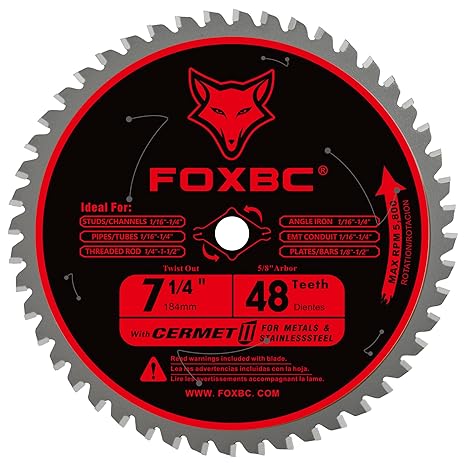
People who frequently cut metal with cordless or corded circular saws will find this 7-1/4 metal cutting blade a reliable choice. Its main strength lies in lasting longer than typical grinding discs thanks to premium ceramic and metallic teeth designed for tough jobs.
Setting up the blade is straightforward on any standard circular saw with a 5/8 arbor. The .075 kerf keeps cuts precise without removing too much material.
It performs best on steel studs, angle iron, conduit, and rods within specified thickness and diameter ranges. The diamond knockout makes blade changes convenient, saving time during busy workdays.
Cutting through metal feels smoother and requires less frequent blade swaps because the cermet carbide tips handle heat and wear exceptionally well. The blade’s 48 teeth provide a good balance of speed and finish quality. Its build is solid, with premium Japan ceramic contributing to longer life.
Some users mention that its maximum RPM rating needs adherence to avoid blade damage.
This blade consistently delivers long-lasting cuts due to its ceramic teeth and handles heat well during metal cutting. Its main drawback is needing close attention to the RPM limit to avoid damage, so it’s not for higher speed saws. The 48 teeth balance cutting speed and clean results.
Anyone cutting steel studs, conduit, or specific metal rods frequently will appreciate its durability and versatility. Users working beyond its thickness or speed limits may want to consider blades designed for heavier industrial use or different RPM ranges.
Pros
- Longer life than standard grinding discs
- Works great on a variety of metal types
- Easy blade changes thanks to diamond knockout
- Compatible with most corded and cordless saws
Cons
- Must stay within 5800 RPM rating
- Limited to specific metal thickness and rod diameters
| Specification | Details |
|---|---|
| Diameter | 7-1/4″ |
| Teeth | 48 |
| Kerf | .075″ |
| Arbor Size | 5/8″ |
| Max RPM | 5800 |
6. Metal Cutting Circular Saw Blade 7-1/4

Designed specifically for cutting various structural metals, this 7-1/4 circular saw blade stands out for its precision and durability. Ideal for anyone working regularly with rebar, angle iron, or metal pipes, it handles tough jobs with fewer sparks and less heat buildup, making safety and clean cuts its biggest strengths.
Setting up involves a straightforward fit onto any compatible circular saw, with the 48 optimized teeth making a noticeable difference in cutting quality. Using it day after day, the ultra-thin kerf keeps material waste low, while the ceramic alloy tooth technology cuts down on heat and sparks.
This means less cleanup and safer work conditions during extended use.
The blade performs exceptionally well on all sorts of metal, from round bars to channel steel. Its carbide-tipped teeth stay sharp and resist wear even with frequent work.
One of the most praised features is the reduced temperature during cutting, helping prevent discoloration. Some users note that it may not last as long on extremely hard or thick metals, but it meets expectations for most applications.
The blade’s biggest appeal lies in its ability to cut metal efficiently while keeping temperature and spark production low, helping avoid heat damage and discoloration. The most common drawback is that its lifespan shortens when used continuously on very tough metals, meaning it may need more frequent replacement in those cases.
People working mostly with standard structural metals will find this blade well-suited to their needs, offering a good balance of safety and economy. Those requiring longer-lasting performance on extremely hard materials might want to explore alternatives designed specifically for heavy industrial use.
Pros
- 48 optimized teeth for smoother metal cuts
- Ceramic alloy teeth reduce heat and sparks
- Ultra-thin kerf minimizes material waste
- Precision cermet carbide tips for durability
Cons
- Not ideal for extremely hard or thick metals
- Longevity decreases with heavy-duty use
| Specification | Details |
|---|---|
| Blade Diameter | 7-1/4″ |
| Number of Teeth | 48 |
| Brand Name | HARDWIN |
| Part Number | 6975960332345 |
| Manufacturer | Guanzhong |
7. Diablo Steel Demon Cermet II Saw Blade 8

Diablo Steel Demon Cermet II Saw Blade 8 is designed for cutting metal with excellent durability. It suits those needing a blade that lasts longer and handles heat well during tough metal cutting tasks.
The biggest strength lies in its ability to maintain sharpness and performance over time.
Setting up this 8-inch blade is straightforward since it fits most standard circular saws with an 8-inch diameter. The 42 teeth arranged in a Triple Chip Grind (TCG) pattern allow smooth, consistent cutting on ferrous metals.
You’ll notice less wear due to its superior hardness and higher heat resistance, making it reliable for repeated use without frequent replacements.
Performance stands out with up to 3 times the life span of regular carbides, a real benefit when working on metal projects. Constructed with cermet material, it handles heat well during extended cuts. Most users praise its longevity and cutting smoothness.
A less frequent complaint relates to price, as durable blades like this can be a bit more of an investment.
The blade is widely praised for its durability and ability to keep cutting sharpness under heat stress. Some mention the upfront cost as a drawback but often justify it with longer blade life between replacements.
People doing frequent metalwork or requiring a blade that lasts through tough conditions will appreciate this option. Those who rarely cut metal or work with thinner materials might find more economical blades sufficient.
Pros
- Up to 3x longer life than standard carbides
- Higher heat resistance for tough cuts
- Superior hardness reduces wear
- Triple Chip Grind teeth for smooth cutting
Cons
- Higher price compared to basic blades
- May require compatible saws with 8-inch arbor
| Specification | Details |
|---|---|
| Diameter | 8-inches |
| Teeth | 42 |
| Material | Cermet |
| Brand Name | Diablo |
| Model | D0842CF |
8. Metal Circular Saw Blade 7-1/4 TCT

Cutting through metal sheets feels surprisingly smooth and controlled with this blade, making it a good fit for anyone handling metalwork at home or in a light workshop. Its strongest point is the tungsten carbide teeth that slice through metal without leaving jagged edges.
Setup is straightforward, with the 7-1/4-inch diameter and 15.87mm arbor ensuring compatibility with many circular and miter saws. Daily cutting feels quieter and steadier thanks to the laser groove design that cuts down noise and vibration, helping you work more comfortably and accurately on different metal types.
The blade’s performance stands out with 48 carbide teeth designed specifically for metal, delivering clean cuts without burrs. It handles steel bars, pipes, and sheets efficiently. The build feels solid, especially in the 1.4mm blade thickness and 1.8mm teeth thickness.
A common issue is its weight, which can make longer jobs a bit tiring.
It cuts metal pieces cleanly with minimal burrs, thanks to its specialized carbide teeth and laser groove design that reduces vibration. However, the blade’s weight from its thickness can be tiring during extended cutting sessions, which some find limiting for longer jobs.
Anyone doing occasional to moderate metal cutting will find it a reliable choice that fits many saws and runs quietly. Those tackling heavy industrial work needing lighter or faster blades should consider alternatives better suited for sustained use.
Pros
- 48 tungsten carbide teeth for smooth metal cuts
- Reduces noise and vibration during use
- Compatible with various circular and miter saws
- Good wear resistance for longer use
Cons
- Blade thickness adds some weight
- Not ideal for prolonged heavy-duty cutting
| Specification | Details |
|---|---|
| Diameter | 184MM (7-1/4″) |
| Blade Thickness | 1.4MM |
| TCT Teeth Thickness | 1.8MM |
| Number of Teeth | 48T Carbide |
| Arbor Size | 15.87MM |
| Manufacturer | KURSTOL |
9. SawWorks Circular Saw Blade 7-1/4

Perfect for cutting mild steel and non-ferrous metals, this 7-1/4 inch circular saw blade suits those working with steel studs, angle irons, or aluminum. Its biggest strength lies in delivering smooth, burr-free cuts thanks to the 48-tooth TCG design.
Setting it up is straightforward, fitting standard 7-1/4 inch circular saws. The zero-degree hook angle keeps the blade steady without pulling or grabbing the metal, which helps control during cuts. The thin 0.071 kerf means less material is removed, reducing strain on the saw’s motor and making it easier to work on cordless tools day to day.
Cut quality is very clean on mild steel and softer metals like copper and brass, with minimal burrs left behind. Built tough enough for steel studs and EMT conduit, it handles a variety of metals reliably.
The strongest praise focuses on smooth, controlled cuts, while the most frequent drawback noted is that cutting speed can feel a bit slow compared to blades with a more aggressive hook angle.
Two things stand out: the blade offers smooth, burr-free cuts on mild steel and softer metals, making it easy to control during work. Most users mention the cutting pace feels slower because of its zero-degree hook angle, which trades speed for precision.
People working mostly with steel studs, angle irons, and general metal framing will appreciate its balance of clean cuts and reduced motor strain. Those needing faster cutting or tackling very hard metals might want to look at other blade options better suited for heavy-duty speed.
Pros
- Clean cuts on mild steel and non-ferrous metals
- Stable cutting with 0° hook angle
- Thin kerf reduces motor load
- Compatible with steel studs and conduit
Cons
- Slower cutting speed compared to aggressive blades
- Not designed for very hard or thick metals
| Specification | Details |
|---|---|
| Brand Name | SawWorks |
| Part Number | SW-Me7.25-48TCG |
| Number of Teeth | 48 |
| Kerf Thickness | 0.071″ |
| Diameter | 7-1/4″ |
10. Freud Diablo Steel Demon Circular Saw Blade
Carbide tipped and built with Freud’s proprietary steel blend, this blade suits anyone needing to cut metal with a tool that won’t dull quickly. Its biggest strength lies in its extreme durability, especially under intense use and impact.
Setup is straightforward, fitting most 5/8 inch bores common on circular saws. The laser-cut arbor keeps vibrations low, so cuts stay accurate and the blade maintains its balance.
The triple chip grind design slices through up to 1/4 inch mild steel, handling daily tasks without fuss or extra effort.
Cutting through metal is consistently smooth thanks to the high-density carbide tips, which hold up well against wear and tear. A few notes from reviews mention that it excels in cutting speed and longevity, but the cost might be a concern for casual users.
Construction feels solid with its shock-resistant brazing, making it a reliable choice for tougher jobs.
The blade stands out for its long-lasting carbide tips and ability to handle heavy metal cutting without wearing down fast. Some users note that the price is a bit steep compared to simpler blades, especially if cutting is occasional or light-duty.
Anyone needing a blade that stays sharp and steady during frequent or demanding metal cutting will appreciate this one. Those doing very thin or infrequent metal cuts might want to look for a more budget-friendly option.
Pros
- Extreme durability for heavy use
- Shock resistant brazing protects tips
- Reduces vibrations with laser-cut arbor
- Versatile fit for 5/8 inch bores
Cons
- Price may be high for occasional users
- Limited to cutting up to 1/4 inch steel thickness
| Specification | Details |
|---|---|
| Brand Name | Diablo |
| Model | D0748F |
| Unit Count | 1 Count |
| Number of Items | 1 |
| Fits Bore Size | Most 5/8 inch bores |
| Cutting Capacity | Up to 1/4 inch mild steel |
11. 8 Metal Cutting Circular Saw Blade

Sharpness and precision stand out immediately, making it ideal for anyone cutting metal regularly. Milwaukee’s 8 Metal Cutting Circular Saw Blade fits well in most saws and excels at clean cuts through tough materials.
Its biggest strength is durability; it keeps its edge longer than many alternatives.
Setup is straightforward since it comes as a single unit designed specifically for metal cutting. It fits quickly onto circular saws without much hassle. Day-to-day use feels reliable thanks to its balanced construction and consistent cut quality, helping maintain accuracy without frequent blade changes.
Performance-wise, it cuts through metal smoothly with minimal sparks or rough edges. The blade construction is solid, offering long-lasting durability that users value most.
One common complaint is that it might wear out faster with extremely heavy-duty or diverse materials, but overall, it handles standard metal cutting tasks very well.
The blade receives strong praise for maintaining its sharp edge and delivering clean cuts consistently, which is its main selling point. Some users note that it can wear out faster when used on particularly thick or tough metals.
Those who frequently cut medium-thickness metal will find it a reliable choice. Professionals dealing with very heavy-duty materials might want to explore blades tailored for extreme durability instead.
Pros
- Sharp cutting edge for precise metal cuts
- Durable blade maintains sharpness over time
- Fits easily onto most circular saws
- Good balance reduces vibration during cutting
Cons
- Blade may wear faster with very heavy-duty metals
- Only sold as a single blade, no multi-pack options
| Specification | Details |
|---|---|
| Brand Name | Milwaukee |
| Unit Count | 1 Count |
| Number of Packs | 1 |
| Part Number | A-ORS495-48-40-4515 |
| Number of Items | 1 |
12. DEWALT Circular Saw Blade DWA7771

Designed for cutting metal with precision, the DEWALT Circular Saw Blade DWA7771 suits anyone looking for durability and consistency. Its main strength lies in the improved carbide tips, which extend blade life and reduce chipping compared to standard options.
Installation on any compatible circular saw is straightforward thanks to the 20mm arbor size. It’s laser etched and color coded, helping you grab the right blade for metal without confusion.
During regular use, the strengthened plate minimizes blade wobble and run out, making cuts smoother and safer every time.
The blade cuts metal effectively, providing clean and reliable results thanks to its 40 teeth configuration. Built for longevity, the carbide is tougher, which users appreciate for durability.
The common drawback noted is that it may not fit saws with smaller or non-standard arbor sizes without adapters, limiting its versatility.
Many find the blade’s longer life and less chipping a real advantage, while the most common complaint involves its compatibility only with 20mm arbor saws. This means setup is easy where it fits but restrictions can limit usage.
Perfect for those regularly cutting metal who need durability and accuracy. Choosing it might not be wise if you have saws with smaller arbors or need a blade for other materials beyond metal.
Pros
- Longer life due to better carbide tips
- Color coded for easy material identification
- Laser etched for added strength
- Reduces run out for smoother cuts
Cons
- Limited to saws with 20mm arbor
- Not ideal for non-metal materials
| Specification | Details |
|---|---|
| Model | DWA7771 |
| Unit Count | 1 Count |
| Blade Size | 5-1/2IN |
| Teeth | 40T |
| Arbor Size | 20mm |
Comparison of Top Circular Saw Blades for Metal
| Product | Brand | Size | Teeth | Warranty |
|---|---|---|---|---|
| DEWALT DW3330 Blade | DEWALT | – | – | – |
| Diablo Steel Demon Cermet II | Diablo | 7-1/4 | 48 | Warranty |
| DEWALT DW3329 Blade | DEWALT | 7-1/4 | 68 | – |
| Milwaukee Metal Cutting Blade | Milwaukee | 5-3/8 | – | Manufacturer Warranty |
| FOXBC 7-1/4 Circular Blade | FOXBC | 7-1/4 | 48 | – |
| Generic 7-1/4 Metal Blade | HARDWIN | 7-1/4 | 48 | – |
| Diablo Steel Demon 8 | Diablo | 8 | 42 | Warranty |
| Generic 7-1/4 TCT Metal Blade | KURSTOL | 7-1/4 | – | – |
| SawWorks 7-1/4 Blade | SawWorks | 7-1/4 | 48 | – |
| Freud Diablo Steel Demon | Diablo | 7-1/4 | – | Limited lifetime |
| Generic 8″ Metal Cutting Blade | Milwaukee | 8 | – | – |
| DEWALT DWA7771 Blade | DEWALT | 5-1/2 | 40 | – |
- BrandDEWALT
- Size–
- Teeth–
- Warranty–
- BrandDiablo
- Size7-1/4
- Teeth48
- WarrantyWarranty
- BrandDEWALT
- Size7-1/4
- Teeth68
- Warranty–
- BrandMilwaukee
- Size5-3/8
- Teeth–
- WarrantyManufacturer Warranty
- BrandFOXBC
- Size7-1/4
- Teeth48
- Warranty–
- BrandHARDWIN
- Size7-1/4
- Teeth48
- Warranty–
- BrandDiablo
- Size8
- Teeth42
- WarrantyWarranty
- BrandKURSTOL
- Size7-1/4
- Teeth–
- Warranty–
- BrandSawWorks
- Size7-1/4
- Teeth48
- Warranty–
- BrandDiablo
- Size7-1/4
- Teeth–
- WarrantyLimited lifetime
- BrandMilwaukee
- Size8
- Teeth–
- Warranty–
- BrandDEWALT
- Size5-1/2
- Teeth40
- Warranty–
How to Choose the Right Circular Saw Blade for Metal
Selecting the right circular saw blade for metal involves considering blade material, tooth design, and compatibility with your saw. Choosing the correct blade ensures cleaner cuts, longer blade life, and prevents damage to both the tool and workpiece, saving time and reducing unnecessary expenses.
Blade Material and Coating
Most circular saw blades designed for metal come either carbide tipped or made from high-speed steel (HSS). Carbide tipped blades tend to stay sharper longer and handle tougher metals without wearing down quickly. High-speed steel blades work well for softer metals but dull faster and may need frequent replacement.
A protective coating, like titanium or anti-rust layers, plays a big role in extending the blade’s life by reducing heat and corrosion. Blades without coatings tend to develop rust or lose hardness after repeated cutting sessions, especially if used on stainless steel or in humid environments.
Choosing the right blade material matters for daily cutting tasks. A carbide tipped blade with a heat-resistant coating is best for cutting hard or abrasive metals like stainless steel or cast iron. Simpler HSS blades can suffice for thinner sheets of aluminum or mild steel.
Using heat-resistant coatings like titanium nitride helps prevent premature blade failure during heavy-duty jobs.
Tooth Design and Count
The way teeth are shaped and arranged impacts how clean the cuts turn out and how fast you can work. Alternate top bevel (ATB) teeth produce smoother cuts with less snagging but might slow the feed rate. Triple chip grind (TCG) teeth are designed to chip away tougher metals and clear chips effectively without heating up as much.
Regular flat-top teeth tend to wear quicker on metals and may lead to rough edges.
Blades with more teeth generally give smoother finishes but cut slower because each tooth removes less material. For metal cutting, a tooth count between 60 and 80 usually balances speed and smoothness well.
Designs that promote chip clearance reduce heat buildup and keep the blade from warping during prolonged use. Better chip clearance also means fewer clogs and less sharpening needed.
Blade Size and Compatibility
Blade diameter has to match the saw’s maximum capacity to avoid safety issues or poor cutting depths. Common sizes for metal cutting circular saws range from 7-1/4 to 10.
Using a blade that’s too small limits depth, and one that’s too large might be unsafe or incompatible. Arbor size (the hole in the blade) must fit your saw exactly; a loose fit causes wobbling and uneven cuts.
Some blades are made specifically for metal cutting and differ in tooth design and material from multipurpose blades that handle wood and metal. Dedicated metal cutting blades last longer and produce better results but aren’t always compatible with saws designed for wood-cutting blades. Checking both diameter and arbor specs against your saw guarantees a secure installation and proper operation.
Cutting Performance and Efficiency
Not all blades cut all metal types or thicknesses efficiently. A blade designed for thin sheet metal may bog down or wear fast on thicker steel or cast iron.
Those made with carbide tips and special tooth geometries handle thicker metals better and preserve sharpness. Built-in heat dissipation features like ventilated plate designs help keep the blade cool, preventing warping under continuous use.
Blades come with maximum speed ratings usually measured in RPM. Staying within this rating is necessary to avoid damaging the blade or saw.
Higher speed ratings often mean smoother, cleaner cuts but require a saw capable of maintaining that speed without vibration. Balancing speed and blade durability contributes to better cutting results and less downtime on frequent metal projects.
Safety Features and Durability
Blades that vibrate excessively make it hard to control the saw, increasing the chance of mistakes and accidents. Look for stability features like laser-cut stabilizer vents or expanded body plates to reduce this vibration.
Stronger blades resist warping or bending when cutting dense metal, which keeps cuts accurate and prolongs blade life.
Some metal cutting blades come with safety certifications from organizations such as ANSI or OSHA, indicating they meet specific performance and durability standards. Choosing blades with recognized safe-use certifications isn’t mandatory but adds confidence during heavy-duty work. Durable blades with a sturdy build and vibration control make daily cutting tasks safer and more predictable.
Proper Safety Precautions When Using Circular Saw Blades for Metal
Metal cutting with a circular saw blade requires strict attention to safety. Always wear heavy-duty gloves and eye protection to guard against sharp metal fragments and sparks that the blade generates during use.
Secure the metal piece firmly in place using clamps or a vise to prevent shifting under pressure. Keep the saw blade properly installed and checked for any damage or excessive wear before starting a cut, as a compromised blade can break and cause serious injury.
It is essential to use blades specifically designed for metal, as regular wood-cutting blades can cause binding or kickback. Avoid forcing the saw through the metal; instead, let the blade’s speed and teeth do the work to reduce heat buildup and blade damage. Ensure good ventilation or wear a mask to avoid inhaling metal dust and fumes created by the cutting process.
Effective Maintenance and Sharpening Techniques for Metal Cutting Blades
Maintaining a circular saw blade used for metal cutting extends its life and ensures clean cuts. After each use, clean the blade with a solution designed to remove metal residues, such as a mixture of water and mild detergent or commercial blade cleaners. Dry the blade thoroughly to prevent rust.
Regularly inspect the teeth for chipping or dullness.
Sharpening metal cutting blades requires a specialized diamond grinding wheel or professional sharpening service, since incorrect sharpening angles can reduce cutting efficiency or damage the tooth geometry. Avoid over-sharpening, which removes unnecessary material and shortens blade life.
Lubricating the blade during use with cutting oil helps reduce friction and heat, preserving sharpness and improving cutting performance.
Comparing Circular Saw Blades and Alternative Tools for Metal Cutting Tasks
Circular saw blades designed for metal are typically faster for straight cuts compared to alternative tools but may not be suitable for all types of metal or cuts. For thin sheet metal, tin snips or a nibbler can offer better control and reduced noise. For heavy gauge or thick metals, abrasive cutoff wheels or plasma cutters can handle the material more efficiently, although they may sacrifice some precision.
Circular saw blades tend to provide cleaner edges compared to abrasive discs and are reusable if maintained correctly. However, angle grinders equipped with metal-cutting discs excel at curved or irregular cuts where circular saws fall short.
Choosing the right tool depends on the metal thickness, desired finish, and cut complexity rather than assuming one blade or tool fits all metal cutting tasks.
People Also Asked
How Do I Choose the Right Circular Saw Blade Size for Metal?
Choose a blade size that matches your saw’s specifications and the thickness of the metal you will cut. Common sizes are 7-1/4 inches or 10 inches, but always check your saw’s maximum blade diameter. Using the right size helps maintain control and clean cuts.
What Safety Precautions Should I Follow When Cutting Metal with a Saw?
Wear safety goggles, gloves, and hearing protection to prevent injuries from metal shards and noise. Clamp the metal securely on a stable surface to avoid movement during cutting. A face shield can protect against flying particles, which are common when cutting metal.
How Long Does a Typical Circular Saw Blade for Metal Usually Last?
Blade life depends on metal type and cutting frequency, but they typically last between 20 to 50 hours of continuous use. Using a blade designed specifically for metal and avoiding overheating can extend its lifespan. Keeping the blade clean also helps maintain cutting performance.
Can I Use the Same Blade for Cutting Different Types of Metal?
Some blades can cut different metals, but using a blade designed for the specific metal, like stainless steel or aluminum, yields better results. Different metals have varying hardness, so swapping blades minimizes wear and improves cut quality. Using the wrong blade can dull it quickly.
What Common Problems Occur When Using a Circular Saw Blade on Metal?
Common problems include excessive sparks, blade binding, and rough or uneven cuts. These usually happen from using the wrong blade tooth count or applying too much pressure. Keeping a steady feed rate and using a blade designed for metal reduces these issues.
Conclusion
Choosing the right circular saw blade for metal hinges on the material it is made from, the tooth count, and how it manages heat. Blades with carbide tips tend to stay sharper longer. A higher tooth count generally delivers a cleaner cut, but can slow down the work depending on the metal.
Heat management matters because cutting metal generates a lot of heat, which can wear blades faster or warp the material.
Consider how often you will use the blade and what your budget is before making a choice. A blade that fits your saw and cutting needs will perform better and last longer. Review the comparison table and detailed picks above to find an option suited for your specific work and budget.