
Top 12 Best Climbing Bike That Will Boost Your Ride Now
Struggling up steep inclines on a heavy, poorly balanced bike can turn any ride into a grueling effort. Those looking for the best climbing bike know the frustration of dealing with excessive weight and inefficient gear ratios that sap energy before reaching the summit.
A bike that doesn’t respond well to changes in terrain or feels sluggish under pressure makes even moderate hills feel much harder.
The best climbing bikes tend to be lightweight, often using aluminum or carbon frames to keep the weight under 25 pounds, which dramatically reduces fatigue. A well-chosen gear ratio is crucial, typically with a compact crankset around 50/34 teeth paired with a wide-range cassette to handle steep grades comfortably.
Fit is another big factor, a properly sized frame ensures efficient power transfer and better control, which is essential when climbing tricky, uneven surfaces.
Need a Quick Check?
| Image | Product | Price |
|---|---|---|
Our Top Picks 1  | Rideplux 5000W Dirt Bike | Check Price |
Our Top Picks 2  | Adult Aluminum Mountain Bike | Check Price |
Our Top Picks 3  | ROCKBROS MT600 29er | Check Price |
Our Selected Top 12 Climbing Bike for Different Needs
This list features twelve carefully chosen climbing bikes designed to meet various riding styles and terrains. Each review highlights performance aspects, suitable rider types, and key advantages and disadvantages to help readers find the best fit for their specific climbing needs.
1. Rideplux Electric Dirt Bike 5000W
5000W peak power runs through the drivetrain of this electric dirt bike, handling steep climbs up to 45° with confidence. Suited for riders tackling rough off-road trails who want a durable, strong machine with balanced handling thanks to its mid-drive motor setup.
Setup involves getting acquainted with three speed modes that adjust power to trail demands. The removable battery adds convenience for charging, and gyro stability control helps maintain balance during tough rides. The unibody steel frame feels solid underfoot, and weight distribution keeps the bike manageable across varied terrain.
Performance on climbs stands out, with powerful torque and steady handling on technical sections. Built from a single piece of high-carbon steel, the frame avoids weak points from welds or bolts, contributing to long-lasting durability. Many users applaud its toughness, while some mention the steel frame makes it heavier than lighter aluminum options.
The bike’s frame durability stands out, built without welds or bolts to distribute impact evenly, making it exceptionally sturdy. Most common complaint concerns its heavier weight compared to lighter frame materials, affecting portability and climb ease for some riders.
Those seeking a strong, powerful machine for demanding climbs will appreciate its torque and frame strength. Riders prioritizing a lighter, corrosion-resistant bike might prefer alternatives with aluminum frames or less weight in mind.
Pros
- High torque for steep and technical climbs
- Unibody frame increases durability on rough trails
- Mid-drive motor keeps weight centered for balance
- Three speed modes adapt to various riding conditions
Cons
- Heavier than some other climbing bike frames
- Steel frame may require more maintenance to prevent rust
| Specification | Details |
|---|---|
| Peak Motor Power | 5000W |
| Torque | 220N·m |
| Frame Material | Unibody High-Carbon Steel |
| Max Incline | 45° |
| Battery | Removable |
| Special Features | Gyro Stability Control, Mid-Drive Motor |
2. Adult Mountain Bike 24/26 Inch Aluminum Frame
Ideal for adult riders between 5’2 and 5’11 looking for a reliable bike that handles a mix of paved roads and light trails, this mountain bike’s standout feature is its full suspension system designed to soften the ride over rough surfaces.
Adjusting the seat is straightforward, allowing for a comfortable fit that suits most in its height range. The 21-speed gearing combined with Shimano trigger shifting makes changing speeds smooth and quick on varied terrains.
Setting up day-to-day rides is simple thanks to the kickstand and adjustable components, making it practical for both casual rides and more demanding outings.
The bike effectively absorbs shocks with its front suspension fork and rear coil shock, keeping the ride stable on uneven trails. Its aluminum frame offers a balance of durability and weight, though some mention the bike might feel a bit heavy for longer climbs. Riders appreciate the reliable stopping power from dual disc brakes, while others note the seat adjustment range can be limited for the tallest users.
The bike is praised for its comfortable ride due to full suspension and secure braking. Common complaints involve the seat adjustment not quite fitting all tall riders and the overall weight that can make uphill sections feel tougher.
Riders seeking a versatile mountain bike for mixed terrain and within the recommended height range will find this bike a dependable choice. Those needing a lighter model for serious uphill climbs or outside the height specifications might consider alternatives better suited to their needs.
Pros
- Adjustable seat fits riders 5’2″–5’11”
- Dual suspension reduces jolts on rough trails
- 21-speed Shimano drivetrain for versatile riding
- Dual disc brakes offer strong stopping power
Cons
- Seat adjustment range limited for taller riders
- Heavier frame can be tiring on extended climbs
| Specification | Details |
|---|---|
| Bike Type | Mountain Bike |
| Number Of Speeds | 21 |
| Suspension Type | Dual |
| Brake Style | Disc |
| Bicycle Gear Shifter Type | Trigger |
| Intended Riding Terrain | Mountain Terrain, Unpaved Trails |
3. ROCKBROS MT600 29 Trail Mountain Bike
Lightweight frame and solid suspension make it stand out for trail riders and fitness cyclists aiming for long adventures. It suits anyone who wants a reliable mountain bike built to handle varied terrain without feeling heavy or sluggish.
Setting up is straightforward with adjustable handlebars and quick-release seat and wheels that make fitting and transport easier. The 140mm air suspension fork with hydraulic damping adapts on the fly to sharp changes in terrain, while the 1×12 drivetrain shifts smoothly, making climbs less tiring and rides more enjoyable day to day.
The 29-inch aluminum frame balances power transfer and control well, responding to rough trails with confidence. The drivetrain’s wide range provides efficient climbing gears, while disc brakes add reliable stopping power. Most users appreciate how smoothly it rides, though some find the front-only suspension limiting on extremely rough descents.
Riders appreciate the smooth ride and lightweight build, praising its efficiency on climbs and durable construction. However, the front-only suspension keeps it from feeling as controlled on very technical or rocky descents as full-suspension models.
Those focused on long-distance rides and moderate trails will find this bike well-suited to their needs. Anyone tackling highly technical downhill sections or seeking maximum shock absorption might consider a bike with rear suspension instead.
Pros
- Lightweight 29-inch aluminum frame
- Adjustable handlebars for personalized fit
- 140mm air suspension with lockout control
- Wide-range 1×12 drivetrain for climbing
Cons
- Only front suspension limits rough terrain handling
- Some may want more suspension travel for technical trails
| Specification | Details |
|---|---|
| Bike Type | Mountain Bike |
| Number Of Speeds | 12 |
| Suspension Type | Front |
| Brake Style | Disc |
| Bicycle Drivetrain Type | chain drive |
| Additional Features | Adjustable Handlebars, Durable, Lightweight, Quick Release Seat, Quick Release Wheels |
4. Schwinn Traxion 29 Mountain Bike

Schwinn Traxion 29 Mountain Bike suits anyone new to mountain biking who needs a reliable bike for climbing and handling tough trails. Its biggest strength lies in the combination of a lightweight aluminum frame and a full suspension system, which keeps rides smooth even on rough terrain.
Setup revolves around its 24-speed shifters and front and rear derailleurs, which make changing gears simple and precise. Riding day to day feels steady thanks to the mechanical disc brakes, offering confidence on descents or tricky stops.
The bike’s 2.25-inch knobby tires on wide alloy rims give enough grip and durability for uneven surfaces.
Performance on climbs is solid, helping tackle hills with smooth gear transitions and responsive suspension that soaks up impacts. Built tough but light, the aluminum frame balances strength and ease of handling.
Most praise points to its suspension and stopping power, while a few mention that mechanical disc brakes can require occasional adjustment for best feel.
Suspension and braking get repeated praise for smoothing out rough trails and providing solid control. Most common gripe concerns needing brake adjustments to maintain crisp stopping over time. Everyday rides benefit from a frame that balances weight with durability.
The bike fits beginners seeking dependable performance on moderate mountain terrain. Riders aiming for highly technical or aggressive downhill routes might want to consider alternatives with more specialized components.
Pros
- Lightweight aluminum frame for easier handling
- Dual suspension absorbs rough terrain effectively
- 24 speeds make hill climbing manageable
- Strong mechanical disc brakes for reliable stopping
Cons
- Mechanical disc brakes may need regular tuning
- Not designed for advanced or technical mountain biking
| Specification | Details |
|---|---|
| Bike Type | Mountain Bike |
| Number Of Speeds | 24 |
| Suspension Type | Dual |
| Brake Style | Disc |
| Frame Material | Aluminum |
5. MERACH Magnetic Exercise Bike

Hopping on this bike feels solid and secure, which is a huge plus for anyone focusing on climbing workouts. It suits those wanting a stable machine that handles heavier loads while tracking progress closely.
Its standout strength lies in the 40% increased frame stability compared to typical exercise bikes.
Setting up is straightforward thanks to a single unit design, and pairing with the Merach app adds clear feedback on your ride metrics like distance and calories burned. The bike syncs smoothly with Google Fit and Apple Health, and apps like KINOMAP and Zwift work well for varied training sessions.
Daily use feels safe thanks to the reinforced frame supporting vigorous pedaling comfortably.
Performance on climbs is solid with reliable, consistent resistance and a durable 2.00mm thick steel frame that holds up well under pressure. The main compliments center on its stable ride and effective weight loss support. The most frequent critique mentions that while sturdy, it may feel a bit heavy to move around for some users.
The bike’s reinforced inverted triangle frame offers excellent stability appreciated during intense rides. Usage feedback often notes the frame thickness as contributing to its weight, making relocation less convenient. The app connectivity supports detailed workout tracking but resistance levels are not extensively explained.
Ideal for people seeking a solid and steady exercise bike for indoor climbing workouts and weight management. Users who frequently move their equipment or require detailed resistance settings might find another model better suited to their needs.
Pros
- Stable under heavy loads up to 300 lb
- Syncs well with popular fitness apps
- Reinforced steel frame feels sturdy and secure
- Real-time metrics tracking via Merach app
Cons
- Relatively heavy, not easy to move around
- Resistance options not detailed in specs
| Specification | Details |
|---|---|
| Brand Name | MERACH |
| Model Name | S26 Exercise Bike |
| Frame Construction | 2.00mm thick steel, inverted triangle |
| Maximum Load | 300 lb |
| Compatible Apps | Kinomap, Zwift, Merach app |
| Data Sync | Google Fit, Apple Health |
6. Dual Motor 5000W Electric Mountain Bike

Powerful and built for serious mountain climbing, this electric bike suits those ready to tackle steep hills and rough terrain without hassle. Its strongest feature lies in the dual 3000W motors combining for high torque, making sure you push through challenging off-road conditions.
Daily riding feels balanced thanks to the full suspension and adjustable seat that keep the ride comfortable. The removable 48V 30Ah battery means charging doesn’t interrupt long adventures, while the digital display offers easy access to speed and battery info. Seven speeds help dial in the pedaling effort on variable terrain, and dual disc brakes provide reliable stopping power.
Performance shows through in conquering 45° inclines and mud, powered by 185Nm torque that few bikes in this class match. The solid frame and dual suspension hold up well on rugged trails, though some mention the bike’s overall weight makes transport tougher.
Sturdy construction and powerful motors stand out as top positives, while the heavy battery adds bulk.
The bike’s greatest advantage is its ability to climb steep, muddy inclines with ease thanks to the powerful dual motors and full suspension setup. Common complaints revolve around its heavy frame, which some find awkward to carry or store after rides. Handling the battery weight can be a challenge off the trail as well.
Anyone focused on aggressive mountain trail riding and long-distance outdoor adventures will appreciate the raw power and comfort. Those seeking a lighter, more compact electric bike for casual rides or urban use might want to consider alternatives with fewer bulk and lower weight.
Pros
- Dual 3000W motors deliver strong torque
- Full suspension smooths rugged trails
- High-capacity 48V 30Ah removable battery
- Dual disc brakes provide reliable stopping
Cons
- Bike weight can make transport harder
- Limited to 7 speeds for gear range
| Specification | Details |
|---|---|
| Bike Type | Electric Bike |
| Number Of Speeds | 7 |
| Suspension Type | FULL |
| Brake Style | Disc |
| Lithium Battery Energy Content | 30000 milliampere_hour |
7. Folding Electric Bike 14

Lightweight frame and foldable design make this electric bike a great choice for urban riders needing portability and power in one package. Suited for beginners or daily commuters, its standout feature is the 700W peak motor that offers strong assist and versatility.
Charging is easier with the removable 48V 10Ah battery, which you can take out and plug in anywhere convenient. Switching between pure electric, pedal-assist, and normal modes allows smooth adjustment to different riding situations. The adjustable handlebars and seat help dial in a comfortable fit quickly, while the compact fold keeps storage straightforward after daily rides.
It climbs hills well with the 350W motor delivering enough torque for urban terrain. Dual suspension adds comfort on rough surfaces. The build includes disc brakes for reliable stopping power.
Praised for its power, the common downside mentioned is the limited 15-20 mile range per charge, especially under heavy use.
The bike receives consistent praise for its powerful motor and flexible riding modes, making uphill rides manageable. The main drawback is the fairly limited range, which restricts longer trips without recharging. Its foldable frame suits riders who need compact storage but expect runs mostly within city limits.
Those looking for a beginner-friendly e-bike with handy portability will appreciate this setup. It handles city streets and moderate hills comfortably. Riders wanting longer range or higher speeds should consider other options, as this model focuses on ease and daily commuting distances rather than extended riding.
Pros
- 700W peak motor for strong power
- Foldable and lightweight for easy transport
- Removable battery for convenient charging
- Adjustable handlebars and seat for comfort
Cons
- Range limited to 15-20 miles per charge
- Top speed capped around 20 mph
| Specification | Details |
|---|---|
| Bike Type | Electric Bike, Folding Bike |
| Motor Wattage | 350 watts |
| Battery Voltage and Capacity | 48V 10AH Removable Battery |
| Number of Speeds | 3 |
| Suspension Type | Dual |
| Brake Style | Disc |
8. NOVA X Electric Dirt Bike 4000W

Reaching speeds up to 46 mph and climbing slopes as steep as 40°, the NOVA X Electric Dirt Bike 4000W suits riders tackling rough mountain trails and unpaved paths. Its biggest strength lies in delivering thrilling power while maintaining precise control on challenging terrain.
Setting up the bike revolves around a removable 48V/22.8Ah battery that offers over 53 miles per charge, reassuring parents about safety and reliability. Dual suspension keeps the ride stable over bumps, and disc brakes help manage speed confidently on descents.
It’s built for regular off-road use, balancing comfort with rugged readiness for longer rides.
Strong performance comes from the 4000W peak motor, which handles steep climbs and rugged trails without hesitation. The dual suspension system smooths out rough mountain terrain while keeping the bike responsive.
One notable praise highlights its reliable battery system with advanced management, while a common complaint mentions the bike’s heavier weight compared to typical dirt bikes affecting maneuverability.
Most reviews praise the battery’s safety and long range, making it dependable for extended rides. Many note the bike’s weight as a downside, especially when handling tight turns or for smaller riders.
The bike suits riders who need power and endurance on tough trails and are okay with extra weight. Those prioritizing a lightweight or smaller bike might want to explore other options better suited for quick handling or younger riders.
Pros
- High power for steep slopes
- Removable, reliable battery
- Dual suspension for rough terrain
- Disc brakes for strong stopping power
Cons
- Heavier than some dirt bikes
- Battery adds weight for younger riders
| Specification | Details |
|---|---|
| Bike Type | Electric Bike, Mountain Bike |
| Motor Power | 4000W Peak |
| Top Speed | 46 mph |
| Climbing Ability | 40° slope |
| Suspension Type | Dual |
| Brake Style | Disc |
9. ROCKBROS 29 Mountain Bike Shimano Deore

Climbing steep and rough trails gets easier with the ROCKBROS 29 Mountain Bike Shimano Deore, designed for riders who need reliable control and straightforward gearing. Its biggest strength lies in the combination of its adjustable air suspension fork and a simple yet wide-range 12-speed drivetrain that keeps focus on the trail, not the shifting.
Setup is straightforward, especially with the 140mm-travel air fork that you adjust by rider weight using the air pressure. The hydraulic damping calms rough terrain, and the lockout switch on the crown helps lock the fork on smooth climbs. The adjustable seat and handlebars let you dial in a comfortable position for longer rides, while the dual disc brakes offer consistent stopping power independent of weather conditions.
It performs well climbing and descending thanks to the Shimano Deore 1×12 setup, which removes front shifting confusion without sacrificing gear range. The bike’s build feels solid and durable, with a well-tuned front suspension handling trail chatter effectively.
Most praise centers on the smooth shifting and shock absorption, while a common complaint is limited adjustability in suspension settings beyond air pressure and lockout.
Smooth and consistent shifting from the 12-speed Shimano Deore system receives the most positive notes, making it easier to focus on climbing and descending. A frequent downside mentioned is the absence of extensive suspension adjustments, which some riders might feel limits fine-tuning on varied terrain.
Those seeking a reliable all-around mountain bike with simple, effective gear options and good front suspension will find this bike suits their needs. Riders wanting full-suspension capability or more advanced suspension tuning might look toward other models better equipped for highly technical trail rides.
Pros
- Adjustable 140mm air fork with hydraulic damping
- Simplified 1×12 Shimano Deore drivetrain
- Dual disc brakes for reliable stopping power
- Adjustable seat and handlebars for custom fit
Cons
- Limited suspension settings besides air pressure
- No rear suspension for rougher trails
| Specification | Details |
|---|---|
| Bike Type | Mountain Bike |
| Number Of Speeds | 12 |
| Suspension Type | Front |
| Brake Style | Disc |
| Bicycle Gear Shifter Type | Trigger |
| Intended Riding Terrain | Mountain Terrain |
10. Carbon Fiber Mountain Bike Shimano M6100

Climbing steep mountain trails demands a bike that’s both light and tough enough to handle rough terrain. Perfect for riders who want an agile climb without sacrificing durability, this bike’s lightweight carbon fiber frame stands out for making uphill rides less tiring while maintaining strong control.
Setting up the bike is straightforward thanks to its fully internal cable routing, keeping the look clean and preventing cables from snagging on branches or rocks. The lockable hydraulic front fork gives you the option to switch suspension on or off, making it adaptable to different surfaces.
With 12 speeds controlled by trigger shifters, shifting is quick and precise, keeping pace with changing trail demands day after day.
Built around a T800 carbon fiber frame, the bike balances weight and strength well, tipping the scales at 26lbs. Front suspension with 130mm travel offers much-needed cushioning over rough patches, while dual disc brakes provide solid stopping power. Riders praise its smooth handling on climbs but sometimes mention that the focus on front suspension means less comfort on longer descents.
The bike’s lightweight carbon fiber frame and front suspension make uphill climbs easier and more controlled, a highlight praised in reviews. Some users find the focus on front suspension doesn’t fully absorb shocks on longer or rougher downhill rides. The clean cable routing adds to its reliability in daily trail conditions.
Riders who want a fast, light option for mountain terrain and prioritize front shock absorption will appreciate this bike. Those seeking full suspension for downhill comfort might want to look at other models tailored to that need.
Pros
- Lightweight carbon fiber frame at 26lbs
- Lockable hydraulic front fork with 130mm travel
- Clean internal cable routing
- Responsive 12-speed trigger shifters
Cons
- Suspension only on front limits rear comfort
- Minimal details on rear suspension performance
| Specification | Details |
|---|---|
| Bike Type | Mountain Bike |
| Number Of Speeds | 12 |
| Suspension Type | Front |
| Additional Features | Dual Disc Brake |
| Brake Style | Disc |
| Bicycle Gear Shifter Type | Trigger |
11. Canyon Grail:ON CF 7 AXS

85Nm of torque from a Bosch Performance Line CX motor powers you through tough climbs and long rides. Designed for gravel and mountain terrain, it suits riders wanting a blend of speed, comfort, and electric assistance for off-road adventures.
Lightweight carbon construction makes it easier to handle than most e-gravel bikes.
Setup involves adjusting the seat and gearing to your preferences, which is straightforward thanks to the adjustable seat and 12-speed cassette. Day-to-day, the dual disc brakes provide reliable stopping power on unpredictable trails.
The integrated 500Wh battery charges up and lasts for around two hours of riding, enough for solid sessions without being bulky or heavy.
Powerful electric support combined with a rugged carbon frame gives an excellent ride quality across rough roads and unpaved trails. The mid-drive motor placement keeps balance centered and the rigid suspension maintains efficient pedaling. Most praise highlights the smooth assistance and strong frame, while the main complaint centers around the relatively short 2-hour battery life limiting longer excursions.
The bike delivers smooth, powerful electric assistance making climbs and long rides easier. Riders commonly note the battery only lasts around two hours, which limits longer trips without recharging.
Ideal for those who want a fast, comfortable ride on gravel and mountain trails with extra power. Not suited for riders needing longer battery life or who prefer suspension for very rough terrain.
Pros
- Strong 85Nm integrated motor torque
- Lightweight carbon frame construction
- Reliable dual disc brakes for safety
- Wide 12-speed gear range
Cons
- Battery lasts about 2 hours per charge
- Rigid suspension can be harsh on rough terrain
| Specification | Details |
|---|---|
| Bike Type | Gravel Bike |
| Number Of Speeds | 12 |
| Suspension Type | Rigid |
| Power Source | Electric |
| Lithium Battery Energy Content | 33.3 watt-hours |
| Brake Style | Disc |
12. Mountain Bike 24/26 Inch Aluminum Frame
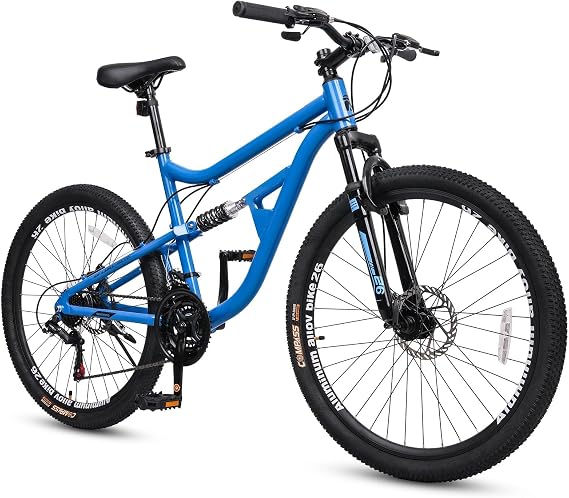
Mountain biking enthusiasts between 5’2 and 5’11 will appreciate this bike designed for versatility across trails and city roads. Its standout feature is the full dual suspension system that smooths out rough terrain and bumps, making rides more comfortable regardless of where you go.
Setting up involves adjusting the seat to fit your height, which is straightforward and helps avoid discomfort on longer trips. The 21-speed Shimano drivetrain makes shifting easy and responsive, suitable for various inclines.
The dual disc brakes provide reliable stopping power in different conditions, and the included kickstand and reflectors add practical convenience for everyday rides.
It performs well on mountain terrain and paved surfaces, absorbing shocks effectively thanks to the front suspension fork and rear coil shock. The aluminum frame feels sturdy yet manageable. Most praise focuses on the smooth ride it offers, while some mention that its weight can make it less nimble on very technical trails.
Many find the suspension system effectively cushions uneven surfaces, creating a comfortable ride, while some note the bike’s weight can reduce agility on challenging trail sections. The adjustable seat makes it easy to dial in a good fit for the recommended height range.
Those who want a comfortable ride on mixed terrain between 5’2″ and 5’11” will find this bike suits their needs well. Riders outside the height range or those needing a lighter, more specialized bike for technical mountain trails may want to look elsewhere.
Pros
- Adjustable seat fits riders 5’2″–5’11”
- Dual suspension softens bumps and jolts
- 21-speed Shimano drivetrain for versatile gearing
- Strong dual disc brakes for safe stopping
Cons
- Can feel heavy on very technical trails
- Limited fit range excludes taller or shorter riders
| Specification | Details |
|---|---|
| Number Of Speeds | 21 |
| Suspension Type | Dual |
| Brake Style | Disc |
| Bike Type | Mountain Bike |
| Intended Riding Terrain | Mountain Terrain, Paved Roads |
| Bicycle Gear Shifter Type | Trigger |
Best Climbing Bikes Comparison Table
| Product | Suspension Type | Number Of Speeds | Brake Style | Intended Riding Terrain |
|---|---|---|---|---|
| Rideplux 5000W Dirt Bike | Unibody Steel Frame | – | – | – |
| Adult Aluminum Mountain Bike | Dual | 21 | Disc | Road, Trail |
| ROCKBROS MT600 29er | Front | 12 | Disc | Mountain Terrain |
| Schwinn Traxion 29er | Dual | 24 | Disc | Trail |
| MERACH Magnetic Bike | – | – | – | Indoor |
| Dual Motor 5000W E-MTB | Full | 7 | Disc | Mountain Terrain |
| Folding 14 Electric Bike | Dual | 3 | Disc | Freestyle, Road |
| NOVA X 4000W Dirt Bike | Dual | – | Disc | Mountain, Unpaved Trails |
| ROCKBROS 29 Deore MTB | Front | 12 | Disc | Mountain Terrain |
| Carbon Fiber M6100 MTB | Front | 12 | Disc | Mountain Terrain |
| Canyon Grail:ON CF 7 | Rigid | 12 | Disc | Gravel, Road |
| Aluminum 24/26 Mountain Bike | Dual | 21 | Disc | Road, Trail |
- Suspension TypeUnibody Steel Frame
- Number Of Speeds–
- Brake Style–
- Intended Riding Terrain–
- Suspension TypeDual
- Number Of Speeds21
- Brake StyleDisc
- Intended Riding TerrainRoad, Trail
- Suspension TypeFront
- Number Of Speeds12
- Brake StyleDisc
- Intended Riding TerrainMountain Terrain
- Suspension TypeDual
- Number Of Speeds24
- Brake StyleDisc
- Intended Riding TerrainTrail
- Suspension Type–
- Number Of Speeds–
- Brake Style–
- Intended Riding TerrainIndoor
- Suspension TypeFull
- Number Of Speeds7
- Brake StyleDisc
- Intended Riding TerrainMountain Terrain
- Suspension TypeDual
- Number Of Speeds3
- Brake StyleDisc
- Intended Riding TerrainFreestyle, Road
- Suspension TypeDual
- Number Of Speeds–
- Brake StyleDisc
- Intended Riding TerrainMountain, Unpaved Trails
- Suspension TypeFront
- Number Of Speeds12
- Brake StyleDisc
- Intended Riding TerrainMountain Terrain
- Suspension TypeFront
- Number Of Speeds12
- Brake StyleDisc
- Intended Riding TerrainMountain Terrain
- Suspension TypeRigid
- Number Of Speeds12
- Brake StyleDisc
- Intended Riding TerrainGravel, Road
- Suspension TypeDual
- Number Of Speeds21
- Brake StyleDisc
- Intended Riding TerrainRoad, Trail
How to Choose the Right Climbing Bike
Choosing the right climbing bike depends on factors like weight, frame geometry, and gearing, as these directly affect performance on steep hills. Prioritizing these elements ensures smoother rides and reduces the need for costly upgrades or repairs down the line.
Weight and Frame Material
Climbing on a heavy bike quickly tires the legs, especially over long ascents. The overall weight directly affects how much energy a rider expends with each pedal stroke. A bike made from carbon fiber typically weighs less than one made from aluminum or steel, reducing fatigue on steep rides.
Steel frames add durability but tend to be heavier, while aluminum strikes a balance by offering lighter weight and decent strength. Carbon fiber frames, though pricier, provide the best strength-to-weight ratio, making them common among serious climbers.
A frame that is too heavy will slow acceleration and make sustained climbs more exhausting. Riders benefit from a frame that balances lightness with enough strength to handle rough roads.
Expect climbing-focused frames to weigh around 8 to 9 kg if aluminum, or closer to 6.5 to 7.5 kg in carbon fiber. This range helps ensure the bike isn’t a burden uphill while remaining sturdy for daily use.
Gear Ratios and Drivetrain
Climbing steep gradients gets a lot easier when a bike offers low enough gear ratios. Having access to a wide range of lower gears means riders can maintain a comfortable cadence without pushing too hard. Drivetrains with compact cranksets and wide-range cassettes (such as a 34-tooth chainring paired with a 32-tooth or larger sprocket) deliver manageable gears for tackling climbs.
Smooth shifting under tension is crucial; rough or delayed gear changes can disrupt rhythm and waste energy on ascents.
Compatibility matters in terms of component quality and terrain type. For hilly areas with frequent steep sections, a reliable 1x or 2x system with well-matched derailleurs and shifters ensures consistent performance. Riders with less leg power will appreciate gearing that includes very low ratios for easier climbing without excessive strain.
Wheelset and Tire Choice
Lightweight wheels reduce the rotational mass, meaning each pedal stroke feels easier when climbing. Aerodynamic designs can also slightly lower drag, though weight has a bigger impact on steep ascents. Narrower tires with minimal but sufficient tread typically improve rolling efficiency uphill, balancing grip with less resistance.
Common widths range from 28mm to 32mm for climbing-focused setups, offering a good compromise between comfort and speed.
Choosing tires with puncture-resistant layers is important for rugged climbing routes where sharp debris or rocks come into play. Durable casings prevent flats that can ruin a ride, especially far from help. Tubeless setups or tires with reinforced sidewalls offer added reliability on mixed surfaces.
Riders often accept a slight increase in weight for this protection, considering it worth the trade-off on challenging climbs.
Fit and Geometry
Frame geometry dictates the rider’s position and how efficiently power transfers to the pedals during climbs. A slightly more upright posture can improve breathing and control on steep grades.
Reach and stack measurements must align with the rider’s body to avoid discomfort or overreaching. Bikes designed for climbing often feature shorter top tubes and higher head tubes to support this riding style.
Correct frame size is critical to maintain balance and maneuverability on steep terrain. Sizing charts based on rider height and inseam provide a starting point, but test rides or professional bike fitting are best for precise adjustments. Features like adjustable seat posts and handlebars help fine-tune fit, allowing riders to optimize their position for power and endurance when climbing.
Braking Performance
Descents after long climbs demand reliable braking to maintain safety and rider confidence. Consistent stopping power without fade is essential on winding downhill sections. Disc brakes generally outperform rim brakes in wet or variable conditions, providing stronger modulation and control.
Mechanical discs offer straightforward maintenance, while hydraulic discs deliver smoother lever feel and more precise braking force.
Brakes integrated thoughtfully into the bike’s design prevent excess weight while preserving performance. Compact calipers and rotors sized appropriately for the bike’s weight and terrain ensure braking does not become a drawback on climbs.
Properly adjusted brakes give riders the confidence to tackle technical descents after exertion, completing the ride safely.
Optimizing Your Climbing Bike Setup for Steep Terrain
Adjusting your bike’s gearing is one of the most effective ways to boost performance on steep terrain. Lower gears reduce the effort required to pedal uphill, so swapping to a cassette with more teeth or installing a compact crankset can make a noticeable difference. Tire pressure also affects traction; slightly lower pressure increases grip without significantly raising rolling resistance.
Check your frame and fork clearance before choosing wider tires designed for better control on loose surfaces.
Other setup tips include:
- Using handlebars with a comfortable reach and width to maintain proper posture during climbs.
- Ensuring your saddle height allows full leg extension to maximize power output.
- Adding clipless pedals to improve pedaling efficiency and control.
Fine-tuning these details helps you tackle steep hills with greater confidence and less fatigue.
Essential Maintenance Tips to Prolong Your Climbing Bike’s Performance
Regular cleaning prevents dirt buildup, which can cause premature wear on components like the chain, cassette, and derailleurs. After muddy or dusty rides, rinse your bike gently without soaking the bearings.
Lubricate the chain every few rides to keep it running smoothly, but wipe off excess oil to avoid attracting grime.
Key maintenance steps include:
- Inspecting brake pads for wear and replacing them before performance suffers.
- Checking tire tread and pressure to prevent flats and maintain grip.
- Confirming bolt tightness on critical parts, such as the stem, handlebars, and seatpost, to ensure safety.
- Monitoring cable tension to maintain precise shifting, especially on steep climbs.
Consistent maintenance not only prolongs your climbing bike’s life but also ensures reliable performance when it counts.
Comparing Climbing Bikes with Alternative Cycling Options for Mountain Adventures
Climbing bikes are designed specifically for uphill riding, often featuring lighter frames, geared for steep gradients, and optimized geometry for efficient power transfer. Compared to mountain bikes, which balance uphill capability with downhill durability, climbing bikes sacrifice some ruggedness for weight savings and climbing efficiency.
Gravel bikes offer versatility across various terrain types but usually have heavier frames and less aggressive gearing, making long, technical climbs more demanding. Road bikes can be lightweight and fast on paved surfaces but lack the traction and stability required for off-road mountain adventures.
Understanding these differences helps you choose the right bike based on the terrain you’ll encounter. Climbing bikes streamline the uphill experience, while mountain and gravel bikes provide broader usage across mixed trails.
People Also Asked
How Do I Choose the Right Size Climbing Bike?
Select a climbing bike size based on your height and inseam measurement for comfort and efficiency. Many manufacturers provide sizing charts; trying the bike in person can help confirm the fit, especially for the reach to the handlebars.
What Are Common Safety Tips for Riding a Climbing Bike?
Always wear a helmet while riding a climbing bike and check your brakes before setting off. It helps to wear bright clothing for visibility and use gloves to protect your hands on rough terrain.
How Long Does a Typical Climbing Bike Frame Last?
A climbing bike frame typically lasts several years with proper care, often around 5 to 10 years. Avoiding crashes and storing it indoors will extend the frame’s lifespan significantly.
What Maintenance Is Needed to Keep a Climbing Bike in Good Shape?
Regularly inspect tire pressure, chain lubrication, and brake function to maintain a climbing bike. Cleaning the bike after muddy rides prevents rust and wear on components.
Are Climbing Bike Parts Compatible with Standard Mountain Bike Components?
Many climbing bike parts share compatibility with standard mountain bike components, but some models have unique designs. It’s best to check specs or consult a bike shop before purchasing replacement parts.
Conclusion
Weight, gear range, and frame stiffness are the key factors when choosing a climbing bike. A lighter bike makes ascents less tiring, a wide gear range helps tackle steep hills, and a stiff frame improves power transfer.
These features work together to make climbing feel more manageable and efficient.
Consider how often you will ride and where you will store the bike before buying. Matching the bike to your budget and available space ensures practical use and longevity.
Check the comparison table and previous sections for details that align with your specific needs.