
Top 12 Best Corded Drill for Metal That Will Blow Your Mind
Drilling into metal with a cheap or poorly chosen corded drill often means overheating, slow progress, or worn-out bits. The best corded drill for metal delivers consistent power and durability, cutting through tough materials without faltering.
Those working with metal know the frustration of a tool that can’t handle demanding projects or stalls halfway through the job.
The key factors that separate a reliable corded drill from a bad one include motor power, build quality, and speed control. A drill with at least 6 amps and 0 to 3,000 RPM offers enough torque and speed variations to handle metal effectively. Hardened steel or cast metal housings protect internal components from sparks and heat.
Precise variable speed control isn’t just convenient; it prevents damage to both the drill bit and metal surface during use.
Need a Quick Check?
| Image | Product | Price |
|---|---|---|
Our Top Picks 1  | DEWALT DWD115K Drill | Check Price |
Our Top Picks 2  | DEWALT DW235G Drill | Check Price |
Our Top Picks 3  | SKIL DL181901 Drill | Check Price |
Our Selected Top 12 Corded Drill for Metal You Can Trust
This list features carefully chosen corded drills designed specifically for metalwork, covering various performance levels and user needs. Each review explains how the drill performs, highlights its strengths and weaknesses, and identifies who will benefit most from using it.
1. DEWALT DWD115K Corded Drill
Delivering 8 amps of power, this corded drill suits anyone needing reliable performance on metal projects. Its high speed reaching 2,500 rpm handles tough drilling tasks without slowing down, making it ideal for heavy-duty use.
Set up is straightforward thanks to the 3/8-inch keyless chuck that holds bits securely while allowing quick changes. The mid-handle grip with a soft surface offers balance and comfort over extended use.
Variable speed control through the VSR trigger adjusts drilling pace precisely during different fastening or drilling jobs.
Drilling capacity on metal goes up to 0.38 inches, working efficiently on various thicknesses. Built with all ball bearing construction, this drill promises long life and durability. Praise centers on its solid motor power and comfortable handling, while some note the drill has only one speed setting, which could limit versatility.
Solid motor power and comfortable handling receive the most praise. A notable complaint is the single speed setting, which reduces flexibility for some tasks.
Strong performers who focus on metal drilling will find this drill fits well. Jobs needing multiple speed options or larger chuck sizes may require a different model.
Pros
- Strong 8-amp motor for heavy drilling
- Comfortable mid-handle soft grip
- Variable speed control with VSR trigger
- Durable all ball bearing construction
Cons
- Only one speed setting available
- Chuck size limited to 3/8 inches
| Specification | Details |
|---|---|
| Maximum Rotational Speed | 2500 rpm |
| Power Source | Corded Electric |
| Amperage | 8 A |
| Maximum Chuck Size | 20 millimeters |
| Torque | 150 in-lb |
| Drilling Capacity Metal | 0.38 inches |
2. DEWALT DW235G Corded Drill
Ideal for those working with metal who need steady power and control, this corded drill stands out for its durable metal gear housing and heat-treated steel gears. Its biggest strength is reliability on tough jobsites where a long-lasting tool is essential.
Setting it up is straightforward since it comes with a chuck key and holder, along with a 360-degree side handle that you can adjust for better grip and control. The two-finger trigger feels comfortable during extended use, and the variable speed makes handling different metal surfaces easier. It’s powered by a 7.8-amp motor, so there’s always enough power without fumbling for batteries.
Drilling through metal is consistent thanks to the 1400 in-lb torque and 1000 rpm max speed, which handles up to 0.5-inch metal thickness reliably. The solid metal gear housing and steel gears support durability, with some noticing its weight during longer jobs.
The drill performs its job well but could feel a bit heavy to some users over time.
The drill’s metal gear housing and heat-treated steel gears are praised for lasting through demanding metalwork. A common downside is that its weight may tire users on longer projects, especially without breaks.
Those needing a tough, reliable drill for consistent metal drilling will find this a solid choice. Users who prioritize lightweight tools or require larger chuck sizes might want to explore other options.
Pros
- Durable metal gear housing for jobsite toughness
- Comfortable two-finger trigger for longer use
- Adjustable 360-degree side handle for control
- Strong torque handles metal drilling up to 0.5 inches
Cons
- Heavier weight can cause fatigue during extended use
- Chuck size limited to 13 millimeters
| Specification | Details |
|---|---|
| Power Source | Corded Electric |
| Maximum Chuck Size | 13 millimeters |
| Maximum Rotational Speed | 1000 rpm |
| Maximum Torque | 1400 in-lb |
| Drilling Capacity Metal | 0.5 inches |
| Amperage | 7.8 A |
3. SKIL DL181901 Corded Drill
Power and precision make the SKIL DL181901 stand out for demanding metal drilling tasks. It suits anyone needing a reliable corded drill that handles tough projects with stability and control without cutting corners on safety features.
Setting it up is straightforward thanks to the corded electric design, no batteries to worry about. The side assist handle improves grip and safety, helping you keep steady during use.
The 1/2 keyed chuck accepts large drill bits for heavy-duty work, while the variable speed trigger with two speeds lets you adjust the drilling pace easily for different materials.
It performs well on metal, drilling up to 0.5 inches with steady power from its 7.5 Amp motor running at 950 rpm. Built solidly enough for workshop or site use, the built-in bubble level adds precision to horizontal and vertical drilling. Some users mention the chuck can be a bit tough to tighten, but most praise its consistent torque and reliability.
The drill is praised for its reliable power and stability during heavy metal drilling, supporting precise work with the built-in bubble level. Conversely, the keyed chuck sometimes requires extra effort to secure bits properly, which could slow down workflow.
Those who want a strong, no-frills corded drill focusing on metal work will feel confident using this model. Users who need higher speeds for faster drilling or smoother chuck operation might want to consider other options.
Pros
- Powerful 7.5 Amp motor handles tough jobs
- Side handle improves safety and control
- Variable speed trigger for precise handling
- Built-in bubble level aids accurate drilling
Cons
- Chuck can be difficult to tighten
- Speed limited to 950 rpm may feel slow for some
| Specification | Details |
|---|---|
| Power Source | Corded Electric |
| Maximum Rotational Speed | 950 rpm |
| Voltage | 120 |
| Amperage | 7.5 A |
| Maximum Chuck Size | 0.5 inches |
| Drilling Capacity Metal | 0.5 inches |
4. Hoteche Corded Electric Drill

Hoteche Corded Electric Drill suits those needing power and control for heavy-duty drilling, especially in metal and concrete. Its standout feature is a 720W motor that keeps consistent power without heating up quickly, making it reliable for demanding tasks.
Setting up the drill is straightforward thanks to the metal chuck that holds bits firmly, so you don’t have to worry about slippage mid-job. The speed control lets you adjust from 0-3600rpm easily, which helps when switching between materials like metal or wood.
Being corded means constant power without battery limits, ideal for long, continuous work.
It handles drilling through metal and concrete with good force, matching its 10mm capacity for metal and up to 30mm for wood. The build feels solid with a durable metal chuck and comes with a maintenance kit including carbon brushes and a chuck key. The most praised trait is its strong, steady power, while some mention the drill feels a bit heavy over long use.
The drill delivers steady and strong power with minimal heat, perfect for tough materials like concrete and metal. Users appreciate the metal chuck’s grip but often note the weight as a downside over longer projects.
People who need a wired drill for heavy-duty home or professional tasks will find this drill a solid choice. Those looking for a lighter or cordless option might want to consider other models instead.
Pros
- Consistent power with low heat buildup
- Metal chuck grips bits tightly
- Variable speed control up to 3600 rpm
- Includes maintenance kit with carbon brushes
Cons
- Can feel heavy during extended use
- Chuck size limited to 3/8 inches
| Specification | Details |
|---|---|
| Power Source | Corded Electric |
| Maximum Rotational Speed | 3600 rpm |
| Maximum Chuck Size | 0.38 inches |
| Drilling Capacity Metal | 10 millimeters |
| Drilling Capacity Wood | 30 millimeters |
| Maximum Power | 720 watts |
5. DEKOPRO Corded Hammer Drill

Feels solid and reliable when held, perfect for those tackling tough jobs with metal and masonry. Suited for anyone needing strong, consistent power at 3,000 RPM and the flexibility to switch between drilling and hammering modes. The 6-amp motor stands out for handling demanding tasks without slowing down.
Setting it up takes just plugging in since it’s corded electric, so no worrying about battery life. The adjustable handle lets you find a grip that fits your style, and switching between the 12 speeds happens smoothly with the variable speed control. Quickly move between hammer mode for walls or concrete and drill mode for metals or wood, making it handy around the house or job site.
Drills through metal and concrete without hesitation thanks to its powerful build, and the 0.5-inch chuck handles a variety of bit sizes well. The motor keeps a steady pace up to 3,000 RPM with an impact frequency of up to 48,000 bpm to break through hard surfaces. A few note that the drill can get fairly warm after extended use, but most praise its solid construction and reliability.
Reliable power from the 6-amp motor and the ability to switch modes quickly receive high praise. Some people notice it gets warm during long drilling sessions, so taking breaks might be necessary to prevent overheating.
Those working mostly indoors or near outlets will appreciate the corded design and consistent speed control. Users needing cordless convenience or lighter weight may want to look at battery-powered options instead.
Pros
- Strong 6-amp motor for demanding jobs
- Switches easily between hammer and drill modes
- Adjustable handle for comfortable grip
- Variable speeds allow precise control
Cons
- Can become warm after extended use
- Requires constant power source, limits portability
| Specification | Details |
|---|---|
| Power Source | Corded Electric |
| Maximum Rotational Speed | 3000 rpm |
| Voltage | 120 |
| Amperage | 6 A |
| Maximum Chuck Size | 0.5 inches |
| Number of Speeds | 12 |
6. BLACK+DECKER DR260C Corded Drill

Perfect for anyone needing a dependable corded drill, the BLACK+DECKER DR260C shines with its solid 5.5 Amp motor. It’s especially good for drilling into metal where steady power and control matter most.
The unlimited runtime because it’s corded makes it reliable for longer jobs without interruptions.
Getting started is easy, just plug it into any power outlet and you’re ready to go. The compact size helps when you’re working in tight spots, and variable speed control lets you adjust the pace depending on the material. Its on-board bit storage keeps an extra screwdriving bit handy, which saves time looking for small parts mid-project.
The drill handles metal drilling up to 0.38 inches smoothly, with a top speed of 1500 rpm and maximum torque of 360 in-lb pushing through tough materials. The build feels solid but not too heavy, making it comfortable for extended use.
People mention it delivers consistent power, but some find the grip a bit basic compared to more expensive models.
Many appreciate the reliable power and steady performance the drill offers, especially for metal work. The most mentioned downside is the simple grip, which some find less comfortable for long sessions. The compact size and corded design make it a dependable tool during extensive projects.
Great fit for those tackling metal drilling with a budget-friendly, always-powered drill. Someone needing heavier-duty torque or bigger drill capacity should look for a higher-end model with a more ergonomic design.
Pros
- Powerful 5.5 Amp motor for consistent drilling
- Variable speed for better control
- Compact design fits tight spaces
- On-board bit storage for convenience
Cons
- Basic grip can feel less comfortable
- Limited to 0.38-inch drilling in metal
| Specification | Details |
|---|---|
| Power Source | Corded Electric |
| Amperage | 5.5 A |
| Maximum Rotational Speed | 1500 rpm |
| Maximum Torque | 360 in-lb |
| Drilling Capacity Metal | 0.38 inches |
| Maximum Chuck Size | 10 millimeters |
7. GALAX PRO Hammer Drill

Heavy-duty metal parts and a durable keyed metal chuck make this drill solid for working with metal. It suits anyone tackling tough projects who needs steady power and control. Its biggest strength lies in the 4.5 amp motor that delivers consistent torque for demanding drilling tasks.
Setup is straightforward with a sturdy carrying case keeping everything organized. The speed knob and variable trigger offer precise control up to 3000 RPM, letting you match speed to the material you’re drilling into. Changing bits is easy with the 1/2 chuck, which holds various sizes securely.
The drill stays well balanced while you work, helping prevent fatigue during longer jobs.
The drill cuts through metal cleanly thanks to its hammer drill function and steady 600-watt power. Construction feels tough, especially around the chuck area which handles the rigors of heavy use. The top compliment mentions reliable power for intense work.
A common drawback is the drill’s weight, which some find a bit tiring over time.
Reliable power and consistent torque stand out as its main advantage, allowing smooth drilling through metal. Most users note the drill’s weight as a drawback, making prolonged handling somewhat tiring during big projects.
Those needing a solid, powerful hammer drill for heavy-duty metalwork will appreciate its performance. Light users or those seeking a more compact option might consider other, lighter models better suited for brief or delicate tasks.
Pros
- Strong 4.5 amp motor handles tough projects
- Variable speed control up to 3000 RPM
- Durable 1/2″ keyed metal chuck for various bits
- Comes with 105 pieces and storage case
Cons
- On the heavier side for extended use
- Some users find it less suitable for lighter tasks
| Specification | Details |
|---|---|
| Power Source | Corded Electric |
| Amperage | 5 A |
| Maximum Rotational Speed | 3000 rpm |
| Maximum Chuck Size | 13 millimeters |
| Number of Speeds | 12 |
| Maximum Power | 600 watts |
8. Hammerhead HAHD075 Hammer Drill

Power stands out right away with a 7.5-amp motor that’s ready for tough metal projects. Ideal for users who need a corded drill that won’t back down on power or convenience, this drill simplifies metal drilling without any complicated setup.
Getting started is straightforward with the keyless 1/2 inch metal chuck that makes changing bits quick and easy. It includes a variable speed trigger and preset selector that let you adjust drilling speed depending on the material.
The soft grip handle keeps things comfortable during longer sessions, while the 2-in-1 function allows switching modes quickly to suit the task at hand.
Performance on metal is solid up to 12 millimeters, handling most metalwork with a maximum speed of 3000 rpm. The build feels durable without being heavy, although it’s not suitable for reinforced concrete. Most users appreciate how the variable speed gives control, but the inability to handle harder concrete surfaces is often noted as a limitation.
The drill’s strength is its consistent power and smooth speed control, making it reliable for most metal drilling needs. However, it does fall short for heavy-duty concrete work as it is not designed for reinforced concrete walls. Its user-friendly grip and quick chuck changes make it practical for repeated use.
Those working mostly with metal and needing precise speed adjustments will find this drill fits their needs well. Users requiring concrete drilling or larger capacity might want to look elsewhere for a more specialized tool. It suits anyone looking for a trustworthy corded drill focused on metal projects.
Pros
- Powerful 7.5-amp motor for demanding metal tasks
- Keyless 1/2 inch metal chuck for quick bit changes
- Variable speed trigger with preset lock for control
- Soft grip handle for comfortable use
Cons
- Cannot be used on reinforced concrete
- Limited to 12 mm drilling capacity in metal
| Specification | Details |
|---|---|
| Power Source | Corded Electric |
| Maximum Rotational Speed | 3000 rpm |
| Amperage | 7.5 A |
| Maximum Chuck Size | 13 millimeters |
| Drilling Capacity Metal | 12 millimeters |
| Speed | 3000 rpm |
9. DEWALT DWE1014 Corded Drill

Powerful yet compact, this corded drill is built for those who need reliable drilling through metal without dealing with battery life. Its strong 7-amp motor makes a noticeable difference when working on tougher materials, perfectly suited for anyone who values muscle and consistency from a drill plugged straight into a standard outlet.
Setting up this drill is straightforward since it runs on standard 120 volts power, so there’s no waiting for batteries to charge. It fits comfortably in the hand thanks to its lightweight design, keeping fatigue low during extended use. The variable speed trigger lets you adjust drilling speed on the fly, and a lock-on switch keeps the drill running without constant pressure on your finger.
With a maximum speed of 2800 rpm and a 0.38-inch chuck, it handles metal drilling tasks well, delivering reliable power without slowing down. The build is compact and solid, making it easy to hold steady.
Most praise focuses on its strong motor and comfort, while the main drawback lies in the single-speed option that might limit versatility in some tricky jobs.
Powerful motor and comfortable grip often earn high marks, making it reliable for consistent drilling through metal. At the same time, a common frustration comes from having just one speed, which can feel restricting for more delicate or varied tasks.
People who want steady power, straightforward operation, and reduced hand fatigue will find this drill well-suited. Those who need more speed options or larger bit capacity might want to consider a model with additional features.
Pros
- Strong 7-amp motor handles metal drilling well
- Compact and lightweight design reduces fatigue
- Variable speed trigger for better control
- Lock-on switch maintains constant speed
Cons
- Only one speed setting limits flexibility
- Chuck size restricts drill bit diameter
| Specification | Details |
|---|---|
| Maximum Rotational Speed | 2800 rpm |
| Power Source | Corded Electric |
| Voltage | 120 volts |
| Amperage | 7 A |
| Maximum Chuck Size | 0.38 inches |
| Drilling Capacity Metal | 0.38 inches |
10. Hoteche Corded Hammer Drill

Drilling through tough materials like metal or concrete can be a challenge without the right tool. The Hoteche Corded Hammer Drill suits those needing a reliable, high-powered hammer drill for heavy-duty tasks.
Its strongest point is delivering consistent torque and power to handle steel, hardwood, and concrete without stalling or overheating.
Setting it up is straightforward, powered by 120 volts AC with an 8.75-amp motor that runs continuously without worrying about battery life. The two-speed control lets you switch to low speed for powerful torque on masonry or high speed for faster drilling in metal and wood.
The variable speed and hammer mode make switching between tasks simple, while the 0.5-inch chuck fits a variety of drill bits.
It drills through metal up to 13 millimeters thick and wood up to 40 millimeters, holding its own on dense concrete thanks to the high impact rate. The all-copper motor is built tough for durability and heat resistance, perfect for construction or renovation jobs.
The most praised feature is its power and steady performance under heavy use. Most users find it somewhat heavy to handle for extended periods, which is the top complaint.
Power and durability come upfront with the strong copper motor and high torque for demanding tasks without stalling or overheating. The drill’s weight is often noted as heavy, which can tire the user during prolonged jobs or fine work.
Anyone working regularly with metal, concrete, or hardwood needing a reliable corded tool will appreciate its consistent performance. Those looking for something lightweight or cordless might prefer other models designed for easier handling or mobility.
Pros
- High-power 1050W copper motor
- Two-speed control with hammer mode
- Drills metal up to 13 mm thickness
- Variable speed for precise control
Cons
- Heavier than some alternatives
- Not cordless, limiting portability
| Specification | Details |
|---|---|
| Power Source | Corded Electric |
| Maximum Rotational Speed | 3200 rpm |
| Voltage | 120 volts_of_alternating_current |
| Amperage | 8.75 A |
| Maximum Chuck Size | 0.5 inches |
| Maximum Drilling Capacity Metal | 13 millimeters |
11. DEWALT DW130V Corded Drill

550 RPM variable speed control stands out for tackling metal drilling with precision and power. Recommended for anyone needing a reliable drill that handles both drilling and mixing tasks well while maintaining manageable weight and comfort.
Setup is simple with a 120V corded connection and a 0.5-inch chuck size ready for common drill bits. The soft grip handle reduces hand fatigue during longer projects. Variable speed and reverse rotation give good control for delicate metal work or removing screws.
Weighing just 7.5 lbs, it doesn’t tire the arm quickly, even on demanding jobs.
Powerful torque of 207.12 N·m and a 9 Amp motor make it strong enough for metal drilling up to 0.5 inches thick. Construction feels solid and durable with a focus on user comfort. The most common praise focuses on sufficient power for job sites, while the frequent complaint mentions the maximum speed feels a bit low for some metal tasks.
Strong points are its solid power delivery and comfort during extended use, making it effective for metal drilling and mixing mud. Common feedback highlights the speed ceiling as a limit for some applications, which can affect task timing on harder metals.
Ideal for those needing a durable drill with precise speed control under moderate torque demands. Less suited for users requiring very high speeds or larger chuck capacities for bigger drill bits in heavy-duty metalwork.
Pros
- Variable speed control for better accuracy
- Soft grip handle minimizes hand fatigue
- Powerful 9 Amp motor for tough jobs
- Lightweight at 7.5 lbs for easier handling
Cons
- Maximum speed limited to 550 rpm
- Chuck size limits larger drill bit options
| Specification | Details |
|---|---|
| Power Source | Corded Electric |
| Maximum Rotational Speed | 550 rpm |
| Voltage | 120 volts |
| Amperage | 9 A |
| Maximum Chuck Size | 0.5 inches |
| Torque | 207.12 N·m |
12. Makita DP4020 Corded Drill
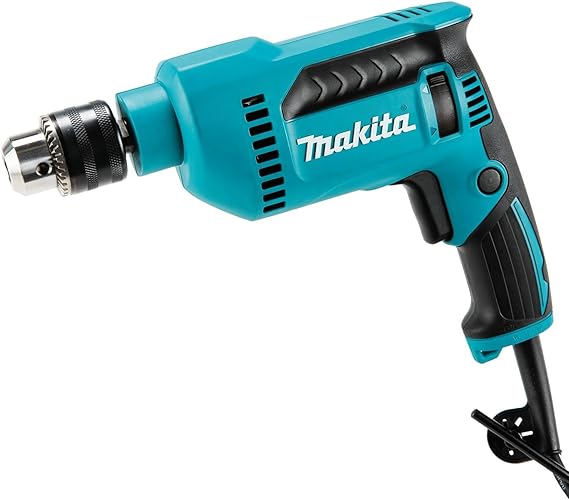
People working mainly with metal will appreciate a drill that offers precise control and consistent power. This corded drill suits those who need reliable performance on tougher materials without worrying about battery life.
Its strongest point is the powerful 5.5 AMP motor combined with an in-line handle design that helps maintain accuracy.
Setting it up is straightforward thanks to the 6.6 ft power cord which gives freedom of movement around the workspace. The variable speed control lets you adjust RPMs up to 3,000, useful when switching between different metals or thinner sheets.
Holding it feels balanced due to the in-line handle, and the lightweight 3.7 lbs design reduces strain during longer drilling sessions. The large trigger and lock-on button keep operation comfortable and steady.
It handles metal drilling tasks well with a maximum chuck size of 0.5 inches and a torque of 120 in-lb, providing enough force for medium-duty projects. Durability is strong due to the all-ball bearing construction, which extends the tool’s life.
Common praise highlights its smooth control and power consistency, while some note the single speed setting limits precise torque control for very delicate jobs.
The drill receives frequent praise for its consistent power output and comfortable handle design which makes precision easier. The main complaint often revolves around having just one speed, which doesn’t give much flexibility for very slow or high-torque tasks.
Those needing steady, medium-power drilling on metal sheets will find this drill a good match. Users who require variable torque or very slow speeds for delicate jobs might want to consider a different model with adjustable gear settings.
Pros
- Powerful 5.5 AMP motor for improved drilling
- In-line handle aids in drilling accuracy
- Lightweight design reduces user fatigue
- Large trigger and lock-on button for comfort
Cons
- Only one speed limits delicate torque control
- Cord length might be short for bigger job sites
| Specification | Details |
|---|---|
| Power Source | Corded Electric |
| Maximum Rotational Speed | 3000 rpm |
| Amperage | 5.5 A |
| Maximum Chuck Size | 0.5 inches |
| Weight | 3.7 lbs. |
Comparison of Best Corded Drills for Metal
| Product | Maximum Rotational Speed | Maximum Chuck Size | Maximum Torque | Maximum Power |
|---|---|---|---|---|
| DEWALT DWD115K Drill | 2500 rpm | 20 mm | 150 in-lb | 300 watts |
| DEWALT DW235G Drill | 1000 rpm | 13 mm | 1400 in-lb | 300 watts |
| SKIL DL181901 Drill | 950 rpm | 0.5 inches | – | 900 watts |
| Hoteche Corded Drill | 3600 rpm | 0.38 inches | – | 720 watts |
| DEKOPRO Hammer Drill | 3000 rpm | 0.5 inches | – | – |
| BLACK+DECKER DR260C Drill | 1500 rpm | 10 mm | 360 in-lb | 1800 watts |
| GALAX PRO Hammer Drill | 3000 rpm | 13 mm | – | 600 watts |
| Hammerhead HAHD075 Drill | 3000 rpm | 13 mm | – | 900 watts |
| DEWALT DWE1014 Drill | 2800 rpm | 0.38 inches | – | 300 watts |
| Hoteche Hammer Drill | 3200 rpm | 0.5 inches | – | 1050 watts |
| DEWALT DW130V Drill | 550 rpm | 0.5 inches | 207.12 N m | 300 watts |
| Makita DP4020 Drill | 3000 rpm | 0.5 inches | 120 in-lb | – |
- Maximum Rotational Speed2500 rpm
- Maximum Chuck Size20 mm
- Maximum Torque150 in-lb
- Maximum Power300 watts
- Maximum Rotational Speed1000 rpm
- Maximum Chuck Size13 mm
- Maximum Torque1400 in-lb
- Maximum Power300 watts
- Maximum Rotational Speed950 rpm
- Maximum Chuck Size0.5 inches
- Maximum Torque–
- Maximum Power900 watts
- Maximum Rotational Speed3600 rpm
- Maximum Chuck Size0.38 inches
- Maximum Torque–
- Maximum Power720 watts
- Maximum Rotational Speed3000 rpm
- Maximum Chuck Size0.5 inches
- Maximum Torque–
- Maximum Power–
- Maximum Rotational Speed1500 rpm
- Maximum Chuck Size10 mm
- Maximum Torque360 in-lb
- Maximum Power1800 watts
- Maximum Rotational Speed3000 rpm
- Maximum Chuck Size13 mm
- Maximum Torque–
- Maximum Power600 watts
- Maximum Rotational Speed3000 rpm
- Maximum Chuck Size13 mm
- Maximum Torque–
- Maximum Power900 watts
- Maximum Rotational Speed2800 rpm
- Maximum Chuck Size0.38 inches
- Maximum Torque–
- Maximum Power300 watts
- Maximum Rotational Speed3200 rpm
- Maximum Chuck Size0.5 inches
- Maximum Torque–
- Maximum Power1050 watts
- Maximum Rotational Speed550 rpm
- Maximum Chuck Size0.5 inches
- Maximum Torque207.12 N m
- Maximum Power300 watts
- Maximum Rotational Speed3000 rpm
- Maximum Chuck Size0.5 inches
- Maximum Torque120 in-lb
- Maximum Power–
How to Choose the Right Corded Drill for Metal
Choosing a corded drill for metal involves focusing on power, durability, and speed control to handle tough materials efficiently. Getting these factors right ensures smooth drilling, prevents tool damage, and saves money by avoiding frequent replacements or repairs.
Motor Power and Speed
Drilling through metal requires enough power to prevent the drill from bogging down or stalling. A motor with at least 6 to 8 amps generally provides enough torque for most metal projects, ensuring steady performance without overheating.
I’ve experienced slower drills struggling on thicker steel sheets, causing frustration and uneven holes.
Variable speed control is essential because softer metals need gentler drilling speeds, while harder metals require more power and slower rotations to avoid burning the bit. Look for drills offering a speed range of about 0 to 3,000 RPM. Consistent torque matters a lot during heavy use, keeping the drill running smoothly and avoiding stalls that can ruin your work and damage equipment.
Chuck Size and Type
The chuck size determines what drill bits can be used, and for metal, bits usually range from 1/16 inch up to 1/2 inch in diameter. A 3/8-inch chuck is often enough for most tasks, but a 1/2-inch chuck allows more flexibility for larger bits.
Using the right bit size prevents slipping or breaking during drilling.
Keyless chucks are handy for quick bit changes without extra tools, which speeds up work when switching bit types or sizes. However, keyed chucks tend to hold bits more firmly under heavy torque.
A chuck that feels solid and doesn’t loosen easily after repeated use is key, as cheap mechanisms wear out fast and risk bit slippage.
Build Quality and Durability
Metalworking involves sparks and shavings, so the drill’s housing needs to be made of tough materials like impact-resistant plastic or metal to withstand this abuse. Some drills have vents designed to channel heat away, which really helps during long, continuous use by protecting the internal parts and preventing premature failure.
Inside, parts like gears and motor brushes must be solid and well-constructed to handle the stress from drilling dense metal. I’ve seen cheaper drills fail quickly because their internal components weren’t up to the task, causing downtime and repair costs.
Ergonomics and Handling
Long jobs drilling metal can tire out your hands fast if the drill is heavy or poorly balanced. A lightweight design with a padded, rubberized grip makes holding the tool comfortable for hours.
Balance between the body and handle reduces wrist strain and keeps the drill steady.
Vibration is a big factor that affects accuracy and comfort. Drills with built-in vibration dampening help keep holes precise and hands less sore.
Also, the trigger placement should let you adjust speed smoothly without awkward finger stretches or sudden starts and stops, making control easier throughout the job.
Safety Features
Overload protection is vital because pushing a drill too hard through thick metal can cause motor burnout or even sudden shutdowns to prevent damage. This safety feature safeguards both the tool and the user from unexpected failures.
Handles insulated with quality rubber and proper grounding reduce shock risks, which is critical when working around metal. An added safety switch or lock to prevent accidental startups is very useful during bit changes or carrying the drill around, preventing mishaps that could cause injury.
Tips for Drilling Metal Efficiently with a Corded Drill
Using a corded drill for metal requires steady speed control and the right drill bits to get clean, precise holes. Choose high-speed steel (HSS) or cobalt drill bits, as they can withstand the heat generated when cutting metal.
Fix the metal piece securely with clamps to minimize movement, which improves accuracy and reduces the risk of injury. Mark the drilling spot with a center punch to prevent the drill bit from wandering.
Start drilling at a low speed, applying firm but moderate pressure to avoid overheating. Periodically pull the drill bit out to clear metal shavings and keep the bit cool. Applying cutting oil or lubricant helps reduce friction and extends the bit’s life.
Hold the drill perpendicular to the metal surface to ensure straight holes and less wear on the bit.
Common Mistakes to Avoid When Using Corded Drills on Metal
Running the drill at high speed without lubrication is a common error that quickly dulls drill bits and overheats the workpiece. Avoid rushing the job by pushing too hard; this can cause the bit shaft to bend or break.
Skipping the step of securing the metal can lead to slipping, which is both dangerous and likely to damage the material.
Not using the right type of drill bit leads to poor results and wasted effort. For instance, wood or masonry bits won’t cut metal effectively. Another frequent mistake is neglecting to clear metal shavings from the hole during drilling, causing excessive heat build-up and bit degradation.
Applying cutting oil is often overlooked but crucial for smoother drilling.
Comparing Corded Drills and Cordless Drills for Metalwork Tasks
Corded drills deliver consistent power without the need to stop and recharge, making them reliable for long metalworking sessions. They usually offer higher torque than cordless models at a lower price point, which benefits tasks requiring steady speed and sustained pressure on hard metals.
Cordless drills provide more freedom of movement, which is helpful in tight spaces or locations without easy access to power outlets. However, battery life limits continuous use, which can be frustrating on larger jobs. Some cordless models now match corded drills in power but come with a higher cost and added weight due to battery packs.
- Corded drills: steady power, typically lighter, no downtime for charging
- Cordless drills: portable, convenient for quick or remote jobs, limited run time
Choosing between them depends on how often and where metal drilling takes place, as well as the scale of the projects involved.
People Also Asked
How Do I Properly Use a Corded Drill on Metal?
Start by securing the metal piece firmly, then select the right drill bit designed for metal such as a cobalt or titanium-coated bit. Use a slow to moderate speed and apply steady pressure. Keeping a bit of lubricant like cutting oil on the drilling area helps reduce heat and prolong bit life.
What Size Drill Bit Is Best for Drilling Metal?
The best drill bit size depends on the hole needed, but common sizes for metal range from 1/16 inch to 1/2 inch. It helps to start with a smaller pilot hole to avoid slipping and then enlarge as needed.
Are Corded Drills Safe to Use on Metal Surfaces?
Corded drills are safe on metal surfaces if proper safety gear like gloves and eye protection is used. Make sure the drill bit is sharp and the metal is clamped down to prevent slipping. Avoid excessive pressure to reduce risk of bit breaking.
How Long Do Corded Drills Typically Last with Metal Work?
Corded drills can last many years with regular metal work if maintained properly. This includes cleaning the motor vents, checking the cord for damage, and replacing worn brushes or bits when needed.
What Are Common Problems When Drilling Through Metal with a Corded Drill?
Common issues include drill bit slipping on the metal surface and overheating of the bit. Applying cutting oil and using center punches to mark drill points can help avoid these problems. Also, excessive pressure can cause bits to break.
Conclusion
Power and durability are the key factors to focus on when choosing a corded drill for metal. A strong motor helps with drilling through tough metal surfaces without stalling. Also, a steady grip and comfortable handling make longer jobs easier to manage.
Adjustable speed settings can be useful for different types of metal and thicknesses.
Consider how often you’ll use the drill and your budget before making a choice. A heavier-duty drill might be worth the investment if you drill metal regularly, while lighter models suit occasional use.
Revisit the comparison table and product details above to find the right balance between features and price for your needs.