
Top 12 Best Corded Right Angle Drill That Will Amaze You
Working in tight spaces often means struggling with bulky tools that can’t reach or, worse, break under pressure. A cheap or poorly made drill can stall easily, overheat, or be too large to fit where you need it most.
Finding the best corded right angle drill makes those cramped corners more manageable, giving consistent power without the need for frequent recharges or battery issues often seen in cordless versions.
The most important aspects for a good corded right angle drill include motor power, size, and durability. Typically, a motor with at least 6 amps provides enough torque for most construction and maintenance tasks. The compact head, usually under 3 inches, allows access to tight spots, while metal gearing rather than plastic ensures longer life.
Comfortable grip and easy access to controls also matter, especially during prolonged use to reduce hand fatigue and keep accuracy steady.
Need a Quick Check?
| Image | Product | Price |
|---|---|---|
Our Top Picks 1  | Makita DA3010F Angle Drill | Check Price |
Our Top Picks 2  | DEWALT DWD450 Stud Drill | Check Price |
Our Top Picks 3  | Generic 1/2″ Right Angle Drill | Check Price |
Our Selected Top 12 Corded Right Angle Drill for Every Budget
This list features carefully chosen corded right angle drills suited for various needs and budgets. Each review explains how the drill performs, highlights its strengths and weaknesses, and identifies the type of user it best serves. The information helps readers find the right tool for their specific tasks.
1. Makita DA3010F Angle Drill
Working in tight spaces like between framing studs calls for a drill that’s compact yet powerful. The Makita DA3010F Angle Drill suits professionals and DIYers who need precision in cramped areas without sacrificing strength.
Its standout feature is a lightweight design combined with a reliable 4.0 AMP motor, making it easier to handle over long periods.
Setting up involves plugging in a corded electric source and choosing the right speed using the variable speed dial, which goes up to 2,400 RPM. The paddle switch is simple to operate, with a speed limiting feature that helps avoid over-tightening screws.
Its small head width of 2-5/8 fits well in narrow spaces, and the built-in clutch reduces the risk of gear damage, which is handy during tricky jobs.
The drill performs consistently when working with wood or metal within its capacity limits. The build feels solid yet is lighter than many other models at just 3.5 lbs. Most praise highlights its compact design and motor strength, while the common downside mentioned is the limited maximum chuck size of 10 millimeters, which restricts the drill bit range.
The strongest praise it receives is for combining powerful performance with a compact, lightweight design that fits well into tight spots. The most common complaint centers on the limited chuck size which restricts the types of drill bits you can use.
Those working frequently in confined areas and needing reliable power will appreciate this drill. It might not be the best pick for those requiring larger bits or multiple speed settings, where a different model could offer more flexibility.
Pros
- Compact design fits in tight spaces
- Lightweight at 3.5 lbs for better control
- Variable speed dial up to 2,400 RPM
- Built-in clutch prevents gear damage
Cons
- Maximum chuck size limits bit options
- Single speed setting may reduce versatility
| Specification | Details |
|---|---|
| Power Source | Corded Electric |
| Maximum Rotational Speed | 2400 rpm |
| Amperage | 4 A |
| Maximum Chuck Size | 10 millimeters |
| Weight | 3.5 lbs. |
| Maximum Torque | 14.6 N m |
2. DEWALT DWD450 Stud and Joist Drill
With an 11 amp DEWALT-built motor, this corded right angle drill suits anyone needing solid power for tight spots. Its standout feature is a mechanical clutch in low gear that prevents bit lock-up, making it reliable for both studs and joists.
Setting up the drill is straightforward thanks to an adjustable front handle and a two-position side handle, which help you get a good grip in various positions. Two variable speed ranges allow matching the speed precisely to what you’re drilling. Despite the metal-gear housing, the tool feels balanced and made for heavy jobs without wearing you down over time.
The drill delivers strong performance, handling high-torque tasks smoothly and drilling holes up to 0.5 inches in wood and metal. The all-metal gear housing and 100% ball bearing construction speak to its toughness and longevity.
Most people appreciate its solid build and clutch feature, though some note the drill could be heavier than ideal for extended use.
Strongest praise focuses on the clutch system that stops bit lock-up, helping protect both the user and the tool. Common complaints revolve around its weight, which some find tiring for longer jobs.
Those needing a tough drill for frequent jobsite use and tasks requiring controlled torque will be satisfied. Anyone looking for a lighter drill or larger drilling capacity should consider other options.
Pros
- Prevents bit lock-up with mechanical clutch in low gear
- Two variable speed ranges for different tasks
- Durable metal-gear housing for jobsite use
- Adjustable handles increase leverage and control
Cons
- Heavier weight can tire you during long use
- Maximum 0.5 inch drill capacity limits larger projects
| Specification | Details |
|---|---|
| Amperage | 11 A |
| Maximum Rotational Speed | 1300 rpm |
| Maximum Chuck Size | 13 millimeters |
| Drilling Capacity Wood | 0.5 inches |
| Drilling Capacity Metal | 0.5 inches |
3. Right Angle Drill 1/2 Inch
People working in tight spaces needing a reliable drill will find the Right Angle Drill 1/2 Inch from Milwaukee fits the bill. It shines in offering power and flexibility with a 7-amp motor and a head that swivels 360 degrees, letting you drill where many other drills can’t reach easily.
Setting up the drill is straightforward; plugging in and attaching bits up to 4-5/8 inches long works smoothly. The trigger speed control helps dial in the right pace for different materials, while the head and handle can rotate fully to fit awkward angles, making it practical for daily use in cramped corners or between studs.
It handles wood and metal drilling up to 0.5 inches with steady power and variable speed. The build is solid for a basic drill, with a maximum torque of 120 N m ensuring strong performance. Reviews commonly mention its power and versatile head motion as major advantages, though some users note the cord limits mobility and the weight can become tiring over longer tasks.
The right angle drill offers strong drilling power combined with a flexible swivel head that many find useful in difficult-to-reach places. The most frequent downside noted is the corded design, which limits movement around the work area and can be inconvenient compared to cordless alternatives.
Those needing powerful performance and precise speed control in tight spots will appreciate the drill’s design. Users prioritizing portability and lighter weight might consider other options better suited for longer or wireless use.
Pros
- Powerful 7-amp motor for tough drilling
- Head and handle swivel 360 degrees
- Trigger speed control for precise work
- Accepts self-feed bits up to 4-5/8 inches
Cons
- Cord limits mobility in some situations
- Heavier weight can be tiring during extended use
| Specification | Details |
|---|---|
| Power Source | Corded Electric |
| Amperage | 7 A |
| Maximum Rotational Speed | 750 rpm |
| Maximum Torque | 120 N m |
| Maximum Chuck Size | 6.35 millimeters |
4. Makita DA4031 Angle Drill

Ideal for plumbers and anyone needing to drill in tight spaces, the Makita DA4031 Angle Drill stands out with its powerful 10 AMP motor and handy 2-speed selector. Its strongest point is how it handles large diameter bits without bogging down, making challenging jobs smoother.
Setting it up is straightforward. The adjustable top handle and solid side handle both have built-in hex wrench storage, so you always have the right tool on hand. Switching between 300 RPM and 1,200 RPM happens easily, allowing quick adjustment based on bit size or material, making everyday tasks less of a hassle.
Performance is strong for a corded angle drill, powering through wood up to 4.63 inches and metal up to 0.5 inches. The torque limiter helps avoid motor damage by cutting off power if the bit binds, but it only works on low speed. The most frequent praise is its motor strength and reliable build, while some find the chuck size limiting for bigger bits.
This drill is highly praised for its powerful motor and the protective torque limiter that prevents motor damage during tough binds. Most users appreciate the adjustable handles for better grip and control. On the downside, the torque limiter’s limitation to low speed and the small chuck size restrict its use with larger bits.
People who regularly work with smaller bits and value motor strength will find it reliable and efficient. Those needing to use bigger diameter bits or seeking torque protection at high speed might want to look elsewhere for a better fit.
Pros
- Powerful 10 AMP motor for tough drilling
- Two-speed selector for versatility
- Adjustable handle with hex wrench storage
- Torque limiter protects motor at low speed
Cons
- Torque limiter works only on low speed
- Chuck size limited to 0.5 inches
| Specification | Details |
|---|---|
| Power Source | Corded Electric |
| Maximum Rotational Speed | 1,200 rpm |
| Voltage | 240 volts |
| Amperage | 10 A |
| Maximum Chuck Size | 0.5 inches |
5. Gino Development TruePower Angle Drill

Gino Development TruePower Angle Drill is a corded right angle drill designed for anyone needing compact power in tight spaces. Its biggest strength is delivering a consistent 1400 RPM with 45 N m of torque, making it well-suited for basic drilling tasks on wood and metal.
Plugging into any standard power outlet, setup is straightforward with no batteries or chargers involved. The single-speed operation at 1400 RPM keeps things simple, while the compact size and right angle design help you work comfortably in awkward spots.
The 0.38-inch chuck accommodates common drill bits for everyday drilling needs.
Performance-wise, it handles drilling into wood and metal at the specified 0.38-inch capacity reliably. The drill’s 960-watt power source gives it enough muscle for lighter jobs without bogging down. Users appreciate its solid construction, but some note the single speed can be limiting when precise control is needed.
People value the drill’s compact form and dependable power for everyday drilling into wood and metal. Many mention the lack of variable speeds as a drawback when finer adjustments are needed during tasks.
This drill suits those who need a straightforward, no-fuss tool for small to medium jobs in confined spaces. Anyone requiring multiple speeds or larger bit capacity might want to explore different models.
Pros
- Compact size fits into tight spaces easily
- Steady 1400 rpm for basic drilling tasks
- Simple single-speed operation
- Strong 960-watt motor power
Cons
- Only one speed limits control options
- Chuck size restricts bit sizes for larger holes
| Specification | Details |
|---|---|
| Voltage | 110 volts |
| Maximum Rotational Speed | 1400 rpm |
| Maximum Torque | 45 N m |
| Maximum Chuck Size | 0.38 inches |
| Power Source | Corded Electric |
| Amperage | 3.8 A |
6. Milwaukee 2415-20 M12 Cordless Right Angle Drill
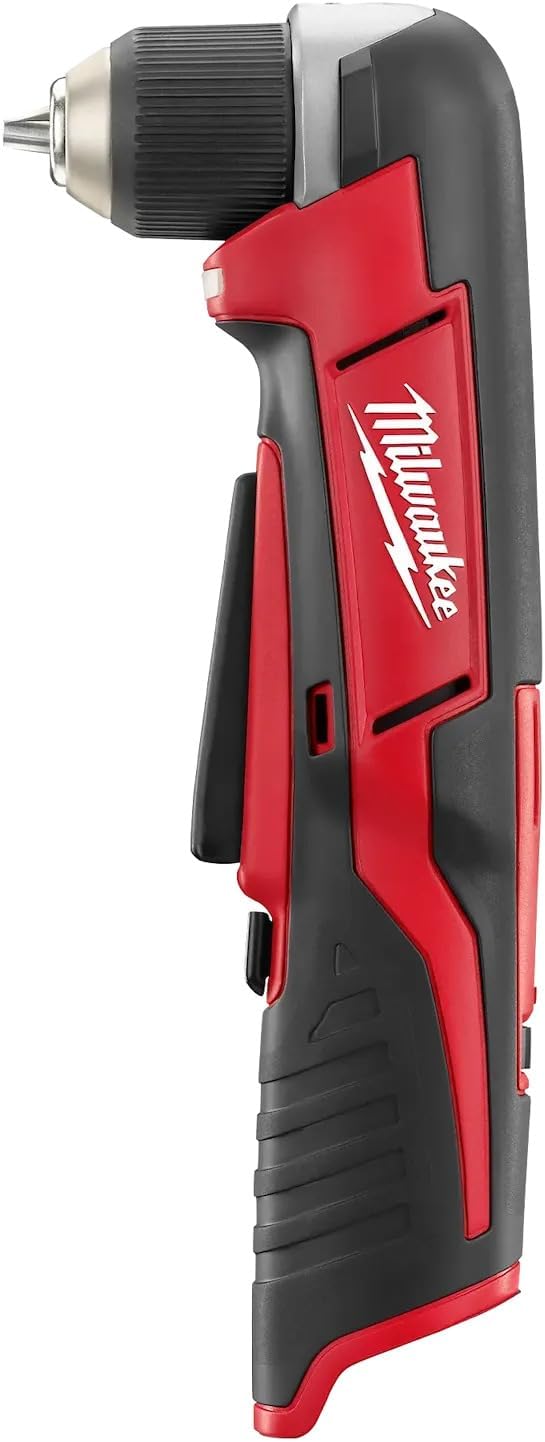
Handling tight spaces feels much easier with this right angle drill, especially when you need steady control. It suits those who often work in cramped spots and need a tool that’s strong yet manageable.
Its best strength lies in balancing power with a compact design.
Setting up involves attaching one of the M12 lithium-ion battery packs, which snaps in quickly and shows remaining run-time on the on-board fuel gauge. The extended paddle switch is comfortable to use in various positions, helping keep steady control during drilling. Built-in LEDs light up dark work areas and let you know when the clutch is slipping, making day-to-day use more efficient and safer.
Power delivery at 12 volts with a max torque of 100 in-lb allows drilling through wood up to 1.25 inches and metal up to 0.38 inches. The electronic clutch offers 11 settings plus a drill mode, giving you control to prevent overdriving screws or damaging materials. Most users appreciate the solid grip from the 3/8-inch ratcheting chuck.
Some find the battery life limiting for longer heavy tasks.
Strong control through the electronic clutch and good grip from the ratcheting chuck make drilling precise and consistent. The main drawback is the battery life, which doesn’t support extended use without recharging or swapping packs.
Tradespeople needing cordless, compact power for tight spots will appreciate this drill. Users expecting long runtime or large chuck capacity might want to consider other options better suited for heavy-duty continuous work.
Pros
- Extended paddle switch for versatile control
- On-board fuel gauge shows battery run-time
- Built-in LEDs illuminate tight workspaces
- Electronic clutch with multiple settings
Cons
- Battery life may limit long continuous use
- Maximum drill size limited to 6.35 mm chuck
| Specification | Details |
|---|---|
| Power Source | Battery Powered |
| Voltage | 12 volts |
| Maximum Torque | 100 in-lb |
| Maximum Rotational Speed | 800 rpm |
| Maximum Chuck Size | 6.35 millimeters |
| Drilling Capacity Wood | 1.25 inches |
7. Genesis GCQD38A Variable Speed Close-Quarter Drill
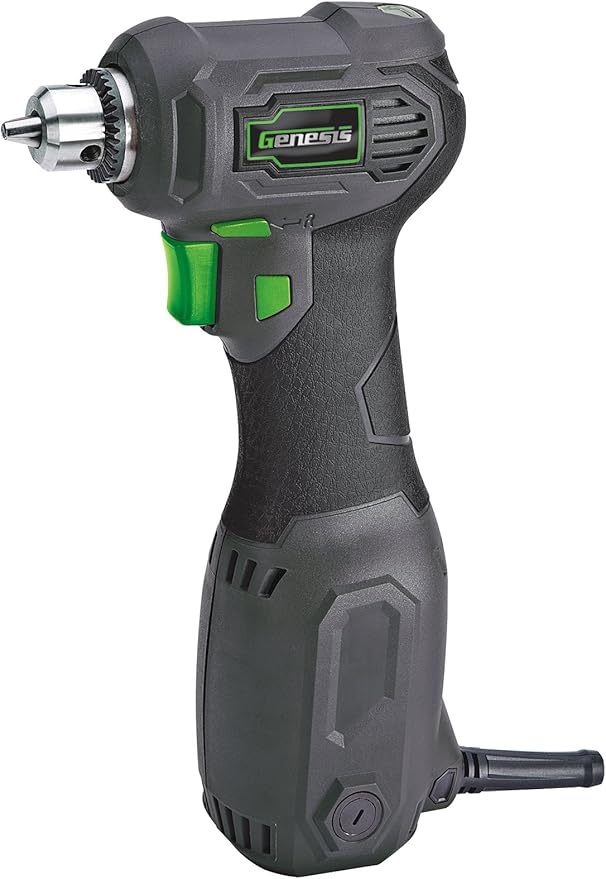
Great for tight spaces, this Genesis drill fits where others struggle. It’s built for close-quarters work and suits anyone needing a compact, corded drill with reliable power.
Plugging it in is straightforward, with a 120-volt power source ready for use. The variable speed dial lets you control drilling from 0 to 1600 RPM, which is helpful on different materials. A lock-on button keeps it running steadily during longer projects, while the power-on indicator confirms the drill is active at a glance.
Its 3.5 amp motor pushes through tasks without hesitating, and the small 3/8 chuck fits bits up to 10 millimeters, perfect for precise jobs. The reversible motor adds flexibility. Users often praise its unique shape and compact head for accessing tight spots, though some find it basic compared to more advanced models.
The unique shape and compact head allow this drill to fit into spots many others can’t, making it very handy for close-quarter work. The most common downside is its simplicity; it doesn’t come with extras found on pricier drills, which may matter for more demanding tasks.
Anyone needing a reliable, straightforward drill for tight spaces will find this very useful. Those looking for more power or bigger chuck sizes should consider other options better suited for heavy-duty or larger projects.
Pros
- Compact head reaches tight spaces easily
- Variable speed up to 1600 RPM
- Lock-on button for continuous use
- Reversible motor for versatile drilling
Cons
- Basic design with limited advanced features
- Chuck size may limit larger drill bits
| Specification | Details |
|---|---|
| Power Source | AC |
| Voltage | 120 volts |
| Amperage | 3.5 A |
| Maximum Rotational Speed | 1600 rpm |
| Maximum Chuck Size | 10 millimeters |
8. VEVOR 3/8 Inch Cordless Right Angle Drill

Durable nylon construction and a 90° right angle design make this drill perfect for tight spaces. Ideal for anyone working in cramped areas, it’s appreciated for fitting easily into gaps and pipe crevices where a straight drill just won’t reach.
Setup involves using the included 2000mAh lithium-ion battery and fast charger, which keeps it ready for action without cords getting in the way. The two-speed settings and lightweight design help with control during woodwork, pipe repairs, or automotive tasks, making daily use less tiring and more precise.
Powered by a brushless motor delivering 45 N m of torque and up to 1900 rpm, it handles drilling through wood and metal efficiently. Most users praise its power and compact form factor, though some note the chuck size limits the drill bit diameter to 0.38 inches, restricting big jobs.
This drill is praised for its strong torque and ability to reach awkward spots with ease. Most users find the limited chuck size a real constraint when needing bigger drill bits for heavy-duty tasks.
People working in tight areas or needing a cordless option will find it handy. Those requiring larger bits or drilling larger holes regularly might want to look for a drill better suited for heavy drilling jobs.
Pros
- 90° design fits in tight spaces
- Powerful brushless motor
- Battery lasts 70 minutes on charge
- Two-speed settings for control
Cons
- Chuck size limits bit diameter
- Not suited for very heavy drilling
| Specification | Details |
|---|---|
| Maximum Chuck Size | 0.38 inches |
| Maximum Torque | 45 N m |
| Speed | 1900 rpm |
| Battery Capacity | 2000 milliamp_hours |
| Power | 260 watts |
9. Brushless Right Angle Drill for DeWalt 20V

Ideal for those who already own DeWalt 20V batteries, the Brushless Right Angle Drill is a practical choice for tight spaces and demanding tasks. Its strongest feature is the brushless motor delivering 400 in-lb of torque, making it powerful enough for various drilling needs while keeping a compact profile.
Using the drill is straightforward once paired with a compatible DeWalt 20V MAX battery. The cordless setup offers better mobility compared to corded models, fitting into corners where typical drills struggle. With two-speed options and a maximum chuck size of 0.38 inches, switching tasks and bits is convenient.
The battery compatibility means no extra chargers or extra batteries are needed if you already have the right ones.
Performance on drilling and tightening tasks is solid, thanks to the 1900 rpm top speed and 400 in-lb torque output. The build feels sturdy and well-constructed, typical of tools designed for professionals.
One common praise highlights its compact form for right-angle access, while a frequent complaint centers on the tool being battery-powered, limiting continuous use without charged batteries on hand.
Strong torque and compact design receive high marks for fitting into tight spots effectively. The need for a separate DeWalt battery and limited usage time on a single charge are noted drawbacks from daily use.
Professionals with existing DeWalt 20V batteries will find this drill convenient and powerful. Those needing uninterrupted operation or a corded option may want to explore other models offering continuous power supply.
Pros
- Compatible with DeWalt 20V MAX batteries
- High torque output of 400 in-lb
- Compact for tight spaces
- Two-speed settings for versatile tasks
Cons
- Battery not included
- Limited run time without extra batteries
| Specification | Details |
|---|---|
| Maximum Torque | 400 in-lb |
| Voltage | 20 volts |
| Maximum Rotational Speed | 1900 rpm |
| Maximum Chuck Size | 0.38 inches |
| Number of Speeds | 2 |
10. Makita DA4000LR Angle Drill

Powerful enough for tough jobs and designed to fit into tight spots, this drill suits anyone needing a reliable corded right angle tool. Its biggest strength lies in the 7.5 AMP motor, which handles various materials without losing pace.
Setting up involves plugging into a standard 220-volt outlet, and the two-speed option lets you switch smoothly between 0-400 and 0-900 RPM depending on your drilling needs. The rubberized grip keeps your hand comfortable during longer tasks, while the large side handle gives extra control and stability for precise work.
Performance holds up well against wood and metal alike, drilling up to 39 millimeters in wood and 13 millimeters in metal effectively. Built with all-ball bearing construction, it runs smoothly and should last longer under regular use.
Strong points include its power and handling, but a typical gripe is its weight, which can be tiring during extended periods.
The powerful motor and smooth operation earn praise for handling wood and metal efficiently. Weight is the most frequent downside, causing some fatigue when used for long stretches.
The drill suits those needing steady power and control in confined spaces. Users looking for something lighter or with bigger chuck sizes might prefer other models.
Pros
- Strong 7.5 AMP motor for tough materials
- Ergonomic rubberized grip for comfort
- Large side handle offers better control
- Variable speed for versatile drilling
Cons
- Can feel heavy during long use
- Maximum chuck size limits larger bit options
| Specification | Details |
|---|---|
| Power Source | Corded Electric |
| Motor Amperage | 7.5 A |
| Speed Settings | 2 speeds (0-400 & 0-900 RPM) |
| Max Chuck Size | 0.5 inches |
| Drilling Capacity | Wood 39 mm, Metal 13 mm |
11. DEWALT FLEXTORQ Right Angle Drill Adapter
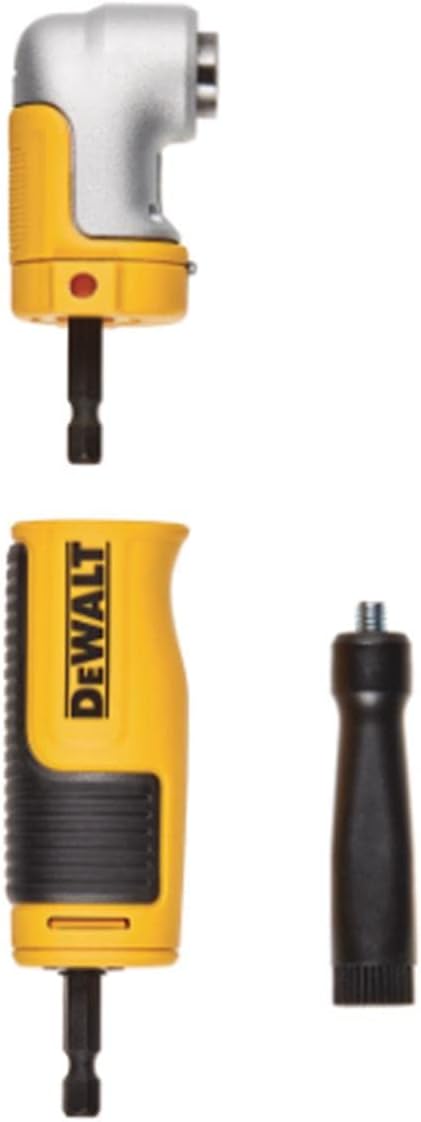
Working in tight spaces often makes drilling tough, but the DEWALT FLEXTORQ Right Angle Drill Adapter handles this with ease. Designed to work with Dewalt impact drivers, its compact size offers great accessibility without sacrificing solid power.
It suits anyone needing a slimmer profile to reach tricky spots without losing torque.
Connecting the adapter to a Dewalt impact driver is straightforward, and the rare earth magnet holds screws in place for easier one-handed operation. Its 1.5-inch head height keeps things tight and the metal gearcase resists wear and tear. Quick bit ejection speeds up switching tasks, making daily jobs run smoother right on the site.
The power output keeps up nicely with a max torque of 300 in-lb and a top speed of 1450 rpm, drilling through wood up to 32 millimeters thick. Built to last, the long life gears offer up to 10 times longer durability than typical models.
Some users mention that while it’s sturdy, the 0.5-inch chuck size can limit bit options on certain projects.
The strongest point is how the adapter combines compact design with serious torque, making difficult angles manageable while maintaining power. The most common downside is the half-inch chuck size limiting bigger bits and needing a specific Dewalt driver to work.
This accessory suits professionals and hobbyists who frequently drill in cramped areas with Dewalt impact drivers. Those needing a wider chuck compatibility or use with other drill brands might look for alternatives offering more flexibility.
Pros
- Compact size fits in tight spaces
- Rare earth magnet holds fasteners securely
- Impact ready for demanding jobs
- Long life gears last 10 times longer
Cons
- Maximum chuck size restricts bit variety
- Requires a Dewalt impact driver to operate
| Specification | Details |
|---|---|
| Power Source | Battery Powered |
| Maximum Chuck Size | 0.5 inches |
| Torque | 300 in-lb |
| Speed | 1450 rpm |
| Drilling Capacity Wood | 32 millimeters |
12. DEWALT Right Angle Flex Shaft Attachment
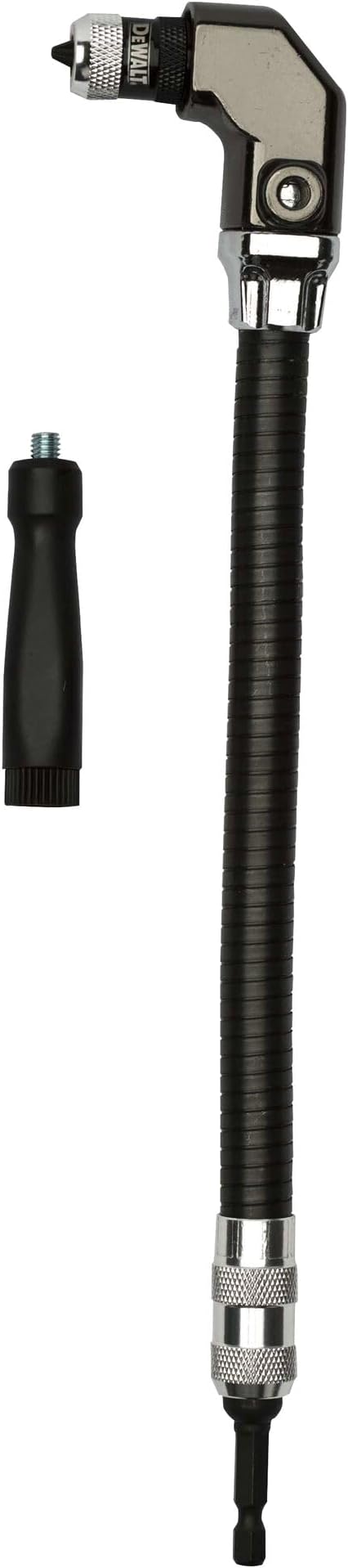
300 watts of power and a 90-degree head with a flexible shaft make this attachment perfect for getting into tight spaces. Great for anyone using DEWALT drills who needs to work in cramped corners or awkward angles.
Its magnetic holding power is a standout, making bit changes and screw driving more reliable.
Setup is straightforward as it fits directly on compatible DEWALT drills. The Rapid Load(TM) head allows quick switching of bits, saving time on the job. Using it day-to-day, the flexible shaft adapts well to tricky spots, keeping your wrist comfortable and reducing strain.
The compact design means it doesn’t add unnecessary bulk when you’re trying to squeeze into tight areas.
Performance feels solid with a maximum torque of 300 Nm, strong enough for most drilling tasks on wood and metal. The build quality is sturdy and compact, designed to handle the force without feeling fragile. Magnetic holding power being ten times stronger than previous models makes bit retention reliable.
A common gripe is the flexible shaft might feel a bit unwieldy for precision in very small spaces.
The strongest praise highlights the 10x magnetic holding power that keeps bits firmly in place during work. The flexible shaft, while useful for tight spots, can sometimes feel difficult to control precisely. This mix makes it a solid tool for various drill tasks but with a learning curve in certain situations.
People working mainly with DEWALT drills in construction or woodworking will find this attachment handy. Those needing a tool for very intricate spaces or not using DEWALT drills might want to look elsewhere.
Pros
- Rapid Load(TM) head for easy bit changes
- Flexible shaft reaches tight spaces
- Compact design for better handling
- 10x magnetic holding power for bit security
Cons
- Flexible shaft can be tricky in very small spaces
- Only compatible with DEWALT drills
| Specification | Details |
|---|---|
| Power Source | Corded Electric |
| Maximum Chuck Size | 20 millimeters |
| Maximum Torque | 300 N m |
| Speed | 3000 rpm |
| Maximum Power | 300 watts |
| Drilling Capacity Wood | 30 centimeters |
Best Corded Right Angle Drills Comparison Table
| Product | Power Source | Max Speed (rpm) | Max Torque | Max Chuck Size |
|---|---|---|---|---|
| Makita DA3010F Angle Drill | Corded Electric | 2400 | 14.6 N m | 10 mm |
| DEWALT DWD450 Stud Drill | Corded Electric | 1300 | 50 in-lb | 13 mm |
| Generic 1/2″ Right Angle Drill | Corded Electric | 750 | 120 N m | 6.35 mm |
| Makita DA4031 Angle Drill | Corded Electric | 1200 | – | 0.5 inches |
| Gino TruePower Angle Drill | Corded Electric | 1400 | 45 N m | 0.38 inches |
| Milwaukee M12 Cordless Drill | Battery Powered | 800 | 100 in-lb | 6.35 mm |
| Genesis GCQD38A Close-Quarter Drill | AC | 1600 | – | 10 mm |
| VEVOR 3/8″ Cordless Drill | Battery Powered | 1900 | 45 N m | 0.38 inches |
| DeWalt 20V Brushless Angle Drill | Battery Powered | 1900 | 400 in-lb | 0.38 inches |
| Makita DA4000LR Angle Drill | Corded Electric | 900 | 35 N m | 0.5 inches |
| DEWALT FLEXTORQ Adapter | Battery Powered | 1450 | 300 in-lb | 0.5 inches |
| DEWALT Flex Shaft Attachment | Corded Electric | 3000 | 300 N m | 20 mm |
- Power SourceCorded Electric
- Max Speed (rpm)2400
- Max Torque14.6 N m
- Max Chuck Size10 mm
- Power SourceCorded Electric
- Max Speed (rpm)1300
- Max Torque50 in-lb
- Max Chuck Size13 mm
- Power SourceCorded Electric
- Max Speed (rpm)750
- Max Torque120 N m
- Max Chuck Size6.35 mm
- Power SourceCorded Electric
- Max Speed (rpm)1200
- Max Torque–
- Max Chuck Size0.5 inches
- Power SourceCorded Electric
- Max Speed (rpm)1400
- Max Torque45 N m
- Max Chuck Size0.38 inches
- Power SourceBattery Powered
- Max Speed (rpm)800
- Max Torque100 in-lb
- Max Chuck Size6.35 mm
- Power SourceAC
- Max Speed (rpm)1600
- Max Torque–
- Max Chuck Size10 mm
- Power SourceBattery Powered
- Max Speed (rpm)1900
- Max Torque45 N m
- Max Chuck Size0.38 inches
- Power SourceBattery Powered
- Max Speed (rpm)1900
- Max Torque400 in-lb
- Max Chuck Size0.38 inches
- Power SourceCorded Electric
- Max Speed (rpm)900
- Max Torque35 N m
- Max Chuck Size0.5 inches
- Power SourceBattery Powered
- Max Speed (rpm)1450
- Max Torque300 in-lb
- Max Chuck Size0.5 inches
- Power SourceCorded Electric
- Max Speed (rpm)3000
- Max Torque300 N m
- Max Chuck Size20 mm
How to Choose the Best Corded Right Angle Drill
Choosing a good corded right angle drill depends on power, size, and durability to handle tight spaces and tough materials effectively. Getting these factors right ensures efficient work, reduces wear, and prevents costly repairs, saving both time and money in the long run.
Power and Torque
Motors with low wattage or amps often struggle with tougher materials like hardwood or metal, leading to slow drilling and overheating. Drills rated around 6 to 7 amps usually handle most household and light construction tasks without bogging down.
The true difference shows when torque numbers come into play; drills offering 30 to 50 Nm of torque easily power through denser surfaces.
A variable speed control dial is a practical feature. It lets the user adjust drilling speed according to the task, which prevents bit damage and material splintering.
Models without this often feel either too slow or too fast, making precise work frustrating. Managing speed and torque according to the material is key to consistent results.
Size and Ergonomics
Bulky drills can be a real burden in small spaces, like cabinetry or between studs. Compact models with a head size under 7 inches fit better and make angled drilling less of a juggling act. Grip comfort also plays a big role; a rubberized handle that molds to the hand lightens fatigue during extended use.
Weight distribution matters more than overall weight alone. A well-balanced unit, even if a bit heavier, handles like it weighs less. This balance prevents wrist strain especially during awkward angle drilling.
Look for drills around 4 to 5 pounds that feel stable in hand instead of front or back heavy.
Chuck Type and Capacity
Using drill bits that don’t fit properly can slow a project down or cause damage. Check the chuck size, common ones range from ⅜ inch to ½ inch, and confirm it matches your bit needs.
A ⅜ inch chuck covers most applications without adding bulk.
Keyless chucks make swapping bits faster and less fiddly on the job site. But they must still hold bits firmly to avoid slipping under torque, which can strip screws or break bits. Quality chucks will grip bits tightly with no wobble, saving time and frustration.
Durability and Build Quality
Job sites rarely treat tools gently. Covers made from high-impact plastic or metal-reinforced housings endure drops and bangs better than basic plastic shells. Internal parts like motor brushes and gears also need solid construction to avoid early wear.
Dust and debris frequently cause breakdowns. Drills with sealed switches and vents help keep particles out, extending tool life.
Without these protections, users might find their drill slowing or stopping after just a season of regular use.
Safety Features
Safety features directly protect both user and tool during heavy use. An electric brake that stops the bit quickly once the trigger is released prevents accidents in tight spaces where overrun bits could cause injury or damage.
Overload protection prevents the motor from burning out under stress by cutting power before temperatures get too high. Good insulation and design also minimize the chance of electric shock, which becomes critical especially when working in damp or metal-rich environments.
Maximizing Efficiency: Usage Tips for Corded Right Angle Drills
Right angle drills are designed to fit into tight spaces where standard drills won’t reach. To maximize efficiency, ensure you match the drill bit to the material, wood, metal, or masonry each require specific bits. Use steady pressure to prevent the bit from slipping or binding, which can slow the work or damage the material.
Since corded models provide consistent power without battery worry, keep the cord clear of the workspace to avoid interruptions. Use the variable speed feature, if available, to adjust for delicate tasks or faster drilling.
Applying cutting oil on metal surfaces can reduce friction and extend bit life.
- Use the shortest, sharpest drill bit suited for your task.
- Keep the cord positioned away from moving parts.
- Choose the correct speed setting for the material.
- Maintain firm, steady pressure, avoid forcing the drill.
Essential Maintenance Practices to Prolong Your Corded Right Angle Drill’s Lifespan
Routine cleaning is crucial for corded right angle drills. Dust and debris buildup can clog ventilation, causing the motor to overheat.
Wipe the drill down with a dry cloth after use and blow out any dust from vents with compressed air. Avoid using water or solvents on electrical parts.
Inspect the power cord regularly for cuts or fraying to prevent electrical hazards. Replace damaged cords promptly rather than attempting to repair them yourself. Lubricate moving parts according to the manufacturer’s instructions to keep the mechanisms running smoothly.
- Clean vents after each use to prevent overheating.
- Check cord integrity and replace if damaged.
- Lubricate as recommended to reduce wear.
- Store the drill in a dry place to avoid rust.
Comparing Corded Right Angle Drills with Cordless Alternatives for Different Projects
Corded right angle drills deliver steady power without interruptions due to battery life. This makes them ideal for longer projects and heavier materials where consistent torque is necessary. The cord limits mobility, making them less practical for work far from outlets or in awkward positions.
Cordless right angle drills offer greater portability and convenience, especially for quick tasks or work in tight, unreachable spots. However, battery runtime and power can vary, potentially slowing some jobs.
Recharge time and battery degradation over time may require planning and occasional replacement.
- Corded drills suit extended use with steady power.
- Cordless drills offer better mobility and ease for quick tasks.
- Corded models need access to power outlets.
- Battery management is essential for cordless reliability.
People Also Asked
How Do I Maintain a Corded Right Angle Drill Properly?
Keep a corded right angle drill clean and dry, and lubricate moving parts if the manual suggests it. Store it in a case or dry spot to prevent rust or damage to the cord and motor.
What Size Drill Bit Fits a Standard Right Angle Drill?
Most standard right angle drills use drill bits with a 1/4-inch shank, fitting their typical chuck size. Using the right bit size avoids slipping and ensures better drilling accuracy.
Are Corded Right Angle Drills Safe to Use Indoors?
Corded right angle drills are safe to use indoors if you have good ventilation and avoid drilling near flammable materials or wiring. Wear safety goggles and keep the cord away from the drill bit while working.
How Long Does a Typical Corded Right Angle Drill Last?
A typical corded right angle drill can last several years with regular maintenance and moderate use. Overworking the drill or exposing it to harsh conditions can shorten its lifespan.
Why Is My Corded Right Angle Drill Overheating During Use?
Overheating often happens because of continuous heavy use or blockage in the vents. Allow the drill to cool off periodically and check for dust or debris clogging the ventilation openings.
Conclusion
Choosing the right corded right angle drill comes down to power, size, and reliability. Power matters because it determines how well the drill handles tough materials.
Size is important to reach tight spaces without strain. Reliability ensures the drill holds up over repeated use without frequent repairs or issues.
Think about where you’ll be working and how often you’ll need the drill. A smaller, less powerful model can be fine for occasional household tasks, while a heavier-duty option suits regular heavy use.
Refer back to the comparison table and reviews above to match these factors with what fits your needs best.