
Top 12 Best Exhaust Sealing Paste That Fix Leaks Fast!
Exhaust leaks can start as small annoyances but quickly turn into noisy distractions and potential engine damage if the wrong sealing material is used. Choosing the best exhaust sealing paste matters because cheap or poorly made pastes often crack or burn away at high temperatures, leaving gaps that let fumes escape. The right paste sticks firmly to rough or corroded pipes without breaking down under heat or vibration, which is essential for a stable, lasting repair.
Key factors in a good exhaust sealing paste include its high-temperature resistance, typically above 1000°F (540°C), and its ability to adhere to various exhaust metals like steel and cast iron. The consistency matters too, too runny and it can drip away before curing, too thick and it becomes hard to spread evenly.
A paste that is safe to handle without prolonged skin irritation and that can be cleaned off tools with simple solvents saves time and frustration during application.
Need a Quick Check?
| Image | Product | Price |
|---|---|---|
Our Top Picks 1  | J-B Weld MufflerSeal | Check Price |
Our Top Picks 2  | Generic Muffler Repair Kit | Check Price |
Our Top Picks 3  | NASCA High Temp Sealant | Check Price |
Our Selected Top 12 Exhaust Sealing Paste You Can Trust
This list features carefully chosen exhaust sealing pastes, each evaluated for performance, durability, and ease of use. You will discover which products are best suited for different needs, along with their main advantages and potential drawbacks to help make an informed decision.
1. J-B Weld MufflerSeal Muffler Cement
Working with mufflers or exhaust pipes gets easier with a thick iron-reinforced paste that actually seals and holds up to heat well. Ideal for anyone tackling muffler or exhaust system repairs, its main strength lies in handling temperatures up to 700 F, making it practical for high-heat environments.
Application requires spreading the paste over cleaned metal or plastic surfaces where the exhaust joints need sealing. It’s a high-viscosity paste, so it doesn’t run off, helping keep things tidy during setup. The product cures either by air drying, taking up to 24 hours depending on humidity or temperature, or speeds up with direct heat application until it hardens.
When properly cured, the paste forms a sturdy, iron-filled seal that deals well with vibrations and heat stress from exhaust systems. It’s mostly praised for staying solid and reliable under typical operating conditions. Common downsides include the relatively long curing time and lack of water resistance, which can limit use in damp environments.
The paste receives strong praise for creating a durable, heat-resistant bond that holds up well on mufflers and exhaust joints. The main complaint is the wait for full curing without applying heat, which can slow down repairs in cooler or more humid conditions.
Anyone looking for a heat-tolerant, stick-to-anything exhaust repair solution will find this useful. Those needing a water-resistant or quick-dry option should consider alternatives better suited for wet environments or faster turnarounds.
Pros
- Resists temperatures up to 700 F
- Compatible with metal, plastic, and rubber
- Hardens to a strong iron-reinforced seal
- Available in easy-to-use tube and can
Cons
- Long cure time without heat application
- Not water resistant, limits outdoor use
| Specification | Details |
|---|---|
| Specific Uses For Product | Fleet and plant maintenance |
| Item Form | Paste |
| Viscosity Level | High |
| Full Cure Time | 24 hours |
| Water Resistance Level | Not Water Resistant |
| Compatible Material | Metal, Plastic, Rubber |
2. Muffler Repair Kit Exhaust Sealant
Muffler Repair Kit Exhaust Sealant suits anyone needing a reliable exhaust seal that handles high heat without slipping. Its biggest strength is a thick, non-slumping formula that creates a secure, lasting seal on mufflers, tailpipes, and exhausts, perfect for tough automotive repairs.
Applying the paste is straightforward thanks to its high viscosity. It sets up quickly and stays put, avoiding messes or drips during repair. Though not water resistant, it’s tailored to hold firm in extremely hot conditions, curing fully within 30 minutes to provide a solid, crack-resistant barrier.
When sealing exhaust leaks, it performs impressively well under temperatures up to 2012℉ (1100℃), maintaining a firm bond. The tube packaging makes it easy to use right out of the box.
Most praise centers on its durability and heat resistance, while the main downside mentioned is its lack of water resistance.
This paste holds up well against very high temperatures and creates a solid, crack-resistant seal that lasts, appreciated for tackling challenging muffler leaks. A notable complaint is it doesn’t resist water, which could be an issue in damp environments or during rain exposure.
Those needing a fast, heat-resistant fix for muffler and exhaust leaks will find this sealant very effective. It may not be suitable for outdoor wet conditions or repairs beyond exhaust components, so other options should be considered for those scenarios.
Pros
- Thick, non-slumping formula for easy application
- Resistant to extreme heat up to 2012℉
- Strong, crack-resistant, and durable seal
- Quick full cure time of 30 minutes
Cons
- Not water resistant, limiting use in wet conditions
- Only fits exhaust-related repairs, no broader applications
| Specification | Details |
|---|---|
| Specific Uses For Product | Muffler Repair Kit |
| Item Form | Paste |
| Full Cure Time | 30 minutes |
| Extreme Heat Resistance | 2012℉ (1100℃) |
| Water Resistance Level | Not Water Resistant |
| Compatible Material | Exhaust, Mufflers, Tailpipes |
3. NASCA High Temp Exhaust Sealant
Heavy-duty metal compatibility and a high viscosity paste make NASCA High Temp Exhaust Sealant a solid choice for anyone needing to fix leaks in hot zones. Suited for people working on exhaust systems, including car users and mechanics, its biggest strength is its ability to resist heat up to 2012°F without losing effectiveness.
Applying this exhaust paste is straightforward thanks to its thick, non-slumping formula. It stays put exactly where you spread it, avoiding drips or running that can complicate repairs.
The tube packaging allows for easy handling and controlled application, making it practical for spot repairs on cracks or holes that demand a gas-tight seal under extreme heat conditions.
Performance-wise, it creates a hard, permanent bond that fixes leaks reliably at temperatures as high as 1100°C. The paste’s stability under such heat means no shrinking or cracking, maintaining engine efficiency. Most praise points to its extreme heat resistance and solid sealing power, while the main complaint relates to its thick viscosity, which might require some effort to spread evenly.
Sealant holds up well against intense heat, providing a reliable fix without cracking or shrinking. Most find its thick paste consistency a challenge when trying to get an even layer on rough surfaces.
Anyone looking for a durable, high-temperature exhaust repair will appreciate its toughness and seal quality. Those needing a thinner or more versatile paste might want to consider different products better suited for various materials or lighter applications.
Pros
- Stable under extremely high temperatures
- Non-slumping formula stays in place
- Strong permanent bond for exhaust repairs
- Easy to apply from the tube
Cons
- Thick paste may be tough to spread smoothly
- Designed only for metal surfaces
| Specification | Details |
|---|---|
| EXTREME HEAT RESISTANCE | 2012°F (1100°C) |
| Item Form | Paste |
| Viscosity Level | High |
| Compatible Material | Metal |
| Container Type | Tube |
| Special Features | Heat Resistant |
4. Permatex Muffler and Tailpipe Putty

Perfect for sealing holes and leaks in exhaust systems, this putty stands out for its ability to handle high heat up to 2000F. Great for anyone tackling mufflers, tailpipes, or catalytic converter joints, it suits those needing a lasting, heat-resistant fix that’s safe for their vehicle’s emissions system.
Applying the putty involves a simple process since it comes in a convenient tube form with a two-pouch bonus pack. It’s designed for metal and glass fiber surfaces, so setting it up on exhaust parts feels straightforward.
Daily use means waiting through a full 16-hour cure time before relying on the fix, and it’s not water resistant, so keeping it dry is important during repairs.
The putty reliably seals out exhaust fumes even at very high temperatures, making it a tough repair choice for harsh conditions. Its high viscosity means it stays where you put it without running.
The strongest praise notes its permanent repair effectiveness, but some users find the lack of water resistance limiting for certain environments.
The putty’s standout feature is its permanent sealing capability at temperatures up to 2000F, providing a strong hold on exhaust leaks. However, its 16-hour cure time and lack of water resistance are limitations users often mention.
People needing a heat-safe, long-lasting exhaust repair will be satisfied with the product. Those looking for a quick-dry or water-resistant solution might want to explore other options.
Pros
- Effective permanent repair for exhaust leaks
- Heat resistant up to 2000F
- Safe for catalytic converters
- Two-pouch bonus pack included
Cons
- Not water resistant
- Requires 16 hours for full cure
| Specification | Details |
|---|---|
| Item Form | Putty |
| Heat Resistance | Up to 2000F |
| Full Cure Time | 16 hours |
| Water Resistance | Not Water Resistant |
| Compatible Material | Metal, Glass Fiber |
5. Visbella Exhaust System Sealant

Visbella Exhaust System Sealant suits anyone needing a strong, heat-resistant seal for exhaust repairs. Its standout feature is the ability to form a perfect seal that holds up against extremely high temperatures, reaching up to 2012℉, making it reliable for harsh engine conditions.
Applying the paste is straightforward, it’s thick and doesn’t slump, so it stays put on exhaust joints like mufflers and catalytic converters. It waterproofs the connection and sets by evaporating water, then cures fully after around four hours with heat exposure.
Ideal for aluminum parts, it covers a variety of exhaust system needs without running or dripping.
The sealant performs well in sealing against noxious fumes, maintaining integrity even under intense heat. Its paste form and high viscosity make repairs manageable without mess.
Reviews praise its heat resistance and strong bonding, though some mention the full curing time as a minor inconvenience.
The most common praise notes that the sealant withstands very high temperatures while effectively preventing exhaust leaks. At the same time, many point out the four-hour full curing process requires patience and proper heat application to ensure a strong seal.
People needing a heat-tolerant, waterproof exhaust repair that lasts will appreciate its durability. Those looking for a faster cure or use on non-aluminum parts might want to consider alternatives better suited to their requirements.
Pros
- Works well on all exhaust system joints
- High temperature resistance up to 2012℉
- Non-slumping thick paste for easy application
- Waterproof once cured
Cons
- Full cure takes about 4 hours with heat
- Limited to specific materials like aluminum
| Specification | Details |
|---|---|
| Heat Resistance | Up to 2012℉ |
| Form | Paste |
| Cure Time | 4 hours |
| Water Resistance | Waterproof |
| Compatible Material | Aluminum |
6. J-B Weld ExtremeHeat Metallic Paste

Fixing cracks or leaks in high-temperature metal parts can be tricky. For those dealing with metal exhaust repairs or high-heat machinery, a reliable paste that withstands intense temperatures is essential.
A sealing paste designed specifically for iron and steel that can handle up to 1000°F stands out as a dependable choice for these jobs.
Applying the paste comes from its high viscosity formula, making it easy to spread over cracks or gaps without running off. It arrives in a tube, which helps keep things clean and manageable during repairs. Once applied, you’ll need to wait 24 hours for a full cure before the bond can be considered permanent.
The paste hardens solid enough to drill, machine, or sand, so you can finish the repair surface smoothly if needed.
The paste performs well in extreme heat environments, creating a bond stronger than steel once it cures. Repairs to iron and alloy steel hold firmly and resist water, which is crucial for exhaust sealing tasks.
The strongest praise highlights its permanent and heat-resistant bonding. Some mention that the 24-hour cure time is fairly long, so planning repair timing is key.
Users appreciate the paste’s ability to form a permanent, heat-resistant bond that withstands tough repair conditions on iron and alloy steel. The most common downside is the 24-hour cure time, which demands advance planning before a repair can be fully trusted.
Those needing a strong, waterproof solution for high-temperature metal repairs will find this paste meets their needs well. Anyone looking for a quicker fix or lower-viscosity product might want to explore alternative options.
Pros
- Handles extreme temperatures up to 1000°F
- Creates permanent, steel-strong bond
- Can be drilled, machined, or sanded after curing
- Waterproof and durable for exhaust repairs
Cons
- Requires a full 24 hours to fully cure
- High viscosity may need careful application
| Specification | Details |
|---|---|
| Heat Resistance | 1000°F / 537°C |
| Compatible Materials | Alloy Steel, Iron |
| Form | Paste |
| Viscosity Level | High |
| Full Cure Time | 24 hours |
| Water Resistance | Waterproof |
7. Permatex Ultra Copper RTV Gasket Maker

Resisting temperatures up to 700°F intermittently, this exhaust sealing paste suits anyone needing a gasket maker that stands up to extreme heat. Its oil resistance outperforms conventional silicones by three times, making it especially reliable for oily, high-temp environments.
Applying the paste is straightforward thanks to its sensor-safe, low odor, and non-corrosive formula. It forms a strong bond even on oil-contaminated metals and remains remarkably flexible, eight times more than typical cut gaskets. Handling the tube and spreading the silicone feels practical, with no harsh smells or messy cleanup involved.
Performance in sealing exhausts is solid, maintaining integrity under significant temperature shifts without cracking or weakening. The build quality reflects careful engineering by a reputable manufacturer, focused on adhesion and flexibility.
The most common praise highlights its bond strength on oily surfaces, while some note it can take a bit longer to fully cure compared to simple gasket pastes.
Strongest praise centers on the exceptional bond it forms on oily surfaces, giving confidence in tough exhaust sealing tasks. The most frequent complaint is the curing time, which some find slower than simpler gasket pastes, requiring patience during installation.
This sealing paste appeals to anyone working with high-temp, oil-contaminated metal parts who values durability and reliability. Those needing a larger volume or faster curing might explore other options better suited for quick or bulk applications.
Pros
- High temperature tolerance up to 700°F intermittent
- Excellent oil resistance for demanding conditions
- Sensor-safe and low odor formula
- Superior flexibility compared to cut gaskets
Cons
- Takes longer to cure fully than some alternatives
- Only available in a small 3-ounce tube
| Specification | Details |
|---|---|
| Temperature Range | -75°F to 700°F Intermittent |
| Oil Resistance | Three Times More Resistant Than Conventional Silicones |
| Flexibility | Eight Times More Flexible Than Cut Gaskets |
| Weight | 3 ounces |
| Model Number | 81878 |
8. NASCA High Temp Exhaust Repair Kit

People tackling muffler and exhaust pipe repairs with large holes or cracks often need a reliable all-in-one solution. Suitable for those who want to do the job without running to the store for extra supplies, it stands out for its ability to handle extremely high temperatures without degrading.
Getting started involves applying the high-viscosity paste directly from the tube to the affected metal area, then reinforcing it with the included mesh or fiber tape for added strength. The kit’s protective gloves keep your hands clean. After application, the repair cures in about 30 minutes, bonding under heat and providing a firm seal that lasts as the engine runs.
Handling temperatures up to 2012°F (1100°C) means it doesn’t crack or crumble like cheaper fillers might. It holds tight on metal surfaces, providing a solid patch for exhaust leaks.
The product is praised for durability but some users mention that the paste needs careful application because of its thickness and stickiness.
This repair kit holds up well to very high temperatures without cracking, making it dependable for exhaust repairs. The most common issue is the paste’s thickness, which can make spreading it evenly a bit challenging unless you’re careful.
People looking for a durable, heat-resistant fix with all parts included will appreciate this kit. Those seeking a thinner, easier-to-spread sealant might prefer a different product.
Pros
- Withstands extreme automotive temperatures
- Includes repair mesh and fiber tape
- Protective gloves provided in the kit
- Cures to a rock-hard finish quickly
Cons
- Paste is thick and sticky to apply
- May require extra care for smooth application
| Specification | Details |
|---|---|
| Item Form | Paste |
| Heat Resistance | 2012°F (1100°C) |
| Full Cure Time | 30 minutes |
| Compatible Material | Metal |
| Viscosity Level | High |
9. LIQUI MOLY Exhaust Assembly Paste
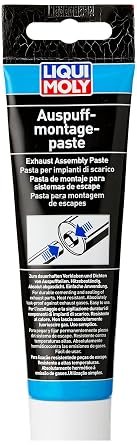
Designed to create a gas-proof and heat-resistant seal for exhaust systems, Liqui Moly Exhaust Assembly Paste is ideal for anyone looking to secure connections that endure high temperatures. Its biggest strength lies in its ability to stick firmly to exhaust parts like end pipes and flame rings, preventing leaks reliably over time.
Applying the paste requires a clean surface on metal or silicone parts before sealing. The high viscosity helps it stay in place without dripping during assembly. Once applied, the product cures fully within 24 hours, ensuring durable water resistance and heat tolerance that suits daily driving conditions and heat cycles typical of exhaust systems.
Performance-wise, the paste holds up well to heat and pressure, maintaining a tight, gas-proof bond on different exhaust joints. The durable composition resists water, helping to avoid corrosion at the sealed points.
The most praised feature is its reliability under extreme temperatures, though some have noted that the curing time of 24 hours can slow down immediate use after application.
This paste reliably withstands high heat and water exposure, creating a strong, gas-proof seal that lasts. The downside is the full 24-hour curing time required before the exhaust system can be safely used without risking seal failure.
It suits anyone needing a dependable, heat-resistant exhaust seal who can wait a day for full curing. Those needing a faster seal or immediate use should consider alternatives with shorter cure times.
Pros
- Strong gas-proof and heat-resistant sealing
- Suitable for metal and silicone materials
- High viscosity prevents dripping during application
- Water-resistant, durable finish
Cons
- Needs 24 hours to fully cure
- Not suitable for immediate reuse after application
| Specification | Details |
|---|---|
| Specific Uses For Product | Universal |
| Item Form | Paste |
| Full Cure Time | 24 hours |
| Water Resistance Level | Water Resistant |
| Compatible Material | Metal, Silicone |
| Other Special Features | Heat Resistant |
10. Liqui Moly Exhaust Repair Paste

Liqui Moly Exhaust Repair Paste offers a straightforward way to seal small cracks and holes in exhaust systems. Designed for people looking for a quick and cost-effective fix, its biggest strength is how well it withstands heat while creating a gas-tight seal without harmful substances.
Using it involves cleaning the area thoroughly and warming up the exhaust by running the engine. Moistening the damaged spot and the paste before pressing it in makes sure it adheres properly.
It works best on exhaust parts that are free from heavy rust or dirt, making application simple and practical.
Performance shines in its ability to resist heat and seal leaks reliably. It avoids asbestos and solvents, adding safety for everyday use.
The strongest point mentioned is how well it stops exhaust leaks. Some note that it may not hold up as well on very large or heavily damaged areas, limiting its use to smaller repairs.
The product is praised for effectively stopping small leaks and resisting high temperatures typical of exhaust systems. Common concerns mention its limitation on larger cracks and the need for clean surfaces to ensure proper sealing.
Anyone needing a quick, low-cost repair for minor exhaust leaks will find it useful. Those with extensive damage or heavily corroded parts might need stronger or more comprehensive solutions.
Pros
- Asbestos and solvent free for safer use
- Heat resistant for exhaust system conditions
- Easy application after cleaning and moistening
- Provides a gas-tight seal on small holes
Cons
- Not suitable for large or heavy damage
- Requires thorough cleaning for best adhesion
| Specification | Details |
|---|---|
| Brand Name | Liqui Moly |
| Manufacturer | LIQUI MOLY GmbH |
| Item Weight | 0.2 kg |
| Model | 3340 |
| Part Number | 3340 |
11. Muffler and Tailpipe Sealant

Feels reliable when applying and working around a hot exhaust pipe. Perfect for anyone needing a secure, heat-proof patch that won’t catch fire. Its biggest strength lies in being a non-combustible, single-component paste that hardens with exhaust heat for a solid, lasting seal.
Easy to apply straight from the tube without any mixing or special tools. The paste sticks well around holes or joints in mufflers and tailpipes.
Once the exhaust heats up, the sealant sets into a firm surface that resists vibration and heat cycling, meaning the repair stays put through daily driving conditions.
Seals holes and leaks effectively without breaking down under extreme temperatures. The paste forms a rigid seal activated by exhaust heat and remains strong even with vibration and thermal changes. Most people praise its non-combustible nature and toughness, while some find the hardening process takes a bit longer than expected before it fully sets.
The paste creates a firm, heat-activated bond that holds up under vibration and extreme temperatures. Some found the curing time a bit slower before the seal fully hardened.
Works well for those looking to patch exhaust leaks without a fire risk and needing a durable fix. Not ideal for quick repairs where immediate full strength is needed or for non-exhaust applications.
Pros
- Non-combustible for safe exhaust system use
- Single component, ready to apply
- Hardens with exhaust heat into a rigid seal
- Durable against vibration and thermal cycling
Cons
- Hardening process can take longer than expected
- Only suitable for exhaust system repairs
| Specification | Details |
|---|---|
| Brand Name | Dynatex |
| Number of Packs | 2 |
| Unit Count | 2 Count |
| Item Highlight | Non-Combustible, Heat-Setting, Hardens with Exhaust Heat, Repairs Holes & Leaks |
| Model | 136989×2 |
12. Permatex Muffler and Tailpipe Putty

Permatex Muffler and Tailpipe Putty provides reliable exhaust sealing suited to anyone repairing mufflers or tailpipes who needs a strong, pliable seal. Its biggest strength lies in creating tight seals that resist heat and vibration well.
Applying the putty is straightforward; it softens with hand warmth, making it easy to mold around exhaust joints. Daily use involves pressing it firmly into gaps where leaks might form, ensuring a good fit.
It stays put during normal engine heat cycles, which matters when avoiding exhaust fumes and noises escaping.
Sealing performance is solid, keeping exhaust joints quiet and leak-free. The putty is dense yet pliable, built to handle the high temperatures found around mufflers. Praise centers on its effective sealing and ease of shaping, while the main drawback noted is that it can dry out if left unused for too long.
Everyday use shows that the putty performs well sealing exhaust joints against leaks and noise, praised for its pliability and strong hold. A common issue is that it can stiffen over time without use, making it harder to work with later.
Those repairing mufflers or tailpipes with occasional maintenance needs will find it an effective solution. People looking for a long-lasting sealant that stays soft indefinitely might seek alternative options better suited to prolonged storage.
Pros
- Easy to mold and apply by hand
- Withstands high temperatures near exhaust
- Creates effective, lasting seals
Cons
- Can dry out if left unused for long
- Requires warming before use for best flexibility
| Specification | Details |
|---|---|
| Manufacturer | Permatex |
| Brand | Permatex |
| Manufacturer Part Number | 80333 |
Best Exhaust Sealing Paste Comparison Table
| Product | Specific Uses | Cure Time | Water Resistance | Compatible Material |
|---|---|---|---|---|
| J-B Weld MufflerSeal | Fleet and plant maintenance | 24 hours | Not Water Resistant | Metal, Plastic, Rubber |
| Generic Muffler Repair Kit | Muffler Repair Kit | 30 minutes | Not Water Resistant | Exhaust, Mufflers, Tailpipes |
| NASCA High Temp Sealant | Repair | – | – | Metal |
| Permatex Muffler Putty | Fleet and plant maintenance | 16 hours | Not Water Resistant | Metal, Glass Fiber |
| Visbella Exhaust Sealant | Repair | 4 hours | Waterproof | Aluminum |
| J-B Weld ExtremeHeat Paste | Repair, High Temperature Environments | 24 hours | Waterproof | Alloy Steel, Iron |
| Permatex Ultra Copper RTV | – | – | – | – |
| NASCA Exhaust Repair Kit | – | 30 minutes | – | Metal |
| Liqui Moly Assembly Paste | Universal | 24 hours | Water Resistant | Metal, Silicone |
| Liqui Moly Repair Paste | – | – | – | – |
| Generic Muffler Tailpipe Sealant | Repairs Holes & Leaks | – | – | – |
| Permatex Tailpipe Putty | – | – | – | – |
- Specific UsesFleet and plant maintenance
- Cure Time24 hours
- Water ResistanceNot Water Resistant
- Compatible MaterialMetal, Plastic, Rubber
- Specific UsesMuffler Repair Kit
- Cure Time30 minutes
- Water ResistanceNot Water Resistant
- Compatible MaterialExhaust, Mufflers, Tailpipes
- Specific UsesRepair
- Cure Time–
- Water Resistance–
- Compatible MaterialMetal
- Specific UsesFleet and plant maintenance
- Cure Time16 hours
- Water ResistanceNot Water Resistant
- Compatible MaterialMetal, Glass Fiber
- Specific UsesRepair
- Cure Time4 hours
- Water ResistanceWaterproof
- Compatible MaterialAluminum
- Specific UsesRepair, High Temperature Environments
- Cure Time24 hours
- Water ResistanceWaterproof
- Compatible MaterialAlloy Steel, Iron
- Specific Uses–
- Cure Time–
- Water Resistance–
- Compatible Material–
- Specific Uses–
- Cure Time30 minutes
- Water Resistance–
- Compatible MaterialMetal
- Specific UsesUniversal
- Cure Time24 hours
- Water ResistanceWater Resistant
- Compatible MaterialMetal, Silicone
- Specific Uses–
- Cure Time–
- Water Resistance–
- Compatible Material–
- Specific UsesRepairs Holes & Leaks
- Cure Time–
- Water Resistance–
- Compatible Material–
- Specific Uses–
- Cure Time–
- Water Resistance–
- Compatible Material–
How to Choose the Right Exhaust Sealing Paste
Choosing an exhaust sealing paste depends on heat resistance, durability, and compatibility with your exhaust materials. Selecting the right paste ensures a strong, long-lasting seal that prevents leaks and avoids costly repairs or replacements. Prioritizing quality saves both time and money in the long run.
Heat Resistance
Engine exhaust temperatures often surpass 1000°F during operation, challenging any sealant used in the system. Paste products without proper heat resistance can degrade, crack, or crumble after a few heat cycles, leading to leaks and potential engine damage. A reliable product stands firm through repeated thermal cycling and maintains integrity beyond 1000°F continuous use.
Some can even handle short peak temperatures near 1600°F, which is essential in preventing failure during heavy engine loads.
Experience shows choosing one with a clear high-temperature rating is crucial. Look for temperature ratings specifically stating continuous and peak thresholds.
Paste that fails here often turns brittle quickly, requiring frequent repairs and risking exhaust leaks that reduce performance and increase noise.
Adhesion and Flexibility
A strong bond between the paste and metal exhaust parts keeps the system airtight under constant vibration and heat changes. Products that lack adequate adhesion soon crack or peel, causing exhaust gases to escape.
Proper flexibility allows the seal to move slightly with metal thermal expansion without losing contact. Compatibility with materials like steel, aluminum, or cast iron matters because some pastes may not stick well to all metals.
Experience shows the best choices maintain flexibility while forming a tight bond on different surfaces. Look for specifications mentioning multi-metal compatibility and resistance to vibration. Product labels or technical sheets usually note this, and ignoring it can lead to persistent leaks and more frequent repairs.
Curing Time and Application
Many exhaust seal pastes vary in texture, affecting how easy it is to spread and apply neatly around joints and flanges. Some are thick and difficult to smooth, requiring tools, while others can be applied by hand without mess.
The curing time also varies widely, from about 15 minutes to a few hours before the seal fully hardens and can withstand heat and pressure.
For practical daily use, consider how quickly you need the system operational again. Some formulas need curing in heat or require specific temperature ranges for best results.
Products that cure at room temperature without special conditions are easier to work with for quick repairs. Pay attention to instructions on application thickness and tool needs.
Durability and Longevity
Exposure to moisture, road salt, and chemicals from fuel can degrade seals rapidly if the paste lacks proper durability. Leaks can return as the paste cracks, shrinks, or hardens brittle over time due to environmental factors and constant exhaust system stress. A durable paste maintains a strong, flexible seal through years of driving.
Look for products that specify resistance to water, salt, and chemical exposure. Pastes proven to last beyond typical seasonal extremes reduce maintenance frequency.
Avoid cheap pastes that often dry out or crumble after a few months, leading to frustration and recurring leaks.
Safety and Toxicity
Handling and applying these pastes safely matters since some products release fumes during curing or contain harmful components. Once fully cured, good sealants become inert and non-toxic, posing no risk of fumes entering the vehicle cabin.
Safe products come with clear instructions on safe storage and handling during application to avoid skin or respiratory irritation.
Compliance with automotive and environmental standards is a good indicator of safety. Checking for relevant certifications or approvals helps ensure the product isn’t just effective but also safe for you and the environment. Ignoring this can cause unnecessary exposure to hazardous substances during repair work.
Proper Application Techniques for Exhaust Sealing Paste
Clean surfaces ensure the best possible bond for exhaust sealing paste. Residue like rust, oil, or dirt prevents the paste from adhering and sealing properly. Use a wire brush or sandpaper to clear the metal, then wipe down with a degreaser or acetone.
Steps to apply exhaust sealing paste effectively:
- Apply the paste evenly in a thin layer over the joint or crack.
- Spread it using a gloved finger or a small spatula to avoid lumps and gaps.
- Allow the paste to dry partially before fitting parts together, so it doesn’t squeeze all out under pressure.
- Torque bolts evenly and gradually to maintain a uniform seal and prevent paste displacement.
- Follow manufacturer’s recommended curing time before starting the engine.
These steps help create a durable seal that withstands heat, vibration, and expansion typical in exhaust systems.
How to Maintain and Extend the Life of Exhaust Sealants
Periodic inspections extend the effectiveness of exhaust sealing paste. Look for cracks, peeling, or areas where the paste is thinning, as these indicate a failing seal.
Addressing these signs early prevents leaks and subsequent damage.
Maintenance tips for longer-lasting seals include:
- Avoid short trips that don’t let the exhaust system fully heat up, since cold moisture can degrade the paste faster.
- Ensure exhaust clamps and flanges remain tight over time, as loose connections stress the seal.
- Keep road salt and chemicals off the exhaust area where possible to reduce corrosion around the seal.
- Clean the area carefully if repairs are needed again; removing old paste thoroughly improves adhesion of new applications.
Taking these precautions keeps the sealing compound effective for years rather than months.
Comparing Exhaust Sealing Paste with Other Exhaust Repair Solutions
Exhaust sealing paste stands out for flexible, temporary repairs where welding or replacement isn’t immediately practical. Unlike exhaust tape or high-temperature silicone, paste fills gaps and cracks well without shifting or peeling under vibration.
Comparison to other options:
- Welding: Provides a permanent fix but requires skill, special equipment, and can distort heat-sensitive components.
- Exhaust tape: Easy to apply but prone to loosening quickly, especially on hot, moving parts.
- High-temp silicone: Good for sealing but less resistant to exhaust gases and may degrade faster.
For a mid-term, practical solution, exhaust sealing paste offers a balance between durability and ease of use, working well on small to moderate leaks until a more permanent repair can be made.
People Also Asked
How Do I Apply Exhaust Sealing Paste Correctly for a Tight Seal?
Apply exhaust sealing paste evenly around the joint or crack to create a consistent layer. Cleaning the surfaces beforehand improves adhesion and helps avoid leaks. Use a brush or your finger to smooth it out for a better seal.
Is Exhaust Sealing Paste Safe to Use on All Pipe Materials?
Most exhaust sealing pastes work on common metals like steel and stainless steel but check the label for compatibility with aluminum or coated pipes. Using the paste on incompatible materials may reduce effectiveness or cause damage.
How Long Does Exhaust Sealing Paste Typically Last Before Needing Replacement?
A typical exhaust sealing paste lasts several months to a year depending on heat exposure and driving conditions. Check the seal periodically and reapply if you see cracks or leaks appearing.
Can Exhaust Sealing Paste Handle High Temperatures Without Breaking Down?
Exhaust sealing pastes are formulated to withstand high temperatures common in exhaust systems, often up to 2000°F or more. Avoid exposing the paste to flame or extreme heat spikes immediately after application to allow proper curing.
Will Exhaust Sealing Paste Work on Different Exhaust Pipe Sizes and Joints?
Sealing paste adapts well to various pipe sizes and joint types since it fills gaps and irregularities. Make sure to apply enough paste to cover the joint completely, especially on larger or uneven connections.
Conclusion
Choosing a good exhaust sealing paste means focusing on heat resistance, how well it bonds to metal, and how easy it is to apply. The product should hold up under high temperatures and stay reliable over time without peeling or cracking. Also consider how long it takes to cure, especially if you need a quick repair.
Match the paste to your specific job, smaller tubes might work fine for occasional use, while larger quantities are better for frequent repairs. Be sure to check the comparison table and detailed picks above to find the option that fits your needs and budget best.