
Top 12 Best Fitness Tracker for Stationary Bike Revealed!
Using a basic or ill-fitting device while cycling on a stationary bike can lead to frustration and inaccurate data. The best fitness tracker for stationary bike lifts these common issues by providing reliable tracking specifically designed for the style of exercise done on these machines.
It captures metrics like heart rate and cadence without getting thrown off by the more controlled movements of indoor cycling.
Fit is crucial, as a tracker that shifts around can cause inconsistent readings, especially during longer sessions. The size and weight should be minimal so it doesn’t interfere with pedaling or get uncomfortable.
Battery life also matters, a solid tracker runs several days on a single charge, avoiding interruptions during regular workouts. Sensors built for sweat resistance are another must to keep the tracker durable and safe during intense rides.
Need a Quick Check?
| Image | Product | Price |
|---|---|---|
Our Top Picks 1  | Sunny Health Cadence Sensor | Check Price |
Our Top Picks 2  | MorePro Fitness Tracker | Check Price |
Our Top Picks 3  | Google Fitbit Air | Check Price |
Our Selected Top 12 Fitness Tracker for Stationary Bike Worth Your Money
This list features a variety of fitness trackers designed specifically for stationary bike users, highlighting their performance and key features. Each review covers who the tracker is best suited for, along with its strengths and potential drawbacks, helping you make an informed choice.
1. Sunny Health & Fitness Advanced Cadence RPM Speed Sensor
Feels light and simple to mount, the Sunny Health & Fitness Advanced Cadence RPM Speed Sensor suits anyone wanting detailed feedback from their stationary bike rides. Its biggest strength lies in real-time tracking through Bluetooth, pairing easily with the SunnyFit app for straightforward workout monitoring.
Setup requires attaching the sensor to your bike without worrying about magnets, saving time and effort. Once connected via Bluetooth, the SunnyFit app shows your speed, cadence (RPM), calories burned, and workout time clearly. Controls are via buttons on the sensor itself, making it quick to check or adjust without distractions.
Accuracy in tracking cadence and speed holds up well during rides and the lithium-ion battery lasts long enough to avoid frequent replacements. The compact, magnet-less design makes it easy to handle and less prone to interruptions. The clearest benefit is no fiddling with magnets, though some mention occasional Bluetooth connection hiccups as a minor drawback.
The sensor offers a magnet-less design that reduces installation hassle and provides reliable real-time tracking of key workout metrics. Some experience interruptions in Bluetooth connectivity, which can require reconnections during use. It delivers solid data without extra setup fuss.
Those wanting simple and accurate metric tracking paired with a free app will appreciate this sensor. Users needing more advanced connectivity or interface customization might look for other options.
Pros
- No magnets to install or adjust
- Connects easily via Bluetooth
- Tracks time, RPM, speed, calories
- Compact and lightweight
Cons
- Bluetooth sometimes loses connection
- Limited interface beyond basic buttons
| Specification | Details |
|---|---|
| Sensor Type | 2 in 1 Cadence & Speed Sensor |
| Battery Type | Lithium Ion |
| Connectivity Technology | Bluetooth, Wireless |
| Human Interface Input | Buttons |
2. MorePro Health Fitness Tracker
MorePro Health Fitness Tracker works well as a stylish and functional choice for people using a stationary bike. It stands out with a large 1.47-inch display offering over 300 watch face options, making it easy to personalize while tracking health metrics accurately.
Setup is straightforward using the companion app, which syncs health data like heart rate and blood pressure continuously throughout the day. Wearing it feels natural thanks to its slim and lightweight design, which fits comfortably during long bike sessions and other daily activities. Switching watch faces or customizing your own dial is simple and keeps the look fresh for any occasion.
The fitness tracker reliably monitors heart rate and blood pressure, providing clear data that helps keep tabs on wellness trends. It is built to be lightweight yet durable, suitable for regular use both in workouts and everyday settings. One common praise is the ability to customize the display extensively, while some users mention the blood pressure readings may vary slightly at times.
Many appreciate the extensive customization options and the crisp, easy-to-read display, making it easy to wear all day, including during workouts. Some find occasional fluctuations in blood pressure measurements, which can affect accuracy for those needing precise monitoring.
Those wanting a stylish, everyday health monitor that tracks key metrics will find this a good fit. Individuals requiring consistently accurate medical-grade blood pressure readings might want to consider another option designed specifically for precision monitoring.
Pros
- Large, customizable 1.47-inch display
- Lightweight and comfortable design
- Continuous heart rate and blood pressure tracking
- Over 300 watch faces available
Cons
- Blood pressure readings sometimes inconsistent
- Limited to one unit count with no extras
| Specification | Details |
|---|---|
| Brand | MorePro |
| Model Number | HM08 Black |
| Wearable Computer Type | Activity Tracker |
| Unit Count | 1 Count |
| Display Size | 1.47 inches |
3. Google Fitbit Air Activity Tracker
Google Fitbit Air features a soft Google Performance Loop Band that fits comfortably during long stationary bike sessions. It suits people who want accurate heart rate monitoring combined with water resistance, making it ideal for those who sweat a lot or ride in various conditions. Its biggest strength is balancing comfort and smart tracking in an easy-to-wear design.
Setup involves syncing with Fitbit OS and connecting to your Android or Apple device, which goes smoothly with updated systems (Android 11.0+ and iOS 16.4+). Daily use feels natural because the tracker stays on securely and tracks your heart rate optically while you pedal.
Quick charging adds convenience, giving a day’s battery life in just five minutes, useful when you need to grab a session last minute.
Performance on heart rate monitoring is consistent and accurate for stationary biking, while water resistance up to 50 meters means you can push through sweat or even light rain without worries. The band is light but durable, holding up well over time.
Strongest praise highlights battery life lasting a full week, though some find the need to rely on smartphone GPS instead of built-in a drawback.
The 7-day battery life and comfortable strap get most praise in reviews, making it reliable for consistent tracking. Some users dislike relying on their phone for GPS instead of built-in tracking, which can be inconvenient during rides.
Anyone wanting a straightforward, comfortable tracker with good heart rate accuracy will be satisfied. Those needing full standalone GPS or not interested in subscription coaching might prefer other options.
Pros
- Comfortable loop band suitable for long wear
- 7 days battery life reduces frequent charging
- Optical heart rate monitor works well during rides
- Water resistant up to 50 meters
Cons
- GPS tracking requires smartphone connection
- Premium coaching subscription sold separately
| Specification | Details |
|---|---|
| Operating System | Fitbit OS |
| Battery Life | 7 Days |
| Quick Charging | Up to 1 day of battery life in 5 mins |
| Water Resistance Depth | 50 meters |
| Compatibility | Android 11.0 or higher & Apple iOS 16.4 or higher |
| Band Material Type | Google Performance Loop Band |
4. Scosche Rhythm Optical Heart Rate Monitor Armband

Accuracy stands out right away with the Scosche Rhythm Optical Heart Rate Monitor Armband, making it ideal for anyone serious about tracking heart rate during stationary bike workouts. Its real-time tracking capability is perfect for monitoring performance and workout intensity precisely.
Setup is straightforward, connecting via Bluetooth or ANT+ to most sports watches, fitness machines, or workout apps. The adjustable, lightweight strap fits comfortably on different arm spots and stays secure throughout intense sessions.
Day-to-day use benefits from detailed recovery insights using HRV mode, which captures heartbeat variations for sleep and stress analysis, adding depth to your fitness tracking routine.
Tracking accuracy impresses with precise heart rate monitoring during both indoor cycling and other workouts. The band’s breathable material and adjustable fit contribute to comfort, making it easy to wear for extended periods.
The most appreciated feature in reviews is its reliability during exercise, while some users find the strap size adjustment a bit tricky on first use.
Reviews praise the consistent heart rate accuracy during workouts as a standout benefit. Conversely, some find adjusting the strap for a perfect fit requires patience and can be a bit awkward when first wearing it.
The tracker suits fitness enthusiasts who want precise heart rate data and recovery insights during cycling sessions. Those looking for an all-in-one fitness band with multi-device connection might want to explore other options better suited for simultaneous use.
Pros
- Accurate real-time heart rate tracking
- Comfortable, breathable strap
- Works with popular fitness apps
- Detailed recovery and stress insights
Cons
- Initial strap adjustment can be tricky
- No multi-device connectivity at once
| Specification | Details |
|---|---|
| Brand Name | Scosche |
| Model Number | Rhythm+ 2.0 |
| Connectivity | Bluetooth and ANT+ |
| Included Components | Fitness Tracker, Band and Charger |
| Unit Count | 1 Count |
| Warranty | 1 Year Warranty |
5. Magene Bluetooth Speed Cadence Sensor

Perfect for anyone focused on tracking speed or cadence during stationary bike workouts, this sensor specializes in one measurement mode at a time, making it a simple, focused choice for precise data. It stands out by offering ANT+ connectivity for multiple device connections, useful during group training or when syncing with multiple apps.
Setup requires removing the insulating battery sheet before use, and switching between speed and cadence modes means reinstalling the battery accordingly. Only one mode can be active per sensor, so tracking both requires two separate sensors. Pairing is done through the app’s own search function, as system Bluetooth settings won’t detect it.
Mounting options include both stem and handlebar placements, giving some flexibility depending on your bike setup.
Performance-wise, it reliably measures either speed or cadence with consistent Bluetooth and ANT+ signals. Build quality feels solid with a lithium manganese dioxide battery that’s easy to replace.
Most praise points to accurate, steady data acquisition, while common complaints include needing a second sensor for dual metrics and limited Bluetooth pairing to one device at a time.
Precision in either speed or cadence tracking gets consistent positive feedback, ensuring reliable workout data. The need for two sensors to measure both variables and Bluetooth’s single-device limitation frequently come up as drawbacks.
Best suited for riders who want focused, accurate tracking in one metric and use multiple devices via ANT+. Those wanting simultaneous speed and cadence data with less equipment might prefer alternative solutions.
Pros
- Supports ANT+ for multiple device connections
- Compact mounting options for versatility
- Precise single-mode tracking of speed or cadence
- Battery replacement is straightforward
Cons
- One sensor measures only speed or cadence at once
- Bluetooth connects to only one device or app simultaneously
| Specification | Details |
|---|---|
| Sensor Type | Cadence Sensor, Speed Sensor |
| Battery Type | Lithium Manganese Dioxide |
| Connectivity Technology | Bluetooth |
| Mounting Type | Stem Mount, Handlebar Mount |
| Human Interface Input | Buttons |
6. Indoor Stationary Bike LCD Monitor

Tracking your heart rate accurately during indoor cycling can be tricky, but this monitor suits anyone who wants clear, real-time feedback without fuss. Its biggest strength lies in the built-in heart rate monitor that keeps you informed right from your bike, helping you stay focused and motivated.
Setting up the monitor is straightforward, and it takes just a few minutes to get it ready on most stationary bikes since it’s designed for compatibility. It’s lightweight, weighing only 5.4 ounces, so moving it between different bikes or storing it away is easy. The display gives clear data as you pedal, making daily workouts more accountable.
You don’t need to worry about complicated gadgets, it’s all practical and simple here.
Performance-wise, the heart rate monitoring works consistently through your ride sessions, providing a reliable measure of intensity. The plastic construction feels sturdy while remaining light, which helps its durability. Many appreciate how it handles tough training sessions without giving out.
Some users note the plastic material looks basic, which might not suit those wanting a more premium feel or design.
Many appreciate its reliable heart rate tracking during intense sessions and the durable build that holds up over time. The most common complaint concerns the simple plastic design, which some find less attractive, especially for a product used daily in front of visitors or in a home gym.
Those looking for straightforward heart rate data on their stationary bike will find this monitor suitable. It is less ideal for anyone wanting a more stylish or feature-rich device and may be better suited for users prioritizing function over looks.
Pros
- Built-in real-time heart rate monitor
- Durable plastic construction
- Lightweight and easy to transport
- Compatible with most stationary bikes
Cons
- Basic plastic feel may lack premium appeal
- Display size limits detailed data views
| Specification | Details |
|---|---|
| Product Dimensions | 6.3 x 5.12 x 1.97 inches |
| Item Weight | 5.4 ounces |
| Material | Plastic |
| Compatibility | Various bicycles and stationary bikes |
7. CYCPLUS Wireless GPS Bike Computer G1
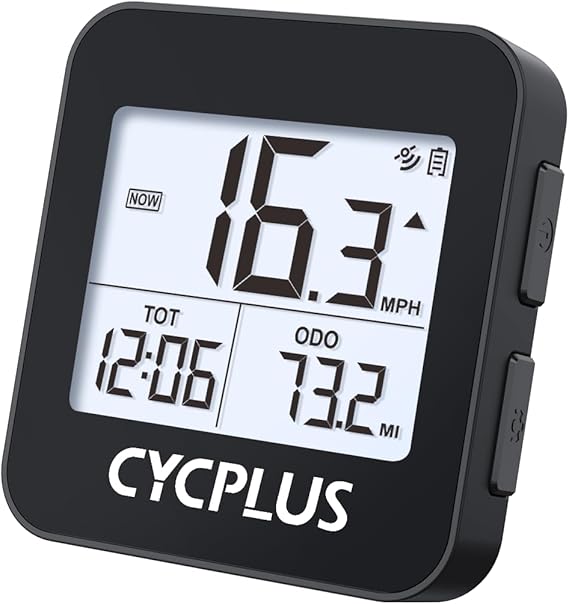
With 50 hours of battery life and wireless GPS tracking, this bike computer is ideal for anyone who wants detailed ride data without cables getting in the way. Best suited for stationary bike users looking to monitor distance, time, and altitude during indoor sessions.
Setting up is straightforward, attaching easily to the handlebar with no wires cluttering your space. The automatic backlight adjusts so the LED screen stays clear whether you’re cycling in a bright room or dim surroundings.
Buttons make navigating through the data simple, and the waterproof design means sweat or an accidental spill won’t interrupt your tracking.
GPS positioning offers quick and accurate ride tracking that clearly shows your distance, ride time, and altitude. Tempered glass on the 2-inch display keeps the screen scratch-resistant, though some users mention occasional difficulty reading small text at a glance.
It’s built solidly and can handle moisture well, but the button interface isn’t as fast as touchscreens.
Accuracy and battery endurance receive strong praise, making it reliable for extended workouts. The downside mentioned most is the screen readability, where small data points may require closer focus, especially during intense rides.
Ideal for riders wanting long-lasting tracking with a simple wireless setup and durable screen. Those needing touchscreen ease or larger displays might want to look elsewhere.
Pros
- Long 50-hour battery life
- Accurate and fast GPS positioning
- Automatic backlight for easy reading
- Waterproof design suitable for sweaty rides
Cons
- Button controls less responsive than touchscreens
- Small text can be hard to read quickly
| Specification | Details |
|---|---|
| Battery Average Life | 50 hours |
| Display Size | 2 inches |
| Connectivity Technology | Wireless |
| Mounting Type | Handlebar Mount |
| Battery Type | Lithium Polymer |
8. Digital Exercise Bike Monitor Console

Ideal for someone who wants a basic monitor to track their time and pedal speed on a stationary bike, this model is straightforward and practical. Its biggest strength lies in its ease of use as a simple timer that also shows estimated distance and speed based on your pedaling cadence.
Setting it up involves connecting via a JST port, which suits most spin bikes with this feature. The display is a clear 1.5-inch LCD, and you operate it using simple buttons. Day-to-day use focuses on tracking workout duration and cadence rather than exact distance.
The heart rate sensor adds an extra metric for those interested in monitoring their pulse without fuss.
Accuracy for speed and distance is estimated only, since it calculates these from pedal revolutions rather than actual movement, which some users find limiting. The build feels functional with a surface mount design and basic wired connectivity.
Praise often points to its reliability as a timer, but frustration arises over the lack of precise distance tracking and the requirement to check bike compatibility carefully before buying.
The strongest praise highlights its straightforward function as a timer with a clear digital display and heart rate sensor. Common complaints focus on the lack of precise speed and distance tracking due to reliance on pedal cadence calculations rather than true measurements. Users often wish for more accurate data but appreciate the simplicity.
This monitor suits those who want a basic, no-nonsense timer and cadence monitor for their stationary bike, especially if their bike uses JST connectors. People needing accurate distance and speed data might look for models with real measurement capabilities instead.
Pros
- Easy to read 1.5-inch LCD display
- Includes heart rate monitoring feature
- Simple button controls for ease of use
- Compatible with most spin bikes using JST ports
Cons
- Speed and distance are only estimated values
- Requires checking JST port compatibility before purchase
| Specification | Details |
|---|---|
| Display Size | 1.5 inches |
| Display | Lcd Digital Display |
| Sensor Type | Heart Rate |
| Connectivity Technology | Jst Connector, Wired |
| Mounting Type | Surface Mount |
| Human Interface Input | Buttons |
9. Fitness Tracker with AMOLED Touchscreen

Fitness Tracker with AMOLED Touchscreen suits riders focused on detailed health tracking during stationary bike workouts. Its standout feature is the bright 1.1 color AMOLED touch screen, which makes reading real-time stats easy, even mid-exercise.
Setting it up requires syncing with a smartphone app to monitor everything from heart rate to sleep. The drink and sedentary reminders encourage regular movement even when off the bike.
Women benefit from the menstrual cycle tracking to keep all health data in one place. The touchscreen is responsive and intuitive, making navigation straightforward during any part of your day.
Tracking heart rate and blood oxygen continuously offers precise feedback, especially useful for controlling workout intensity. The curved design feels comfortable and light on the wrist during long sessions. Praise points to detailed sleep analysis reports, while common critiques focus on the limited half-year warranty offered.
It’s reliable but relies on mindful handling to avoid any damage.
Continuous health tracking and sleep analysis receive strong praise for accuracy and detail, helping with workout control and rest management. The most common downside noted is the short warranty period, which may raise concerns about long-term reliability.
Those wanting comprehensive real-time fitness and health data will find this tracker well-suited. Users expecting a longer protection plan or extreme durability might want to consider other options depending on their priorities.
Pros
- Bright AMOLED touchscreen is easy to read
- Continuous heart rate and blood oxygen monitoring
- Tracks sleep stages with specific analysis reports
- Includes menstrual cycle, drink, and movement reminders
Cons
- Only a 0.5-year warranty included
- Durability depends on careful use
| Specification | Details |
|---|---|
| Brand Name | Fininv |
| Model Number | C60 |
| Screen Size | 1.1″ Color AMOLED Touch Screen |
| Included Components | fitness tracker |
| Warranty Description | 0.5 years |
10. MorePro Screenless Fitness Tracker

MorePro NOVA2.0 offers a screenless fitness tracking experience that fits quietly on your wrist, making it ideal for anyone wanting simple, distraction-free monitoring during biking sessions or daily activities. Its ultra-slim design is especially comfortable for long wear without the usual bulk of traditional fitness bands.
Setup is straightforward, including just the band, charge cable, and manual in the box. Wearing it daily feels light, and data like heart rate, steps, blood oxygen, and calories track automatically in the background.
Without a screen, it relies on syncing to a phone app for detailed insights, which keeps your focus on your workout or day rather than constant checking.
Performance-wise, this tracker collects all key metrics relevant to wellness and stationary bike workouts effectively and quietly. The build quality supports all-day comfort with a slim profile, though some users mention the lack of a screen as a downside since it means you can’t see stats instantly on the wrist.
It prioritizes comfort and simplicity over immediate feedback.
Reviewers appreciate the slim and lightweight feel of this tracker, making it easy to wear throughout the day and night. The main issue noted is the absence of a screen, which means you can’t check your stats directly on the device during exercise.
This tracker suits riders who prefer minimal distractions and prioritize comfort over instant data display. Those seeking immediate real-time feedback on their wrist might look for a device with a built-in screen instead.
Pros
- Ultra-slim, comfortable design
- Tracks multiple wellness metrics automatically
- Lightweight and low distraction for workouts
- Records heart rate, blood pressure, blood oxygen
Cons
- No screen to view stats in real time
- Not suitable for medical diagnosis or treatment
| Specification | Details |
|---|---|
| Model Name | NOVA2.0 |
| Brand | MorePro |
| Built-In Media | Band, Charge Cable, Fitness tracker, User Manual |
| Warranty Description | 1 year |
11. Screenless Fitness Tracker Smart Band

Wearing a band without a screen might feel odd at first but quickly becomes a welcome change when focusing on your workout, especially on a stationary bike. Ideal for those looking for detailed health data without distractions, it quietly tracks key wellness stats all day long.
Connecting the band to the free QwatchPro app takes just a few moments and requires no subscription fees. It stays comfortable with its nylon and silicone band while tracking heart rate, SpO2, stress levels, and even sleep stages throughout the night.
Notifications for calls and messages appear subtly, keeping you informed without pulling away from your ride. GPS data comes through your smartphone, which helps keep the wristband lightweight.
The tracker reliably monitors heart rate variability and daily energy levels, showing good consistency in tracking trends over time. The waterproof design helps you stay confident during sweaty sessions.
Most praise revolves around its detailed wellness insights without screen distractions. Some find the lack of a screen limiting since they can’t check data instantly on the wrist.
Many appreciate the detailed wellness data and stress tracking that comes without the distraction of a screen, making it easier to focus on cycling sessions. The absence of an on-device display is the most common frustration, as it requires checking the app for updates.
People who prefer tracking detailed health metrics and hate screen interruptions will enjoy this smart band. Those who want immediate on-wrist feedback or standalone GPS should consider alternatives with built-in displays and independent location tracking.
Pros
- Lightweight band avoids wrist fatigue during workouts
- Comprehensive data tracking without screen distractions
- No subscription required for the app
- Waterproof for all-day wear and sweat resistance
Cons
- No screen to view stats instantly on the wrist
- GPS depends fully on smartphone connection
| Specification | Details |
|---|---|
| Operating System | Android 4.4+/ iOS 9.0+ |
| Band Material Type | Nylon/Silicone |
| Water Resistance Level | Waterproof |
| GPS Geotagging Functionality | GPS Via Smartphone |
| Additional Features | Sleep Tracker, Heart Rate, SpO2, Call/Message Reminder |
12. Google Fitbit Charge 6 Fitness Tracker

Ideal for stationary bike enthusiasts looking to closely monitor fitness progress, this fitness tracker excels at giving detailed health insights and versatile exercise tracking. Its ability to sync heart rate data in real time with compatible exercise machines stands out, helping users maintain the right intensity during workouts.
Setting it up is straightforward, connecting easily to treadmills and ellipticals to provide continuous heart rate updates. Daily use involves choosing from over 40 exercise modes or relying on automatic exercise recognition. Sleep tracking and a stress management score offer useful feedback on recovery and well-being, while built-in GPS supports outdoor activities.
The touchscreen interface and YouTube Music controls keep workouts engaging and connected.
Performance-wise, accuracy in heart rate monitoring during exercise sessions is praised, along with reliable GPS tracking. The stainless steel case and silicone band feel durable yet comfortable for all-day wear. A frequent downside mentioned is occasional syncing delays with certain devices.
The water resistance up to 50 meters allows wearing it during sweaty rides or in wet conditions without worry.
Reviews point out that the real-time heart rate integration is a key feature that improves stationary bike sessions, though many users report frustrations with sync delays during use. The device’s durable build and extensive tracking features reflect a well-rounded fitness companion.
Those focusing on detailed health metrics and frequent indoor cycling will appreciate this tracker’s capabilities. People needing flawless syncing or using non-compatible devices might want to consider alternatives better suited to their tech ecosystem.
Pros
- Real-time heart rate link to exercise machines
- 40+ exercise modes for varied workouts
- Accurate sleep and stress monitoring
- Water resistant up to 50 meters
Cons
- Sometimes delayed syncing with devices
- Android Wear system can feel limited
| Specification | Details |
|---|---|
| Operating System | Android Wear 1.0 |
| Band Material Type | Silicone |
| Case Material Type | Stainless Steel or Metal |
| Water Resistance Depth | 50 |
| Supported Application | GPS, Heart Rate Monitor |
Best Fitness Trackers for Stationary Bike Comparison
| Product | Sensor Type | Connectivity | Battery Life | Mounting Type |
|---|---|---|---|---|
| Sunny Health Cadence Sensor | Cadence & Speed Sensor | Bluetooth, Wireless | Lithium Ion | – |
| MorePro Fitness Tracker | Activity Tracker | – | – | – |
| Google Fitbit Air | Optical Heart Rate | – | 7 Days | – |
| Scosche Rhythm Heart Monitor | Heart Rate Monitor | – | – | – |
| Magene Speed Cadence Sensor | Cadence, Speed Sensor | Bluetooth | Lithium Manganese Dioxide | Stem, Handlebar Mount |
| Indoor Stationary Bike Monitor | – | – | – | – |
| CYCPLUS GPS Bike Computer | – | Wireless | 50 hours | Handlebar Mount |
| Digital Exercise Bike Monitor | Heart Rate | Wired | – | Surface Mount |
| AMOLED Fitness Tracker | – | – | – | – |
| MorePro Screenless Tracker | – | – | – | – |
| Screenless Smart Band | Activity Tracker | – | – | – |
| Google Fitbit Charge 6 | Activity Tracker | GPS Enabled | – | – |
- Sensor TypeCadence & Speed Sensor
- ConnectivityBluetooth, Wireless
- Battery LifeLithium Ion
- Mounting Type–
- Sensor TypeActivity Tracker
- Connectivity–
- Battery Life–
- Mounting Type–
- Sensor TypeOptical Heart Rate
- Connectivity–
- Battery Life7 Days
- Mounting Type–
- Sensor TypeHeart Rate Monitor
- Connectivity–
- Battery Life–
- Mounting Type–
- Sensor TypeCadence, Speed Sensor
- ConnectivityBluetooth
- Battery LifeLithium Manganese Dioxide
- Mounting TypeStem, Handlebar Mount
- Sensor Type–
- Connectivity–
- Battery Life–
- Mounting Type–
- Sensor Type–
- ConnectivityWireless
- Battery Life50 hours
- Mounting TypeHandlebar Mount
- Sensor TypeHeart Rate
- ConnectivityWired
- Battery Life–
- Mounting TypeSurface Mount
- Sensor Type–
- Connectivity–
- Battery Life–
- Mounting Type–
- Sensor Type–
- Connectivity–
- Battery Life–
- Mounting Type–
- Sensor TypeActivity Tracker
- Connectivity–
- Battery Life–
- Mounting Type–
- Sensor TypeActivity Tracker
- ConnectivityGPS Enabled
- Battery Life–
- Mounting Type–
How to Choose the Best Fitness Tracker for Stationary Bikes
Key factors for choosing a fitness tracker for stationary bikes include accurate heart rate monitoring, reliable motion sensors, and good compatibility with cycling apps. Selecting the right features ensures better workout tracking and avoids spending money on devices that don’t meet your specific exercise needs.
Compatibility with Stationary Bike
Many indoor cyclists find their workout data inaccurate because their tracker doesn’t sync properly with their bike or preferred fitness app. Devices that support Bluetooth or ANT+ connection make a noticeable difference by pulling real-time data directly from the bike’s sensors, which means speed, cadence, and power readings align closely with what you actually do.
This connection avoids manual input errors and keeps your stats consistent across platforms.
Good trackers also support popular apps like Zwift or Peloton, making indoor cycling more engaging with detailed ride analysis. Some models offer customizable workout modes specifically for indoor cycling, selecting these provides specialized metrics and better tracking of intervals or resistance changes.
- Bluetooth or ANT+ connectivity
- Compatibility with major cycling apps
- Customizable indoor cycling modes
Heart Rate Monitoring Accuracy
Wrist-based heart rate sensors often struggle to maintain accuracy during intense pedaling because arm movement and sweat can interfere with optical readings. Trackers with improved sensor technology and better strap fit usually hold steady contact with the skin, which makes a big difference for interval training where precise heart rate zones matter. Erratic readings can cause confusion about workout intensity and recovery.
Positioning on the arm is also critical; a tracker that slips or is too tight won’t provide consistent data. Models that come with adjustable straps made from flexible materials tend to maintain stable contact without discomfort. Reliable heart rate measurements help adjust effort in real-time, making your sessions more effective.
- Accurate optical sensors resistant to sweat and movement
- Adjustable straps for firm, comfortable placement
Battery Life and Charging
Mid-ride battery failure is frustrating during long indoor sessions, especially on endurance days spanning hours. Trackers with battery life lasting several days to a week per charge minimize these interruptions.
Some models promise over a full day of continuous tracking, but practical use varies with GPS and display usage.
Fast charging via USB is standard on many devices, with some supporting wireless charging for convenience. Powersaving modes extend time between charges by limiting features like always-on displays or continuous heart rate monitoring. These settings allow you to use the tracker through multiple workouts and daily activities without constant recharging.
- Battery life of several days or 24+ hours continuous use
- USB or wireless charging options
- Powersaving features to prolong use
Display and Usability
Indoor lighting can be dim, so a bright, clear screen makes it easier to glance at metrics without pausing. Screens around 1.2 to 1.4 inches balance visibility and compactness well.
Trackers with adjustable brightness help maintain legibility in various lighting conditions. During high-intensity cycling, quick access to workout stats and notification alerts means less fumbling with buttons.
The interface should allow smooth switching between stats like time, cadence, and heart rate without needing to stop pedaling. Water resistance or sweatproof construction matters too; trackers exposed to heavy sweat benefit from higher IP ratings, preventing damage and discomfort.
- Bright, mid-sized display (1.2–1.4 inches)
- Easy navigation of workout screens
- Sweat/water resistance (IP67 or higher)
Fit and Comfort
Using a tracker for hours during cycling demands a band that adjusts precisely without causing itching or pressure points. Bands made of silicone or breathable woven materials allow airflow and reduce moisture buildup that often leads to skin irritation.
Heavy or bulky devices pull on the wrist and become distracting, so a lightweight design under 50 grams is preferable.
Experience shows that a snug, yet comfortable fit makes it easier to forget you’re wearing the device, which encourages longer, more focused workouts. Avoiding tight snaps or clasps that dig into skin helps during sweaty sessions for better overall comfort and less chafing.
- Adjustable, breathable band materials
- Lightweight construction (preferably under 50 grams)
- Secure fit that prevents slipping without discomfort
Maximizing Your Stationary Bike Workouts with Fitness Trackers
Tracking heart rate consistently throughout your stationary bike workout gives the clearest insight into how hard you’re pushing yourself. Fitness trackers with optical heart rate monitors can capture this data continuously, which helps in adjusting intensity for better results.
GPS features won’t always apply for stationary bikes, but those that offer detailed calorie burn estimates and workout duration graphs give you valuable feedback. Some devices also sync with apps that record your cycling sessions and allow you to compare performance over time.
Benefits of using a fitness tracker for stationary biking:
- Monitors heart rate zones to avoid undertraining or overtraining
- Tracks calories burned with greater accuracy than a watch alone
- Records workout duration and intervals for structured sessions
- Provides motivation through progress tracking and reminders
Choosing a tracker specifically geared toward cardio workouts or cycling will yield a more relevant data set, helping you adjust your workouts effectively.
Proper Maintenance and Care for Long-Lasting Fitness Trackers
Keeping your fitness tracker functioning properly depends on regular cleaning and care. Sweat and skin oils can build up on sensors, potentially interfering with accurate readings.
Use a soft, damp cloth to gently wipe the tracker after each workout.
Battery life also benefits from mindful charging habits. Avoid letting the battery completely drain or leaving the tracker plugged in for extended periods once fully charged. This prolongs battery health over months of use.
Additional tips for maintaining your fitness tracker:
- Remove the tracker during heavy water exposure unless it is rated waterproof
- Store it in a cool, dry place to prevent damage to internal components
- Check for firmware updates regularly to fix bugs and improve performance
Proper care ensures that the device continues to provide accurate data during your stationary bike workouts.
Common Mistakes to Avoid When Using Fitness Trackers on Stationary Bikes
Many users fail to secure the fitness tracker snugly on their wrist, which can cause erratic heart rate readings during stationary bike sessions. A loose fit lets the sensors move or lose contact, leading to gaps in data.
Wearing the tracker on the wrong wrist without adjusting settings is another common slip-up. Most devices allow you to specify which arm the device is worn on for better accuracy.
Other common errors include:
- Not synchronizing the device with the workout app, losing detailed session analysis
- Ignoring rest days or overrelying on the tracker for motivation, risking burnout
- Skipping regular cleaning, which can degrade sensor function over time
Following manufacturer guidelines closely and paying attention to fit and position prevents many issues and improves the reliability of your fitness data.
People Also Asked
How Do I Properly Size a Fitness Tracker for Stationary Bike Use?
A fitness tracker should fit snugly on your wrist without cutting off circulation. Stretch the band slightly and make sure it stays in place while pedaling. Wristbands that are adjustable with multiple holes tend to work best during longer sessions.
What Safety Features Should I Look for in a Fitness Tracker?
Heart rate monitoring accuracy and water resistance are key safety features. Sweat and minimal water exposure should not affect the tracker’s performance. Some devices also include alerts for irregular heartbeats, which can be useful during intense exercise.
How Compatible Are Fitness Trackers with Different Stationary Bike Models?
Most fitness trackers use Bluetooth or ANT+ to connect with stationary bikes, a standard that works with many models. Check if the tracker supports these protocols or apps compatible with your bike. Compatibility may vary, so linking with the bike’s console or app is helpful.
How Long Does a Typical Fitness Tracker Battery Last During Workouts?
Battery life during workouts typically ranges from 5 to 7 days with regular use. Continuous heart rate tracking and GPS use can shorten this. Charging overnight once or twice a week usually keeps the device ready without interruptions.
What Are Common Problems Using Fitness Trackers on Stationary Bikes?
Inaccurate heart rate readings can occur if the tracker moves or is loosely worn. Another issue is syncing delays with the bike’s console or smartphone app. Keeping the tracker clean and ensuring firmware updates helps maintain accurate data recording.
Conclusion
The most important factors to consider are accurate heart rate monitoring, compatibility with your stationary bike or fitness apps, and a comfortable fit since you’ll wear it during workouts. Battery life also matters if you want consistent tracking without frequent charging. The tracker should be able to record key metrics like calories burned, distance, and workout duration effectively.
Think about how much space you have for the device, how often you plan to use it, and what fits your budget. That way you avoid buying something too complicated or expensive for your needs.
Check the comparison table above to see how each option stacks up on these points and pick the one that aligns best with your routine and setup.