
Top 12 Best GPS for Dirt Bike Trail Riding You Need Now
Riding through dense woods or remote trails with a cheap GPS often means losing signal or dealing with a device that won’t hold up to mud and rain. The best gps for dirt bike trail riding keeps you on track without constant resets or fear of damaging your gear. Poorly chosen ones tend to have short battery life or screens that are impossible to read in bright sunlight, which can cut a ride short or lead to getting disoriented.
Durability and screen visibility are key when choosing a GPS for off-road use. Look for units with rugged builds rated at least IP67 for water and dust resistance, and screens bright enough to stay clear under direct sunlight, typically over 500 nits.
Battery life also stands out, with many good models running 10 hours or more on a single charge, ensuring they last through long rides without needing a recharge in the middle.
Need a Quick Check?
| Image | Product | Price |
|---|---|---|
Our Top Picks 1  | Garmin Tread Off-Road | Check Price |
Our Top Picks 2  | Garmin zūmo XT2 | Check Price |
Our Top Picks 3  | Garmin Tread 2 | Check Price |
Our Selected Top 12 Gps for Dirt Bike Trail Riding for Every Budget
This list features twelve GPS devices designed specifically for dirt bike trail riding, covering various budgets and needs. Each review explains how the device performs, the type of rider it suits best, and highlights its main strengths and weaknesses.
1. Garmin Tread Powersport Off-Road Navigator
When you’re hitting dirt bike trails, having a navigator that keeps up with rough conditions and stays visible in bright sunlight is crucial. Designed for powersport riders, this device stands out for its glove-friendly 5.5” ultrabright touchscreen, making route tracking and group communication much easier on off-road rides.
Setting it up is straightforward with the powered mount and wiring harness that secures it firmly to your bike. Day-to-day, the group ride radio keeps you connected with up to 20 riders via push-to-talk, so you never lose track of friends on the trail.
The preloaded and downloadable maps cover public lands and forest roads, giving detailed route info every time you head out.
Its performance as a navigator is reliable thanks to the high-visibility LCD screen and capacitive touchscreen that responds well even with gloves on. Built tough with IPX7 weather resistance, the device is ready for mud and rain. Reviews often praise the clear group tracking and map detail, while some note the Windows-based operating system can feel a bit clunky at times.
Clear group tracking and detailed maps earn high marks for keeping riders connected and on course. The Windows operating system, however, can lead to slower interactions and occasional responsiveness issues while navigating menus.
Off-road riders valuing durable, visible navigation and group communication will find this device useful. Those looking for smaller or faster-responsive GPS options might want to consider other products better suited to minimal setups or quicker system performance.
Pros
- Glove-friendly 5.5″ ultrabright touchscreen
- Group Ride Radio for up to 20 riders
- Preloaded topographic and street maps
- Powered mount with secure tube attachment
Cons
- Windows operating system can be slow
- Device size may be bulky for some setups
| Specification | Details |
|---|---|
| Screen Size | 5.5 inches |
| Connectivity Technology | Wi-Fi |
| Operating System | Windows |
| Mounting Type | Dashboard Mount |
| Touch Screen Type | Capacitive |
2. Garmin Zūmo XT2 Motorcycle GPS Navigator
Garmin zūmo XT2 Motorcycle GPS Navigator offers a bright 6-inch capacitive touch screen perfect for dirt bike trail riders needing clear maps and satellite images. Its ability to switch between road, topographic, and satellite maps is invaluable when exploring off-road trails.
This GPS suits riders who want detailed navigation without sacrificing clarity or convenience.
Setup is straightforward, especially with the included micro SDHC memory card and USB adapters for easy charging. Daily riding benefits from the handlebar mount and Bluetooth connectivity, making it easy to sync with smartphones and customize routes through the Tread app. Group rides are supported with Group Ride Radio tracking, working well even without cell coverage.
Navigation remains accurate and responsive, with a sharp 1280 x 720 LCD display enhancing visibility outdoors. The hardware feels solid under dirt and vibrations, handling typical trail conditions well. Battery life averages around five hours, which suits long rides but requires planning for charging.
Common feedback highlights excellent map detail and build quality, while some users note the battery life as a limiting factor.
Excellent screen clarity and versatile map options receive consistent praise, making it easy to follow trails and plan routes. The main drawback is moderate battery life that may require extra power sources on longer trips. The build quality handles rough trail riding well, maintaining reliable performance.
Those who enjoy mixed terrain trail riding and want advanced route planning with group tracking will appreciate this GPS. Riders needing extended battery life or simpler systems might consider alternative models better suited for ultra-long adventures or straightforward navigation.
Pros
- Bright 6-inch capacitive touchscreen
- Multiple map types including satellite and topo
- Group Ride Radio tracks riders without cell coverage
- Solid handlebar mounting for vibration resistance
Cons
- Battery lasts about 5 hours, not ideal for ultra-long rides
- Android operating system may feel complex to some
| Specification | Details |
|---|---|
| Screen Size | 6 inches |
| Battery Average Life | 5 hours |
| Resolution | 1280 x 720 |
| Memory Storage Capacity | 32 GB |
| Mounting Type | Handlebar Mount |
| Connectivity Technology | Bluetooth |
3. Garmin Tread 2 Powersport Navigator
Trail riders who demand reliable navigation in rough conditions will appreciate a navigator that’s built specifically for powersports. A 6-inch glove-friendly touchscreen that shines bright in direct sunlight makes route tracking easy and clear on dusty or rainy trails. Its standout feature is rugged durability designed for extreme weather and terrain.
Getting started involves mounting it securely on the handlebar using the included tube mount kit. The touchscreen reacts well to gloved hands, which is crucial mid-ride. Preloaded maps cover detailed off-road areas like U.S. Forest Service Motor Vehicle Use routes, and it links to your phone via Bluetooth for updates or additional data.
Battery life allows a solid seven hours of use before recharging with the portable 5000mAh charger included.
Navigation is precise with turn-by-turn directions for both on and off-road paths using topographic and elevation maps. Its IP67 water rating confirms that this unit keeps working through mud, rain, or dust.
The toughest praise is about its screen visibility in sunlight; however, some mention the 7-hour battery life could be longer for extended backcountry rides.
The screen’s visibility in bright daylight consistently receives strong praise for making navigation simple, even with gloves on. Users often note that the battery lasts about 7 hours, which can feel short when tackling very long or multiple backcountry rides without access to power.
Trail riders who want detailed off-road navigation and don’t mind recharging mid-adventure will find this navigator very useful. Those planning longer expeditions or prioritizing a lighter, smaller unit might explore alternatives with longer battery life or more compact designs.
Pros
- Ultrabright and glove-friendly touchscreen
- Preloaded topographic and trail maps
- Waterproof and built for extreme weather
- Includes portable 5000mAh charger
Cons
- 7-hour battery life may limit long rides
- Large 6-inch screen can be bulky on smaller handlebars
| Specification | Details |
|---|---|
| Screen Size | 6 inches |
| Battery Average Life | 7 hours |
| Waterproof Rating | IP67 |
| Memory Storage Capacity | 64 GB |
| Mounting Type | Handlebar Mount |
4. Garmin Zūmo 396 LMT-S Motorcycle GPS

Designed specifically for motorcycle riders who crave twisty road adventures, the Garmin zūmo 396 LMT-S stands out with its rugged and glove-friendly 4.3-inch screen that holds up against harsh weather and fuel vapors. Its biggest strength lies in helping you find curvy routes while keeping your hands where they belong on the handles.
Setting up involves pairing the GPS with your smartphone through the free Smartphone Link app, which then allows hands-free calling and smart notifications directly on the device. Sharing GPX files with friends for group rides is straightforward, and the screen is easy to read even in direct sunlight. The controls use push buttons rather than touch alone, so it’s reliable while wearing gloves on dusty trails.
The navigation excels at finding adventurous routes by avoiding major highways, making every ride more interesting and scenic. The device is built tough, from its resistant display to its handlebar mount.
Reviews frequently praise its routing capabilities and durability, although some mention the resistive touchscreen can occasionally feel less responsive compared to newer models.
Many users appreciate how well the GPS finds curvy, scenic routes and its durability under tough riding conditions. The common downside is the resistive touchscreen, which can sometimes feel a bit sluggish compared to more modern touchscreens.
Riders who want a simple, dependable navigation device that prioritizes adventurous routes will find this GPS useful. Those who prefer a highly responsive touchscreen or higher resolution might want to look elsewhere.
Pros
- Glove-friendly, sunlight-readable 4.3” display
- Sturdy against fuel vapors and harsh weather
- Hands-free calling via smartphone pairing
- Routes favor curvy, hilly roads over highways
Cons
- Resistive touchscreen less responsive than capacitive ones
- Limited display resolution at 400 x 240 pixels
| Specification | Details |
|---|---|
| Screen Size | 4.3 inches |
| Memory Storage Capacity | 16 GB |
| Mounting Type | Handlebar Mount |
| Connectivity Technology | Bluetooth |
| Display Type | WQVGA color TFT with white backlight |
5. Garmin Tread 2 Powersport Navigator

Garmin Tread 2 Powersport Navigator offers reliable GPS trail navigation designed for dirt bike riders and other powersport enthusiasts. The biggest strength lies in its rugged 6” glove-friendly touchscreen that performs well in tough weather and extreme temperatures, making it a solid choice for off-road adventures.
Setting up involves mounting it securely on your handlebar using the provided handlebar mount. The capacitive touchscreen works smoothly even with gloves on, and Bluetooth connectivity pairs easily with your smartphone. It displays turn-by-turn directions on various trail maps, helping you stay on course without fiddling with complex controls.
Battery life keeps you guided for about 7 hours per use, which suits typical trail rides.
Navigation is accurate and detailed, covering both unpaved trails and on-road routes with OpenStreetMap and City Navigator data. The device’s IP67 water rating gives it serious durability against mud and rain. Strong praise comes from its clear, bright screen and map detail.
Some users note the battery life might fall short during longer rides without a power source close by.
The brightest point is the ultra-bright, glove-friendly touchscreen that keeps working well in all weather and tough trail conditions. The device handles off-road maps with plenty of useful detail. On the downside, battery life can be limiting, especially for longer rides without external charging options.
Riders who frequently tackle rugged trails and need reliable, easy navigation will appreciate this device. Those planning extended trips or needing longer battery life should consider options with longer endurance or external power support.
Pros
- Glove-friendly capacitive touchscreen
- Durable with IP67 water rating
- Turn-by-turn navigation on trails
- Bluetooth connectivity to smartphone
Cons
- Battery lasts about 7 hours only
- Software updates status not clearly known
| Specification | Details |
|---|---|
| Screen Size | 6 inches |
| Compatible Vehicle Types | ATV, Motorcycle, Snowmobile, UTV |
| Battery Average Life | 7 hours |
| Connectivity Technology | Bluetooth |
| Operating System | Windows |
| Water Resistance | IP67 |
6. (Removed – No Brand or Core Model Provided)

Feels like a solid companion for dirt bike trail riding with a clear focus on connectivity and ease of use on the go. Suited mostly for riders who want straightforward, hands-free navigation and music controls without fussing over complicated menus. Its wireless CarPlay and Android Auto compatibility stand out as the biggest advantage for staying connected.
Setup involves mounting it securely on the handlebar with a waterproof design that handles rough conditions well. Day-to-day use benefits from the glove-friendly 5-inch touchscreen, which stays readable in bright sunlight and switches to night mode comfortably.
Being able to control it via voice commands keeps attention on the trail and it pairs easily with smartphones through Bluetooth and Wi-Fi for syncing apps and music.
The GPS navigation rolls smoothly, providing worldwide maps and reliable routing for any trail. The device feels sturdy and purpose-built around a 5-inch IPS LCD display with good anti-glare performance. Bluetooth and Wi-Fi connectivity support a steady connection, though some users note occasional syncing hiccups.
The single biggest praise is its wireless CarPlay and Android Auto feature; the main complaint revolves around limited screen size for detailed maps.
Wireless CarPlay and Android Auto support provide excellent hands-free connectivity and make navigation and media control easy on the trails. Many appreciate the bright, glove-friendly screen, though some find the 5-inch size limiting when needing detailed map views. Syncing the device with smartphones may occasionally require a restart or re-pairing.
Riders focused on staying connected with navigation and music while keeping their hands mostly free will find this device a good fit. Those who rely heavily on large screen detailed maps or need flawless smartphone connectivity might want to consider alternatives with bigger displays or more stable syncing.
Pros
- Glove-friendly touchscreen
- Wireless CarPlay and Android Auto
- Anti-glare, sunlight-readable display
- Waterproof for rough conditions
Cons
- Screen size sometimes too small for detailed maps
- Occasional syncing issues with smartphones
| Specification | Details |
|---|---|
| Screen Size | 5 inches |
| Display Type | LCD |
| Operating System | Linux |
| Connectivity Technology | Bluetooth, Wi-Fi |
| Waterproof | Yes |
| Mounting Type | Handlebar Mount |
7. CYCPLUS G1 Wireless GPS Bike Computer
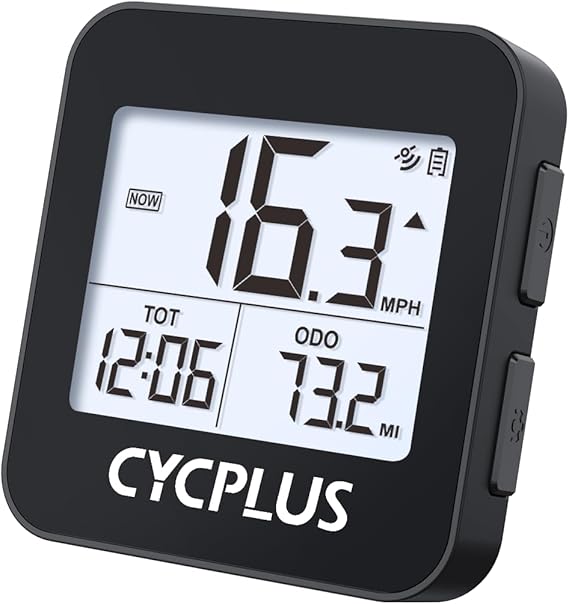
Great for dirt bike riders looking for accurate GPS tracking with strong battery life, it excels at providing clear ride data without cables getting in the way. Its standout feature is precise, fast GPS positioning, making it an asset for navigating rugged trails.
Setting up the device is straightforward, mounting easily on the handlebar with no cables needed thanks to its wireless design. The backlit screen adapts automatically for good visibility day and night, and the buttons are intuitive to operate while riding.
Tracking ride time, distance, altitude, and other stats happens smoothly during every outing.
The GPS consistently delivers reliable and quick route tracking, key for trail riding. Build quality is solid, with tempered glass that resists scratches and an IPX6 waterproof rating that handles rain without fuss.
Strong battery performance allows up to 50 hours of use. Some users wished for a larger display and touchscreen functionality.
The GPS signal tracks routes accurately and quickly, while the battery holds up through long rides. Many appreciate the waterproofing and glare-free backlight, though some find the small screen limits quick data glancing, and prefer touch controls over buttons.
Riders who want wireless, long-lasting GPS tracking with durable build find this device suitable. Those needing a larger, touch-sensitive display or more advanced features might explore other options.
Pros
- High-accuracy dynamic GPS positioning
- Automatic backlight visible in sunlight
- Long 50-hour battery life
- IPX6 waterproof design
Cons
- Screen size is relatively small at 2 inches
- No touchscreen, relies on buttons
| Specification | Details |
|---|---|
| Display Size | 2 inches |
| Display | LED |
| Battery Average Life | 50 hours |
| Battery Type | Lithium Polymer |
| Connectivity Technology | Wireless |
| Mounting Type | Handlebar Mount |
8. Garmin Tread 2 SxS Edition All-Terrain Navigator

Built for rugged off-road conditions, the Garmin Tread 2 SxS Edition features an 8” ultrabright, glove-friendly capacitive touchscreen and an IP67 dust and water resistance rating. It fits riders who want reliable, turn-by-turn navigation on challenging dirt bike trails without worrying about the elements.
Setting it up is straightforward, thanks to its touchscreen interface and windshield mount which keeps the device stable on rough terrain. The combination of Bluetooth, USB, and Wi-Fi makes updating maps and software accessible. Using turn-by-turn directions based on OpenStreetMap and U.S. Forest Service maps helps you follow unpaved roads and trail routes effectively, while the large display works well even with gloves on.
Navigation is clear and responsive, with GPS and Galileo satellite support providing accurate location tracking. The device is solidly built to withstand extreme temperatures and weather, making it suitable for long, tough rides. Customers appreciate its durability and user-friendly interface, while some point out that occasional map data limitations require caution and reliance on posted road signs.
Durability and touchscreen usability in tough environments receive strong praise, while map data limitations are the most common complaint. Riders should rely on posted signs to supplement navigation, as trail suggestions may not always be fully accurate or complete.
Those who need a rugged, clear, and easy-to-use navigation device for dirt bike trails will appreciate this model. Trail riders requiring fully comprehensive map coverage or longer battery life might want to explore other options better suited to extended or remote use.
Pros
- Ultrabright, glove-friendly 8-inch touchscreen
- Durable with IP67 dust/water rating
- Turn-by-turn navigation for off-road trails
- Multiple connectivity options for updates
Cons
- Map data may be incomplete or limited
- Battery life around 6 hours could be longer
| Specification | Details |
|---|---|
| Screen Size | 8 inches |
| Battery Average Life | 6 hours |
| Mounting Type | Windshield Mount |
| Supported Satellite Navigation System | GPS, Galileo |
| Connectivity Technology | Bluetooth, USB, Wi-Fi |
| Operating System | Garmin OS |
9. Garmin eTrex 22x Handheld GPS Navigator

A bright 2.2” sunlight-readable color display stands out, making map reading on dirt bike trails easier, even under strong outdoor light. Suited for trail riders who want reliable navigation with preloaded Topo Active maps and solid satellite tracking from both GPS and GLONASS systems. Long battery life supports extended trips without fuss.
Getting started is straightforward with preloaded topographical maps that include cycling and hiking trails. Navigation works via buttons, not touchscreen, which keeps it practical in muddy or gloved hands. Bluetooth connectivity adds convenience for waypoint sharing or syncing.
The device runs on 2 AA batteries lasting up to 25 hours, so no worrying about frequent recharging or power banks.
The tracking accuracy remains dependable even in tougher terrains due to the dual satellite system. The rugged handheld design fits well in hand or mounts easily to an ATV or bike. The biggest plus users notice is its long battery life.
Most common gripe involves the small 2.2-inch screen sometimes feeling cramped, especially for detailed route views.
Users appreciate the extended battery life and reliable tracking across challenging trail environments, which keeps navigation steady during full-day rides. Complaints focus mostly on the screen’s limited size, which can make detailed map views harder to handle on the go.
Trail riders who want dependable battery life and solid navigation with physical controls will enjoy this device. Those needing larger, touchscreen displays for complex mapping should consider a different GPS model.
Pros
- Readable color display under bright sunlight
- Long 25-hour battery life with AA batteries
- Preloaded Topo Active maps with trails
- Supports both GPS and GLONASS satellites
Cons
- Small 2.2-inch screen can feel cramped
- No touchscreen interface, only buttons
| Specification | Details |
|---|---|
| Screen Size | 2.2 inches |
| Resolution | 240 x 320 |
| Battery Average Life | 25 hours |
| Memory Storage Capacity | 8 GB plus micro SD slot |
| Connectivity Technology | Bluetooth |
10. Garmin Zūmo XT3 Motorcycle GPS Navigator

Perfect for dirt bike trail riders who want a rugged and reliable GPS, this device stands out because of its tough IP67-rated design that handles vibrations, weather, and rough terrains without missing a beat. The bright 4.7” touchscreen makes following your routes easy when off-road or on the street.
Setting up involves loading detailed street and topographic maps, plus you can add satellite images straight to the device. Creating custom routes is straightforward via the device or companion app.
A lean angle gauge and ride stats like max speed and G-force add useful insights to your ride, all accessible from the touchscreen and synced through Bluetooth.
Performance-wise, it handles navigation on the toughest trails and busy roads with precise GPS tracking and a responsive screen. The build is solid, designed to take harsh conditions without failing. Praise centers on its clarity and durability, while some users wish the software updates were more frequent or clearly detailed.
Clear, bright display and sturdy build make it ideal for challenging trail riding. The biggest complaint is the lack of clarity about software updates, which can feel slow or uncertain for keeping navigation fresh.
Those wanting durable navigation with advanced ride data will find it well worth considering. Riders looking for constant software improvements and broader update support might look for alternatives better tuned to that need.
Pros
- Durable with IP67 waterproof and vibration resistance
- Bright, easy-to-read 4.7” touchscreen
- Preloaded with detailed maps and satellite imagery
- Live lean angle gauge adds ride feedback
Cons
- Software update frequency and details not clearly supported
- Some users wish for more frequent feature updates
| Specification | Details |
|---|---|
| Screen Size | 4.7 inches |
| Battery Average Life | 7 days |
| Mounting Type | Handlebar Mount |
| Memory Storage Capacity | 64 GB |
| Connectivity Technology | Bluetooth, USB |
| Waterproof Rating | IP67 |
11. Garmin Zūmo XT2 Motorcycle GPS Navigator

Trail riding on a dirt bike demands quick readability and reliable navigation. Perfect for riders who want clear routes and weather-resistant gear, this GPS offers a bright 6-inch screen that handles dirt and vibrations well.
Its standout feature is bringing detailed moto routes and satellite imagery right to the handlebar.
Setup is straightforward with touchscreen controls and smartphone compatibility. Planning routes or switching between efficient paths and adventurous trails happens smoothly through the visual route planner. Group rides benefit from real-time location sharing via the Tread app.
The device stores plenty of North American maps, and Bluetooth keeps connectivity tight for sharing performance stats like speed and elevation.
Navigation is accurate with a sunlight-readable display that holds up against weather and shocks common on trails. Constructed to meet IPX7 standards, it resists water and vibrations. Praise highlights the clear screen and useful route options, while some users mention the 6-hour battery life as a limiting factor on longer rides.
The bright and durable screen stands up well to varying weather and rough trail conditions, making navigation visible and reliable even in bright sunlight. Common feedback points to the limited six-hour battery life as a constraint during long days out riding.
Riders who want detailed, custom routes and group tracking will appreciate its features. Those planning extended trips without easy access to charging may want to consider GPS options with longer battery life.
Pros
- Bright, sunlight-readable 6” display
- Waterproof IPX7 design
- Visual route planner with satellite imagery
- Group ride location sharing
Cons
- Battery life averages 6 hours only
- Requires smartphone app for full features
| Specification | Details |
|---|---|
| Screen Size | 6 inches |
| Battery Average Life | 6 hours |
| Memory Storage Capacity | 32 GB |
| Compatibility | Android, iPhone |
| Mounting Type | Handlebar Mount |
12. Garmin Zūmo XT3 Motorcycle GPS Navigator

Designed for harsh riding conditions, this GPS navigator offers a rugged 4.7 screen that holds up well in rain and rough terrain. Ideal for dirt bike riders who demand durability and clear maps, it stands out with IPX7 water resistance and military-grade toughness.
Setting up the device is straightforward, thanks to the handlebar mount and touchscreen controls. Daily navigation feels reliable with topographical, street, and satellite maps all stored on the included 32GB memory card. Updating maps over Wi-Fi is painless, and the bundled battery and charging accessories ensure it stays powered throughout long trail rides.
Navigation is accurate with support for GPS, GLONASS, and Galileo satellites, and the adventurous routing keeps you on dirt trails. The build quality meets MIL-STD-810 standards, so vibration and weather pose little problem. Frequent feedback mentions the ruggedness as a major plus, but some find the resistive touchscreen less responsive than expected.
The device is praised for its rugged build that confidently withstands rough trail riding and bad weather. However, the resistive touchscreen sometimes feels slow to react, which may slow down quick adjustments while on the move. Keeping it charged requires managing external power options during longer adventures.
Riders who need a tough, weatherproof GPS with versatile maps will appreciate this navigator. Those who prefer a more responsive touchscreen or longer standalone battery life might want to consider other options better suited to those needs.
Pros
- Waterproof with IPX7 rating
- Durable military-grade construction
- Multiple map types included
- Wireless Wi-Fi updates
Cons
- Resistive touchscreen can lag
- Battery life depends on external power
| Specification | Details |
|---|---|
| Screen Size | 4.7 inches |
| Water Resistance | IPX7 |
| Durability Standard | MIL-STD-810 |
| Map Types | Street, Topographical, Satellite |
| Memory Storage Capacity | 32 GB |
| Supported Satellite Navigation System | GLONASS, GPS, Galileo |
Best GPS Devices for Dirt Bike Trail Riding Comparison
| Product | Screen Size | Battery Life | Map Types | Mounting Type |
|---|---|---|---|---|
| Garmin Tread Off-Road | 5.5 inches | – | North America | – |
| Garmin zūmo XT2 | 6 inches | 5 hours | North America, Satellite, Street | Handlebar Mount |
| Garmin Tread 2 | 6 inches | 7 hours | North America | – |
| Garmin zūmo 396 LMT-S | 4.3 inches | – | City Tour, street/tourist | Handlebar Mount |
| Garmin Tread 2 Plus | 6 inches | 7 hours | North America | Handlebar Mount |
| (Removed – No Brand | 5 inches | – | Worldwide | Handlebar Mount |
| CYCPLUS G1 Bike GPS | 2 inches | 50 hours | – | Handlebar Mount |
| Garmin Tread 2 SxS | 8 inches | 6 hours | North America | Windshield Mount |
| Garmin eTrex 22x | 2.2 inches | 25 hours | Topographical | Handheld |
| Garmin zūmo XT3 | 4.7 inches | 7 days | North America | Handlebar Mount |
| Garmin zūmo XT2 Pro | 6 inches | 6 hours | North America | Handlebar Mount |
| Garmin zūmo XT3 Max | 4.7 inches | – | Street, Topographical, Satellite | Handlebar Mount |
- Screen Size5.5 inches
- Battery Life–
- Map TypesNorth America
- Mounting Type–
- Screen Size6 inches
- Battery Life5 hours
- Map TypesNorth America, Satellite, Street
- Mounting TypeHandlebar Mount
- Screen Size6 inches
- Battery Life7 hours
- Map TypesNorth America
- Mounting Type–
- Screen Size4.3 inches
- Battery Life–
- Map TypesCity Tour, street/tourist
- Mounting TypeHandlebar Mount
- Screen Size6 inches
- Battery Life7 hours
- Map TypesNorth America
- Mounting TypeHandlebar Mount
- Screen Size5 inches
- Battery Life–
- Map TypesWorldwide
- Mounting TypeHandlebar Mount
- Screen Size2 inches
- Battery Life50 hours
- Map Types–
- Mounting TypeHandlebar Mount
- Screen Size8 inches
- Battery Life6 hours
- Map TypesNorth America
- Mounting TypeWindshield Mount
- Screen Size2.2 inches
- Battery Life25 hours
- Map TypesTopographical
- Mounting TypeHandheld
- Screen Size4.7 inches
- Battery Life7 days
- Map TypesNorth America
- Mounting TypeHandlebar Mount
- Screen Size6 inches
- Battery Life6 hours
- Map TypesNorth America
- Mounting TypeHandlebar Mount
- Screen Size4.7 inches
- Battery Life–
- Map TypesStreet, Topographical, Satellite
- Mounting TypeHandlebar Mount
How to Choose the Best GPS for Dirt Biking
Key factors include durability, battery life, and ease of use, as dirt biking involves rough terrain and long rides. Choosing a reliable GPS with accurate tracking helps prevent getting lost and reduces the risk of damage, ultimately saving money and avoiding frustration on trails.
Durability and Weather Resistance
Dirt riding often kicks up thick clouds of dust and showers of mud, so a device that fails under these conditions quickly becomes useless. Many GPS units crack or fog up after a few rides if they aren’t built to handle water exposure and constant abrasion.
Strong plastic or rubberized cases slow down scratching and withstand frequent impacts with rocks or falls. Look for a minimum IP67 rating to confirm water and dust resistance and something that handles shocks without internal damage, such as military-grade or rugged construction standards.
Shock and vibration resistance plays a big role on rough trails. Some devices have internal cushioning or shock absorbing mounts that reduce wear and screen cracks. Durable screens are usually made of tempered glass or hardened plastic that won’t easily scratch when rubbing against gear or gloves.
A well-built device stays functional in these conditions without needing constant repair or replacement.
Battery Life and Power Options
Long trail rides expose riders to hours without access to charging. Batteries that last at least 8 to 10 hours of continuous use mean fewer worries mid-ride. Devices with removable batteries make it easier to swap in extras on extended trips.
Some also support external charging from power banks or the bike’s electrical system, which adds flexibility on longer journeys.
Power-saving modes can stretch runtime by dimming screens or limiting background processes, but this sometimes comes at the cost of reduced visibility or slower response. Balancing brightness and battery use is critical since you need to see the screen clearly without draining power too fast.
Devices without these options risk dying at inconvenient moments, leaving riders lost.
Display Visibility and Readability
Baking sunlight often blinds off-road riders when they try to check their location. Screens without sufficient brightness or antiglare filters become impossible to read outdoors, forcing riders to stop frequently.
A screen with at least 400 nits brightness and a matte or etched glass surface improves visibility drastically. Also, an HD resolution helps display detailed maps without squinting.
Touchscreens must register inputs accurately even with gloves or dirty hands, conditions that dirt bikers encounter constantly. Capacitive screens can struggle here, while some models use resistive or hybrid panels that respond well in these situations.
Buttons can supplement touch input for quick MENU or zoom commands, avoiding the frustration of an unresponsive screen.
Navigation Features and Accuracy
Signal dropout happens often deep in forested or mountainous trails, so GPS units with strong reception and quick satellite locks improve navigation reliability. Devices supporting multiple satellite systems like GPS, GLONASS, or Galileo generally maintain more accurate positioning. Offline maps are essential since many trails lack cell service, and being able to preload routes keeps riders oriented.
Route tracking logs your path and provides breadcrumbs for backtracking. Additional features such as compass integration, altimeter readings, and waypoint marking assist in complex trail navigation. Devices without these tend to leave riders guessing, increasing the chance of getting lost.
Mounting and Ergonomics
Attachments that loosen under vibration can cause the device to rattle or fall off during rough riding. Mounts with rubber dampers and solid clamp mechanisms reduce this risk and keep the device steady on handlebars. Compatibility with standard dirt bike handlebar diameters ensures a secure fit without modification.
Simple installation and removal without the need for special tools allow riders to quickly swap devices between bikes or remove them for storage. Compact size and light weight matter since a bulky or heavy unit affects bike handling and rider comfort, especially on technical trails.
Devices around 3 to 4 inches in screen size strike a good balance.
Optimizing GPS Accuracy on Challenging Dirt Bike Trails
Dirt bike trails often run through thick forests or deep canyons, which can interfere with GPS signals. For better accuracy, mount the GPS unit where it has a clear line of sight to the sky, such as the handlebars or helmet.
Avoid areas with heavy tree cover or steep hills during critical navigation points. A good GPS device updates its satellite connection frequently, reducing position lag. Some models offer multiple GNSS options like GPS, GLONASS, and Galileo, which also helps maintain a stronger lock in tricky environments.
Carrying a device with an updatable map system ensures you have the latest trails and waypoints. During long rides, recalibrating the unit periodically can correct drifting positions.
Using GPS alongside traditional navigation methods like trail markers provides an extra layer of safety, especially in remote areas.
Essential Maintenance Tips to Prolong Your GPS Device’s Lifespan
Keeping a GPS device working reliably requires routine care, especially when used in muddy and dusty trail conditions. After every ride, wipe down the screen and body with a damp cloth to remove dirt that can scratch or clog ports. Make sure to remove any mud from buttons or charging ports to prevent corrosion.
Charge the device fully before storing it for long periods to preserve battery health. Avoid exposing it to extreme temperatures, as heat or cold can reduce battery performance and damage internal components.
Software updates are crucial because they not only improve functionality but also fix bugs and improve map accuracy. Storing the GPS in a padded case during transport protects it from shocks and drops common on dirt bike outings.
Comparing Dedicated GPS Units with Smartphone Apps for Trail Navigation
Dedicated GPS units tend to offer more rugged construction tailored for off-road use, including water resistance and better screen visibility in direct sunlight. Their batteries often last longer than smartphones, which is valuable on multi-hour rides. These devices usually come preloaded with specialized topographic maps and the ability to load custom trails.
Smartphone apps can provide real-time features like weather updates and emergency communication but generally rely on cellular signals or limited offline maps. They also drain phone batteries quickly, which might limit phone use for other purposes.
Both options have their place; dedicated GPS units excel in reliability and durability, while apps offer convenience and connectivity if you are riding in an area with good coverage.
People Also Asked
How Do I Properly Mount a GPS on a Dirt Bike?
Attach the GPS securely to the handlebars or triple clamp using a sturdy mount designed for bikes. Make sure it does not obstruct cables or controls, and double-check the tightness before heading out. A vibration-absorbing mount can help prevent damage from rough trails.
What Is the Average Battery Life of a Dirt Bike GPS?
Most dirt bike GPS units offer between 6 and 10 hours of battery life on a full charge. To extend usage, lower the screen brightness or activate power-saving modes during longer rides. Carrying a portable USB charger can avoid being stranded with a dead device.
Are Dirt Bike GPS Units Compatible with Off-Road Trail Maps?
Many dirt bike GPS devices support off-road trail maps, including downloadable ones specific to motocross tracks or forest trails. Confirm compatibility with the manufacturer’s software before buying, and consider devices that accept custom map uploads for more precise navigation.
How Do I Keep My GPS Safe from Water and Dust?
Use GPS units with IP67 or higher rating for water and dust resistance. Additional protection like clear waterproof cases or sealed mounting enclosures can help. After riding in wet, muddy conditions, wipe down and dry the device to prevent long-term damage.
What Common Problems Should I Expect with Dirt Bike GPS Devices?
Common issues include screen glare under sunlight, signal loss in dense woods or canyons, and battery drain faster than expected. Firmware updates can fix bugs, so keep the device updated. Carrying a paper map as backup is wise in case the GPS fails during a ride.
Conclusion
Choosing a GPS for dirt bike trail riding comes down to durability, battery life, and clear screen visibility. The device needs to handle rough conditions without failing, run long enough for a full ride, and display maps or routes clearly even in bright sunlight.
Pick a model that fits your mount space and budget, and consider how often you’ll use it so you get good value for the price. Check the comparison table and read through the options above to find the best match for your riding needs.