
Top 12 Best Hardtail Mountain Bike Under 1000 Reviewed
Cheap or poorly chosen hardtail mountain bikes often feel heavy and clunky on the trail, making every ride more of a chore than a thrill. Riders looking for the best hardtail mountain bike under 1000 usually face issues like weak frame construction, stiff or uncomfortable suspension, and unreliable shifting that can leave them stranded mid-ride.
A good hardtail in this price range typically features a lightweight aluminum frame, which balances durability with manageable weight, usually around 25 to 30 pounds. Suspension forks with at least 80mm of travel help absorb rough terrain without adding extra complexity.
Reliable 1x drivetrain systems with quality components make shifting smooth and straightforward, while disc brakes provide consistent stopping power in wet or dry conditions.
Need a Quick Check?
| Image | Product | Price |
|---|---|---|
Our Top Picks 1  | Mongoose Flatrock | Check Price |
Our Top Picks 2  | Generic Hardtail MTB | Check Price |
Our Top Picks 3  | Aluminum 26″ MTB | Check Price |
Our Selected Top 12 Hardtail Mountain Bike Under 1000 Picks for Every Need
This list features a variety of hardtail mountain bikes that balance performance and value for riders with different needs and budgets. Each review covers how the bike handles on trails, who it’s best for, and highlights key strengths and limitations to help make comparisons easier.
1. Mongoose Flatrock
Riders between 5’4 and 6’2 looking for a straightforward mountain bike with a solid aluminum frame will find the Mongoose Flatrock suits their needs. Its main strength lies in being lightweight while holding up well on off-road trails, making it a reliable choice for intermediate trail rides.
Setting up the bike is relatively simple, thanks to standard 26-inch wheels and twist shifters that make gear changes clear and manageable. The front suspension fork helps absorb bumps, smoothing out rough terrain during daily rides.
V-brakes give you firm stopping power without complicated maintenance, and the knobby tires provide good grip on uneven surfaces.
Performance on trails shows it holds up well in dirt and gravel, handling changes in terrain without much fuss. The aluminum frame balances lightness and durability, allowing for easier uphill rides. Common praise mentions reliable brakes and smooth shifting, though some find the 7-speed range limiting for steeper climbs.
Reliable braking and smooth gear shifts stand out in regular use, making control easier on tricky trail surfaces. Some consider the limited gear range a drawback when tackling steeper hills, which can affect long rides on varied terrain.
People who want a solid bike for moderate trail riding and easy handling will appreciate this bike. Those seeking more complex gearing or full suspension for rough mountain terrain might want to explore other models better suited to advanced trail challenges.
Pros
- Lightweight aluminum frame
- Front suspension fork for bump absorption
- Simple twist grip shifters
- Knobby tires for better traction
Cons
- Only 7 speeds limit gearing options
- No rear suspension for rough trails
| Specification | Details |
|---|---|
| Bike Type | Mountain Bike |
| Number Of Speeds | 7 |
| Suspension Type | Front |
| Brake Style | V Brake |
| Wheel Size | 26 inches |
| Gear Shifter Type | Twist Grip |
2. Hardtail Mountain Bike
A hardtail mountain bike designed for riders between 5’2 and 6′, offering good traction and a sturdy frame at an accessible price. Its biggest benefit is simple, reliable performance on off-road trails thanks to front suspension and durable tires that handle varied terrain well.
Setup is mostly done out of the box with 90% pre-installation and helpful online videos, making it easier to get riding quickly. Adjustable seat and handlebars allow a custom fit, while the 7-speed gear system adapts to steep climbs and flat paths.
Regular use shows the non-slip tires and V-brakes provide confidence on loose or uneven surfaces.
The bike holds up well on mountain trails with a reinforced frame that resists weather damage. Front fork suspension keeps the ride smoother over bumps. The 7-speed chain drive shifts smoothly, though glitches may happen if maintenance is neglected.
Some note the V-brakes needing occasional tuning, but overall the components balance durability and affordability.
High marks come from the bike’s sturdy build and versatile riding capability on mountain terrain. The waterproof finish is useful for wet conditions. The most frequent problem mentioned involves the V-brakes needing adjustments after some use, which affects stopping reliability if ignored.
Those who want a straightforward mountain bike with adjustable fit and solid frame will be satisfied. Riders seeking advanced suspension or higher-end braking systems should look elsewhere. The bike suits casual trail riding rather than extreme downhill or racing scenarios.
Pros
- Mostly pre-assembled, simple setup
- Durable frame with waterproof paint
- Adjustable seat fits wide height range
- Front suspension improves trail comfort
Cons
- V-brakes require periodic maintenance
- Occasional gear shifting issues without tuning
| Specification | Details |
|---|---|
| Number Of Speeds | 7 |
| Suspension Type | Front |
| Brake Style | V Brake |
| Adjustable Seat | Yes, quick-release |
| Intended Riding Terrain | Mountain Terrain |
3. Aluminum 26 Inch Mountain Bike
Aluminum 26 Inch Mountain Bike suits riders seeking a sturdy, responsive hardtail for trail and unpaved paths. Its standout feature is a 17 aviation grade aluminum frame that keeps pedaling efficient and responsive, helping maintain speed especially on climbs and rough tracks.
Assembly involves basic steps and can be completed in about 20 minutes with included tools. The internal cable routing reduces noise during rides, while the mechanical dual disc brakes offer reliable stopping power in various weather.
Front fork shock absorbers take the edge off bumps, allowing longer rides on uneven terrain without discomfort.
Pedaling efficiency is strong thanks to a 21-speed Shimano system that shifts smoothly and lets you handle diverse slopes easily. The aluminum frame is rigid yet lightweight enough to flick around on trails.
Some riders find the assembly instructions insufficient, but the majority appreciate the solid grip from the puncture-resistant tires, even in muddy or loose conditions.
Strong grip on different terrains and efficient gear shifts make it popular among trail riders. Bumps are absorbed well by the thicker front fork, though a few note assembly took trial and error due to short instructions. Mechanical disc brakes provide confident stopping power under wet or muddy conditions without complex maintenance.
Riders who want a tough hardtail for moderate mountain trails and unpaved paths will find this bike fits their needs well. Those seeking full suspension, more advanced braking systems, or larger frame sizes might want to explore other options better suited for more extreme or technical riding.
Pros
- Aviation grade aluminum frame for stiffness and low weight
- Strong, reliable mechanical disc brakes
- Front shock absorption smooths rough trails
- Quick 21-speed gear shifting
Cons
- Assembly instructions can be unclear
- Limited suspension focus, front fork only
| Specification | Details |
|---|---|
| Frame Size | 17 inch aluminum |
| Wheel Size | 26 inch |
| Gears | 21 speed Shimano |
| Brakes | Mechanical dual disc |
| Suspension | Front fork shock absorber |
| Intended Terrain | Mountain terrain, unpaved trails |
4. Carbon Fiber Mountain Bike Shimano Deore
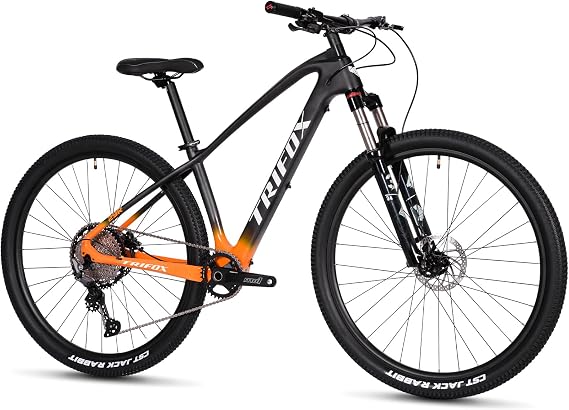
Riding on trails becomes noticeably lighter with the Carbon Fiber Mountain Bike Shimano Deore. It suits riders who want a solid, responsive hardtail bike without spending more than a thousand dollars.
Its standout feature is the lightweight carbon fiber frame that helps maintain control on rough terrain without feeling cumbersome.
Assembly comes mostly done, with about 20 minutes to finish and tools included. The internal cable routing keeps the lines tidy and out of the way.
The hydraulic front fork with 130mm travel offers adjustable shock absorption, which lets you toggle suspension on or off depending on the trail. The Shimano 12-speed drivetrain shifts smoothly, and tires grip well on mountain paths.
Ride quality benefits from strong frame stiffness and reliable components. The Shimano PR-MT200 oil disc brakes provide confident stopping power even in wet conditions. The main praise from feedback is the smooth, precise shifting and solid brake feel.
A common downside found is the limited frame size options, which may not fit all riders comfortably.
The bike receives high marks for its light and stiff carbon fiber frame combined with precise 12-speed shifting. Its brakes handle steep or wet descents well. Some riders find the provided sizes too narrow in range, reducing comfort for those outside the offered frames.
Trails riders who favor a lightweight, agile bike with good components will find it a solid option under $1000. Those needing larger frame sizes or preferring full suspension may want to consider other models tailored to those needs.
Pros
- Lightweight carbon fiber frame at 26lbs
- Smooth 12-speed Shimano Deore shifting
- Strong hydraulic disc brakes for all weather
- Lockable suspension fork adjusts to terrain
Cons
- Limited frame sizes may not suit taller riders
- Requires basic assembly with some tools provided
| Specification | Details |
|---|---|
| Frame Material | T800 Carbon Fiber |
| Speeds | 12 |
| Suspension Travel | 130mm Front Hydraulics |
| Brake Type | Shimano PR-MT200 Hydraulic Disc |
| Tire Size | 29 x 2.1 inch |
| Frame Sizes Available | 15.5, 17, 19 inches |
5. 26 Inch Steel Hardtail Mountain Bike

A basic steel hardtail mountain bike built for durability and reliable performance suits riders who need an affordable option for trail and everyday use. Its standout feature is a sturdy high-tensile steel frame that handles rough paths without issue while remaining budget-friendly.
Assembly is straightforward thanks to a simple design and included components. The 80mm suspension fork cushions the ride over rugged surfaces, reducing fatigue on longer trips. Shifting through 21 speeds covers climbing hills smoothly and cruising on flats easily.
Dual mechanical disc brakes provide consistent stopping power in varied weather and terrain, making it suitable for diverse riding conditions.
Its main task of trail riding is handled effectively. The steel frame offers strength and stability, but it adds some weight compared to aluminum models. The drivetrain shifts reliably through multiple gears, allowing adjustments to terrain changes.
Some users note that the brakes require occasional tuning. It delivers solid durability and dependable control with a minor trade-off in weight.
Strong points include the tough steel frame that stands up to daily riding and the 21-speed drivetrain offering good gear range. Common drawbacks are the bike’s weight owing to the steel and the need for brake adjustments over time to maintain stopping power.
Riders focused on budget-friendly, sturdy mountain biking will find this bike suitable for dirt, gravel, and pavement use. Those seeking a lighter bike or minimal maintenance might prefer bikes with aluminum frames or hydraulic brakes instead.
Pros
- Durable steel frame for rough trail use
- Smooth 21-speed gear shifting
- Effective mechanical disc brakes front and rear
- Front suspension fork absorbs bumps well
Cons
- Heavier due to steel frame material
- Brake tuning needed occasionally for reliable stopping
| Specification | Details |
|---|---|
| Bike Type | Mountain Bike |
| Number Of Speeds | 21 |
| Suspension Type | Front |
| Brake Style | Disc |
| Frame Material | High-Tensile Steel |
| Wheel Size | 26 Inch |
6. WEIZE Adult Dual Suspension Mountain Bike

High-carbon steel construction shapes a sturdy full suspension frame designed for adults 5’4 and taller. Ideal for riders seeking comfort across different terrains, it combines front and rear shock absorption as its standout feature, giving a smoother ride on rough paths without extra gear costs.
Assembly comes mostly done, needing only basic tools and a short adjustment session helped by video guides. The adjustable seat lets you find a comfortable position for longer rides. The 27.5-inch wheels and all-terrain tires handle pavement, parks, and gravel routes well.
Ride control benefits from twist shifters and V-brakes that give straightforward speed management on any route.
Riders can expect a decent performance out of the 18-speed drivetrain for handling climbs and flats with stable pedaling. The bike’s build feels solid thanks to the steel frame, which also adds weight but helps with durability.
Praise highlights the reliable dual suspension system. Brake performance is consistent, though some find the V-brakes need occasional tuning for best stopping power.
A common highlight is the comfort gained from the front and rear suspension, which noticeably reduces jarring on uneven surfaces. Frequent maintenance is needed on the V-brakes to keep them responsive and safe, which means occasional adjustments will be part of regular use. The partial assembly setup is helpful but still requires some time for newcomers to feel fully ready.
Riders who want a strong frame that handles different surfaces value this bike’s build and gear range. Ideal for casual mountain and trail riders not focused on weight savings or high-end brakes. Those expecting lightweight performance or the most advanced braking systems might prefer options beyond this price point.
Pros
- Strong steel frame withstands rougher trails
- Dual suspension smooths out bumps effectively
- Wide 18-speed range suits varied terrain
- Easy partial assembly with clear video instructions
Cons
- V-brakes require upkeep for consistent stopping
- Heavier frame can slow uphill acceleration
| Specification | Details |
|---|---|
| Wheel Size | 27.5 Inch |
| Speeds | 18 |
| Suspension Type | Dual |
| Frame Material | High-Carbon Steel |
| Brake Style | V Brake |
| Gear Shifter Type | Twist Grip |
7. Full Suspension Mountain Bike

Dual full suspension stands out on this bike, making rides smoother over rough terrain. Best suited for riders between 4.75 and 6.4 feet tall, it supports up to 265 pounds and adapts well to daily commuting, casual cycling, and light trail riding.
Setup is straightforward with 90% pre-assembly and a quick-release front wheel. The 21-speed gear system offers a range of options for varying terrain.
Front and rear fenders help keep you clean on wet or muddy roads. The padded saddle adds comfort for longer rides, reducing fatigue on urban streets or trails.
The suspension absorbs shocks effectively, which helps on both mountain terrain and paved roads. The bike feels sturdy and well-built. Shifting between gears is smooth due to the twist grip shifter.
Some mention the V brakes require adjustment over time to maintain strong stopping power.
Dual suspension provides reliable shock absorption during rides, especially on uneven paths. Frequent adjustments to the V brakes come up often, which can be a minor annoyance during regular use. The quick assembly appeals to riders wanting to start quickly without specialized tools.
Riders looking for comfort and versatility on mixed terrain will appreciate this bike’s features. Those looking for a bike to handle very technical or aggressive mountain trails might prefer a model with stronger brakes and a sturdier frame.
Pros
- Dual suspension softens bumps effectively
- Wide rider height range accommodated
- Quick-release front wheel speeds up assembly
- Fenders protect from mud and water
Cons
- V brakes may need frequent adjustment
- Not designed for very aggressive trail riding
| Specification | Details |
|---|---|
| Bike Type | Mountain Bike |
| Number Of Speeds | 21 |
| Suspension Type | Dual |
| Brake Style | V Brake |
| Gear Shifter Type | Twist Grip |
| Intended Riding Terrain | Mountain Terrain, Paved Roads, Urban Terrain |
8. Huffy Stone Mountain Bike

Dual suspension and a 21-speed Shimano gear system make this a solid choice for beginner riders tackling trails or uneven roads. Ideal for people who want comfort and versatility in a mountain bike without spending over $1000. Its steel frame adds durability while handling rough terrain smoothly.
Assembly requires some patience but is straightforward, with clear instructions and all necessary tools included. Day-to-day rides benefit from twist shifters that provide quick gear changes, handy on hilly or varied paths.
The adjustable seat and dual suspension keep rides comfortable, even on bumpy gravel or mountain terrain. The included kickstand is a practical addition for parking during breaks.
Performance on trails feels stable thanks to the dual suspension absorbing shock from rough ground and roots. The steel frame holds up well over time with minimal flex.
The strongest point is the confident grip from the 26-inch knobby tires on dirt and gravel surfaces. A common downside is the slightly heavier frame compared to aluminum models, which may slow acceleration on flat roads.
Ride quality receives praise for cushioning rough trails and maintaining control thanks to the suspension and tires. A common complaint centers around the bike’s weight, which makes pedaling tiring on long, flat routes or casual city rides. Some also note that setup time is longer than expected, requiring careful adjustment of the gears and brakes for smooth operation.
People seeking a dependable, budget-friendly mountain bike with suspension for trail or gravel rides will find this bike fits well. Those prioritizing light weight or needing a bike mainly for road commuting might consider options with aluminum frames and simpler setups instead. Confidence on uneven terrain and gear range are strong points here.
Pros
- Comfortable dual suspension absorbs trail bumps
- 21-speed Shimano drivetrain for versatile gearing
- Durable steel frame with stylish gray and red finish
- Knobby tires offer strong traction on rough terrain
Cons
- Heavier steel frame reduces speed on flat ground
- Assembly can take considerable time for beginners
| Specification | Details |
|---|---|
| Frame Material | Steel |
| Number of Speeds | 21 |
| Suspension Type | Dual (front fork and rear spring shock) |
| Tire Size | 26-inch |
| Brake Style | Dual linear pull |
| Gear Shifter Type | Twist Grip |
9. Mongoose Impasse

Mountain trails and unpaved paths require a bike that can handle rough ground without adding extra weight. The Mongoose Impasse suits riders between 5’3 and 6’0 who want a bike that mixes lightweight build with solid trail performance.
Its biggest strength lies in its durable aluminum hardtail frame paired with wide tires for stability.
Setting up the Impasse involves no complex assembly and benefits from its lightweight aluminum frame that keeps the bike manageable. Daily rides become more comfortable, thanks to the suspension fork which soaks up bumps, while the 27.5-inch wheels and 2.6-inch knobby tires help roll over rocks and roots without frequent loss of traction. The 7-speed trigger shifters make changing gears straightforward on various inclines.
It handles uneven terrain well, with the suspension fork providing smooth control without compromising speed. The mechanical disc brakes offer reliable stopping in dirt or wet conditions.
The strongest praise notes its good grip and responsive gear shifting. Some mention the suspension can feel a bit stiff over very rough patches, which may affect ride comfort.
Good grip on loose surfaces and smooth gear shifts are the highlights, helping maintain control on trails. The suspension fork’s stiffness on extremely uneven paths is the most noted drawback, possibly requiring upgrades for serious off-road riders.
Riders seeking a reliable, lightweight bike for moderate trail riding will appreciate this build. Those planning aggressive downhill runs or needing a wider gear range might prefer models with advanced suspension and more speeds.
Pros
- Lightweight aluminum frame for easy handling
- 2.6-inch wide tires for extra grip and stability
- 7-speed L-Twoo 1×7 drivetrain for smooth shifting
- Mechanical disc brakes provide reliable stopping power
Cons
- Suspension fork can feel stiff over very rough terrain
- Limited speed range with only 7 gears
| Specification | Details |
|---|---|
| Bike Type | Mountain Bike |
| Number Of Speeds | 7 |
| Suspension Type | Full |
| Brake Style | Disc |
| Intended Riding Terrain | Mountain Terrain, Unpaved Trails |
10. 29 Inch Mountain Bike

29-inch wheels provide extra stability for rides over rocky and rough mountain terrain. Suited for riders who want a stable hardtail bike for trail rides, this model’s strongest point is how well it holds its line on fast straights and technical descents.
Assembly is straightforward since the bike arrives 75% pre-built. Putting on the front wheel, handlebars, saddle, and pedals takes less than 30 minutes using the included tools and manual with a video link. The adjustable seat and lightweight alloy wheels add comfort and ease for longer rides.
Reflectors on front and rear improve safety in low light.
It handles climbs and drops well thanks to a 21-speed drivetrain calibrated for precise shifts without chain chatter. Dual disc brakes stop powerfully without wear or adjustments but can be slightly sensitive to very rough trails. The frame and wheels feel durable, though some mention the suspension is not very plush compared to pricier models.
Shifting is smooth and the braking feels strong and reliable, which are praised features. Complaints mainly center on the suspension, which some find too stiff for jagged, technical trails. This setup suits riders prioritizing stable wheels and dependable braking over high-end shock absorption.
People who ride varied mountain terrain but mostly on less aggressive trails will find the stability and gearing useful. Those who want more advanced suspension or softer ride quality on very rough ground might consider other options with premium shocks. Riders needing a ready-to-ride bike with minimal setup time will appreciate this model.
Pros
- Large 29-inch wheels for better stability
- Dual disc brakes offer consistent stopping power
- 21-speed drivetrain with factory-calibrated derailleur
- Tools and detailed instructions included for easy setup
Cons
- Suspension is not very plush on rough trails
- Disc brakes can feel sensitive on very rough terrain
| Specification | Details |
|---|---|
| Bike Type | Mountain Bike |
| Number Of Speeds | 21 |
| Suspension Type | Dual |
| Brake Style | Disc |
| Wheel Size | 29-inch |
| Drivetrain Type | Chain drive |
11. Ktaxon Mountain Bike

Riders who want a sturdy mountain bike without spending over $1000 will find the Ktaxon Mountain Bike a solid choice. It suits those tackling mixed terrain regularly and values straightforward handling and reliable gear shifting above flashy tech. The bike’s 21-speed system is its biggest strength, handling climbs and descents with ease.
Assembly requires attaching the handlebar, front wheel, pedals, and adjusting brakes and gears, which most people can manage with basic tools. Daily rides benefit from its quick-adjust seat post, allowing easy height changes.
The lightweight aluminum wheels reduce wind resistance, and the lock-out suspension fork smooths out bumps on trails. Tires grip well on rocky and gravel paths thanks to their non-slip, explosion-proof design.
Performance fits the level of intermediate trail biking, with solid front suspension and dual mechanical disc brakes offering reliable shock absorption and stopping power under different conditions. The high-carbon steel frame ensures toughness and resists deformation.
Most praise goes to the smooth gear changes and sturdy brakes; the common drawback mentioned involves needing frequent brake adjustments to maintain optimal sensitivity.
Smooth gear changes stand out and make trail rides manageable, although the brakes can require frequent fine-tuning to keep performance sharp. The double shock absorption in the front fork adds comfort on uneven paths, making longer rides less tiring.
People who spend most riding on variable trails and want good shifting and brake control will appreciate this bike. Riders needing minimal assembly or highly refined braking might want to look at other options with pre-setup or hydraulic systems.
Pros
- Quick and precise 21-speed shifting
- Strong dual disc brakes for better stopping
- Lightweight aluminum alloy wheels reduce drag
- Adjustable seat post for easy height changes
Cons
- Brake sensitivity needs regular tuning
- Assembly requires some mechanical skill
| Specification | Details |
|---|---|
| Number Of Speeds | 21 |
| Suspension Type | Front |
| Brake Style | Disc |
| Frame Material | High-carbon steel |
| Wheel Size | 27.5 inch |
| Drivetrain Type | Chain drive |
12. Tommaso Gran Sasso 29er Hardtail

Designed for riders who want a solid mountain bike without overspending, the Tommaso Gran Sasso 29er Hardtail stands out with its lightweight aluminum frame and reliable 24-speed setup. Its biggest strength lies in balancing durability and performance for trails that require both speed and control.
Setting up involves a straightforward assembly focused primarily on the front suspension and disc brakes, which make handling steep and rocky terrain easier. The 29-inch wheels roll smoothly over roots and stones, while the trigger shifters offer quick gear changes. On a daily basis, the bike holds up well to mountain terrain and requires only basic maintenance like occasional chain lubrication and brake adjustments.
The frame feels sturdy without adding too much weight, which helps keep pedaling efficient on climbs. The front suspension absorbs shocks effectively, though some riders mention the lack of rear suspension can make longer rides less comfortable. The disc brakes provide reliable stopping power, but a few reports note that they occasionally require fine-tuning after rough rides.
Strong points include a sturdy yet lightweight frame and the smooth gear shifting, which helps riders handle tricky mountain terrain efficiently. Some riders have found the front suspension alone insufficient for very bumpy trails, and brake adjustments are sometimes needed after intense use.
Those looking for a dependable hardtail with quality components at a reasonable price will appreciate the bike’s balance of features. Riders who need more comfort over rough ground or prefer full suspension might want to consider a different option.
Pros
- Lightweight aluminum frame for easier climbing
- 24-speed gearing suitable for varied terrain
- Disc brakes offer strong stopping power
- Large 29-inch wheels smooth rough trails
Cons
- Only front suspension can feel harsh on long rides
- Disc brakes may need frequent adjustments
| Specification | Details |
|---|---|
| Bike Type | Mountain Bike |
| Number Of Speeds | 24 |
| Suspension Type | Front |
| Frame Material | Aluminum |
| Brake Style | Disc |
| Gear Shifter Type | Trigger |
Best Hardtail Mountain Bikes Under 1000 Comparison Table
| Product | Suspension Type | Number Of Speeds | Brake Style | Intended Riding Terrain |
|---|---|---|---|---|
| Mongoose Flatrock | Front | 7 | V Brake | Mountain Terrain, Unpaved Trails |
| Generic Hardtail MTB | Front | 7 | V Brake | Mountain Terrain |
| Aluminum 26″ MTB | Front | 21 | Disc | Mountain Terrain, Unpaved Trails |
| Carbon Fiber Shimano MTB | Front | 12 | Disc | Mountain Terrain |
| Steel 26″ Hardtail MTB | Front | 21 | Disc | Mountain Terrain, Unpaved Trails |
| WEIZE Dual Suspension MTB | Dual | 18 | V Brake | Mountain Terrain, Unpaved Trails |
| Full Suspension MTB | Dual | 21 | V Brake | Mountain Terrain, Paved Roads |
| Huffy Stone MTB | Dual | 21 | Dual linear pull | Mountain Terrain |
| Mongoose Impasse | Full | 7 | Disc | Mountain Terrain, Unpaved Trails |
| 29″ Mountain Bike | Dual | 21 | Disc | Mountain Terrain |
| Ktaxon MTB | Front | 21 | Disc | Mountain Terrain |
| Tommaso Gran Sasso 29er | Front | 24 | Disc | Mountain Terrain |
- Suspension TypeFront
- Number Of Speeds7
- Brake StyleV Brake
- Intended Riding TerrainMountain Terrain, Unpaved Trails
- Suspension TypeFront
- Number Of Speeds7
- Brake StyleV Brake
- Intended Riding TerrainMountain Terrain
- Suspension TypeFront
- Number Of Speeds21
- Brake StyleDisc
- Intended Riding TerrainMountain Terrain, Unpaved Trails
- Suspension TypeFront
- Number Of Speeds12
- Brake StyleDisc
- Intended Riding TerrainMountain Terrain
- Suspension TypeFront
- Number Of Speeds21
- Brake StyleDisc
- Intended Riding TerrainMountain Terrain, Unpaved Trails
- Suspension TypeDual
- Number Of Speeds18
- Brake StyleV Brake
- Intended Riding TerrainMountain Terrain, Unpaved Trails
- Suspension TypeDual
- Number Of Speeds21
- Brake StyleV Brake
- Intended Riding TerrainMountain Terrain, Paved Roads
- Suspension TypeDual
- Number Of Speeds21
- Brake StyleDual linear pull
- Intended Riding TerrainMountain Terrain
- Suspension TypeFull
- Number Of Speeds7
- Brake StyleDisc
- Intended Riding TerrainMountain Terrain, Unpaved Trails
- Suspension TypeDual
- Number Of Speeds21
- Brake StyleDisc
- Intended Riding TerrainMountain Terrain
- Suspension TypeFront
- Number Of Speeds21
- Brake StyleDisc
- Intended Riding TerrainMountain Terrain
- Suspension TypeFront
- Number Of Speeds24
- Brake StyleDisc
- Intended Riding TerrainMountain Terrain
How to Choose the Right Hardtail Mountain Bike
Focus on frame material, suspension quality, and reliable components since these influence durability and ride comfort. Choosing the right size ensures better control and less fatigue. Good selection avoids frequent repairs and upgrades, saving both time and money in the long run.
Frame Material and Build Quality
Hitting the trails on a bike that feels heavy or creaky quickly takes the fun out of rides. Bikes made from aluminum tend to be lighter, usually around 2 to 3 pounds lighter than steel frames, which makes climbing hills and accelerating easier. Steel frames, on the other hand, offer more durability and a smoother ride due to their natural flex.
Knowing this makes a difference when juggling weight with comfort and toughness, especially on longer or rough rides.
Weld quality also plays a huge role. Poorly finished joints can develop cracks or flex in unpleasant ways after months of hitting rocks and roots. Look for clean, even welds without gaps or uneven beads.
Corrosion resistance matters based on the riding environment. Aluminum resists rust well, but steel frames often require a good paint job or coating to prevent rust if used in wet or salty conditions.
Some steel frames come with chromoly, a stronger alloy with better durability and slightly less weight than standard steel.
Suspension and Fork Performance
Riding on rugged trails with a fork that has only 80mm of travel quickly shows its limits, bumps feel harsher and control slips on rough descents. For most trail conditions, a fork travel between 100mm and 120mm strikes a solid balance, softening impacts without sacrificing pedaling efficiency.
Adjustable features like preload, rebound, and lockout can make a noticeable difference, allowing riders to fine-tune suspension responsiveness based on terrain or personal preference.
Shock absorption ties directly into comfort and bike handling. A fork that maintains traction over roots or rocks helps avoid loss of control and fatigue on longer rides. A good bike here often uses air-sprung forks with sealed cartridge damping, which reduces frequent servicing needs.
Speaking of maintenance, parts availability matters too, common brands tend to have more accessible replacement seals and springs, which simplifies repairs and keeps the fork performing well over time.
Tire Size and Tread Type
Riding on a trail full of rocks and roots shows quickly how tire diameter influences control and speed. A 29-inch wheel tends to roll over obstacles more smoothly and maintain momentum better on longer rides.
Smaller 27.5-inch wheels offer quicker handling, especially in tight or technical sections. Choosing the right size affects how easily the bike accelerates and how it grips uneven terrain, so ignoring this can lead to more fatigue and less confidence on tricky paths.
Tread pattern plays a huge role in grip, especially on mixed surfaces like muddy patches or loose dirt. Tires with widely spaced knobs shed mud better and prevent slipping, but they can feel slower on hardpack.
Denser tread patterns provide more consistent traction on dry trails. A widely recommended feature to look for is tires rated between 2.2 and 2.4 inches wide, since these balance traction and rolling resistance well. Also consider compatibility with wheel sizes and rim width, as upgrading tires or swapping wheels requires matching standards to avoid unexpected fit problems.
Component Quality and Drivetrain
Shifting gears on a mountain bike can be frustrating if the components aren’t reliable. Cheap shifters often feel clunky and can slip unexpectedly, especially when tackling steep sections.
A smooth drivetrain makes climbing less tiring and descending faster without feeling out of control. A 1x or 2x setup with a wide gear range, often 9 to 12 speeds, lets you adjust cadence steadily whether you’re grinding uphill or accelerating on flats. Look for brands that use steel or reinforced alloys in their chainrings and derailleurs, which tend to last longer than budget plastic alternatives.
Brake durability matters just as much on rough trails. Lower-end brakes might fade after prolonged use or lack consistent stopping power under heavy load. Hydraulic disc brakes often outperform mechanical ones by offering stronger and more reliable braking in wet or muddy conditions.
Consistency here is key to controlling speed and confidence. Pay attention to rotor sizes; 160mm or larger rotors generally provide better heat dissipation and stopping force during long descents.
Fit and Comfort Features
Riding a bike that doesn’t fit your height or riding style quickly becomes uncomfortable and can even cause pain after a short distance. Frames designed with proper geometry accommodate various rider heights, typically offering sizes from 15 to 21 inches.
A well-matched frame keeps your hips and knees aligned during pedaling, which prevents strain. Riders who prioritize aggressive trails need a slacker head tube angle around 65-67 degrees for better control, while those focused on cross-country benefit from a steeper angle near 69-71 degrees for efficient climbs.
Adjustability in the saddle and handlebars lets you fine-tune your riding position. Having a seat post capable of adjusting height by at least 4 inches and handlebars that can be adjusted for height and reach means less discomfort on longer rides. Bikes that include vibration-damping features, such as compliant seat posts, suspension seat collars, or wider tires with lower pressure, significantly reduce fatigue.
Expect small but noticeable differences on rough terrain when these elements are part of the design.
Tips for Optimizing Your Riding Experience on a Hardtail Mountain Bike
Adjusting tire pressure significantly impacts trail control on a hardtail mountain bike. Lower pressure improves grip on loose terrain but increases the risk of pinch flats, so aim for a balance, typically between 30-40 PSI depending on your weight and trail conditions.
Upgrading the saddle or handlebar grips can make long rides much more comfortable. Hardtail frames provide a direct connection to the trail, so small comfort improvements help reduce fatigue over rough ground.
Regularly check your suspension fork settings. Unlike full suspension bikes, the fork absorbs most shocks here.
Fine-tune the rebound and compression to suit your riding style and terrain for better control.
Other useful tips include:
- Using clipless pedals for more efficient power transfer.
- Choosing durable, puncture-resistant tires to avoid frequent flats.
- Maintaining a clean drivetrain to keep gear shifting smooth.
Essential Maintenance Practices to Prolong the Life of Your Hardtail
Regularly cleaning your hardtail’s drivetrain helps prevent premature wear and keeps gear shifts smooth. Use a brush and degreaser to remove dirt and old lubricant from the chain, cassette, and chainrings. After drying, apply a suitable bike chain lubricant sparingly to avoid attracting more grime.
Checking tire pressure before each ride ensures better traction and reduces the risk of flats. Hardtail mountain bikes typically benefit from pressures around 30 to 40 psi, but this depends on tire width and terrain. Use a reliable pressure gauge for accuracy.
Inspecting bolts and fasteners is vital. Over rough trails, vibrations can loosen screws on the stem, handlebars, and seat post.
Use a torque wrench to tighten bolts according to the manufacturer’s specifications, avoiding overtightening that could damage components.
- Wipe down the frame to clear mud and debris after rides.
- Check brake pads regularly and replace them when worn past safety limits.
- Store the bike indoors or under cover to prevent rusting and sun damage.
Comparing Hardtail Mountain Bikes to Full Suspension Models: Pros and Cons
Hardtail mountain bikes typically weigh less than full suspension models because they lack rear shock components. This makes them easier to pedal uphill and more efficient on smoother trails.
Maintenance also tends to be simpler since there are fewer moving parts, which can save time and reduce repair costs over the bike’s lifespan.
Hardtail pros include:
- Lower cost, often making them more accessible under $1,000.
- Better power transfer, resulting in faster climbs and acceleration.
- Easier to clean and maintain due to fewer components.
On the other hand, full suspension bikes offer more comfort and control on rough terrain by absorbing impacts through both front and rear shocks. This can reduce rider fatigue during long rides with lots of obstacles.
However, they tend to be heavier, more complex, and costlier to buy and maintain.
People Also Asked
How Do I Choose the Right Size Hardtail Mountain Bike?
Picking the right size hardtail mountain bike means matching the frame height to your height, generally sizing by standover height and reach. Test riding or checking the manufacturer’s size chart helps since some brands run differently. A bike too tall or short makes handling harder on rough trails.
What Maintenance Is Needed to Keep a Hardtail Mountain Bike Lasting?
Regular cleaning, chain lubrication, and checking tire pressure keep a hardtail mountain bike in good shape. Inspect the brakes and suspension fork often, especially if you ride muddy or dusty trails. Tightening bolts and airing up tires before each ride avoids most problems.
Are Hardtail Mountain Bikes Safe for Rough Trail Riding?
Hardtail mountain bikes are safe for rough trails with proper tires, a sturdy frame, and good handling skills. They excel on rocky or uneven ground due to their rigid rear, though expect more bump feedback compared to full suspension. Wearing protective gear improves security on technical rides.
How Do I Check Compatibility of New Parts on My Hardtail Bike?
Check new parts for compatibility by matching sizes and specifications like frame diameter, gear speed, brake type, and wheel size. Reading product manuals or consulting bike forums helps because some components only fit specific models. Bringing your bike to a local shop can prevent incorrect purchases.
What Are Common Problems with Hardtail Mountain Bikes Under 1000?
Common problems on hardtail mountain bikes under 1000 dollars include heavier frames, cheaper components wearing out faster, and basic suspension forks that lack adjustability. Brake performance can sometimes be subpar, requiring upgrades for aggressive riding. Regular tuning and occasional part swaps greatly improve ride quality.
Conclusion
Choosing a hardtail mountain bike under $1000 means focusing on frame durability, decent suspension, and reliable brakes. These three factors make a big difference in handling trails and keeping you comfortable.
Paying attention to the bike’s weight and gear range also helps, but sturdiness and control come first.
Consider how often you’ll ride and where you’ll store the bike before buying. A heavier bike might be fine for weekly rides but harder to manage daily.
The comparison table above breaks down these points for each bike, helping you pick the one that fits your budget and needs.