
Top 12 Best Lithium Car Battery That Will Blow Your Mind
Drawn-out engine starts on cold mornings or unexpected power drops during a drive are familiar frustrations when the wrong car battery is installed. The best lithium car battery offers a reliable jumpstart and steady performance over time, avoiding the sudden failures common with cheaper alternatives that rely on outdated lead-acid technology.
Picking the right one makes a difference in consistent power delivery and lifespan.
Effective lithium car batteries stand out by their energy density and weight, often being 40 to 60 percent lighter than traditional lead-acid versions. The quality of lithium-ion cells impacts charge retention and cycle count, with good batteries lasting well over a thousand charge-discharge cycles under normal use. Compatibility with the vehicle’s power system and a built-in management system to monitor temperature and voltage are key to safety and durability.
Need a Quick Check?
| Image | Product | Price |
|---|---|---|
Our Top Picks 1 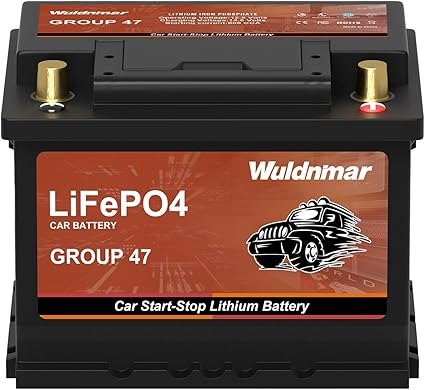 | BCI Group 47 LiFePO4 | Check Price |
Our Top Picks 2  | Group 24 12V LiFePO4 | Check Price |
Our Top Picks 3  | 12V 40Ah LiFePO4 Battery | Check Price |
Our Selected Top 12 Lithium Car Battery for Every Budget
This list features a variety of lithium car batteries suitable for different needs and budgets. Each review explains how the battery performs, who it is best suited for, and highlights its main advantages and disadvantages to help you make an informed choice.
1. BCI Group 47 LiFePO4 Lithium Car Battery
Using the 12.8V lithium car battery has been a noticeable upgrade in my daily driving. It fits perfectly thanks to the precise dimensions and polarity match.
What stands out the most is its lightweight build, making handling and installation much easier compared to traditional lead-acid batteries.
Installation was straightforward because the battery matches typical BCI Group 47 sizes at 9.60 x 6.92 x 7.75”. The weight of just 11.02 lbs means it’s not a strain to lift or position under the hood.
Maintaining the battery involves only occasionally charging it with a dedicated 12V 10A LiFePO4 charger, which keeps it performing at its best day-to-day without fuss.
Performance delivers solid and reliable starts with 600 cold cranking amps, and it has been proven to handle up to 850 CCA in testing. The build quality using LiFePO4 technology ensures a longer lifespan and thousands of charge cycles.
Customers appreciate its durability and lightweight convenience, though some point out that the specific charger requirement can be a minor hassle for replacements or second batteries.
Users praise the lightweight design and reliable starting power, while a common issue is the need for a specialized charger to maintain optimal performance. This can add an extra step for those swapping from traditional batteries without the right charger on hand.
Drivers wanting a durable, lightweight lithium battery that fits standard car setups will find this a solid choice. Those needing extremely high cold cranking power or who prefer universal charger options might prefer alternative battery types or brands.
Pros
- Lightweight at 11.02 lbs for easy handling
- High cold cranking amps: 600A standard, tested 850A
- Perfect fit for BCI Group 47 vehicles
- Long lifespan with thousands of charge cycles
Cons
- Requires specific 12V 10A LiFePO4 charger
- Some may find cold cranking amps lower than high-end lead-acid batteries
| Specification | Details |
|---|---|
| Voltage | 12.8 volts |
| Cold Cranking Amperage (CCA) | 600A (tested up to 850 CCA) |
| Dimensions (L x W x H) | 9.60″ x 6.92″ x 7.75″ |
| Weight | 11.02 lbs |
| Resistance | 4.7 ohm |
2. Group 24 12V 60Ah LiFePO4 Car Battery
Ideal for passenger cars, this 12V 60Ah LiFePO4 battery offers impressive safety features and reliable power output. It suits drivers who want a stable, long-lasting alternative to traditional lead-acid batteries, especially in vehicles with complex electronics or start-stop systems.
Installation was straightforward due to its vehicle-specific fit. The battery’s built-in Battery Management System keeps the pack balanced and protected from overcharge or deep discharge. Daily use is smooth, with consistent voltage stability ensuring dependable starts regardless of temperature changes.
Performance holds strong, delivering 12 volts and low resistance at 0.02 ohm for quick ignition. The case and cells feel solid, designed to handle automotive stresses.
Users consistently praise its safety protections, though some note the higher upfront cost compared to lead-acid options.
Safety features such as overcharge and temperature protections are often highlighted as key benefits, providing confidence in daily driving conditions. Some mention the upfront cost as a drawback, especially compared to traditional batteries.
Ideal for those wanting a safer, more stable lithium battery for their passenger cars, particularly with advanced electronics. Drivers looking for a budget option or wider vehicle compatibility might want to consider alternatives.
Pros
- Multiple safety protections included
- Supports start-stop system vehicles
- Stable voltage output under load
- LiFePO4 chemistry for long lifespan
Cons
- Higher initial price than lead-acid models
- Limited to passenger car compatibility
| Specification | Details |
|---|---|
| Voltage | 12 volts |
| Capacity | 60Ah |
| Resistance | 0.02 ohm |
| Automotive Fit Type | Vehicle Specific Fit |
3. 12V 40Ah LiFePO4 Car Battery
Constructed with LiFePO4 technology, this 12V 40Ah battery is ideal for passenger cars with engines under 2.0L. Its biggest strength lies in its compact yet powerful design, providing reliable start-stop performance while staying lightweight and easy to fit in smaller engine compartments.
Setup involves fully charging the battery before first use to get the best lifespan. The battery weighs 14.8 pounds and measures 9.5 by 6.9 by 8 inches, making it manageable for standard car installations. An IP66 waterproof rating allows use in varied weather conditions, and the addition of M8 screws on terminals offers flexible compatibility with many vehicle models.
When running, the battery delivers strong power suited to smaller engines, supporting reliable vehicle starts. It comes with threaded terminals originally but now features an M8 terminal for universal fit, enhancing usability. The build quality is sturdy, though some might find the size slightly larger than expected for tight spaces.
Most feedback highlights its durability, while common concerns include terminal compatibility issues without the provided screws.
The battery is praised for its dependable power delivery and durable waterproof design. The most frequent complaint relates to terminal compatibility, requiring users to install the M8 screws carefully for proper fit.
Ideal for drivers with smaller cars who want a reliable lithium battery without added weight. Those with larger engines or concerns about terminal setup might consider alternatives better suited for higher capacity or plug-and-play fits.
Pros
- Compact size fits smaller engine compartments
- IP66 waterproof for outdoor use
- M8 terminals for wider vehicle compatibility
- Lightweight at under 15 pounds
Cons
- Limited to engines below 2.0L
- Terminal screws needed for some installations
| Specification | Details |
|---|---|
| Compatible Vehicle Type | Passenger Car |
| Terminal | M8 Terminal |
| Automotive Fit Type | Universal Fit |
| Dimensions | 9.5×6.9×8 inches |
| Weight | 14.8 pounds |
4. Group 48 H6 LiFePO4 Lithium Car Battery

Bluetooth app monitoring is the standout feature of the Group 48 H6 LiFePO4 Lithium Car Battery, perfect for anyone who wants close control over their car battery’s health. Its compact size and 60 amp_hour capacity fit most passenger cars needing a reliable, modern lithium replacement.
Setting it up requires checking the size and tapered terminal layout to match your car. Day-to-day, the smartphone app makes it easy to track battery health remotely, toggle power for saving energy, and even set anti-theft alerts.
The app link adds convenience beyond a traditional battery, giving a practical way to avoid unexpected issues.
Performance is solid for starting and running passenger cars at 12.8 volts. The battery’s construction feels durable with standard SAE terminals. Most reviews praise how well the Bluetooth feature works in alerting battery status.
A common complaint is needing to verify fitment carefully due to the dimensions and terminal orientation before buying.
Bluetooth app control is a highlight, letting users monitor battery health and prevent failure day-to-day. The biggest issue is that measurements and terminal orientation must be confirmed beforehand to avoid compatibility problems.
Drivers looking for a tech-savvy lithium upgrade with real-time updates will appreciate this battery. Those with cars requiring different terminal types or dimensions are better off searching for a different model.
Pros
- Bluetooth app enables real-time battery monitoring
- Compact size fits most passenger cars
- 60 amp_hour capacity holds strong charge
- Anti-theft alerts accessible via smartphone
Cons
- Careful fitment check needed due to exact dimensions
- Limited to vehicles with SAE tapered terminals
| Specification | Details |
|---|---|
| Automotive Battery Size | 10.94″ L x 6.89″ W x 7.48″ H |
| Voltage | 12.8 volts |
| Battery Capacity | 60 amp_hours |
| Terminal Type | SAE Terminal |
| Terminal Position | Left negative (-), Right positive (+) |
| Vehicle Compatibility | Passenger Car |
5. NOCO Boost GB40 12V Portable Lithium Jump Starter

Powerful and compact, this 12V portable lithium jump starter suits anyone who wants reliable emergency vehicle starts without bulk. Its standout feature is the ability to deliver 1000 amps of peak lithium power, enough to jump-start most gas and diesel engines up to 6.0L and 3.0L respectively.
Setup is straightforward, with clearly marked clamps that prevent sparks and incorrect connections, ensuring safe use in urgent situations. The device doubles as a power bank to charge phones and tablets, making it handy beyond vehicle troubles. A bright 100-lumen LED flashlight with multiple modes supports roadside repairs or signaling in the dark.
The unit recharges efficiently in just 3 hours.
Starts come quickly and consistently thanks to the high peak output current, making it dependable for up to 20 battery jumps per charge. The build quality feels solid, designed to handle typical outdoor conditions. Praises emphasize its safety features, especially the spark-proof and reverse polarity protection, but some found the battery capacity modest for repeated use without recharging.
Many highlight its reliable and safe jump-start performance for a range of vehicles, praising the spark-proof connection that avoids mistakes. Most criticisms revolve around the 2150mAh capacity, as repeated use needs quicker recharging to remain ready in emergencies.
People needing reliable emergency starts for smaller engines and occasional device charging will appreciate this unit. Those with larger vehicles or frequent jump start demands may want a version with greater battery capacity and longer run times.
Pros
- Instant start on dead batteries up to 6.0L gas
- Spark-proof and reverse polarity protection
- Power bank for charging mobile devices
- Brightness-comparable 100-lumen LED flashlight
Cons
- Limited to around 20 starts per charge
- Battery capacity may require frequent recharging
| Specification | Details |
|---|---|
| Battery Type | Lithium |
| Voltage | 12 volts |
| Peak Output Current | 1000 A |
| Battery Capacity | 2150 milliamp_hours |
| Compatible with Vehicle Type | ATV, Motorcycle, Passenger Car, RV, Tractor, Truck, UTV, Van, Watercraft |
6. NOCO Boost GB70 12V Lithium Jump Starter

Dead batteries can strike at the worst moments, and having a reliable jump starter makes all the difference. Ideal for anyone driving vehicles with engines up to 8.0L gas or 6.0L diesel, this lithium jump starter is known for providing a powerful 2000 amp boost that starts your vehicle quickly and safely.
Setup involves simply connecting the included clamps to your vehicle’s battery. Its smart design stops sparks and avoids reverse polarity mistakes, making it safe to use even in dim conditions. It also charges fully in six hours, so it’s ready to go when you need it most.
A built-in flashlight with multiple modes helps during night emergencies, and it doubles as a power bank for your phone or tablet.
Jumping a dead battery is its core strength, with up to 40 starts per charge on compatible vehicles. The build holds up well under repeated use, combining compact size with 12 volts of power and 2000 amps of peak current. Positive feedback mentions its safety features, while some find the recharge time a little long during consecutive jumps.
Many appreciate how the unit’s safety features remove worry about sparks or reverse polarity, making it straightforward to jump start without second-guessing connections. However, a common drawback is the lengthy 6-hour recharge time, which might be inconvenient when multiple jump starts are needed in quick succession.
Great for people who want a powerful yet safe jump starter that fits a variety of vehicles and doubles as a portable charger. Those needing to jump start very large diesel engines or requiring rapid recharge cycles might want to look for a different model.
Pros
- 2000 amps peak power handles large engines easily
- ULTRASAFE prevents sparks and connection errors
- Integrated flashlight with 7 useful modes
- Power bank supports charging of smartphones and tablets
Cons
- Recharge time of 6 hours can slow repeated use
- Limited to vehicles with engines up to 8.0L gas and 6.0L diesel
| Specification | Details |
|---|---|
| Battery Type | Lithium Ion |
| Voltage | 12 volts |
| Battery Capacity | 5000 milliamp_hours |
| Amperage | 2000 A |
| Peak Output Current | 2000 A |
| Compatible Vehicle Type | ATV, Motorcycle, Passenger Car, RV, Tractor, Truck, UTV, Van, Watercraft |
7. Group 47 H5 12V LiFePO4 Car Battery
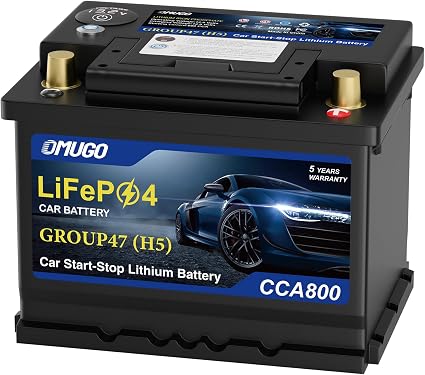
800 CCA ensures instant starts in freezing temperatures, making it ideal for drivers in cold climates who want reliable ignition every time. Lightweight at 20 lbs, it fits well in popular passenger cars needing a durable, high-performance replacement battery.
Installation fits specific vehicle types, so swapping out old lead-acid batteries involves no guesswork. Day-to-day use benefits from a smart battery management system that prevents overcharge and over-discharge, along with a voltage display showing battery health at a glance.
Its design suits start-stop systems, delivering consistent power through long life cycles without the weight penalties of traditional batteries.
The battery performs with strong, reliable power for starting engines even at -30°C, making it dependable in harsh winter conditions. Built with premium LiFePO4 cells, it outlasts lead-acid batteries by years and thousands of cycles.
The biggest praise highlights its durability and quick start ability, while some mention the price as a notable drawback compared to standard options.
Strongest praise revolves around its ability to fire up vehicles instantly in severe cold without hesitation. The most common complaint points to the battery’s higher initial price compared to traditional options.
Drivers in colder regions or with start-stop systems will appreciate the balance of reliability and longevity. Those on a tighter budget or with less temperature concern might look for simpler, less expensive alternatives.
Pros
- Instant cold-weather starts at -30°C
- Lasts much longer than lead-acid batteries
- Lightweight for improved vehicle handling
- Smart BMS protects battery health
Cons
- Higher upfront cost than lead-acid batteries
- Limited to compatible passenger car models
| Specification | Details |
|---|---|
| Voltage | 12.8 volts |
| Battery Capacity | 23 amp_hours |
| Cold Cranking Amps (CCA) | 800 |
| Weight | 20 lbs |
| Resistance | 4.7 ohm |
| Automotive Fit Type | Vehicle Specific Fit |
8. Mighty Max MM-H6 Group 48 12V AGM Car Battery

Perfect for those with golf carts or anyone who needs a dependable 12V battery that delivers solid power. Its standout feature is the fast starting power that works well across various weather conditions, making it suitable for daily use in challenging environments.
Installation is straightforward thanks to the universal fit, and the sealed AGM design means no spills or maintenance worries while in use. The 70Ah capacity supports longer run times, and the durable construction handles vibrations and shocks easily, which is ideal for rough terrain or active vehicles.
Offers steady starts with 760 cold cranking amps, ensuring consistent performance. The battery resists harsh conditions and vibration, delivering dependable power for longer periods. Praised for lasting through tough environments, but some users note the resistance level at 144 ohms can be higher than expected for certain setups.
Fast starts and steady power delivery across seasons stand out, along with the battery’s sealed design that eliminates leaks. However, the relatively high resistance can be a drawback for applications requiring lower internal resistance.
Those operating golf carts or similar vehicles in varying conditions will find this battery reliable. Users seeking a lithium battery for more general or automotive use might want to look for alternatives with lower resistance and broader compatibility.
Pros
- Strong 760 CCA for reliable starting power
- Sealed, spill-proof AGM design
- Durable against shock and vibration
- Universal fit for easy installation
Cons
- Resistance of 144 ohms may affect some systems
- Specifically suited to golf carts, limiting broader use
| Specification | Details |
|---|---|
| Voltage | 12 volts |
| Battery Capacity | 70 amp_hours |
| Cold Cranking Amps (CCA) | 760 |
| Resistance | 144 ohm |
| Terminal | Stud Terminal |
| Automotive Fit Type | Universal Fit |
9. PX Group 47 H5 LiFePO4 Lithium Car Battery

Lightweight and safe, the PX Group 47 H5 LiFePO4 Lithium Car Battery fits passenger cars needing a reliable 12-volt battery with a unique focus on safety. Its biggest strength lies in using lithium iron phosphate material combined with a built-in Battery Management System (BMS), providing better safety than traditional lead-acid batteries.
Installing the battery requires checking measurements carefully since it measures 9.6 x 6.9 x 7.75 inches and fits a Group 47 size. The left negative and right positive terminal layout matches many passenger cars. Day-to-day use feels solid with the battery display and start buttons updating status, making it simple to monitor without extra tools.
Performance-wise, it offers consistent power for everyday driving and quick starts thanks to its cold cranking amps, although exact cold cranking amps aren’t specified. Built from safe, stable lithium iron phosphate cells with one cell per battery, it is designed for longevity and safety.
The most appreciated feature mentioned is its safety performance, while a common issue is ensuring proper fit due to the exact size needs.
Safety stands out as the top praise, thanks to the lithium iron phosphate chemistry and built-in BMS that reduce risks compared to lead-acid batteries. Size compatibility is the most frequent concern, as the battery must match existing dimensions exactly for proper installation.
Drivers prioritizing safety and modern battery technology will appreciate this battery. Those needing detailed cold cranking amps or non-standard sizes might look for alternatives better suited to their specific vehicle requirements.
Pros
- High safety with BMS control circuit
- Lightweight lithium iron phosphate material
- Universal fit for passenger cars
- Easy-to-read battery display and start buttons
Cons
- Must confirm battery size before purchase
- No specific cold cranking amp rating given
| Specification | Details |
|---|---|
| Voltage | 12 volts |
| Group Size | 47 |
| Dimensions (L*W*H) | 9.6 x 6.9 x 7.75 inches |
| Terminal Layout | Left: -, Right: + |
| Number Of Cells | 1 |
| Automotive Fit Type | Universal Fit |
10. Group 47 H5 12V LiFePO4 Lithium Car Battery

NebuQuic Group 47 H5 12V LiFePO4 battery stands out for delivering reliable cold-cranking power in a lightweight, compact design. It suits drivers looking to replace AGM lead-acid batteries with something more manageable and long-lasting, especially for start-stop vehicles, SUVs, and trucks.
Setup is straightforward since it’s a direct drop-in replacement for Group 47 or H6 AGM batteries, matching common battery tray sizes. The IP66 waterproof rating and threaded M8 terminals make installation cleaner and more secure.
Day-to-day, it runs fully maintenance-free thanks to its built-in smart BMS, handling overcharge and short circuits without worry.
Power delivery is solid, with 660 CCA ensuring quick engine starts even in cold weather. The battery’s LiFePO4 chemistry keeps weight down to just 14.8 lbs, making it easier to handle than heavy lead-acid packs.
Most praise centers on the reliable start power and low upkeep, although some mention the relatively modest 40Ah capacity compared to larger batteries.
Reliable engine starting even in cold weather is the biggest advantage here, backed by 660 CCA. Users appreciate the maintenance-free, lightweight build, but some feel the 40Ah capacity doesn’t suit heavier duty or extended power needs. The waterproof rating adds confidence in tough conditions.
Ideal for everyday drivers wanting a lighter, longer-lasting battery for standard start-stop vehicles and trucks. Those needing long-range capacity or frequent deep discharge use might consider higher-capacity options instead.
Pros
- Lightweight compared to traditional lead-acid batteries
- Built-in smart BMS for safety and battery health
- Waterproof (IP66) rating for durability
- Fits as a direct AGM replacement in standard trays
Cons
- 40Ah capacity may be low for high-demand vehicles
- Might be pricier upfront than conventional batteries
| Specification | Details |
|---|---|
| Voltage | 12 volts |
| Battery Capacity | 40 amp_hours |
| Cold Cranking Amps (CCA) | 660 CCA |
| Dimensions | 9.5″L x 6.9″W x 7.5″H |
| Weight | 14.8 lbs |
11. 12V 100Ah LiFePO4 Group 49 Lithium Car Battery

Running a car with this lithium battery feels reliable and smooth, especially for passenger vehicles. It suits anyone looking for a sturdy replacement that fits well and delivers consistent power.
Its biggest strength lies in the upgraded design that carefully matches traditional battery sizes while providing modern lithium technology benefits.
Setting it up is straightforward as long as the dimensions and terminal layout match your current battery. The button upgrades help during installation and startup.
Day-to-day, the stable 12.8 volt output keeps everything running without surprises. The universal fit type makes it a versatile option across many passenger car models, but exact size measurement is essential before buying.
Performance stays solid with steady power supply and good cold cranking amps comparable to conventional batteries. It feels well built and compact at 13.89 by 6.88 by 7.48 inches.
Users often praise its dependable voltage and fit but point out a need to double-check dimensions carefully to avoid installation issues. Construction quality appears thoughtful and durable with safety in mind.
Reliable power output and proper fit are praised often, but careful measurement to ensure size and terminal alignment is frequently highlighted as a necessity. It performs strongly when installed correctly but requires attention during selection to avoid compatibility problems.
People looking for a replacement lithium battery that aligns well with traditional dimensions will appreciate the universal fit and power stability. Those unwilling to measure and compare their current battery carefully might want to consider a product with a broader fit range or detailed sizing guarantees.
Pros
- Fits standard Group 49 battery size
- Stable 12.8-volt output for passenger cars
- Universal fit works with many vehicles
- Upgraded button and start button design
Cons
- Must confirm exact size before purchase
- Terminal polarity and location must match
| Specification | Details |
|---|---|
| Voltage | 12.8 volts |
| Battery Dimensions | 13.89 x 6.88 x 7.48 inches |
| Number Of Cells | 1 |
| Automotive Fit Type | Universal Fit |
| Group Size | 49 (DIN60) |
12. G27 12.8V 80Ah Lithium Car Battery

Excellent for anyone wanting a lighter, safer option than a traditional lead-acid car battery. Perfect for vehicles that fit a Group 27 size and need dependable starting power.
Its main strength lies in combining solid performance with significantly reduced weight thanks to lithium iron phosphate chemistry.
Setting it up means checking your vehicle’s battery compartment for the specific Group 27 size and terminal layout. Once installed, the built-in battery management system keeps the battery safe by preventing overcharge, over-discharge, and other electrical issues.
You’ll notice the difference right away since it weighs about one-third of a lead-acid equivalent, making handling much easier.
Delivers 1300 CCA at 12.8 volts, providing strong starting current for cold conditions. The build feels sturdy and compact within its 12 × 6.8 × 8-inch frame.
Common praise highlights its safety features and lightweight design as big advantages. Some complaints come from those needing a different terminal layout or those whose vehicles don’t accommodate the size perfectly.
The battery’s standout features are its safety controls and reduced weight, which make handling and performance more comfortable during daily use. The most frequent complaint is about the fit, especially the terminal layout and physical dimensions, which don’t suit every vehicle.
Good fit for anyone with a Group 27 battery slot prioritizing weight savings and safety. Drivers with non-standard terminal layouts or limited battery space should consider other sizes or models.
Pros
- Lightweight compared to lead-acid batteries
- Strong 1300 CCA starting power
- Built-in BMS protects battery health
- Compact Group 27 size fits many cars
Cons
- Only fits vehicles with specific battery space
- Terminal layout may not suit all cars
| Specification | Details |
|---|---|
| Voltage | 12.8 volts |
| Capacity | 80Ah |
| Cold Cranking Amps (CCA) | 1300 CCA |
| Battery Size | GROUP 27 (N70) |
| Dimensions | 12 × 6.8 × 8 inches |
| Terminal Layout | Left Positive (+), Right Negative (−) |
Comparison of Top Lithium Car Batteries
| Product | Vehicle Compatibility | Voltage | Capacity (Ah) | Automotive Fit Type |
|---|---|---|---|---|
| BCI Group 47 LiFePO4 | Passenger Car | 12.8 volts | – | Vehicle Specific Fit |
| Group 24 12V LiFePO4 | Passenger Car | 12 volts | – | Vehicle Specific Fit |
| 12V 40Ah LiFePO4 Battery | Passenger Car | 12 volts | 40 Ah | Universal Fit |
| Group 48 H6 LiFePO4 | Passenger Car | 12.8 volts | 60 Ah | Vehicle Specific Fit |
| NOCO Boost GB40 Jump Starter | Multiple | 12 volts | 2.15 Ah | Universal Fit |
| NOCO Boost GB70 Jump Starter | Multiple | 12 volts | 5 Ah | Universal Fit |
| Group 47 H5 LiFePO4 | Passenger Car | 12.8 volts | 23 Ah | Vehicle Specific Fit |
| Mighty Max MM-H6 AGM | Golf Cart | 12 volts | 70 Ah | Universal Fit |
| PX Group 47 LiFePO4 | Passenger Car | 12 volts | – | Universal Fit |
| Group 47 H5 LiFePO4 Battery | – | 12 volts | 40 Ah | – |
| 12V 100Ah Group 49 LiFePO4 | Passenger Car | 12.8 volts | 100 Ah | Universal Fit |
| G27 12.8V 80Ah Lithium | – | 12.8 volts | 80 Ah | – |
- Vehicle CompatibilityPassenger Car
- Voltage12.8 volts
- Capacity (Ah)–
- Automotive Fit TypeVehicle Specific Fit
- Vehicle CompatibilityPassenger Car
- Voltage12 volts
- Capacity (Ah)–
- Automotive Fit TypeVehicle Specific Fit
- Vehicle CompatibilityPassenger Car
- Voltage12 volts
- Capacity (Ah)40 Ah
- Automotive Fit TypeUniversal Fit
- Vehicle CompatibilityPassenger Car
- Voltage12.8 volts
- Capacity (Ah)60 Ah
- Automotive Fit TypeVehicle Specific Fit
- Vehicle CompatibilityMultiple
- Voltage12 volts
- Capacity (Ah)2.15 Ah
- Automotive Fit TypeUniversal Fit
- Vehicle CompatibilityMultiple
- Voltage12 volts
- Capacity (Ah)5 Ah
- Automotive Fit TypeUniversal Fit
- Vehicle CompatibilityPassenger Car
- Voltage12.8 volts
- Capacity (Ah)23 Ah
- Automotive Fit TypeVehicle Specific Fit
- Vehicle CompatibilityGolf Cart
- Voltage12 volts
- Capacity (Ah)70 Ah
- Automotive Fit TypeUniversal Fit
- Vehicle CompatibilityPassenger Car
- Voltage12 volts
- Capacity (Ah)–
- Automotive Fit TypeUniversal Fit
- Vehicle Compatibility–
- Voltage12 volts
- Capacity (Ah)40 Ah
- Automotive Fit Type–
- Vehicle CompatibilityPassenger Car
- Voltage12.8 volts
- Capacity (Ah)100 Ah
- Automotive Fit TypeUniversal Fit
- Vehicle Compatibility–
- Voltage12.8 volts
- Capacity (Ah)80 Ah
- Automotive Fit Type–
How to Choose the Right Lithium Car Battery
Choosing the right lithium car battery involves considering capacity, durability, and compatibility with your vehicle. Selecting a battery that matches your car’s power needs and fits properly ensures reliable performance, preventing premature replacements and costly repairs down the road.
Battery Capacity and Power Output
Starting a vehicle on a cold morning can reveal the importance of the battery’s cold cranking amps (CCA) rating. This number indicates the ability of the battery to deliver sufficient power to start the engine under low-temperature conditions. A battery with too low a CCA may struggle, leaving you facing slow starts or no start at all.
Alongside CCA, reserve capacity (RC) measures how long a battery can keep the engine running if the alternator fails. Matching these ratings to your vehicle’s demands is crucial; small cars typically require around 300-400 CCA, while larger engines or trucks may need 600 or more.
Voltage compatibility is equally important. Most cars use 12-volt systems, so batteries must fit that specification exactly. Getting the wrong voltage can cause electrical problems or damage components.
Checking the battery’s power specifications against the vehicle’s manual avoids these issues, ensuring reliable starts and stable electrical performance during daily use.
Size and Fit
A battery that physically fits the compartment without forcing or gaps saves a lot of headaches. Size matters here since car manufacturers design tight spaces for batteries, and any deviation can mean poor installation or damage to the battery or cables. Besides length, width, and height, the terminal type and placement are critical.
Some cars use top terminals, others side terminals, so matching these prevents difficult cable stretches or improper contacts.
Weight might seem minor but affects handling during installation. Heavier batteries can be tough to lift, especially in cramped engine bays.
Certain vehicles are sensitive to added weight in specific spots. Checking the battery’s weight and dimensions against known specs helps avoid awkward fitting and ensures safety during installation and driving.
Durability and Build Quality
Materials inside the battery case play a big role in how long the battery lasts and how well it copes with daily stresses. Batteries built with strong casing and sealing materials resist cracks and wear, which otherwise lead to early failure. Internally, protection from shocks and vibrations prevents the cells from breaking down prematurely, a common issue for vehicles on rough roads or off-road conditions.
Temperature tolerance is another key factor. Batteries exposed to extreme heat or freezing temperatures without proper design will degrade faster or fail suddenly.
Look for sturdy construction and claims of thermal resistance, especially if the vehicle is driven in harsh climates. These features provide extra reliability and reduce the chance of unexpected breakdowns.
Safety Features
Safety is not just an afterthought but a necessity in battery design. Builtin safeguards like overcharge protection prevent damage from the car’s alternator or charging system, which can otherwise cause swelling or fire hazards.
Short circuit protection stops dangerous electrical faults that might lead to sparks or system damage.
Fire and explosion risks are minimized by careful material selection and battery architecture. Proper insulation of internal components and sealed construction prevent acid leaks and corrosion, common causes of battery failure and damage to surrounding parts. A battery with these safety measures offers confidence in daily operation and reduces maintenance worries.
Warranty and Support
Warranty length and what it covers provide a direct measure of the manufacturer’s confidence in their product and protect the user’s investment. A standard warranty might range from two to five years and should clearly state what failures or defects are covered. This information helps avoid surprises if the battery stops working early.
Good customer service and technical support ease the process of troubleshooting or warranty claims. A clear and simple return policy combined with responsive communication saves time and frustration.
When selecting a battery, it’s practical to check reviews or forums about the company’s support experience, ensuring help is available if problems arise.
Proper Maintenance Practices to Extend the Life of Lithium Car Batteries
Lithium car batteries require less maintenance than traditional lead-acid types, but some care is still necessary to get the best lifespan. Avoid exposing the battery to extreme temperatures, as excessive heat or cold can reduce its capacity. Regularly check the terminals for corrosion and clean them with a mixture of baking soda and water if needed.
Overcharging is a common issue; using a charger designed for lithium batteries helps prevent damage.
Other key maintenance tips include:
- Keeping the battery charged between 20% and 80% state of charge to avoid stress from full depletion or overcharge.
- Storing the battery in a cool, dry place if the vehicle will be unused for extended periods.
- Inspecting cables and connectors to ensure secure, corrosion-free connections.
Proper care can extend the functional life of a lithium car battery well beyond its warranty period.
Safety Precautions and Handling Tips for Lithium Car Batteries
Handling lithium car batteries safely is important due to their chemical composition and energy density. Avoid puncturing or dropping the battery, as physical damage can cause short circuits or leaks. Use insulated tools when working with battery terminals to minimize risk of sparks.
Take note of these safety points:
- Never expose the battery to water or submerge it, which can cause electrical shorts.
- Store the battery away from flammable materials during charging or storage.
- When the battery swells or shows any damage, stop using it and reach out to a professional for disposal.
Following manufacturer guidelines for charging and handling reduces chances of accidents and ensures longevity.
Comparing Lithium Car Batteries with Traditional Lead-Acid Alternatives
Lithium car batteries offer several advantages over traditional lead-acid types. They weigh significantly less, reducing overall vehicle weight and potentially improving fuel efficiency.
Their energy density allows for a smaller size compared to lead-acid batteries of similar capacity.
Other differences include:
- Longer cycle life with more charge-discharge cycles before noticeable capacity loss.
- Faster charging times, making them more convenient for frequent use.
- Lower self-discharge rates, meaning they retain charge better when not in use.
However, lithium batteries tend to cost more upfront and require compatible charging systems. Lead-acid batteries still perform well for basic applications and are easier to recycle in some regions.
People Also Asked
How Do I Know If a Lithium Car Battery Fits My Vehicle?
Check the battery’s voltage and size specifications to match your car’s requirements exactly. Comparing the terminal type and capacity with your original battery helps avoid installation issues.
What Safety Precautions Should I Take When Handling Lithium Car Batteries?
Avoid exposing the battery to extreme heat or physical damage during handling. Always wear safety gloves and goggles since lithium batteries can be hazardous if punctured or improperly handled.
How Long Does a Lithium Car Battery Typically Last Before Replacement?
Lithium car batteries generally last between 5 to 10 years depending on usage and maintenance. Regularly checking battery health and avoiding deep discharges can help extend its lifespan.
Can I Use a Lithium Car Battery with My Existing Car Charger?
Most lithium batteries are not compatible with traditional lead-acid chargers without an adapter or charger designed for lithium chemistry. Using the wrong charger can damage the battery or reduce its lifespan.
What Are Common Signs of Problems in Lithium Car Batteries?
Noticeable voltage drops, slower start times, or the battery not holding a charge indicate potential issues. Keeping an eye on these signs allows timely service before the battery fails completely.
Conclusion
Capacity, voltage compatibility, and durability are the most important factors to consider when choosing a lithium car battery. Make sure the battery meets your vehicle’s power requirements and can last through your typical usage patterns. Weight and resistance to temperature changes also affect performance, especially in different climates.
Measure your vehicle’s battery space carefully to avoid fitment issues. Compare the costs and expected lifespan based on how often you drive.
Revisit the comparison table and detailed descriptions above to find the option that fits your needs and budget best.