
Top 12 Best Mountain Bike Saddle That Boost Comfort
Riding over rough trails with a cheap or ill-fitting saddle often leads to unnecessary pain and discomfort. The best mountain bike saddle balances firmness and cushioning to prevent soreness on bumpy rides. Without the right support, numbness and chafing can ruin a long day on the bike, turning what should be an enjoyable adventure into a struggle.
What sets a good mountain bike saddle apart is primarily the shape and padding density. Narrow saddles around 130 to 145 millimeters wide are common for riders who want better leg clearance and less friction.
High-quality saddles use durable synthetic covers and dense foam or gel inserts to absorb shock while maintaining a firm platform for power transfer. Weight also matters; lighter saddles typically fall between 200 and 300 grams, striking a balance between strength and easy handling on technical terrain.
Need a Quick Check?
| Image | Product | Price |
|---|---|---|
Our Top Picks 1 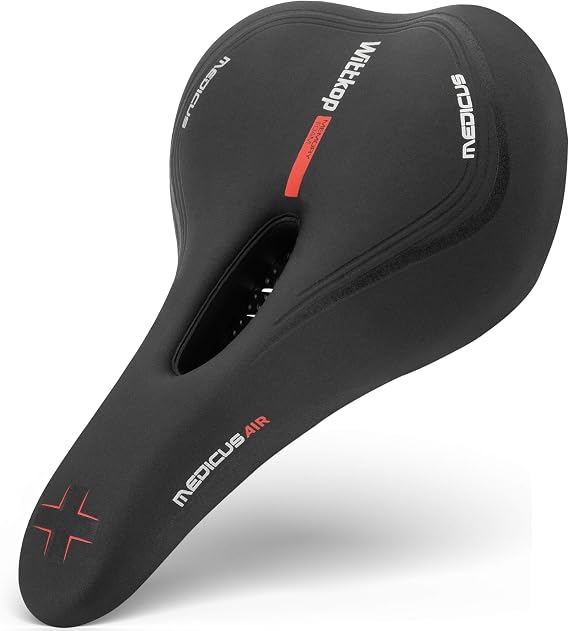 | Wittkop Bike Saddle | Check Price |
Our Top Picks 2  | WTB Volt Saddle | Check Price |
Our Top Picks 3  | WTB Pure Saddle | Check Price |
Our Selected Top 12 Mountain Bike Saddle Picks for Every Need
This list includes a variety of mountain bike saddles designed for different riding styles and preferences. Each review explains how the saddle performs on trails, who it fits best, and highlights the main advantages and drawbacks to help you choose the right one for your needs.
1. Wittkop Bike Seat
Riders seeking a solid replacement saddle for mountain biking that balances comfort and durability will find the Wittkop Bike Seat meets basic expectations. It suits those who want a straightforward, no-frills option that gets the job done without extra features.
Its main strength lies in its simplicity and reliable fit for casual trails.
Attaching the bike seat involves standard mounting compatible with most bikes. Daily rides show the seat holds up to routine wear but offers nothing specialty like extra padding or ventilation.
The size and shape are average, so it does not require break-in time. Regular cleaning is easy since the materials do not trap dirt excessively.
Padding provides moderate comfort during shorter rides but might feel firm on longer trails. Build quality is solid, with materials that withstand frequent use without damage. Positive feedback highlights its dependable fit on most bikes.
A noted drawback is less comfort for riders who prefer a softer seat on rough terrain.
Durability and straightforward mounting are the biggest advantages here. The saddle performs reliably for general mountain biking but does not offer extra cushioning or ergonomic shaping, which limits comfort on longer or rougher rides. Its structure is consistently solid with no reports of early wear or failures.
People looking for an affordable, dependable bike seat that covers basic needs will find it adequate. Those seeking enhanced comfort or specialized seats for extended or rugged riding should consider alternatives with more padding or ergonomic designs tailored to longer use.
Pros
- Easy installation with standard attachments
- Durable materials hold up during regular rides
- Suits casual mountain biking needs
- Low maintenance, simple cleaning
Cons
- Firm padding may not suit long rides
- Lacks advanced comfort features or ventilation
| Specification | Details |
|---|---|
| Brand Name | Wittkop |
| Number of Items | 1 |
| Number of Packs | 1 |
| Unit Count | 1 Count |
| Manufacturer | Wittkop |
| Model Number | 97955413-1 |
2. WTB Volt Bike Seat
WTB Volt Bike Seat fits riders needing firm support without giving up cushioning. Its standout feature is the deeply contoured shape that cradles the pelvis, which suits those with limited flexibility or who want stability on longer rides.
It balances medium padding with firm support for easier-paced mountain biking and road rides.
Setting it up involves choosing one of the three widths designed for proper sit bone support: narrow, medium, or wide. This makes sure the saddle matches your pelvis width, improving comfort and pedaling power.
The pressure relief cutout under the nose and the padded center channel reduce soft tissue pressure, letting you ride longer with less numbness and discomfort. Weighing 315 grams, it’s light enough for trail and road use while maintaining a stable platform.
Durability comes from solid construction with mid-level padding that stays firm but comfortable. The molded base and padding combine for long rides without sinking in. Most praise focuses on how well the seat supports the pelvis, but some riders mention the firm padding takes a short adaptation period.
The saddle fits well in terms of width but requires picking the right size for best results.
The contoured shape receives strong praise for providing pelvic stability during rides, helping especially those with reduced flexibility. The medium padding thickness delivers comfort while remaining supportive, though adjusting to the firmness can take some rides. Riders find that choosing the saddle width that matches their sit bones is crucial to avoid discomfort.
Riders who want firm support combined with moderate cushioning and who can select the correct width will appreciate this saddle. Those preferring a softer, plush seat or who do not want to spend time finding the perfect fit might want to consider other options. It works well for long rides and a mix of trail and road cycling for riders.
Pros
- Three width options for individual sit bone fit
- Cushioning balances comfort and firm support
- Pressure relief cutout reduces soft tissue pain
- Padded central channel prevents numbness
Cons
- Firm padding needs rider adjustment time
- Choosing correct width is essential for comfort
| Specification | Details |
|---|---|
| Weight | 315 g |
| Padding Thickness | Medium |
| Widths Available | Narrow, Medium, Wide |
| Model Number | W065-0587 |
| Warranty | 2 Year Manufacturer |
| Included Components | Bicycle Saddle |
3. WTB Pure Bike Seat
WTB Pure Bike Seat offers a classic drop nose design focused on comfort for long rides and mountain trails. It suits bikepackers and all-mountain riders who spend hours in the saddle and need pressure relief without sacrificing support.
Its main strength lies in extra thick padding combined with specific cutouts that prevent numbness and discomfort.
Setting up the saddle is straightforward, designed to fit most standard seat clamps. The cutout on the underside and the central “love channel” work together to relieve pressure on soft tissues during extended rides.
The extra thick padding makes off-road or long-distance trips more bearable by reducing soreness. It’s stable and feels well-cushioned without being too bulky or heavy at 345 grams.
Performance meets expectations with solid support and comfort throughout various terrains. Its build is durable with an emphasis on rider comfort rather than being ultralight. Strong praise centers on the pressure relief zones that help avoid numbness.
The most common complaint involves slight issues with the padding breaking in slowly, requiring a few rides to fully adjust.
Pressure relief features like the underside cutout and “love channel” receive strong praise for preventing numbness during extended rides. The extra padding is comfortable but does require a period of breaking in, which some find inconvenient before it feels perfect.
Bikepackers and all-mountain riders seeking comfort over ultralight weight will appreciate this saddle. Those prioritizing minimal weight or a faster break-in period might consider other options better suited to aggressive racing or fast handling.
Pros
- Classic drop nose shape for controlled riding
- Extra thick padding for long-term comfort
- Pressure relief cutout reduces soft tissue discomfort
- Durable build suited to mountain and bikepacking use
Cons
- Padding takes time to break in fully
- Weight heavier than some ultralight saddles
| Specification | Details |
|---|---|
| Brand Name | WTB |
| Model Number | W065-0610 |
| Unit Count | 1 Count |
| Item Weight | 345 g |
| Included Components | Bicycle Saddle |
| Warranty Description | 2 Year Manufacturer |
4. WTB Koda Bike Seat

Riding feels secure and balanced with a flat-profile saddle designed for flexibility and stability. The WTB Koda suits riders who prefer moderate padding and efficient power transfer over long or less intense rides. It stands out for fitting sit bones well and offering pressure relief that lets you stay comfortable for hours on varied trails.
Setup involves picking the right width to match your sit bone spacing, and choosing titanium or chromoly rails based on weight preference. The flat nose design makes it easier to shift positions or get on and off quickly. The comfort zone cutout reduces pressure on soft tissue, noticeable during longer rides where small discomforts can add up.
Padding strikes a middle ground, soft enough to cushion but firm enough to support pedaling power. The build feels sturdy with reliable rails and a shell that doesn’t flex excessively.
Reviewers comment that the saddle cuts down numbness thanks to the love channel design but some find the padding a bit thin on rougher trails.
Comfort and support balance well on longer rides with less numbness thanks to pressure-relieving features. Some note that the medium padding feels minimal on aggressive trails or rocky paths, indicating it suits moderate conditions better than very rough environments.
Riders seeking a saddle that matches their anatomy and allows power transfer will appreciate this model. Those needing more thick cushioning or a heavily padded design might find it lacking and should look at other options made for rough and bumpy trails.
Pros
- Two width options for correct sit bone support
- Flat profile allows pelvic tilt and stability
- Comfort zone cutout relieves soft tissue pressure
- Lightweight with titanium or chromoly rails
Cons
- Padding may feel thin on very rough terrain
- Flat nose can take time to get used to
| Specification | Details |
|---|---|
| Item Weight | 315 g |
| Padding Thickness | Medium |
| Rail Material Options | Titanium or Chromoly |
| Width Options | Two widths available for fit |
| Model Number | W065-0613 |
| Warranty | 2 Year Manufacturer |
5. Universal Comfortable Bike Seat

Comfortable cycling over rough terrain is possible with this bike saddle designed for riders who want a balance between support and breathability. It fits a wide range of bikes and stands out for its thick cushioning and shock absorption features.
Installation uses a standard saddle adapter and comes with all necessary tools, making it straightforward to replace old seats. The built-in cushioning reduces pressure on the lower back during long rides, and the non-slip leather surface combined with the airflow vent helps keep you dry. It works well for mountain biking or daily commuting.
Padding with high-density foam maintains comfort on bumps, and the narrow front allows natural leg movement without chafing. It holds up well over time, but some find it a bit bulky for racing styles.
The waterproof cover adds durability but requires regular cleaning to prevent dirt build-up.
Pressure relief and shock absorption receive frequent praise, making rides smoother on uneven trails. A common downside mentioned is the size; riders preferring slim and lightweight seats find it too large. The waterproof cover keeps the leather safe but carries some maintenance responsibilities.
Ideal for casual and mountain bikers who spend hours riding and need extra cushioning. Those focused on speed or racing may want a slimmer option. It suits riders who use various bike types since it fits most standard posts and comes ready to install with tools included.
Pros
- Thick foam padding reduces pressure on long rides
- Waterproof cover protects seat from rain and dirt
- Center airflow vent keeps seat cool and dry
- Includes all parts needed for installation
Cons
- May feel bulky for racing or aggressive riding
- Leather surface needs regular cleaning to avoid dirt build-up
| Specification | Details |
|---|---|
| Dimensions | 9.7″ x 8″ x 3.7″ |
| Weight | 0.81 kg |
| Material | High-density foam with wear-resistant leather cover |
| Compatibility | Fits most standard seat posts; for mountain, BMX, road, electric, and exercise bikes |
| Included Components | Saddle adapter, mounting wrench, waterproof cover |
| Warranty | 2 years |
6. Fifty-Fifty Mountain Bike Saddle
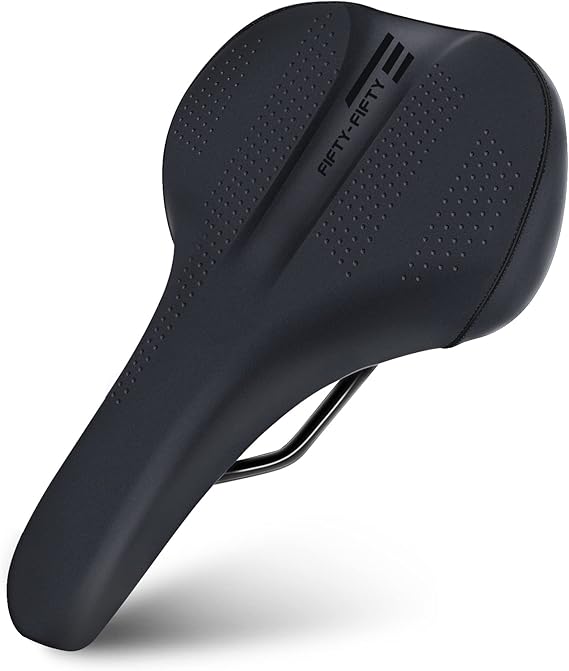
Chromoly rails and memory foam padding make a solid case for riders needing a lightweight but comfortable saddle. Designed to support sit bones and reduce inner leg bruising, it suits those who spend long hours on mountain trails and want a water-resistant seat that cuts down on discomfort.
Setting up takes just a few minutes thanks to straightforward instructions and adjustable positioning. The waterproof surface keeps the saddle dry during wet rides, while ventilation slots improve airflow, reducing heat buildup.
Weighing only 295 grams, it won’t add unwanted bulk to the bike, helping maintain ride efficiency.
Memory foam adapts well to the rider’s body, lending consistent comfort on bumpy tracks. The chromoly rails add strength without much weight. Most praise mentions the comfort and breathability on longer rides.
Some find the edges a bit firm and report minor discomfort until they get used to the shape.
Comfort stands out due to the memory foam adapting to individual sit bones, especially appreciated on long rides. Ventilation slots contribute to cooler rides by reducing sweating. The firmer edges cause some initial discomfort but tend to ease once accustomed to the saddle’s shape and support.
Riders looking for a lightweight, breathable, and water-resistant saddle will find this model appealing. Those sensitive to firmer saddle edges or seeking immediate soft cushioning might prefer an alternative with softer or wider padding upfront.
Pros
- Lightweight at just 295 grams
- Memory foam molds to body shape well
- Waterproof surface repels moisture effectively
- Ventilation slots reduce sweating
Cons
- Edges can feel firm on initial use
- May require time to adjust to saddle shape
| Specification | Details |
|---|---|
| Weight | 0.38 kg (about 295 g reported) |
| Material (rails) | Chromoly |
| Water Resistance | Waterproof surface |
| Padding | Memory foam |
| Air Ventilation | Slots for airflow |
| Installation | Adjustable angle and position |
7. Velmia Bicycle Saddle

Comfort stands out immediately with this bike saddle, thanks to its memory foam that adjusts to your body shape. Suitable for riders who spend long hours on regular bicycles or e-bikes, it offers reliable cushioning and ventilation, helping to reduce pressure and sweat during intense rides.
Mounting the saddle is straightforward, provided with an illustrated guide and the needed clamp so you can get going right away. The ventilation slot keeps air flowing, preventing unwanted moisture buildup. Its waterproof build with welded seams protects it from rain and puddles, making daily use less of a worry whether you park outdoors or ride in wet conditions.
The saddle offers solid performance for relief and breathability while riding. It holds its shape over time, with a width of 7.3 inches fitting most riders well. Positive notes highlight the comfortable memory foam and ventilation features, though a few mention the three versions require careful choice for riding style to get the perfect fit.
Comfort and ventilation receive strong praise as the memory foam provides noticeable cushioning and the central slot allows steady airflow. The most frequent drawback centers on choosing the right model, which can be confusing and affect satisfaction if the fit doesn’t match the rider’s position well.
Riders looking for tailored comfort and water resistance will appreciate this saddle’s features. Those who prefer a more forgiving, one-size-fits-all approach might look for saddles without multiple model options to avoid fitting difficulties.
Pros
- Memory foam contours to body shape
- Ventilation slot prevents sweating
- Fully waterproof with sealed seams
- Clear installation instructions included
Cons
- Three models require careful selection
- Some users find fit depends on riding style
| Specification | Details |
|---|---|
| Width | 7.3 inches |
| Material | Memory foam, waterproof cover with welded seams |
| Models | Three versions for different riding styles |
| Included Components | Saddle clamp, illustrated instructions |
| Design Origin | Germany |
8. RockBros Comfort Bike Seat

Designed for riders who spend hours on varied terrain, this mountain bike saddle targets comfort and support without adding extra weight. It suits cyclists focused on longer rides where pressure relief and durability matter most.
The key strength lies in its ergonomic shape combined with a breathable design to keep cycling comfortable all day.
Installing the saddle is straightforward thanks to side markings on the carbon steel rails, allowing precise positioning. The thick high-density foam cushions road vibrations effectively.
Its PU leather surface offers a firm grip to prevent slipping during climbs or fast descents. Ventilation holes help prevent sweat buildup, making it better for hot or intense rides.
The saddle absorbs shocks well and prevents soreness on long rides. Its carbon steel rails remain stable and resist bending under stress. The anti-slip surface reduces unwanted movement, but some riders may find the narrow front a bit restrictive depending on their pedaling style.
Adjusting the angle takes some patience due to the downward-tilting front wave shape.
The saddle earns praise for soft resilience during longer rides and reliable shock absorption. Its ventilation system genuinely keeps the rider cooler, although the front design requires some getting used to and angle adjustments can slow setup time. The PU leather grips well but adds slight stiffness on initial rides.
Suitable for cyclists prioritizing comfort and durability on extended mountain rides, especially in warm conditions. Those preferring a wider or flatter front may want to explore other options. Its modest weight and supportive design make it a solid choice for riders who need both cushioning and ventilation.
Pros
- Effective pressure relief with downward-tilting front
- Thick foam absorbs road vibrations well
- Breathable airflow channel reduces heat buildup
- Durable, stable carbon steel rails
Cons
- Front narrow shape may feel restrictive to some
- Angle adjustment can be tricky initially
| Specification | Details |
|---|---|
| Weight | 340 g |
| Material | PU leather surface, carbon steel rails, high-density foam |
| Design | Ergonomic wave shape with hollow airflow channel |
| Included components | Saddle body |
| Warranty | 1 Year Manufacturer |
9. RockBros Waterproof Bicycle Seat

Sitting comfortably on long or rough mountain rides often depends on your saddle choice. Designed for riders who want light, ergonomic support with good breathability, this seat stands out for its balance between comfort and weight. Its waterproof PU leather also makes it a practical option for varying weather conditions.
Installing the saddle is straightforward, aided by included wrenches and clear side markings for adjustment. The narrow front prevents leg chafing during pedaling, while the wider back supports your sit bones.
The top layer has a matte finish that grips well, helping keep you steady even on technical trails. The air channel running through the center lets air circulate, reducing sweat and heat buildup during longer rides.
Constructed with sturdy rails, the saddle holds its shape well under stress and supports up to 220 lb without issue. The foam padding offers noticeable softness without feeling overly squishy. A frequent compliment relates to its breathability, but some find the foam not thick enough for extremely rough terrain or very long rides.
The waterproof surface works well in wet conditions, although it might feel less breathable in hot weather.
Comfort stands out, especially on moderate rides, thanks to the foam padding and ergonomic shape. The air channel keeps things cooler than many similar saddles. However, some users note the foam thinning on very rough rides and less breathability under intense heat.
This saddle suits riders who prioritize weight, comfort on moderate trails, and an easy-to-clean waterproof surface. Those planning long-distance rides over extremely rough terrain might want to look for models with thicker padding or more specialized cushioning systems.
Pros
- Lightweight at just 0.58 lb
- Air channel promotes cooling airflow
- Waterproof PU leather top
- Side markings help with easy installation
Cons
- Foam may be too thin for very rough trails
- Matte surface less breathable in hot weather
| Specification | Details |
|---|---|
| Weight | 0.34 kg (0.58 lb) |
| Material | PU leather with high-density foam |
| Maximum load | 220 lb (100 kg) |
| Rail material | Rigid, deformation resistant |
| Includes | Hexagonal wrench, open-end wrench |
10. RockBros Memory Foam Bike Seat

High-density memory foam offers comfort that lasts over long bike rides, making this seat ideal for riders who face rough trails or long distances. The seat suits those who want a soft, shock-absorbing saddle that doesn’t quickly wear out or deform.
Installation takes just a few minutes with the included wrench, fitting most mountain and recreational bikes. The narrow front design allows your thighs to move freely without rubbing, while the wider back supports your sit bones comfortably. A waterproof PU cover keeps moisture out, so rainy rides don’t lead to a soggy seat.
The reflective dots help keep you stable, which is reassuring when riding on uneven paths.
Shock absorption works well thanks to the thick memory foam, reducing discomfort on bumpy terrain. The high carbon steel frame feels solid without adding excess weight.
One point to note is the seat might be bulkier compared to minimalist saddles, which some find less suitable for aggressive racing. The safety handle at the back is a useful addition for passenger stability or extra grip.
Memory foam padding receives praise for cushioning and reducing pressure over bumpy trails. The waterproof surface holds up well during wet rides but may cause slight heat build-up on warmer days. The safety handle is appreciated for added control and passenger comfort.
Comfort riders and trail explorers will appreciate the cushioning and durable design. Those who prefer a lightweight, minimalist saddle for racing or speed might find the bulkier shape limiting. The waterproof feature suits riders in all weather but might be less ideal in hot climates where breathability matters more.
Pros
- Thick memory foam provides lasting shock absorption
- Waterproof PU layer keeps cushion dry in wet conditions
- Narrow front prevents thigh rubbing during rides
- Safety handle adds extra grip for passengers
Cons
- Seat bulkier, may not suit aggressive or racing riders
- Some find it less breathable on hot days
| Specification | Details |
|---|---|
| Material | High carbon steel frame, PU waterproof cover |
| Cushion Type | High-density memory foam |
| Design | Narrow front, wide back |
| Installation Tool | Standard wrench included |
| Model Number | 380007001/CA |
| Warranty | One year |
11. RockBros Memory Foam Bike Seat

Anyone who rides different types of bikes, from city cruisers to mountain trails, will find the RockBros Memory Foam Bike Seat useful. It suits riders who want comfort over long distances and solid shock absorption without switching saddles constantly.
Its memory foam padding stands out as the best feature for reducing pain during rides.
Setting up the saddle takes just a few minutes with the included 6mm Allen wrench and open end wrench. The seat fits both double rail and clamp tube mounts, making it versatile for city, mountain, and racing bikes. A slanted slot in the seat helps air circulate, so you avoid a stuffy feeling during hotter rides or long stretches in the saddle.
Memory foam keeps pressure off your saddle bones and butt, making long rides more comfortable. The seat’s spherical and bow design improves shock absorption, so bumps in the trail feel less jarring. It weighs 0.78 kg, which is moderate but not heavy.
Some mention the seat takes a short break-in before feeling most comfortable, while others find the rails less sturdy over time.
Praise focuses on the comfort memory foam provides, especially on longer rides. Ventilation is effective at preventing overheating, making it suitable for warmer weather. Common complaints point to the rails occasionally weakening, which could affect stability over time.
Riders looking for a comfortable seat across different bike styles will appreciate this saddle’s flexibility and cushioning. Those who want the absolute lightest weight or need precision fitting might consider other options, as this seat balances comfort and moderate weight rather than racing-level lightness.
Pros
- Thickened memory foam relieves saddle bone pressure
- Slanted slot increases airflow and ventilation
- Shockproof design reduces impact on rough terrain
- Easy installation for multiple bike types
Cons
- Rails can feel less sturdy after extended use
- Needs break-in period for best comfort
| Specification | Details |
|---|---|
| Item Weight | 0.78 kg |
| Materials | High quality memory foam |
| Installation | Double rail or clamp tube |
| Included Tools | 6mm Allen wrench, open end wrench |
| Model Number | 38210012002+13-15W+BS-06/US |
| Warranty | 1 Year |
12. OUXI Comfort Gel Bike Seat

Comfortable padding and a non-slip surface set this mountain bike saddle apart. Ideal for riders seeking better pressure relief on long rides, it features a thick gel and sponge interior. The standout quality is its upgraded cushioning that softens the impact on rough trails or city streets.
Installing the seat is straightforward, with included tools and a removable adapter fitting most bikes. The non-slip PU leather surface stays put during rides, while the breathable hollow design helps keep things ventilated.
The waterproof cover adds protection, making daily use less of a worry when riding through wet conditions or storing the bike outdoors.
The saddle absorbs shocks well thanks to high-density artificial gel and elastic sponge inside. It fits standard bike seat posts and offers relief during long cycling sessions. A common praise highlights the comfort over hard polymer seats, but some find the size a bit wide, which could cause thigh rubbing on narrower bikes.
The most common positive feedback praises the thick gel and sponge padding for delivering lasting comfort and reducing pain during long rides. Some note the slightly wide design interferes with leg movement on certain bikes, which can be uncomfortable.
Riders who prioritize cushioning and protection on rugged trails or city commutes will appreciate this saddle. Those who need a narrower seat or smaller size might prefer different models designed with slim profiles in mind.
Pros
- Thick gel padding reduces pressure on buttocks
- Non-slip texture prevents sliding on rough rides
- Breathable hollow design aids ventilation
- Includes installation tools and waterproof cover
Cons
- Seat width may cause thigh rubbing for some
- Only one size option available
| Specification | Details |
|---|---|
| Material | PU leather, gel, highly elastic sponge |
| Size | 5.5” Width * 9.8” Length |
| Weight | 0.62 kg (1.2 lb) |
| Includes | Waterproof cover, tube clip, double sided wrench |
| Compatibility | Fits standard bicycles, 7/8″ seat clamp |
| Warranty | 1 year warranty, 30-day money-back |
Best Mountain Bike Saddles Comparison Table
| Product | Brand | Weight | Warranty | Included Components |
|---|---|---|---|---|
| Wittkop Bike Saddle | Wittkop | – | – | – |
| WTB Volt Saddle | WTB Volt | WTB | 315 g | 2 Year Manufacturer |
| WTB Pure Saddle | WTB Pure | WTB | 345 g | 2 Year Manufacturer |
| WTB Koda Saddle | WTB Koda | WTB | 315 g | 2 Year Manufacturer |
| Universal Comfort Seat | Universal Comfort | LCYMD | 810 g | 2 Year Manufacturer |
| Fifty-Fifty MTB Saddle | Fifty-Fifty MTB | FIFTY-FIFTY | 380 g | – |
| Velmia Bike Saddle | Velmia | VELMIA | – | – |
| RockBros Comfort Saddle | RockBros Comfort | ROCKBROS | 340 g | 1 Year Manufacturer |
| RockBros Waterproof Seat | RockBros Waterproof | ROCKBROS | 340 g | 1 year |
| RockBros Memory Foam Saddle | RockBros Memory Foam | ROCKBROS | – | 1 year |
| RockBros Memory Foam Saddle II | RockBros Memory Foam II | ROCKRBOS | 780 g | 1 Year |
| OUXI Gel Comfort Saddle | OUXI Gel Comfort | OUXI | 620 g | 1 year warranty |
- BrandWittkop
- Weight–
- Warranty–
- Included Components–
- BrandWTB Volt
- WeightWTB
- Warranty315 g
- Included Components2 Year Manufacturer
- BrandWTB Pure
- WeightWTB
- Warranty345 g
- Included Components2 Year Manufacturer
- BrandWTB Koda
- WeightWTB
- Warranty315 g
- Included Components2 Year Manufacturer
- BrandUniversal Comfort
- WeightLCYMD
- Warranty810 g
- Included Components2 Year Manufacturer
- BrandFifty-Fifty MTB
- WeightFIFTY-FIFTY
- Warranty380 g
- Included Components–
- BrandVelmia
- WeightVELMIA
- Warranty–
- Included Components–
- BrandRockBros Comfort
- WeightROCKBROS
- Warranty340 g
- Included Components1 Year Manufacturer
- BrandRockBros Waterproof
- WeightROCKBROS
- Warranty340 g
- Included Components1 year
- BrandRockBros Memory Foam
- WeightROCKBROS
- Warranty–
- Included Components1 year
- BrandRockBros Memory Foam II
- WeightROCKRBOS
- Warranty780 g
- Included Components1 Year
- BrandOUXI Gel Comfort
- WeightOUXI
- Warranty620 g
- Included Components1 year warranty
How to Choose the Right Mountain Bike Saddle
A good mountain bike saddle fits your body shape and riding style to prevent discomfort and injury. Materials and padding affect durability and support, while the saddle’s shape influences your riding efficiency. Choosing the right one avoids replacements and makes rides more comfortable.
Comfort and Fit
Riding with a saddle that’s too narrow or too wide quickly leads to discomfort and numbness. The width should match the spacing of your sit bones, which can range roughly from 100mm for smaller frames to over 140mm for larger ones.
A saddle that aligns well with these bones prevents unnecessary side-to-side pressure, keeping longer rides bearable. Many brands now provide measurements or guidelines to help choose the right width, making a big difference for comfort during multi-hour rides.
Padding type and thickness also make a big difference. Gel padding works well for shorter rides, but foam or air-filled alternatives provide better support and shape retention for longer sessions.
Overly thick padding often fools you at first but ends up causing more soreness by compressing unevenly. Ergonomic features like cut-outs or channels help reduce pressure on soft tissue and improve blood flow, reducing numbness and chafing. Models with these designs typically emphasize comfort without sacrificing control or stability on rough terrain.
Durability and Materials
After months of riding on rough trails, a low-quality covering quickly shows signs of wear, cracking or fading under sun and rain. A durable saddle uses materials like synthetic leather or reinforced microfiber, which stand up to moisture and abrasion much better than standard vinyl. These covers not only last longer but also keep comfort intact without stiffening up after exposure to elements.
The strength of the base and rails makes a noticeable difference on bumpy descents or jumps. Aluminum rails provide a solid balance between weight and toughness, while steel rails are tougher but heavier. Carbon rails shave off grams but can be prone to cracking without proper care.
Look for a base made of nylon or composite materials rated for impact resistance to prevent cracking. A sturdy construction avoids annoying creaks and the risk of sudden failure while riding hard.
Weight and Performance
Riding a bike with a saddle that weighs more than 300 grams might not seem like a big deal at first, but over long distances, the extra weight can slow you down and tire your legs faster. I’ve ridden both heavy and light saddles, and the difference in efficiency is noticeable during steep climbs or sprint efforts. Saddles made from carbon or lightweight alloys typically weigh between 150 and 250 grams, which saves energy but often means less padding.
For someone who values speed and power, choosing a saddle under 250 grams usually offers a good balance.
The shape of the sitting surface also plays a key role in how power transfers during each pedal stroke. Narrow, flat designs tend to encourage a more aggressive riding position by minimizing hip rotation.
Conversely, wider or more carved shapes can provide better support but might restrict pedaling motion slightly. Paying attention to your personal biomechanics helps; for example, riders with a wider sit bone measurement should choose saddles that offer at least 130-140 mm width to avoid discomfort and maintain consistent power delivery.
Adjustability and Compatibility
Sitting on a saddle that doesn’t fit your bike’s seat post can ruin a ride quickly. Many mountain bike saddles come with rails compatible with standard 7mm diameter clamps, but some use oversized or carbon rails needing specific clamps.
Trying to mount a saddle without the right fit leads to instability and rattling noises, making long rides uncomfortable. Confirming the rail type and seat post clamp size before buying avoids this common hassle.
Ride comfort greatly depends on the saddle’s adjustability. Saddles offering angle adjustment and fore-aft positioning allow fine-tuning that adapts to your riding style.
Moving the saddle forward or tilting it slightly reduces pressure on sensitive areas, improving comfort on steep climbs or fast descents. Aggressive riders often prefer narrow saddles with moderate padding, while a wider, softer shape suits a relaxed posture. Checking for at least 10 degrees of tilt adjustment and around 3 to 4 cm of fore-aft travel helps keep your position comfortable across varied terrain.
Ventilation and Moisture Management
Riding for hours under the sun often leads to uncomfortable heat and sweat buildup, especially in the seat area. Saddles with cutouts or channels can make a noticeable difference by allowing air to flow more freely.
These features help prevent skin irritation and reduce that sticky feeling caused by trapped heat. Look for saddles with a central cutout about 4-6 cm wide or multiple narrow channels; these sizes tend to strike the right balance between support and ventilation.
Materials that wick moisture away from the skin keep you dry longer during intense climbs or fast descents. Synthetic covers like microfiber or perforated leather do better at moisture management compared to traditional materials. Some designs focus on minimizing sweaty areas that commonly cause chafing by narrowing the contact points or using cushioning that maintains breathability.
Without these considerations, riders often experience soreness and discomfort after just a short period, so paying attention to these details can improve not just comfort but also overall ride endurance.
Proper Maintenance and Care for Prolonged Saddle Life
Keep the saddle dry and clean after every ride to prevent the material from wearing out prematurely. Dirt and sweat can degrade padding and cover materials, making the saddle less comfortable over time.
A soft cloth with mild soap and water works well for routine cleaning. Avoid harsh chemicals or scrubbing too hard.
Inspect the saddle regularly:
- Check for cracks or tears in the cover, which can worsen if ignored.
- Examine the rails and mounting hardware for signs of rust or looseness.
- Tighten bolts carefully to maintain proper fit without overtightening.
Store the bike indoors or under cover. UV rays and rain damage materials and accelerate deterioration. Using a breathable bike cover helps prevent moisture buildup under the saddle.
Replacing worn-out saddles promptly is better than pushing through discomfort. Comfort depends on both shape and condition, so maintenance directly impacts ride quality.
Common Mistakes to Avoid When Choosing and Installing a Mountain Bike Saddle
Picking a saddle solely based on appearance or price is a common mistake. Saddles that look good may not offer the right comfort or support, leading to discomfort on longer rides. Low-cost saddles often use cheaper materials that wear quickly or don’t provide enough padding.
Ignoring the width of the saddle relative to your sit bones can cause numbness or pain. It’s better to measure or test saddles that match your anatomy.
Installation mistakes also affect comfort and performance. A saddle that’s tilted too far forward or backward can cause pressure points or force you into poor riding posture.
- Check the saddle width against your sit bone distance.
- Adjust the tilt so the saddle is level or slightly nose-down for aggressive riding.
- Set the saddle height to allow slight knee bend at the pedal’s lowest point.
- Secure the rails firmly to avoid saddle movement during rides.
Proper fit and installation take some time but greatly improve comfort and control on rough trails.
Comparing Mountain Bike Saddles to Alternatives Like Dropper Posts and Seat Cushions
Choosing the right saddle can make a noticeable difference in comfort and control during long rides. Compared to dropper posts, which adjust seat height on the fly, a quality mountain bike saddle directly affects how your sit bones distribute pressure.
Dropper posts improve handling on technical descents but don’t address sitting comfort, which is crucial on extended climbs or cross-country rides.
Seat cushions or padded shorts add a layer of softness but tend to lack the structural support of a well-designed saddle. A saddle shaped to match your anatomy keeps your posture better and reduces fatigue more effectively than adding padding alone, which can sometimes lead to extra heat or chafing.
Key points to consider:
- Saddle design influences riding position and pressure distribution.
- Dropper posts improve bike handling but don’t improve comfort when seated.
- Padded cushions are supplementary, not a substitute for a proper saddle.
- A saddle suited to your riding style and anatomy reduces the need for extra padding.
People Also Asked
How Do I Choose the Right Size Mountain Bike Saddle?
Choose a saddle width that matches the distance between your sit bones, usually measured with a simple jig or by checking pressure points after a ride. Test different saddles if possible because comfort varies a lot depending on your riding style and position.
What Is the Average Lifespan of a Mountain Bike Saddle?
Mountain bike saddles typically last anywhere from 1 to 3 years, depending on how often you ride and the conditions. Rain, mud, and frequent falls can wear the cover and padding quicker, so inspect it every few months for signs of cracking or flattening.
How Do I Properly Clean and Maintain My Bike Saddle?
Clean your saddle with warm water and mild soap after muddy rides, avoiding harsh chemicals that can damage the material. Use a soft brush or cloth to remove stuck dirt, and let it air dry completely before storing to prevent mildew and material breakdown.
Are Mountain Bike Saddles Compatible with All Seat Posts?
Most mountain bike saddles fit standard rails that clamp onto seat posts, but some designs use different rail shapes or proprietary mounts. Double-check the rail size and seat post clamp compatibility, especially with lightweight or carbon parts to avoid fitting problems.
What Common Issues Should I Watch for with Bike Saddles?
Watch out for rail bends or cracks from impacts, padding compression that reduces comfort, and worn-out covers that expose foam or leave seams exposed. Loose clamps or shifting saddles during rides indicate a need for tightening or replacement parts.
Conclusion
Comfort tops the list when choosing a mountain bike saddle. The shape should support your sitting bones without causing pressure points during long rides.
Durability matters too, especially if you’re tackling rough trails regularly. Finally, consider the weight and padding balance; too much padding can cause discomfort, while too little may not protect enough.
Think about how often you’ll ride and your budget before making a choice. A saddle that fits well with your bike’s setup and meets your riding style pays off in the long run.
Check the comparison table and earlier picks for options that match different needs and price ranges, making it easier to find the right fit for your rides.