
Top 12 Best Pressure Washer for Siding and Deck Revealed!
Cheap or poorly selected pressure washers often leave siding and decks looking worse rather than better. Water pressure that’s too high can damage wood or strip paint, while too low pressure won’t remove grime or mildew effectively.
The best pressure washer for siding and deck strikes the right balance, offering sufficient power without causing surface damage, making cleaning more efficient and less risky.
A good pressure washer for these tasks generally has between 1,300 and 2,400 PSI, which is enough to clean without etching surfaces. The flow rate, measured in gallons per minute, should be around 1.2 to 2.5 GPM to carry away dirt effectively. Materials also matter: stainless steel nozzles and durable hose connections reduce wear and leaks.
Models with adjustable pressure settings and wide spray tips allow better control, making the cleaning process safer and easier.
Need a Quick Check?
| Image | Product | Price |
|---|---|---|
Our Top Picks 1  | Westinghouse ePX3100s Washer | Check Price |
Our Top Picks 2  | Westinghouse ePX3500 Washer | Check Price |
Our Top Picks 3  | Sun Joe SPX3000 Washer | Check Price |
Our Selected Top 12 Pressure Washer for Siding and Deck for Every Budget
This list features a range of pressure washers suitable for cleaning siding and decks, covering various budgets and needs. Each review explains how the product performs, who it is best for, and highlights its main advantages and disadvantages.
1. Westinghouse ePX3100s Electric Pressure Washer
Compact and lightweight, this electric pressure washer suits those needing strong cleaning power without bulk. Ideal for siding and decks, it delivers impressive force in a portable 10-pound design, making tough outdoor jobs manageable without heavy equipment.
Setup is straightforward with built-in holders keeping the spray gun, lance, and nozzles organized between uses. Carrying it around the yard feels easy thanks to its compact form. The adjustable foam cannon comes in handy when cleaning greasy or stained surfaces, turning soap into thick foam that clings well and helps lift grime.
The pressure washer puts out up to 2100 max PSI, enough power to clean most siding and deck surfaces effectively. It’s built compact yet solid, perfect for handling a variety of outdoor chores.
The most common positive feedback highlights its powerful cleaning in a small package, while some users mention the water flow rate could feel limited for larger jobs.
The pressure washer’s strongest point is its powerful cleaning capacity in a very portable design, appreciated on siding and decks alike. The most frequent downside noted is that the water flow, although decent, can be insufficient for bigger or heavily soiled areas.
Those who prioritize mobility and easy storage will find this pressure washer suits their needs well. Users requiring higher water flow for extensive surfaces may want to consider heavier-duty models with greater capacity.
Pros
- Compact and lightweight at 10 pounds
- Adjustable foam cannon for thick soap application
- Built-in storage for spray gun and nozzles
- Delivers up to 2100 max PSI power
Cons
- Water flow rate may feel low on larger jobs
- Limited hose length restricts reach
| Specification | Details |
|---|---|
| Model Number | ePX3100s |
| Max PSI | 2100 |
| Rated PSI | 1800 |
| Max GPM | 1.76 |
| Rated GPM | 1.2 |
| Weight | 10 pounds |
2. Westinghouse ePX3500 Electric Pressure Washer
Compact size and light weight stand out with this electric pressure washer, ideal for tackling siding and deck cleaning without lugging heavy equipment. Its balance between power and portability is the main feature people appreciate most.
Setting it up is straightforward thanks to the quick-connect nozzles and an extendable steel wand that feels durable and user-friendly. The 25-foot nylon braided hose gives enough reach for most home projects, and the soap tank makes applying detergent simple when extra cleaning strength is needed.
Maneuvering around corners or furniture is easy due to the four 360° steering wheels and anti-tip design.
Performance delivers 2000 PSI at 1.2 GPM, enough to handle dirt and grime on decks and siding well without overkill. Build quality stands out with steel components in the wand and a sturdy low-profile base.
Most praise focuses on its portability and effective cleaning power, while some mention the maximum pressure not hitting the highest category for more demanding jobs.
Most find the pressure and portability ideal for regular home use, but some wish the pressure was higher for tough stains. The compact design and wheels make moving it around easy during cleaning sessions.
This suits someone needing reliable pressure for siding and deck cleaning without heavy lifting. It may not meet demands if strong commercial-grade power is required. For casual to moderate cleaning, it fits well.
Pros
- Lightweight at just 19 pounds
- Four 360° steering quick-lock wheels
- Includes five quick-connect nozzles
- Built-in soap tank for detergent use
Cons
- Pressure may be low for heavy-duty cleaning
- Wand length limited to 17.5 inches
| Specification | Details |
|---|---|
| Max PSI | 2500 |
| Rated PSI | 2000 |
| Max GPM | 1.76 |
| Rated GPM | 1.2 |
| Weight | 19 pounds |
| Wand Length | 17.5 inches extendable steel wand |
3. Sun Joe SPX3000 Electric Pressure Washer
Sun Joe SPX3000 offers strong cleaning power without the bulk and cost of gas models, ideal for siding and deck maintenance. Its 2030 PSI pressure and versatile nozzle options make it the choice for anyone wanting thorough cleaning without too much fuss.
Setup is straightforward with quick-connect nozzles and a garden hose adapter included. The 20-foot high-pressure hose gives enough reach around the yard, while the 34-inch stainless steel lance feels sturdy during use.
Switching spray tips between narrow jets for tough spots and wide fans for gentle cleaning takes seconds.
Performance meets expectations with 2030 PSI clearing dirt effectively across siding and decks. Built to last, its brass fittings and stainless-steel lance hold up well, even under frequent use.
Praise often centers on its strong spray power and good variety of nozzles. Some users mention the 1.2 GPM flow as a bit low for very large jobs.
Strong spray power and nozzle versatility often receive praise for thorough cleaning. Commonly noted drawback is the relatively low 1.2 GPM water flow, which slows down large cleaning jobs.
Best suited for homeowners wanting efficient cleaning for decks and siding without heavy equipment. Users needing faster work on large surfaces might consider higher flow or gas options instead.
Pros
- Strong 2030 PSI pressure for effective cleaning
- Five quick-connect nozzles for versatile spray options
- Stainless steel spray lance with brass fittings
- Long 20-foot high-pressure hose included
Cons
- Water flow of 1.2 GPM may be slow for large areas
- Electric power limits range compared to gas models
| Specification | Details |
|---|---|
| Working Pressure | 2030 PSI PWMA Rated |
| Water Flow | 1.2 GPM |
| Power Source | 13-Amp Electric |
| Spray Tips Included | 5 (0°, 15°, 25°, 40°, Soap) |
| High-Pressure Hose Length | 20 feet |
| Manufacturer Warranty | 2 years |
4. CHICWIND Electric Pressure Washer 2026 Model

Cleaning siding and decks can be a real workout, especially when dirt and grime get stuck tight. This CHICWIND Electric Pressure Washer offers a solid 2070 PSI output, making it a practical choice for homeowners who want a powerful yet manageable tool for outdoor cleaning. Its biggest strength is balancing enough pressure with portability for regular use around the house.
Setting it up is straightforward, thanks to the integrated 26ft hose reel that keeps the hose from tangling during use. The built-in 1L foam cannon makes applying soap easy without messing with extra parts. Its 24lb design means it’s light enough to carry around but heavy enough to stay stable while running.
The Total Stop System automatically shuts off the pump when not in use, helping avoid unnecessary wear and power waste.
This washer handles outdoor surfaces well, easily tackling siding, decks, fences, and more. The 1800W motor performs reliably, and the general build feels solid for the price point. One of the biggest positives noted is the convenience of the hose reel combined with the foam cannon.
Some mention that it is not as heavy-duty as gas-powered models, which can limit tougher, long-term tasks.
The pressure washer impresses most users with its hose reel and foam cannon combination, making everyday cleaning tasks easier. The main downside often mentioned is its limited power compared to gas models, restricting some tougher jobs.
People looking for a lightweight, electric option for siding and deck cleaning will find it suitable. Those who need a machine for extensive heavy-duty use would be better off with a more powerful gas-powered washer.
Pros
- Convenient built-in foam cannon soap tank
- Integrated hose reel prevents tangles
- Auto shut-off saves energy and pump life
- Lightweight but stable design
Cons
- Less powerful than gas-powered washers
- May struggle with very heavy-duty cleaning
| Specification | Details |
|---|---|
| Max Pressure | 2070 PSI |
| Flow Rate | 1.67 GPM |
| Motor Power | 1800W |
| Voltage | 120V/60Hz |
| Weight | 24lb |
| Hose Length | 26ft |
5. Krud Kutter Multi-Purpose Pressure Washer Concentrate

Covering up to 5,800 square feet with just one gallon when diluted makes this pressure washer concentrate a solid choice for cleaning large siding and deck surfaces. It’s designed for anyone needing a commercial strength cleaner that tackles greasy, sticky, or tough stains without scrubbing.
Mixing is straightforward, one gallon concentrates to 20 gallons of solution, so filling your pressure washer reservoir is simple. Spray the surface and let the formula sit for around 3 to 5 minutes before rinsing.
This means less effort scrubbing and faster job completion, especially on wood, vinyl, or aluminum siding, as well as concrete and decks.
It quickly removes dirt, grease, bird droppings, and tree sap, handling a broad range of surfaces well. The concentrate itself comes in a 128 fluid ounces bottle, which feels sturdy and easy to measure for mixing. People widely appreciate its deep cleaning power but occasionally note it needs a good rinsing to avoid residue.
The concentrate is praised for removing stubborn grime without scrubbing, which saves a lot of elbow grease. The most common issue is that residue can remain if the rinsing is not thorough, which means extra care is needed after application.
People with large outdoor surfaces made of vinyl, wood, or concrete will appreciate this cleaner for tackling heavy dirt. Those who want a gentler or less concentrated product might want to consider alternatives better suited for delicate materials.
Pros
- Effective on tough dirt and grease
- Suitable for multiple siding types
- One gallon covers large areas
- No scrubbing required, just rinse
Cons
- Needs thorough rinsing to avoid residue
- Strong formula may not suit delicate surfaces
| Specification | Details |
|---|---|
| Brand Name | Krud Kutter |
| Model Number | 385462 |
| Unit Count | 128 Fluid Ounces |
| Manufacturer | Rust-Oleum |
| Manufacturer Part Number | 385462 |
6. KÄRCHER Multi-Purpose Pressure Washer Detergent
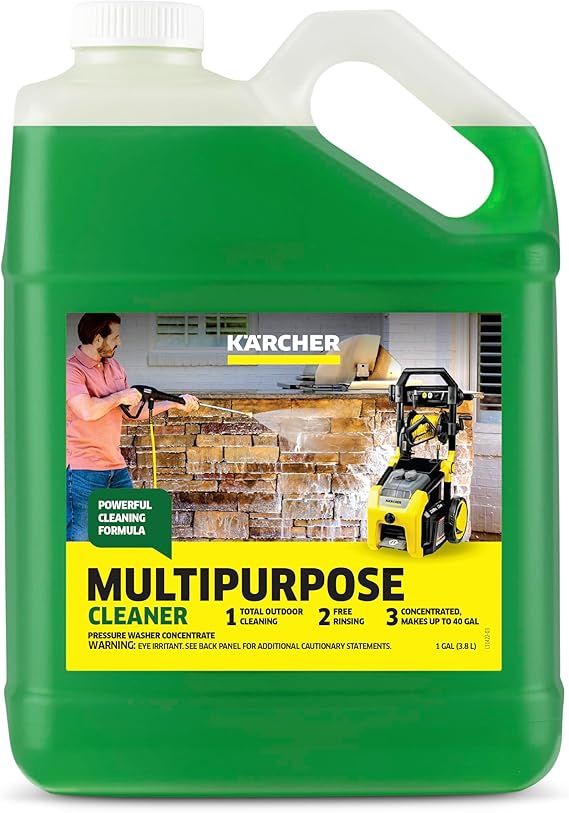
People looking for a versatile cleaning solution for their siding, deck, and other outdoor surfaces will appreciate this multi-purpose detergent. Its biggest strength is how it works with almost any pressure washer, making it a flexible choice for many homeowners.
Getting started is straightforward, just dilute the concentrate to make up to 40 gallons of soap, which means it lasts a long time. It can be used directly in your pressure washer or with a foam cannon, and manual use is also an option.
The fresh scent adds a nice touch, making cleaning chores less unpleasant.
Performance-wise, it cleans a broad range of surfaces well, from concrete to patio furniture. The liquid formula is easy to handle and effective at cutting through dirt.
Many praise how concentrated it is, while the common complaint is users needing to pay attention to the right dilution from the label to get the best results.
Users appreciate how long a single gallon lasts thanks to the concentrate strength. At the same time, many find it necessary to closely follow dilution instructions to avoid leftover soap on surfaces. This detergent is dependable for various cleaning needs but demands some attention during preparation.
People with multiple outdoor cleaning tasks will value its versatility and cost-effectiveness. Those looking for a simpler, ready-to-use solution without measuring may want to explore alternative products.
Pros
- Works with most gas and electric pressure washers
- Highly concentrated; makes up to 40 gallons
- Suitable for many outdoor surfaces
- Fresh scent during use
Cons
- Requires careful dilution to avoid residue
- No specific instructions included on quantity for all machines
| Specification | Details |
|---|---|
| Item Form | Liquid |
| Scent | Fresh |
| Specific Uses For Product | All-Purpose Cleaning, Car Washing, Fence Cleaning, Siding Washing, Driveway Cleaning, & More |
| Surface Recommendation | Cars, Fences, Patio Furniture, Siding, Driveways, Heavy Equipment, & More |
| Special Features | Concentrated, Made in the USA |
7. Simple Green Oxy Solve Deck and Fence Cleaner

Lifting grime and stains from wood siding and decks becomes straightforward with this concentrate. Perfect for anyone needing to tackle tough outdoor dirt like tree sap or grease without relying on strong chemicals, its key strength lies in using peroxide to power through grime safely.
Mixing the liquid concentrate into your pressure washer is simple, and it spreads easily across wooden surfaces like decks and fences. The unscented formula doesn’t add any funny smells during use, and it tackles oils and grease effectively. Because it covers up to 6,400 square feet, it works well for large outdoor projects without repeated trips to refill.
Cleaning wood surfaces such as fences and decks works as expected, lifting off stubborn stains gently but thoroughly. It’s designed specifically for wood, so it won’t harm your decking material.
Reviews highlight how it removes tough grime yet some find it takes a bit longer to see full results on heavily stained areas. The concentration also means measuring is necessary each time, which users should prepare for.
The peroxide formula effectively lifts grime, oils, and grease on wood decks and fences while avoiding harsh chemicals. Users appreciate the large coverage and lack of scent but note that tougher stains may need more time to clear, requiring patience during application.
This cleaner suits those with sizeable outdoor wood areas looking for a safer alternative to hard chemicals. Users seeking a quick-acting solution on heavily stained wood might want to look for something stronger or more specialized.
Pros
- Powerful peroxide-based cleaner
- Unscented, no strong smells
- Works well on wood surfaces
- Covers large areas up to 6,400 sq. ft.
Cons
- Requires careful mixing due to concentration
- May take longer on deep stains
| Specification | Details |
|---|---|
| Item Form | Liquid |
| Scent | Unscented |
| Specific Uses For Product | Deck, Fence |
| Surface Recommendation | Wood |
| Special Features | Concentrated |
| Special Ingredients | Citric Acid |
8. Portable Electric Pressure Washer with Quick Connect Nozzles

LWQ Portable Electric Pressure Washer with Quick Connect Nozzles suits those looking for powerful cleaning on siding and decks. It stands out by delivering a strong water flow of up to 2.5 GPM to handle dirt and grime efficiently.
Setup is straightforward with the quick-connect metal spray nozzles allowing easy switching between different spray angles, 0°, 15°, 25°, and 40°. The detergent bottle works well with common cleaning chemicals like bleach without risking pump damage. The unit saves water and energy while cleaning patios, furniture, and cars with simple operation.
The pressure washer performs well on tough stains thanks to its high pressure and adaptable nozzles. It is solidly built with metal connectors that feel durable.
The best feature mentioned is how effectively it cleans complex shapes. A noted downside is that it may not be as lightweight or portable as some expect for its class.
Strong water flow and metal nozzles make it very effective at cleaning detailed surfaces and complex shapes. Many find it reliable in handling tough dirt, but it could be cumbersome to move around due to its weight and size.
Good fit for anyone who wants solid cleaning power without worrying about water waste or damaging the pump with chemicals. Those needing a truly lightweight or compact washer might want to consider other options.
Pros
- High water flow saves time cleaning
- Four nozzles fit different cleaning needs
- Foam cannon for applying detergent easily
- Durable metal quick-connect fittings
Cons
- Not very lightweight for a portable model
- Some users might find it bulky
| Specification | Details |
|---|---|
| Brand Name | LWQ |
| Model Number | S5 |
| Water Flow | 2.5 GPM |
| Number of Nozzles | 4 quick-connect metal spray nozzles |
| Manufacturer Part Number | S5-01 |
9. Gas Pressure Washer 4200 PSI 212cc

Powerful and reliable, it handles tough siding and deck cleaning without much trouble. Suited for homeowners wanting professional-level results at home, it stands out for its impressive pressure and flow rate that cut through grime and moss quickly.
Setup involves a straightforward pull-start on the 212CC gas engine, which runs steadily once going. Daily use feels solid thanks to the 4200 PSI pressure combined with a 4.0 GPM flow rate, helping clear away stubborn dirt with minimal passes. Handling the unit requires some space and care due to its size and engine noise but it remains manageable for most outdoor cleaning tasks.
Pressure and flow deliver really strong cleaning power, stripping away thick moss, oil stains, and even paint effectively. The build feels durable thanks to a strong 7HP 4-stroke engine that delivers steady output.
Most praise focuses on how fast and thorough the cleaning is, while some mention the typical gas engine noise and weight as a minor drawback.
Strong cleaning power with 4200 PSI and 4.0 GPM flow rate is praised for handling thick moss and deep stains efficiently. Common complaints focus on the engine noise and the unit’s weight, which make it less ideal for quiet or very lightweight use.
The washer is great for homeowners needing intense cleaning power for large exterior jobs. Those looking for quieter or more portable options might prefer electric models with lower pressure and flow rates instead.
Pros
- High pressure cleans tough dirt quickly
- Strong 7HP gas engine provides steady power
- Effective on various outdoor surfaces and stains
- Easy pull-start ignition system
Cons
- Heavier and louder than smaller electric models
- Requires outdoor use due to gasoline engine
| Specification | Details |
|---|---|
| Working Pressure | 4200 PSI |
| Engine Size | 212CC |
| Flow Rate | 4.0 GPM |
| Engine Type | 7HP 4-stroke OHV gasoline |
| Manufacturer | Steupoek |
| Model Number | SUN090 |
10. Gas Pressure Washer 4200 PSI Heavy Duty

Great for heavy-duty cleaning, this gas pressure washer delivers a strong 4200 PSI and 4.0 GPM flow, perfect for tackling siding and deck grime. Best suited for homeowners needing serious power to remove stubborn dirt and prep surfaces quickly without renting equipment.
Setup is straightforward with one unit to handle. Pumping the trigger gets the max pressure almost instantly, making regular cleaning tasks quicker. Its design supports long sessions without overheating, so daily use covers large yards or driveways comfortably.
Moving it around takes some effort due to its weight but stability during operation is reliable.
The pressure and water flow provide excellent deep cleaning that cuts through tough buildup on decks, siding, and more. It feels solidly built with durable materials designed for heavy use.
Most people praise its cleaning strength while some mention the heft, which can make it a bit hard to transport for short bursts.
The washer stands out for delivering powerful pressure and flow that easily handle deep cleaning on various surfaces. Most find the weight challenging, which can slow transport but assures solid stability when running.
Those needing to clean large outdoor areas regularly will appreciate the strength and reliability, while anyone prioritizing lightweight, highly portable machines might want to explore smaller, less powerful options.
Pros
- Strong 4200 PSI power for tough cleaning
- High 4.0 GPM flow removes grime quickly
- Durable build designed for heavy use
- Reliable performance for siding and decks
Cons
- Heavier weight makes moving it harder
- Single unit without extra accessories included
| Specification | Details |
|---|---|
| Brand Name | Steupoek |
| Model Number | STE89 |
| Water Pressure | 4200 PSI |
| Water Flow Rate | 4.0 GPM |
| Unit Count | 1 Count |
11. Electric Pressure Washer 5000 PSI with Pressure Control

Sturdy design and adjustable pressure make this electric pressure washer a solid choice for anyone looking to clean siding or decks with precision. Its biggest strength lies in its variable pressure settings, allowing you to tailor the force from 2,500 to 5,000 PSI to suit delicate surfaces or tough grime.
Setup is straightforward thanks to the 1/4 Quick Connect system compatible with various attachments like foam cannons and surface cleaners. The 23ft hose and 35ft cord provide decent reach for outdoor use. The built-in GFCI adds an important layer of safety by cutting power during electrical faults, increasing confidence when working around water.
Cleaning performance matches expectations for home use, handling wood decks and siding with ease when adjusted properly. The heavy-duty build feels durable but stays manageable in weight. Most users appreciate the safety feature, though the longest cord can sometimes be cumbersome to wrap up after use.
Many users appreciate the safety feature that cuts power instantly during leakages, making it reassuring to use around water. On the downside, the cord length sometimes makes storage less convenient than smaller models.
Ideal for homeowners who need a powerful yet adjustable pressure washer for siding and decks. Those wanting a very compact or lightweight unit might prefer a different option.
Pros
- Adjustable pressure fits delicate and tough surfaces
- Built-in GFCI improves safety in wet areas
- Compatible with many Quick Connect accessories
- Generous hose and cord length for flexibility
Cons
- Long power cord can be tricky to store
- Maximum pressure may be excessive for small jobs
| Specification | Details |
|---|---|
| Pressure Range | 2,500 – 5,000 PSI |
| Hose Length | 23ft |
| Cord Length | 35ft |
| Included Nozzles | 4 + 500ml Foam Cannon |
| Manufacturer Warranty | 1 year |
| Model Number | T50000102702 |
12. Greenworks Electric Pressure Washer 1900 PSI

Greenworks Electric Pressure Washer offers 1900 PSI power with easy electric start, making it ideal for homeowners needing light-duty cleaning for siding and decks. Its biggest strength lies in the no-maintenance design that removes the fuss of gas engines.
Setup is straightforward thanks to the push-button start and integrated 35-FT power cord with built-in GFCI for safety. The included 25°, 40°, and turbo nozzles plus soap applicator cover various cleaning tasks.
The 20-FT kink-resistant hose and universal quick-connect system keep working without interruption or tangles during daily use.
Cleaning performance is solid for residential jobs like decks or patio furniture, delivering sufficient pressure to remove dirt without damage. The build is simple but reliable, with no gas, oil, or pull cords to maintain.
Many reviews highlight ease of use and the convenience of electric start, while some note the 1900 PSI pressure may struggle with tougher grime.
Greenworks Electric Pressure Washer 1900 PSI provides enough pressure for cleaning vehicles and outdoor furniture effectively. It starts easily with a push button and requires no gas or oil, cutting down on routine maintenance. The 25-foot power cord and safety GFCI plug add convenience and protection during use. Some find the 1.2 GPM flow rate less effective for heavily soiled.
People needing a pressure washer for light residential tasks like washing cars, decks, or siding will find this model suitable. Those tackling tougher grime or requiring more water flow might want to look for a washer with higher PSI and GPM for quicker, deeper cleaning. Compact design and included nozzles make it well-suited for straightforward cleaning chores.
Pros
- No gas, oil, or spark plugs needed
- Push button electric start
- Includes multiple nozzles and soap applicator
- Long power cord with safety GFCI plug
Cons
- Pressure may be insufficient for tough stains
- Primarily suited for light-duty cleaning tasks
| Specification | Details |
|---|---|
| Pressure | 1900 PSI @ 1.2 GPM Max |
| Power Cord Length | 35-FT with GFCI Plug |
| Hose Length | 20 FT tangle-free hose |
| Nozzles Included | 25°, 40°, turbo nozzle, soap applicator |
| Start System | Push button start |
Best Pressure Washers for Siding and Deck Comparison
| Product | Power | PSI | Warranty | Included Components |
|---|---|---|---|---|
| Westinghouse ePX3100s Washer | Electric | – | 2 Year Limited | – |
| Westinghouse ePX3500 Washer | Electric | – | 3 Year Limited | Nozzle Tips, Hose, Wand |
| Sun Joe SPX3000 Washer | Electric | 2500 Max PSI | 2 Year | – |
| CHICWIND 2026 Washer | Electric | – | – | – |
| Krud Kutter Pressure Concentrate | – | – | – | – |
| KÄRCHER Washer Detergent | – | – | – | – |
| Simple Green Deck Cleaner | – | – | – | – |
| Portable Electric Washer | Electric | – | – | – |
| Gas Pressure Washer 4200 PSI | Gas | 4200 PSI | – | – |
| Heavy Duty Gas Washer 4200 | Gas | 4200 PSI | – | – |
| 5000 PSI Electric Washer | Electric | 5000 PSI | 1 Year | 4 Nozzles, Foam Cannon |
| Greenworks 1900 PSI Washer | Electric | 1900 PSI | – | Nozzles, Soap, Hose |
- PowerElectric
- PSI–
- Warranty2 Year Limited
- Included Components–
- PowerElectric
- PSI–
- Warranty3 Year Limited
- Included ComponentsNozzle Tips, Hose, Wand
- PowerElectric
- PSI2500 Max PSI
- Warranty2 Year
- Included Components–
- PowerElectric
- PSI–
- Warranty–
- Included Components–
- Power–
- PSI–
- Warranty–
- Included Components–
- Power–
- PSI–
- Warranty–
- Included Components–
- Power–
- PSI–
- Warranty–
- Included Components–
- PowerElectric
- PSI–
- Warranty–
- Included Components–
- PowerGas
- PSI4200 PSI
- Warranty–
- Included Components–
- PowerGas
- PSI4200 PSI
- Warranty–
- Included Components–
- PowerElectric
- PSI5000 PSI
- Warranty1 Year
- Included Components4 Nozzles, Foam Cannon
- PowerElectric
- PSI1900 PSI
- Warranty–
- Included ComponentsNozzles, Soap, Hose
How to Choose the Right Pressure Washer
Choosing the right pressure washer involves considering pressure level, water flow rate, and adjustable settings to suit different surfaces. These factors ensure effective cleaning without damage, saving money on repairs and reducing the time spent on maintenance for your siding and deck.
Pressure and Flow Rate
Pressure and flow rate matter more than many think when cleaning siding or decks. Many people find out the hard way that high PSI can strip paint or gouge wood, while too low won’t remove stubborn dirt or mildew. A good balance usually falls between 1500 and 2500 PSI, paired with a flow rate around 1.5 to 2.5 GPM, which provides enough power without risking surface damage.
Adjustable pressure settings become useful because siding and deck boards vary in durability. For example, vinyl siding needs less pressure compared to rough cedar decking.
Models offering a range of pressure options let you switch from gentle rinses to deep cleans without swapping machines or risking damage. This flexibility makes tackling multiple surfaces in one go a practical reality.
Portability and Size
Weight and size directly affect how easily you can move the washer around the yard or up and down steps. Units closer to 20 pounds are manageable for most, but anything heavier can slow down work unless it has good wheels and handles.
Compact designs slide easily into storage spaces, cutting clutter after the job.
Corded versions offer unlimited run time, but the cord limits reach and requires nearby outlets. Battery-powered washers free you from cords but may need breaks to recharge during extended jobs. Look for features like large wheels, telescoping handles, and well-placed grips.
These details improve transport ease, especially with heavier, high-pressure machines.
Durability and Build Quality
Frequent outdoor use tests a washer’s build quality over time. Hose materials made from thick rubber or reinforced PVC tend to resist kinks and cracks better than cheap plastic. Metal wands, usually aluminum or stainless steel, stand up to drops and rough handling compared to plastic counterparts.
The pump’s internal components need to resist corrosion because water and weather exposure invite rust. Brass fittings and stainless steel parts generally last longer and keep the pressure consistent by preventing leaks. Poorly made connections often cause pressure drops or inconsistent spray patterns, which slow down work and frustrate users.
Ease of Use and Accessories
Interchangeable spray tips offer practical ways to handle a range of cleaning tasks from gentle rinsing to intense scrubbing. Having at least 3 or 4 nozzles from 0 to 40 degrees makes daily use more efficient. Quick swaps avoid wasting time or damaging surfaces.
Setup and cleanup get easier with features like onboard detergent tanks and hose reels. These eliminate hauling extra bottles or wrestling with tangled hoses. Quick connect fittings reduce frustrating fumbling when attaching wands or accessories, so you can get started or finish cleaning faster.
Safety Features
Accidental sprays can ruin something delicate or cause injury. It’s helpful when machines include safety locks on the trigger guns to prevent unintended spraying.
A pressure relief valve also protects the system from dangerous buildup when the trigger is released.
Many models feature thermal relief valves or automatic shutoff systems that turn the motor off when it overheats during extended use, preventing damage. Ergonomic gun designs with cushioned grips reduce hand fatigue if you spend a long time cleaning a big deck or siding surface.
Proper Techniques for Pressure Washing Siding and Decks Without Causing Damage
Holding the pressure washer wand at a slight angle and maintaining a distance of about 18 inches from the surface helps avoid damage to siding and decks. Start cleaning from the top and work downward to prevent streaks.
Using a wide spray nozzle reduces the impact force, which is especially important on wood siding or aged decks. Avoid using a narrow, concentrated jet on softer materials because it can gouge or chip the surface. Move the wand in steady, overlapping strokes rather than focusing too long on one spot, which can cause surface erosion or force water beneath the siding.
Test a small area first to check for any adverse effects before tackling the entire surface. For decks, spray along the grain to prevent splintering and avoid washing striping caused by inconsistent pressure application.
Essential Maintenance Tips to Prolong the Life of Your Pressure Washer
Regularly inspecting your pressure washer for loose fittings and leaks helps keep it operating effectively. After each use, run clean water through the system to flush out detergents or debris that could clog nozzles. Store the unit indoors or in a dry shed to protect it from frost, which can damage internal components.
Changing the oil in gas-powered washers after the first 5 hours of use and then every 50 hours extends engine life. Replace worn-out or cracked hoses as they can cause loss of pressure or pose safety hazards.
Keep the air filter clean to avoid overheating. Periodically clean the nozzle tips with a small wire or nozzle cleaning tool to maintain spray quality and prevent uneven pressure.
Comparing Pressure Washers and Soft Wash Systems for Different Exterior Surfaces
Pressure washers offer the advantage of quick, high-pressure cleaning that removes tough dirt, mildew, and old paint from hard surfaces like concrete and vinyl siding. They are better suited for decks and siding that can handle strong water jets without damage.
Soft wash systems use low-pressure water combined with specialized cleaning solutions, making them gentle on delicate surfaces such as stucco, painted wood, or roofs with fragile shingles. Soft washing is more effective for killing mold and algae without risking surface harm. Choosing between the two depends on the surface material and cleaning needs.
Pressure washers clear grime efficiently but may require more careful handling, while soft wash systems provide safer options for sensitive exteriors but can take longer to complete the job.
People Also Asked
How Much Pressure Is Safe for Cleaning Siding and Decks?
A pressure setting of 1500 to 1600 PSI is generally safe for cleaning siding and decks. Using a wider spray nozzle helps prevent damage by distributing pressure more evenly, avoiding gouges or etching on wood or vinyl surfaces.
What Size Pressure Washer Do I Need for My Deck?
A pressure washer with about 2000 to 2800 PSI and a flow rate around 2.0 to 2.5 GPM works well for deck cleaning. This range handles dirt and mildew effectively without being so powerful that it damages wood boards.
How Do I Properly Use a Pressure Washer on Siding?
Keep the nozzle moving and hold it about 12 to 18 inches from the siding for even cleaning. Avoid pointing directly at windows or gaps to prevent water intrusion behind the siding.
How Long Do Pressure Washers Usually Last with Regular Use?
Regular use models often last between 5 to 10 years with proper maintenance like cleaning filters and replacing worn parts. Neglecting upkeep can drastically shorten a pressure washer’s lifespan.
What Common Problems Occur When Pressure Washing Decks and Siding?
Common issues include gouging wood surfaces, water seepage behind siding, and clogged nozzles. Checking settings and keeping the spray nozzle at a safe distance helps reduce these problems.
Conclusion
The important factors to think about when choosing a pressure washer for siding and deck include water pressure, usually measured in PSI, and how much water it can spray per minute. You want enough pressure to get dirt and mildew off without damaging surfaces.
Portability and ease of use also matter, so consider the weight and the length of the hose and cord.
Match your choice to how often you plan to use it and the size of your outdoor space. A budget-friendly model may work fine for occasional use on a small deck, while larger areas might need something with more power.
Take another look at the comparison table and product details above to find the one that fits your specific needs and workload.