
Top 12 Best Road Bike Computer Picks for Accurate Tracking
Riding with a basic bike computer often means dealing with screens that are hard to read under bright sunlight or struggling with devices that die halfway through a long ride. Finding the best road bike computer matters because road cyclists need clear, reliable data to track speed, distance, and sometimes even cadence.
A poorly matched computer can lead to frustration and missed data, which ruins the point of having one in the first place.
The best road bike computer usually stands out through a few key features. A screen size around 2 to 3 inches with high contrast helps keep information visible at a quick glance. Battery life is crucial, with many devices lasting between 15 to 20 hours on a single charge, enough for a full day of riding.
Mounting options and the device’s weight also matter since anything bulky or unstable on the handlebars can distract or throw off the ride’s balance.
Need a Quick Check?
| Image | Product | Price |
|---|---|---|
Our Top Picks 1 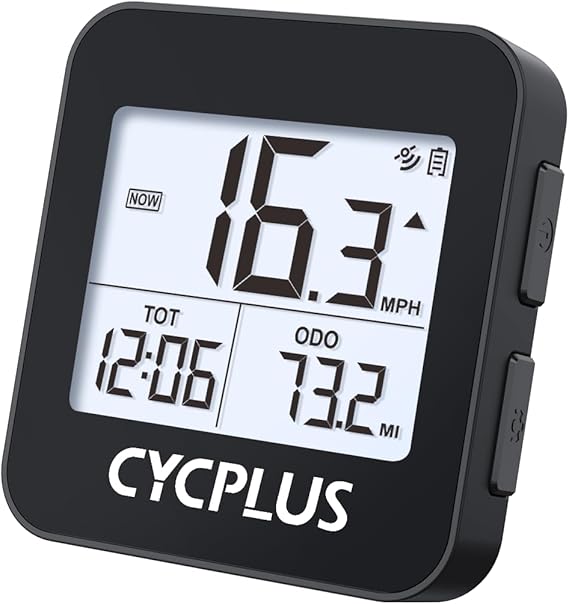 | CYCPLUS G1 | Check Price |
Our Top Picks 2  | Garmin Edge 1050 | Check Price |
Our Top Picks 3  | Wahoo ELEMNT Bolt V3 | Check Price |
Our Selected Top 12 Road Bike Computer Picks for Every Need
This list covers a range of road bike computers that vary in features, size, and complexity. Each review explains how the device performs during rides, who it is best suited for, and highlights its main advantages and potential drawbacks.
1. CYCPLUS Wireless GPS Bike Computer G1
Built around a wireless design with a durable, tempered glass screen, the CYCPLUS Wireless GPS Bike Computer G1 suits cyclists wanting accurate tracking without handlebar clutter. The biggest strength lies in its dynamic GPS positioning that delivers reliable ride data right on the screen.
Setting up is straightforward thanks to its wireless handlebar mount and button controls. The automatic backlight adjusts visibility from bright sunlight to nighttime rides, so data remains readable all day.
It automatically goes into sleep mode after 10 minutes of inactivity, which helps preserve the large 1200 mAh battery, keeping it running well over 50 hours between charges.
Accuracy in route tracking and ride statistics stands out during performance, making it reliable for serious cyclists. Its IPX6 waterproof rating means it can handle rain without issues, and tempered glass prevents screen scratching. The main praise is for its precise GPS and long battery life, while a common complaint involves the button interface being less intuitive than touchscreens.
Strong GPS accuracy and impressive battery life get consistent praise from users who rely on the device for detailed ride data. On the downside, some find the button interface clunky compared to more modern touchscreen models, which can slow down data navigation on the move.
Cyclists prioritizing battery endurance and accurate, wireless GPS will find this unit practical and reliable. Those preferring touchscreen control or needing more advanced connectivity features may prefer a different model.
Pros
- High GPS sensitivity and accurate route tracking
- Long-lasting 1200 mAh battery capacity
- IPX6 waterproof for all weather conditions
- Glare-free, scratch-resistant tempered glass screen
Cons
- Button controls less intuitive than touchscreen
- Sleep mode delay may not suit all users
| Specification | Details |
|---|---|
| Display Size | 2 inches |
| Display | LED |
| Battery Average Life | 50 hours |
| Battery Type | Lithium Polymer |
| Connectivity Technology | Wireless |
| Mounting Type | Handlebar Mount |
2. Garmin Edge 1050 Cycling Computer
A 3.5-inch color touchscreen stands out on this premium cycling computer, designed for serious road cyclists who want detailed navigation and performance tracking. Its single biggest strength lies in combining route planning, real-time alerts, and workout data all in one device.
Setting up involves syncing with a smartphone for live ride features like location sharing and in-ride messaging. The capacitive touchscreen makes creating courses and checking road surface types straightforward while riding. Battery life ranges from 20 hours during heavy use to as much as 60 hours in saver mode, covering long riding days with ease.
Navigation is clear with GPS plus GLONASS and Galileo support, showing remaining ascents and grades accurately. The device feels solid on the handlebar mount, with a responsive screen and physical buttons for precise input. A common complaint is the touchscreen can be unresponsive in heavy rain.
The built-in speaker for workout prompts and alerts works well but isn’t very loud in noisy environments.
The device’s ability to show detailed maps with road surface types and remaining climbs gets consistent praise. The touchscreen not working smoothly in wet conditions is the most noted drawback. The handlebar mount holds well, and the battery lasts long enough for extended rides without frequent recharging.
Serious cyclists wanting detailed route feedback, safety alerts, and live ride connectivity will appreciate this computer. Those often riding in heavy rain or noisy urban areas might consider alternatives with better screen sensitivity under wet conditions and louder audio cues. The broad feature set fits well for training and navigation combined.
Pros
- Responsive 3.5-inch color touchscreen
- Long battery life with saver mode
- Comprehensive navigation and route planning
- Built-in speaker for prompts and alerts
Cons
- Touchscreen unresponsive during heavy rain
- Speaker volume too low in loud environments
| Specification | Details |
|---|---|
| Screen Size | 3.5 inches |
| Battery Life | 20 hours normal use, 60 hours saver mode |
| Connectivity | Bluetooth, USB, Wi-Fi |
| Navigation Systems | GPS, GLONASS, Galileo |
| Memory Storage | 64 GB |
| Mounting Type | Handlebar Mount |
3. Wahoo ELEMNT Bolt V3 Bike Computer
Road cyclists who want reliable navigation and real-time alerts will appreciate the Wahoo ELEMNT Bolt V3. Its strongest feature is the automatic turn-by-turn navigation with clear LED and audible cues, saving time on planning and reducing the chance of wrong turns on rides.
Setting up the bike computer is straightforward, especially when syncing with apps like Strava or Komoot, which wirelessly download routes directly to the device. You can also create routes on the companion app and send them to the Bolt by Bluetooth. The on-device map lets you zoom and pan, and turn notifications are clear and concise.
Live tracking and smart notifications keep you connected without needing to check your phone constantly.
The screen size of 2.3 inches is big enough to show details while riding. It holds a charge for 20 hours, enough for long days on the road. The plastic body mounts securely on handlebars using buttons for control.
One common praise notes the smooth integration with ANT plus rearview radar, which shows vehicles approaching from behind. The most frequent complaint is about the bulkiness of the device compared to smaller GPS computers.
Turn-by-turn navigation receives strong praise for accuracy and easy-to-see LED signals that avoid distractions. The device is reported as a bit bulky, which can be noticeable on lightweight or aero handlebars. Battery performance allows for extensive ride time without worries about recharging mid-ride.
Cyclists who rely heavily on precise navigation and want effective alerts about vehicles behind will find this device very useful. Those looking for a minimalistic or very compact GPS computer might prefer a smaller model without smart notification features.
Pros
- Automatic route downloads from popular apps
- Clear turn-by-turn navigation with LED and sounds
- Integrates with ANT plus rearview radar
- Long battery life for full-day rides
Cons
- Bulky size compared to some GPS computers
- Requires smartphone for smart notifications and live tracking
| Specification | Details |
|---|---|
| Display Size | 2.3 inches |
| Battery Life | 20 hours |
| Sensors | Heart Rate, Cadence, Speed |
| Connectivity | Bluetooth, USB, Wi-Fi |
| Mounting Type | Handlebar Mount |
| Human Interface | Buttons |
4. Garmin Edge 840 GPS Cycling Computer

Riders who need precise navigation and training support will find this cycling computer helpful. It’s a solid fit for cyclists who want detailed ride data and extended battery life for long sessions. The biggest strength lies in its combination of multi-band GNSS accuracy and personalized performance guidance.
Setup involves syncing with compatible power meters and heart rate monitors to access tailored coaching and stamina insights. The screen mixes touchscreen controls with buttons, which makes operation reliable even in wet or sweaty conditions. Maps cover popular roads and trails in North America, with improved ride type-specific details to plan routes effectively.
Notifications and training prompts keep you on track throughout rides.
Accuracy for positioning is strong due to multi-band satellite support, helping with navigation in tougher environments. The device is solidly built with a 2.6-inch LCD screen that’s visible in daylight. The frequent compliment highlights its ClimbPro ascent planner for pacing climbs, while some mention the touchscreen can be less responsive with gloves.
Battery life supports up to 26 hours under demanding settings, enough for full-day rides.
Riders praise its ClimbPro ascent planner and detailed navigation for challenging terrain. Frequent feedback notes the touchscreen can struggle with glove use, which requires relying on buttons for control during cold rides. Battery longevity allows going beyond standard daylight sessions, supporting multiple ride types without charging concerns.
Cyclists focused on training with power and heart rate data will benefit most from the coaching features. Those who often ride outside North America or prefer full touchscreen interaction without buttons may look for alternative options. This suits endurance riders and racers needing detailed ride analysis and route guidance.
Pros
- Accurate multi-band GPS for reliable location
- Long battery life suitable for extended rides
- Personalized training with power and heart rate data
- ClimbPro mode shows detailed ascent info anytime
Cons
- Touchscreen responsiveness drops with gloves
- Maps limited to North America coverage
| Specification | Details |
|---|---|
| Battery Life | Up to 26 hours (demanding use), 32 hours (battery saver) |
| Screen Size | 2.6 inches |
| Memory Storage | 32 GB |
| Connectivity | Bluetooth, Wi-Fi, USB |
| Navigation | Multi-Band GNSS |
| Control Method | Buttons and touchscreen (capacitive) |
5. iGPSPORT BSC500 GPS Bike Computer

3.3-inch touchscreen displaying up to 12 cycling data points at once fits well on road bikes for riders who want clear and detailed feedback. Navigation accuracy stands out with dual-band, multi-satellite positioning, making it suitable for people who ride varied routes and need precise real-time guidance.
Setting it up involves installing the iGPSPORT app to send or import routes from apps like Strava and Komoot, simplifying ride planning. Buttons and touchscreen both work for input, useful when gloves or sweat make one method tricky. Voice navigation through a loudspeaker lets you keep eyes on the road, with turn reminders adjusting timing according to speed to prevent missed splits.
Strong GPS signals from multiple satellite systems keep positioning on track; the computer recalculates routes automatically if you go off course. Battery life uses a lithium-ion pack, providing consistent power.
Some note that touchscreen responsiveness varies slightly under wet conditions. The build is solid enough for daily use but not detailed in weather resistance features.
Clear navigation instructions and accurate tracking stand out, alongside ease of importing routes from multiple apps. The most frequent issue is the occasional touchscreen lag in wet conditions, which can be frustrating mid-ride and may require switching to button control.
Strong navigation and detailed data attract serious road riders wanting dependable guidance. Casual cyclists or those riding in rainy climates might consider alternatives with better-known weather protection and single input methods. The device suits riders who prioritize multi-source GPS and hands-free voice updates.
Pros
- Large touchscreen with button backup
- Accurate multi-satellite GPS tracking
- Voice navigation reduces screen glancing
- Supports route import from popular apps
Cons
- Touchscreen less responsive when wet
- No detailed weather resistance specified
| Specification | Details |
|---|---|
| Display Size | 3.3 inches |
| Sensor Type | Cadence Sensor |
| Battery Type | Lithium Ion |
| Human Interface Input | Buttons, Touchscreen |
| Positioning | Dual-Band GPS+Beidou+GLONASS+GALILEO+QZSS |
6. CYCPLUS GPS Wireless Bike Computer M1

Road cyclists looking for detailed ride data and accurate tracking will appreciate this bike computer. Its biggest strength is the precise GPS positioning using a Swiss chip, making it ideal for tracking long routes and syncing performance stats with a smartphone app.
Setting up involves attaching the compact handlebar mount designed for 31.8 mm bars, which takes less than a minute. The 2.9-inch backlit screen stays readable in all light conditions thanks to glare-free FSTN technology.
It connects easily to sensors via ANT+ and Bluetooth, so monitoring speed, cadence, heart rate, and more happens without fuss.
GPS tracking is consistently precise, letting you follow your exact route and analyze it afterward. The tempered glass screen resists scratches during everyday use.
One common issue is the necessity to correctly set the time zone initially to avoid problems with the screen lighting and functions. The mount holds firmly even on rough roads, preventing wobble.
Precise GPS tracking and clear screen visibility stand out during rides. The screen lighting depends heavily on setting the time zone at first use, which can be a hurdle for some.
The bike computer suits road cyclists wanting detailed performance data and route analysis through an app. Cyclists with handlebars different from 31.8 mm or who want a plug-and-play experience without initial setup might consider alternatives.
Pros
- High GPS accuracy with Swiss chip inside
- Automatic screen lighting adjusts by sunrise/sunset
- Includes speed and cadence sensors
- Strong handlebar mount prevents wobbling
Cons
- Time zone must be set first for full function
- Mount fits only 31.8 mm handlebars
| Specification | Details |
|---|---|
| Display Size | 2.9 inches |
| Display Type | LCD with FSTN backlight |
| Battery Life | 60 hours |
| Connectivity | ANT, Bluetooth |
| Mount Type | Handlebar Mount (31.8 mm) |
| Sensor Type | Speed/cadence, GPS sensor |
7. iGPSPORT BSC200S GPS Bike Computer

iGPSPORT BSC200S stands out with its flexible route navigation and long battery life. Suited for road cyclists who want reliable GPS tracking alongside route customization and easy-to-use navigation features.
Its biggest strength lies in quick setup for rides and durable battery performance lasting up to 25 hours.
Setting up involves using the iGPSPORT app to create or import routes from Strava, Komoot, or Ride with GPS. You can save points and launch navigation with a single touch, avoiding delays.
The 2.4-inch color screen stays visible in sunlight thanks to a semi-transparent, semi-reflective display. Notifications for calls and messages help keep you informed without stopping.
Accuracy in GPS tracking is solid, giving access to over 100 ride data types like speed, cadence, and FTP. The handlebar mount fits securely and buttons are straightforward to operate during rides.
Some mention the navigation interface could be smoother, and occasionally the screen’s color can be a bit hard to see in tricky lighting. The build is sturdy and includes a fast-charging Type-C port.
One strong point is the reliable battery life that lasts well beyond long rides, allowing continuous tracking without frequent recharges. Navigation can require some getting used to, and the interface occasionally feels less intuitive. The clear display helps but can struggle under certain sunlight angles, especially for color visibility.
Road cyclists wanting solid GPS functionality combined with route flexibility and notifications will find this device useful. Those who prioritize a highly refined user interface or prefer larger displays might consider alternative options. It fits well for riders who value practical features over advanced touchscreen controls.
Pros
- Supports route import from multiple platforms
- Long 25-hour battery with quick 1.5-hour charge
- Turn, yaw, and call notifications included
- Compatible with iGPSPORT lights for added functions
Cons
- Navigation interface not as smooth as expected
- Screen colors can be hard to view in some light
| Specification | Details |
|---|---|
| Display Size | 2.4 inches |
| Battery Life | 25 hours |
| Connectivity | ANT, Bluetooth, USB |
| Resolution | 320×240 |
| Mounting Type | Handlebar Mount |
8. GEOID CC700 GPS Bike Computer

GEOID CC700 GPS Bike Computer offers a vibrant 2.8” color screen and detailed route navigation favored by serious road cyclists. Its strongest feature is the fast and accurate positioning through multiple satellite systems and AGNSS support, making it ideal for riders who value precise tracking and easy-to-follow routes.
Setting up requires syncing via WiFi or Bluetooth, allowing quick firmware updates and easy transfer of ride data to apps like STRAVA. Uploading GPX routes through the phone app simplifies pre-ride planning. The three-button interface keeps controls straightforward while cycling.
Indoor training mode connects with smart trainers, enabling controlled workouts without interruptions from outdoor conditions.
Performance stays reliable with a 5-second positioning update using five satellite systems, giving accurate location tracking. The durable Asahi glass screen resists scratches and maintains clarity on long rides.
Positive feedback often highlights the vivid display and smooth rerouting, while the common complaint involves occasional difficulty syncing AGNSS data if the device is turned on or off far from the usual location.
Bright and colorful navigation with quick rerouting receives strong praise, especially for handling outdoor environments without lag. However, syncing AGNSS data requires being near the usual location with WiFi access, which some find inconvenient when traveling or switching locations frequently. The three-button design is simple but may not suit riders who prefer touchscreen or larger controls.
Cyclists who want detailed tracking and clear route guidance will appreciate this device’s features and screen clarity. Those needing quick indoor-outdoor switching or more extensive customization might want to explore other options offering touchscreen controls or more flexible data syncing setups.
Pros
- Bright 2.8″ screen with Asahi glass
- Supports 5 satellite systems for quick positioning
- WiFi sync speeds up data and firmware updates
- Customizable data pages with 29 layouts
Cons
- AGNSS sync can fail if powered far from usual location
- Control buttons may feel small during intense rides
| Specification | Details |
|---|---|
| Display Size | 2.8 inches, color |
| Connectivity | ANT, Bluetooth, Wi-Fi |
| Sensor Type | Speed, Cadence, Heart Rate |
| Mounting Type | Handlebar mount |
| Positioning Systems | GPS, BEIDOU, GLONASS, QZSS, GALILEO |
| Human Interface | Three buttons |
9. GPS Bike Computer

Staying aware of your cycling stats feels straightforward with this GPS Bike Computer. Suited for road riders who want detailed ride metrics without fiddling with many settings.
Its main strength lies in rich ride data covering speed, distance, elevation, and temperature all in one place.
Setup involves mounting the device on the handlebar and letting the built-in GPS do its job without extra sensors or magnets. Daily operation stays simple thanks to auto start and stop, along with a backlight that adjusts automatically when light conditions change. Sleep mode after 7 minutes of inactivity saves power during breaks.
Tracking speed, altitude changes, and gradients performs reliably, giving a comprehensive view of every ride. The screen size at 2.4 inches strikes a balance between readability and compactness.
Battery life lasts up to 28 hours on a single charge, making it suitable for long rides. Some feedback points to occasional difficulty reading the display in very bright sunlight.
The GPS bike computer offers detailed ride data including speed, distance, ride time, and altitude, useful for tracking performance on varied terrain. The 2.4-inch LCD display is easy to read, and its automatic backlight works well in different lighting. Some find the setup simple since it uses built-in GPS without sensors, but a few mention the screen could be more.
Cyclists who want complete ride stats and durability with a long battery life benefit from this model, especially on mixed routes where elevation matters. Those who prioritize faster touchscreen interaction or specific connectivity features might look for alternatives with more advanced interfaces or smartphone syncing capabilities.
Pros
- Tracks detailed ride data including altitude and temperature
- No need for a separate wheel sensor or magnet
- Backlight automatically adjusts to light conditions
- Long battery life supports extended rides
Cons
- Display can be hard to read in direct sunlight
- Buttons may require firm presses to register input
| Specification | Details |
|---|---|
| Display Size | 2.4 inches |
| Display Type | LCD |
| Battery Life | 28 hours |
| Sensors | GPS, Motion, Barometric Altimeter, Speed |
| Water Resistance | IPX7 waterproof |
| Mounting Type | Handlebar mount |
10. GEOID CC700 Pro GPS Bike Computer

Great for road cyclists who want reliable navigation and versatile data tracking, the GEOID CC700 Pro GPS Bike Computer stands out with its 2.8-inch touchscreen and strong map features. It suits riders needing clear directions and fast GPS positioning during rides.
Setup involves downloading offline maps with 4GB storage and connecting to WiFi for quick firmware updates and AGNSS syncing. The touchscreen paired with three buttons makes it easier to operate while riding. It connects effortlessly through Bluetooth and WiFi to share ride data and sync with apps like STRAVA and TrainingPeaks.
GPS accuracy is solid, thanks to support for five satellite systems and quick 5-second location finding. The build includes a handlebar mount and a bright TFT display that’s easy to see in various light conditions. Common praise notes how the device recalculates routes smoothly if you go off course.
A frequent complaint involves occasional touchscreen lag during use.
The GEOID CC700 Pro offers a 2.8-inch color touchscreen that is clear and easy to read even in bright sunlight, helping riders follow navigation without distraction. The device recalculates routes automatically when off course, thanks to its 5-satellite system and AGNSS syncing. The WiFi capability ensures fast syncing and quick firmware updates.
Cyclists who want detailed offline navigation and easy access to training data will appreciate this bike computer. It suits those training indoors with power control or connecting to DJI cameras for extra functionality. Riders focused on simplicity or those who prefer a smaller display might find better fit with simpler GPS devices.
Pros
- Fast 5-second GPS positioning with AGNSS
- Large 2.8-inch color touchscreen
- Offline map downloads with 4GB storage
- Connects easily to smart trainers and DJI cameras
Cons
- Touchscreen can be slow or unresponsive at times
- Route re-planning requires app connection
| Specification | Details |
|---|---|
| Display Size | 2.8 inches |
| Display Type | TFT |
| Satellite Support | GPS, BEIDOU, GLONASS, QZSS, GALILEO |
| Connectivity | ANT, Bluetooth, Wi-Fi |
| Mounting Type | Handlebar Mount |
| Human Interface Input | Touchscreen, 3 Buttons |
11. Garmin Edge 1040 Solar Bike Computer

Garmin Edge 1040 Solar features a lithium polymer battery enhanced by a Power Glass solar lens, designed for serious cyclists needing long-lasting performance and precise navigation. It suits riders putting in long hours or tackling challenging routes who want reliable power management and detailed data tracking.
Setting up involves connecting to the Garmin Connect app where you can customize data fields and sync courses. On the road, its touchscreen and button controls let you quickly switch views or pause rides.
The solar charging adds meaningful battery life gains during daytime rides, which helps reduce worries about running out of power on multi-hour outings.
Accuracy benefits from multi-band GNSS technology, offering dependable positioning in tough environments like dense urban or wooded areas. The build combines a 3.5-inch LCD that balances readability and compactness with sturdy construction for handlebar mounting.
Positive feedback highlights the smart power target and stamina tracking, while some find the interface can be a bit complex at first.
Garmin Edge 1040 Solar offers impressive battery life thanks to the Power Glass solar charging lens, extending rides by up to 100 hours in saver mode and adding valuable charging during daytime use. Navigation with multi-band GNSS provides accurate positioning even in tough environments. Some people find the setup and interface a bit complex initially, especially when pairing sensors or.
Cyclists who want detailed performance tracking and advanced navigation along with long battery life will appreciate this bike computer. It works well for those training seriously, thanks to power guides and stamina insights. Casual riders or those who want a simpler device might prefer something less feature-dense and easier to set up without extra sensors.
Pros
- Long battery life with solar charging lens
- Multi-band GNSS provides accurate location tracking
- Customizable data fields via app or device
- Power guide feature helps pace efforts effectively
Cons
- Interface complexity may slow initial use
- Solar charging benefits require strong daylight
| Specification | Details |
|---|---|
| Display Size | 3.5 inches |
| Battery Average Life | 30 hours |
| Power Glass Solar Charging | Adds up to 42 min/hour in battery saver mode |
| Connectivity Technology | Bluetooth, USB |
| Human Interface Input | Buttons, Touchscreen |
| Native Resolution | 282×470 |
12. Wahoo ELEMNT ACE Cycling Computer

Bright and sharp, the 3.8-inch LCD display stands out, especially for riders who want detailed data at their fingertips. Designed for road cyclists focused on precision and performance, its clearest strength lies in real-time wind and air resistance tracking to inform every pedal stroke.
Setting it up is straightforward thanks to the all-in-one Wahoo app that syncs seamlessly with the device. The Ready-To-Ride Dashboard helps you start quickly without loading delays.
Controls respond to button presses, touchscreen swipes, and pinch gestures, making it versatile in different weather and terrain. You can easily switch through detailed maps and performance metrics during your ride.
Accuracy in tracking speed, cadence, and air pressure contributes directly to better riding decisions. The build is solid with a reliable handlebar mount, though some say it could be slimmer for smoother integration.
Battery life of 30 hours lets you trust it for long rides. Live AirBoost and AirDrag results add a unique edge, but the touchscreen can be less responsive when wet or with gloves on.
Winning features include the detailed wind and air drag metrics that make it easier to optimize riding strategy. Battery endurance supports long sessions without worry. Complaints mainly reference the touchscreen’s sensitivity to wet conditions and difficulty with gloved fingers, which can slow rider interaction in certain weather.
Enthusiasts focused on data-driven rides and wind conditions will appreciate the specialized metrics and solid battery. Those preferring entirely glove-friendly physical controls or smaller mounts might look for simpler models. This computer suits riders who want in-depth feedback rather than just basic speed and distance.
Pros
- Real-time air resistance tracking for performance adjustments
- Long battery life suitable for extended rides
- Multiple control options with buttons and touchscreen
- Quick start with Ready-To-Ride Dashboard
Cons
- Touchscreen can be unresponsive with gloves or moisture
- Handlebar mount slightly bulky for some setups
| Specification | Details |
|---|---|
| Display Size | 3.8 inches |
| Display | LCD |
| Battery Average Life | 30 hours |
| Sensor Type | Pressure Sensor, Speed Sensor, Cadence Sensor |
| Connectivity Technology | ANT, Bluetooth, USB, Wi-Fi |
| Human Interface Input | Buttons, Microphone, Touchscreen |
Best Road Bike Computers Comparison Table
| Product | Display Size | Battery Life | Connectivity | Input Method |
|---|---|---|---|---|
| CYCPLUS G1 | 2 inches | 50 hours | Wireless | Buttons |
| Garmin Edge 1050 | 3.5 inches | 60 hours | Bluetooth, USB, Wi-Fi | Buttons, Touchscreen |
| Wahoo ELEMNT Bolt V3 | 2.3 inches | 20 hours | Bluetooth, USB, Wi-Fi | Buttons |
| Garmin Edge 840 | 2.6 inches | 26 hours | Bluetooth, USB, Wi-Fi | Buttons, Touchscreen |
| iGPSPORT BSC500 | 3.3 inches | – | – | Buttons, Touchscreen |
| CYCPLUS M1 | 2.9 inches | 60 hours | ANT, Bluetooth | Buttons |
| iGPSPORT BSC200S | 2.4 inches | 25 hours | ANT, Bluetooth, USB | Buttons |
| GEOID CC700 | 2.8 inches | – | ANT, Bluetooth, Wi-Fi | Buttons |
| Generic GPS Bike Computer | 2.4 inches | 28 hours | – | Buttons |
| GEOID CC700 Pro | 2.8 inches | – | ANT, Bluetooth, Wi-Fi | Touchscreen |
| Garmin Edge 1040 Solar | 3.5 inches | 30 hours | Bluetooth, USB | Buttons, Touchscreen |
| Wahoo ELEMNT ACE | 3.8 inches | 30 hours | ANT, Bluetooth, USB, Wi-Fi | Buttons, Microphone, Touchscreen |
- Display Size2 inches
- Battery Life50 hours
- ConnectivityWireless
- Input MethodButtons
- Display Size3.5 inches
- Battery Life60 hours
- ConnectivityBluetooth, USB, Wi-Fi
- Input MethodButtons, Touchscreen
- Display Size2.3 inches
- Battery Life20 hours
- ConnectivityBluetooth, USB, Wi-Fi
- Input MethodButtons
- Display Size2.6 inches
- Battery Life26 hours
- ConnectivityBluetooth, USB, Wi-Fi
- Input MethodButtons, Touchscreen
- Display Size3.3 inches
- Battery Life–
- Connectivity–
- Input MethodButtons, Touchscreen
- Display Size2.9 inches
- Battery Life60 hours
- ConnectivityANT, Bluetooth
- Input MethodButtons
- Display Size2.4 inches
- Battery Life25 hours
- ConnectivityANT, Bluetooth, USB
- Input MethodButtons
- Display Size2.8 inches
- Battery Life–
- ConnectivityANT, Bluetooth, Wi-Fi
- Input MethodButtons
- Display Size2.4 inches
- Battery Life28 hours
- Connectivity–
- Input MethodButtons
- Display Size2.8 inches
- Battery Life–
- ConnectivityANT, Bluetooth, Wi-Fi
- Input MethodTouchscreen
- Display Size3.5 inches
- Battery Life30 hours
- ConnectivityBluetooth, USB
- Input MethodButtons, Touchscreen
- Display Size3.8 inches
- Battery Life30 hours
- ConnectivityANT, Bluetooth, USB, Wi-Fi
- Input MethodButtons, Microphone, Touchscreen
How to Choose the Right Road Bike Computer
Choosing a road bike computer involves focusing on features like accuracy, ease of use, and compatibility with sensors you already have. Picking the right device means fewer setup headaches and avoids spending on extras you won’t use, making your rides smoother and more enjoyable.
Display and Visibility
Glancing down at a screen that’s too small or unclear during a ride can be distracting and even dangerous. A display of around 2 to 3 inches with a high enough resolution makes a real difference in readability, especially under direct sunlight.
Screens with less than 160 x 128 pixels often force you to squint or lean in to see speed, distance, or cadence details. Models featuring an antiglare coating help reduce reflections, allowing you to check your stats without stopping or shading the device with your hand. Backlight options also matter for early morning or evening rides, ensuring the data stays visible when natural light fades.
Being able to tailor the screen to show only the most relevant numbers lets riders stay focused on what’s important. Prioritizing fields like current speed, distance left, or heart rate avoids clutter that can cause confusion. Customization usually means having 2 to 4 data fields per screen, and cycling through multiple pages is common.
Devices that let you choose what’s shown save time and keep the display clean.
Gps Accuracy and Connectivity
Relying on basic GPS tracking quickly shows its limits. Inaccurate speed and distance readings can throw off your training goals or confuse route tracking, especially in areas with tall buildings or dense trees.
Devices that support multiple satellite systems like GLONASS or Galileo provide better coverage and more consistent location fixes. This means fewer dropped signals and more reliable data, even in challenging environments such as narrow city streets or forested trails.
Connectivity matters just as much as GPS precision. The option to link with sensors via Bluetooth or ANT+ improves the riding experience by syncing cadence, heart rate, and power meter data directly to the device. This setup avoids manual input errors and lets apps automatically analyze performance in real time.
A device supporting both Bluetooth and ANT+ is more versatile, ensuring compatibility with a wide range of accessories and training apps.
Battery Life and Power Options
Long rides can easily stretch beyond five hours, so having a device that lasts through the day is crucial. Some models promise 15 or even 20 hours of continuous use, which suits endurance cyclists well. Running out of battery mid-ride can mean losing valuable route data or speed tracking, which quickly becomes frustrating.
Devices with rechargeable batteries tend to offer longer, more environmentally friendly lifespans but require charging gear and downtime. In contrast, those with replaceable batteries allow a quick swap on the go but rack up costs with repeated purchases.
Power-saving features make a noticeable difference during extended tours. Several units include modes that dim the screen, reduce GPS accuracy, or switch off unnecessary sensors. Although this extends battery life, some tracking details might stop updating in real-time.
Expect at least a 20% boost in runtime using these modes, so it’s a trade-off worth considering depending on your riding style. Choosing a device with a few power-management options ensures flexibility between full functionality and longer usage.
Sensor Compatibility and Features
During several rides, a weak or lost sensor signal can be frustrating, especially when you rely on data like cadence or heart rate to track performance. A good device supports a wide range of external sensors, including cadence sensors, heart rate monitors, and power meters from major brands using Bluetooth or ANT+.
Stable connections reduce data dropouts, allowing for consistent tracking. The best devices handle multiple sensors at once without lag or interference, important if you use more than one to monitor different metrics.
Built-in sensors like accelerometers and barometers add value by providing extra data such as elevation changes and speed without additional accessories. Accuracy improves noticeably on routes with hills, helping track real conditions rather than just GPS-derived estimates.
Pairing should be quick and straightforward, with clear feedback on screen. Look for devices with automatic sensor detection or at least easy manual pairing options. Devices resistant to signal loss during vibrations and sweat exposure make rides less stressful and more focused on performance.
Mounting and Durability
After riding a few hundred miles with various devices, the difference made by a solid mounting system becomes clear. Some mounts can wobble or even detach on rough roads, which disrupts tracking and distracts while riding. Look for mounts that are aerodynamic and tailored to your bike’s handlebar or stem size, typically between 31.8mm and 35mm in diameter.
A good design keeps the unit firmly in place without adding bulk or interfering with your riding position.
Durability is another factor that often gets overlooked until the unit takes a hit or faces bad weather. Units built with tough plastics or metals handle bumps and occasional drops much better. Check for a water resistance rating like IPX7 or higher, which means the device can withstand heavy rain, splashes, or even brief submersion.
Dust resistance is just as important, often indicated as IP6X, to prevent dirt from gumming up buttons or sensors. Proper ratings translate to fewer malfunctions and longer device life outdoors.
Maximizing Your Road Bike Computer’s Accuracy Through Proper Installation
Placing the sensor on the correct part of your bike is crucial for precise speed and distance readings. Most road bike computers work best when the magnet is attached to a spoke and the sensor is fixed on the fork leg directly opposite the magnet’s path.
Ensure the sensor and magnet align closely without touching; a gap of about 1 to 3 millimeters typically works well.
Mounting tips to improve accuracy:
- Secure the sensor tightly so it doesn’t shift during rides, as movement can cause inconsistent data.
- Use zip ties or the specific mounting brackets provided with your computer to avoid sensor wobble.
- Calibrate wheel size accurately in the device settings, matching your tire’s actual circumference (found on the tire sidewall), because even minor mismatches affect distance tracking.
- Keep the sensor clean from mud and debris; dirt buildup may interfere with the magnet’s signal.
Setting up the bike computer this way minimizes errors and ensures each ride’s data reflects your real performance.
Essential Maintenance Tips to Extend the Life of Your Bike Computer
Keeping your bike computer in good shape requires regular cleaning, especially after rides in wet or dusty conditions. Use a soft cloth dampened with water to wipe the screen and sensors gently.
Avoid harsh chemicals, which can damage the sensitive components.
Replace the batteries or recharge the unit as soon as you notice the display dimming or the device turning off unexpectedly. This prevents data loss during your rides and keeps the GPS functioning accurately.
Mounting and storage also affect longevity. Always secure the computer firmly on the handlebar or stem mount to avoid vibrations and shocks. When not in use, remove the device and store it in a dry, cool place away from direct sunlight.
- Check for firmware updates regularly to ensure your bike computer runs smoothly.
- Inspect cables and connections if your model relies on wired sensors.
- Avoid exposing the unit to extreme temperatures during transport or storage.
Comparing Road Bike Computers with Smartphone Apps for Navigation and Tracking
Most dedicated road bike computers offer clearer visibility in direct sunlight compared to smartphone screens, which tend to glare and become difficult to read outdoors. These devices typically come with mounts designed specifically for bike handlebars, providing a stable, hands-free experience that many riders prefer on longer rides.
Battery life is another important factor; road bike computers often last for 15-20 hours on a single charge, while smartphones usually need recharging after heavy GPS use within 4-6 hours.
Road bike computers also provide more accurate ride data:
- Built-in sensors like barometers and precise GPS chips improve route tracking and elevation details.
- They can connect directly to cycling sensors, such as cadence and heart rate monitors, without needing third-party apps.
- Unlike smartphones, many bike computers continue tracking even in airplane mode, saving battery and minimizing distractions.
Smartphone apps offer a wider variety of mapping tools and constant updates, but require balancing screen visibility, battery drain, and phone security while riding.
People Also Asked
How Do I Set up a Road Bike Computer for First Use?
Start by mounting the computer on your handlebars or stem using the provided bracket. Power it on and go through the setup menu to input basic data like wheel size, time, and your profile details. Calibrating sensors after setup helps ensure accurate readings during rides.
What Is the Typical Battery Life of a Road Bike Computer?
Most road bike computers last between 15 and 30 hours on a full charge or fresh batteries. Some higher-end models offer rechargeable batteries that can be topped up via USB, making mid-ride charging possible on longer trips.
Are Road Bike Computers Compatible with Different Types of Sensors?
Road bike computers commonly support ANT+ and Bluetooth sensors, allowing connections with heart rate monitors, cadence sensors, and power meters. Verify the sensor type compatibility before purchasing to avoid connection problems.
How Do I Clean and Maintain My Road Bike Computer Properly?
Use a soft cloth with mild soap and water to clean the screen and casing. Avoid submerging the unit in water or using harsh chemicals. Remove the computer from the mount to clean the contacts and check for debris that might affect connectivity.
What Are Common Issues Encountered with Road Bike Computers?
Frequent issues include sensor connection drops, inaccurate data due to miscalibration, or screen freezing. Regularly updating the firmware and checking sensor batteries often resolves most operational problems.
Conclusion
Choosing the right road bike computer comes down to a few key factors. Accuracy of GPS and sensor readings is crucial for tracking your rides properly. Battery life matters depending on how long your typical rides are.
Display readability in bright sunlight keeps you from straining your eyes while on the road.
Think about where you’ll mount it, how much you want to spend, and how often you’ll actually use it. Those points will narrow your options quickly.
The comparison table and detailed picks above make it easier to find the best fit for your setup and riding style.